




by Redazione 17/10/2026


Categories: News / Disclaimer
Curator Francesco Bonami, an Italian with U.S. citizenship, has been appointed artistic director of the Moscow-based GES-2 center, which is funded by the V-A-C Foundation, linked to oligarch Leonid Mikhelson. The appointment has reignited the debate over the limits of cultural dialogue with Russia and the responsibilities of arts institutions.
Francesco Bonami, an Italian curator with U.S. citizenship, is the new artistic director of GES-2 House of Culture, the Moscow-based center dedicated to contemporary art and supported by the V-A-C Foundation. For the curator, born in Florence in 1955, this marks a new role within an institution with which he has long collaborated: since 2021, he has helped shape its strategy, and in 2024, he curated the exhibition *Square and Space* alongside Zelfira Tregulova . From Malevich to GES-2. This appointment now allows him to play a direct role in artistic decisions and the development of the program. The handover will take place on December 6, 2026, when Russian curator Alisa Prudnikova will conclude her term as Program Director of the V-A-C Foundation and GES-2. The curator, founder of the Ural Industrial Biennial of Contemporary Art, will, however, continue to collaborate with the center starting in 2027 as an independent curator, focusing on academic research and international residencies.
This transition is part of the recent history of an institution founded with the goal of connecting different artistic practices and broadening access to contemporary culture. However, GES-2 is also one of the venues where the difficulties of cultural relations with Russia followingthe February 2022 invasion of Ukraine are reflected: the issue of international collaborations, artists’ freedom of expression, and the role of institutions linked to major Russian economic groups have shaped the debate surrounding the Moscow-based center.


Bonami described his role in terms of collaborating with the curatorial team and identifying projects best suited to the institution’s identity. “In my view,” he stated in the official press release announcing his appointment, “the role of Artistic Director is to catalyze artistic energy. Our shared goal is to seek out the best projects for GES-2. My experience should be helpful in this regard.” The intention is to build upon the work already carried out by the group, without interrupting ongoing projects or disregarding the time required for their completion. The thematic areas and projects planned for the next three years will be announced by the end of 2026.

Among the priorities identified by Bonami are the connection between different artistic disciplines, the alternation between large- and small-scale exhibitions, and the creation of conditions conducive to the realization of ambitious artist-led projects. The curator also assigns a significant role to the Vaults Centre for Artistic Production and GES-2’s artist residency program, conceived as tools capable of fostering connections between experimentation, the creation of new works, and professional exchange.
This new role consolidates a collaboration that predates the opening of GES-2. In 2010 and 2011, Bonami, together with Irene Calderoni, curated *Modernikon. Contemporary Art From Russia*, an exhibition presented in Turin and Venice featuring works by twenty Russian artists. In 2017, V-A-C Press published his book *I Could Have Done That Too* in Russian, which explores the questions contemporary art poses to its viewers and how it can be approached without requiring specialized knowledge. Furthermore, in December 2026, GES-2 will present *Things, Idols, Bananas*, a project that Bonami curated together with Dmitry Belkin. The initiative thus marks the transition between the previous programming phase and the new artistic direction.
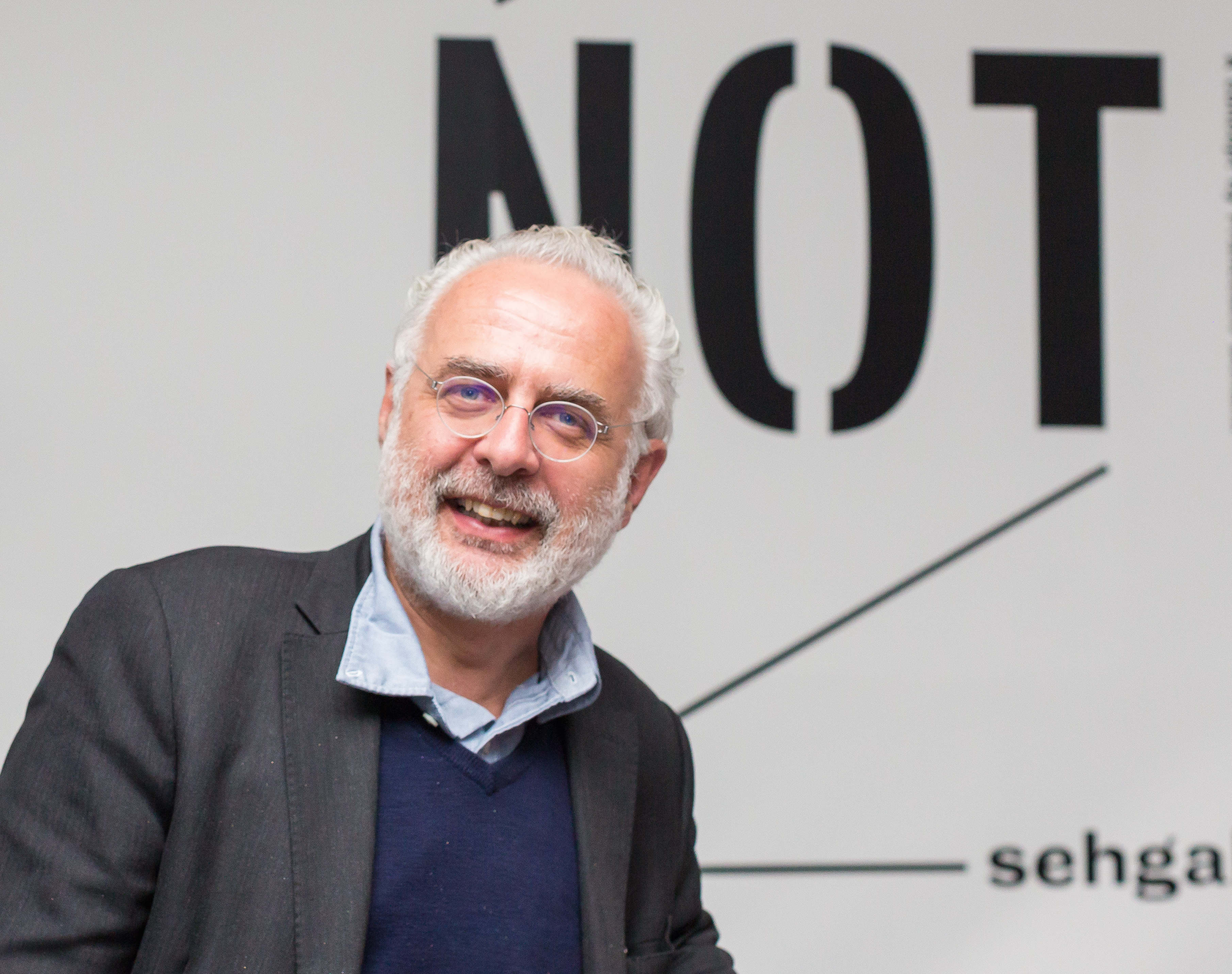
Who Is Francesco Bonami
Born in Florence in 1955, Bonami studied set design and architecture at the city’s Academy of Fine Arts. He began his career as an artist before working as an editor for the international magazine *Flash Art*, one of the experiences that paved the way for his entry into the curatorial field. In 1993, he curated a section of the “Aperto” exhibition at the Venice Biennale. In 1997, he served as curator of the SITE Santa Fe Biennial, and in 2000, he co-curated Manifesta 3 in Ljubljana. In 2003, he served as artistic director of the 50th Venice Biennale, and in 2010, he was co-curator of the Whitney Biennial in New York.
His career includes long-term positions at institutions dedicated to contemporary art. From 1995 to 2018, he served as artistic director of the Fondazione Sandretto Re Rebaudengo in Turin; from 1999 to 2008, he worked as a senior curator at the Museum of Contemporary Art in Chicago. Throughout his career, he has organized over one hundred exhibitions at institutions in various countries, including the Walker Art Center in Minneapolis, the Hara Museum of Contemporary Art in Tokyo, the Musée d’Art Moderne in Paris, the Pinault Collection in Venice, and the Museo Jumex in Mexico City. He has also curated solo exhibitions by artists such as Jeff Koons, Damien Hirst, Takashi Murakami, Rudolf Stingel, Maurizio Cattelan, Juergen Teller, Damián Ortega, and Hiroshi Sugimoto. In 2024, he organized Cattelan’s first solo exhibition at the Gagosian Gallery in New York in twenty years, according to reports in the art press. He was also one of the curators of the 2024 Rome Quadriennale.
In addition to his curatorial work, Bonami has written several books on contemporary art and contributes to the Italian press, as well as appearing on television programs. His writings often address the doubts and questions that arise when encountering contemporary artworks, using accessible language that combines analysis and irony. In 2010, he was awarded the French Legion of Honor.
The Exhibition on Malevich and the Relationship with Russian Art
A significant milestone in the collaboration between Bonami and the V-A-C Foundation was the aforementioned *Square and Space. From Malevich to GES-2*, curated in 2024 together with Zelfira Tregulova, former director of the State Tretyakov Gallery in Moscow. The project explored the relationship between the avant-garde and the development of global art, while also focusing on the connections between the artwork, the exhibition space, and the viewer. In its presentation of the initiative, the foundation emphasized the role of Russian art in the processes of artistic innovation during the 20th century.
The decision to dedicate an exhibition to this theme comes at a time when artists’ national identities and the interpretation of cultural traditions have become particularly contentious issues. This is the case with Kazimir Malevich, whose identity as a Ukrainian artist has been the subject of in-depth research by Ukrainian art historians at international institutions. In an interview with ARTnews regarding the 2024 exhibition, Bonami directly addressed the issue of cultural sanctions, stating: “Sanctions are economic in nature, not cultural. Sanctioning culture is a crime that kills people’s souls.” This statement expresses his position on the distinction between economic measures and cultural isolation, but it does not resolve the issue of relationships between artists, institutions, and economic entities linked to Russia—an issue that has taken on significant weight in the international debate since 2022.
What Is GES-2 House of Culture
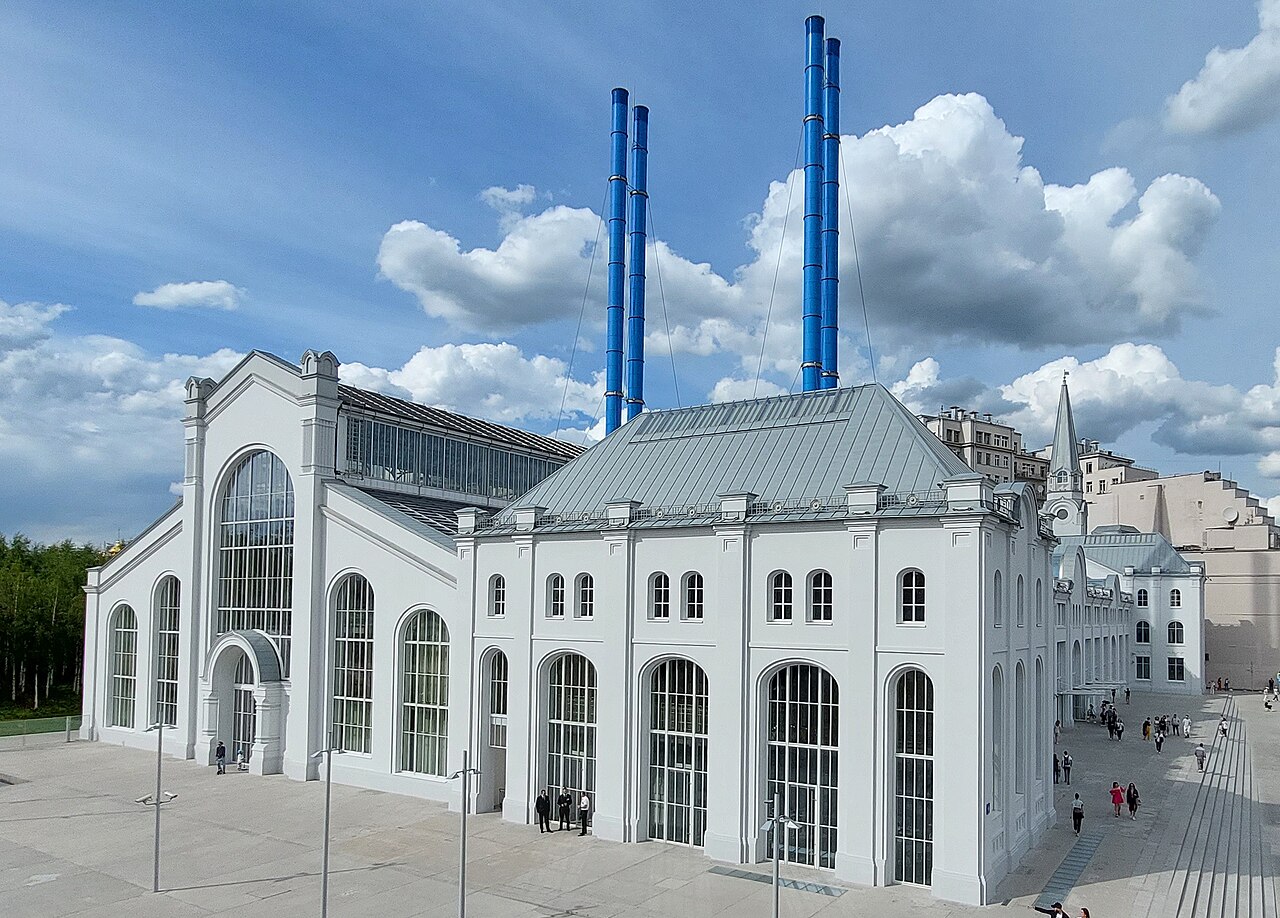
GES-2 House of Culture opened in December 2021. The center occupies a former early 20th-century power plant, located across from the Kremlin and renovated according to a design by architect Renzo Piano. The building was conceived as a space dedicated to a variety of activities: in addition to exhibition areas, it includes a library, an auditorium, design studios, recording studios, and spaces for artistic production. Four of the original smokestacks, approximately 70 meters tall, have been transformed into blue structures that contribute to the building’s natural ventilation and help reduce energy consumption. Inside, there is also a grove of birch trees.
The center was funded by the V-A-C Foundation, founded by Russian billionaire Leonid Mikhelson, an entrepreneur who continues to maintain close ties with the Russian regime’s leadership (he is also a supporter of the United Russia party, for which he previously funded the election campaign of Vyacheslav Volodin, Speaker of the Duma; furthermore, according to investigations conducted by independent Russian media and reported by the Institute for the Study of War, he assists the Russian Ministry of Defense—through non-sanctioned companies—in recruiting soldiers to be deployed in Ukraine), as well as the chairman and principal shareholder of the energy company Novatek. Following the invasion of Ukraine, Mikhelson was subjected to personal sanctions by the United Kingdom, Canada, Australia, New Zealand, and Ukraine. In 2023, ownership of GES-2 was transferred to his daughter, Victoria Mikhelson, who does not appear to be subject to personal sanctions by any other countries, with the exception of Ukraine. The founder’s position and the ownership structure are key to understanding the conditions under which the center operates: the issue, in fact, concerns not only curatorial choices but also how an institution funded by substantial private wealth can maintain relationships with international artists and professionals amid cultural isolation and political restrictions.
The GES-2 project draws on the model of the Houses of Culture, institutions that, in the Soviet Union, brought together theatrical and artistic activities, libraries, cinemas, and educational programs under one roof. The V-A-C Foundation presented GES-2 as a space open to diverse audiences, intended to bring Russian artistic production into contact with the international scene. The foundation had been co-founded by Teresa Iarocci Mavica, an Italian curator who had played a central role in bringing the project to fruition. Mavica stepped down as director of the center shortly after its opening, in late 2021, and subsequently focused on the foundation’s Venetian branch, V-A-C Zattere, which opened in 2017. In March 2022, Francesco Manacorda, artistic director of the V-A-C Foundation since 2017, also resigned following Russia’s invasion of Ukraine. His departure came during a period of intense strain for the institution, marked by the suspension of activities and projects and by the difficulty of maintaining the international relationships that had been one of the foundation’s original objectives. Immediately after his resignation, Manacorda shared some reflections on the role of cultural institutions in a country embroiled in war in an interview published in 2022 by *Il Giornale dell’Arte*, in which the curator explained that his decision had come about after he had tried to understand how to safeguard the institution and its ongoing activities. Manacorda had described the foundation’s work as an attempt to create opportunities for dialogue, including through initiatives aimed at communities that did not typically engage with contemporary art. The invasion brought that process to a halt: Manacorda explained that he had deemed his resignation inevitable in light of the deteriorating situation and the restrictions on freedom of expression, and he also noted the difficulty of distinguishing the country from its political class, noting that the suspension of cultural activities risked depriving citizens of spaces for dialogue without directly affecting those who had ordered the invasion.
Shortly after the war began, Icelandic artist Ragnar Kjartansson also canceled the performances of a new work scheduled at GES-2, stating: “It is not possible to present this work while the horror begins.” This incident helped highlight the dilemma faced by several international cultural institutions: how to continue operating in Russia without ignoring the invasion of Ukraine and its impact on individual freedoms, while at the same time ensuring that severing ties does not indiscriminately affect artists and cultural professionals.
Bonami’s Position
Bonami has on several occasions expressed interest in contemporary Russian art and in the possibilities for dialogue between artistic scenes. In a statement to Interior.ru following his appointment, he noted that some young Russian artists and curators are developing a perspective capable of transcending local and national boundaries while retaining a strong cultural identity. In the same interview, he argued that the current moment offers an opportunity to put the obsession with the international context into perspective, focusing instead on people capable of building an autonomous artistic world and communicating it to others. In this regard, he drew on the tradition of Russian literature, wondering whether a similar approach might find new forms of expression in contemporary art.
“Art is like a sport,” he said, “anyone can practice it, but only a few master it. And this applies not only to Russian artists, but to any country. Yet, I see young artists and young curators in Russia developing a unique perspective that transcends local or national contexts, while maintaining a strong identity. New ways of interacting—with all their flaws and limitations—have helped shape a more sophisticated and international approach to the development and realization of ideas. I’ve met young artists in Moscow who use modern technology in a profound yet innovative way, creating works with strong cultural roots. The current moment allows us to let go of our obsession with the ‘international’ context. I believe that the most interesting people today are those capable of building an entire world within themselves and then attempting to share it with the rest of the world.”
It remains to be seen how these positions will translate into the program for the next three years and what opportunities for international collaboration can be developed.
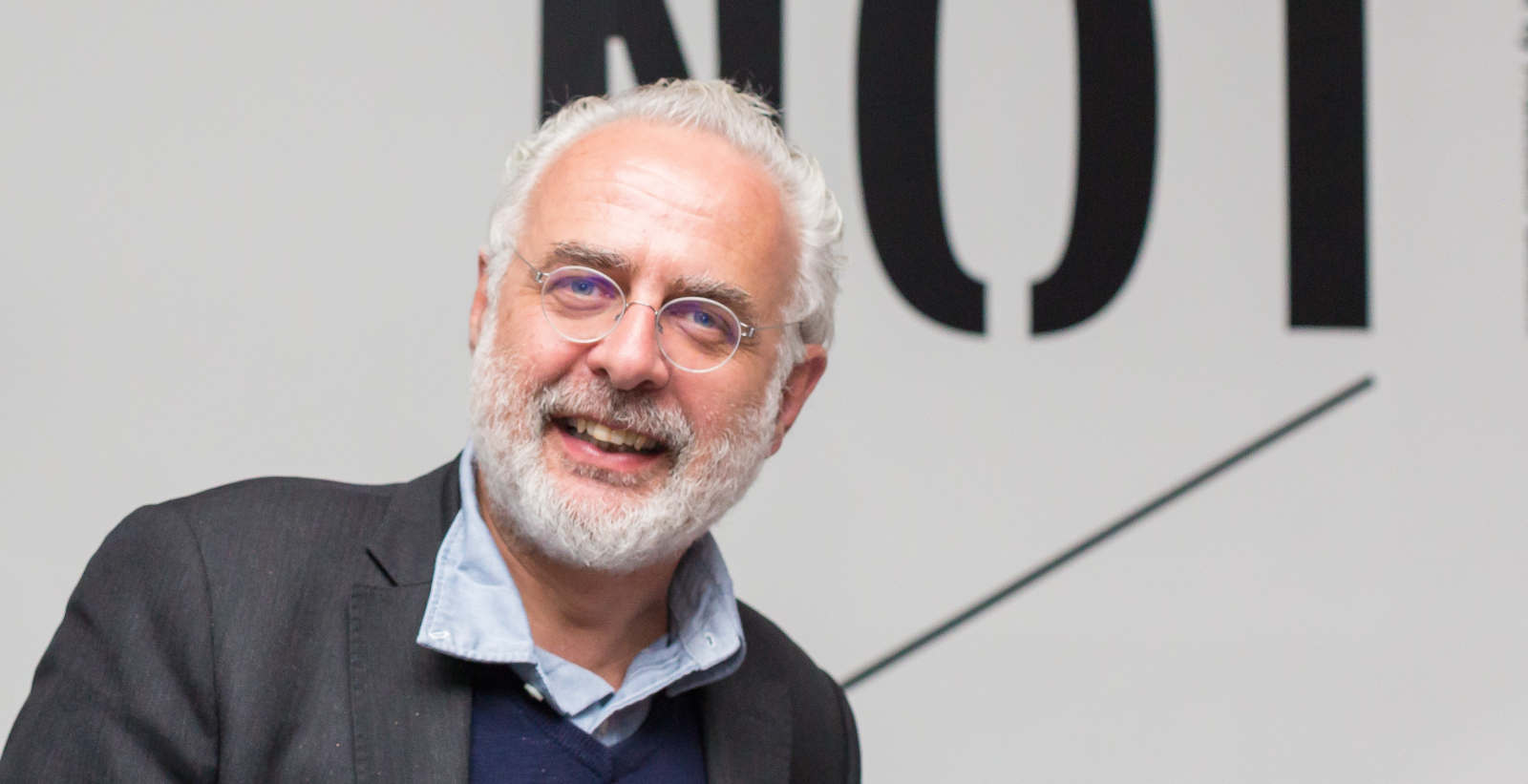 |
| Italian curator Francesco Bonami is the new director of an art center in Russia |
Warning: the translation into English of the original Italian article was created using automatic tools. We undertake to review all articles, but we do not guarantee the total absence of inaccuracies in the translation due to the program. You can find the original by clicking on the ITA button. If you find any mistake,please contact us.