





The future of Milan’s MUDEC is back on the table even before the current concession expires: the bid process launched by the City of Milan to award the museum’s management for the next eight years was in fact unsuccessful— —concluding without a single bid. Not even 24ORE Cultura, the company that currently manages the spaces and whose agreement is set to expire in March, came forward. The most significant aspect of this situation is therefore not merely that the bidding process was unsuccessful, but that none of the interested operators believed they could meet the financial conditions set forth in the project: the City of Milan, which had put out to bid a concession with an estimated total value exceeding 84 million euros, is now preparing to revise its requirements and issue a new call for bids.
The process had been launched last June and called for an eight-year concession. The future concessionaire would have been responsible for a fairly broad scope of management of the complex: not only the organization of temporary exhibitions, but also a range of museum-related services, from the restaurant to the café, from the bookshop to the parking lot. Among the required obligations was also the requirement to organize at least two international exhibitions each year. In exchange, the City had set a minimum annual fee of 100,000 euros, which could be increased during the bidding phase. The bidding period expired on September 28 without any proposals being submitted.
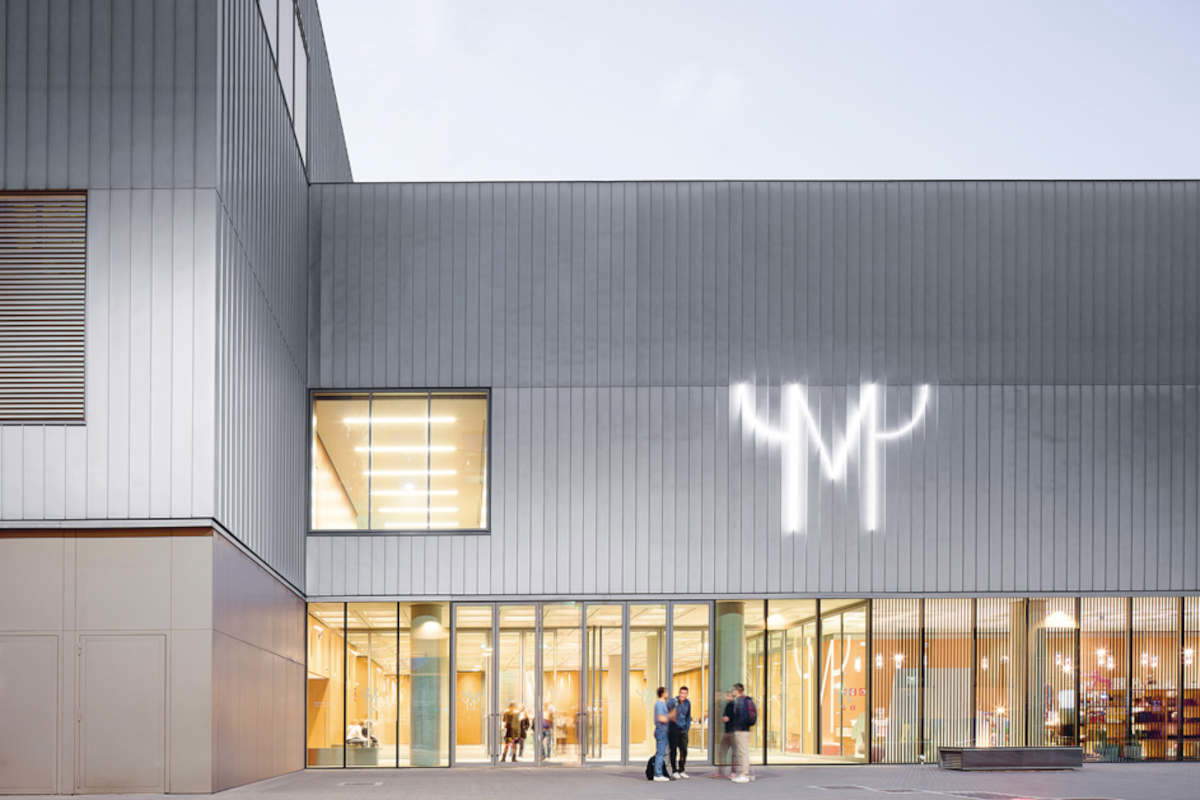
This situation is all the more significant because MUDEC is not merely an exhibition space, but a complex in which the management of the museum is intertwined with that of a range of activities and services. The new concessionaire would therefore have had to financially support a complex system, while simultaneously assuming responsibility for both exhibition programming and public services.
It was precisely the financial viability of the proposed terms —as revealed during the bidding process and reported in the press—that reportedly raised doubts among potential operators. The City, however, notes that interest in the bidding process was not entirely absent: several parties reportedly conducted site visits to the museum’s premises. However, no one ultimately turned that interest into a bid.
Palazzo Marino therefore does not seem willing to leave the museum without a new bidding process: the administration has indicated that the goal is to publish a second call for bids shortly, adjusting the requirements to make them more attractive to operators. The key issue will therefore be determining which conditions can be modified compared to the first call for bids, without compromising the objectives related to the museum’s management and programming.
The history of MUDEC is relatively recent and began with the transformation of the former Ansaldo site and the establishment of the museum within one of the large industrial complexes that characterized this part of Milan, on Via Tortona—an area that was once an industrial zone and has now become the design district. The former Ansaldo site began to develop as a manufacturing hub in the early 20th century and, over the decades, housed activities related to industrial and railway production. In 1989, the City of Milan purchased the complex, gradually initiating a transformation process intended to change the area’s function: from a site of industrial production, the former Ansaldo site thus began to be reimagined as a cultural hub. In the 1990s, the idea also took shape to relocate the Civic Ethnographic Collections here and to build a museum dedicated to the cultures of the world: this was the origin of the project that would lead to the creation of the Museum of Cultures, the MUDEC, although it would take many years to bring it to fruition. In 1999, the City of Milan launched an international competition for the design of the new museum. The following year, British architect David Chipperfield won the competition. However, a particularly long period would elapse between the competition and the museum’s opening to the public: the project was not completed until fifteen years after the commission was awarded. MUDEC then opened to the public on March 27, 2015—the year of the Expo—while the official inauguration took place on October 27 of the same year.
More than ten years after its opening, the complex’s financial management is once again taking center stage. The current concession agreement with 24ORE Cultura is set to expire in March, and the first attempt to identify a successor operator for the next eight years has yielded no bids. The City will therefore have to start from scratch: the next call for bids must take into account the findings of the first procedure and, above all, the concerns regarding the financial sustainability of the conditions imposed on operators. The administration has already set the direction: to recalibrate the requirements and reissue the concession in a form that can attract the interest of those who will take on the management of the museum and its activities.
 |
| MUDEC: Tender for the Next Eight Years Fails to Attract Bids—No Offers Submitted for Management |

Warning: the translation into English of the original Italian article was created using automatic tools. We undertake to review all articles, but we do not guarantee the total absence of inaccuracies in the translation due to the program. You can find the original by clicking on the ITA button. If you find any mistake,please contact us.























 IT
IT FR
FR DE
DE ES
ES CN
CN


