




by Redazione 25/07/2026



Categories: News / Disclaimer
Restoration of the Castello Svevo in Porto Recanati (Macerata) has been completed. For the first time, visitors can explore the ramparts and the tower, which have been returned to the city along with new lighting and a tour highlighting the medieval complex.


Porto Recanati (Macerata) is returning one of its most iconic landmarks to the community: following a major restoration and revitalization project, the Castello Svevo has officially reopened to the public, with the restoration of the walls, the ramparts, the tower, and the lighting of the entire complex. The inauguration took place on Sunday, July 19, and marked the conclusion of a project promoted by the municipal administration led by Mayor Andrea Michelini, aimed at strengthening the protection of the city’s historical heritage and enhancing its cultural and tourist offerings. The project was presented as an initiative that goes beyond the mere architectural restoration of a historic building. With the slogan “Majestic in the past, radiant in the present,” the administration sought to emphasize how the restoration represents an investment in Porto Recanati’s identity, in the promotion of its history, and in the prospects for the area’s cultural and tourism development.

“Today, as mayor and on behalf of the administration, I feel a deep sense of pride in seeing this project completed. We are giving back to the city a place that is part of its most authentic history, the result of a collaborative effort, a concrete vision, and a commitment that brought together institutions, technicians, and professionals united by a common goal,” stated Mayor Andrea Michelini.


The project was carried out through collaboration between the Municipality of Porto Recanati, the Marche Region, the Superintendence of Ascoli Piceno and Macerata, the commissioned professionals, municipal offices, the contractors, and the workers involved in the construction site. The project was funded with resources obtained through the regional “Infrastructure 2032” call for proposals and is cited by the municipal administration as one of the most significant projects carried out in recent years for the protection and enhancement of the city’s historical heritage. The restoration, in fact, allows one of the city’s most important landmarks to be returned to the public, transforming it into a new hub of cultural and tourist interest designed to be enjoyed year-round.

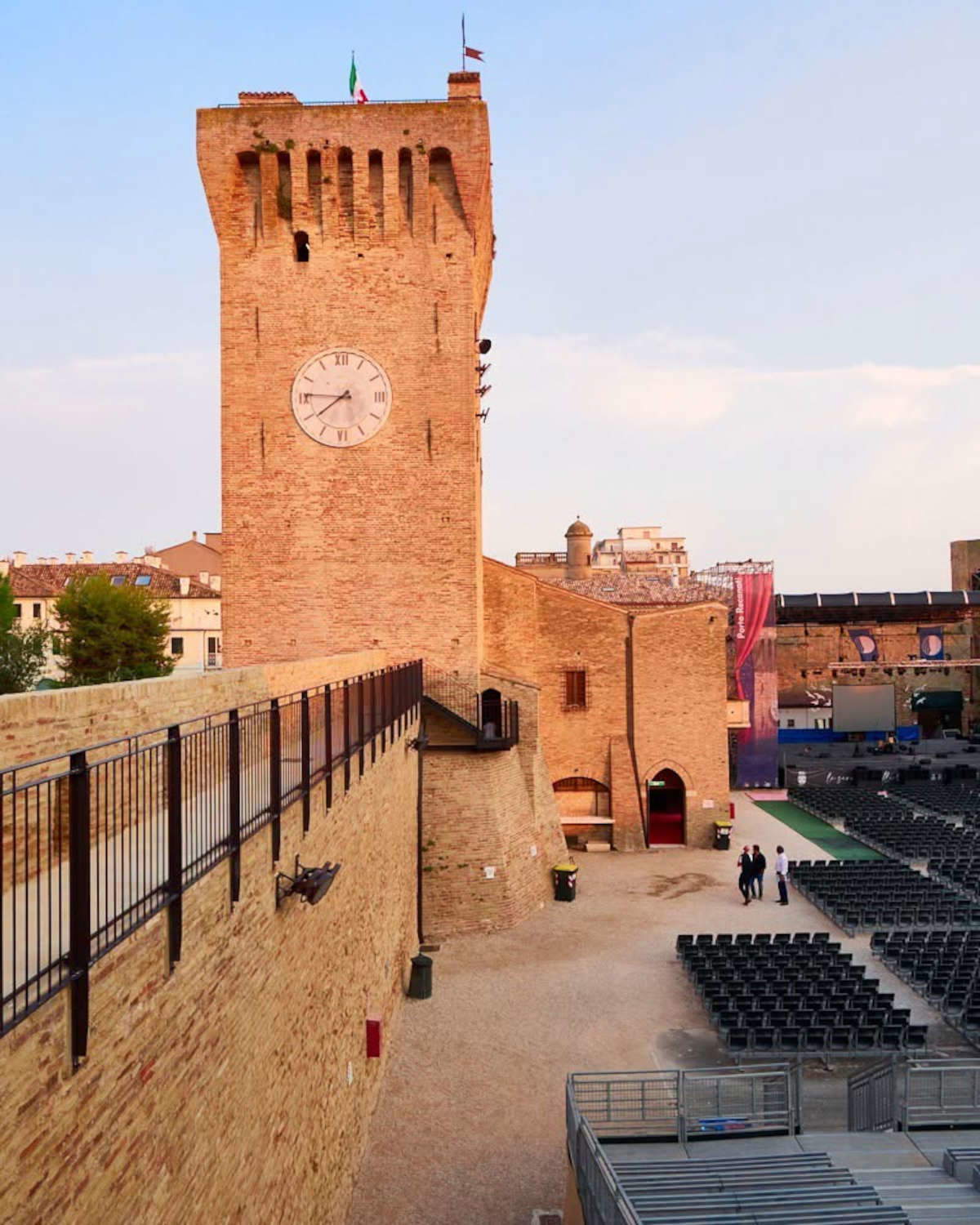
The origins of the Swabian Castle date back to the 13th century, and its name is traditionally linked to Emperor Frederick II of Swabia. As early as 1285, the fortification was known as “Castrum Maris,” the Castle by the Sea, reflecting its role as a defensive stronghold for the community that had developed along the Adriatic coast. Over the following centuries, the complex was gradually expanded and reinforced. Between the 14th and 15th centuries, major renovations were carried out, giving the castle the appearance it retains to this day. The oldest element remains the quadrangular keep, approximately twenty-five meters high, which still dominates the entire fortification and is one of the main landmarks of Porto Recanati’s skyline.
Among the elements of greatest historical interest are the coat of arms of the city of Recanati, still visible on the side of the castle facing the sea, and the symbol carved on the southern keep, which some scholars have linked tothe Order of the Knights Templar. This hypothesis, however, is not supported by documents attesting to a permanent presence of the Templars within the castle. Over time, the complex has also taken on a cultural role, becoming a venue for performances and events. Within the walls lies the “Beniamino Gigli” Arena, built at the behest of the famous Recanati-born tenor and now used for concerts, opera performances, and events that attract national and international artists, making it one of the main venues for live performances on the Adriatic coast.
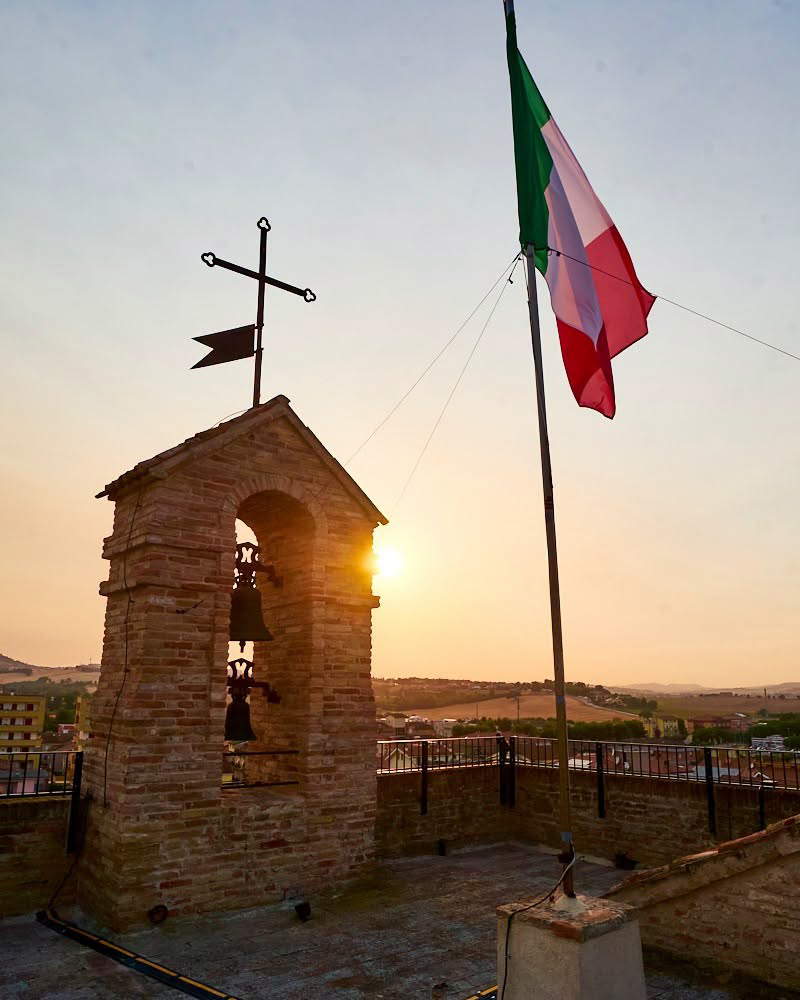
The restoration project addressed various aspects of the monumental complex. Among the main interventions were the restoration of the historic walls, the restoration of the watchtowers, the reopening of access to the tower, and the installation of a new lighting system for both the castle’s exterior and the Gigli Arena. The most significant aspect of the project is the opening of the ramparts and the tower to the public for the first time. Visitors can now walk along the same paths used over the centuries to defend the medieval village, viewing the monument from a completely new perspective.
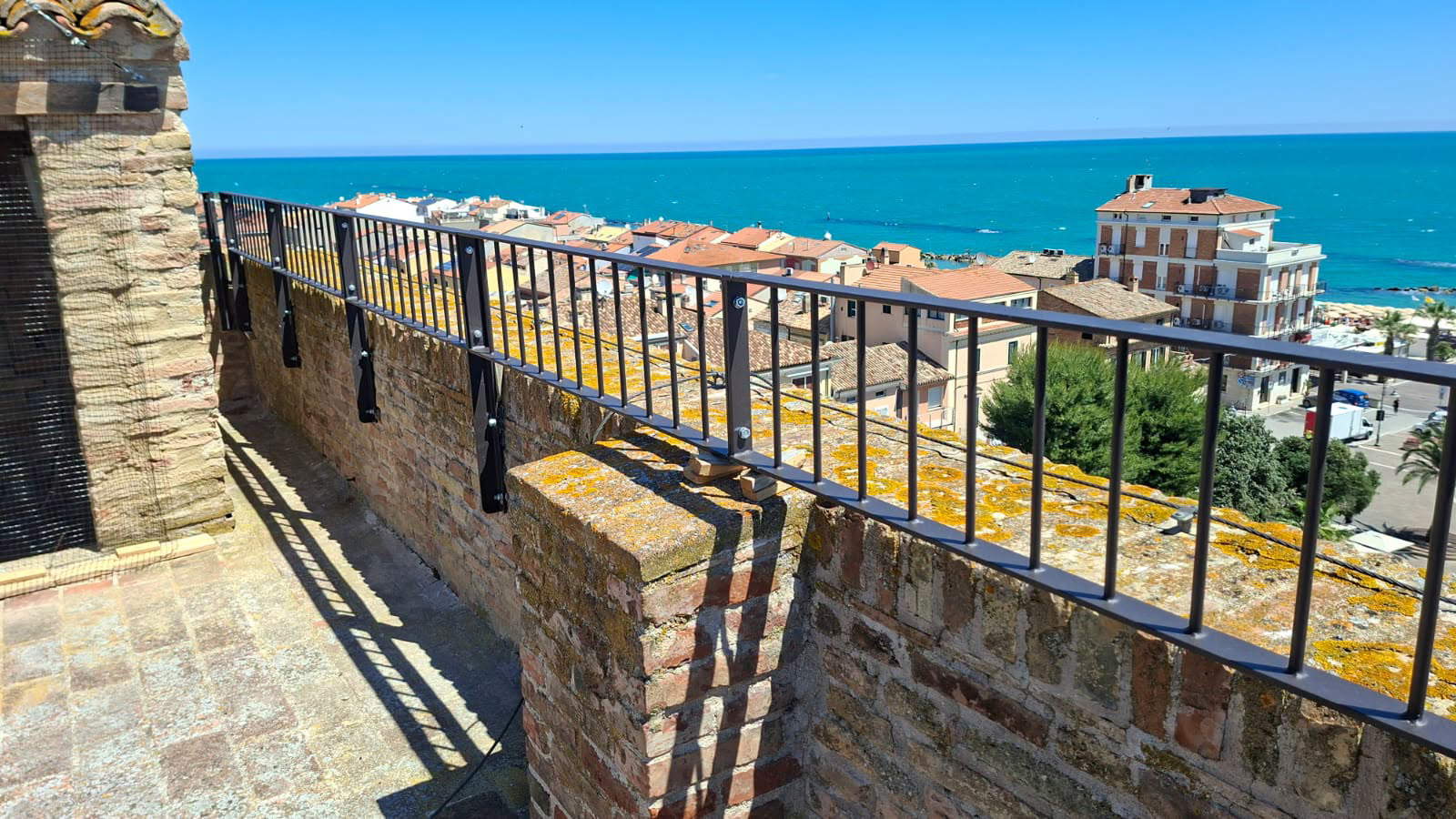
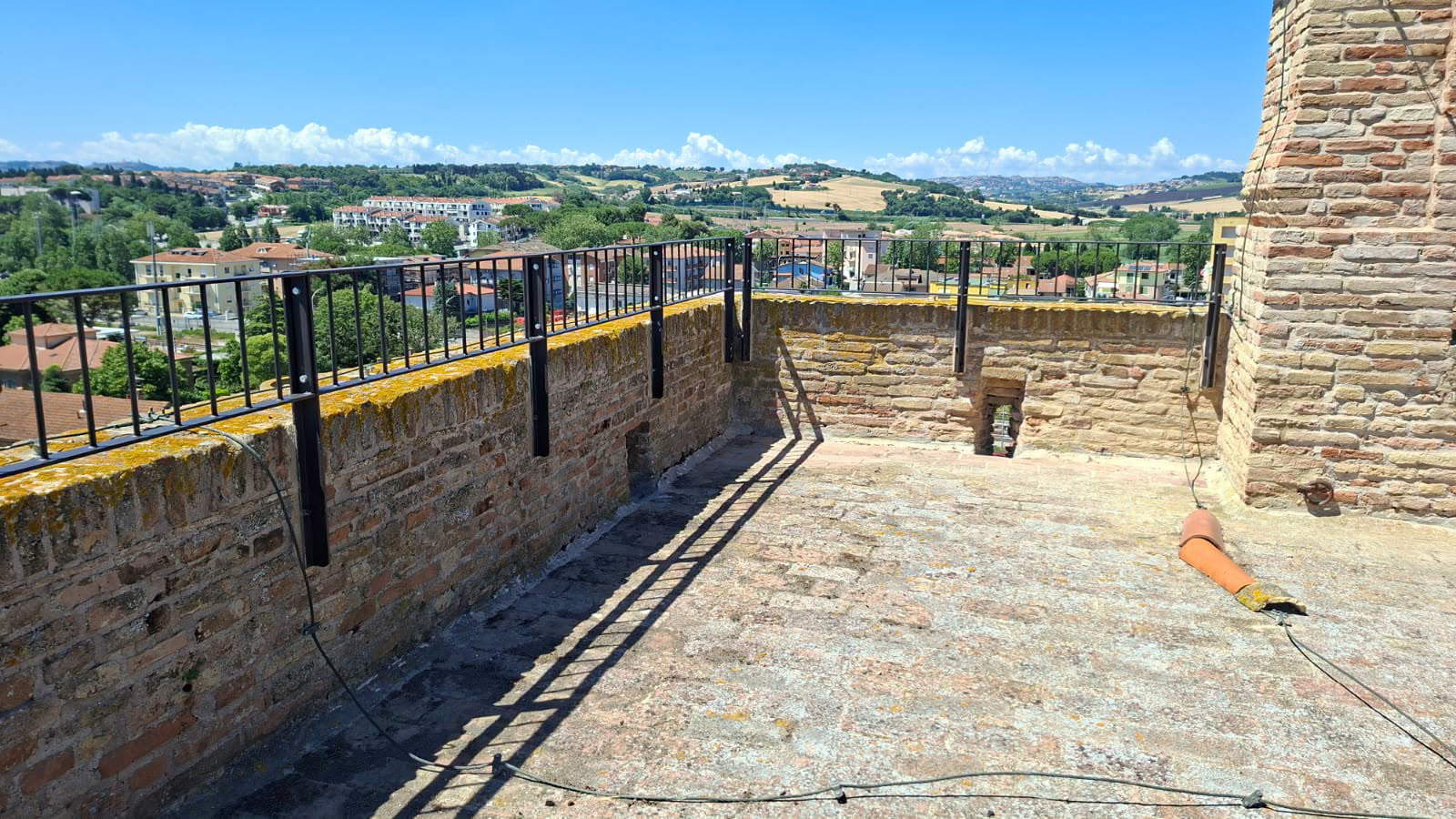
From the elevated walkway, visitors can admire the historic center of Porto Recanati, the Adriatic Sea, and the rolling hills of the Marche region, transforming the visit into an experience that combines the monument’s historical significance with the exploration of the surrounding area.
The municipal administration expressed its gratitude to the president of the Marche Region, Francesco Acquaroli, Councilor Francesco Baldelli, and architect Nardo Goffi, acknowledging their contribution in supporting the project.
Thanks were also extended to the Ascoli Piceno-Macerata Superintendency, represented by architects Giovanni Issini and Emanuele Barigelli; to the construction firm Edileco Telarucci; to the company Effetto Luce; to the company Colmef; Mauro Paccamiccio of Vivai e Piante, and to all the professionals and workers involved in the project. Finally, the administration acknowledged the work carried out by architect Donatella Paciarotti, engineer Agnese Pirani, surveyor Michela Vitali (sole project manager), construction manager Rudi Togni, engineer Francesco Paolo Russo, architect Loretta Zannini, engineer Aurora Fioravanti, engineer Gionni Pallotti, and the municipal offices that oversaw the project.
Along with the reopening, the schedule of tours was also announced. Throughout the month of July, the ramparts and the Torre Sveva will be open to the public free of charge every Tuesday and Friday, from 10 a.m. to 11 a.m. and from 5 p.m. to 6 p.m., offering visitors the chance to experience one of Porto Recanati’s most iconic monuments up close from a perspective that was previously inaccessible.
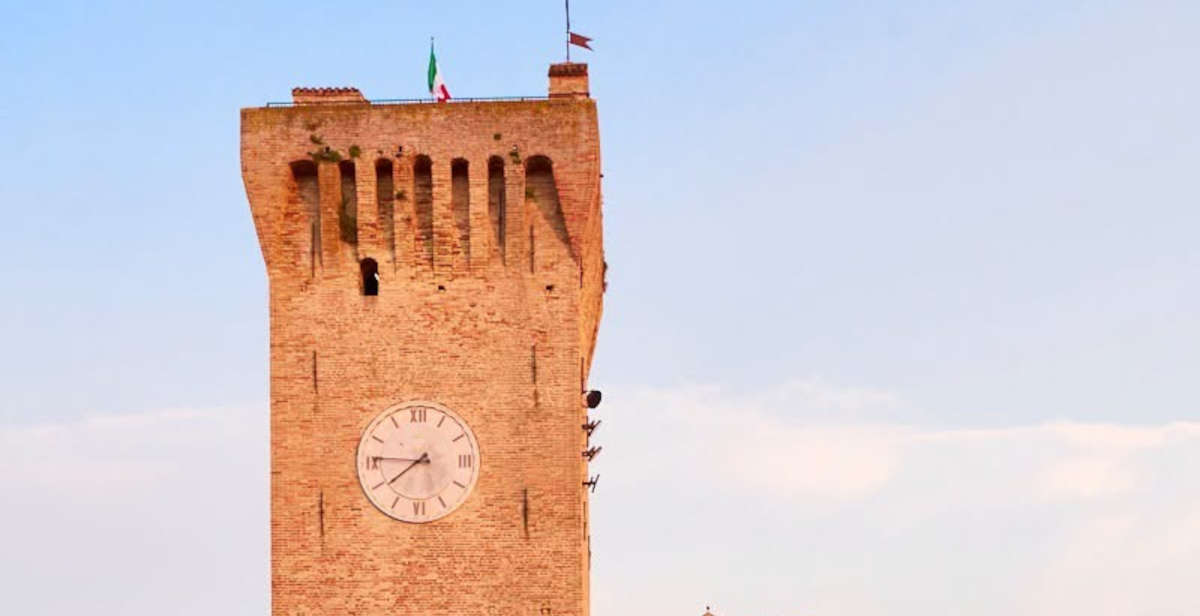 |
| Porto Recanati Reopens the Swabian Castle: Walls, Tower, and Watchtowers Restored |
Warning: the translation into English of the original Italian article was created using automatic tools. We undertake to review all articles, but we do not guarantee the total absence of inaccuracies in the translation due to the program. You can find the original by clicking on the ITA button. If you find any mistake,please contact us.