



by Redazione 15/11/2026


Categories: News / Disclaimer
After being closed for about a month and a half, the Church of Santa Maria foris portas in Castelseprio (Varese) is reopening with a new layout, informational panels, and a modern lighting system. The reopening follows a major campaign of diagnostic surveys on the early medieval frescoes, which have been a UNESCO World Heritage Site since 2011.


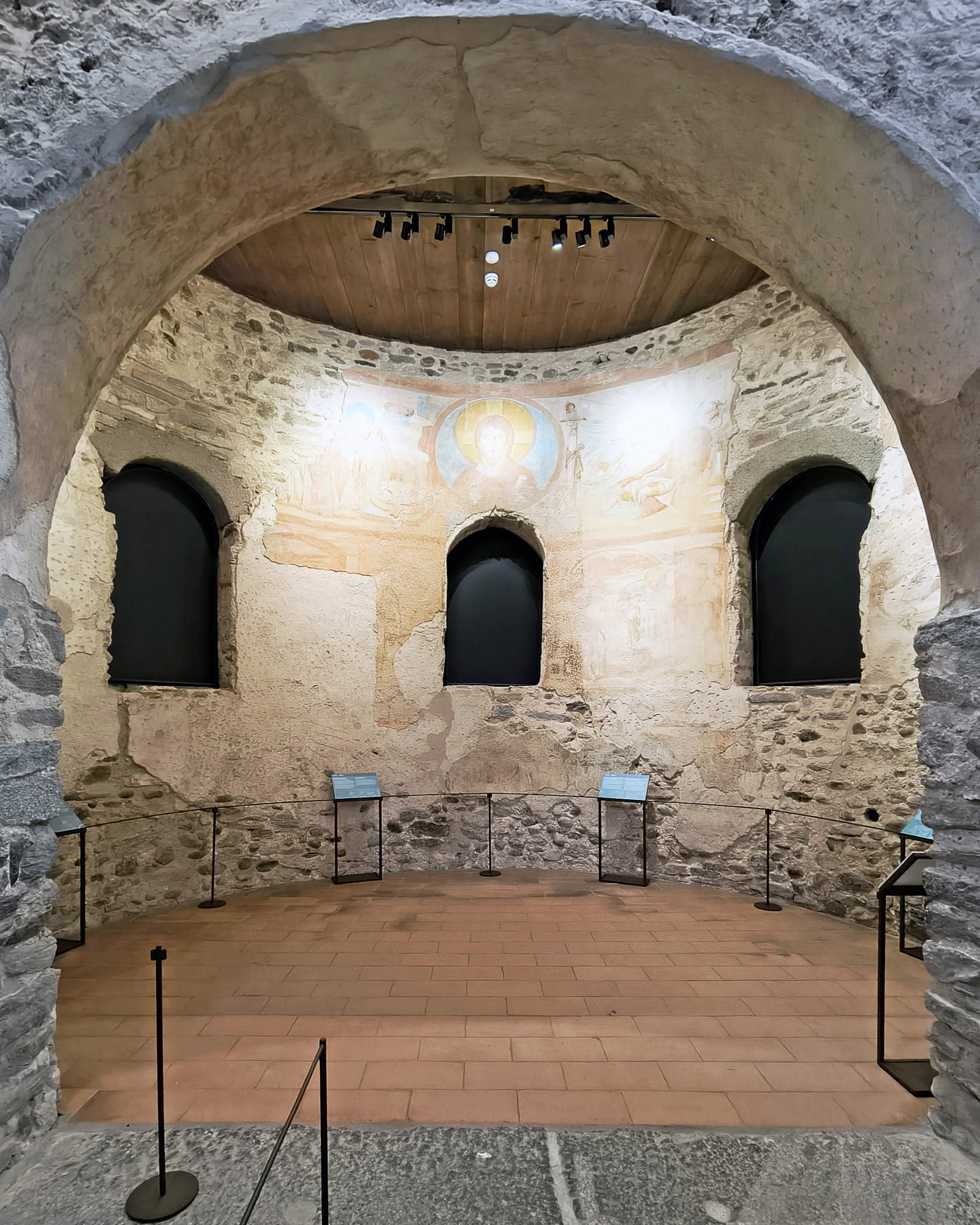
The Church of Santa Maria foris portas in Castelseprio (Varese) has reopened to the public with a new museum layout and a lighting system designed to highlight its early medieval frescoes. The temporary closure, which lasted about a month and a half, made it possible to carry out the most extensive diagnostic survey ever conducted on the early medieval frescoes in the apse and to renovate the spaces designated for visitor reception and tours. The monument, which has been on the UNESCO World Heritage List since 2011, is now once again accessible, equipped with tools designed to explore its history and make one of the most enigmatic pictorial complexes in Western medieval art more understandable.

During the closure period, the VISTA project —Visual Investigation of Santa Maria foris portas: Techniques & Analysis—was carried out, a new and comprehensive research campaign dedicated to the extraordinary frescoes. The results of the research will be presented in the coming weeks by the Lombardy Regional Directorate of National Museums, an agency of the Ministry of Culture that sponsored the initiative.


At the same time, the Park’s management oversaw a renovation of the exhibition spaces and informational displays, with the aim of guiding visitors through the historical events surrounding the building and its paintings. The frescoes are, in fact, of particular interest to scholars: while their exceptional craftsmanship and uniqueness within the region’s historical and artistic landscape are widely recognized, various aspects of their origin and interpretation remain the subject of debate. The new exhibition was created by the staff of the Castelseprio Archaeological Park and Antiquarium, directed by Luca Polidoro, with a special focus on accessibility and the needs of people with disabilities. Part of the project is also dedicated to presenting the findings of the most recent research, which is helping to better define the historical context of the church and its decorations.

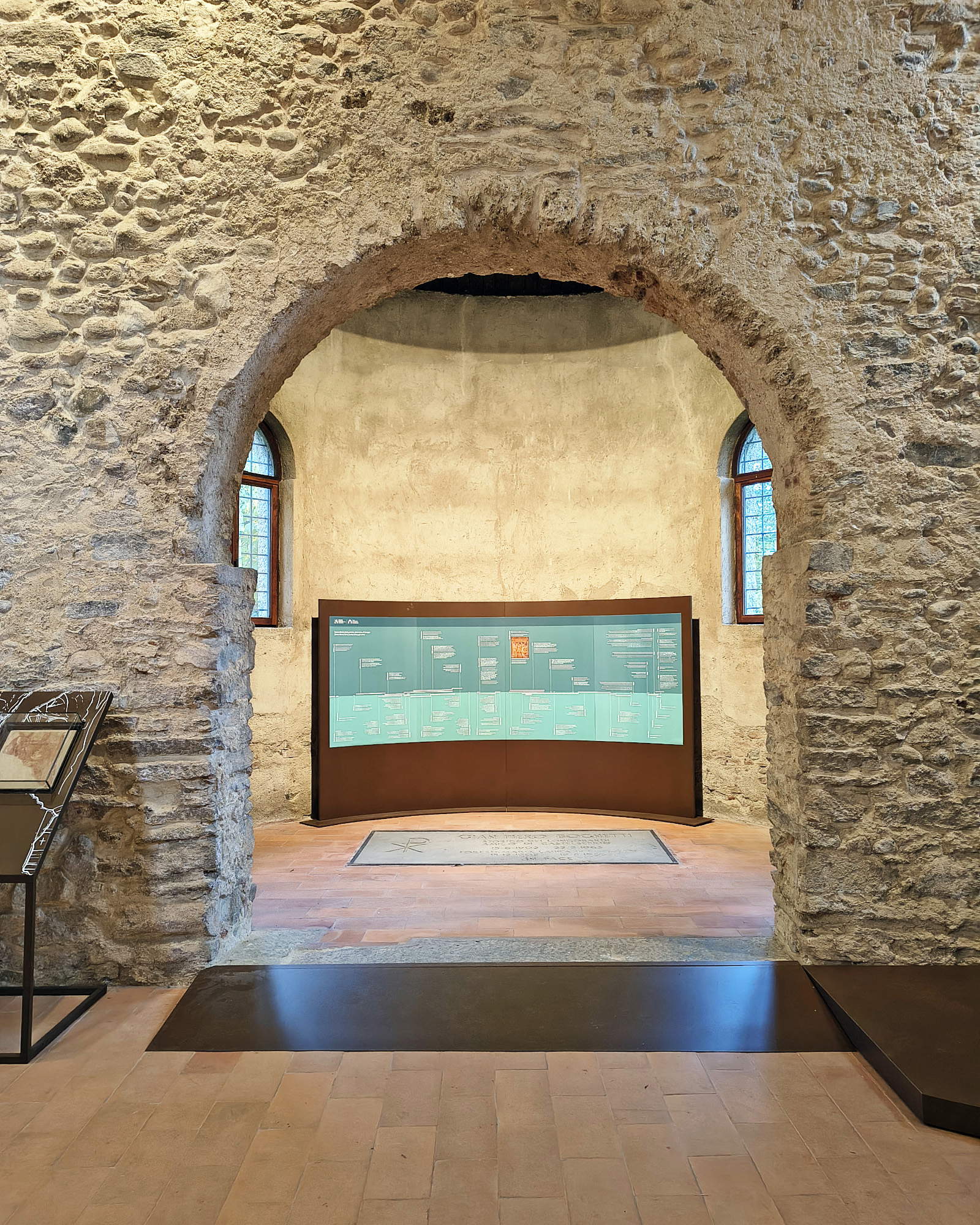
The Info Point at the entrance has also been completely renovated and now serves as the starting point for the tour, offering a more functional welcome and initial guidance for exploring the site. Among the most significant improvements is the new lighting system, designed to fully showcase the richness of the frescoes and allow visitors to appreciate details that were previously difficult to make out. Lighting control via an app will also allow the lighting to be adjusted according to different needs, thereby improving the organization of guided tours. The tour is enriched by informational panels that illustrate the building’s main historical and artistic aspects and its relationship with the ancient town of Castelseprio. A timeline guides visitors through the various phases of the church’s history, from its origins to the present day, interweaving local events with the biographies of several notable figures. The goal is to convey the human dimension of these places by recounting the stories of the men and women who frequented and lived in them over the centuries.
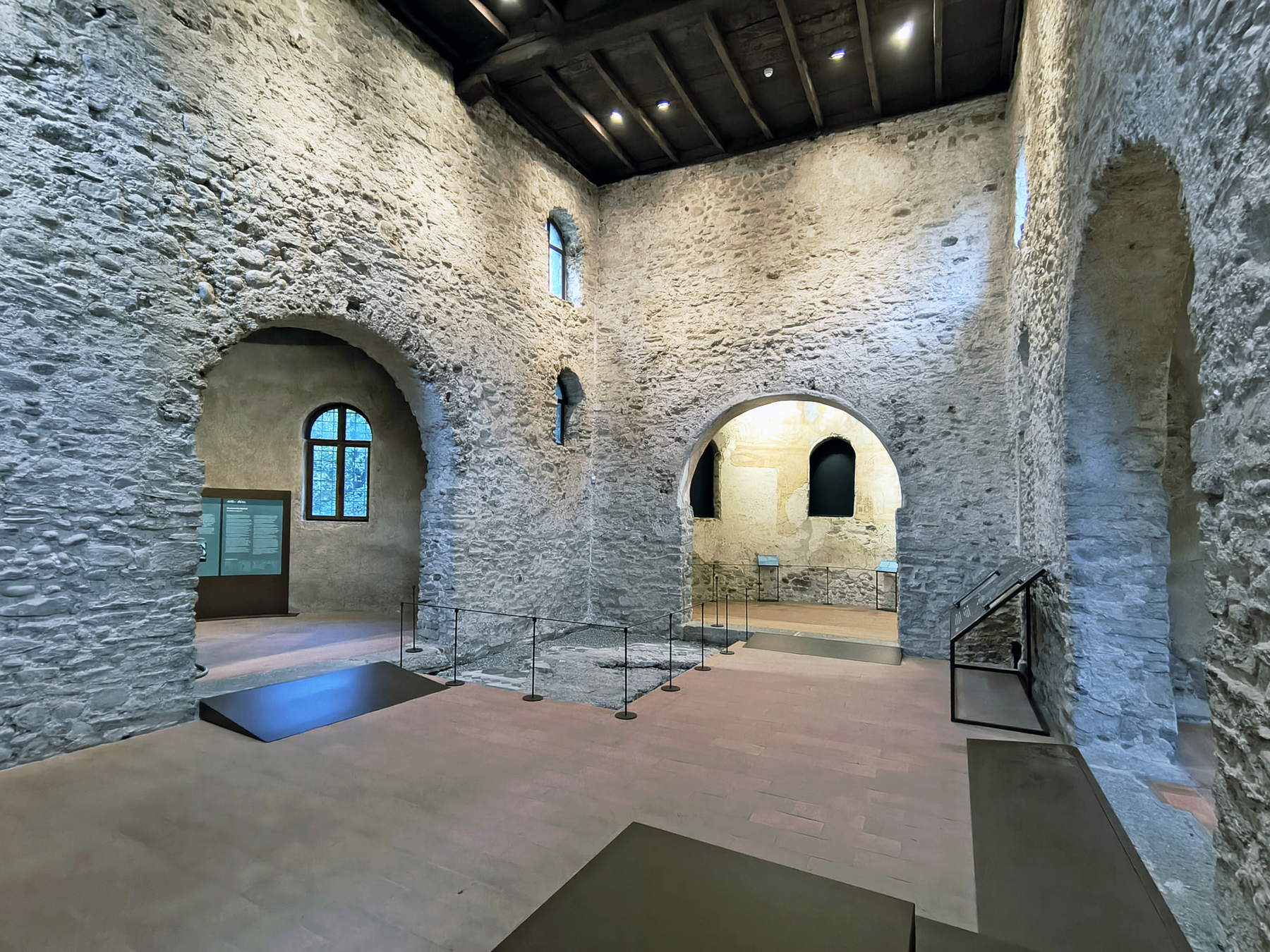
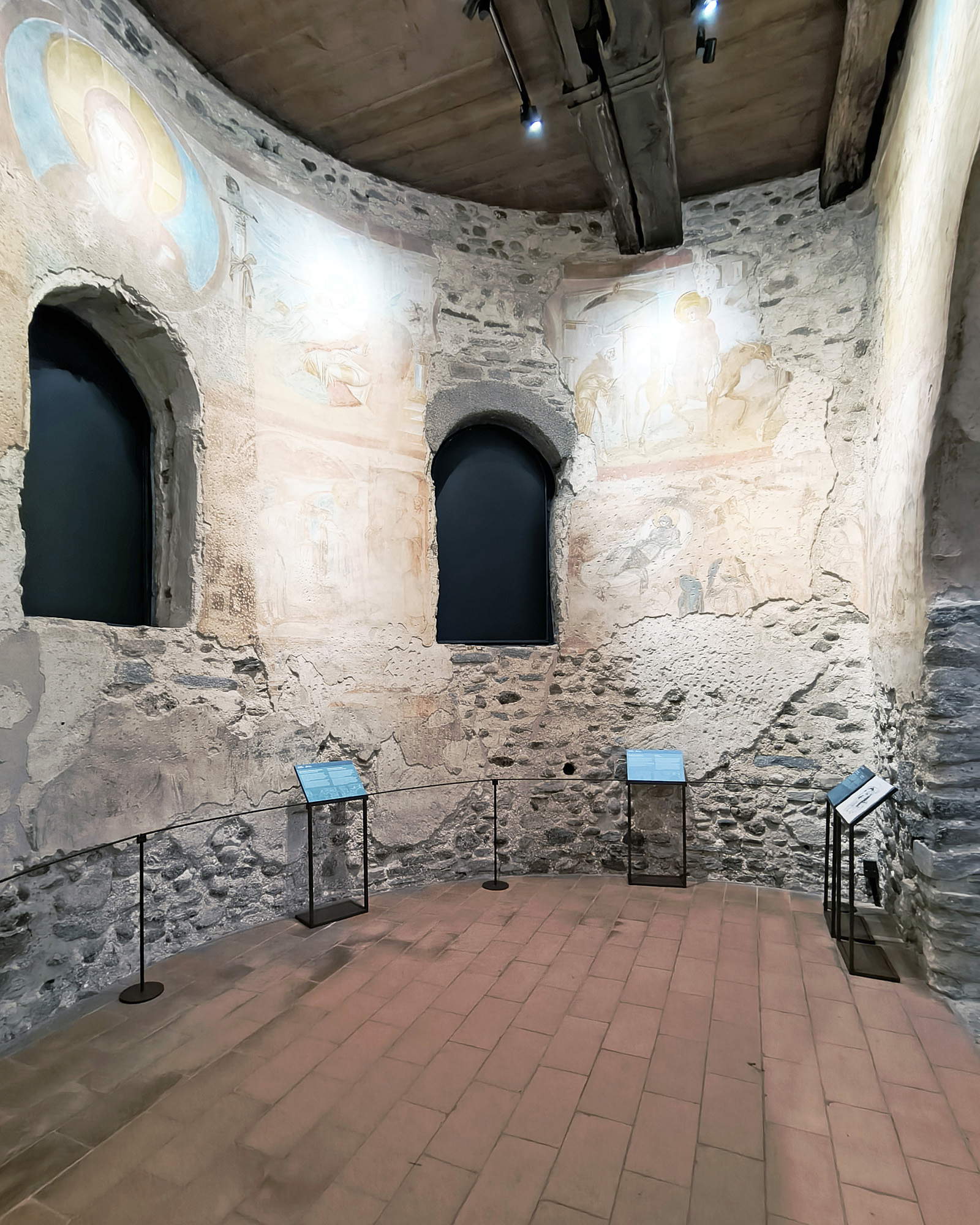
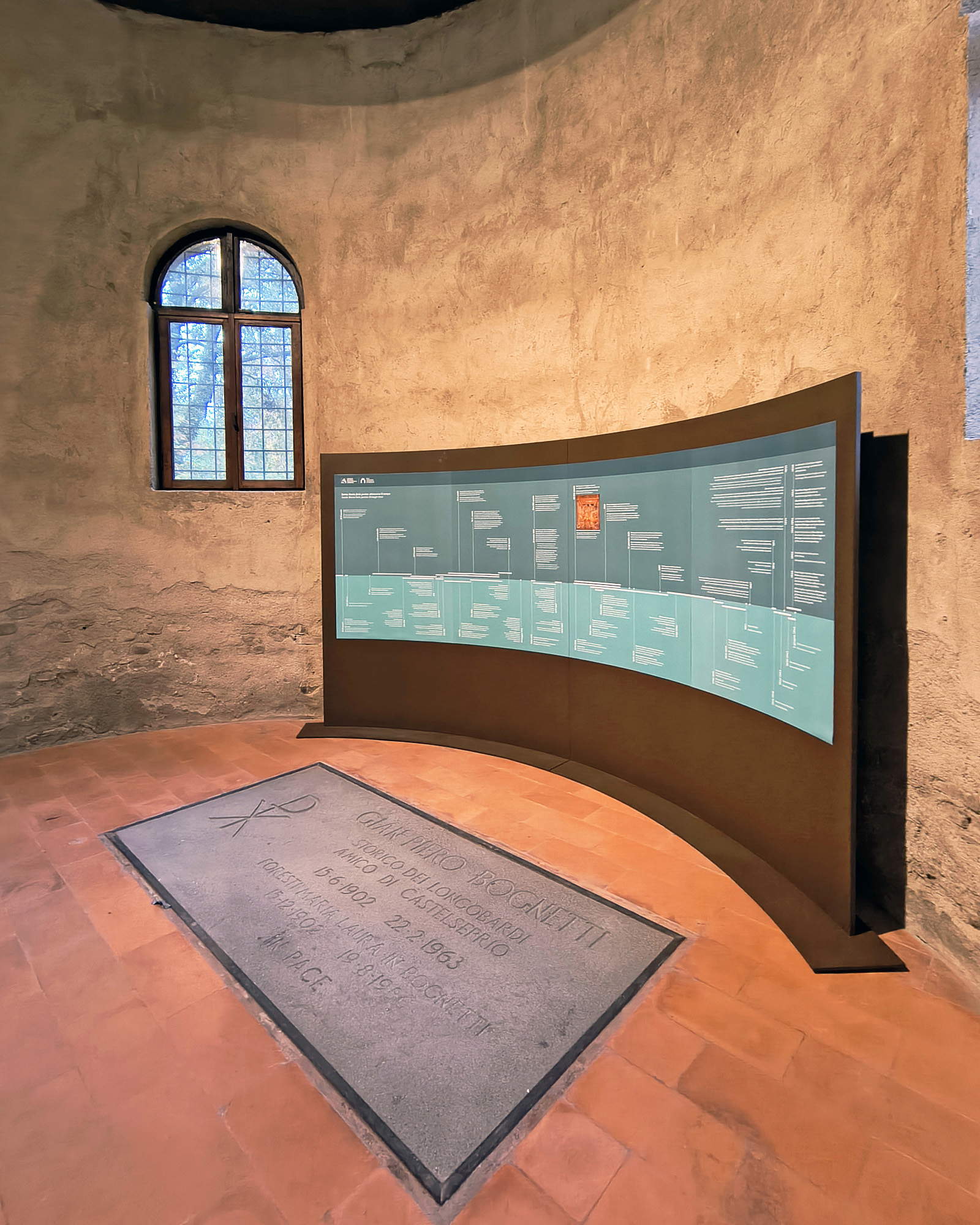
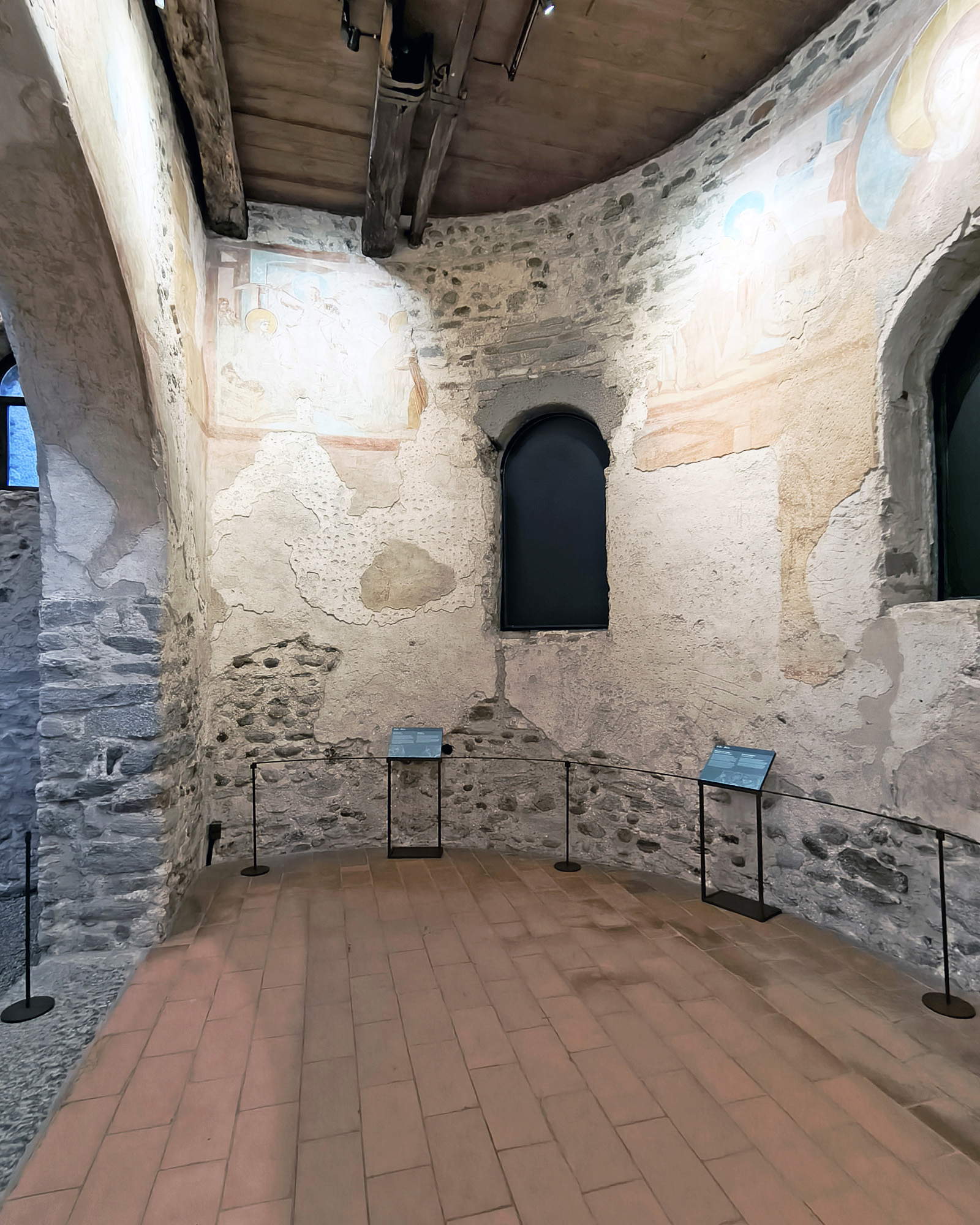
Another new development concerns the display of two fragments of the apse frescoes, which were once at the center of a complex theft case. After being recovered, these precious artifacts are now finally on view to the public. The exhibition design was carried out by the firm Articolarte based on a design by architect Morris Bellini, with graphics by Studio 48.
Discovered in 1944 beneath later decorations, the frescoes of Santa Maria foris portas represent a unique case in the artistic landscape of the medieval West. For over eighty years, they have been the focus of attention within the international scientific community, due to the extraordinary quality of the painting and the numerous historical and interpretive questions that still surround them. Particularly complex is the interpretation of the iconographic program, which draws heavily on the apocryphal Gospels and remains the subject of debate and interpretation among scholars. The church’s reopening, accompanied by new scientific research and a revamped visitor experience, thus offers an opportunity to once again examine these works up close, which continue to raise fundamental questions about the history of early medieval art.
“We are proud,” stated Rosario Maria Anzalone, Director of the Lombardy State Museums, “to present this important renovation project, which involves the Infopoint and, above all, the church of Santa Maria foris portas. This extraordinary treasure trove of art, with its wealth of historical and cultural insights, can now be said to be truly accessible and enjoyable, for the benefit of the entire community. It is projects like these that give meaning and purpose to our institutional mission: to expand knowledge and foster active engagement with our cultural heritage.”
“The reopening of Santa Maria foris portas,” added the director of the Castelseprio Archaeological Park and Antiquarium, Luca Polidoro, “represents the result of an intense collaborative effort, involving many different professionals from the Administration—from the Technical Office to the Communications Office, to the reception and security staff, and the team responsible for site maintenance: so many people who work behind the scenes every day and enable the Archaeological Park to provide an increasingly rich and efficient public service. This great collaborative effort will allow visitors not only to better understand the importance of the site and the church, but also to feel part of the vibrant atmosphere of archaeological, historical, and artistic research that has been one of Castelseprio’s defining features for several years now.”
|
| Santa Maria foris portas Reopens After the Most Extensive Diagnostic Survey of Its Frescoes |
Warning: the translation into English of the original Italian article was created using automatic tools. We undertake to review all articles, but we do not guarantee the total absence of inaccuracies in the translation due to the program. You can find the original by clicking on the ITA button. If you find any mistake,please contact us.