


by Redazione 23/10/2026


Categories: News / Disclaimer
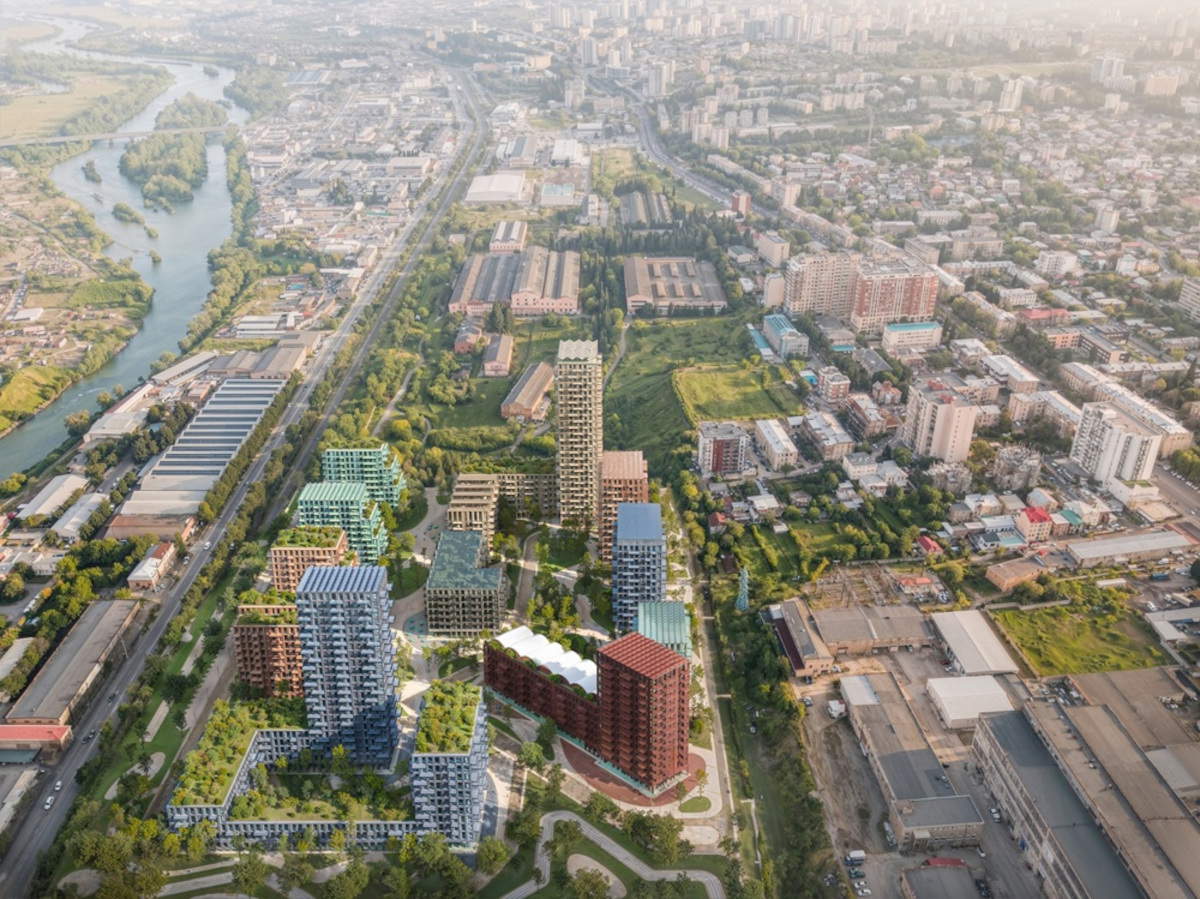
In Tbilisi, Georgia, Stefano Boeri Architetti has won the competition for Loco Park, a 73,600-square-meter master plan that transforms a former Soviet-era locomotive factory into a new green neighborhood, returning a brownfield site to the community.


A former Soviet-era locomotive factory is set to be transformed into a new green neighborhood, where contemporary architecture, industrial heritage, and public spaces become part of a single urban landscape. This is the vision behind Loco Park, the master plan with which Stefano Boeri Architetti won the competition organized by LOCO Alliance to redevelop a 73,600-square-meter area in Tbilisi, the capital of Georgia. The goal is to restore to the city a place marked by its industrial past, transforming it into a space open to daily life, interaction, and community.

The project does not seek to erase the traces of the past, but rather to integrate them into the neighborhood’s new identity. Certain characteristic elements of the former industrial complex are reclaimed and reinterpreted through a contemporary architectural language, while brick—a material also linked to local building traditions—creates a connection between the area’s industrial history and its new residential purpose.
The master plan is organized around nine buildings, set within a structured sequence of open spaces that includes a sports forest, a sprawling park, a linear boulevard, and shared gardens. Green spaces thus become the connecting element of the project, capable of linking the various functions and reintegrating the site with the surrounding neighborhoods. The continuity of pedestrian paths promotes accessibility and invites people to enjoy the outdoor spaces, which include areas dedicated to physical activity, places to rest, and opportunities for social interaction. In this way, Loco Park takes shape not only as a new residential development but as a system of communal spaces destined to become part of daily life in Tbilisi.


The buildings are conceived as distinct volumes, each with its own recognizable character, yet integrated within a unified urban design. The ground floors play a fundamental role in the relationship with public space: entrances, neighborhood shops, cafés, workshops, and shared services help bring the building facades to life and foster continuity between indoor and outdoor spaces. The upper floors house residences of various sizes, designed to meet different housing needs. The variety of residential types is accompanied by a particular focus on the quality of the living spaces and their relationship with the surrounding landscape.
The roofs also help define the character of the project. Their profiles echo and reinterpret the silhouettes of the factories and workshops historically present in the area, transforming the industrial heritage into a distinctive element of the new skyline. The different geometries give rise to a complex composition, in which references to the past are translated into contemporary architectural forms. The roofs are not merely a formal element but also house environmental, residential, and communal functions. Greenhouses, terraces, solar panels, loft-style apartments, and common areas for residents help expand the potential uses of the buildings, integrating various activities into the upper portions of the structures. The roof geometries are also designed to improve natural lighting, ventilation, and solar exposure, thereby enhancing the quality of the living spaces. The project thus combines the celebration of industrial heritage with solutions focused on comfort and environmental sustainability.
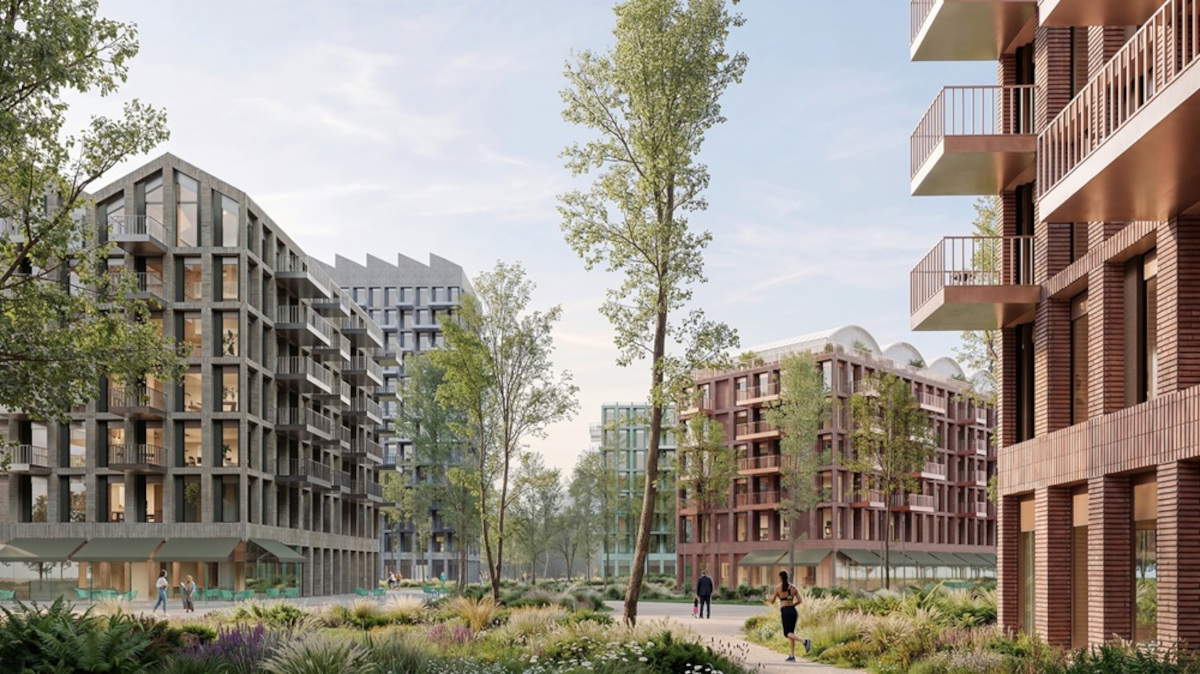
Another defining feature of Loco Park is its relationship withthe color identity of the Georgian capital. Stefano Boeri Architetti conducted a photographic survey of the colors of the urban landscape, identifying several recurring shades: blue-gray, terracotta, green, dove gray, and mineral whites. This research resulted in a palette of bricks for the facades of the new buildings, achieved through different combinations of colors, textures, and laying patterns. The result is a coherent architectural ensemble that is far from uniform: each building retains its own identity, while the materials and shades establish a connection with the rich colors and textures of Tbilisi.
With Loco Park, Stefano Boeri Architetti proposes a model of urban regeneration that connects industrial heritage, contemporary architecture, and the landscape. Residences, neighborhood amenities, multifunctional rooftops, and green spaces come together to create a neighborhood designed to be traversed and experienced, as well as lived in. The transformation of the former locomotive factory thus becomes an opportunity to return an area of the city to the community, converting a site dedicated to industrial production into a new system of relationships, encounters, and daily activities.
"We are delighted to be able to help shape the future of an extraordinary city like Tbilisi. The new Loco Park neighborhood will combine the legacy of the great Soviet-era locomotive factory with the vision of a contemporary, vibrant space—green and open to everyone. The buildings of Loco Park will be islands in an urban archipelago, distinct yet united by a network of tree-lined, pedestrian-friendly public spaces available to the entire city,” said architect Stefano Boeri, who presented the project in Tbilisi alongside Pietro Chiodi, a partner at Stefano Boeri Architetti.
“We sought to interpret the identity of Loco Park through a simple, balanced, and contemporary solution, inspired by Tbilisi’s extraordinary chromatic richness, local materials, and traces of the area’s industrial history,” added architect Pietro Chiodi. “The colors and brick thus become elements capable of giving each building its own identity and, at the same time, creating a coherent whole.”
|
| Tbilisi: A former locomotive factory will be transformed into a green neighborhood, revitalizing a brownfield site |
Warning: the translation into English of the original Italian article was created using automatic tools. We undertake to review all articles, but we do not guarantee the total absence of inaccuracies in the translation due to the program. You can find the original by clicking on the ITA button. If you find any mistake,please contact us.