




by Redazione 16/10/2026



Categories: News / Disclaimer
After sixteen years, the Teatro Valle returns to the city following a renovation project costing over 11 million euros, which began in March 2023. The historic decorations have been restored, a 19th-century “Dance of the Hours” has been recovered, and the graffiti from the 2011 occupation has been preserved. The theater reopens as the House of Contemporary Drama.


After sixteen years of closure, the Teatro Valle returns to the city of Rome following the completion of a restoration and renovation project that began in March 2023 and was funded with over 11 million euros. The historic 18th-century theater was the focus of this morning’s press conference, during which Rome’s mayor, Roberto Gualtieri, the city’s superintendent of cultural heritage, Claudio Parisi Presicce, and the leadership of the Fondazione Teatro di Roma presented the work carried out by the Capitoline Superintendence for Cultural Heritage in collaboration with the Ministry of Culture. The restoration encompassed the entire monumental complex, including conservation work, structural upgrades, and the modernization of systems, all aimed at ensuring safety, accessibility, and functionality without compromising the building’s historical identity.


The project required the involvement of numerous professionals, including architects, engineers, technicians, conservators, art historians, and skilled tradespeople. During the final months of construction, up to 80 workers were on site daily, with several contractors working simultaneously in various areas of the theater. This complex organizational effort was necessary to carry out work on a building of particular significance to the capital’s architectural and theatrical history.


The restoration program focused primarily on the auditorium, the boxes, the grand staircases, and other monumental elements designed by Giuseppe Valadier. On the stage, the wooden flooring in the deepest section was demolished, while excavations of the underground spaces were completed, particularly beneath the stage, behind the stage, and in the northern pit. These spaces will be used as technical rooms and storage areas.


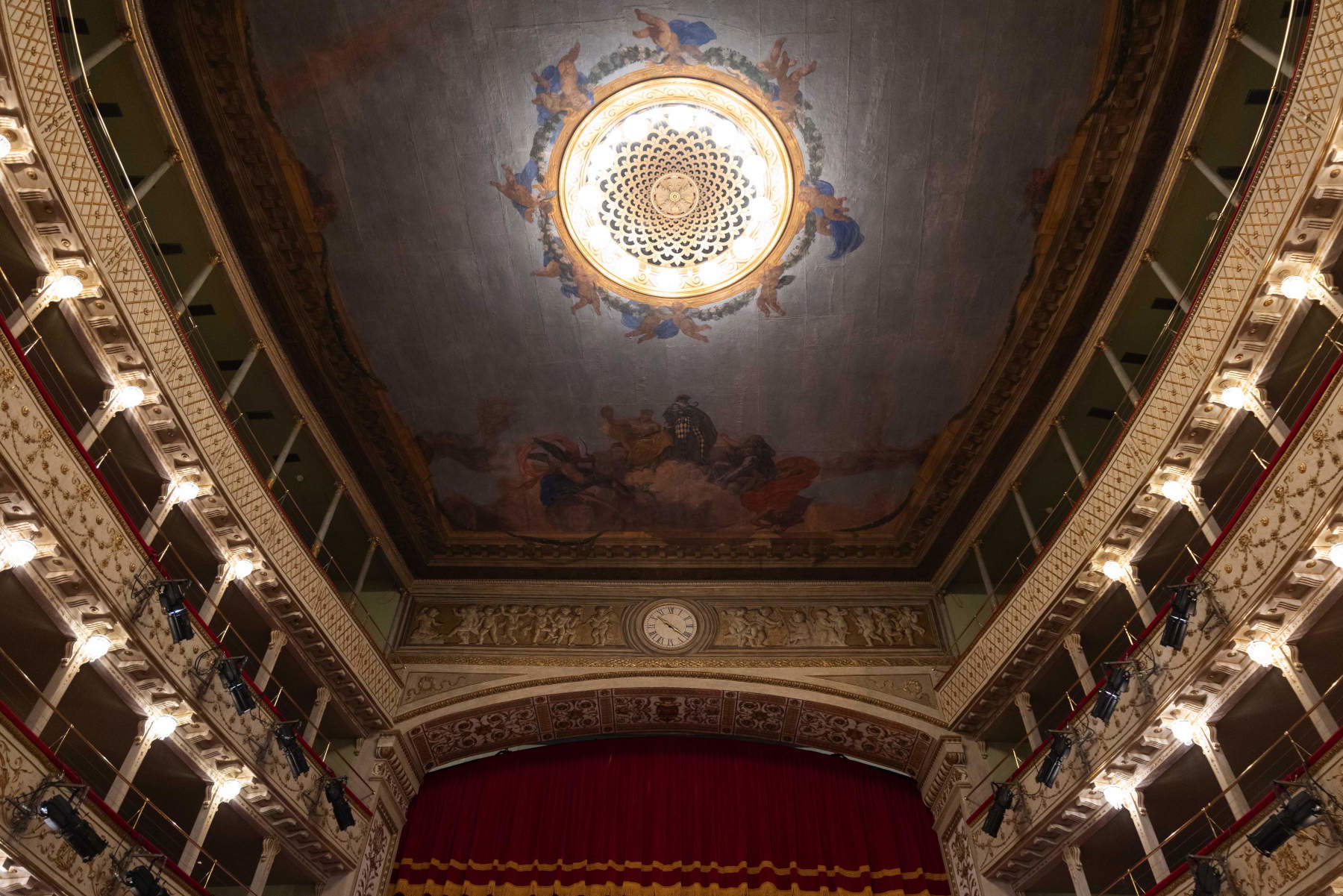
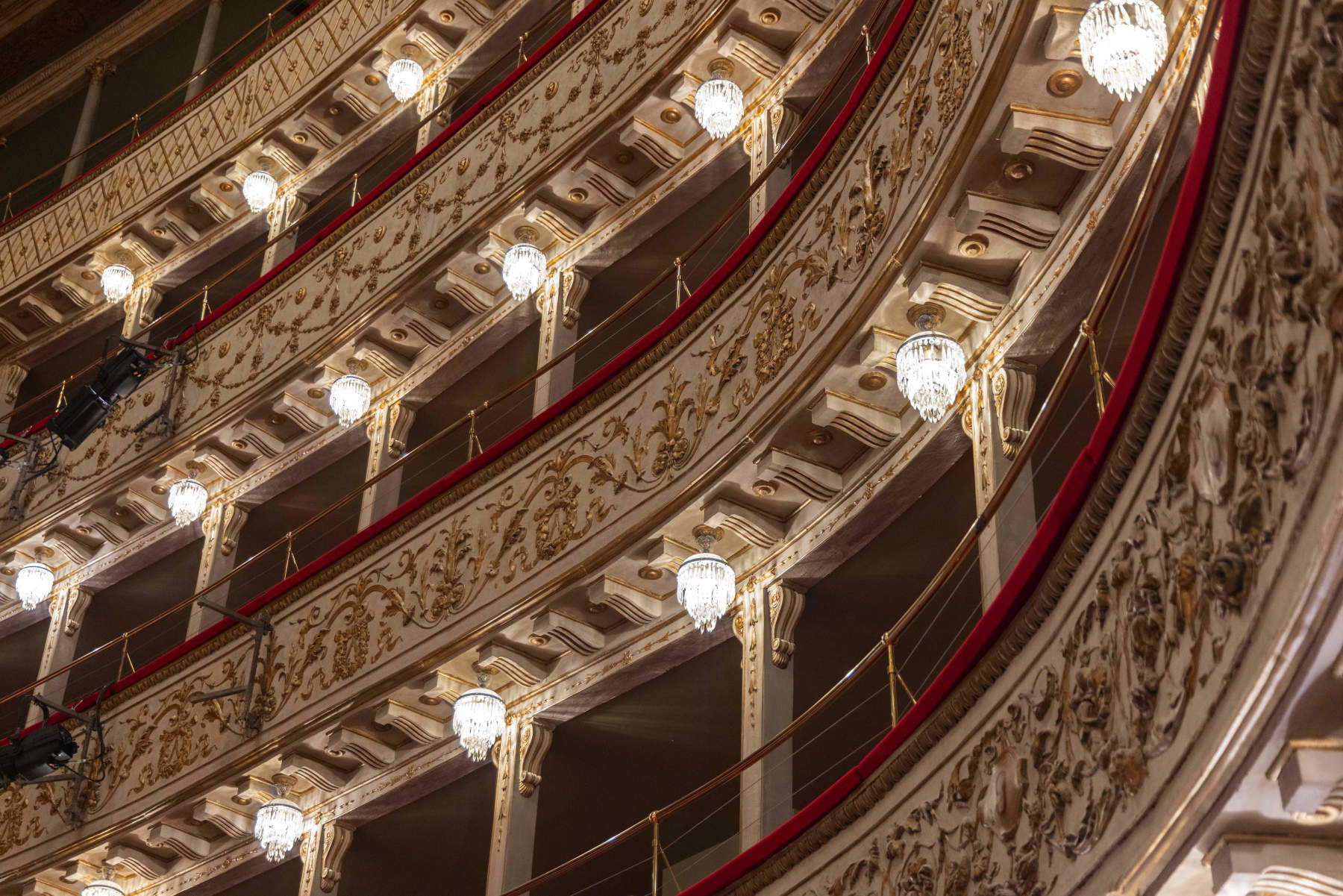
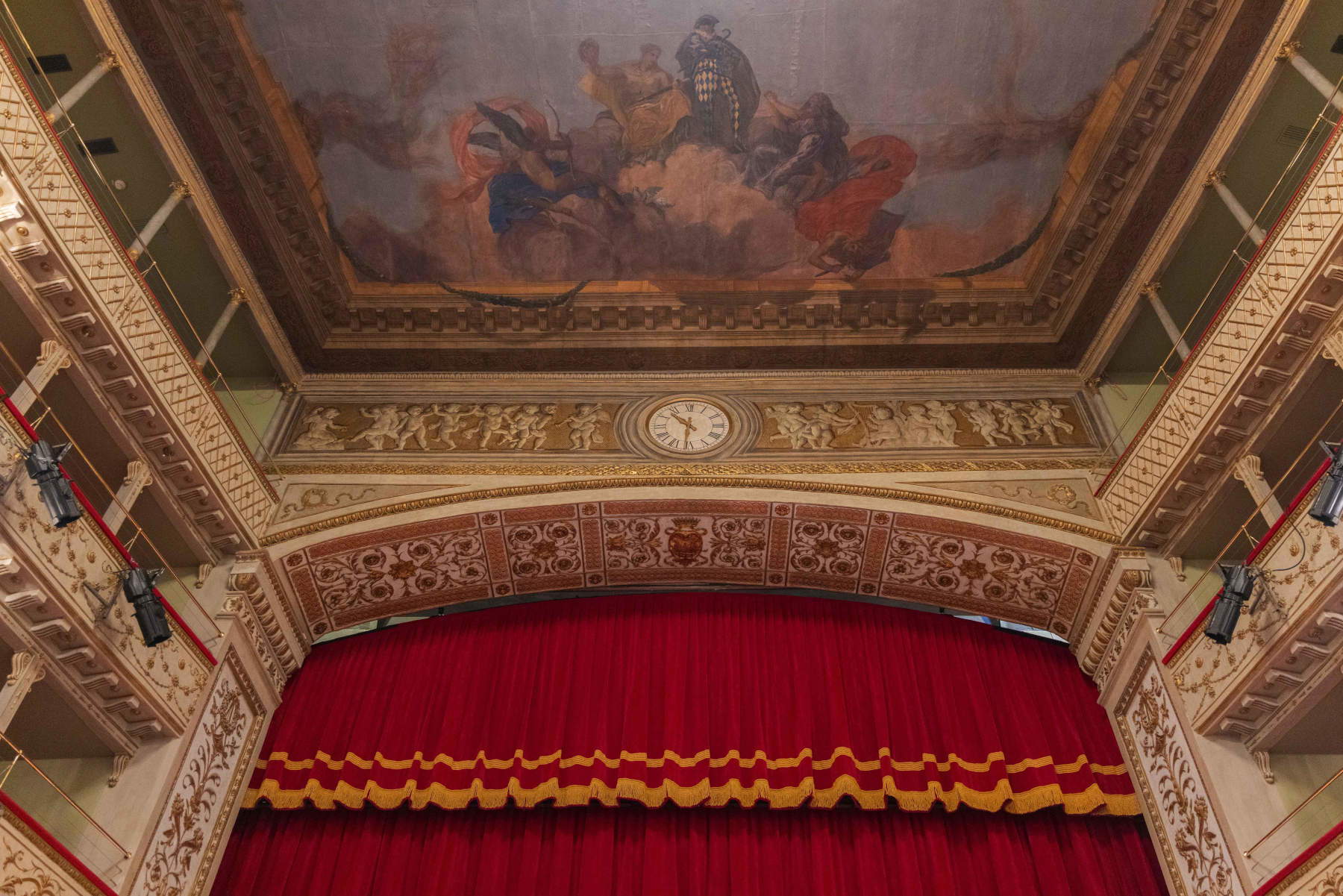
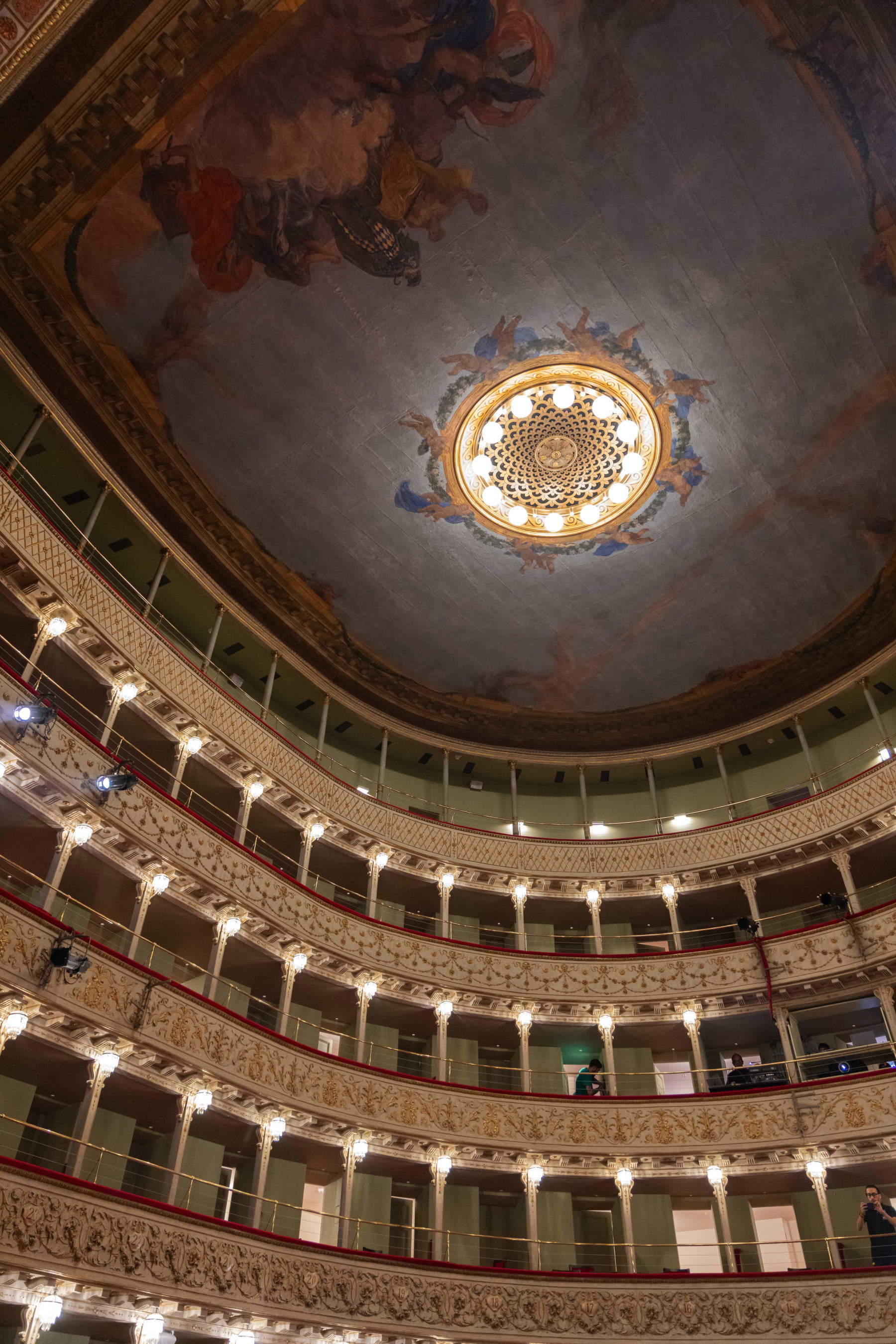
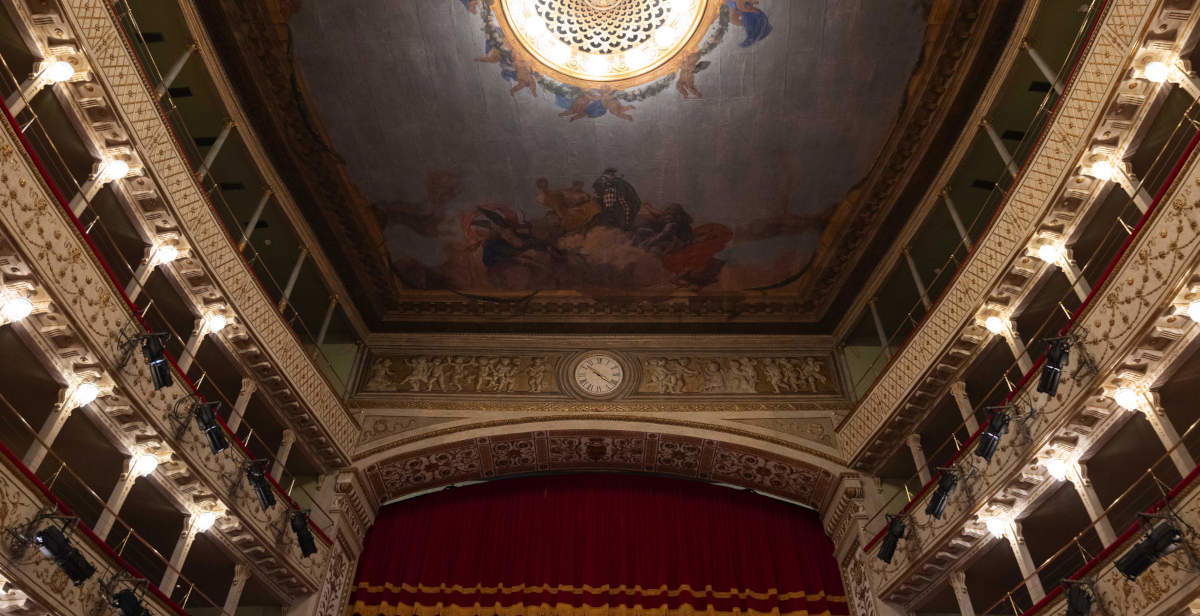
A central part of the construction site was dedicated to the restoration of the decorative elements. The work was preceded by historical and stratigraphic surveys conducted by the Capitoline Superintendency in collaboration with the State Superintendency and the appointed restorers. The restoration work made it possible to recover the historic decorations of the boxes, the ceiling canvas, and the proscenium arch, bringing to light artistic elements that had been partially hidden by subsequent repainting and modifications.
Among the most significant findings was the rediscovery of a 19th-century decoration concealed beneath 20th-century layers of paint. In fact, a “Dance of the Hours” has reemerged on the proscenium arch, consisting of monochrome cherubs painted with refined craftsmanship on a pure gold background. The work can be traced back to the 19th-century interventions documented in historical records related to Valadier.
However, the project was not limited to preserving the earliest phases of the theater’s history. A trace of the 2011 occupation was also preserved—when actors and theater workers occupied the Valle and painted messages and slogans against discrimination along the staircases. The key figures behind that experience later formed the Associazione Fondazione Teatro Valle Bene Comune.
Alongside the conservation restoration, numerous new structures were built. These include a lightweight structure above the backstage vault and new foundations for the freight elevator connecting the stage to the understage area, the passenger elevator, and the staircase located in the lower backstage area, as well as the work required for the north gallery. The dressing rooms have also been completely redesigned and rebuilt, with the addition of staircases and an elevator to serve the performers and technical staff. The renovation also extends to the spaces intended for the audience. The auditorium has been entirely repainted, and new furnishings have been installed, including the seats in the main auditorium and the chairs in the boxes. The project also included the creation of accessible pathways, elevators, and service areas adapted to the safety and usability requirements of the complex.
The technical systems were renovated and the fire prevention systems were updated with the adoption of water-mist technology. This fire suppression system uses a reduced amount of water and allows for the optimization of the necessary equipment—features that make it particularly suitable for historic buildings, where the protection of historic structures and systems requires specific solutions.
Another phase of the work focused on the stage technology systems, designed to control and manage the lighting, audio, and video signals used during performances. The new equipment includes control units and terminals located in the stage tower and on the various levels of the boxes, with the aim of making the theater capable of meeting the technical requirements of contemporary productions.
The reopening thus marks the completion of a project to preserve and modernize Rome’s historical heritage, as well as the return to activity of a space that has played a significant role in the city’s cultural memory. The Teatro Valle once again becomes a place for gathering, participation, and artistic production, with a new role entrusted to the Fondazione Teatro di Roma: that of the House of Contemporary Drama. The program will focus on production, writing, and dialogue about the present, with the aim of connecting the great dramas of the second half of the 20th century with the voices of today’s theater scene.
The new season opens with Francesco Piccolo and the play *La sera della prima*. *Six Characters in Search of an Author* at the Teatro Valle, running through October 18. The production evokes the tumultuous evening in 1921 when Luigi Pirandello’s *Six Characters in Search of an Author* was first staged right here at the Teatro Valle. This choice recalls one of the most famous episodes in 20th-century theater history and links the theater’s reopening to the memory of the venue and the evolution of Italian drama.
“It is deeply moving to finally return the Teatro Valle to the people of Rome after sixteen years,” said Rome’s mayor, Roberto Gualtieri. “We are not only reopening one of Europe’s oldest and most prestigious theaters, but we are also giving the city back an extraordinary place of culture, freedom, and participation. We have invested over 11 million euros and undertaken a restoration of extraordinary complexity, which required delicate interventions, challenging technical solutions, and work of great precision, all while respecting the history and identity of this theater. I would like to thank the Capitoline Superintendency, which led this project, and in particular the craftsmen, restorers, technicians, and all the workers who, with professionalism, passion, and dedication, made this achievement possible. The Valle has spanned three centuries of history, witnessing great artistic seasons and important moments of civic engagement. Now it comes back to life, with a new mission dedicated to contemporary theater. Because we believe that culture is an essential part of Rome’s democratic life. Today, a long wait comes to an end and a new chapter begins. Welcome back, Teatro Valle.”
 |
| Teatro Valle: Rome’s Historic Theater Reopens After 16 Years; Restoration Cost Over 11 Million |
Warning: the translation into English of the original Italian article was created using automatic tools. We undertake to review all articles, but we do not guarantee the total absence of inaccuracies in the translation due to the program. You can find the original by clicking on the ITA button. If you find any mistake,please contact us.