





What about the works Banksy has left on the streets of England in recent years? From 2024 to the present, three works on public property by the famous Bristol-based street artist have cost British taxpayers 150,000 pounds—about 175,000 euros—for removal, cleanup, protection, and management: The data was released by the BBC, which obtained it through a Freedom of Information request. The total figure, however, is set to rise further, as officials are still working to remove one of the artist’s most recent murals from the walls of the Royal Courts of Justice in London, which appeared last year.
The most significant cost among these three cases, according to the BBC, relates to the mural painted on the Royal Courts of Justice in September 2025, for which removal efforts and security measures have so far cost more than 85,000 pounds, approximately 100,000 euros. The British Ministry of Justice has announced that it has spent 50,000 pounds—just under 60,000 euros—in an effort to remove the paint from the building’s wall. The building, located on Carey Street in the heart of London, is classified as a Grade II listed building—a protection level that requires special precautions during restoration and cleaning work to preserve the structure’s original appearance. Added to this figure is an additional 35,300 pounds—approximately 42,000 euros—to cover the costs of staff overtime and the security measures implemented to protect the area affected by the artist’s intervention.
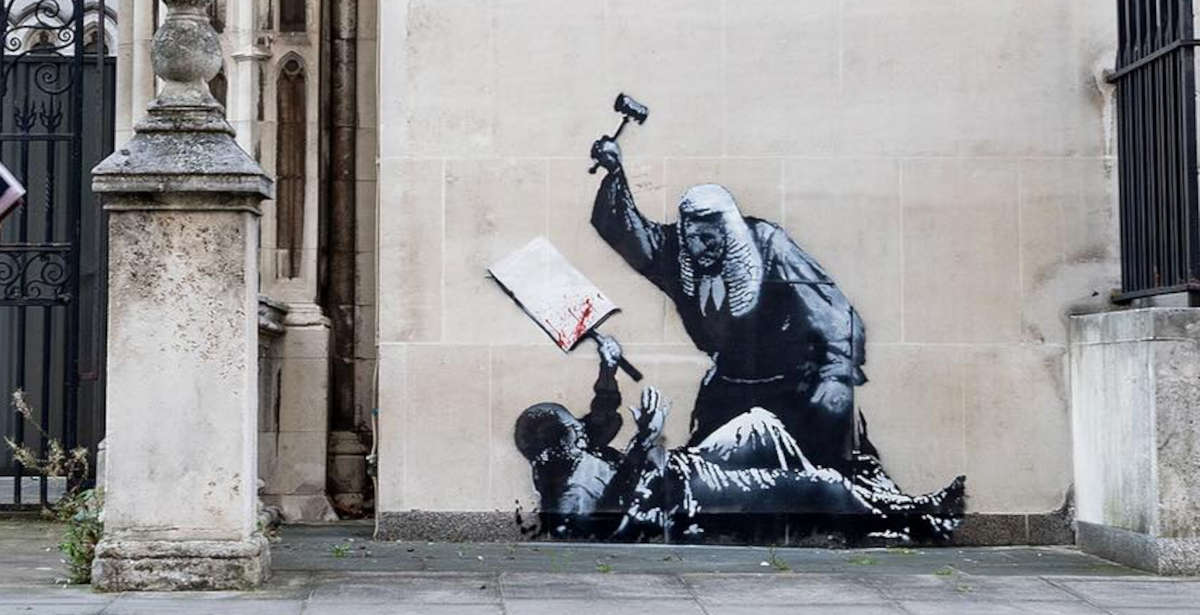
The artwork that generated the most recent costs depicts a judge in a wig striking a protester with his gavel, and it appeared on the wall of the Royal Courts of Justice on September 8, 2025. As is customary, Banksy claimed authorship of the image by posting it on his official website and Instagram account, thereby unequivocally confirming that it was his work. However, since the building housing the court is a protected historic monument, the institution, as mentioned, is legally obligated to preserve its original character. So much so that immediately after the mural appeared, court staff cordoned off the area and arranged for security, while the first attempts to remove the paint began.
The information released by the BBC has reignited the debate that has surrounded Banksy’s work for years, with opinions divided between those who view his works as a form of vandalism and those who consider them an expression of public art of great cultural and social value. And it is precisely the fact that the artist chose to paint on the walls of a historic building serving as a courthouse that has deeply divided British public opinion.
The Shadow Minister of Justice, Nick Timothy, has taken a strongly critical stance, telling the BBC that “it is scandalous that tens of thousands of pounds of public money—perhaps even more—must be spent to clean up what Banksy has left behind, as he seems to believe he has the right to deface public buildings with impunity. Our courthouses are a national symbol of justice and the rule of law: Banksy’s acts of vandalism must be stopped, and the artist should be required to personally cover the costs imposed on the public.” Others, however, believe Banksy’s works should be preserved, as they are the creations of an important artist who enjoys strong public support and could even have a positive impact on tourism.
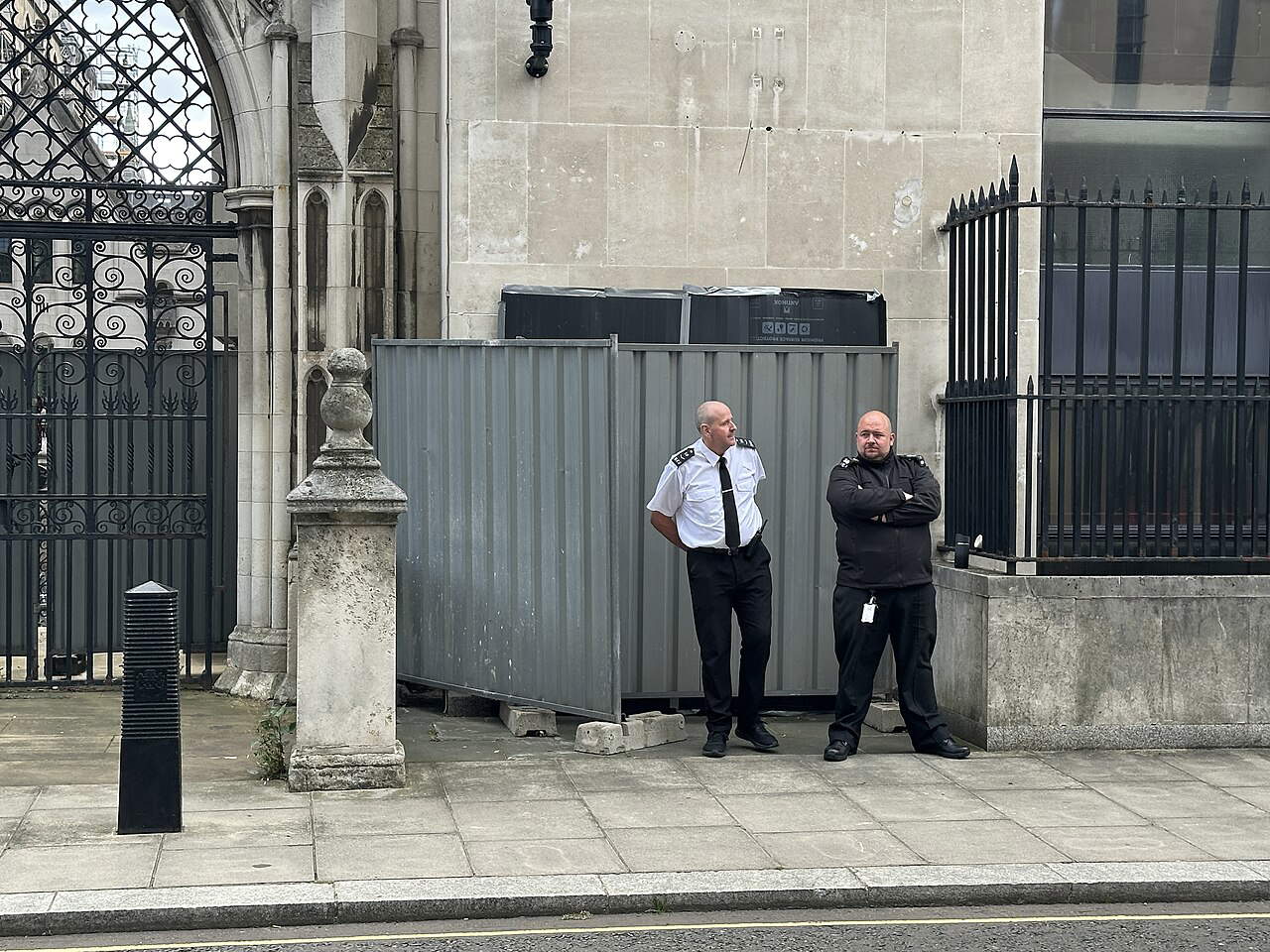
Cleanup efforts on the facade of the Royal Courts of Justice are still ongoing behind scaffolding, protective sheeting, and a locked gate installed to secure the area. However, the mural on the Royal Courts of Justice is not the only instance in which Banksy’s works have resulted in expenses borne by public authorities. In April, for example, a statue depicting a man carrying a flag appeared near Trafalgar Square, specifically on Waterloo Place. The flag covers the figure’s face, which appears on the verge of taking a step and falling from the pedestal on which it stands. In this case as well, Banksy claimed authorship of the work by posting a video on Instagram documenting the statue’s installation, which took place at night. Westminster City Council, which owns the land where the statue was placed, stated that it had no prior knowledge of the installation. The council reported that it had spent nearly 60,000 pounds—approximately 70,000 euros—on the purchase of security barriers, related administrative costs, and the payment of a security guard tasked with monitoring the artwork. In response to a freedom of information request, Westminster City Council clarified that ownership of the statue now formally rests with the council, as the owner of the land on which it stands, and that the administration has already informed the artist’s agent that it is working on evaluating the available options in the short, medium, and long term. The BBC has requested further clarification regarding this statement but has not yet received a response.
|
| Three works by Banksy cost London taxpayers nearly 175,000 euros |

Warning: the translation into English of the original Italian article was created using automatic tools. We undertake to review all articles, but we do not guarantee the total absence of inaccuracies in the translation due to the program. You can find the original by clicking on the ITA button. If you find any mistake,please contact us.



















 IT
IT FR
FR DE
DE ES
ES CN
CN


