




by Redazione 25/11/2026



Categories: News / Disclaimer
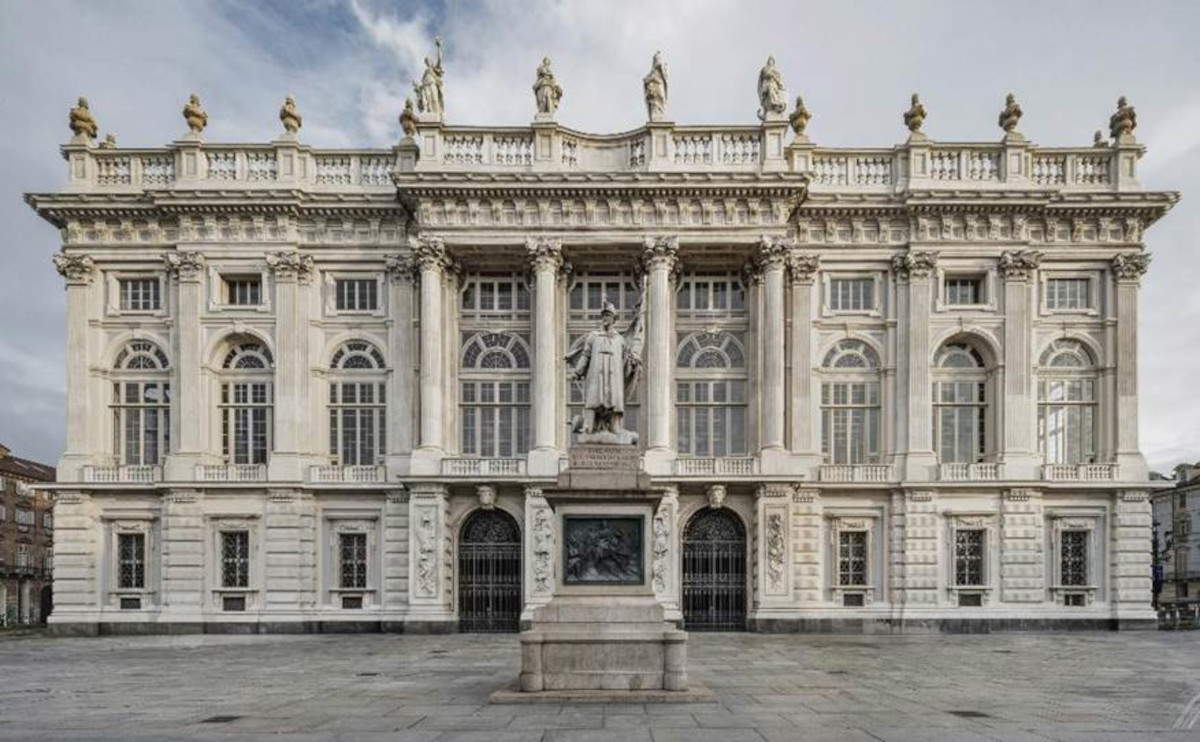
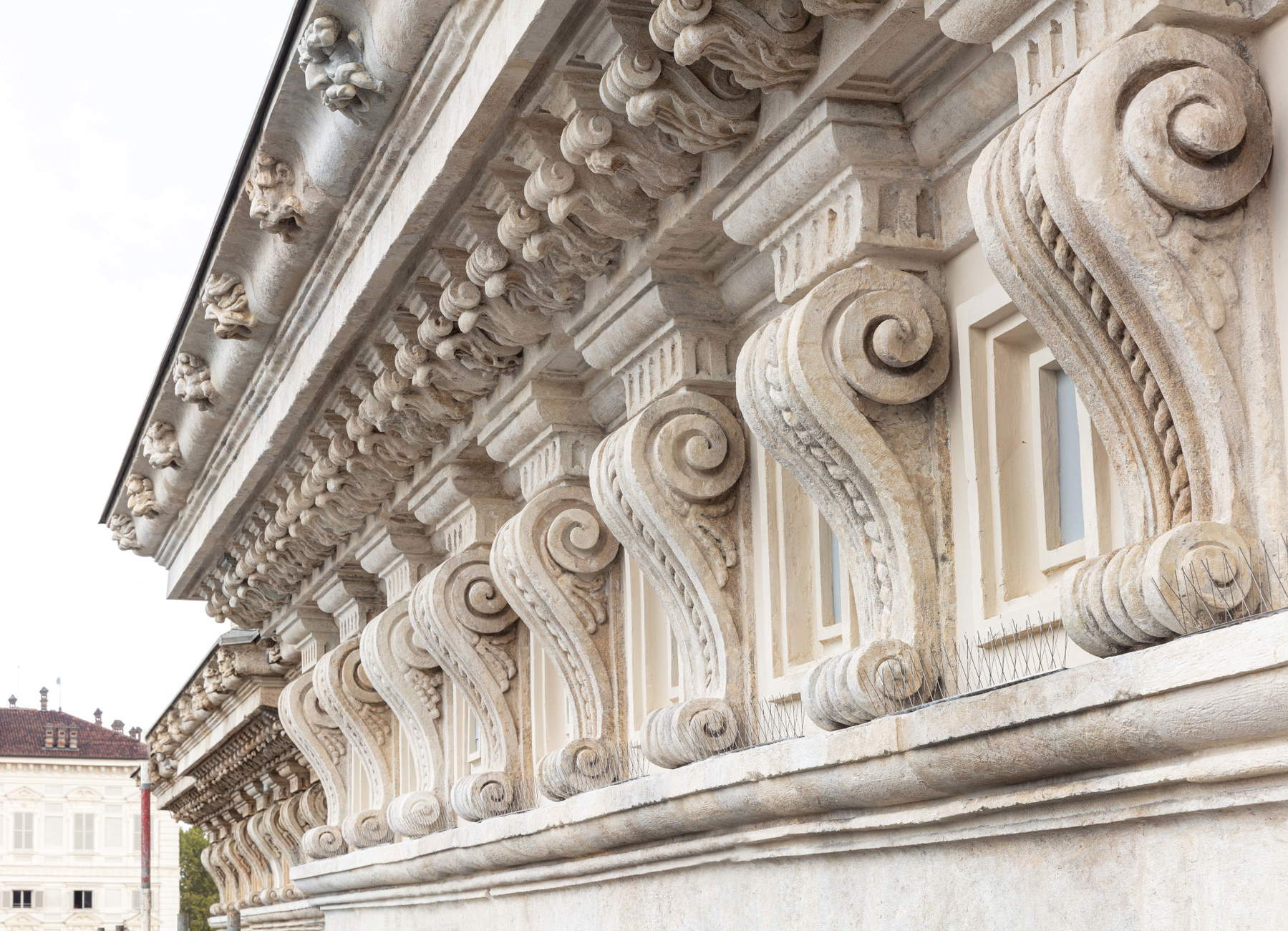
The Juvarra-style facade of Palazzo Madama has been restored, marking one of the most significant projects in the initiative to revitalize the Turin museum. The total investment amounted to 12.5 million euros.


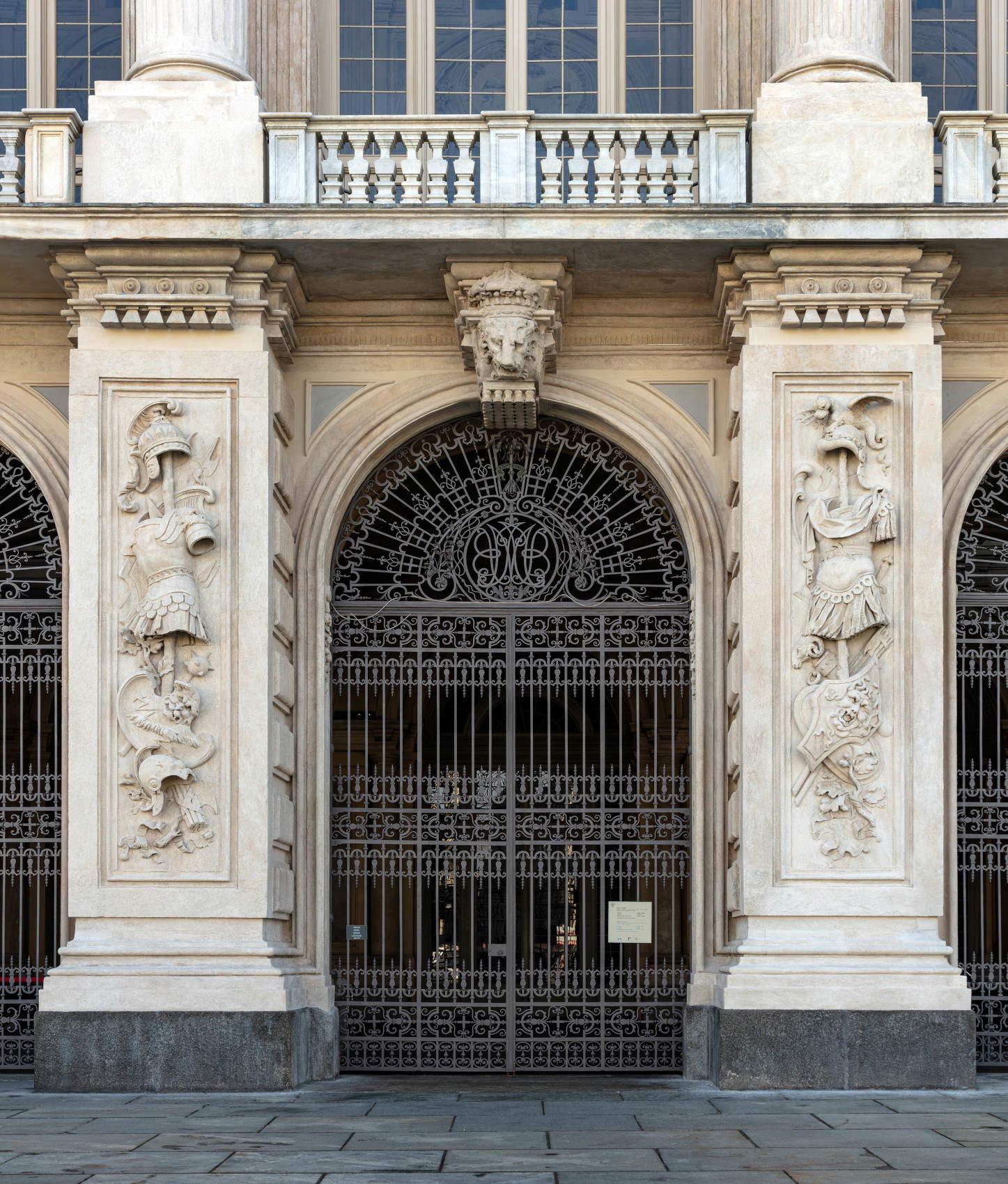
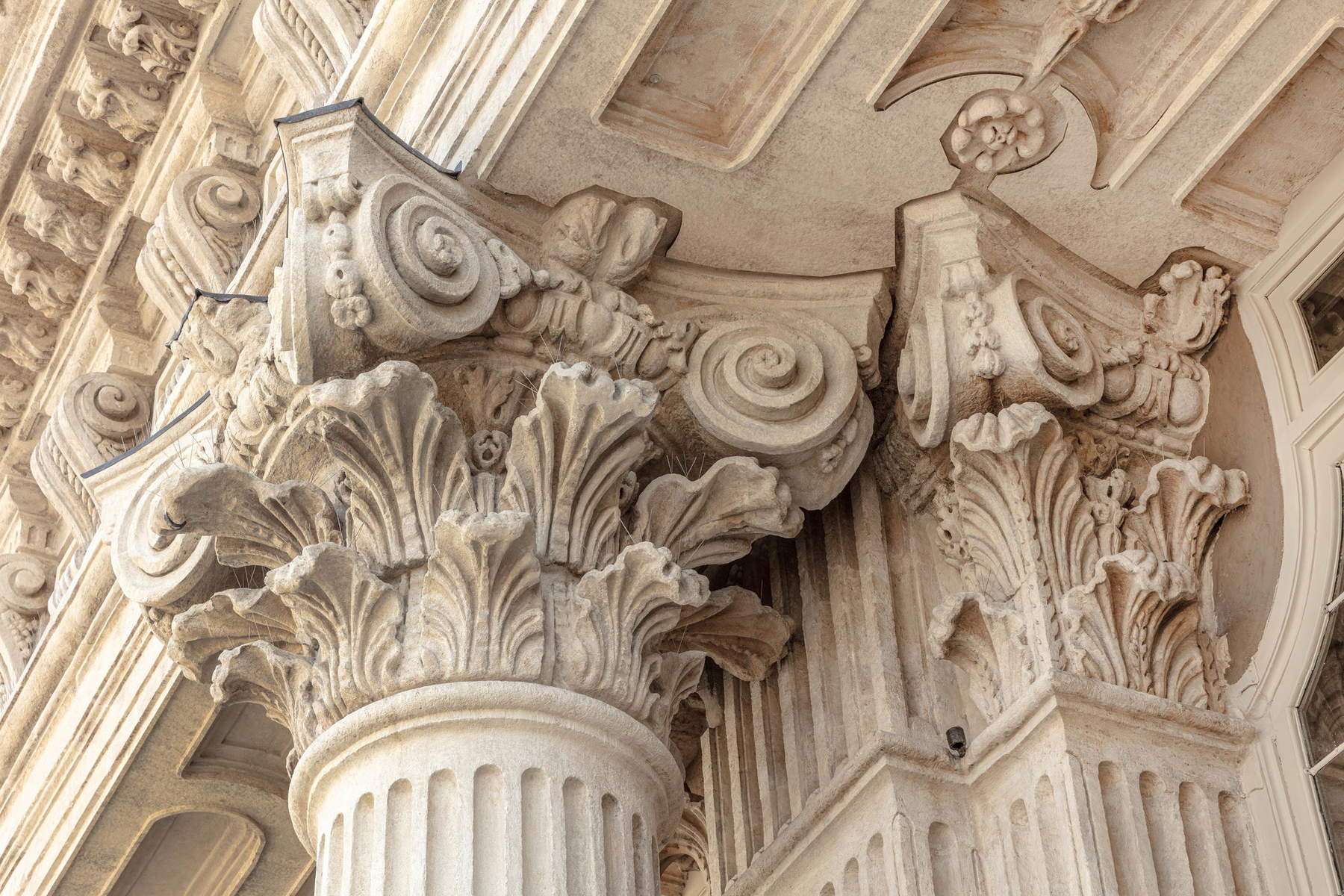
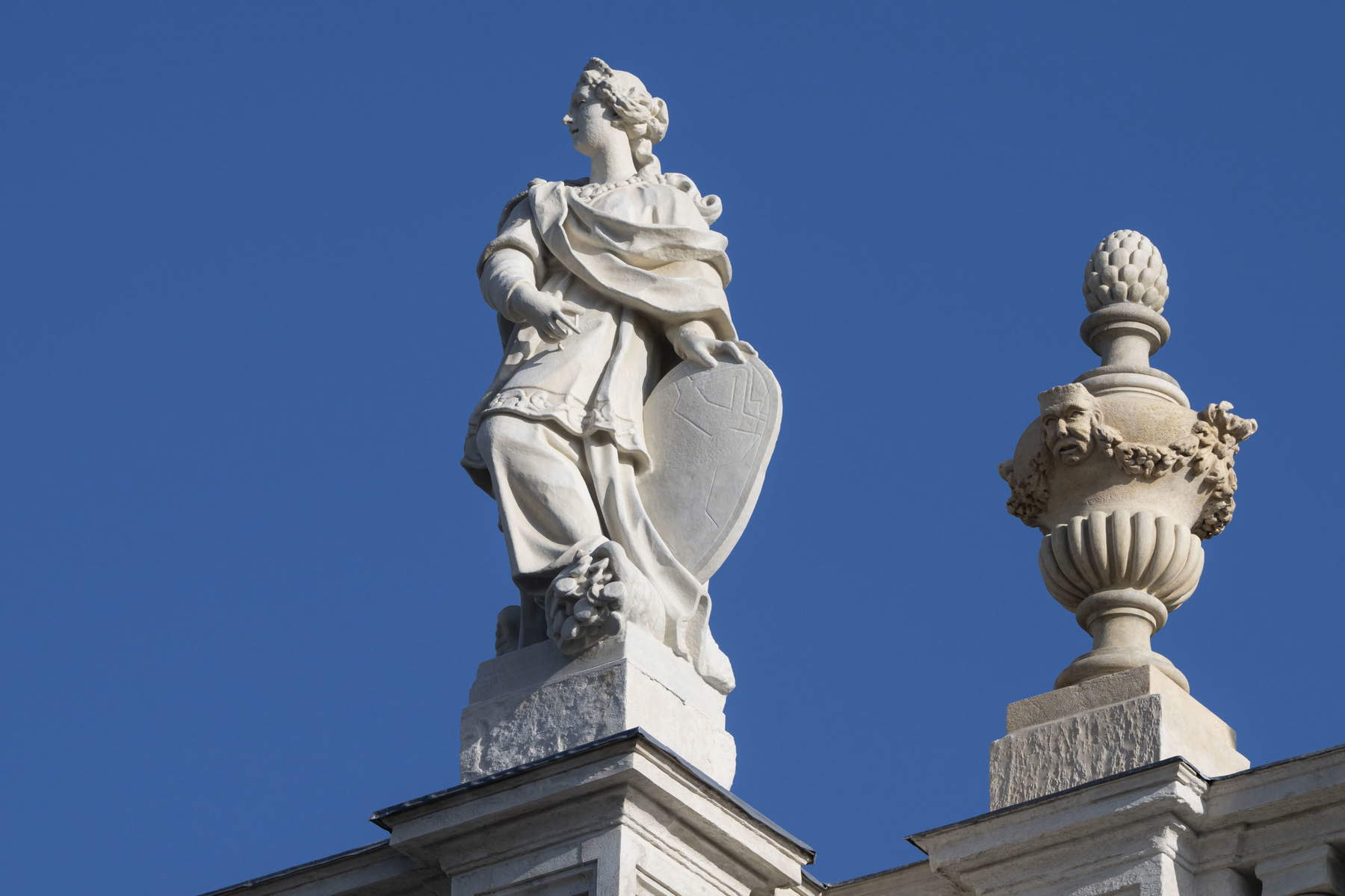
The Baroque façade of Palazzo Madama, designed by Filippo Juvarra, is once again on full display in all its grandeur following the completion of its comprehensive restoration. With the removal of the scaffolding, Turin has regained one of its most recognizable architectural landmarks, at the heart of a broad program to redevelop and enhance the complex—divided into five phases and intended to transform the museum into the City Museum. At the top of the façade, the four allegorical statues of Good Government, created by Giovanni Baratta, once again look out over the city thanks to the Carrara marble replicas installed in their place. The restored originals, meanwhile, have been moved to the underground spaces of the Carlo Emanuele I Gallery, which were restored as part of the third phase of work and are set to be repurposed for new museum exhibitions.


The completion of the restoration was presented in the presence of Rosanna Purchia, Turin’s Councilor for Culture; Lisa Accurti, Superintendent of Archaeology, Fine Arts, and Landscape for the Metropolitan City of Turin, Lisa Accurti; the President of the CRT Foundation, Anna Maria Poggi; the President of the Turin Museums Foundation, Massimo Broccio; and the project director, Gianfranco Gritella. The project, sponsored by the Fondazione Torino Musei and carried out by a team of specialized craftsmen under the direction of Studio Architetto Gianfranco Gritella & Associati, completes the first two phases of the project. This achievement was made possible by the collaboration between the City of Turin, the CRT Foundation—the historic and primary private supporter of Palazzo Madama—and the Ministry of Culture.


The Restoration of the Juvarra-Style Facade: Two Phases of Work and a Complex Project
The first phase, carried out between 2022 and 2024, focused on the central section of the facade. The work involved a comprehensive program of structural consolidation and marble restoration, funded entirely by the CRT Foundation with a grant of 2.9 million euros. In 2025, construction continued with the second phase, dedicated to the two side sections of the facade. The project, funded by the Ministry of Culture with 2.3 million euros, was initially managed by the Ministry of Culture’s Regional Secretariat for Piedmont and subsequently by the Superintendence of Archaeology, Fine Arts, and Landscape for the Metropolitan City of Turin, which ensured overall supervision of the entire project regarding architectural and historical-artistic preservation.


The work involved restorers, engineers, and specialists, combining advanced diagnostic surveys, research, and traditional techniques. Among the most significant operations were the structural consolidation using reversible steel elements, the recovery of historic marble from Alpine quarries, and the restoration of the large Baroque windows. This was a particularly challenging project, which addressed some of the most complex structural issues in Juvarra’s architecture, restoring the facade’s stability, formal clarity, and full monumental grandeur.
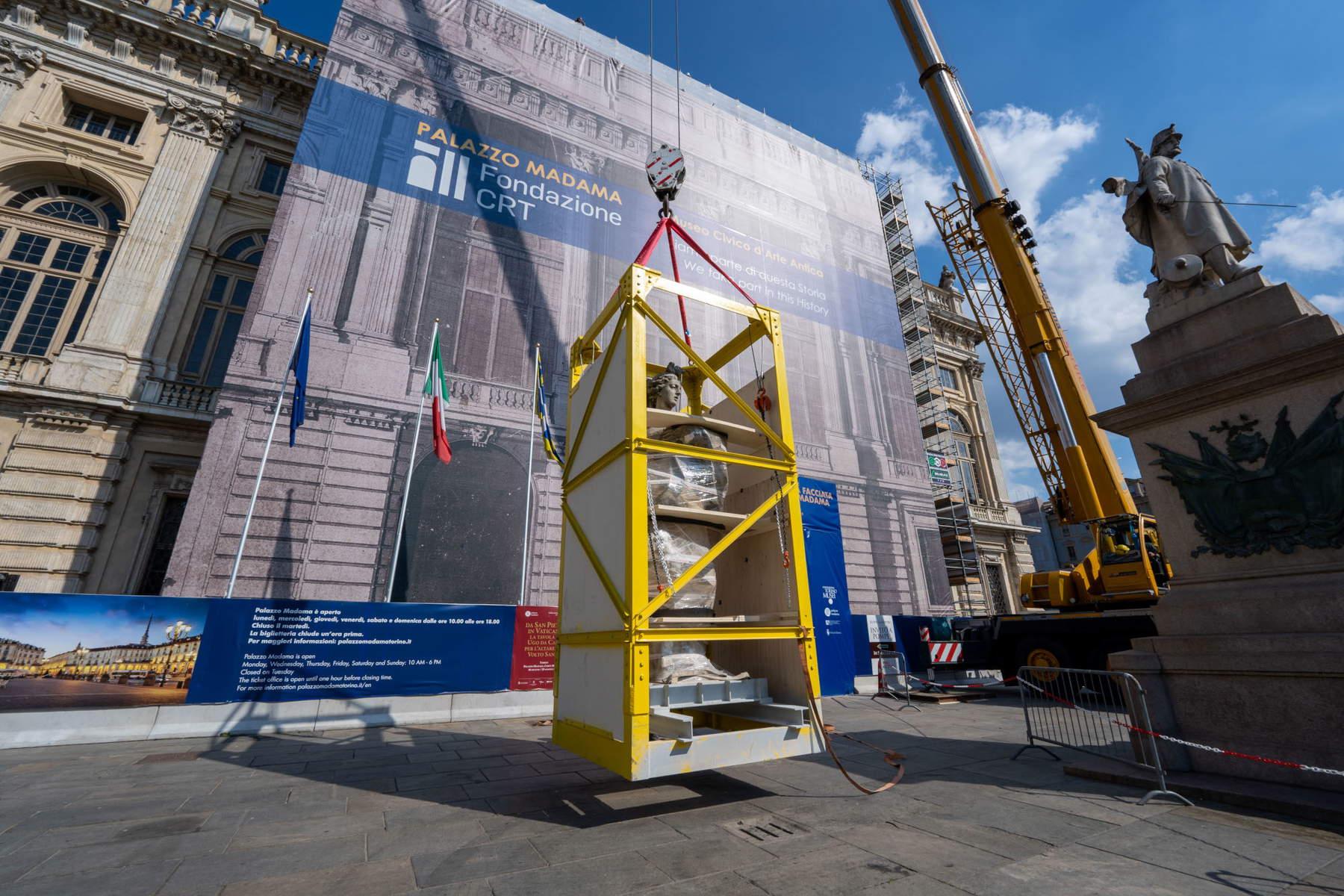
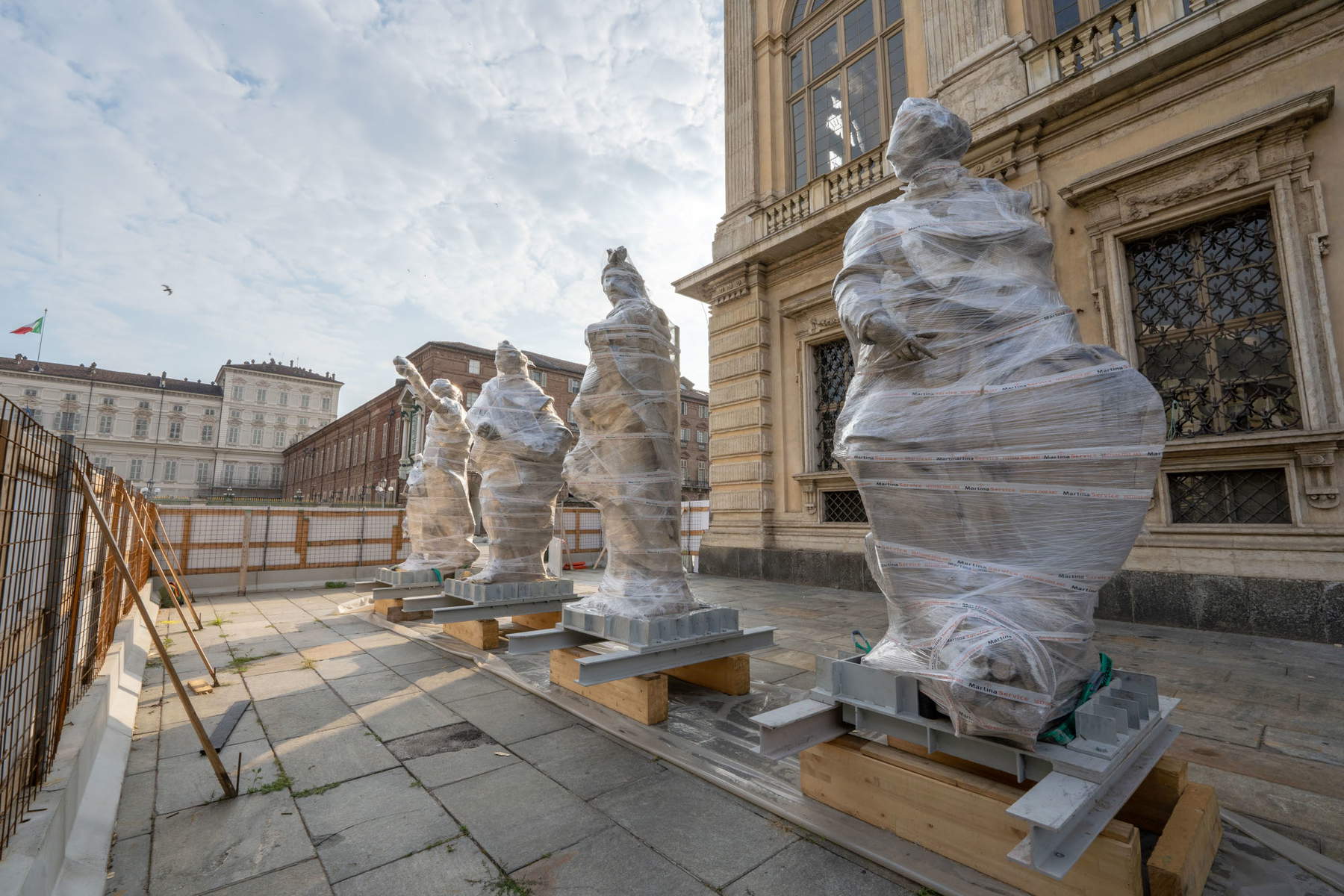
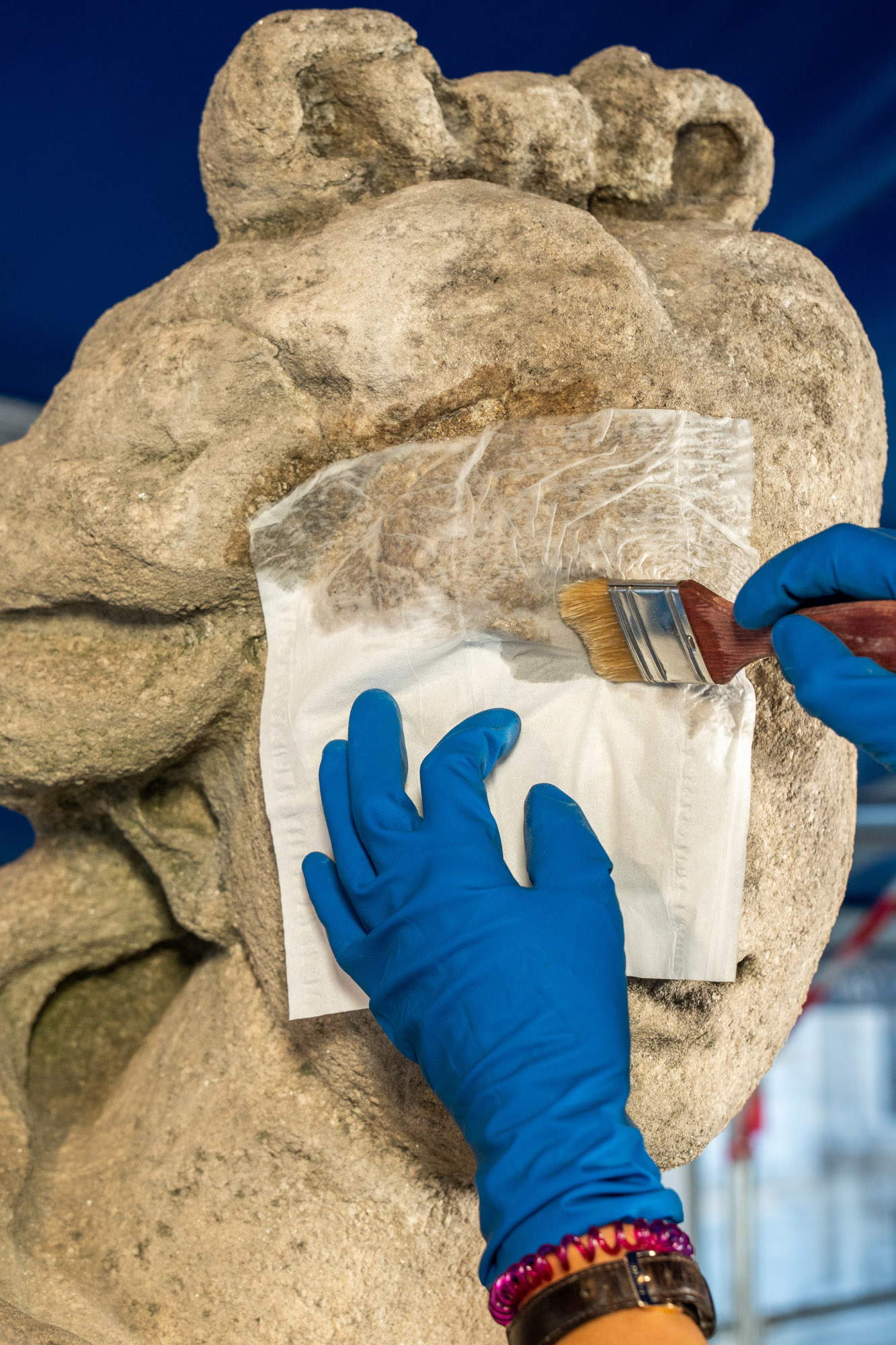
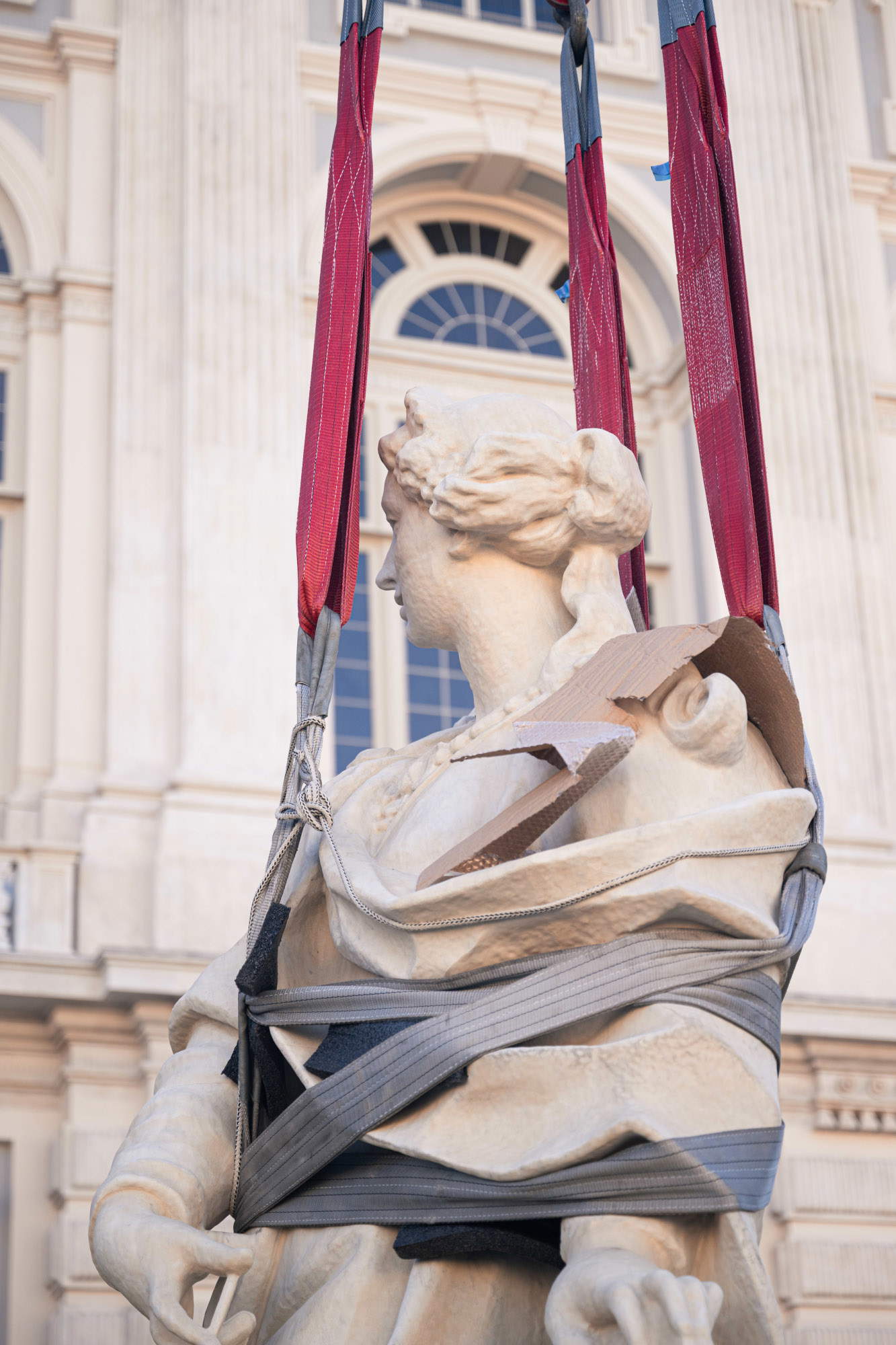
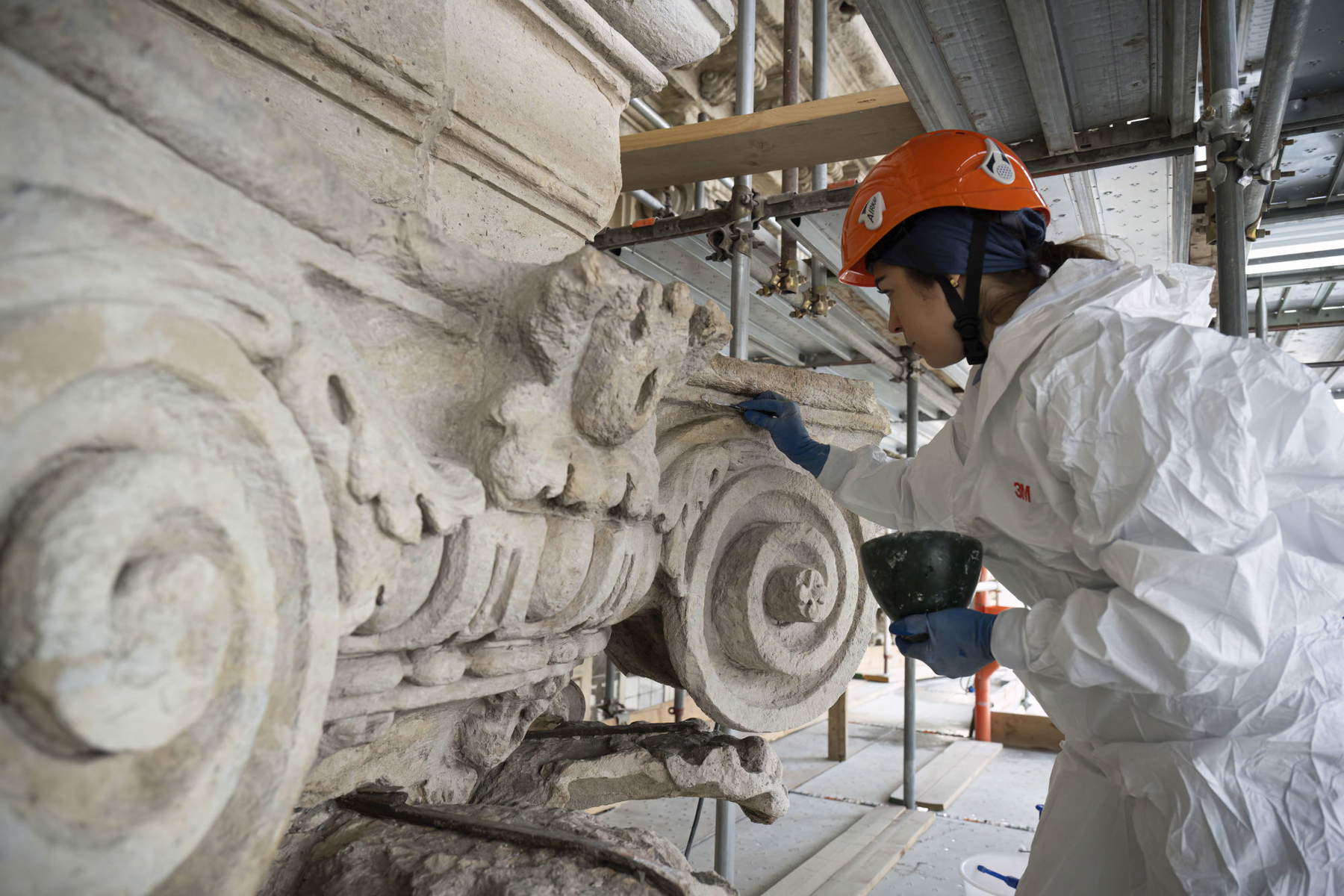
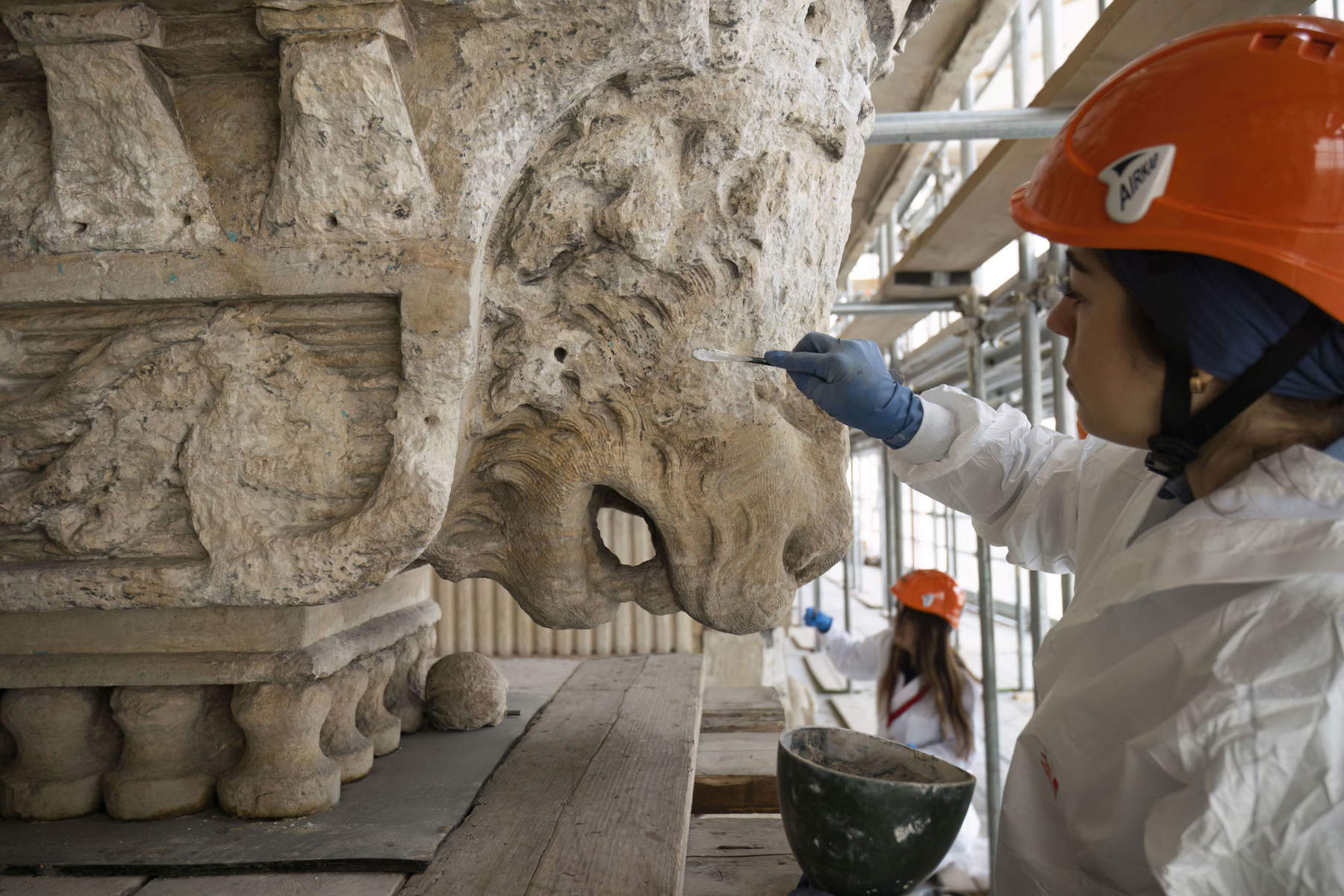
The restoration of Palazzo Madama was also an experience of public participation. In 2022, the four allegorical statues of Good Government—Justice, Liberality, Piety, and Victory—created by Giovanni Baratta, underwent a striking relocation from the top of the building to Piazza Castello. The sculptures were lowered in a spectacular operation and taken to a specially set-up pavilion, where the public could watch their restoration.
The originals, carved from Brossasco marble, were subsequently placed in the underground chambers of the ancient Gallery of Charles Emmanuel I, which is currently undergoing restoration and repurposing. In the future, they will be displayed as part of a dedicated museum exhibition, which will also include the ancient city walls of Augusta Taurinorum. Carrara marble replicas have been installed on the facade, recreating the decorative scheme designed by Juvarra.
Even the construction site itself became an opportunity for learning about and engaging with cultural heritage. Thousands of people were able to tour the site via a guided path that reached a height of 28 meters. Carried out with the support of the CRT Foundation and in collaboration with the Consulta per le Persone in Difficoltà, the project represented the first example in Italy of a vertical construction site accessible to the public and to people with disabilities, thanks to a multi-level access route.
The restoration of the facade is a key phase in the overall revitalization program for Palazzo Madama, which involves an investment of 12.5 million euros, funded by the City of Turin, the CRT Foundation (which covers approximately half the amount), and the Ministry of Culture. The project is one of the priorities of the Torino Musei Foundation’s Strategic Plan and aims to integrate the preservation of architectural heritage with the enhancement of the museum’s offerings. The goal is to make the spaces more accessible, improve the visitor experience, and provide a more comprehensive account of Turin’s urban history.
Palazzo Madama is thus being reimagined as a City Museum from a contemporary perspective: a place where the community can recognize its origins, understand social and cultural transformations, and gain a deeper understanding of Turin’s role in Europe. Following the completion of the façade, the program will continue with projects designed to expand the areas open to visitors, improve internal connections, and enhance spaces of particular historical and architectural interest.
Currently underway,the third phase involves the restoration and adaptation of the underground spaces of the Carlo Emanuele I Gallery, an ancient passageway connecting Palazzo Madama to the Royal Palace complex, built between the late 16th century and the early 17th century. The project includes a museum exhibition dedicated to the four original statues of the Good Government, which will be preserved and showcased as part of a new archaeological itinerary. The tour will also offer visitors the opportunity to explore the history of the ancient fortifications and walls of Augusta Taurinorum.
Once work on the Gallery is complete, the fourth phase will involve the renovation and opening to the public of the panoramic terrace —spanning over 500 square meters—located above the vault of the Juvarrian Staircase. The space will offer a unique view of the city, previously inaccessible to visitors. Plans also include the restoration of the attic space above the Senate Hall, with the creation of new vertical access points and the addition of museum facilities.
The fifth phase, still in the design phase, involves the functional restoration of additional underground spaces in the area of the ancient Porta Fibellona. The plan includes the creation of over 600 square meters of new exhibition spaces along the side moat, where warehouses and stables once stood. Plans also call for a redesign of the visitor reception areas, the ticket office, and the gift shop, with the aim of expanding exhibition spaces and improving the organization of museum services. The overall project also includes the enhancement of the Juvarrian Staircase, a highly significant architectural feature that will play a central role in the new visitor experience.
The museum’s new cultural and tourist positioning is based on the concept of “Civico Zero,” intended as a starting point for interpreting and understanding Turin. Palazzo Madama thus becomes the place from which to navigate the city’s history, recognizing its origins, layers of development, and urban transformations. The institution goes beyond its traditional exhibition function to establish itself as a true cultural infrastructure, capable of connecting historical heritage with public space, memory with the contemporary world, and the local community with visitors from around the globe.
Two thousand years of history in the heart of Turin
Palazzo Madama occupies a central position in both the geography and the collective memory of the city. Over the course of more than two thousand years, the complex has undergone various transformations: from the Roman-era Porta Decumana to a medieval castle, from the Baroque residence designed by Filippo Juvarra to the building that today blends into the contemporary urban landscape.
Its history is also deeply intertwined with the institutional events of Italy. Palazzo Madama served as the seat of the Senate of the Kingdom of Sardinia and, in 1848, hosted the promulgation of the Albertine Statute. Beginning in the late 19th century, thanks to the research and restoration work of Alfredo d’Andrade, the building took on a new public and cultural role, leading to the establishment of the Civic Museum of Ancient Art. Today, the museum offers a journey through the Middle Ages, the Renaissance, the Baroque period, and the decorative arts, housing over 80,000 works. Its structures, still fully accessible, make it an extraordinary example on the European scene: a single building where Turin’s artistic, political, civic, and urban histories intertwine.
“The many tourists and enthusiasts who have arrived from all over the world in recent days for the ATP Finals have been able to admire the Juvarra-designed façade of Palazzo Madama—one of the city’s most beloved and iconic symbols—restored to its original splendor following the long-awaited removal of the scaffolding,” said Stefano Lo Russo, Mayor of the City of Turin. “This project goes far beyond the architectural restoration of a Baroque masterpiece. Palazzo Madama represents the historical, symbolic, and geometric heart where over two thousand years of history intertwine—and from which Turin tells its story, defines itself, and opens up to the world. Restoring this façade has meant not only returning one of the city’s jewels to its full magnificence, but also strengthening Turin’s cultural identity and appeal. Our thanks go to the Fondazione Torino Musei, the Ministry of Culture, the Superintendency, the Fondazione CRT, and all the workers who contributed to this project. Once again, our city has demonstrated an extraordinary synergy between institutions and between the public and private sectors, which made this achievement possible. This achievement is made all the more valuable by the fact that the construction site itself was transformed into a participatory, accessible, and inclusive experience, allowing thousands of citizens to witness firsthand the care being taken of our heritage. The renovation of the façade marks a first, fundamental step in a much broader overall project that, in the coming years, will open up new spaces, consolidating Palazzo Madama’s role as a heritage site capable of uniting the memory of our roots with a vision for Turin’s future.”
“It is only right to devote adequate space to presenting the work on the Juvarra-designed facade of Palazzo Madama,” stated Lisa Accurti, Superintendent of Archaeology, Fine Arts, and Landscape for the Metropolitan City of Turin. “The prolonged duration of the work, the expectations it generated, and the insights gained from it called for an opportunity to publicly share the objectives, distinctive features, and results achieved within the context of an extremely demanding and complex project—one that was both challenging and fascinating. The iconic façade has, in fact, always been a ‘difficult’ patient: managing its intimate complexity—hidden beneath the refined surfaces now restored to their original splendor—required the mobilization of significant financial resources—provided by the City of Turin, the Ministry of Culture, and the CRT Foundation —as well as adherence to the necessary operational timelines, combined with careful theoretical and methodological considerations, and the integrated, multidisciplinary development of technical solutions that are both innovative and “tailor-made,” in a truly collaborative effort involving clients, conservation professionals, and technical experts.”
“Seeing the restoration of the entire façade of Palazzo Madama completed is a source of great satisfaction for the CRT Foundation, the palace’s primary private supporter. Together with the City of Turin, the Superintendency, and the Fondazione Torino Musei, we chose to take on a complex challenge by fully funding the restoration and consolidation of the central front section, the restoration of the four monumental statues of Good Government, and the creation of their replicas: a crucial step toward completing the facade we are presenting today. Our commitment to Palazzo Madama, however, continues and is evidenced by the funding the Foundation has allocated for the continuation of work on the panoramic terrace,” stated Anna Maria Poggi, President of the CRT Foundation. “From the very beginning, we believed in the value of this complex restoration and rehabilitation project for the building, which more than any other bears witness to Turin’s major historical eras, and for this reason we chose to cover approximately half the cost of the entire project. We have allocated the necessary resources for a project that required research, specialized expertise, and innovative solutions, thereby continuing our efforts to support and enhance Palazzo Madama. And we wanted the construction site to be open and accessible to people with disabilities as well, so that the restoration could also serve as an opportunity to get to know the palace up close and strengthen the public’s connection to this symbol of Turin, a UNESCO World Heritage Site.”
“The unveiling of the beautifully restored Juvarra façade and the work on the acroterial statues mark only the completion of the first and second phases of the broader ongoing redevelopment project for Palazzo Madama,” added Massimo Broccio, President of the Fondazione Torino Musei. “In our Strategic Plan, we have outlined a major project—comprising five phases in total—for the restoration and repurposing of Palazzo Madama, aimed at returning to the public a building renewed in both its structure and its significance to give shape to the future City Museum, a strategic venue for telling the story—through the palace itself—of Turin, its roots, and its transformations. Every city, in fact, holds at its heart a place that, better than any other, is capable of recounting its origins and revealing its soul. For Turin, this is undoubtedly Palazzo Madama—a one-of-a-kind national treasure and a rare example on the international stage. A place of continuity across eras, a one-of-a-kind historical and cultural landmark capable of encapsulating, within a single building, the very evolution of the city. The third phase of this major project is already underway, involving the restoration of the “Carlo Emanuele I” underground gallery that connects to the Royal Palace, creating a new visitor route that will allow the public to discover a previously unknown part of the building. This will be followed by the fourth phase, featuring the reopening to the public of the panoramic terrace, designed as a prime vantage point overlooking the city and as a space capable of extending the museum beyond its walls. Finally, a fifth, future-oriented phase calls for the functional redevelopment of new underground spaces within the complex of the ancient Porta Fibellona and the creation of over 600 square meters of new exhibition spaces on the south side of the building facing Via Roma. Special thanks to the City of Turin, the CRT Foundation—a long-standing and generous patron of Palazzo Madama—the Ministry of Culture, and the Superintendence for Archaeology, Fine Arts, and Landscape for the Metropolitan City of Turin, all of whom are making this historic project at Palazzo Madama possible.”
|
| Turin: The facade of Palazzo Madama, a Baroque masterpiece by Juvarra, has been restored |
Warning: the translation into English of the original Italian article was created using automatic tools. We undertake to review all articles, but we do not guarantee the total absence of inaccuracies in the translation due to the program. You can find the original by clicking on the ITA button. If you find any mistake,please contact us.