





On the Feast of the Assumption, new and surprising discoveries are drawing attention back tothe former church of Santa Maria delle Fortezze in Viterbo, formerly known as Santa Maria Annunziata and later as San Francesco di Paola. The church was built in the 16th century at the behest of Ottaviano Riario, Bishop of Viterbo, who presided over the laying of the cornerstone on June 21, 1514. The new building was erected near an ancient Marian shrine, the Beata Maria della Fortezza, located close to the Bastia, a fortification built in 1077 by Emperor Henry IV. The presence of a Marian devotion already deeply rooted in the area suggests that the iconographic program of the new church was conceived from the very earliest stages of the project specifically to honor the Virgin Mary.
Of the eight chapels that once adorned the church, only four survive today. The building was, in fact, severely damaged by Allied bombing on May 26, 1944, which irreparably compromised its structure.
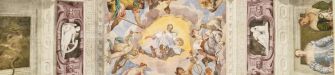
One of the surviving chapels is the one dedicated to the Virgin Mary, whose frescoes were recently restored thanks to a project promoted by the ABAP Superintendency for the Province of Viterbo and Southern Etruria and entrusted to the Koinè cooperative. The work, completed last July, was carried out by conservators Mariangela Santella and Cristiana Luberto, following preliminary consolidation work performed by Riccardo Vettraino. The pictorial cycle depicts some of the most important moments in the life of Mary. The Annunciation appears on the entrance arch, with the Virgin facing the Archangel Gabriel, depicted holding a lily, a symbol of purity. In the lower part of the wall, one can recognize the Dormitio Virginis, with the Apostles gathered around Mary’s tomb. At the center of the composition is the luminous mandorla enclosing the figure of the Assumption, while the apse niche features the Coronation of the Virgin, with Mary kneeling before Christ and surrounded by angels playing music.
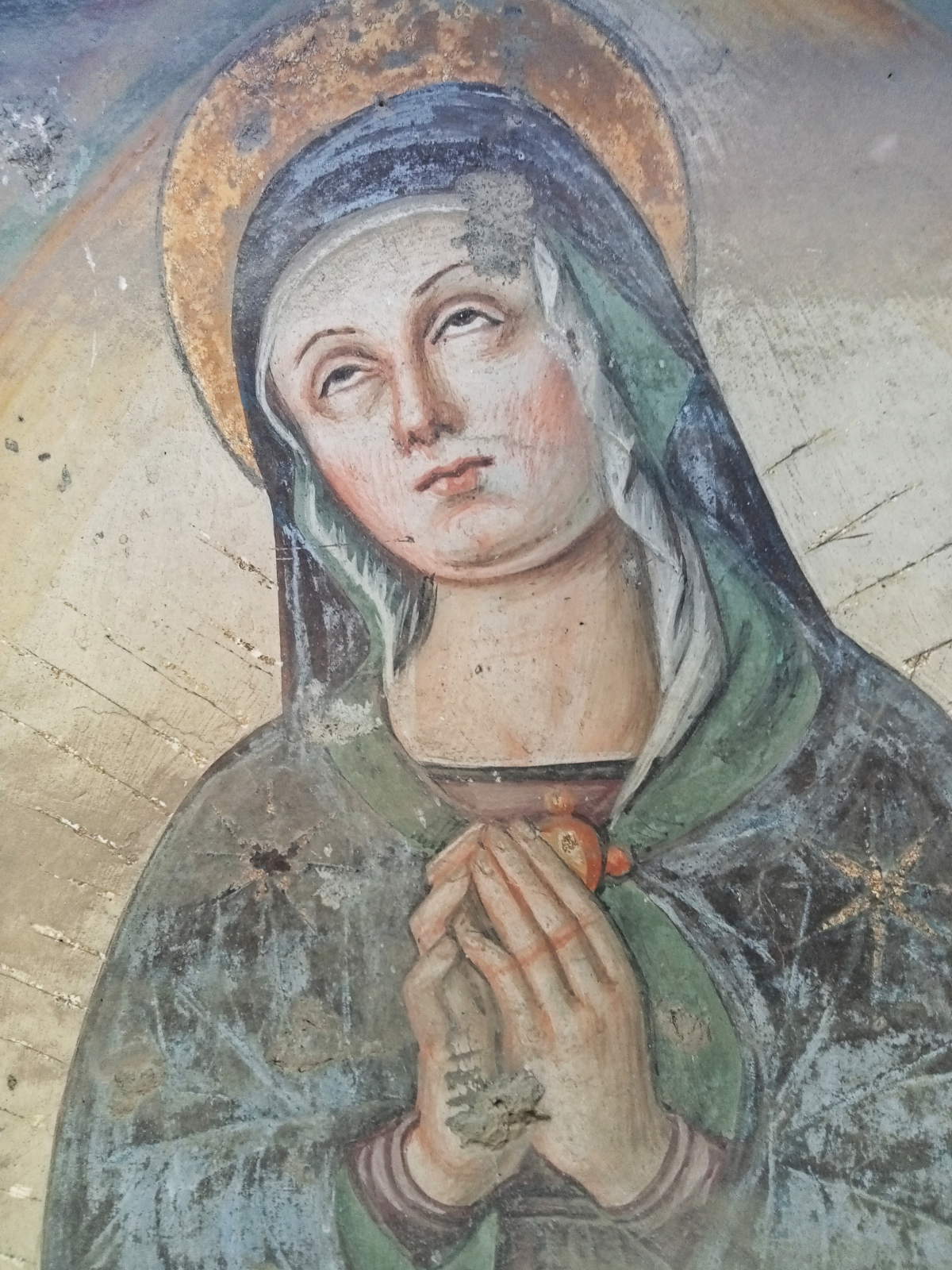
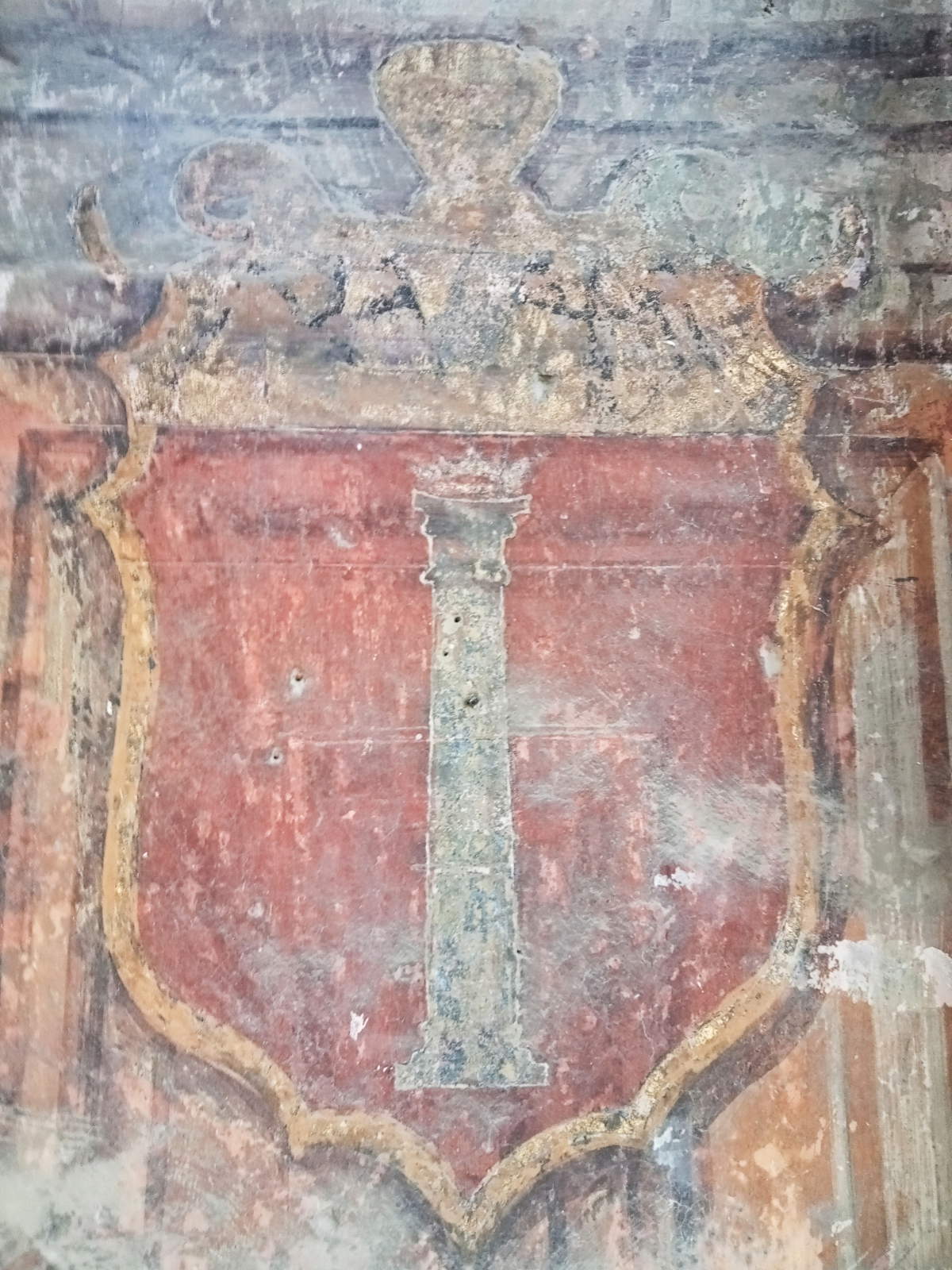
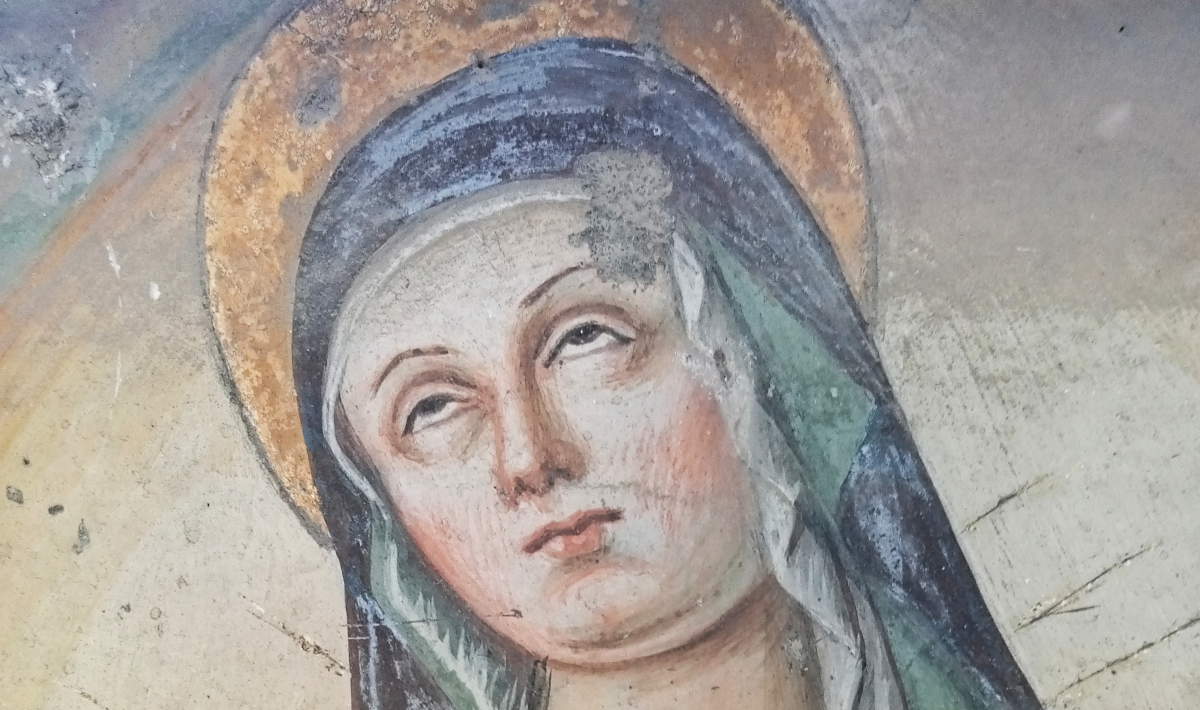
Research has revealed surprising stylistic and technical similarities with the work of some of the leading artists active in Rome between the 15th and 16th centuries. Particularly significant is the depictionof the Assumption, which faithfully reproduces the central figureof the Assumption of the Virgin painted by Pietro Perugino between 1481 and 1483 for the Sistine Chapel. The Apostles, too, appear to be derived from a Roman model: those painted by Melozzo da Forlì in the apse of the Basilica of Saints Apostles and now preserved, in fragments, at the Vatican Pinacoteca. But the most interesting discovery concerns a figure that had remained almost completely hidden for a long time: restoration work has in fact brought to light a depiction of the Virgin at the Annunciation flanked by God the Father, depicted amid clouds, putti, and cherubim. The figure of the Creator, with his long white beard and richly colored cloak, is a clear reference to the Eternal Father in Michelangelo’s *Creation of Adam*, frescoed on the vault of the Sistine Chapel between 1508 and 1512.
This reference may also hold a specific celebratory significance regarding Ottaviano Riario: his episcopal consecration had in fact taken place in 1506 at the hands of Julius II della Rovere, the pope who had commissioned Michelangelo to decorate the Sistine Chapel ceiling.
Diagnostic investigations have also identified traces of gilding, achieved by applying a tin foil layer subsequently covered with gold leaf. The cleaning of the ornamental frieze, the grotesques, and the faux-marble moldings has further revealed the use of preparatory cartoons. Of particular importance was the discovery regarding the Colonna family coats of arms on the side pilasters: the coats of arms appear to have been added at a later stage and partially covered an earlier perspective decoration. This finding alters the interpretation of the chapel’s history: its original decoration was not financed by the Colonna family. This also dispels the hypothesis of direct involvement by Vittoria Colonna, who is often linked to the artistic and cultural events in Viterbo during the years 1541–1544. The decoration of the Marian Chapel should therefore predate this and, in all likelihood, have been completed around 1520, a few years before Ottaviano Riario’s death in 1523.
The restoration also opens up new perspectives on the identity of the artist who created the cycle. According to art historian Saverio Ricci, who was appointed project manager for the final phase of funding that made the conservation work on the Marian Chapel possible, the frescoes may be attributed to Valentino Pica the Younger, a little-known artist from Viterbo, of whom only one certain example remains: the altarpiece signed and dated 1514 in the church of Sant’Amanzio in Vitorchiano. Ricci also speculates that Pica may have been associated with Pastura during the decoration of the Vitelleschi Chapel in the Cathedral of Tarquinia and that he subsequently stayed in Rome to further his studies. Upon his return to Viterbo, the artist is believed to have worked for important local patrons, including other members of the Riario family. Several works in the region are also attributed to him, including another chapel in the former Church of the Fortezze, this time featuring a cycle with a Christological theme.
The restoration of the Marian Chapel has thus made it possible to restore the legibility of an important early 16th-century painting cycle and, at the same time, to raise new questions regarding its dating, its patrons, and the artist’s identity. The extensive restoration project on the former Church of the Fortezze was initiated by the Superintendency, led by architect Margherita Eichberg, beginning in 2023, thanks to PNRR funds from the “Caput Mundi” program.
The results of the investigations and restoration will soon be explored in greater depth through conferences, publications, and dedicated studies. The goal is also to produce a monograph documenting the history and various phases of the complex. The next challenge will now be the restoration of the church’s other surviving chapel, characterized by Christological-themed decoration: a new project that could add further pieces to the artistic history of the former Santa Maria delle Fortezze.
 |
| Viterbo: The Marian Chapel of the Former Church of Santa Maria delle Fortezze Has Been Restored—New Discoveries |

Warning: the translation into English of the original Italian article was created using automatic tools. We undertake to review all articles, but we do not guarantee the total absence of inaccuracies in the translation due to the program. You can find the original by clicking on the ITA button. If you find any mistake,please contact us.















 IT
IT FR
FR DE
DE ES
ES CN
CN


