





New details are emerging about the theft of three works by Paul Cézanne, Pierre-Auguste Renoir, and Henri Matisse stolen on the night of March 22–23 from the Magnani Rocca Foundation in Mamiano di Traversetolo ( Parma) and recovered today by the Carabinieri of the Cultural Heritage Protection Unit in Parma. The recovery marks a decisive step in the investigation into the high-profile theft carried out at the so-called “Villa dei Capolavori,” but it does not signal the conclusion of the investigation.
The three works—Paul Cézanne’s *Tasse et plat de cerises* (a watercolor), *Les Poissons* by Pierre-Auguste Renoir (oil on canvas), and *Odalisque Sur La Terrasse* by Henri Matisse (aquatint engraving), were found in a residence in the northern part of Parma, in the Cortile San Martino neighborhood, linked to one of the suspects. According to information that emerged in the hours following the recovery, the works had been hidden in a dark storage closet and placed inside a large box originally used to hold a television set. It was a particularly simple hiding place for three works that, due to their value and fame, had become immediately recognizable on an international level.
At present, a total of nine people—all from Moldova, both men and women—are under investigation: five of them have been taken into custody by the judicial police because they are believed to be responsible, among other things, for the theft of the artworks. The suspects are also charged with criminal conspiracy to commit theft. Individual responsibilities will, of course, have to be determined during the proceedings, and the investigators’ inquiries are still ongoing.
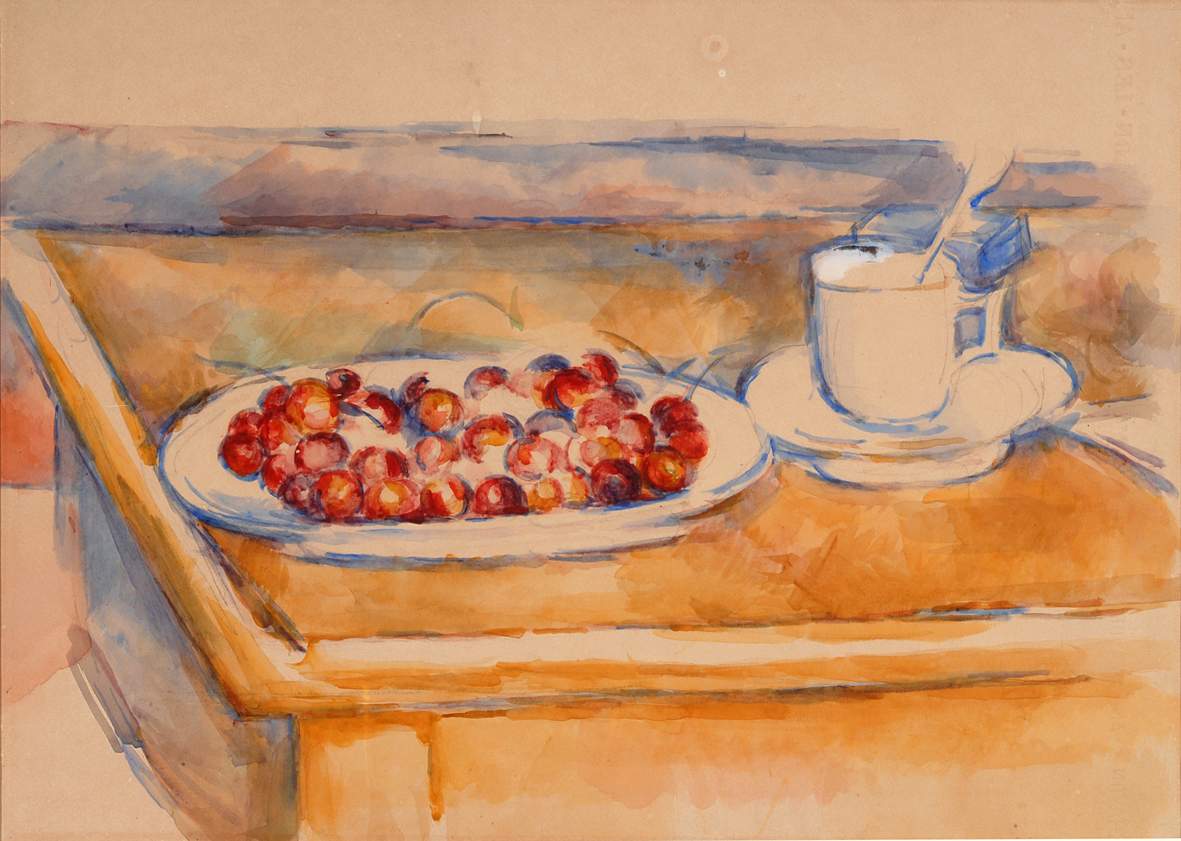
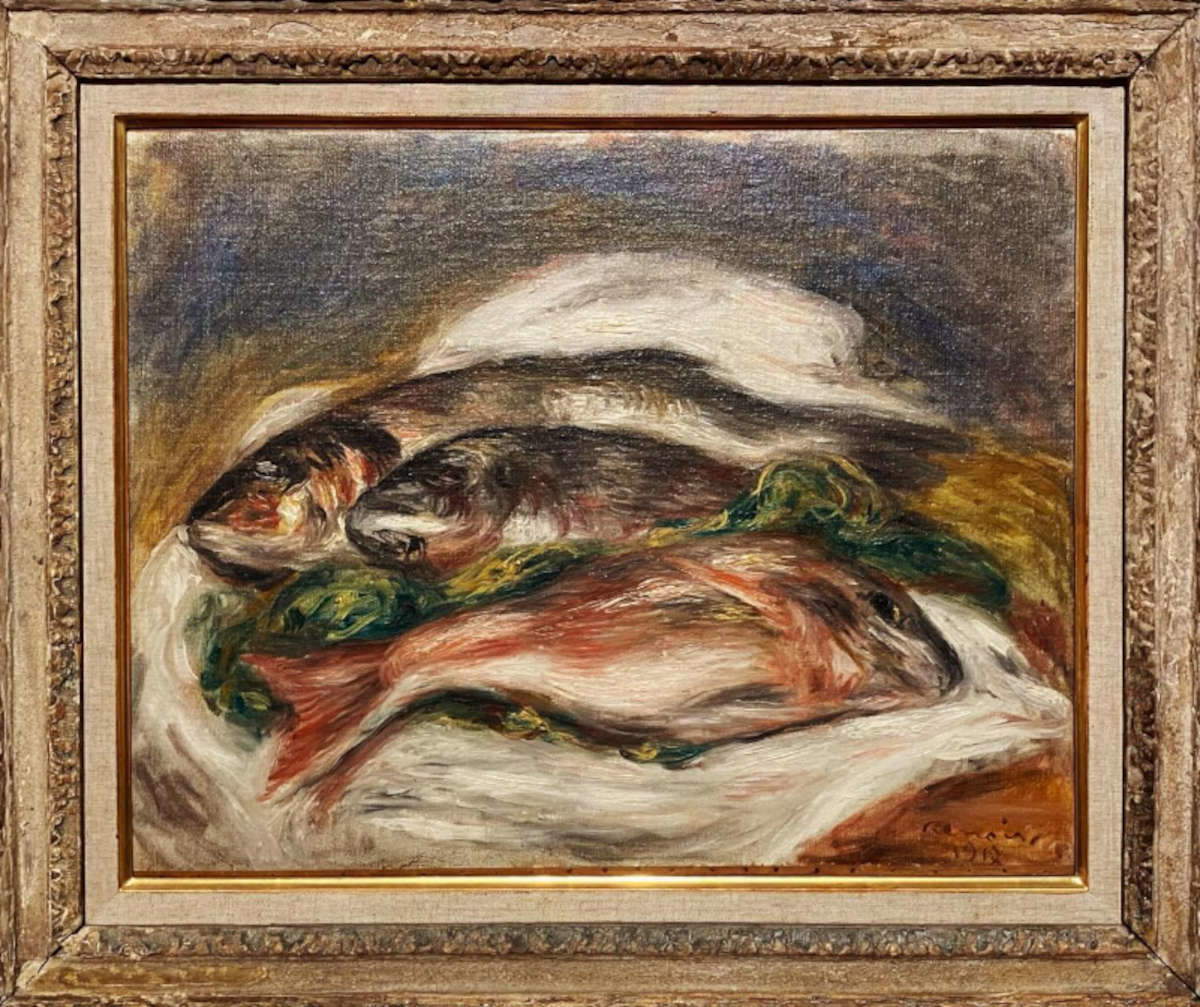
The discovery takes on even greater significance precisely because investigators believe the three paintings may never have left Parma. After the theft, the possibility that the works were intended to be quickly transported out of Italy and entered into the international black market had naturally been considered; however, their continued presence just a few kilometers from the Magnani Rocca Foundation suggests a different scenario, which the Public Prosecutor’s Office and the Carabinieri will now have to fully investigate.
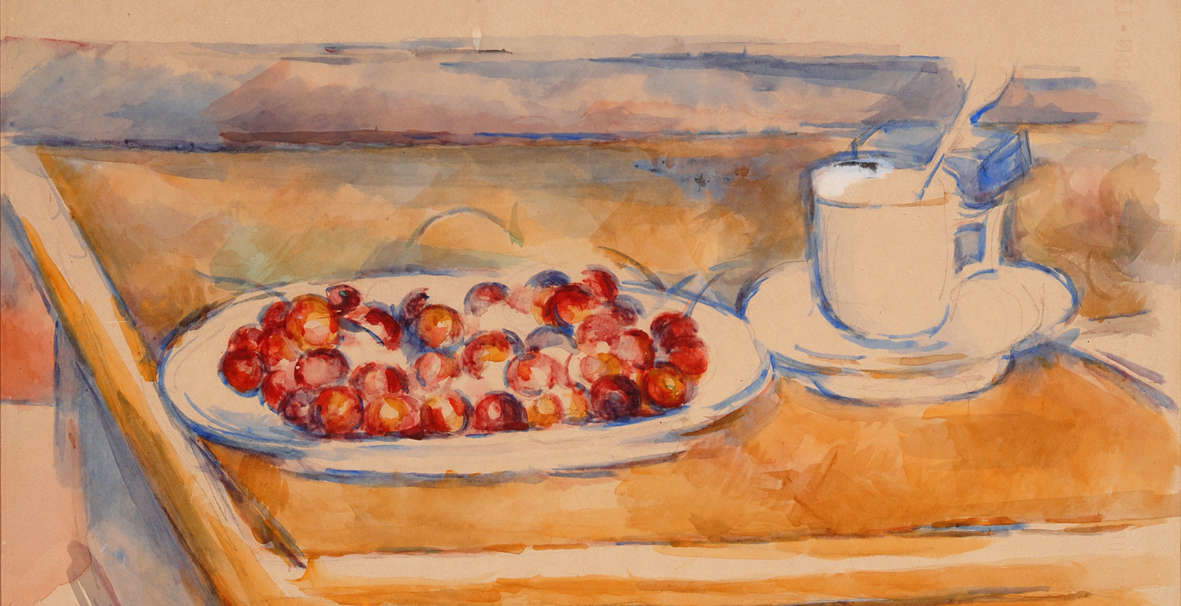
The recovered works are three pieces belonging to different periods in the history of French art, united by their presence in the collection assembled by Luigi Magnani, a musicologist, intellectual, and collector to whom we owe the creation of the collection now housed in the villa in Mamiano. The Cézanne painting, *Tasse et plat de cerises* ( see here for more details), is a pencil and watercolor on white paper, measuring 380 by 490 millimeters, and is the most valuable of the recovered works. Its estimated value is approximately 6 million euros. The work, one of the few pieces by Cézanne on display in an Italian museum, is one of the most significant works in the Foundation’s collection. Pierre-Auguste Renoir’s *Les Poissons*, on the other hand, is an oil painting on canvas, measuring 40 by 51.5 centimeters. The work is signed and dated “Renoir 1917” in the lower right corner, and its value is estimated at approximately 3 million euros. The painting thus belongs to the late period of the French Impressionist artist’s career and is also one of the rare works by Renoir permanently housed in an Italian collection. Rounding out the group is Henri Matisse’s *Odalisque Sur La Terrasse*, a color aquatint on paper measuring 63 by 91 centimeters. The estimated value of this work is significantly lower than that of the Cézanne and Renoir pieces, at around 20,000 euros. The Matisse, however, is also an important part of the Foundation’s collection, and its recovery helps to restore the core group of works stolen during the March heist.
The heist had caused a major stir precisely because of the speed with which it was carried out. The thieves had entered the villa on the night of March 22–23 and made their way to the rooms where the works were kept. According to the investigators’ reconstruction, two hooded men were captured on surveillance cameras as they moved quickly through the building. Outside, according to investigators’ reconstruction, other accomplices were present. The entire operation reportedly took less than three minutes—an extremely short time during which the thieves managed to make off with the three works that were later recovered. Furthermore, during their escape, a fourth piece was lost—a fact that came to light later. The activation of the security systems and the arrival of security guards helped put a stop to the heist before the thieves could take any other works.
The speed of the theft and the selection of the paintings had led investigators to suspect, from the very beginning, that this was a carefully planned operation. The stolen works were, in fact, relatively small in size and therefore easy to transport, but at the same time they held very high economic and historical value. The footage recorded by the security cameras, released today, has become one of the central elements of the investigation: in the videos, the perpetrators can be seen moving quickly through the galleries, reaching the paintings, removing them, and leaving.
The discovery of the three paintings came after a comprehensive investigation conducted by the Carabinieri of the Parma Provincial Command and the Cultural Heritage Protection Unit. The searches were carried out under the authority of the Parma Public Prosecutor’s Office and led to the identification of the location where the works were being held. The investigation will now seek to clarify the roles of the nine individuals implicated in the case and, in particular, what responsibilities can be attributed to the five who have been taken into custody, as well as the motive behind the theft.
“Beauty has triumphed,” the Magnani Rocca Foundation stated in the meantime. “Renoir, Cézanne, and Matisse have been recovered.” After nearly five months, the three works stolen from the Villa dei Capolavori have been recovered thanks to the efforts of the Carabinieri, the Cultural Heritage Protection Unit, and the Parma Public Prosecutor’s Office. Soon they will be able to return to where Luigi Magnani intended them to be: on display for all to see.”
“Three priceless works by Cézanne, Renoir, and Matisse are returning to the public thanks to the Carabinieri of the Cultural Heritage Protection Unit and the Parma Provincial Command,” comments Minister of Culture Alessandro Giuli. “I thank the Commander of the TPC, General Antonio Petti, and all the Carabinieri who carried out this important operation with competence and professionalism, recovering the works stolen last March from the Magnani Rocca Foundation. The Carabinieri’s operations in defense of our cultural heritage make us proud and once again confirm Italy’s excellence in the protection of cultural heritage.”
 |
| Works by Cézanne, Renoir, and Matisse stolen from the Magnani Rocca have been found in a storage room in Parma |

Warning: the translation into English of the original Italian article was created using automatic tools. We undertake to review all articles, but we do not guarantee the total absence of inaccuracies in the translation due to the program. You can find the original by clicking on the ITA button. If you find any mistake,please contact us.






















 IT
IT FR
FR DE
DE ES
ES CN
CN


