





There is this purported “democraticness” whereby the contemporary artwork must reach “right away,” to everyone. No words and explanations are needed because if the work “works” it must be clear, obvious and immediate. If we look at strictly contemporary works, that is, made by artists who have emerged in the last fifteen years, having this belief is a very serious mistake. In fact, if a work by a contemporary artist immediately convinces us there is something wrong with it, because most likely that artist has used codes, formal and conceptual, that somehow we already have in our eyes and have already digested.
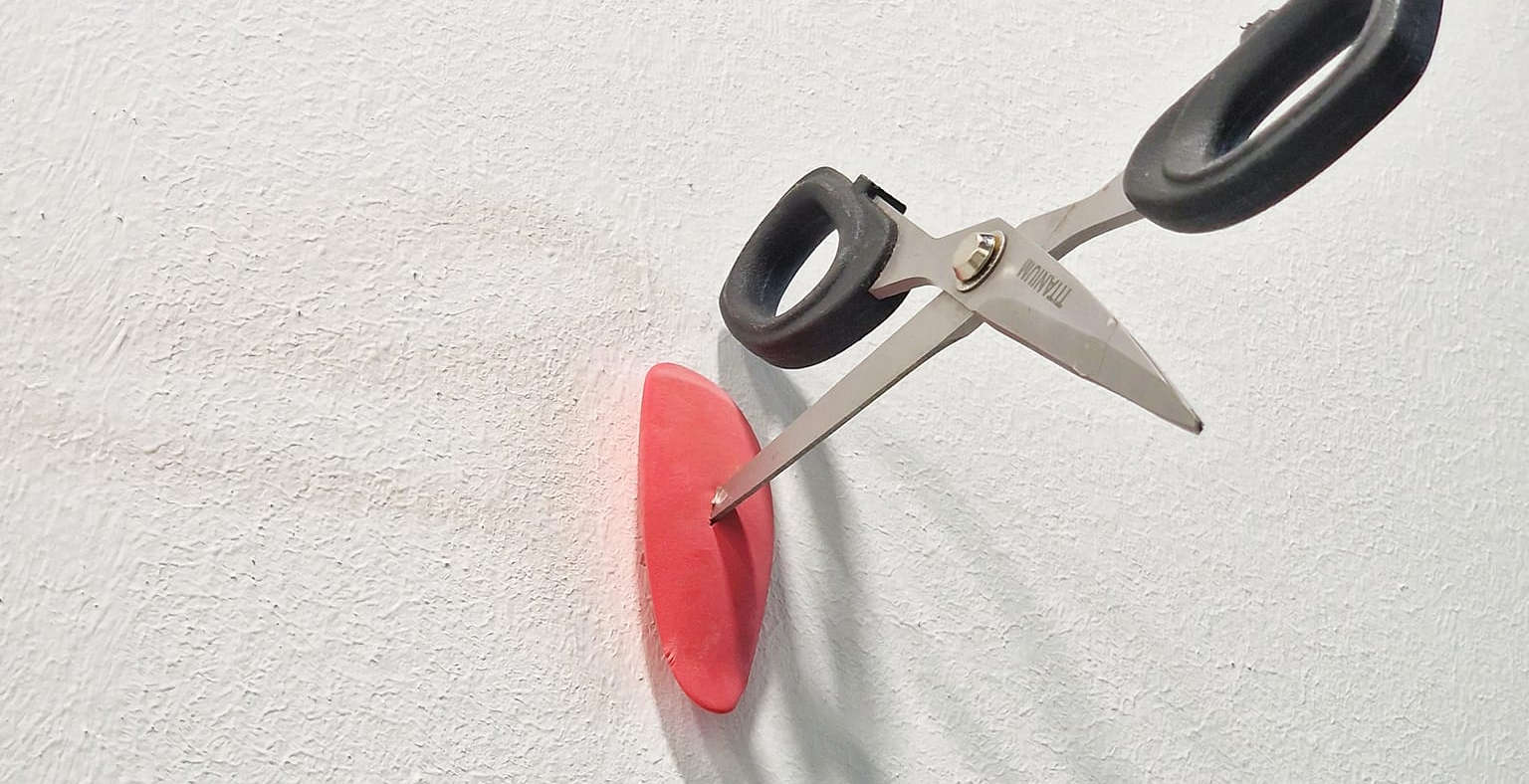
It is not about innovating and being original at any cost, but about using “quotation” as a bridge to deal with our present. Quality contemporary artwork, has to make us do some effort, a form of fitness that is comparable to the effort we make when we train our bodies, to improve our physical fitness. If we want to “train our eyes” and improve the sensitivity with which we face the world, we must necessarily do some fatigue. If we are not struggling we are seeing derivative works that precipitate from attitudes that were intuited sixty, seventy years ago. The value of contemporary artwork lies precisely in the M.A.V.A. cloud (modes, attitudes, visions, attitudes), from which works then precipitate as weathering and witnessing those attitudes.
It is those attitudes that we can apply in our everyday lives. Would you have your doctor treat you with modalities from sixty, seventy years ago? It is certain that those modalities might work today as well, but you are giving up the opportunity to be treated with the best care. Jannis Kounellis, Lucio Fontana or Alberto Burri, remain great artists but of course they are tied to their historical period and to modalities that, while still interesting today, will never be completely relevant to our present. Here is the task of contemporary art: to identify attitudes relevant to our present in order to deal with our reality. And it is not true that “everything has already been done,” because today we live in a present made up of unprecedented technologies, and completely new themes and issues are on the agenda compared to the last century. It is simply that younger artists are confronted with an extremely precarious educational and work system, and therefore lack the right courage and training to dissect and trace more contemporary attitudes.

The author of this article: Luca Rossi
“Luca Rossi" è un nome di fantasia in cui idealmente convergono tutti i ruoli del sistema dell'arte: artista, critico, curatore, blogger e osservatore indipendente. È stato definito da Fabio Cavallucci “la personalità artistica più interessante d'Italia”. Dal 2009, “Luca Rossi”, collettivo aperto e figura controversa nel sistema artistico, cerca di stimolare quotidianamente un dibattito più critico nell'ambito dell'arte contemporanea, intesa come materia capace di rivestire un ruolo fondamentale nel nostro presente. Dalle sue riflessioni critiche, ampiamente diffuse, sue le definizioni di “Ikea evoluta”, “Sindrome del Giovane Indiana Jones” e “Nonni Genitori Foundation”, è nato un progetto artistico non convenzionale, che comprende anche attività di divulgazione e formazione, culminate nel 2016 con la creazione della Luca Rossi Art Academy & Coaching (documenta.live). Nel febbraio 2026, un Hidden Work di Luca Rossi è entrato nel nuovo percorso espositivo di Osteria Francescana di Massimo Bottura, segnando un ulteriore sviluppo del progetto e della ricerca intorno agli Hidden Works. Nel 2014 Giacinto Di Pietrantonio, in un’intervista, definì Luca Rossi la promessa futura dell'arte contemporanea, paragonandolo a ciò che Vanessa Beecroft avrebbe potuto essere negli anni Novanta. Alcuni “nodi critici” sviluppati nel corso degli anni da Luca Rossi sono entrati a far parte del linguaggio dell'arte italiana e hanno contribuito a cambiare la prospettiva e la visione di molte persone, dentro e fuori il settore. Nel 2014, la celebre critica d'arte Angela Vettese dichiarò che, dopo aver letto i testi di Luca Rossi, aveva deciso di non dedicarsi più alla pratica artistica, ma esclusivamente alla teoria.Warning: the translation into English of the original Italian article was created using automatic tools. We undertake to review all articles, but we do not guarantee the total absence of inaccuracies in the translation due to the program. You can find the original by clicking on the ITA button. If you find any mistake,please contact us.














 IT
IT FR
FR DE
DE ES
ES CN
CN


