



by Silvia Mazza 16/11/2026


Categories: Opinions / Disclaimer
The photo of Messina’s superintendent, Luigi Giacobbe, standing alongside his predecessor, Orazio Micali, as he personally helps save the paintings at the Chamber of Commerce, tells a story that goes far beyond an emergency: it is a tangible sign of civic commitment that restores confidence to the city after the damage inflicted on its artistic heritage. An article by Silvia Mazza.


In journalistic jargon, it’s called a “news photo.” But the photo published in the Gazzetta del Sud—in the midst of the emergency that struck the historic Messina Chamber of Commerce building, devastated by the fire on November 5—goes far beyond mere news reporting. It depicts the newly appointed superintendent, Luigi Giacobbe, personally overseeing the removal of the paintings housed in the building. These are works of art belonging to a collection from the 19th and early 20th centuries that Giacobbe himself knows intimately: he had cataloged them in a 2011 volume and, even earlier, studied them as a university student while researching Sicilian masters. That photo, reposted by the author on Facebook and shared widely across social media, reached 35,000 views and over 4,000 interactions in just a few hours. These significant numbers prompt reflection: what captured the public’s attention so profoundly?

The answer lies in the value of professional ethics and in a powerful message of trust. Messina is a community still reeling from the open wound of the theft of Antonello da Messina’s works. Etched in the minds of the citizens is the indelible image of that other photo: the two panels of the San Gregorio polyptych abandoned by the thieves. While that image once conveyed a heart-wrenching sense of helplessness in the face of a violated cultural heritage—fueling mistrust toward institutions deemed inadequate in their protection—today the scenario is reversed.


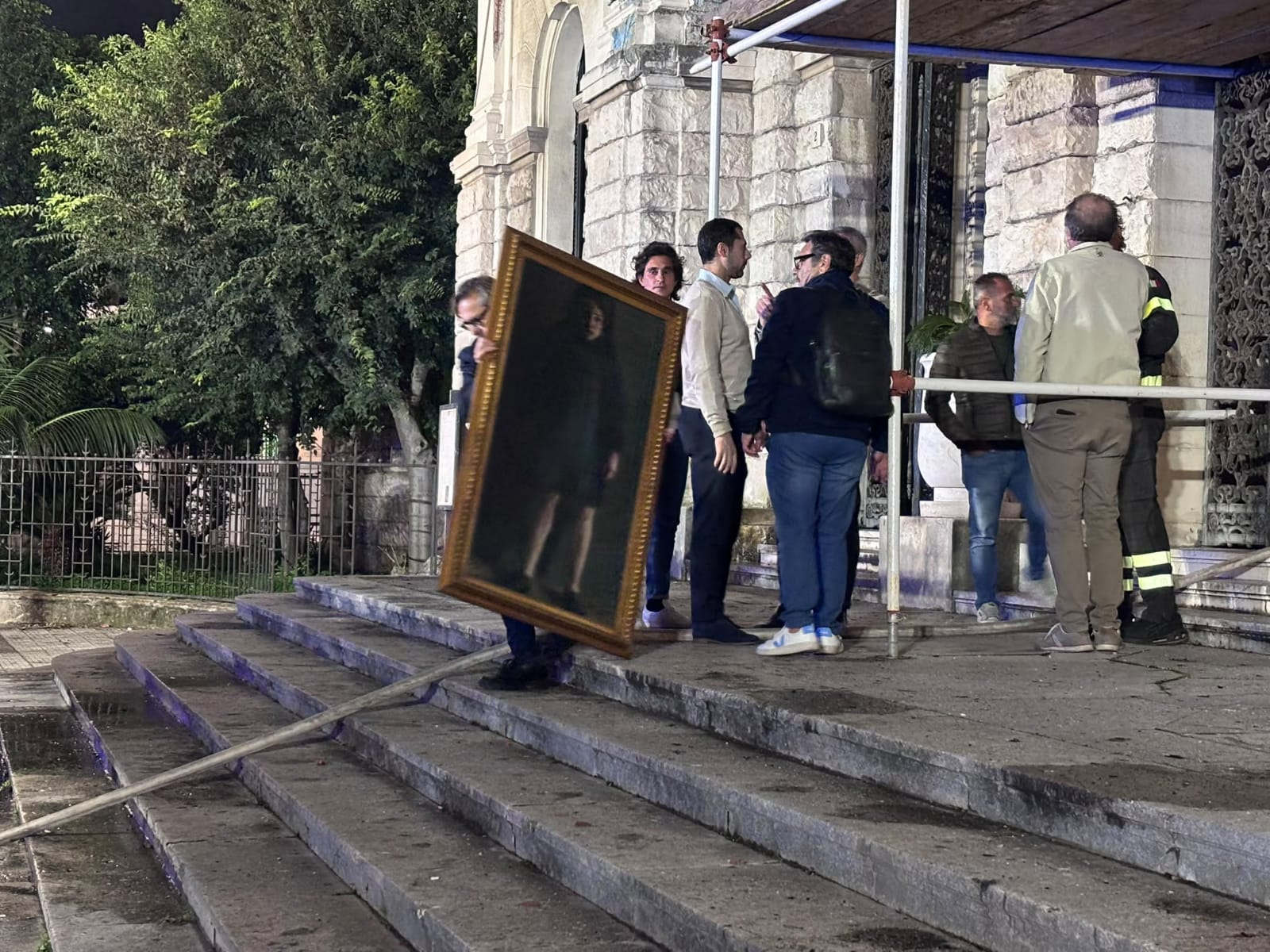
Giacobbe has proven himself to be a guardian of our cultural heritage on the ground, not behind a desk. He chose to “get his hands dirty” like any ordinary worker. In that gesture lies not only institutional rigor but also love: the Superintendent was not merely securing a simple canvas, but a fragment of our collective memory.

Rounding out this inspiring story is a second behind-the-scenes moment, perhaps even more significant because it wasn’t captured by the camera flashes. At Giacobbe’s side, lending a hand amid the flames and smoke, was former Superintendent Orazio Micali. A vivid demonstration that the spirit of service does not retire and that the civic responsibility to preserve memory does not expire with chronological age.
And even behind the scenes, that same Regional Museum—which had been targeted by the mid-August theft—was not caught off guard; there, until late into the night, Director Marisa Mercurio and her staff welcomed, organized, and arranged 44 works on loan from the Chamber of Commerce.
What we today call “cultural heritage” (a painting, a sculpture, an archaeological artifact) were, for the Latins, *monimenta*, derived from the verb *monere*: to remember, but also to admonish. They are not inanimate objects, but living elements that transform the past into an open question about the present. They do not bring history to a close; rather, they keep it alive and capable of guiding a community’s choices.
Change can also begin here. From a gesture that anyone might instinctively have made in an emergency, but which—when carried out by a public official, or someone who held that office until yesterday—restores dignity to institutions. Because authority does not come from the office itself, but from the respect earned through action.
Warning: the translation into English of the original Italian article was created using automatic tools. We undertake to review all articles, but we do not guarantee the total absence of inaccuracies in the translation due to the program. You can find the original by clicking on the ITA button. If you find any mistake,please contact us.