




by Luca Rossi 08/09/2026



Categories: Opinions / Disclaimer
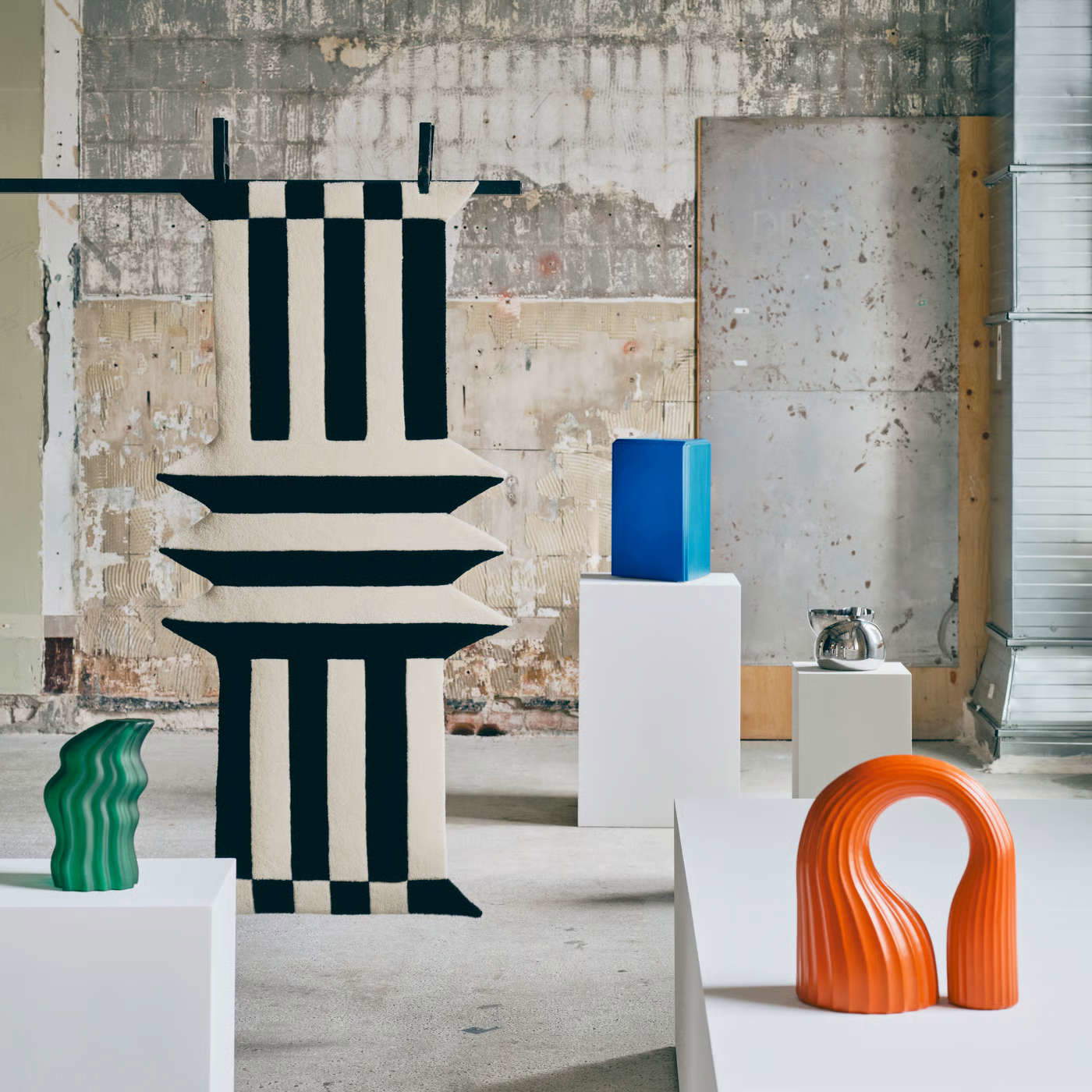
IKEA is entering the world of art with a new line of artworks. But the point isn’t to determine what is art and what isn’t. Art isn’t a chair. Art isn’t decoration. So, to understand it, you need a language. And a valuable work of art can transform a home much more profoundly than any piece of furniture—even if it looks like a work of art.

The news making the rounds these days is that IKEA, the low-cost furniture giant, has created a line of artwork to be sold in its stores. Back in 2009, I had already coined the term “Evolved IKEA” to describe a whole series of artworks that drew on a derivative, modernist, and contemporary aesthetic, without, however, stemming from approaches, attitudes, visions, or perspectives capable of having concrete value in confronting and resisting our present. Beyond the usual debate over what is and isn’t art—and beyond the fact that contemporary art can sometimes seem like nothing but hot air—I believe it is necessary to clarify two fundamental issues.
First: To interpret contemporary art, you need an alphabet. It’s very simple: to appreciate and interpret contemporary art, you need an alphabet, just as you need an alphabet to read a book. Many people judge the “book” of a work of art by merely looking at its cover. They do this because they lack the tools—that is, the alphabet—to go beyond what they see at first glance. This is why they may not understand how Maurizio Cattelan’s banana, *Comedian*, can be an extraordinary work of contemporary art, while Jago’s *Medusa*, featuring the likeness of actress Whoopi Goldberg, may have—when considered specifically in the context of the contemporary—a much lower value. Note: this is not a matter of “I like it” or “I don’t like it.” I may not like Maurizio Cattelan’s *Comedian *. I may find it irritating, off-putting, or even detestable. But if I am familiar with the language of modern and contemporary art, I must be able to recognize its value as a work of contemporary art. Just as I may not love a particular book, but that does not prevent me from recognizing its literary value. The problem arises when we lack that foundation and are therefore forced to judge it by its cover.


Second: a work of art can transform a space. This concerns the relationship between art, home, and architecture. A valuable work of art can create enormous added value within a home or an architectural project. Architects, interior designers, and all of us choose specific chairs, finishes, furniture, lamps, beds, and materials with great care. Yet, very often, we do not choose works of art with the same care and determination. It’s a paradox, because it is precisely a work of art that can create a unique, complex, and even magical atmosphere within a home or an architectural space. A chair, a piece of furniture, a living room set, or a lamp will essentially remain what they are. A work of art, on the other hand, can grow, come alive, and tangibly transform the architectural space every day.
Please note: I’m not talking about a decorative object to place on top of the mantelpiece. I’m talking about modern and contemporary works of art that stem from meaningful approaches, attitudes, visions, and perspectives. Works that bear witness to concrete ways through which we can see the world differently and, in some way, resist our contemporary reality. It’s clear that, to recognize this value, each of us must learn the language and develop our own critical sense.
If we stop at the book’s cover, we’ll never truly appreciate the book itself. And so, at that point, it’s much better to buy a chair, a piece of furniture, a living room set, a lamp, or a bed—at least they’re useful for something. Extend life or broaden it? All of Western culture today seems focused on a single, grand goal: extending life. We live longer, we try to stay young, and we invest in health, technology, and research to gain more time. Following the line of reasoning presented so far, we could then say that a chair helps extend life; a high-quality work of art, on the other hand, can “enrich” it. It can make our lives greater, deeper, more complex, and, perhaps, even more beautiful. And it is precisely in this possibility that the fundamental difference between a work of art and a piece of furniture lies. Because the value of art does not consist simply in the object before our eyes, but in everything that object can evoke within and around us.
Warning: the translation into English of the original Italian article was created using automatic tools. We undertake to review all articles, but we do not guarantee the total absence of inaccuracies in the translation due to the program. You can find the original by clicking on the ITA button. If you find any mistake,please contact us.