





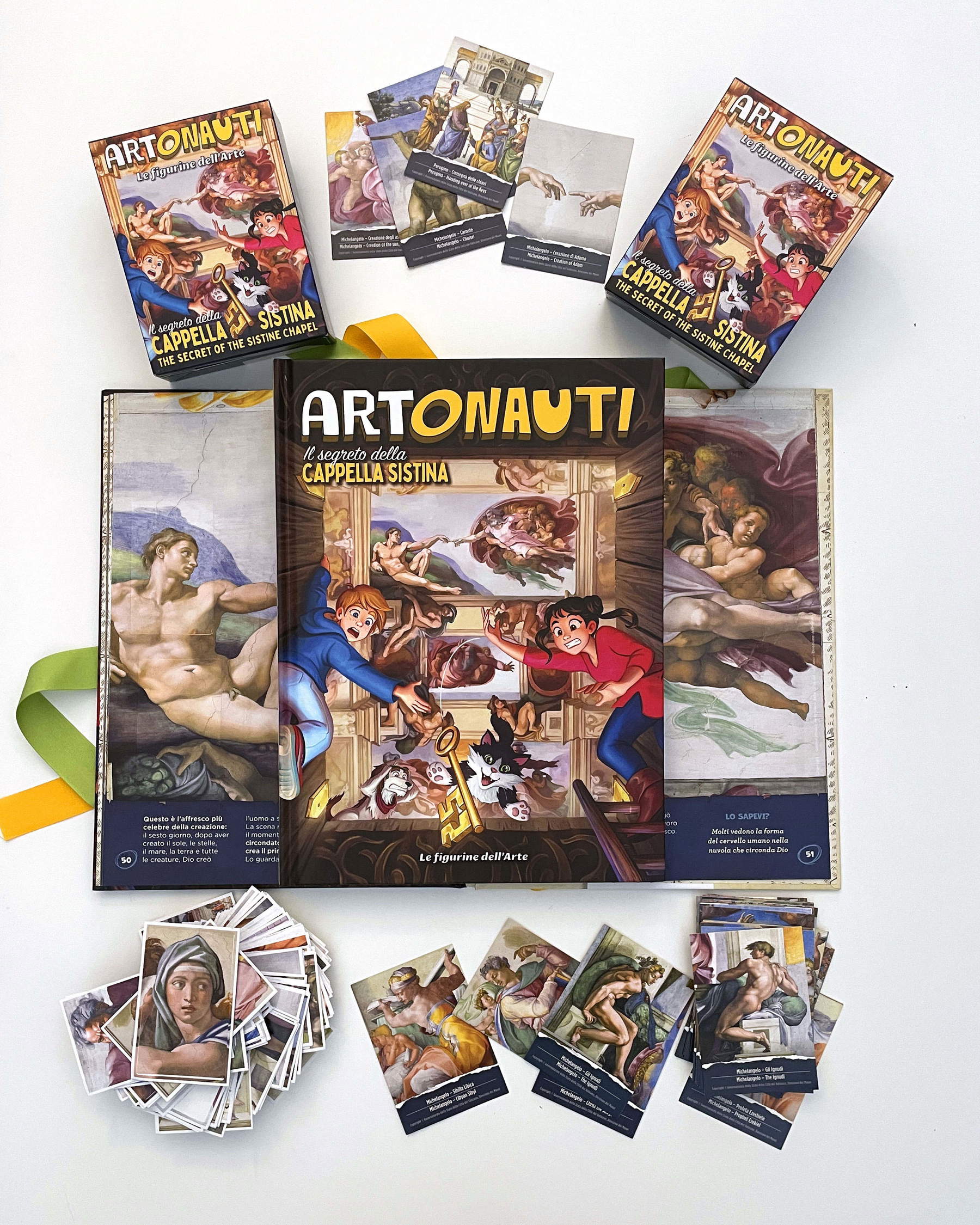
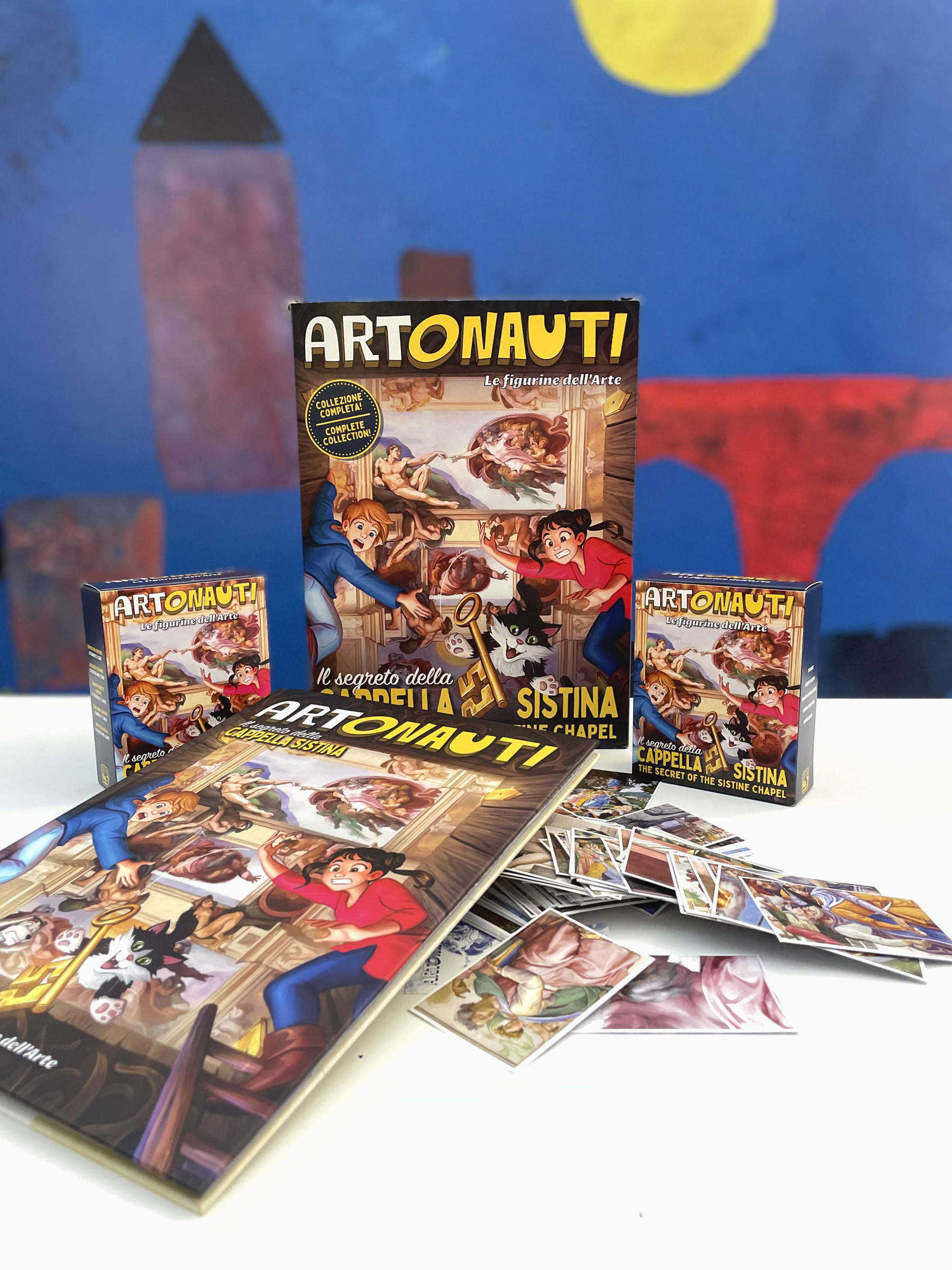
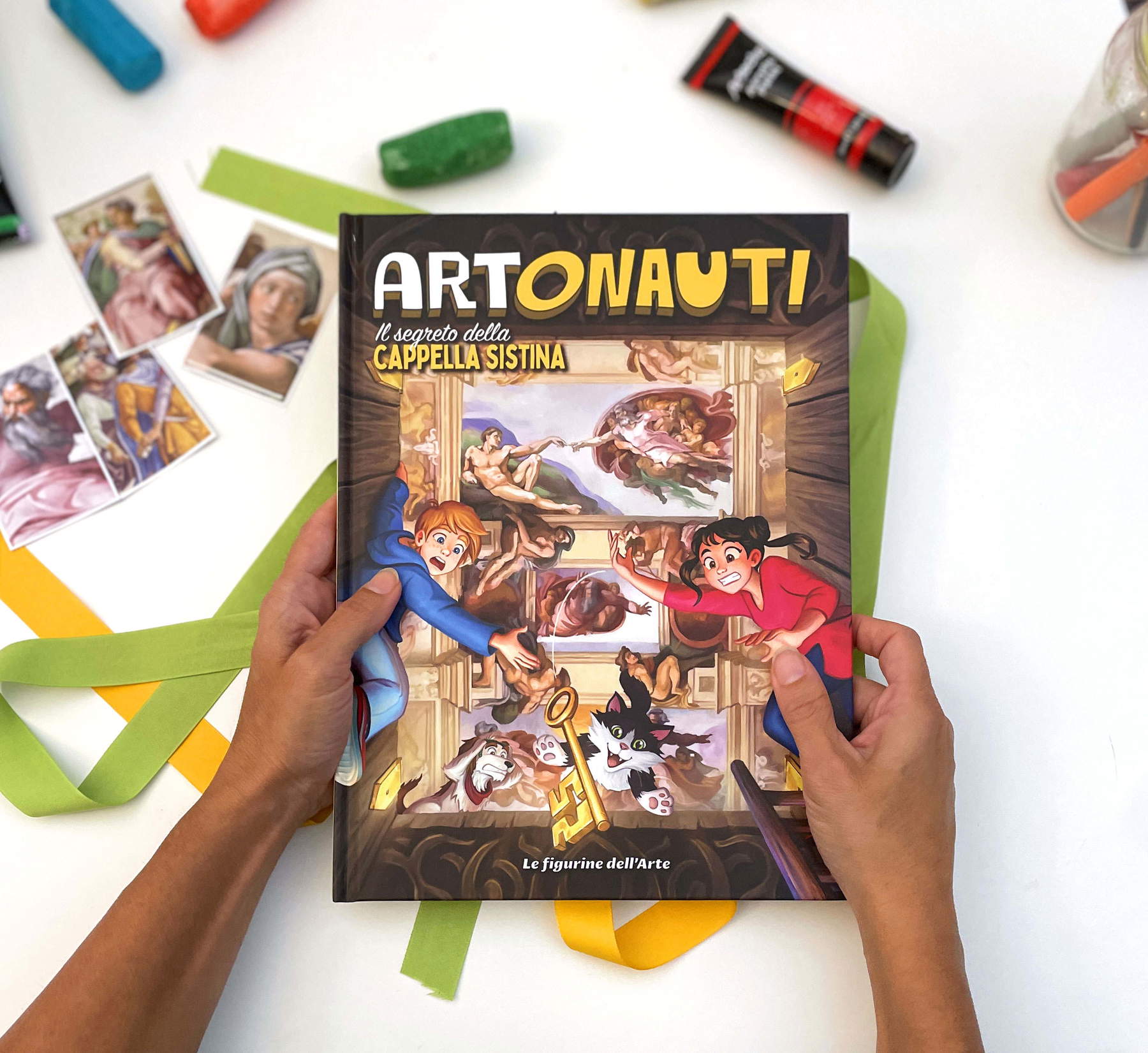
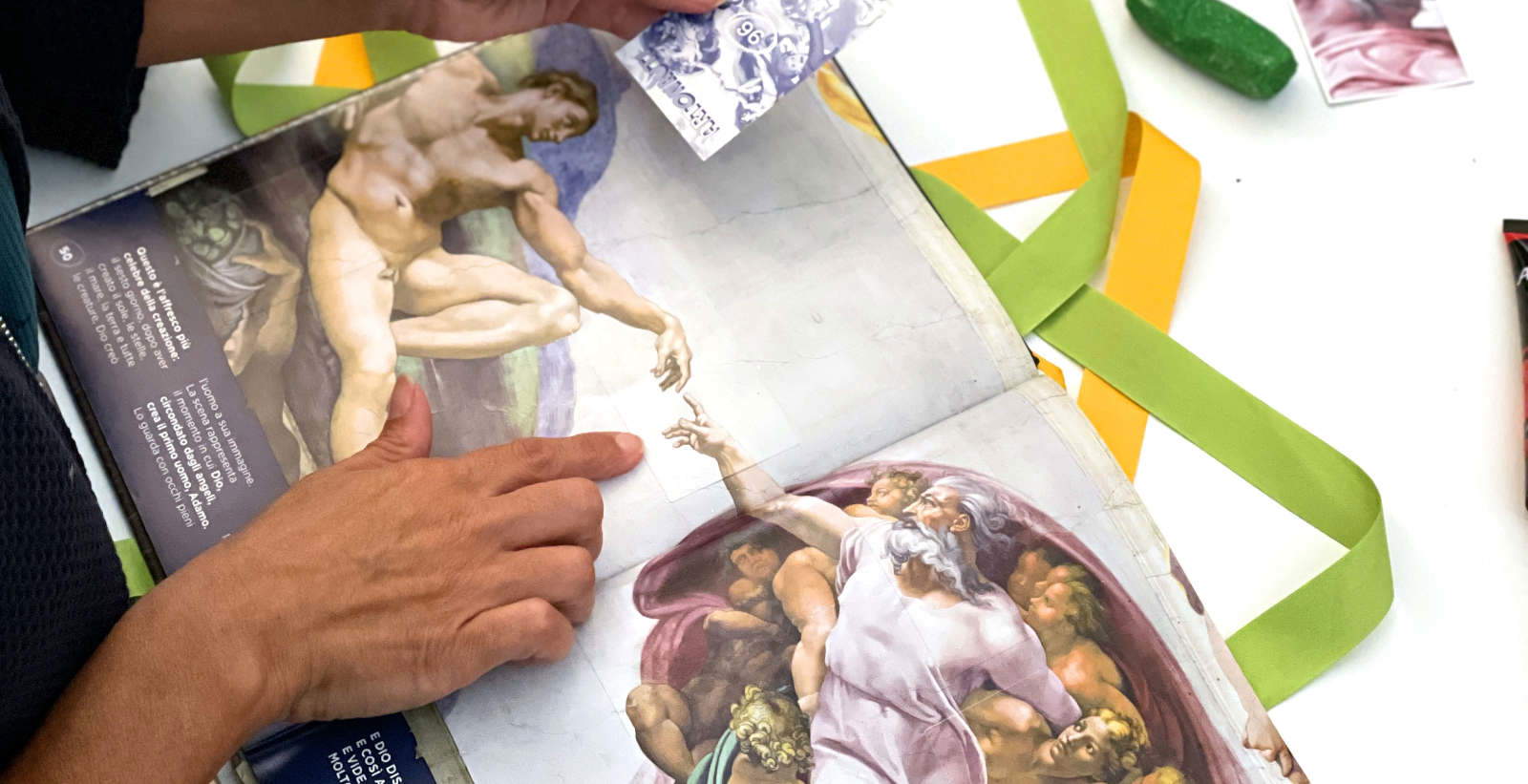
There are images we’re used to viewing all at once and which, precisely for that reason, we risk not truly observing. The Sistine Chapel is one of them: an endless array of figures, scenes, painted architectural elements, and details that the eye must inevitably take in within a few minutes. A sticker album now invites us to do the opposite: take those images, break them down, isolate a face or a scene, search for the fragments, and slowly put them back together. This is the idea behind the seventh collection of Artonauti, the art-themed sticker album created by Daniela Re and Marco Tatarella. Following the previous collections, the project makes a symbolic entry into the Sistine Chapel with a special limited-edition release created using images provided by the Vatican Museums. The new album, titled *The Secret of the Sistine Chapel*, features 144 stickers to be placed in order to complete 56 images of the famous chapel.
The process is familiar to anyone who has ever held a sticker album: finding the right number, figuring out where to place it, realizing you have a duplicate, trading it with someone, and continuing until the pages are complete. Here, however, the search for the sticker also becomes a way to linger over the images.
The difference lies mainly in the pace: a fresco viewed in its entirety can feel like a vast composition that’s hard to take in at a glance; a sticker, on the other hand, forces you to focus on a specific portion. A face, a figure, or a detail of the painted architecture can become the starting point for gradually piecing together the scene. The album obviously does not attempt to replace a visit to the Sistine Chapel, nor to encapsulate the experience within 64 pages: its purpose is rather to offer a different way of approaching the images—first the fragment, then the scene, and finally the whole. In addition to this visual reconstruction, the book features a narrative centered on the artists and the events surrounding the chapel’s creation.
Once again, this journey is guided by the protagonists of past editions of *Artonauti*—namely, Ale, Morgana, and Argo, the “zero zero setter” dog who accompanies the protagonists on their adventures. The three enter the Sistine Chapel and meet the artists who contributed to its history: Perugino, Ghirlandaio, Botticelli, and, of course, Michelangelo. The decision to tell the story of the Chapel through its key figures shifts the focus from the idea of a static, finished work to that of a space shaped by various interventions at different times. Alongside the artists, characters, relationships, and conflicts emerge, including the events surrounding the relationships between the artists and the popes. The new collection takes the form of a treasure hunt: a series of maps, clues, and messages guides readers through the book, while Ale, Morgana, and Argo try to uncover a secret hidden in the Chapel. The question that drives the story is therefore also the one that guides the search for the stickers: will the Artonauti succeed in uncovering the message hidden in the Sistine Chapel?
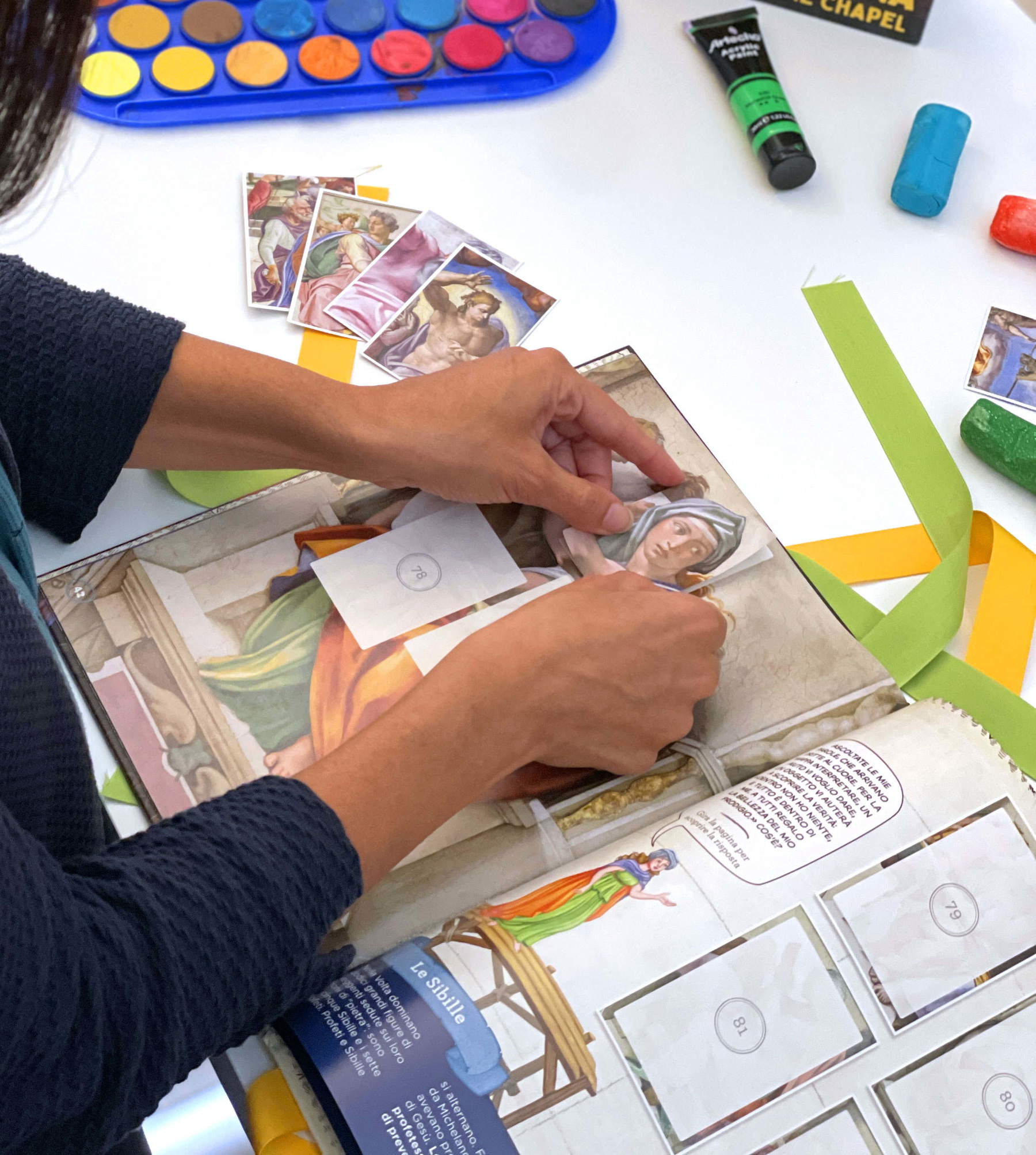
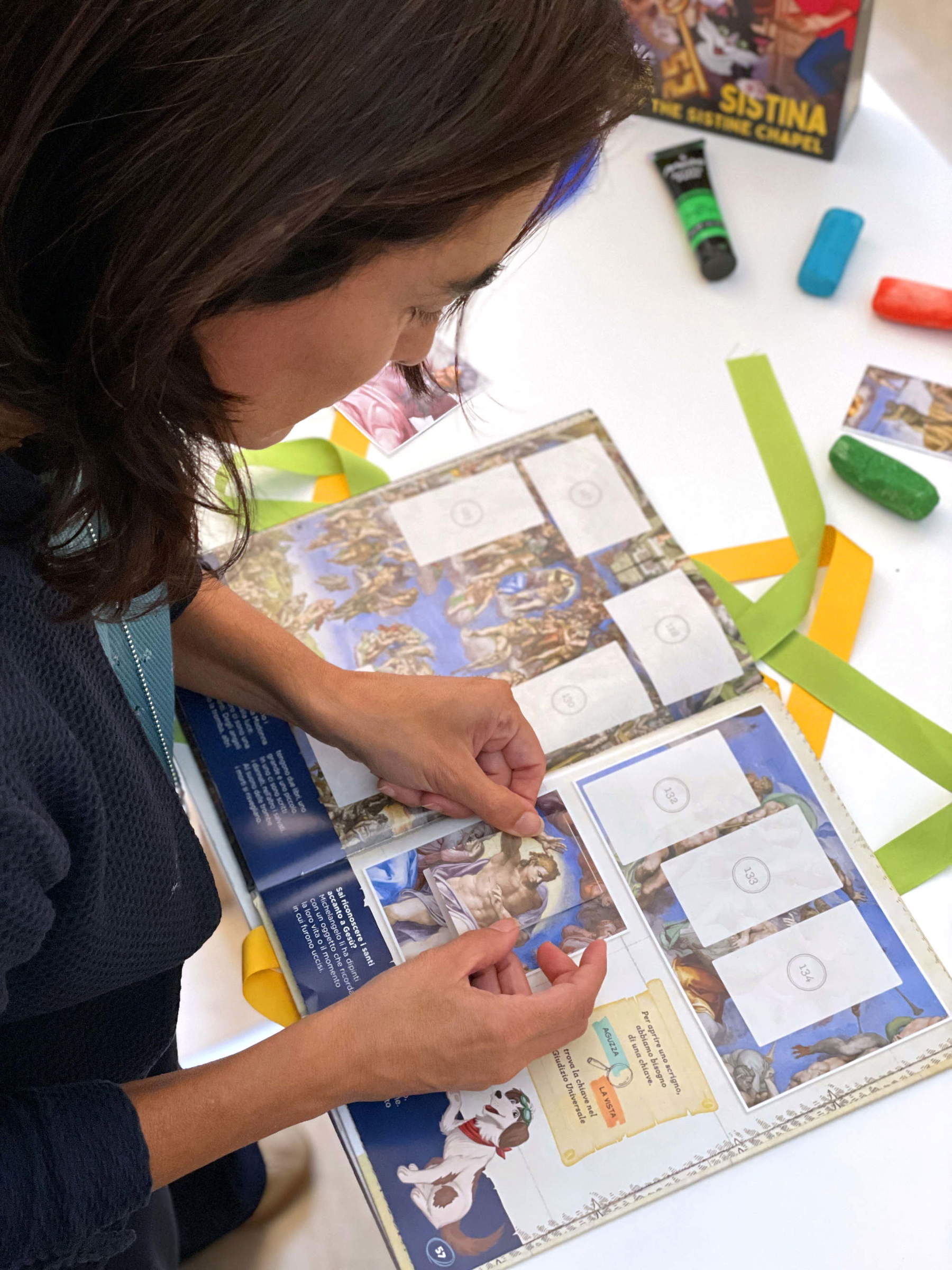
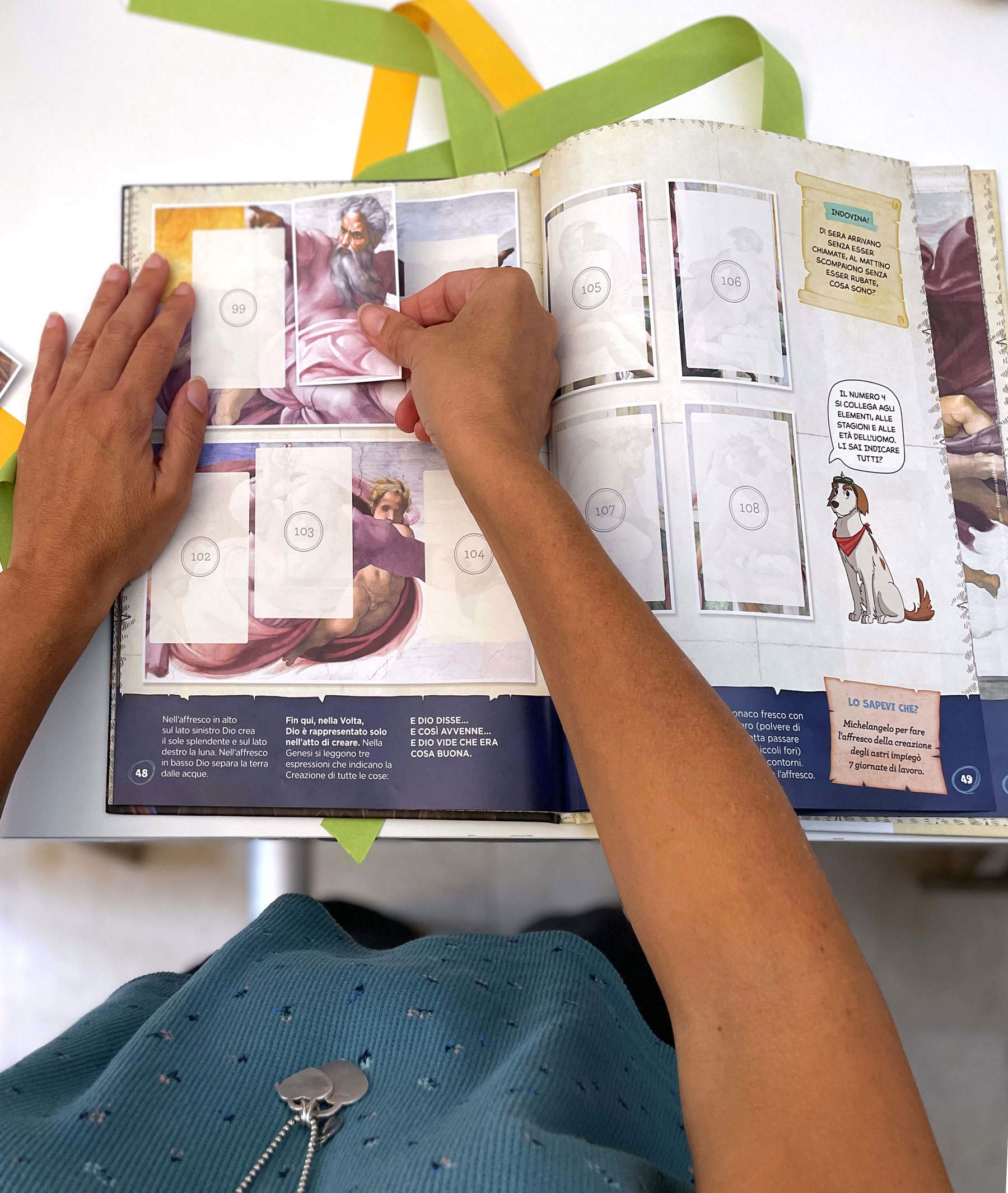
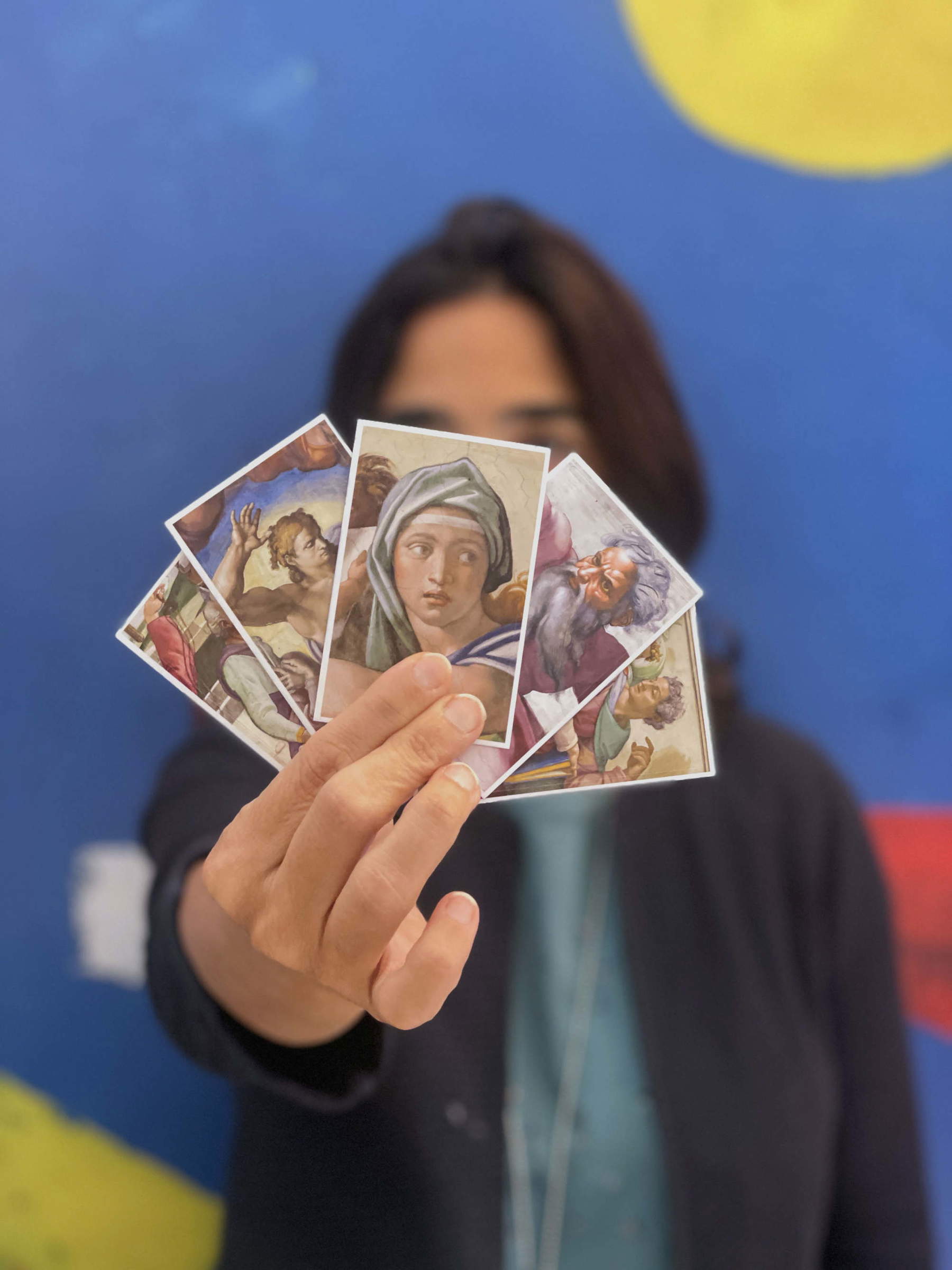
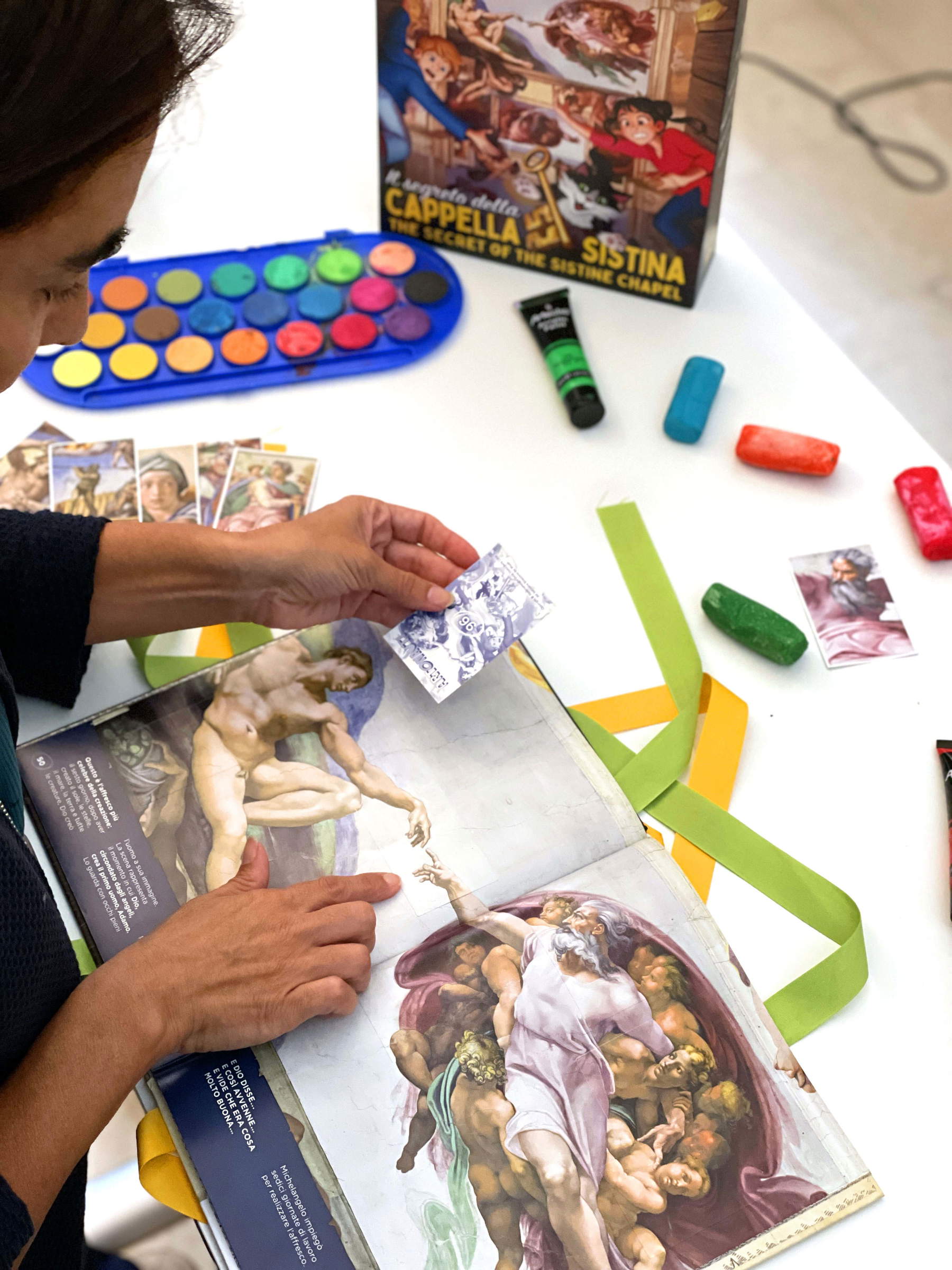
The narrative dimension is not separate from the sticker game. On the contrary, the search for the elements needed to complete the images proceeds hand in hand with the discovery of the stories. The sticker thus becomes a small tool for observation: to understand where to place it, you must look at the image, recognize the detail, and compare it with the empty space.
It’s a simple process, but it changes the relationship with the reproduction of the artwork. The search for the exact position slows down the gaze and draws attention to details that might easily go unnoticed. In this sense, the game is not merely used as a source of entertainment, but as part of the mechanism through which to introduce young children to art.
This special edition includes the hardcover album and 50 packs of stickers, offering the chance to complete the entire collection: thus preserving the ritual of opening the packets, searching for missing images, finding duplicates, and trading with other collectors—that same “I have this one, I have that one, I’m missing this one” that is part of the memories of generations of children. The difference is that, once completed, the album can be kept as a book dedicated to the Sistine Chapel. The 144 stickers are used to complete 56 images and to build, page by page, a visual narrative of the chapel and the artists who worked on it.
The edition is designed for a very broad audience: the recommended age range is 6 to 99 years old. The complete set, consisting of the hardcover album and 50 packs of stickers, costs 49.90 euros. The collection is available on the Artonauti website and can also be ordered at newsstands and bookstores.
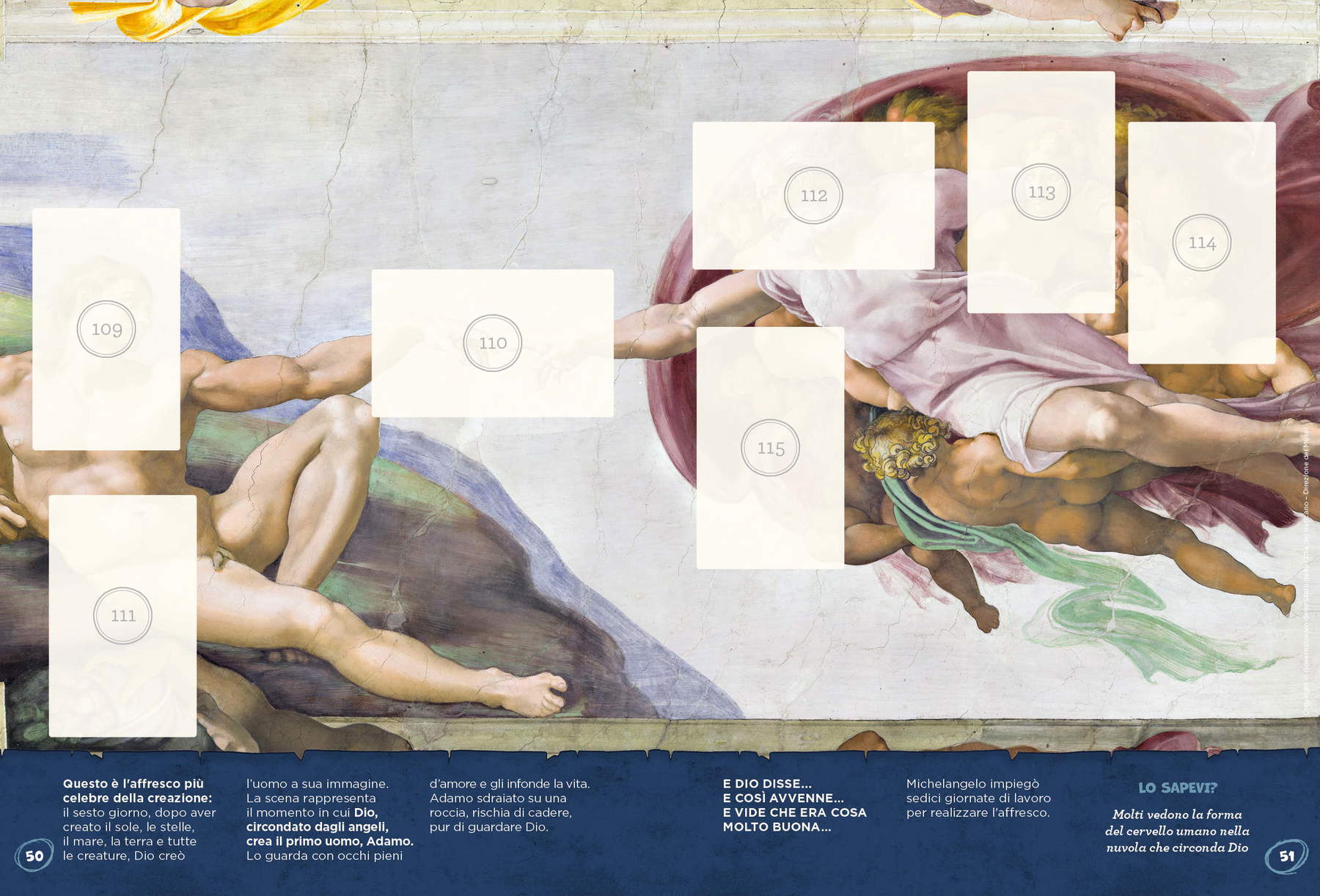
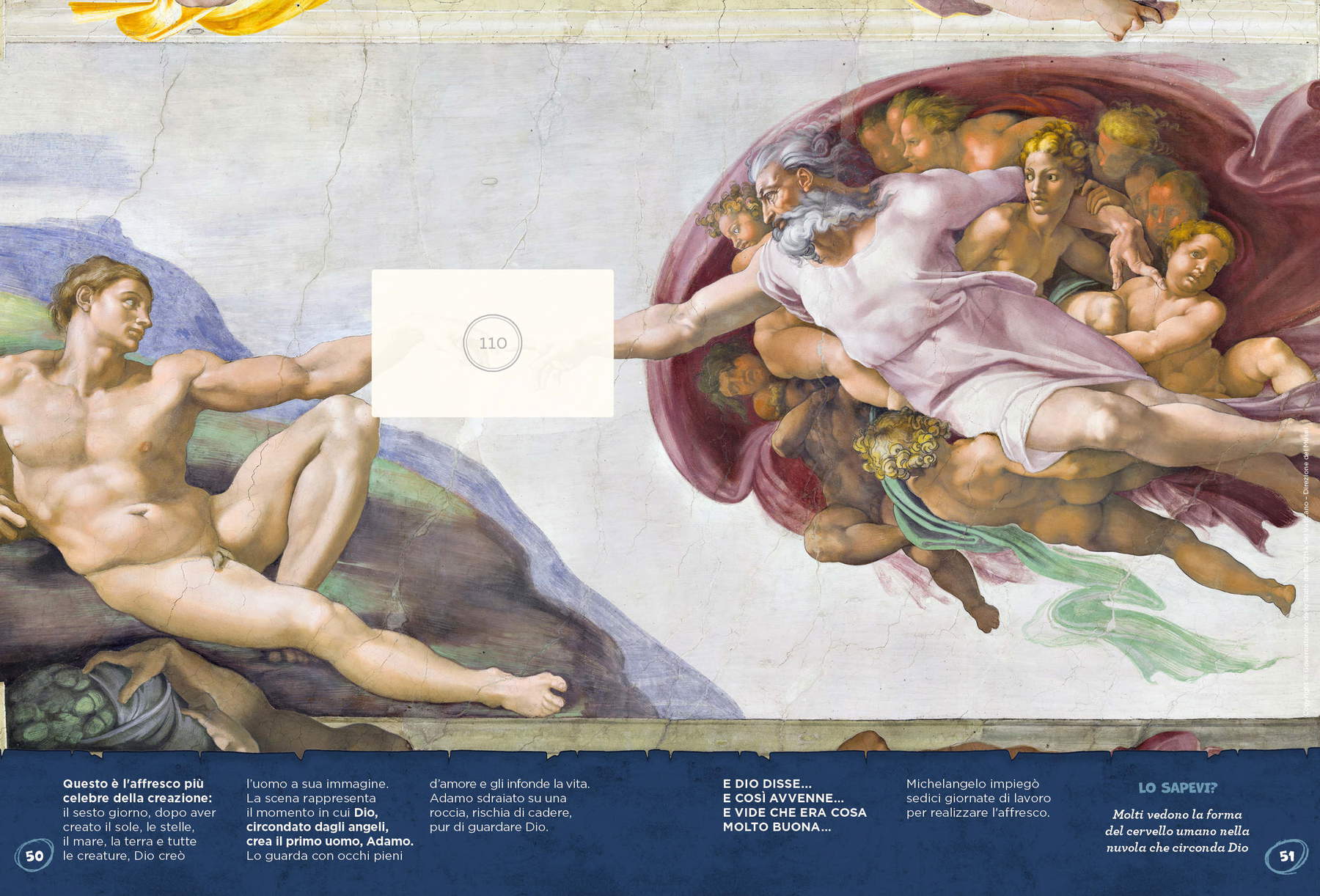
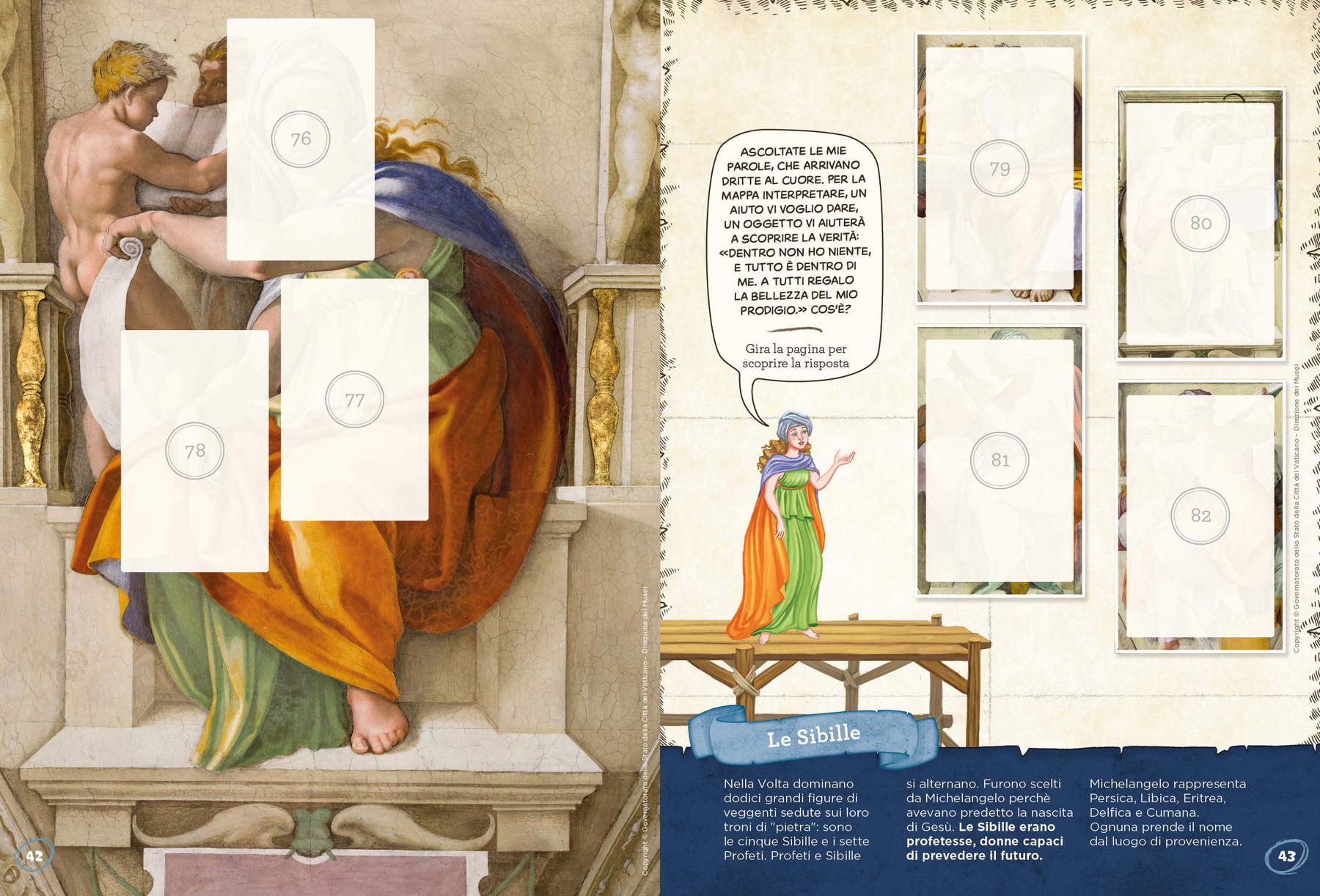
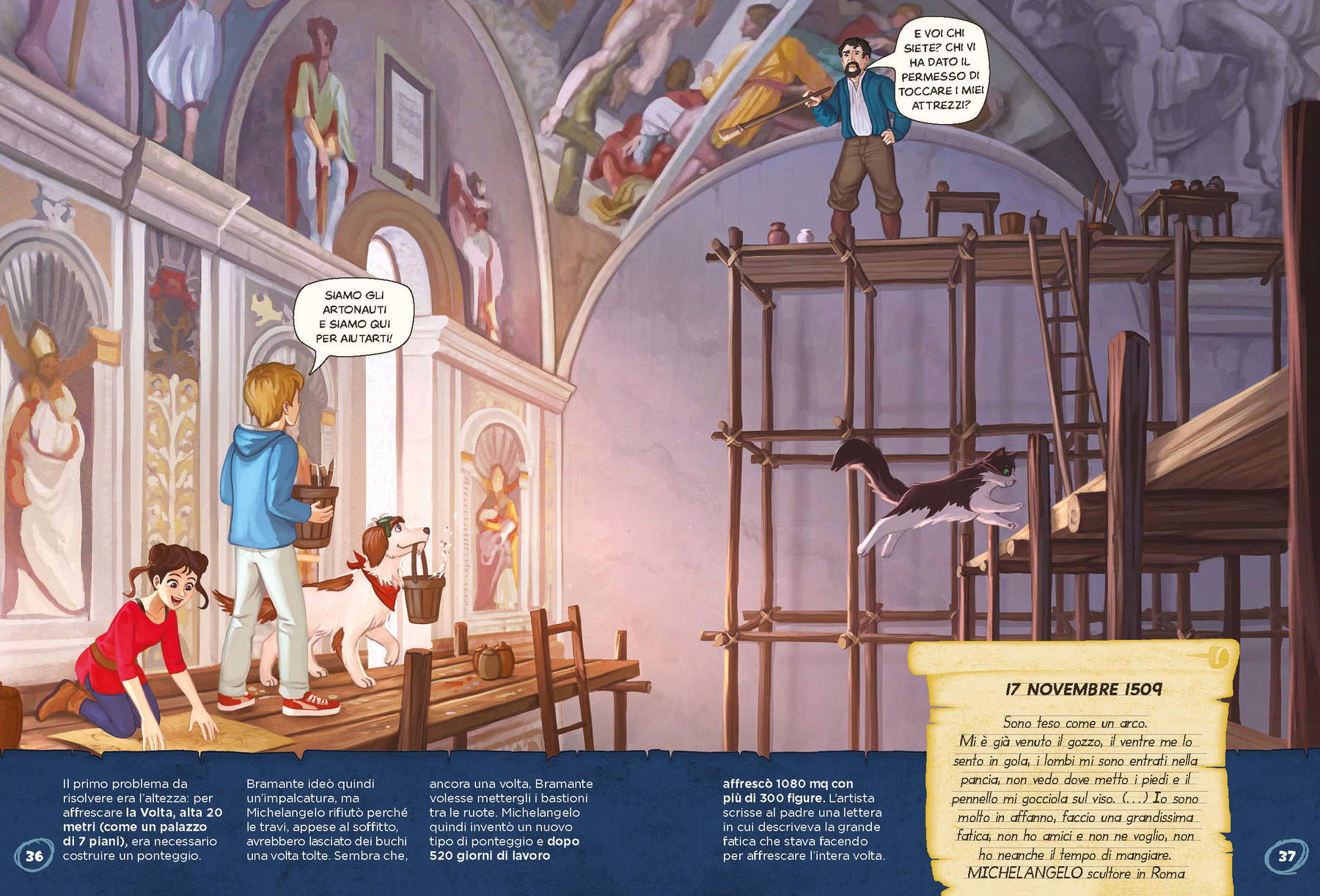
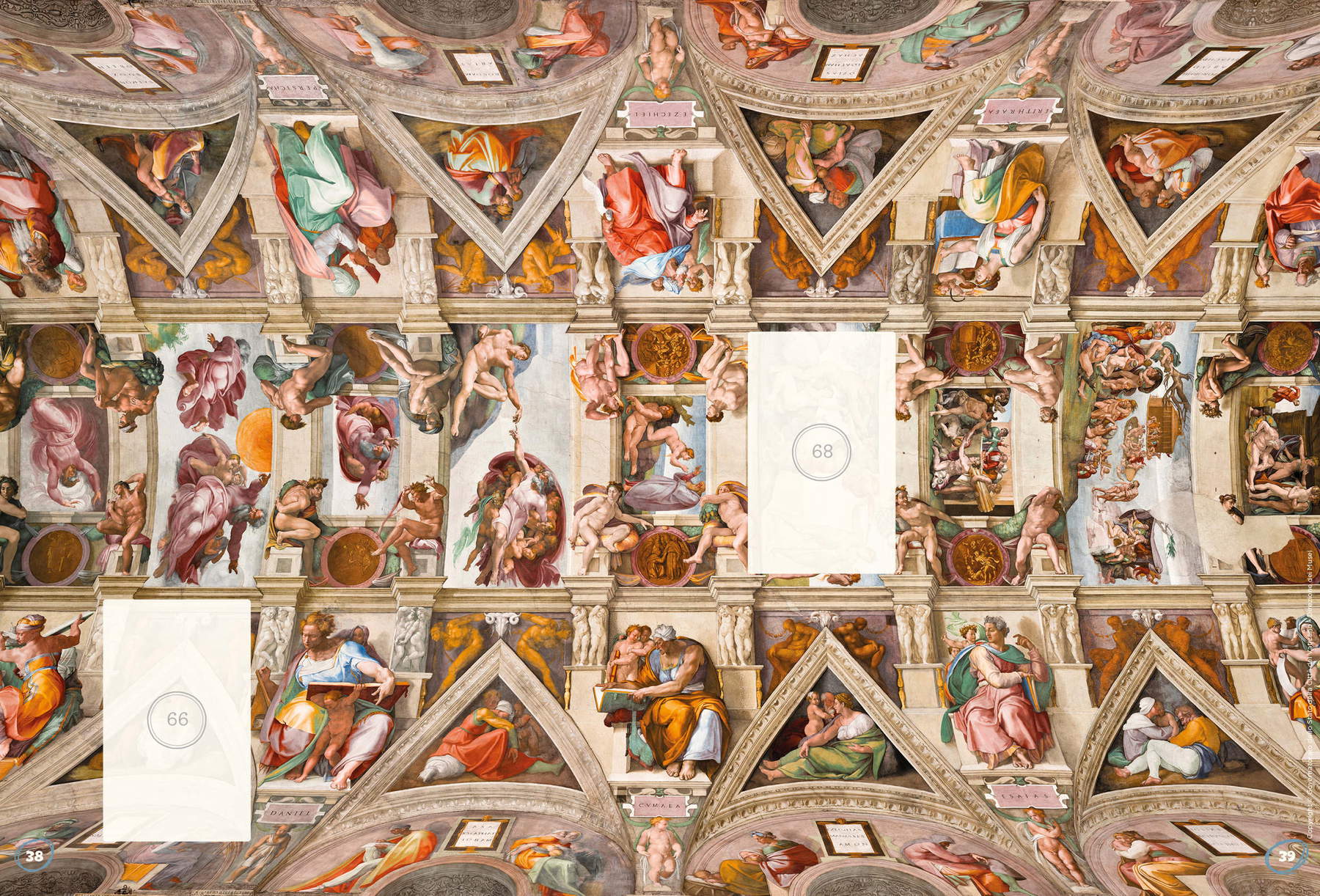
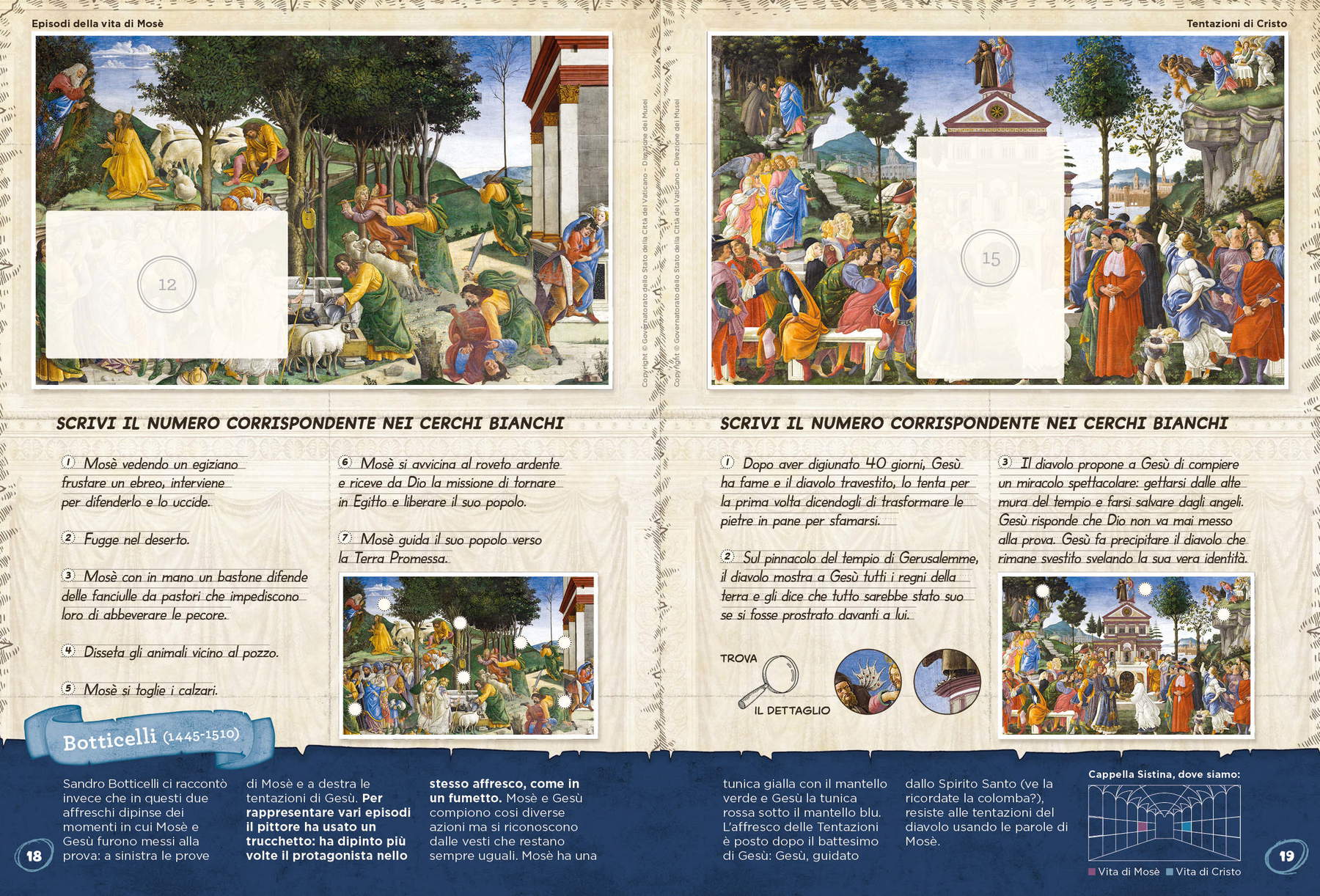
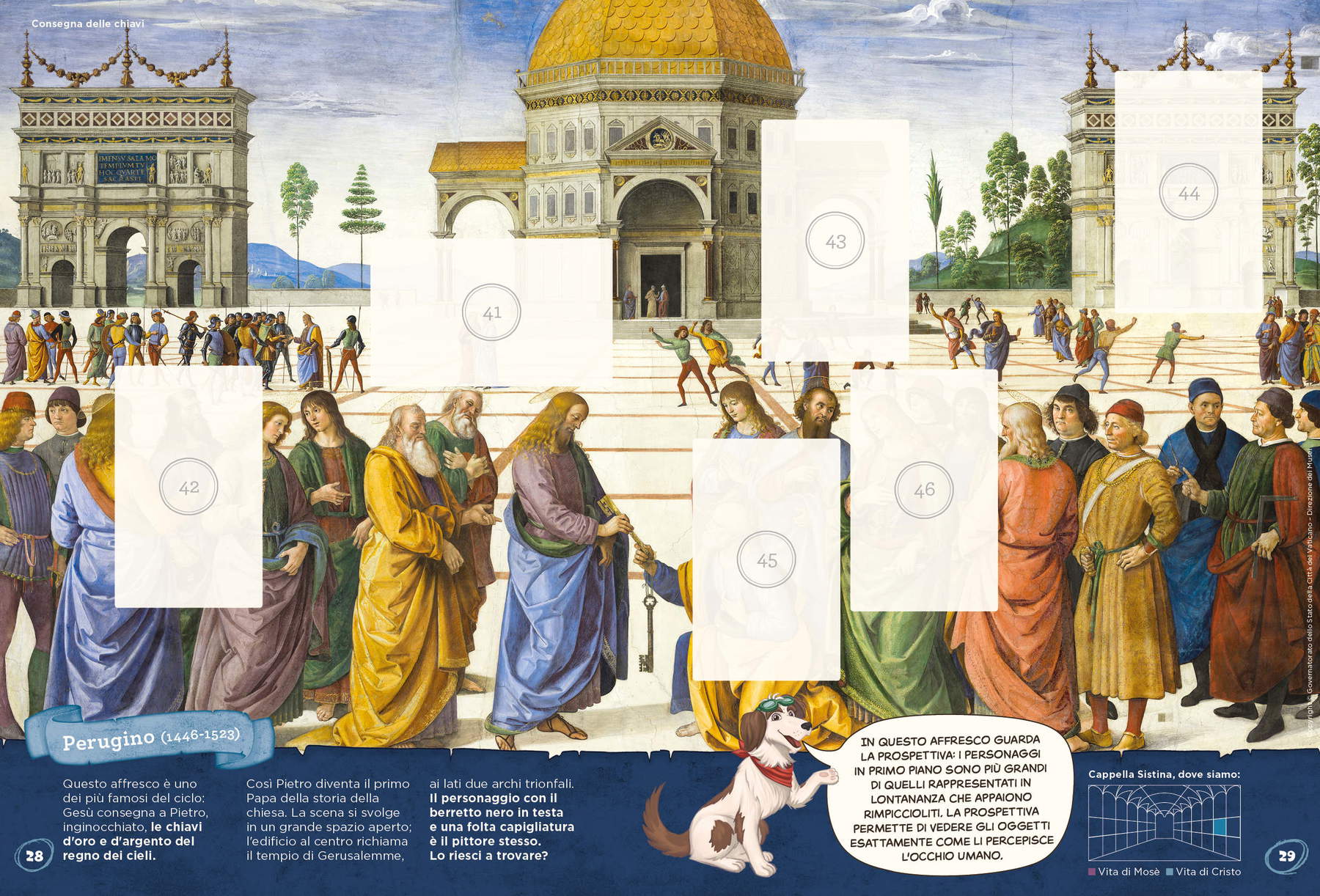
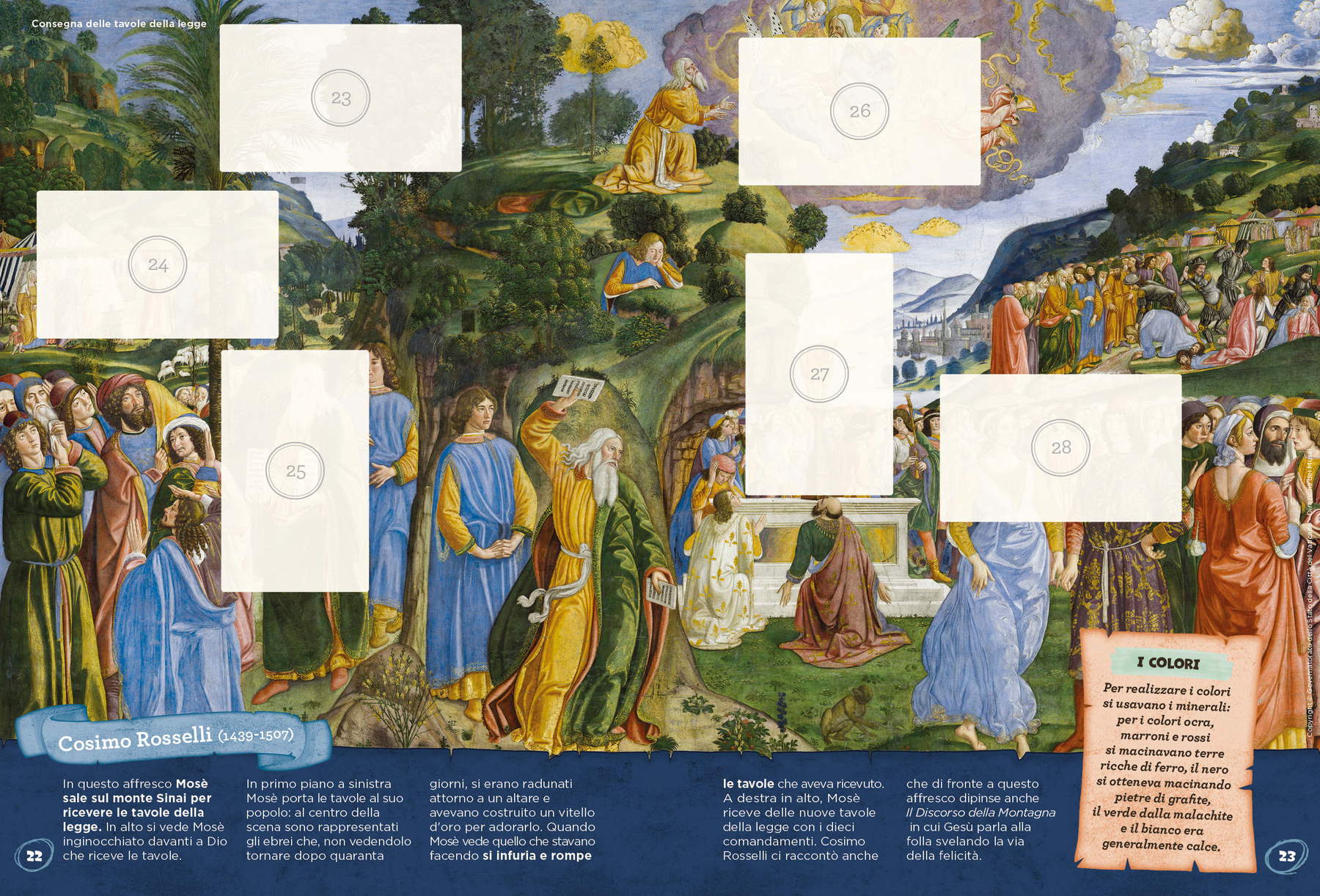
The album seeks to transform complexity into an accessible journey: it does not necessarily start with the whole to arrive at the details, as is often the case when viewing a monumental work, but proceeds in the opposite direction—that is, the details become the gateway through which to reconstruct the larger image. The playful element therefore does not eliminate the concentration required for observation, but rather makes it part of the game. Artonauti was born precisely from the intersection of this popular format and the popularization of art. The project was conceived by Daniela Re, a teacher, and Marco Tatarella, a publisher, and is presented as the first sticker album dedicated to art in Italy and around the world. Along the way, it won the fourth edition of Fondazione Cariplo’s Cultural Innovation competition and the Piccolo Plauto Award for its pedagogical and educational quality. The project is also supported by the Giordano Dell’Amore Social Venture Foundation, which participates as an impact investor with the goal of promoting art education among younger generations through simple and fun educational tools.
With *The Secret of the Sistine Chapel*, therefore, the sticker album format is applied to one of the most complex sites in the history of Italian art. The innovation lies not only in transforming the frescoes into stickers, but in attempting to change the way they are viewed. An immense surface is fragmented into many smaller images; each image must be recognized, sought out, and repositioned; only at the end does the whole become visible again.
 |
| The Sistine Chapel Becomes a Sticker Album: The Seventh Artonauti Collection Is Here |

Warning: the translation into English of the original Italian article was created using automatic tools. We undertake to review all articles, but we do not guarantee the total absence of inaccuracies in the translation due to the program. You can find the original by clicking on the ITA button. If you find any mistake,please contact us.























 IT
IT FR
FR DE
DE ES
ES CN
CN


