



by Andrea Bruciati 21/11/2026


Categories: Works and artists / Disclaimer
From geographical and scientific knowledge to the Chinoiserie trend: how 17th- and 18th-century Europe transformed a distant civilization—that of China—into an aesthetic language. An article by Andrea Bruciati.


In 1601, the Jesuit Matteo Ricci presented Emperor Wanli with two chiming clocks: a gift that helped open the doors of the imperial court to the Society of Jesus. More than a century later, in Turin, sixty lacquer panels that had set out from Rome became the Chinese Cabinet at the Royal Palace. Between these two episodes lies the story of how Europe viewed China, traded with it, and ultimately learned to imagine it.

This narrative, spanning from the late sixteenth century to the end of the eighteenth century, reveals how Europe progressively redefined China’s intellectual and aesthetic status. To understand the reception of the East in the West, one must distinguish the historical reality of a civilization from the genealogy of the visual forms through which it has been represented, interpreted, and systematically reinvented.
The trajectory leading from the initial geographical meaning to the concept of Chinoiserie traces a constellation of five semantic thresholds (China, Cathay, Serica, Chinoiserie, Celestial Empire), understood as conceptual frameworks through which Europeans sought to reduce an otherness—one that was difficult to classify according to their own cultural parameters—to familiar categories. These five terms do not denote five successive eras; rather, they function as—often overlapping—registers through which Europeans came to know, trade with, and imagine Chinese civilization.



1. China: The Jesuit Perspective and Cultural Accommodation (1583)
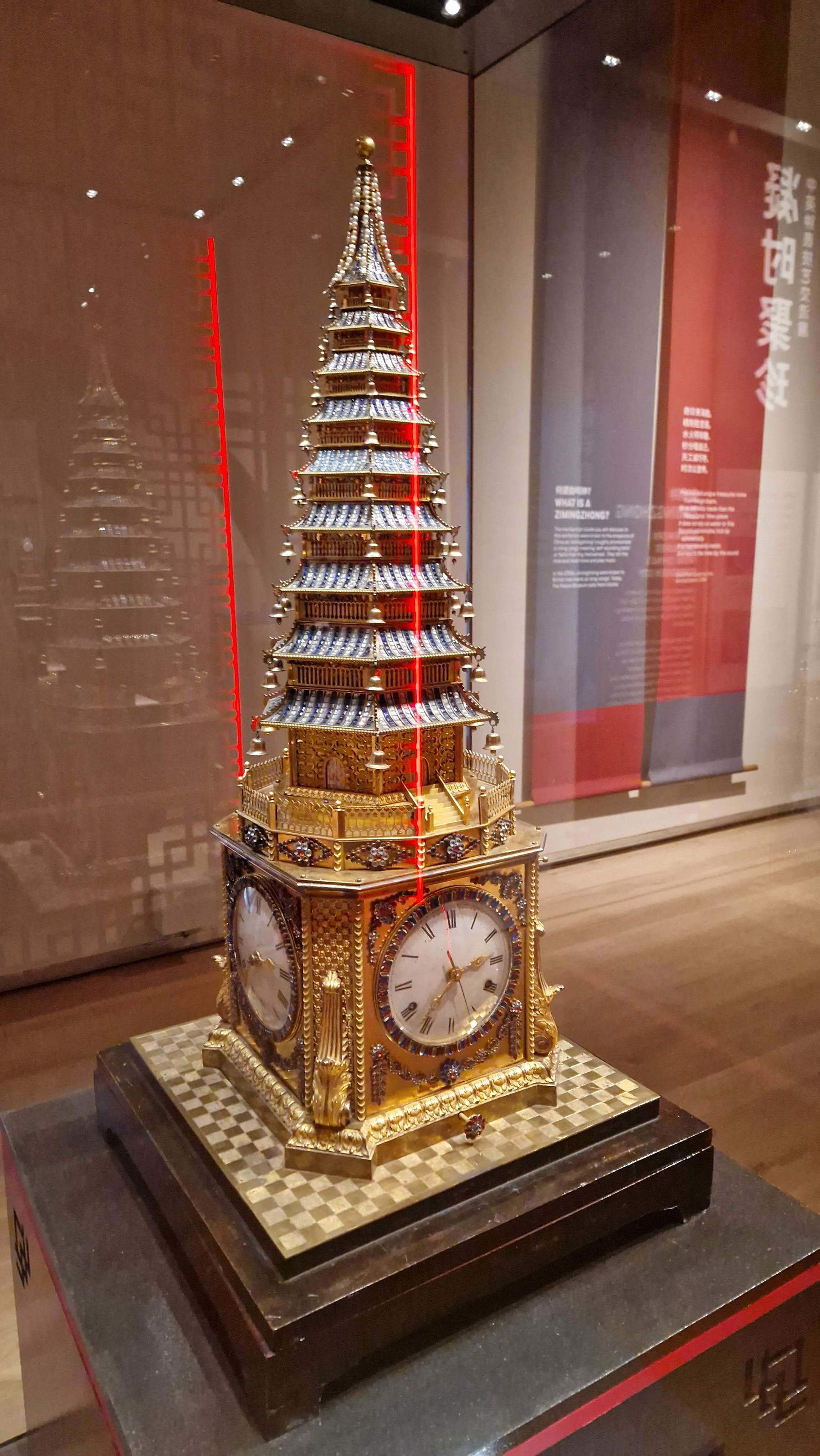
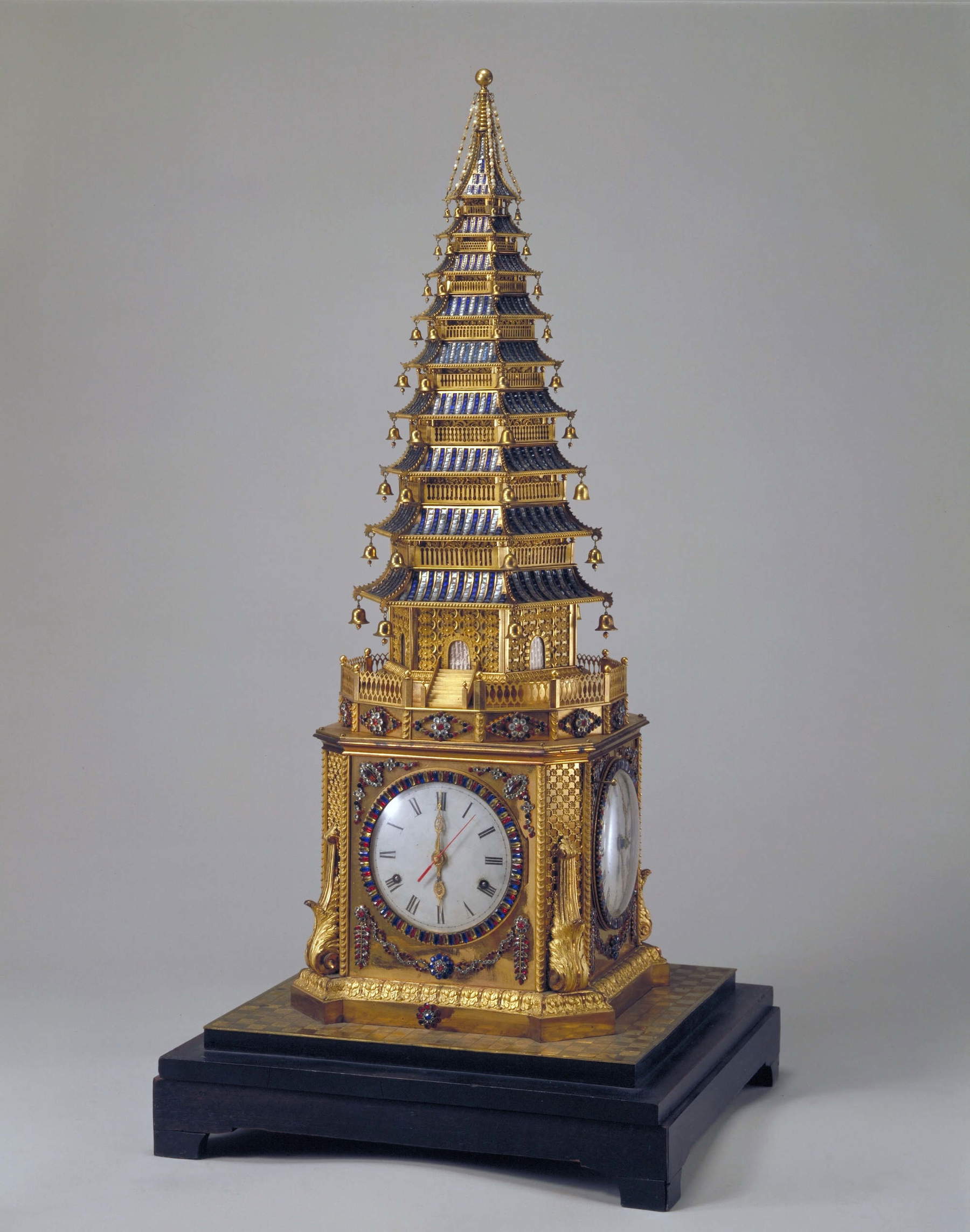
The first milestone occurred in 1583 with Matteo Ricci’s arrival in Zhaoqing. At this juncture, the term “China” acquired empirical and intellectual substance, becoming the reference point for an encounter grounded as much in observation as in philosophical dialogue. The perspective of the Jesuit missionaries adhered to the logic of cultural accommodation, a strategy that found one of its most effective expressions in the 1601 gift of two mechanical clocks to the court.
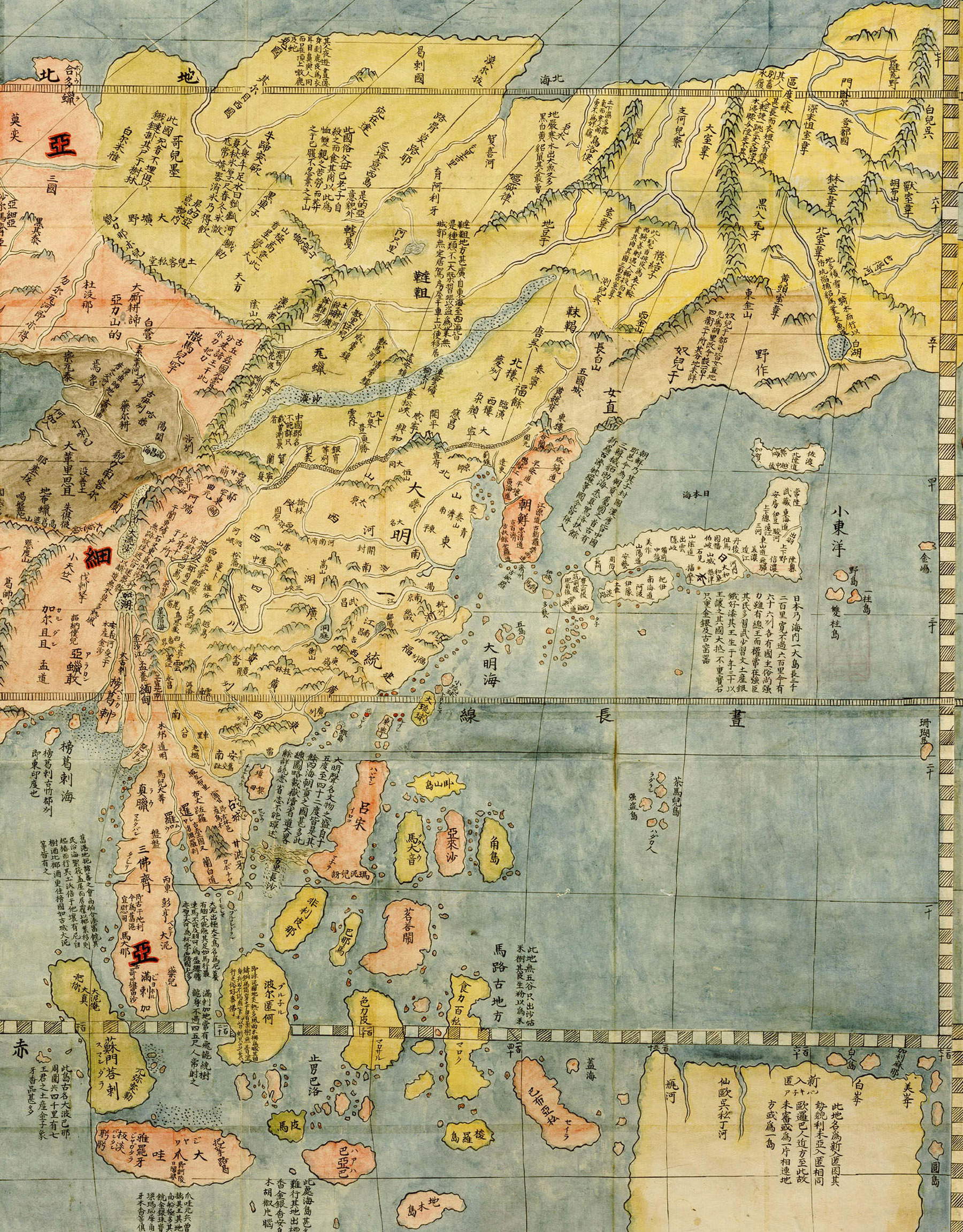
The clocks, which belong to the zimingzhong category—literally “bells that ring on their own”—serve as tools for intellectual negotiation: to gain acceptance, Ricci assumed the role of a Confucian scholar and adapted Western cartography by translating it into local characters, as demonstrated by the monumental woodblock-printed mural map *Kunyu Wanguo Quantu* (Complete Map of the Ten Thousand Countries of the World), printed in Beijing in 1602.
Jesuit China emerges as an intellectual counterpart with whom the West can establish a dialogue: a complex state and philosophical framework, a terrain for intellectual exchange, albeit within an asymmetrical relationship marked by religious interests and strategies of influence. This initial framework paves the way for an older legacy: that of Cathay, which would continue to coexist with the new place name in European geographical representations.
2. Cathay: The Persistence of Tradition and Cartographic Duality
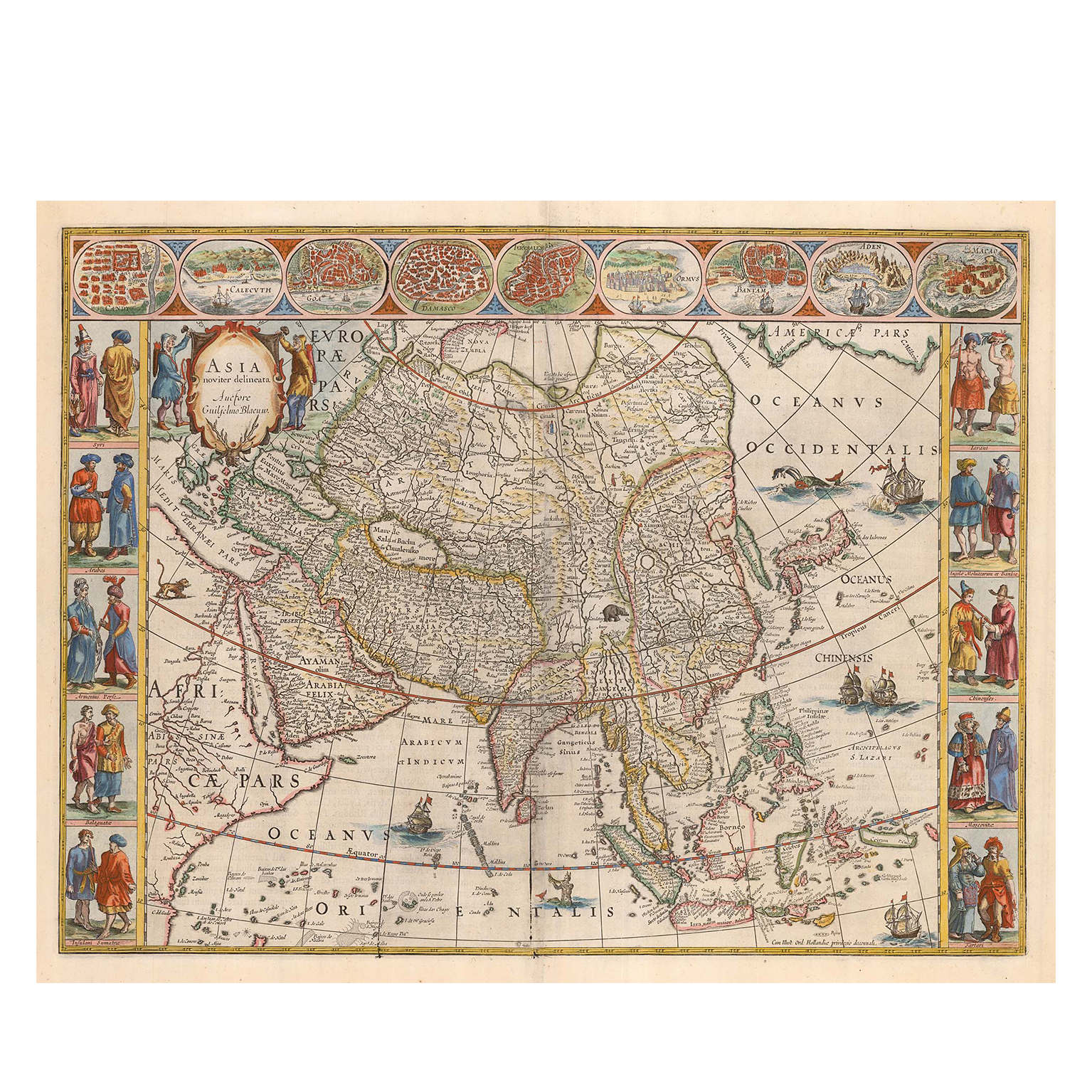
Overlaying this empirical and intellectual dimension, in widely circulated printed cartography, is the survival of “Cathay,” an archetypal term borrowed from the medieval tradition of Marco Polo’s *Milione *. The visual culture of the era experienced a unique duality: in 17th-century European maps, and even more markedly in Willem Janszoon Blaeu’s famous *Asia Noviter Delineata* (1635), northern Cathay and southern China coexist as distinct territories.
This discrepancy illustrates the slow pace at which new information was able to alter a geography entrenched in textual and cartographic tradition. The identification of Cathay with China—confirmed by Bento de Góis’s overland journey (1602–1607) [Ricci, Trigault 1615], was fully incorporated only in Martino Martini’s *Novus Atlas Sinensis*, printed by Joan Blaeu in 1655 [Martini 1655]. The coexistence of Cathay and China reveals the stratification of accumulated knowledge, in which the authority of ancient texts and the allure of the marvelous continued to interact with the evidence provided by travel and trade. European geography was therefore not automatically updated, but incorporated new knowledge into preexisting representations, preserving for a long time names and distinctions that had by then become problematic. Alongside this textual legacy, another layer emerges with the term “Serica.”
3. Silk: The Materiality of Luxury and the Circulation of Knowledge
The expansion of maritime routes controlled by the Dutch VOC (Vereenigde Oostindische Compagnie) and the British East India Company transformed China into a hub of the new geography of global trade. Alongside this commercial reconfiguration, however, a more distant image remained alive: that of Serica, the “land of silk” from the Greco-Roman geographical tradition [Ptolemy 1548]. This was a revival of a classical place name, whose correspondence with Chinese territories had historically remained uncertain.
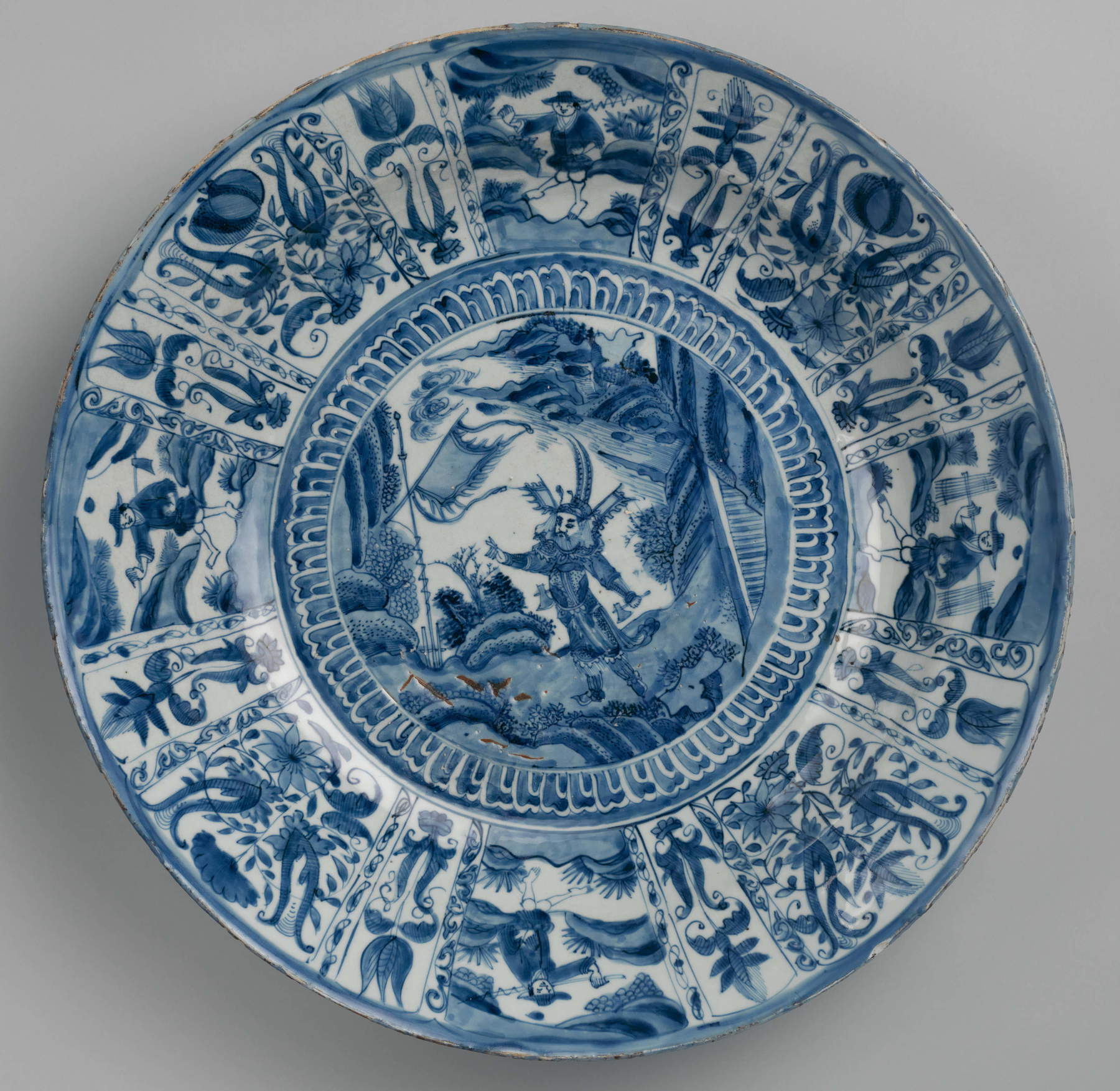
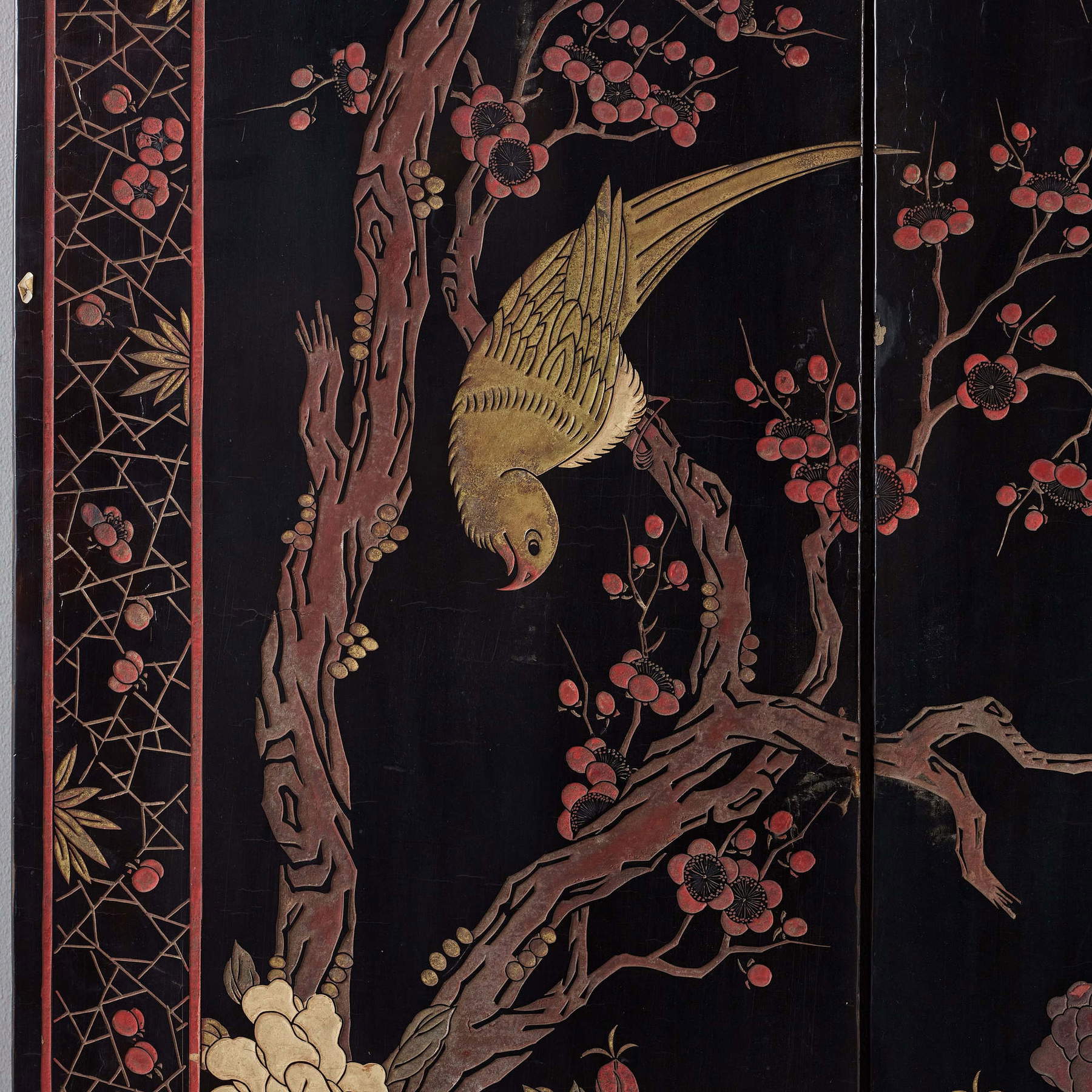
The focus of observation thus shifted toward material culture: porcelain, lacquerware, textiles, and collectibles made China present in European ports and homes as a place of production, circulation, and desire. Specific artifacts such as Ming-era Kraak-style export porcelain, decorated with radial panels in cobalt blue under a glaze, or the large twelve-panel Coromandel lacquer screens engraved with scenes of court life from the Qing dynasty, arrived in the ports of Amsterdam and London. The ornamental designs of these luxury goods varied significantly depending on the form and function of the objects.
Behind the apparent fascination with this form of consumption lies a vast transfer of technical knowledge: letters sent in 1712 and 1722 by the Jesuit François-Xavier d’Entrecolles from the workshops in Jingdezhen describe the production processes of Chinese porcelain, illustrating the preparation of the clay bodies and the complementary roles of kaolin and petuntse, a feldspar-rich rock that contributes to the formation of the glassy phase during firing [d’Entrecolles 1717; 1724].
These accounts fueled European knowledge of Chinese manufacturing techniques and the search for further opportunities to develop and refine continental ceramic production, in a context in which the East India Companies were seeking to rebalance global trade flows. This transfer took place within an asymmetrical commercial system, in which access to Chinese knowledge and control over European markets were not held by the same entities. From this technical and aesthetic capitalization emerged a fourth category: Chinoiserie, in which the geographical dimension dissolves into an aesthetic code.
4. Chinoiserie: The Diminishment of Otherness and Critical Ornamentation
This process of formal appropriation reached its peak in the 18th century, when the term “Chinoiserie” became established as a “fashion.” The West detached China from its geographical reality, translating it into an autonomous European language constructed through the selection and reworking of Eastern models, often blended with fantastical elements and Western decorative conventions.
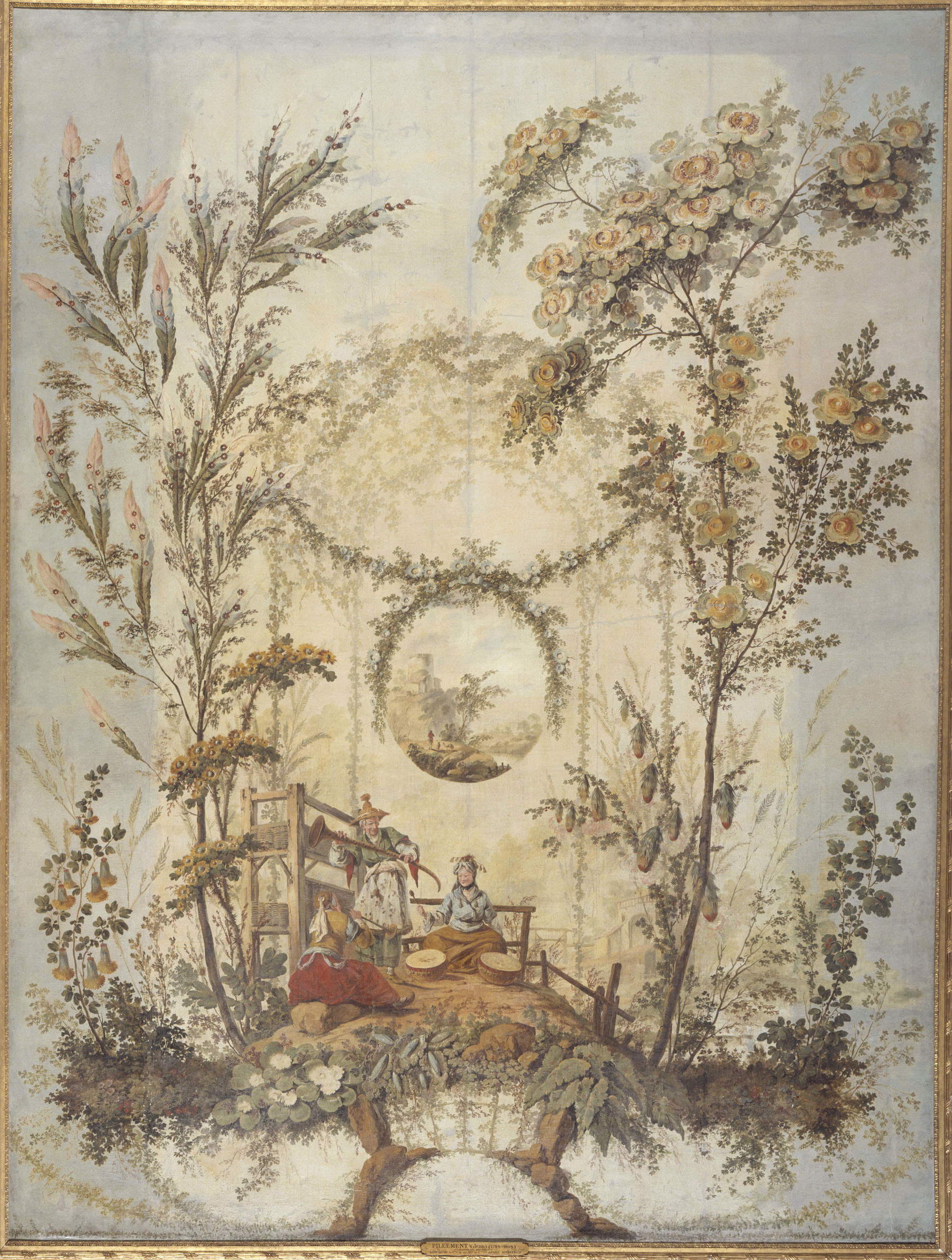
The circulation of this imagery was facilitated by the spread of printed catalogs—collections of engravings and ornamental patterns—that reduced China to a visual formula easily transferable from one medium to another. Printed catalogs did not merely document objects and architecture: they selected their forms, isolated them from their original context, and made them available for reinterpretation by European artists and artisans. Chinoiserie thus also established itself as a phenomenon of visual reproducibility, in which printmaking played a decisive role in the standardization and dissemination of Oriental motifs. Jean-Baptiste Pillement’s series of etchings and decorative patterns provided European artisans with a vocabulary of forms, figures, and plant motifs that could be adapted to different media and contexts.
While Hugh Honour’s seminal study, *Chinoiserie: The Vision of Cathay* (1961), contextualized the phenomenon within the shifting tastes of the eighteenth century, more recent historiography—particularly Stacey Sloboda’s monograph, *Chinoiserie: Commerce and Critical Ornament in Eighteenth-Century Britain (2014), has demonstrated how this visual language also constituted a critical commentary on the culture of global consumption itself. Sloboda’s perspective allows us to view ornament as a surface upon which the contradictions of international trade, social hierarchies, and the processes of constructing otherness are reflected. Decoration thus becomes a space for cultural negotiation, in which the desire for the East coexists with its reduction to an object of consumption and social distinction.
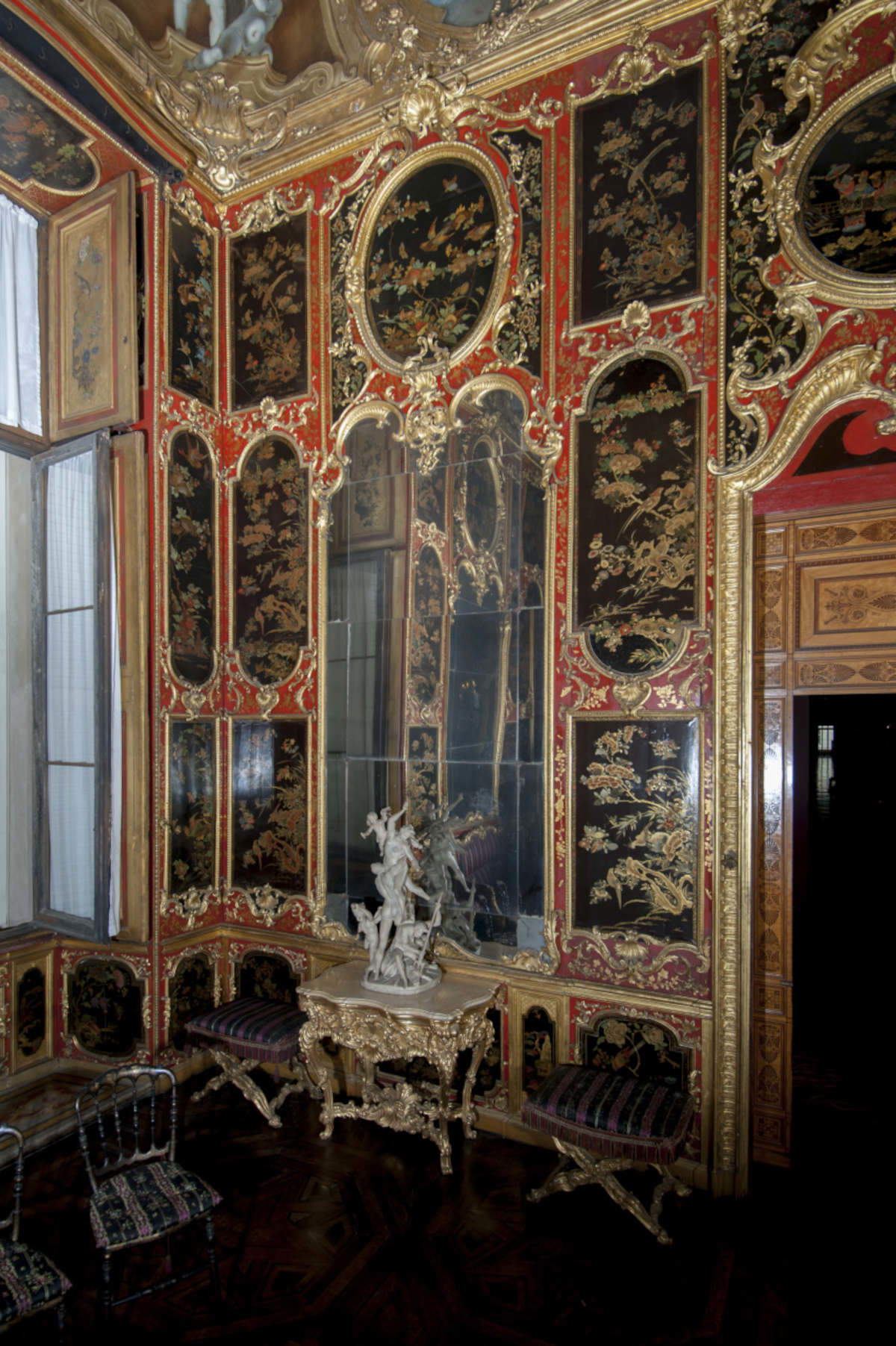
Chinoiserie can both domesticate cultural diversity and challenge the society that consumes it: ornament is the vehicle of an exotic desire and the site where the ambivalences of global trade, social distinction, and cultural identity come to the surface. This was the moment of the continent’s decorative triumph: consider the Chinese Cabinet at the Royal Palace in Turin, designed by Filippo Juvarra as part of the renovation of the royal apartments begun in the early 1730s. In March 1733, sixty wooden panels lacquered in black and gold, depicting flowers and animals, were shipped from Rome to Turin, where they were incorporated into the room’s decorative design. The project, resumed after Juvarra’s departure, was largely completed between 1736 and 1737 through the integration of the original Chinese panels with wooden elements and panels painted by the artist Pietro Massa to imitate Eastern lacquerware. The coexistence of imported artifacts and locally produced items makes this room a particularly significant example of the transformation of Chinese objects into components of a Western ornamental system.
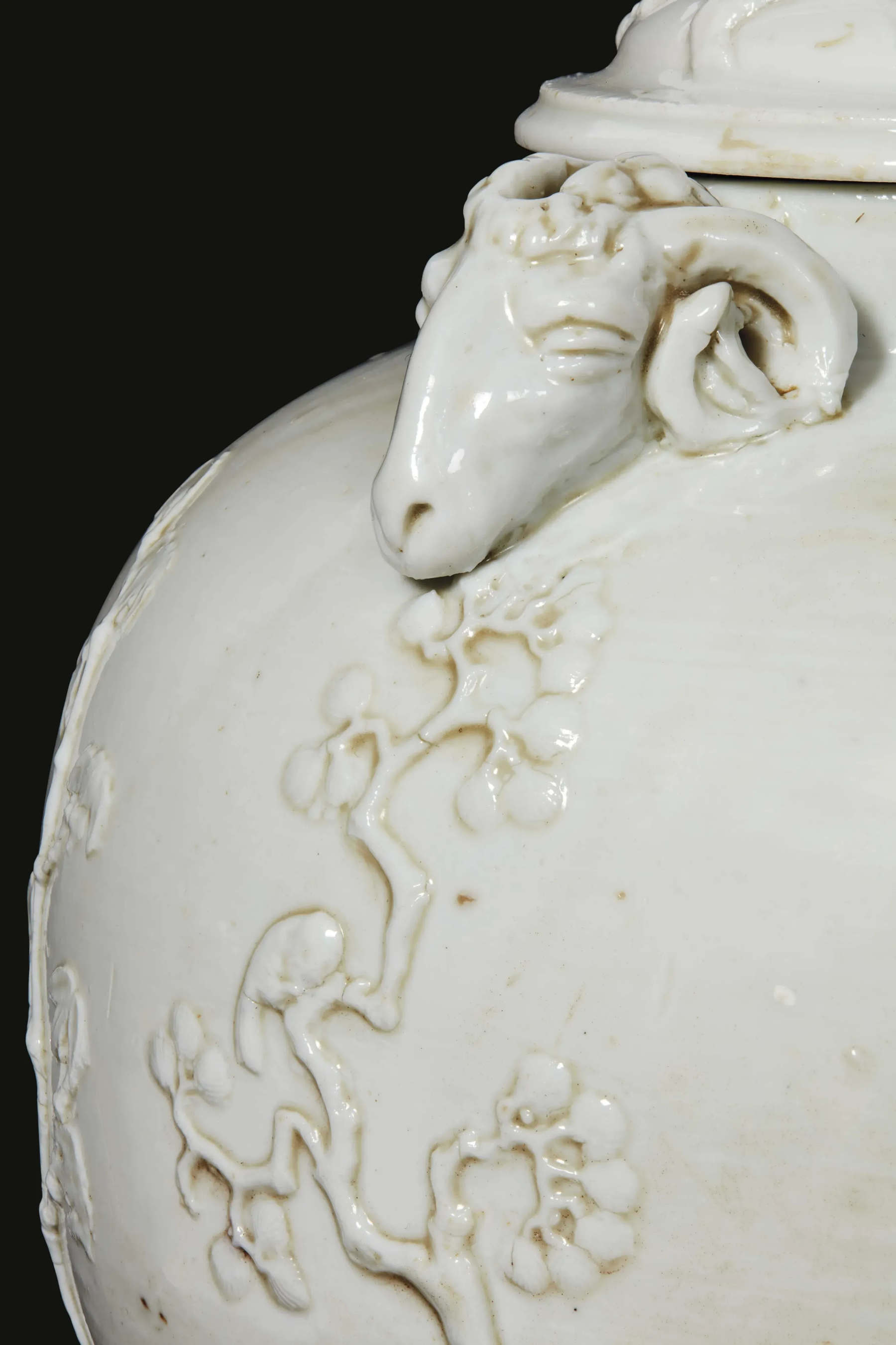
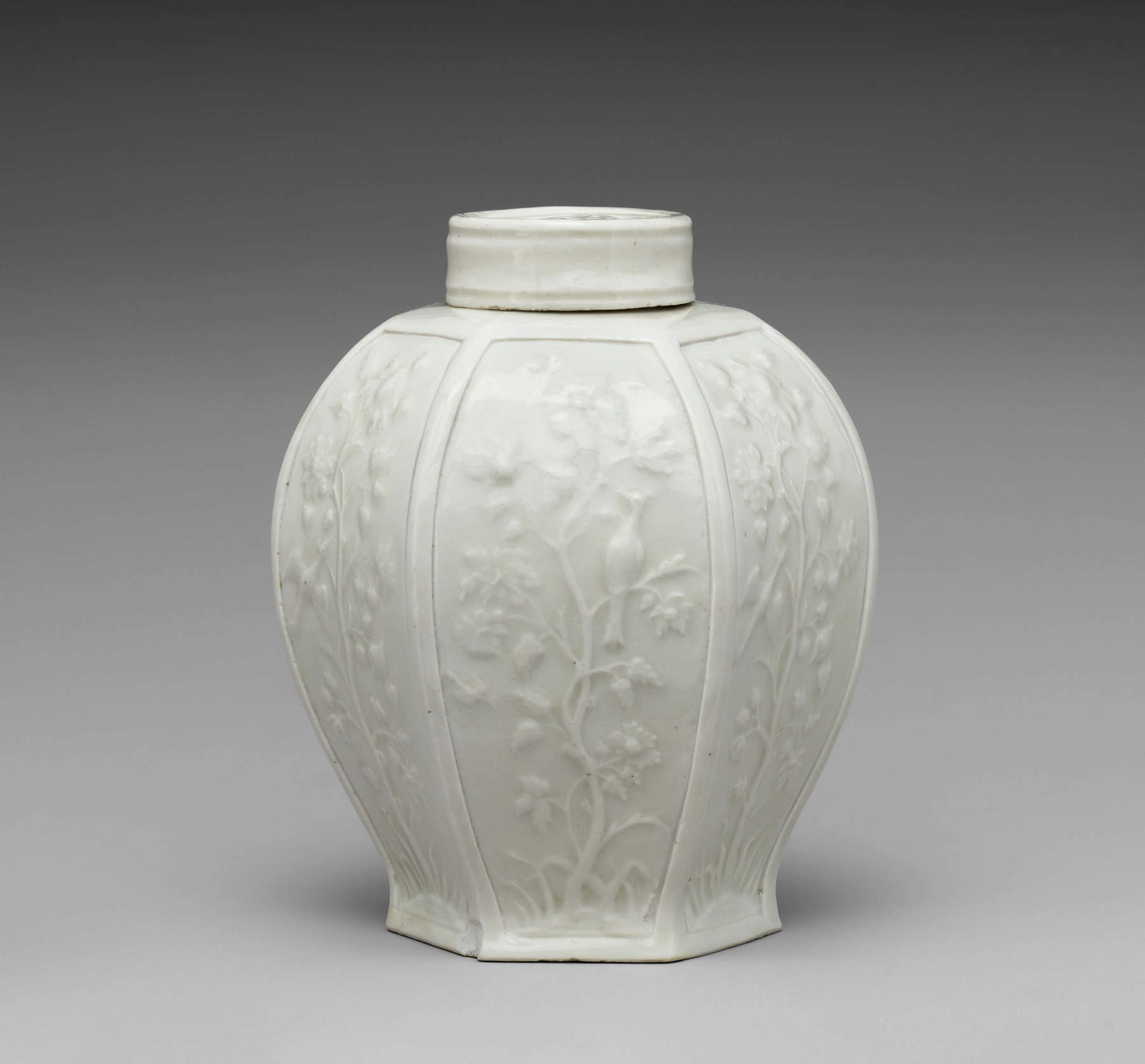
Meanwhile, in terms of material culture, the octagonal baluster vases with achromatic reliefs of flowering plum branches from the Doccia Manufactory—founded by Carlo Ginori—stand out; they were modeled after Dehua’s Blanc de Chine porcelain. Here, too, imitation coincides with a reinterpretation: the Eastern model is translated through the technical and formal possibilities of European manufacturing, giving rise to objects in which the legacy of Chinese production intertwines with a different conception of material and ornamentation.
This process reveals an ambivalent tension. While on the one hand Europe expresses fascination with a civilization perceived as rich, sophisticated, and endowed with a millennia-old manufacturing tradition, on the other hand it freely reworks its symbols, removing them from their original contexts. The reduction of otherness to a decorative language thus functions as a form of symbolic neutralization: what appears culturally distant is made familiar, available for consumption and aesthetic appropriation.
Then there is the gender dimension of taste, which must be handled with caution. The recurring association of Chinoiserie with grace, lightness, and artifice may indicate how certain decorative elements have been involved in the social constructions of taste, distinction, and female respectability. The contexts of use point in this direction: porcelain, lacquerware, and screens found their place in private rooms, studies, and reception rooms. Daniel Defoe, in his *Tour* (1724–1727), credits Queen Mary II with introducing the custom of furnishing homes with displays of Chinese porcelain, lamenting its subsequent spread and the excesses of consumption. Alexander Pope, in *The Rape of the Lock* (1714, Canto III, lines 105–110), evokes Chinese porcelain through the scene of coffee served in Oriental vessels. These are accounts of a different nature: Defoe critically documents the spread of a collecting practice, while Pope incorporates Eastern material culture into the ritual of aristocratic consumption. The genre here concerns the way consumption is judged, not the image of China. From this aesthetic register, in which China has now become a showcase of forms and consumption, a final phase unfolds: the Celestial Empire, where China once again becomes a political interlocutor.
5. Celestial Empire: The Return of Reality and Visual Opium (1793)
The conceptual narrative reached a decisive turning point in 1793 with the British diplomatic mission led by Lord Macartney to the court of Emperor Qianlong. The Western emissaries presented themselves before the sovereign with a comprehensive collection of gifts: scientific instruments, clocks (the very same gift with which Ricci had opened the court’s doors to the Jesuits in 1601), optical devices, and luxury goods. The delegation, aiming to open new ports and stabilize trade relations, offered these technological objects to demonstrate Britain’s supposed manufacturing superiority. The Qing court, however, interpreted this diplomatic exchange within a system of political and ceremonial relations based on assumptions different from those of the British [Hevia 1995].
The mission’s commercial failure and the clash between these two different visions of diplomacy marked one of the most significant turning points in relations between Europe and China. Qianlong’s famous letter to George III, traditionally interpreted by the West as a manifestation of blind self-sufficiency and isolationism, now calls for a more cautious historiographical reading. As Henrietta Harrison (2017) has demonstrated, the document’s popularity in Europe is linked to subsequent political manipulations aimed at constructing—especially in the 20th century—the myth of a Qing China that was structurally incapable of understanding international modernity.
The contrast between the idealized China depicted in European decorations and the reality of geopolitical relations reveals one of the deepest contradictions of early globalization. While European courts rendered the East as an ornamental catalog of gardens and pagodas—such as the Kew Pagoda (1762), designed by William Chambers, author of *Designs of Chinese Buildings* [Chambers 1757]— economic exchanges became increasingly contentious. Throughout the nineteenth century, the expansion of the opium trade, fueled by British merchant networks via India, would destabilize the Qing economy and society, ultimately leading to the Opium Wars.
Chinoiserie can thus be interpreted as a consolatory image of the East, a veritable “visual opium”: not because it produces effects analogous to the substance, but because it renders objects, forms, and landscapes desirable, softening their historical and political complexity and turning them into a reservoir of motifs available for aesthetic consumption. It is a matter of recognizing the coexistence of two distinct modes of appropriation: the aesthetic one, which turns China into a consumable image, and the economic and political one, which progressively calls its autonomy into question.
Where China ends, Europe begins
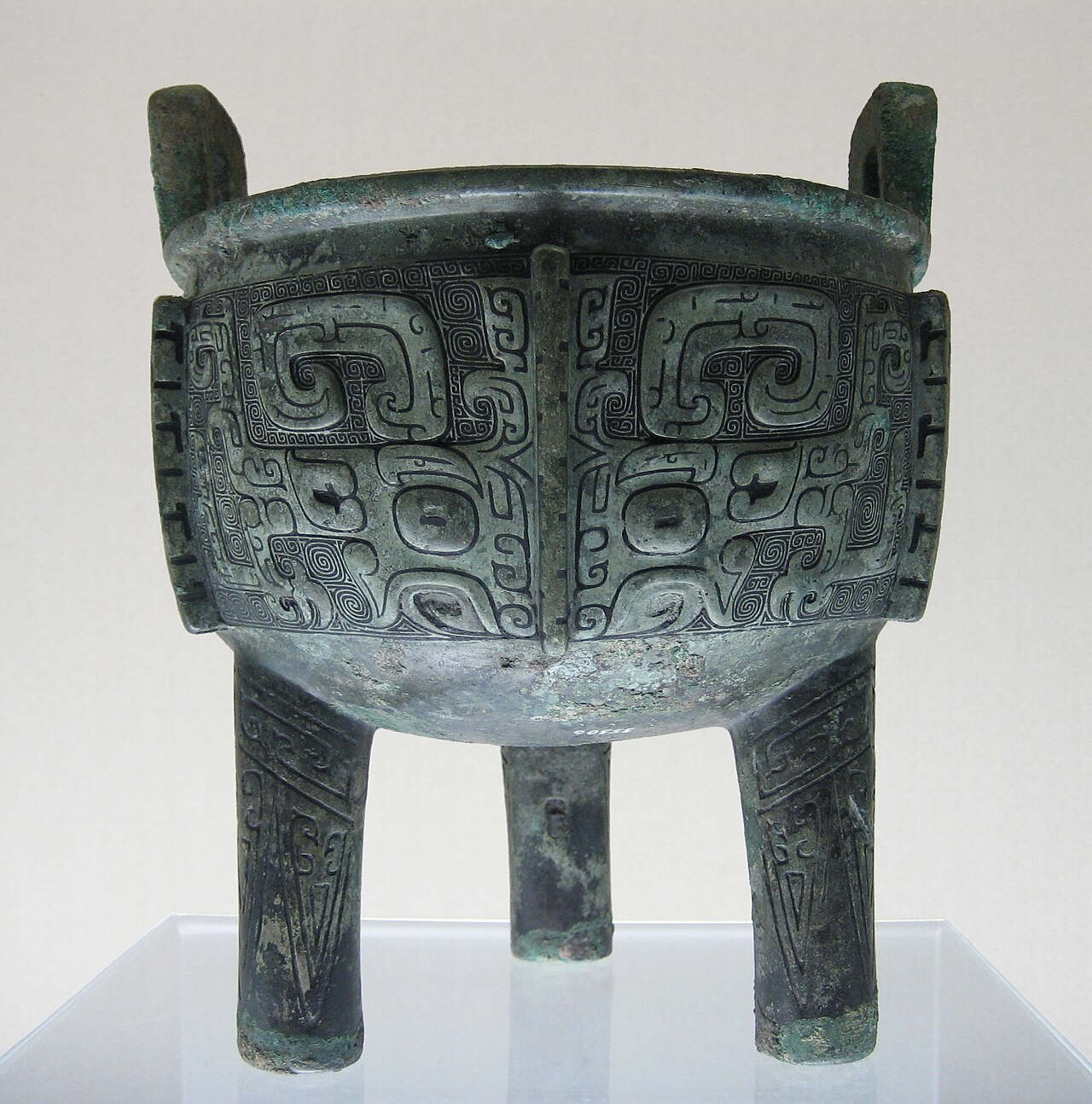
The tension inherent in this genealogy is revealed in the visual collision between two specific families of artifacts. On the one hand, objects of Chinese material culture (such as the Shang-era ding-type ritual bronze vessels or Qiu Ying’s silk scrolls), which bear witness to formal systems possessing their own autonomy (largely unknown to eighteenth-century Europe, and taken here as a point of comparison); on the other, European fictions, ranging from the Chinese-style interiors of the Palazzina di Caccia in Stupinigi to the Meissen porcelain decorated by Johann Gregorius Höroldt with reinvented Oriental motifs.
These European artifacts are evidence of an autonomous creative process in which the encounter with the “other” generates new codes. The critical issue arises when this reinterpretation is mistaken for a faithful representation of the civilization that inspired it. Chinoiserie tells us less about China itself than about the way Europe chose to imagine it.
Re-examining this evolution requires deconstructing the mechanisms of power inherent in Western visual culture, compelling the observer to reflect not only on the exhibited object but also on the gaze that legitimized its presence. Through geographical knowledge, commercial exchange, and ornamental reinvention, China has become a mirror of European aspirations and contradictions. The history of Chinoiserie is therefore not merely the chronicle of a decorative style: it is the story of how one civilization visually constructed the image of another, transforming the desire to understand it into the power to reinvent it.
Primary Sources
-
Blaeu, Willem Janszoon (1635), *Asia Noviter Delineata*, in *Theatrum Orbis Terrarum sive Atlas Novus*, Amsterdam, Guiljelmus et Ioannes Blaeu.
-
Chambers, William (1757), *Designs of Chinese Buildings, Furniture, Dresses, Machines, and Utensils*, London, published for the author.
-
Defoe, Daniel (1724–1727), A Tour thro’ the Whole Island of Great Britain, London.
-
d’Entrecolles, François-Xavier (1717; 1724), Letter from Father d’Entrecolles (September 1, 1712) and Letter from Father d’Entrecolles (January 25, 1722), in Edifying and Curious Letters, vol. XII (1717), pp. 253–365 and vol. XVI (1724), pp. 318–367, Paris, Nicolas Le Clerc.
-
Martini, Martino (1655), *Novus Atlas Sinensis*, Amsterdam, Joan Blaeu.
-
Pillement, Jean-Baptiste (ca. 1755–1775), Jean Pillement etchings, Getty Research Institute, Research Library, accession no. P830005.
-
Polo, Marco (1559), *Dei viaggi di Messer Marco Polo, Gentilhuomo Venetiano*, in Giovanni Battista Ramusio, *Secondo volume delle Navigationi et viaggi*, Venice, Stamperia de’ Giunti.
-
Pope, Alexander (1714), *The Rape of the Lock*, London, Bernard Lintot, Canto III, lines 105–110.
-
Ptolemaeus, Claudius (1548), *The Geography of Claudius Ptolemy of Alexandria*, translated by Pietro Andrea Mattioli, with commentary by Sebastian Münster and maps by Giacomo Gastaldi, Venice, Niccolò Bascarini for Giovanni Battista Pederzano.
-
Ricci, Matteo; Trigault, Nicolas (1615), *De Christiana expeditione apud Sinas suscepta ab Societate Iesu ex P. Matthaei Riccii eiusdem Societatis commentariis Libri V*, Augsburg, Christoph Mang.
Essential Bibliography
-
Harrison, Henrietta (2017), “The Qianlong Emperor’s Letter to George III and the Early-Twentieth-Century Origins of Ideas about Traditional China’s Foreign Relations,” in *The American Historical Review*, CXXII, 3, pp. 680–701, DOI: 10.1093/ahr/122.3.680.
-
Hevia, James L. (1995), *Cherishing Men from Afar: Qing Guest Ritual and the Macartney Embassy of 1793*, Durham-London, Duke University Press.
-
Honour, Hugh (1961), *Chinoiserie: The Vision of Cathay*, London, John Murray.
-
Sloboda, Stacey (2014), *Chinoiserie: Commerce and Critical Ornament in Eighteenth-Century Britain*, Manchester, Manchester University Press.
Warning: the translation into English of the original Italian article was created using automatic tools. We undertake to review all articles, but we do not guarantee the total absence of inaccuracies in the translation due to the program. You can find the original by clicking on the ITA button. If you find any mistake,please contact us.