



by
Ilaria Baratta  @ilaria.lilly
18/11/2026


Categories: Works and artists / Disclaimer
The gods had bestowed upon her every kind of beauty, but Zeus had hidden within her heart the deception destined to change humanity forever—and for the worse. Alexandre Cabanel portrays Pandora before she opens her jar, giving her the face of an opera diva: Christina Nilsson, the famous 19th-century Swedish soprano. A new article by Ilaria Baratta for the column “Robe da miti!”


There was a time when all the evils of the world were sealed inside a jar. A time when people led a peaceful existence on Earth, free from disease, fatigue, and pain. Then it happened that a beautiful young woman, overcome by uncontrollable curiosity, opened the jar, and… human suffering began— a suffering that has since inexorably accompanied us on our earthly, mortal journey through life. Her name was Pandora (yes, like the well-known jewelry brand with which we now pay tribute to girls of all ages), and in fact, even the etymology refers to a gift, becausepân-dôron, in ancient Greek, means “all gifts”—though not in a tragicomic sense.

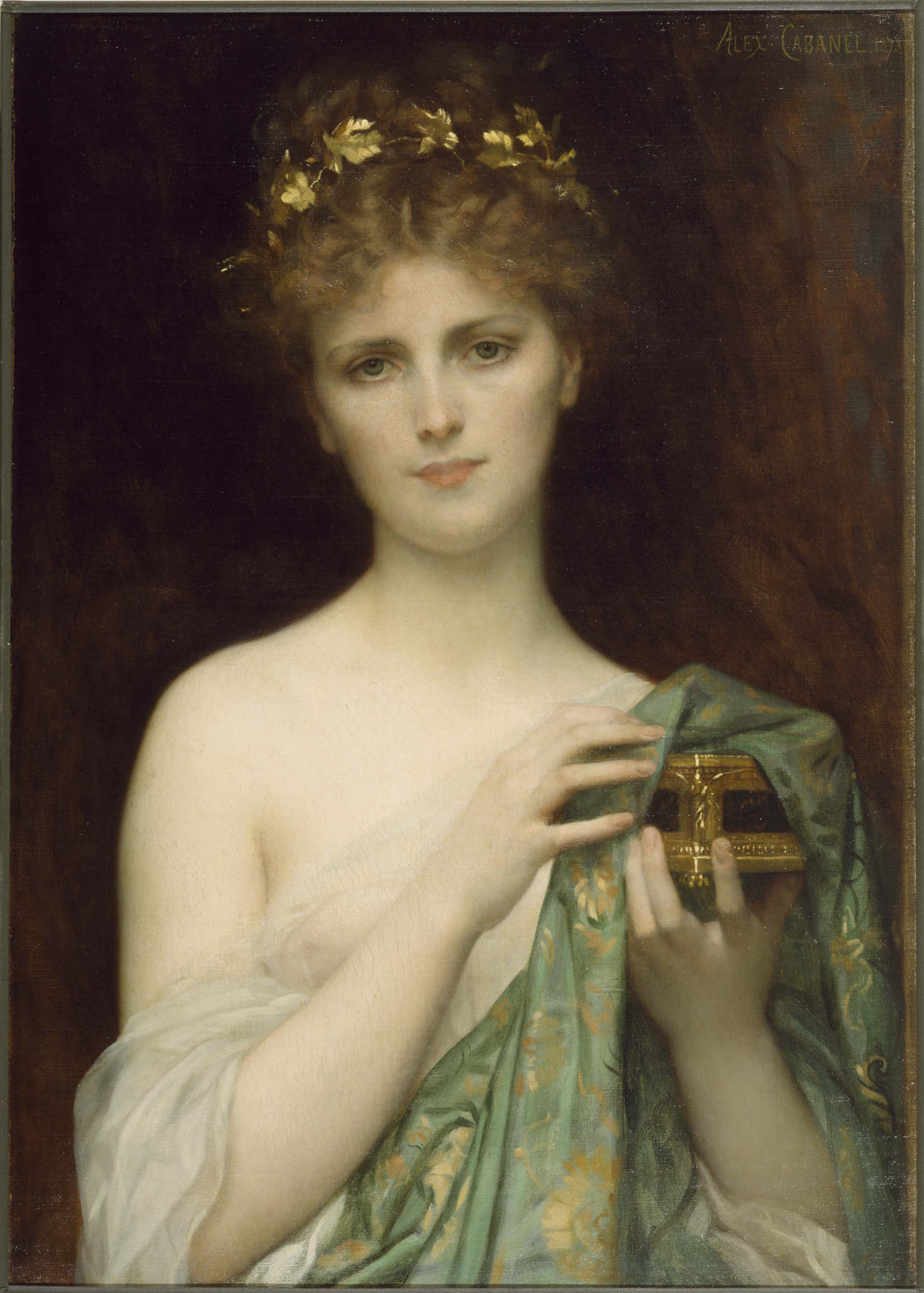
What strikes one, upon reading the myth and observing the exhaustive portrait painted by Alexandre Cabanel—one of the most famous French painters of the academic school, known for his paintings on classical, mythological, or historical themes—is, first and foremost, the discrepancy—the almost jarring contrast—between the goddess-like, delicate, and angelic beauty that characterizes the young maiden and the misfortunes, calamities, and unhappiness that she herself brought upon all of humanity with her action. If she had not opened that jar, perhaps all the evils of the world would have remained forever locked inside that ruinous vessel.


Cabanel’s Pandora holds it tightly and securely in her hands, raising it to chest level with her left hand and covering it with a precious embroidered fabric with her right, making it clear and predictable to the viewer that she will soon uncover that small casket with her pure white fingers and, by removing the lid, she will release its ominous contents. Her intense green eyes gaze at us—eyes like a fawn’s set in a delicate, sophisticated face, further softened by an updo adorned with a wreath of golden leaves encircling her head amidst her wavy light brown hair. Her mouth, small and understated, accentuates the young woman’s composure, though she does not forgo a hint of seduction: a sheer, transparent veil lightly covers one breast, draping over her arm and deliberately leaving one shoulder bare, thus highlighting her ethereal, velvety skin even more for the viewer’s eyes.


Everything seems to point to a divine creation, such is her beauty. In fact, as already mentioned, the meaning of her name, Pandora—that is, “all gifts”—stems from the fact that all the gods of Olympus contributed to her creation, each offering her a gift: according to the account by Hesiod, Zeus ordered Hephaestus, the god of fire, to fashion a creature by mixing earth and water, endowing her with vitality, a human voice, and the appearance of a young woman whose beauty rivaled that of the immortal goddesses. The other deities also participated in her creation, each called upon to bestow a particular quality upon her. Athena taught her the art of weaving and adorned her; Aphrodite bestowed upon her grace, charm, and amorous desire; while the Graces and Peito, the goddess of persuasion, adorned her with precious gold jewelry. The three Horae, the deities who presided over the seasons, wove a wreath of spring flowers around her head. Behind that marvelous appearance, however, lies an ambiguous creature: Zeus had, in fact, charged Hermes, the messenger of the gods, with instilling in her heart lies, seductive words, and a deceitful nature. Beautiful and seductive in appearance, yet destined to bring men pain and misfortune.
Her creation—comparable to an Eve of Greek mythology—had been willed by the lord of the gods, Zeus, as punishment for Prometheus, the Titan who had dared to steal fire from the gods to give it to mankind. When Zeus discovered this, his wrath was directed not only against the Titan—chaining him to a cliff and having an eagle devour his liver every day—but against all of humanity. To punish humankind, therefore, the king of the gods decided to deprive them of the necessities of life and to send them a gift that would prove to be a misfortune for all.
Once she was created, Zeus sent Pandora to Epimetheus, Prometheus’s brother, via Hermes, who was tasked with delivering the woman to him as a divine gift. Epimetheus welcomed her without suspecting any deception, even though his brother had warned him, advising him never to accept gifts from Zeus, because they might conceal a danger to mortals. And so it was. Until that moment, in fact, humans had inhabited the Earth without ever knowing suffering, the most grueling labors, or the diseases that led to death. The turning point came when Pandora, carried away by her excessive curiosity, lifted the lid of the jar that Zeus himself had warned her never to open. All the evils of the world poured out, spreading across the Earth and marking the definitive transition from a peaceful existence to a state of perpetual hardship. Only Hope remained inside the jar, for Pandora quickly closed the lid before it could fly away.
The myth of Pandora thus recounts the origin of the evils that afflict humanity as Zeus’s vengeance for Prometheus’s deception, the end of a world free from suffering, and the beginning of a new human condition, characterized by the inevitable presence of illness, toil, and pain.
In the painting housed at the Walters Art Museum in Baltimore, Cabanel depicts the famous Swedish soprano Christina Nilsson (1843–1921)—known for her pure, brilliant voice and her graceful appearance—in the role of Pandora. She was one of the most celebrated opera singers of her time. Nicknamed “the singer with the golden voice,” she captivated audiences at major international theaters, establishing herself as one of the leading figures of the opera scene in the second half of the 19th century. Her career took her to perform in Europe’s major musical centers and on major tours in the United States. Born on a modest farm south of Växjö, in the Småland region of southern Sweden, the youngest of seven children, Christina grew up in a simple family environment, far from major cultural centers, but showed a marked aptitude for music from a very young age. Even as a child, she demonstrated a particular talent for singing and the violin—skills that soon helped define her personality. Her family’s financial difficulties forced her, at the age of eight, to contribute to the household income by putting her musical gifts to use.
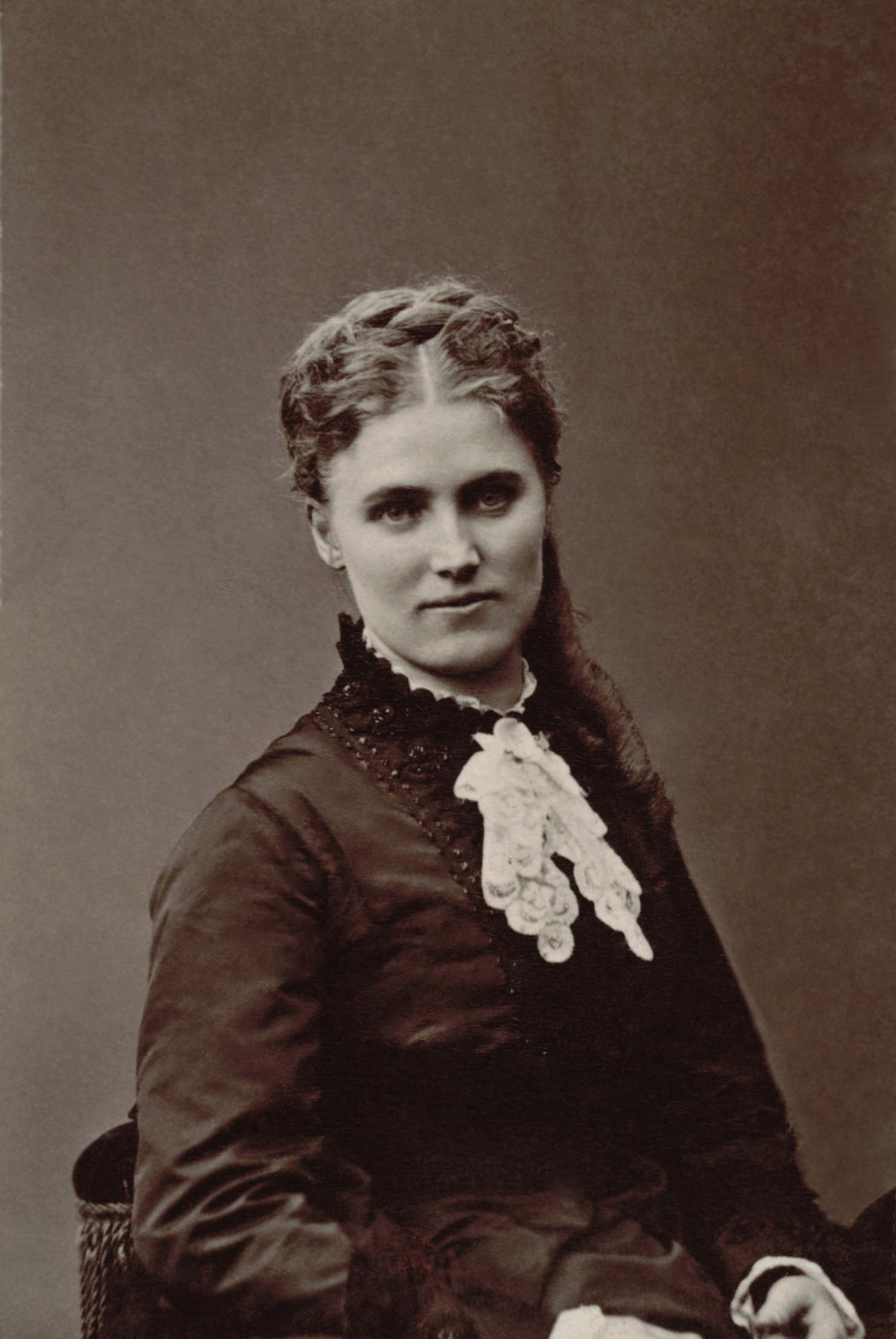
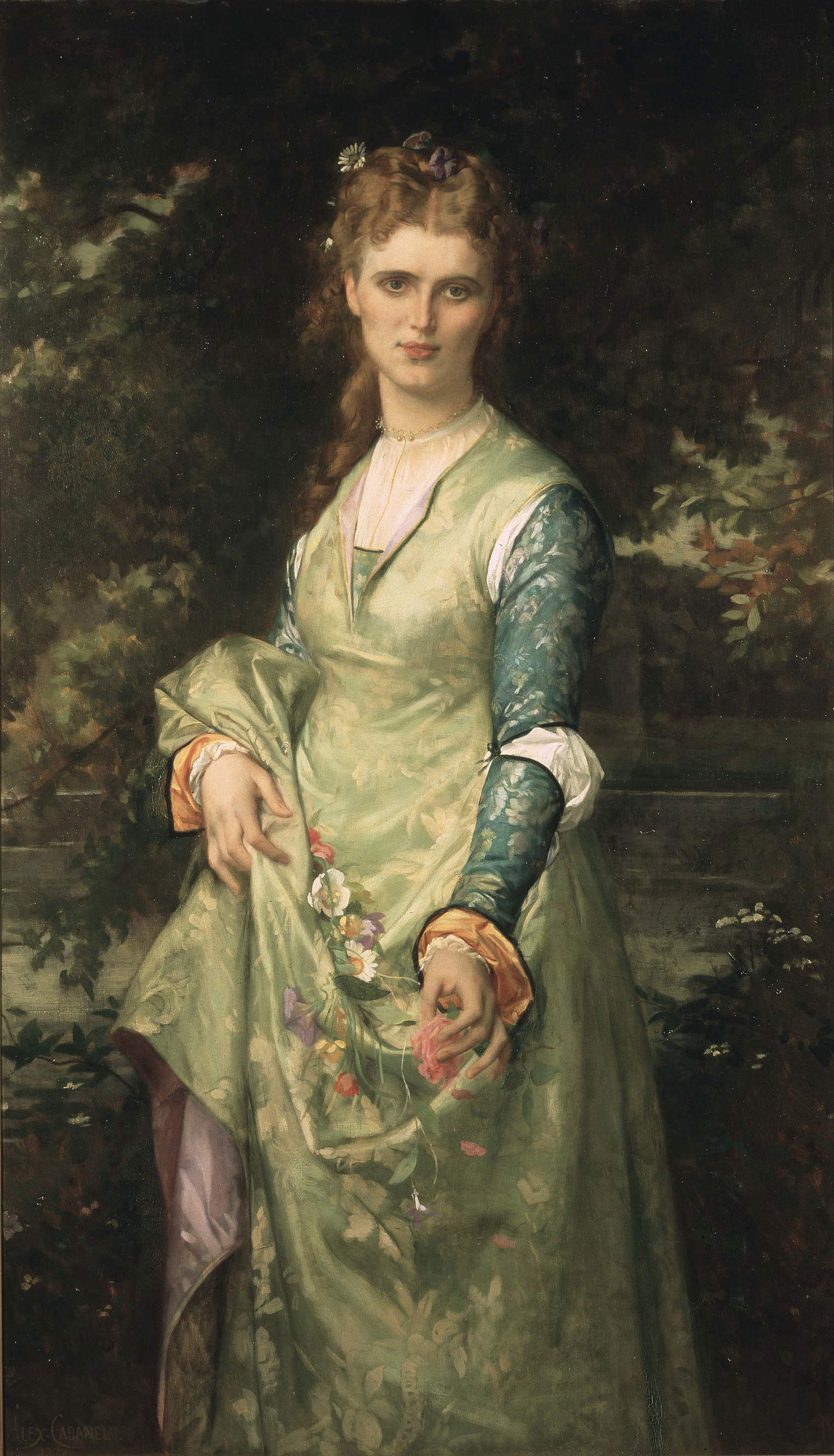
The young woman’s talent did not go unnoticed, and thanks to the opportunities for study and training she was able to secure, Christina moved to Paris in 1860—at that time one of the major hubs of European musical life. It was in the French capital that her career took a decisive turn. Her debut in the role of Violetta in Giuseppe Verdi’s *La traviata* earned her an enthusiastic reception, revealing her extraordinary vocal and interpretive qualities to the audience. This initial success was followed by another particularly demanding challenge: the role of the Queen of the Night in Wolfgang Amadeus Mozart’s *The Magic Flute* , a part that requires a remarkable vocal range and great technical mastery.
Before long, Christina Nilsson’s name became well-known in international musical circles. After establishing herself in Paris, the singer gradually expanded her career, performing in London and at major European theaters as well. Her repertoire included some of the most famous characters in nineteenth-century opera, such as Ophelia in Ambroise Thomas’s *Hamlet* and Marguerite in Charles Gounod ’s *Faust *. It was her portrayal of Ophelia in Thomas’s*Hamlet*, which premiered in 1868, that played a decisive role in establishing her reputation. A particularly complex role, requiring not only remarkable vocal ability but also a keen dramatic sensibility: Nilsson tackled it with great expressive intensity, winning over the Parisian audience and making her portrayal of Shakespeare’s tragic heroine unforgettable. Alexandre Cabanel himself also depicted her as Ophelia in a painting now housed at the Nationalmuseum in Stockholm. In addition to music, Christina cultivated a keen interest in the visual arts: she was, in fact, also a passionate art collector, so much so that she bequeathed over two hundred works to the Swedish museum. Her voice was a gift, and the painter gave his face to the creature born of all the gifts of the gods.
Warning: the translation into English of the original Italian article was created using automatic tools. We undertake to review all articles, but we do not guarantee the total absence of inaccuracies in the translation due to the program. You can find the original by clicking on the ITA button. If you find any mistake,please contact us.