


by Noemi Capoccia 31/10/2026


Categories: Works and artists / Disclaimer
Pazuzu, the demon from *The Exorcist* by William Peter Blatty and William Friedkin, was considered by the Assyrians to be an amulet against evil. From the statuette in the Louvre to the heads in New York, Berlin, and London, these artifacts show how a fearsome figure from the first millennium B.C. became a horror icon.
Anyone who has seen *The Exorcist* will most likely remember Linda Blair as the young girl Regan MacNeil, the menacing figure of an ancient statuette, the soundtrack—with those notes from Mike Oldfield’s *Tubular Bells* that still evoke the film to this day—and the way that image has become etched into the horror imagination of the 20th century. And anyone familiar with the film also remembers well the terror it unleashed as soon as it was released: in theaters, some people covered their eyes, others walked out halfway through the screening, and still others felt sick and had to be helped. That fear, preserved in the accounts of those who were there, is as much a part of the film’s legend as its most famous scenes. The film, directed by William Friedkin and released in 1973, is based onthe novel of the same name by William Peter Blatty, published in 1971, who also wrote the screenplay for the film. In both works, there is a name that recurs—one that many viewers remember without knowing its origin: Pazuzu, the demon associated in the story with the malevolent entity that takes possession of Regan.


Yet Pazuzu did not spring from the pen of a writer or the camera of a director: he is a real figure from the Mesopotamian pantheon, documented by texts and artifacts dating back to the first millennium B.C. And the very bronze statuette used by Friedkin is housed at the Louvre Museum in Paris, in the Department of Oriental Antiquities (for those who wish to see the object up close, the statuette MNB 467 is on display in the Richelieu Wing of the Paris museum, in Room 230). Together with other examples housed at the Metropolitan Museum of Art in New York, the Vorderasiatisches Museum in Berlin, and the British Museum in London, it allows us to reconstruct with some precision who the demon was in his original context and what purpose his images served. The picture that emerges is very different from the one perpetuated in popular culture: in ancient sources, Pazuzu is indeed a fearsome creature, but he is also a presence invoked to protect homes, the sick, pregnant women, and newborns.


Let’s begin by analyzing the film. The prologue to *The Exorcist* is set on an archaeological dig site. Father Merrin, played by Max von Sydow, is a priest and archaeologist working on an excavation in northern Iraq, where ancient artifacts are being unearthed, including the image of a demon. The sequence concludes with a confrontation between the man and a large statue, in an atmosphere marked by the wind and the fight between two dogs. The editing then links this scene—across continents—to the domestic story that occupies the rest of the film, set in Washington.

The location of the prologue is Hatra, in the Nineveh Governorate (and we’ll discuss Nineveh itself later), in Iraq. The site, which has been listed as a World Heritage Site since 1985 and has also been on the List of World Heritage in Danger since 2015, is described by UNESCO as a large fortified city that was under the influence of the Parthian Empire and served as the capital of the first Arab kingdom. The city’s ruins—particularly the temples, where Hellenistic and Roman architecture blends with Eastern decorative elements—bear witness to the grandeur of that civilization.
This fact introduces a distance that the film does not explicitly convey. The ruins of Hatra belong to an era several centuries later than that of the Neo-Assyrian statuettes of Pazuzu and to a different culture—that of the Parthian, Hellenistic, and Roman periods—and there is no connection in origin between the city and the demon. On screen, the setting of an archaeological excavation in Iraq serves to evoke a distant past in a general sense, while the actual artifacts of Pazuzu come from other contexts and a different historical period.
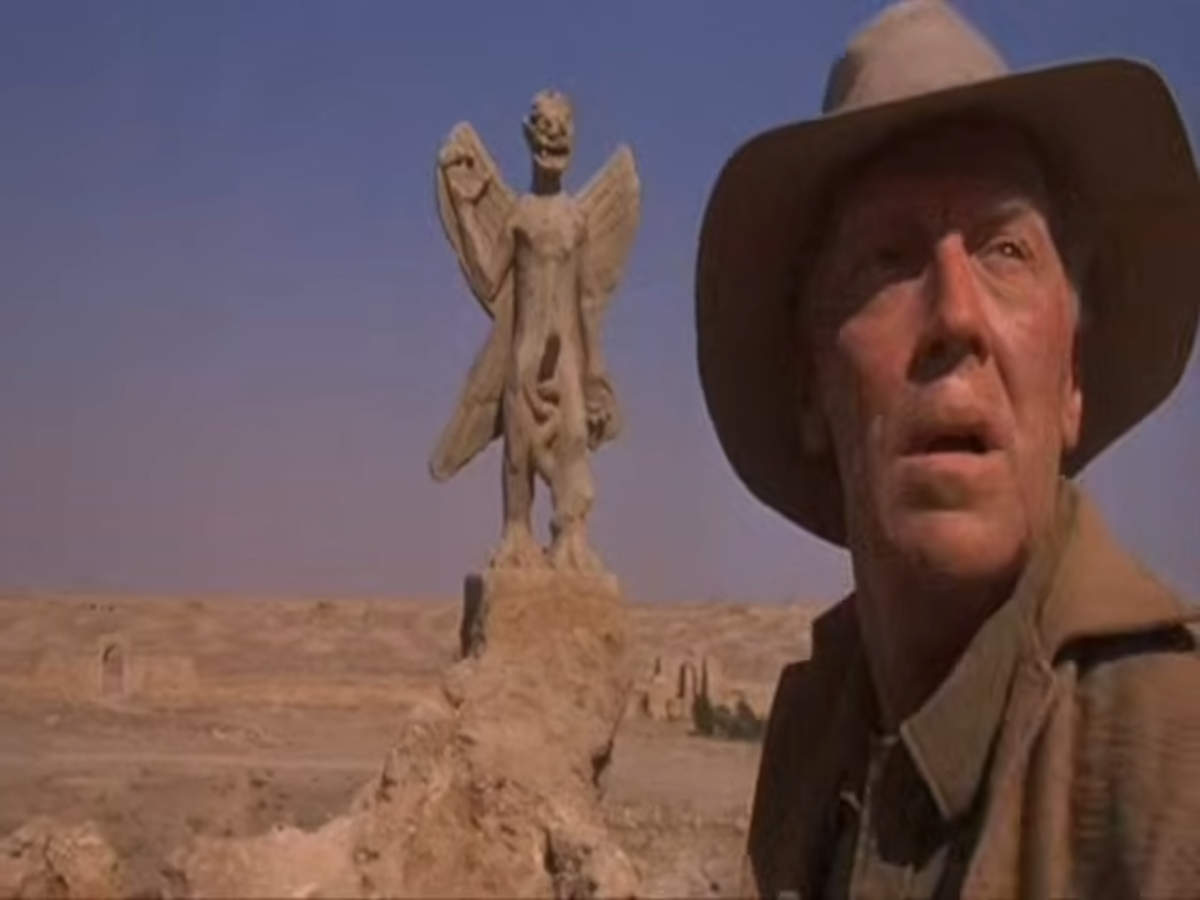
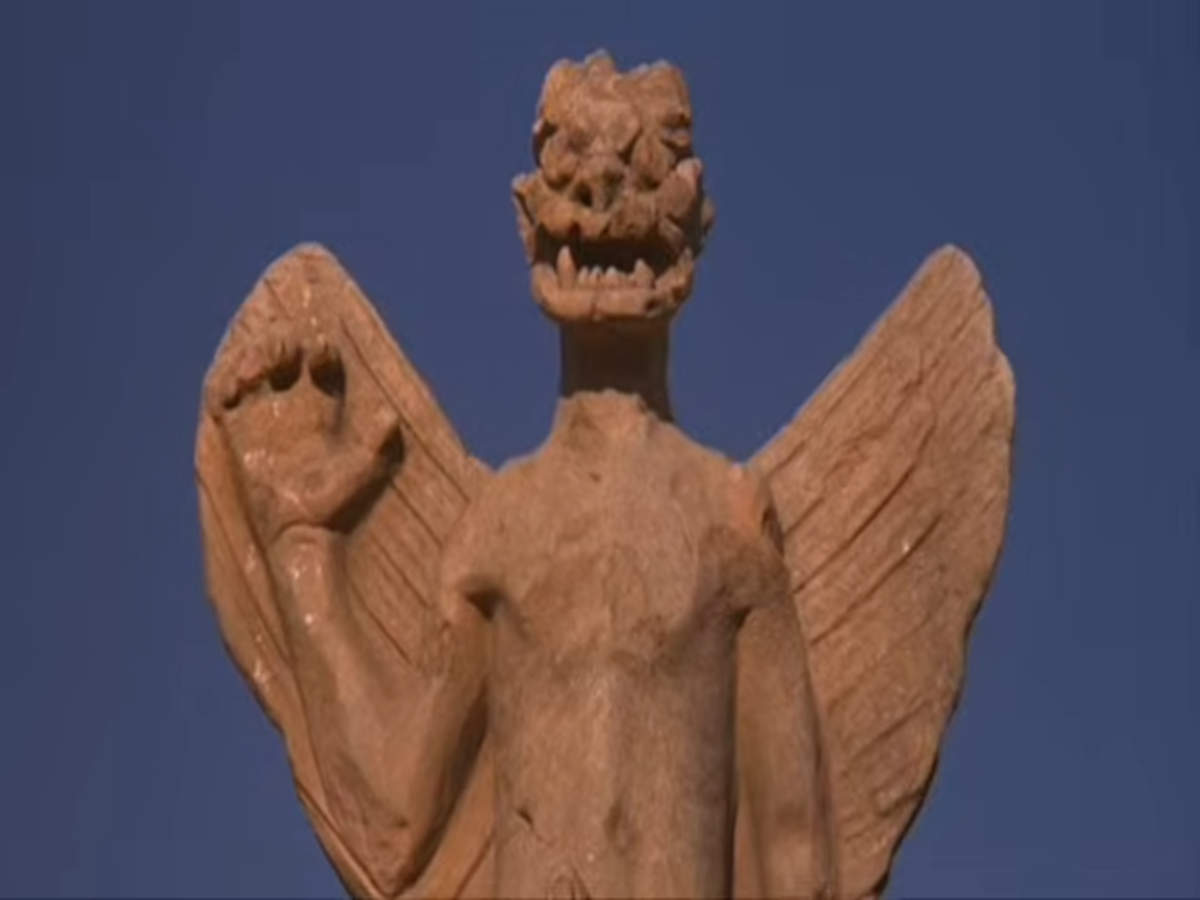
The decision to open the film at an archaeological site thus serves a specific narrative purpose: it establishes that the evil to be confronted has an ancient and distant origin, and that it was awakened by the scholars’ work itself. It is a trope that horror cinema has since revisited many times, linking excavation, discovery, and the curse. Take the 1999 classic *The Mummy*, for example. In the case of Pazuzu, however, the connection between fiction and historical documentation is closer than is usually the case. The reason? Because the figure actually exists in the texts and artifacts of Assyria and Babylon. Even the detail of the wind, which accompanies the apparition in the film, finds a counterpart in the sources: the historical Pazuzu is, in fact, a demon of the winds.
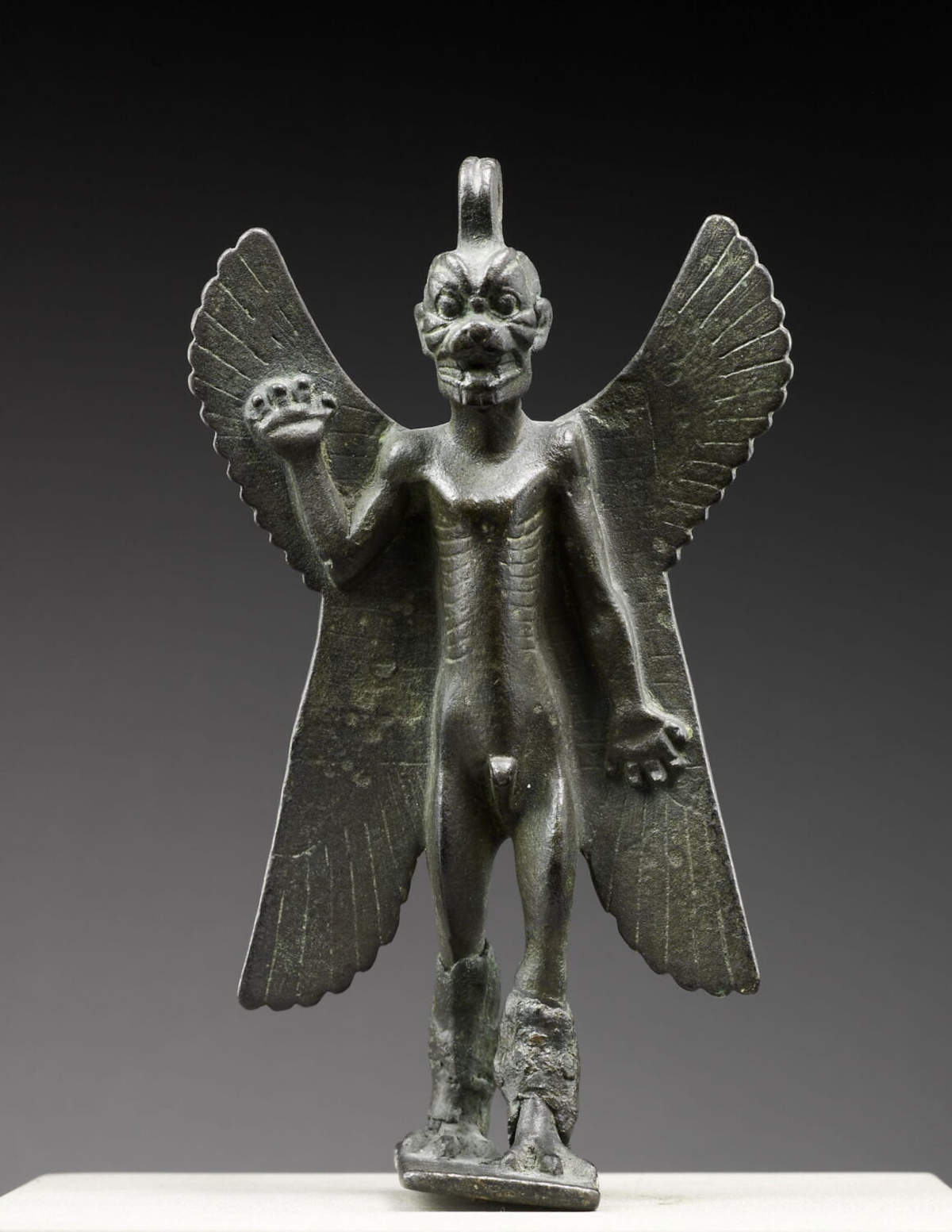
The Louvre identifies the Assyrian artifact as a “Figurine of the Demon Pazuzu,” a find that scholars date to between 911 and 604 B.C., naturally during the Neo-Assyrian period. From a material standpoint, the figurine is made of bronze using the casting technique and is in its complete state. The museum describes it as a pendant figurine—that is, one equipped with a suspension ring—depicting Pazuzu standing on a base with his right arm raised. The back is entirely covered by an inscription in syllabic cuneiform, written in the Neo-Assyrian language. Furthermore, the text of the inscription, according to the translation provided by the Louvre, reads: “I am Pazuzu, son of Hampa, the king of the evil spirits of the air who bursts forth violently from the mountains in a rage—it is I.”
But who was Pazuzu really, and what was the purpose of the statuette?
According to the catalog of the Metropolitan Museum of Art in New York, *Assyria to Iberia at the Dawn of the Classical Age*, edited by Joan Aruz, Sarah B. Graff, and Yelena Rakic, Pazuzu was the king of the Lillu demons—a truly fearsome figure. He does not appear in iconography or exorcism texts before the beginning of the first millennium B.C. and is associated with older demons, such as Humbaba and the West Wind. He was associated with the harmful winds that ravage the steppe and was believed to be the cause of headaches, carried from the desert by the western winds. At the same time, however, precisely because of his role as a benevolent household spirit, he could protect humans from the harmful effects of those very same winds.
This dual nature is key to understanding the figure. Pazuzu was, in fact, invoked in exorcism rituals to banish malevolent demons that had entered homes back to the underworld and to prevent them from causing harm. Among these, the primary target was the terrible Lamashtu, who attacked pregnant women and newborns.
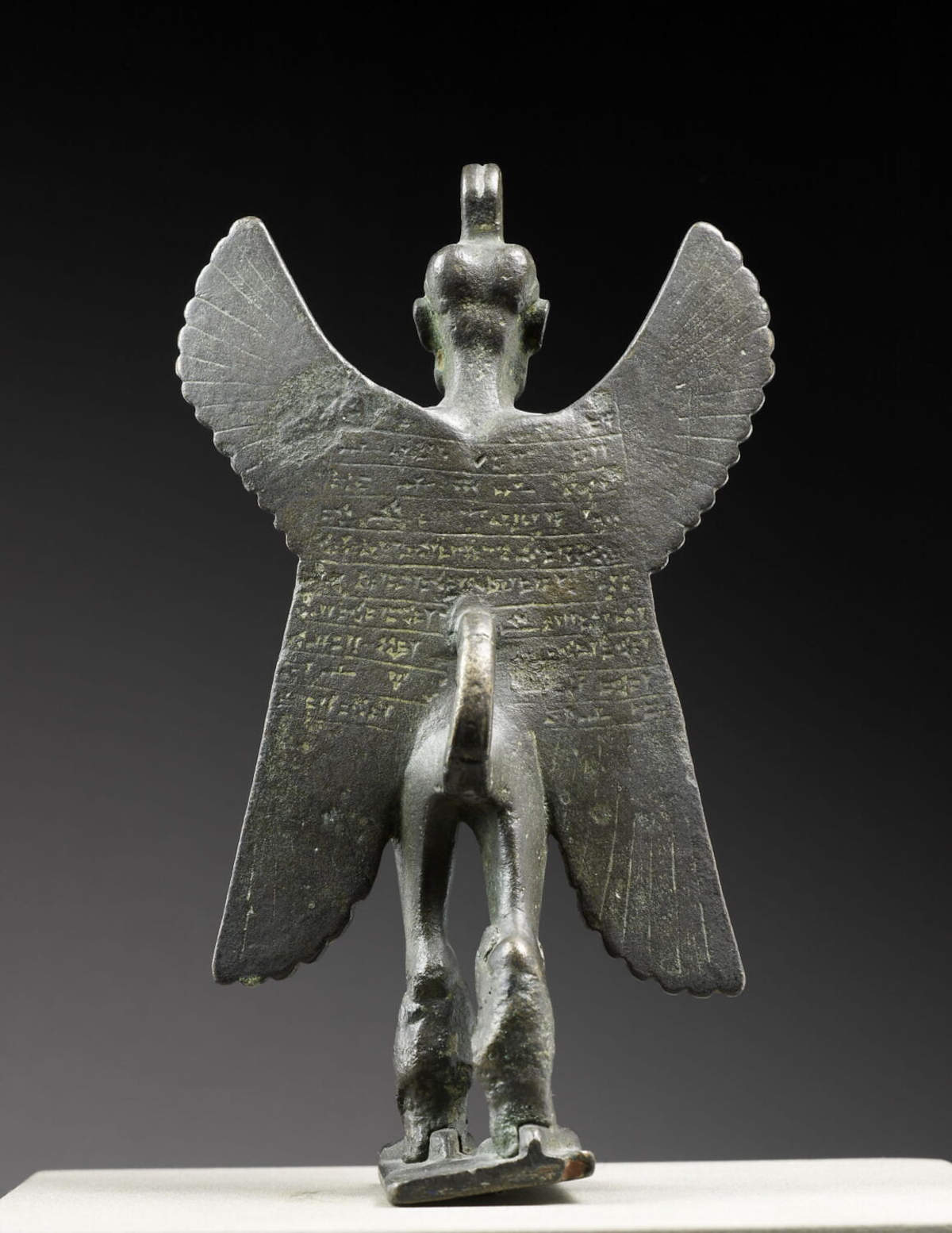
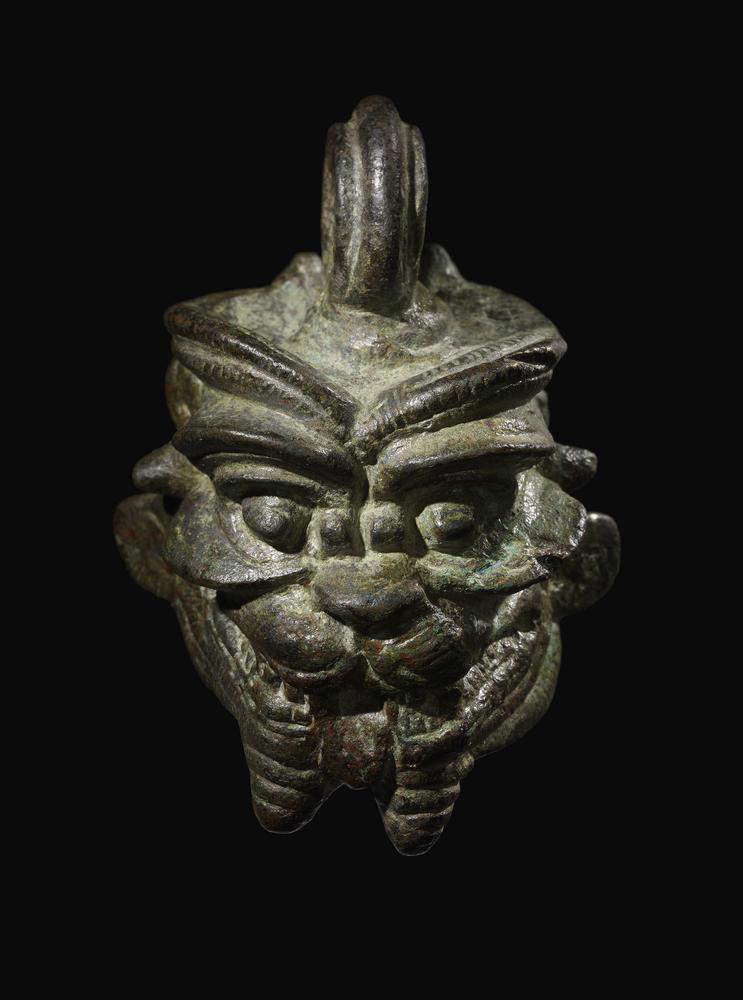
Pazuzu’s appearance is also well-defined. His head is half-animal and half-human, and—as evidenced by pendants depicting only the head—it was believed that the demon’s apotropaic and exorcistic powers resided precisely in the head. His monstrous features include a flattened nose, bulging eyes, and a wide-open mouth. His body is human, with male attributes, but his protruding ribs and prominent chest resemble a bird’s sternum. The four wings, to which the arms are attached, the segmented and curved scorpion tail, and the predatory claws confirm its belonging to the supernatural world.
The suspension ring at the top of the Louvre statuette suggests that it was hung on the wall of the room where the demon’s presence was deemed necessary. Pazuzu amulets, often consisting of the head alone, were placed in homes, attached to the beds of the sick—as explicitly indicated in exorcism texts—or hung around the necks of patients, pregnant women, and newborns. Some pendants depicting Pazuzu also take the form of cylindrical seals.
In his role as protector of humans and exorcist of the demon Lamashtu, Pazuzu also appears on plaques intended to keep her at bay: a large image of him watches over the scene to ensure that the exorcism ritual is performed correctly. The image of the demon could also be used in magical rituals, as indicated by the standardized formulas that were typically engraved on his depictions.
Due to the simplicity of its forms, the statuette housed at the museum in Paris is considered one of the most refined examples among the known three-dimensional depictions of Pazuzu. In terms of size and quality of craftsmanship, the catalog compares it to another statuette discovered during excavations at Tell Sheikh Hamed, in northern Syria, in 1989. The latter has been dated to the 7th century B.C.E., based on its archaeological context and a more ornate iconography.
The image of Pazuzu is also widely found throughout the Near East and the eastern Mediterranean, especially in Babylonia and Assyria, but also in Susa and Nush-i Jan to the east, and in Megiddo and the Greek sanctuary of Samos to the west. Three depictions of the demon have been found in Tomb I of the Queens’ Tombs at Nimrud, which provides the earliest reliable dating for the demon’s appearance, placed during the reign of King Sargon II.
The ruler’s name also refers to a modern-day event: the rediscovery of Assyria. The king had a new capital built, Dur-Sharrukin (“Fortress of Sargon”), at the site now known as Khorsabad in northern Iraq, but he died in 705 B.C. in a bloody battle, and his body was never found. The mystery of his disappearance fueled fears of divine punishment, and his son and successor, Sennacherib, decided to establish the capital in Nineveh, where he was already serving as regent. The city of Khorsabad, which remained unfinished, was abandoned, and the site gradually fell into oblivion until the excavations conducted in 1843 by Paul-Émile Botta, the French vice-consul in Mosul. Those excavations markedthe beginning of Mesopotamian and Near Easternarchaeology and led to the rediscovery of a lost civilization, known until then only through the Bible and other ancient texts. Some of Botta’s finds were exhibited at the Louvre, where the world’s first Assyrian museum was inaugurated on May 1, 1847.
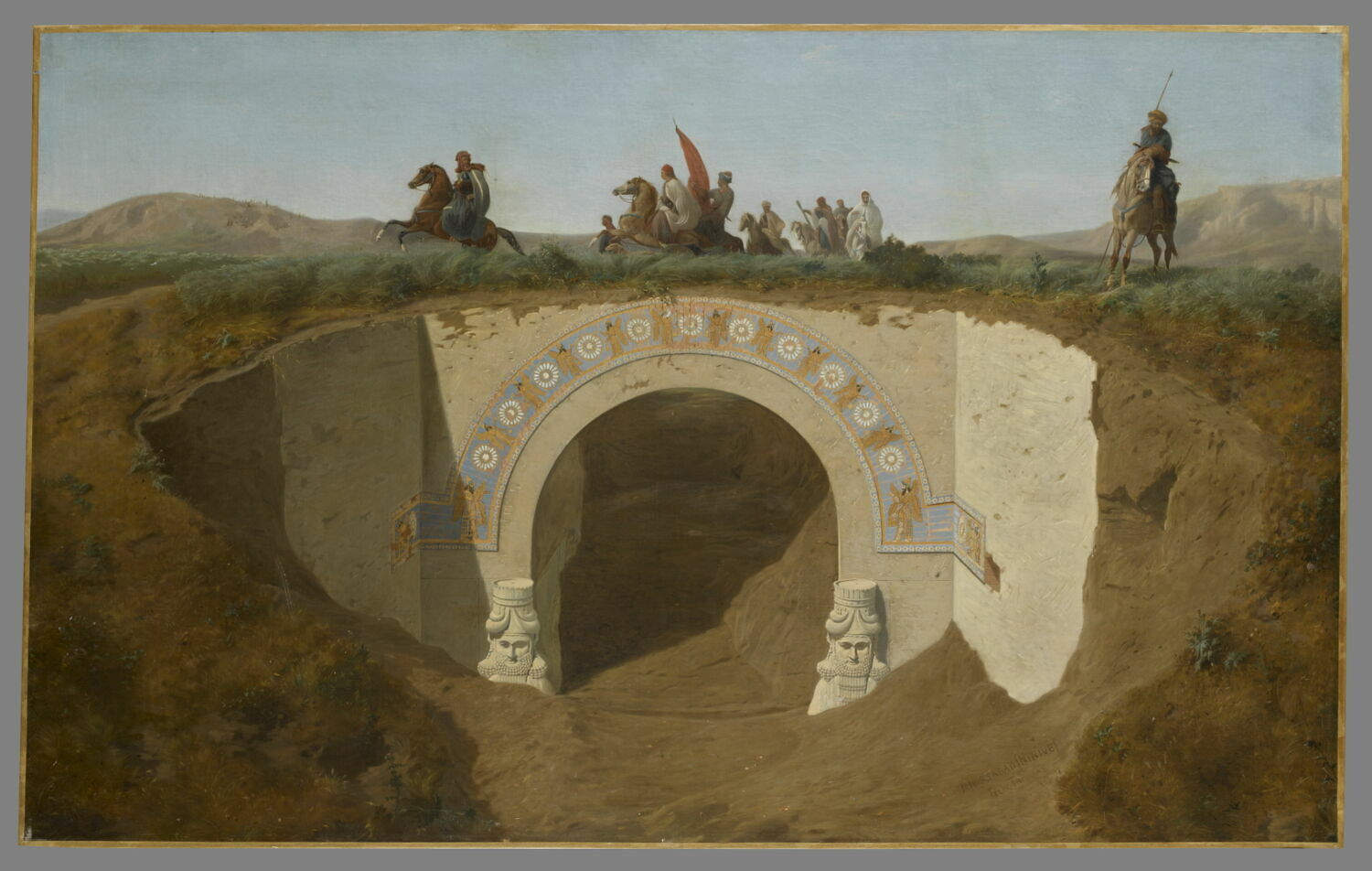
Another work housed at the Louvre also recounts this encounter between the modern world and the buried cities of the East: *Visite du pacha de Mossoul aux fouilles de Khorsabad, ancienne Ninive*, created in 1863 by Félix Thomas, an artist of the French school. The title evokes a visit to the excavations and captures the atmosphere of an era when the Assyrian ruins became the scene of new explorations and growing European curiosity. It is significant that the work links Khorsabad with Nineveh, two distinct cities but both connected to the history of the Assyrian Empire: the former, a capital founded by Sargon II and abandoned after his death; the second, destined to become the center of the kingdom under Sennacherib. Nineveh itself, with its reputation as a powerful and destroyed city, would also have fueled the imagination of artists far beyond the boundaries of archaeological research. In any case, it is necessary to distinguish the historical context from the provenance of the artifacts. The connection to Khorsabad therefore pertains to contemporaneity and the historical context, not the site of discovery.
It is precisely this fusion of events, places, and accounts that conveys the complexity of Assyria: a civilization that research has brought to light and which, even before being reconstructed by archaeologists, had already found in Western art a powerful image of grandeur and ruin.
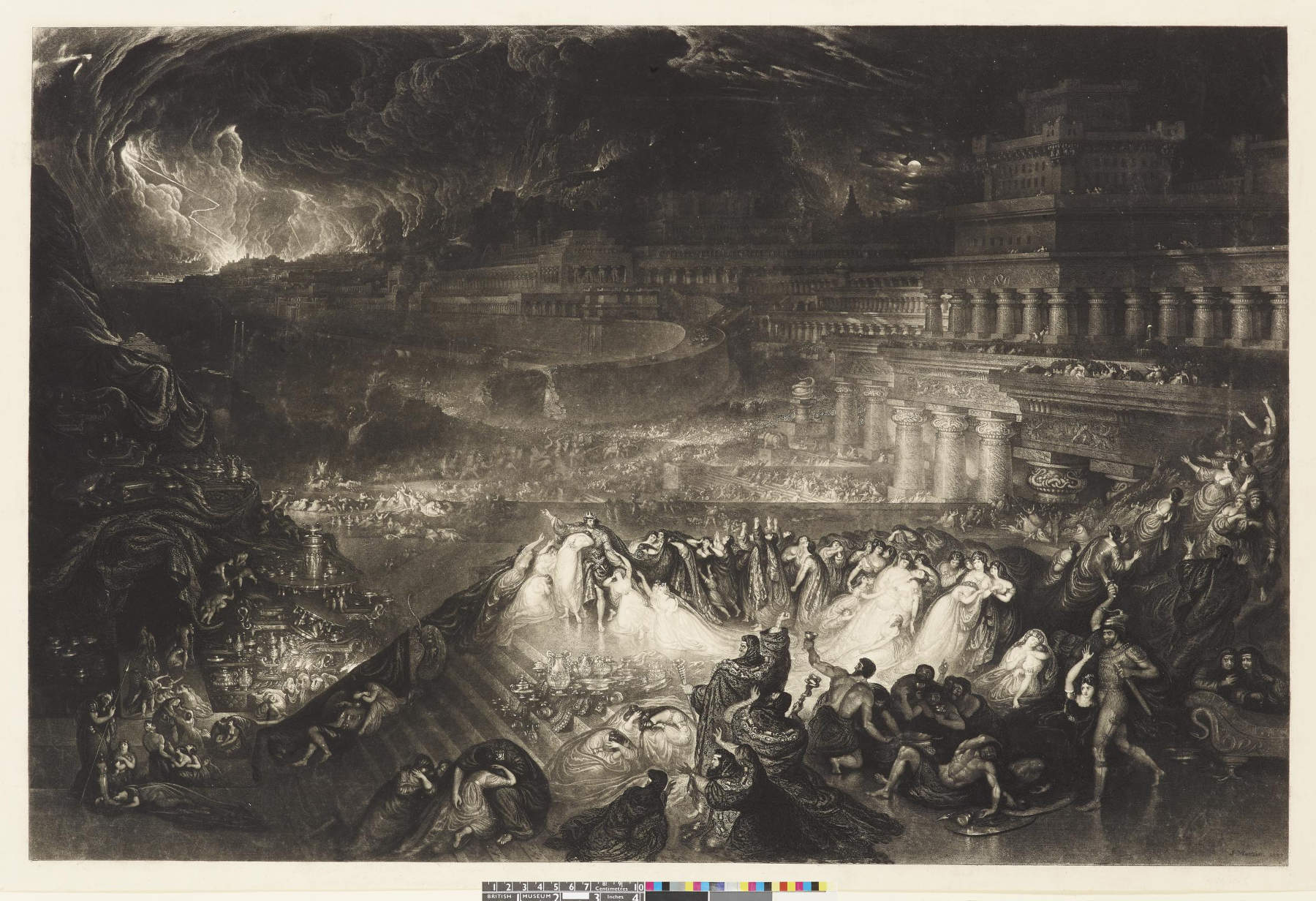
Before the nineteenth-century discoveries restored a tangible presence to the Assyrian cities, in fact, Nineveh existed primarily in literary memory and in the visions of artists. One example is *The Fall of Nineveh* by John Martin, a British painter born in Haydon Bridge in 1789 and who died on the Isle of Man in 1854. In his depictions of catastrophes and monumental ruins, the painter gave form to a Romantic sensibility drawn to the Sublime: the disproportion between human beings and the forces that tower over them, the fragility of power, and the inevitability of destruction. Martin’s painting fits squarely within this tradition and depicts an Assyria still filtered through imagination and a taste for drama. This represents a marked contrast to the Pazuzu statuette in the Louvre and Friedkin’s films: on the one hand, a city transformed into a grandiose vision of ruin; on the other, a small bronze object, bearing an inscription and intended to protect whoever carried it. There are, however, no 19th-century paintings dedicated specifically to the demon: his fame among the general public is, in fact, linked to Friedkin’s films.
Other Pazuzu Figures in Museums
The statuette in the Louvre is not the only image of the demon that has survived to the present day. The Metropolitan Museum houses a pendant featuring the head of Pazuzu, dating from the Assyrian period to approximately the 8th–7th centuries B.C. This is one of the most common forms in which the demon was depicted—the head alone—designed (as mentioned earlier) to be worn or hung and thus to act in close contact with the person it was meant to protect. The Metropolitan also houses another bronze pendant depicting the head and neck of Pazuzu, dating from the 8th–7th centuries B.C. The prominent eyes, protruding forehead, and short beard framing the wide-open mouth characterize its menacing appearance. Worn as an amulet, the pendant was oriented so that the demon’s gaze was directed outward, serving as protection against dangers, particularly against Lamashtu, the fearsome demonic entity.
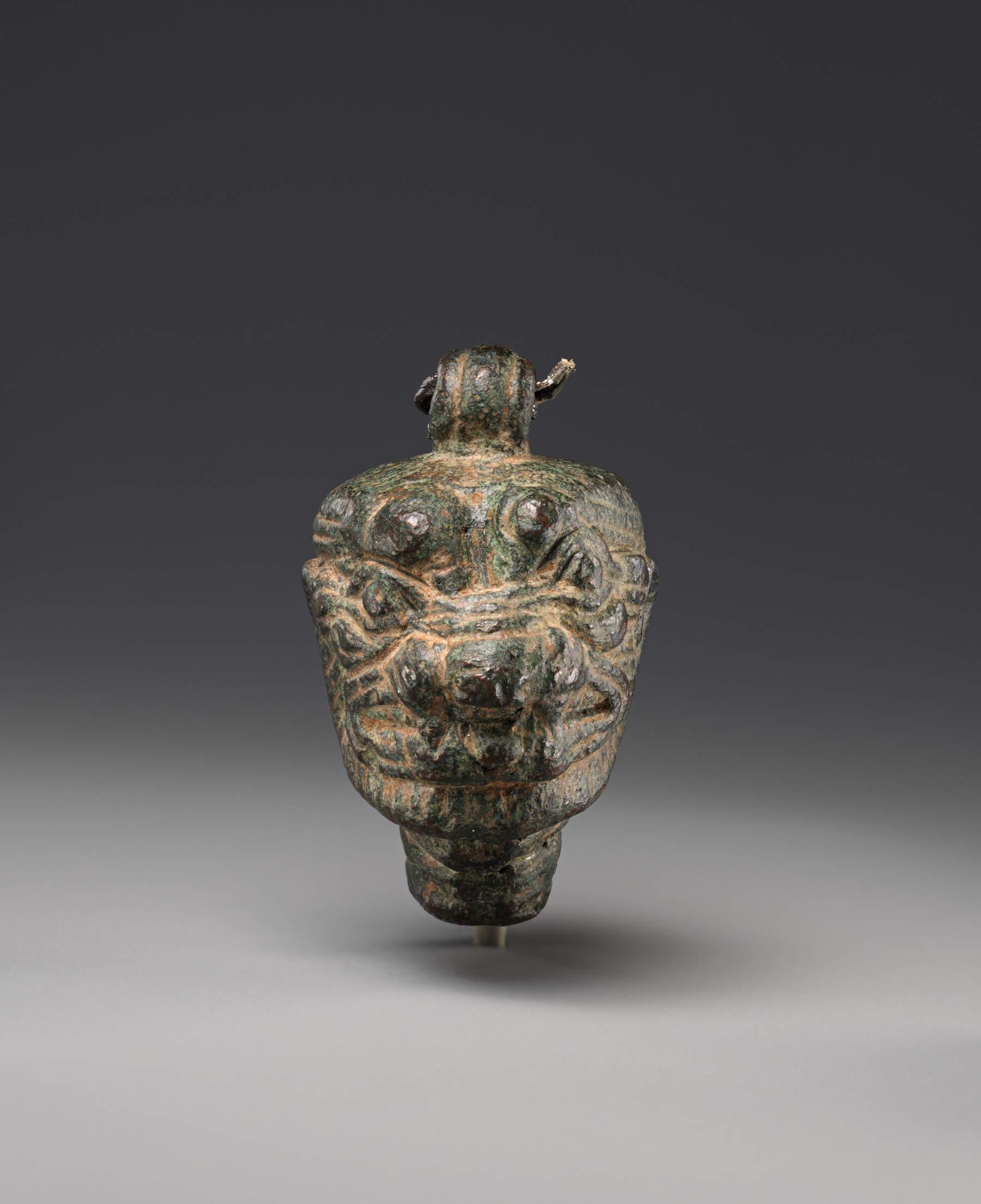
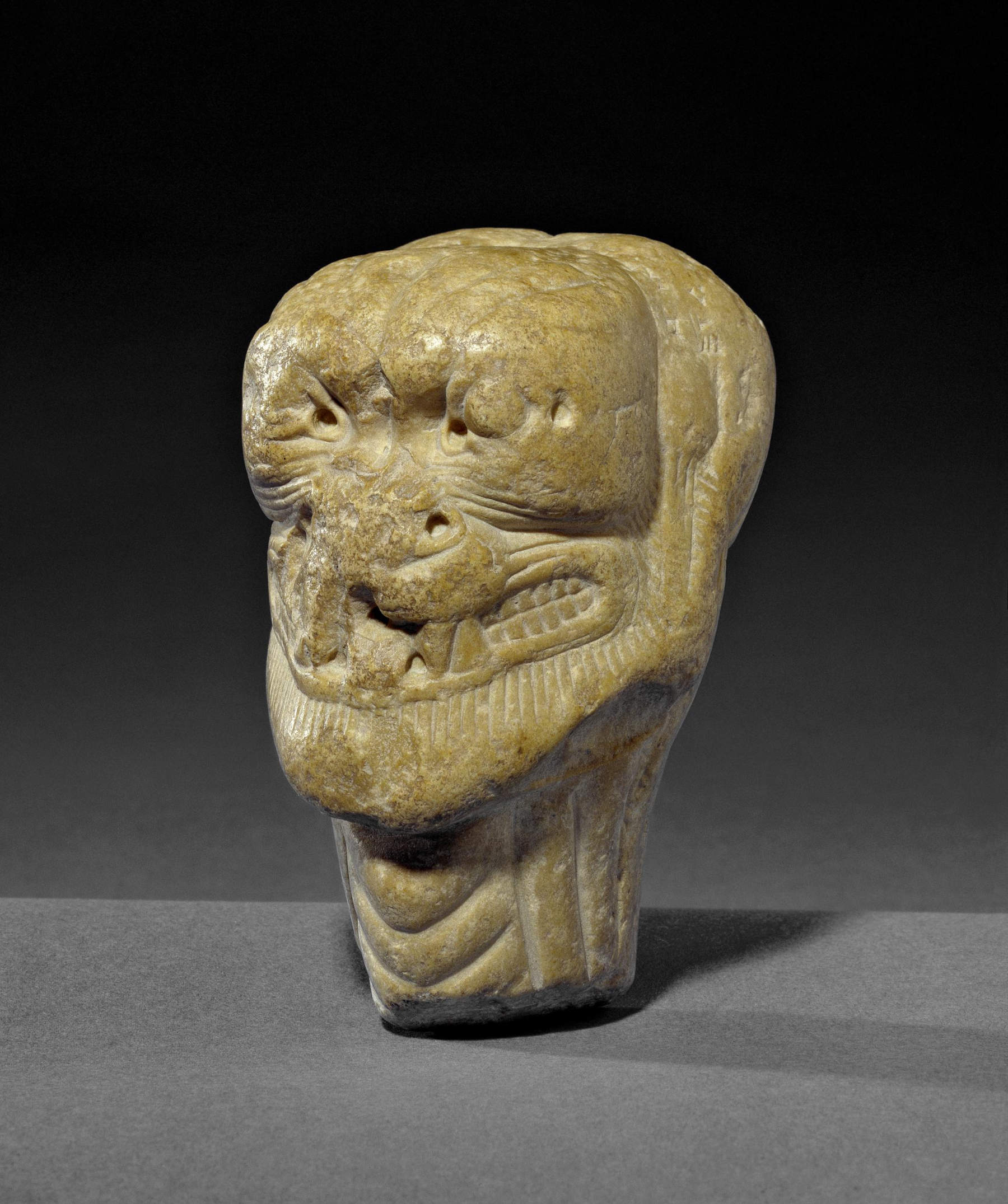
The Vorderasiatisches Museum in Berlin houses a demon head dating to the first half of the first millennium BCE. The British Museum holds two examples of different types. The first is an amulet consisting of a bronze head of Pazuzu, cast with a ring for suspension at the top and dated to between the 9th and 6th centuries BCE. The second is a yellow limestone head from the same chronological period and of Neo-Assyrian culture, with a cuneiform inscription on the back and sides. The museum describes its face as that of a lion or a dog, with unnaturally bulging eyes and horns. The artifact was excavated by Hormuzd Rassam.
Exorcism in Western Painting
There is a second comparison that the case of Pazuzu makes possible. In Friedkin’s film, the demon is the entity to be driven out, and this task is carried out by two Christian priests; in ancient Mesopotamia, however, it was Pazuzu who was called upon to perform the expulsion. These are two distinct traditions, which cannot be presented as one deriving from the other, and which have also produced very different images in European art.
Anyone familiar with how the exorcism in the film unfolds will recall a long, physical battle: the freezing room, the shaking bed, the prayers repeated to the point of exhaustion, the holy water brandished against a voice that is no longer that of a little girl. But that scene, however extreme, has its origins in a much older and more restrained practice: exorcism as a codified rite of the Church, consisting of formulas, invocations, and gestures—and, even earlier, in the healings of the possessed recounted in the Gospels. Before cinema turned it into a spectacle of terror, Western art had depicted it for centuries as an act of liberation.
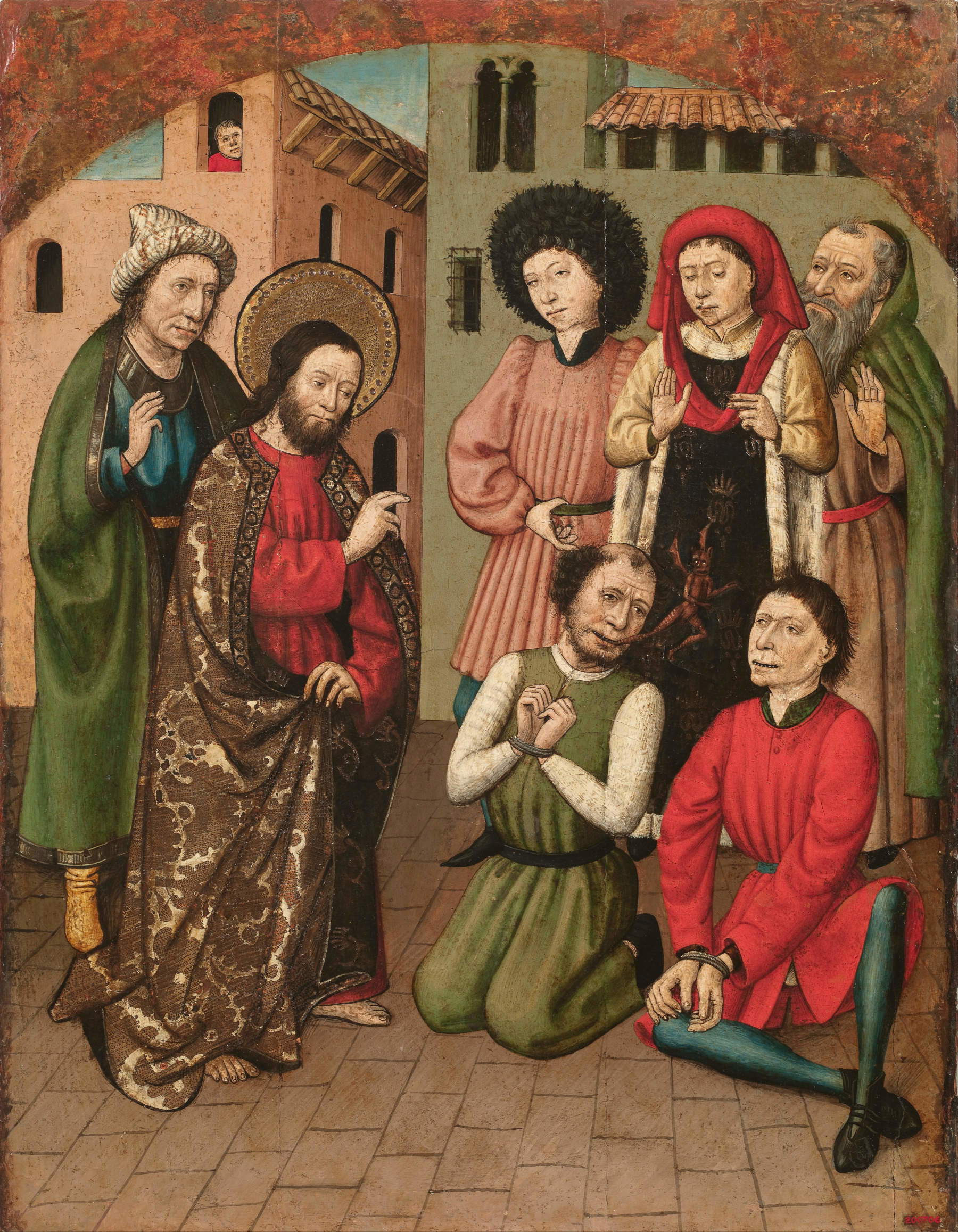
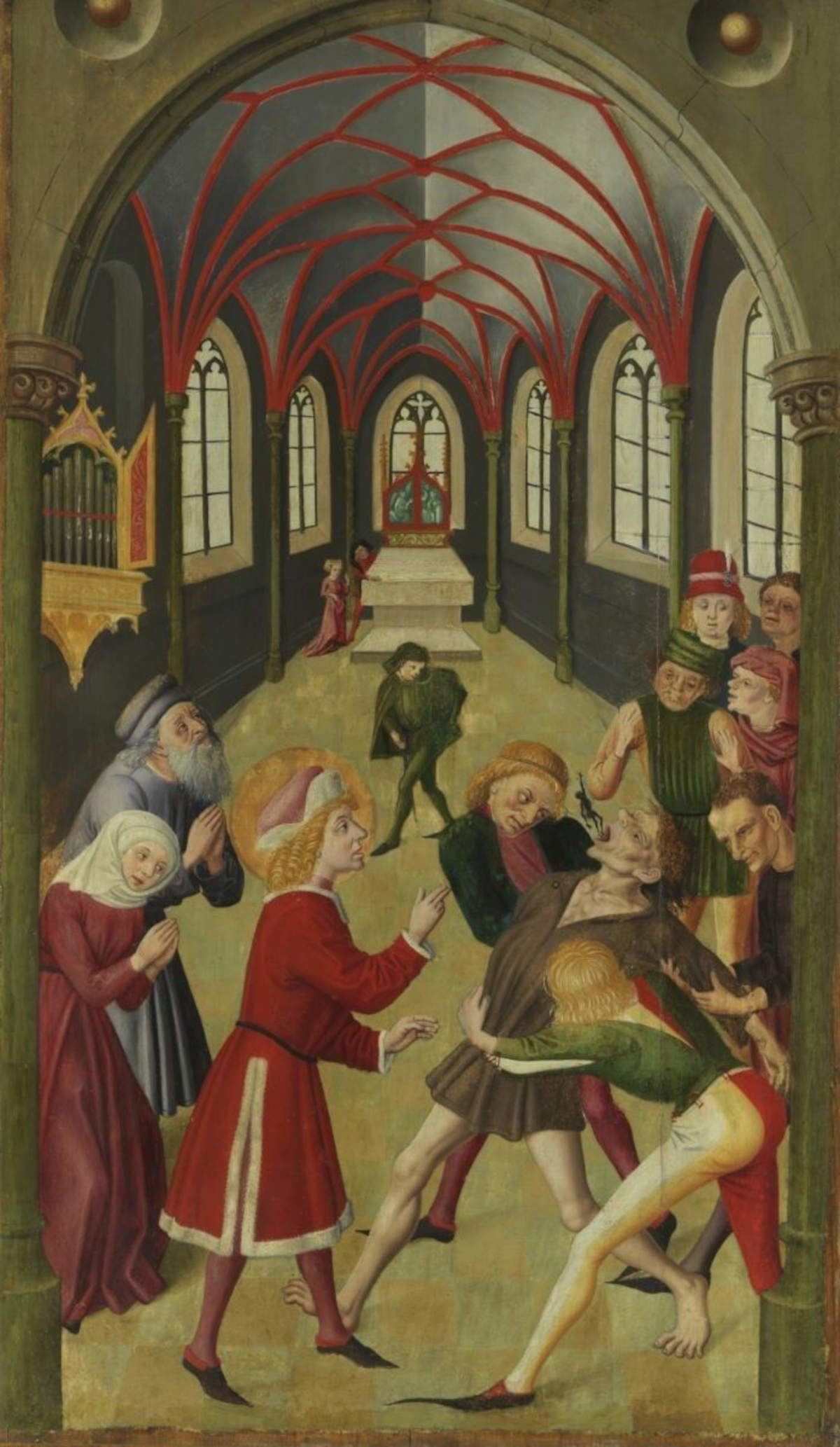
The Master of Saint Bartholomew, active in the mid-15th century, painted a Saint Bartholomew Performing an Exorcism around 1440–1460, now in the Museu Nacional d’Art de Catalunya in Barcelona. At the Musée Unterlinden in Colmar, there is a panel painting attributed to Gabriel Mälesskircher, *Saint Vitus Healing a Possessed Man*, in which the saint—invoked in Christian tradition against various evils—frees a man from the devil.
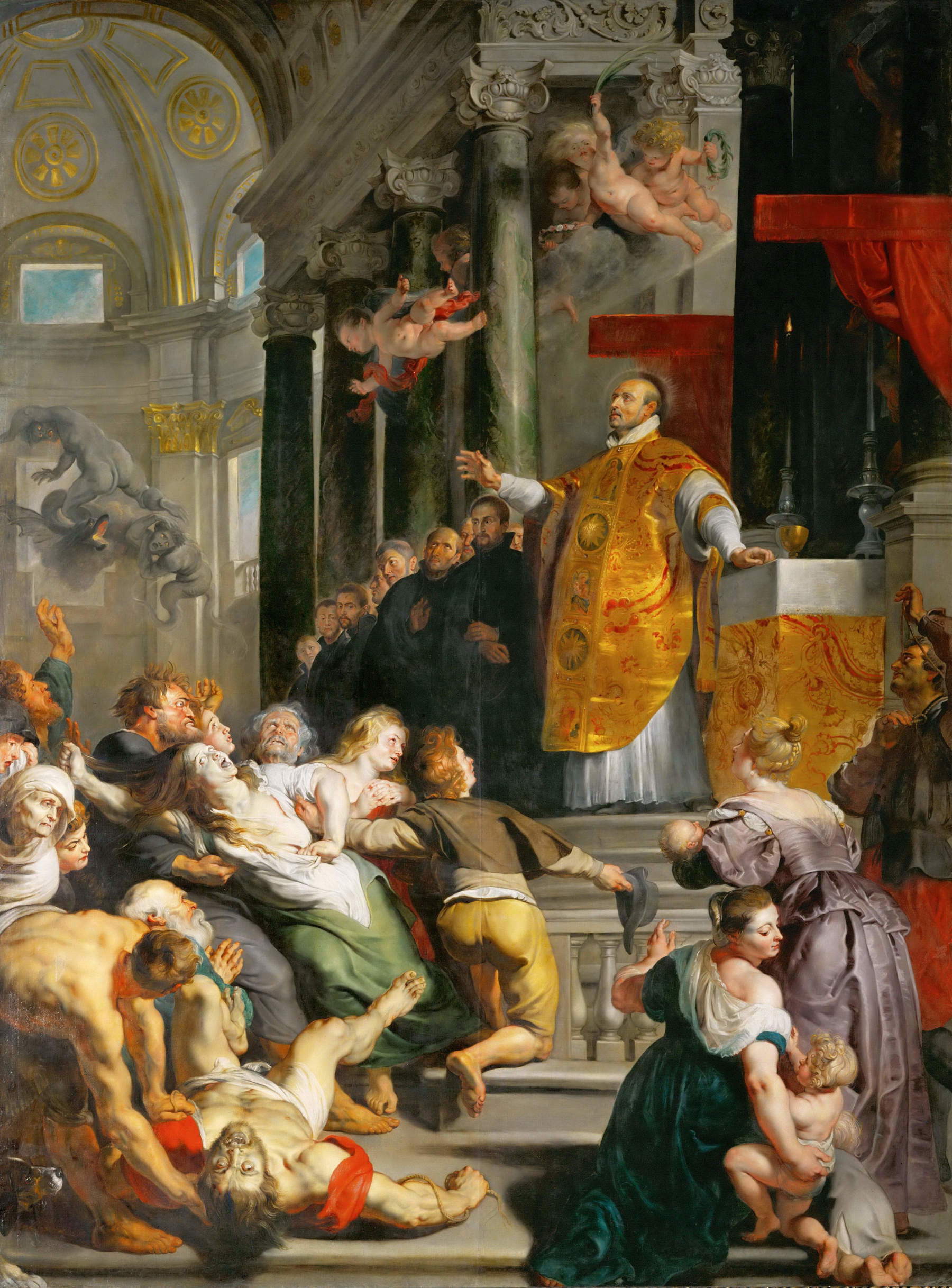
Among the Baroque examples, Peter Paul Rubens’ *The Miracles of Saint Ignatius of Loyola*, painted around 1617–1618 and housed at the Kunsthistorisches Museum in Vienna, stands out. The monumental canvas once adorned the high altar of the Jesuit church in Antwerp, alternating with *The Miracles of Saint Francis Xavier*, as part of the decorative program commissioned from Rubens. The composition brings together episodes partly drawn from the life of the order’s founder and others belonging to the traditional iconography of the saints, with particular emphasis on the healing of the possessed.
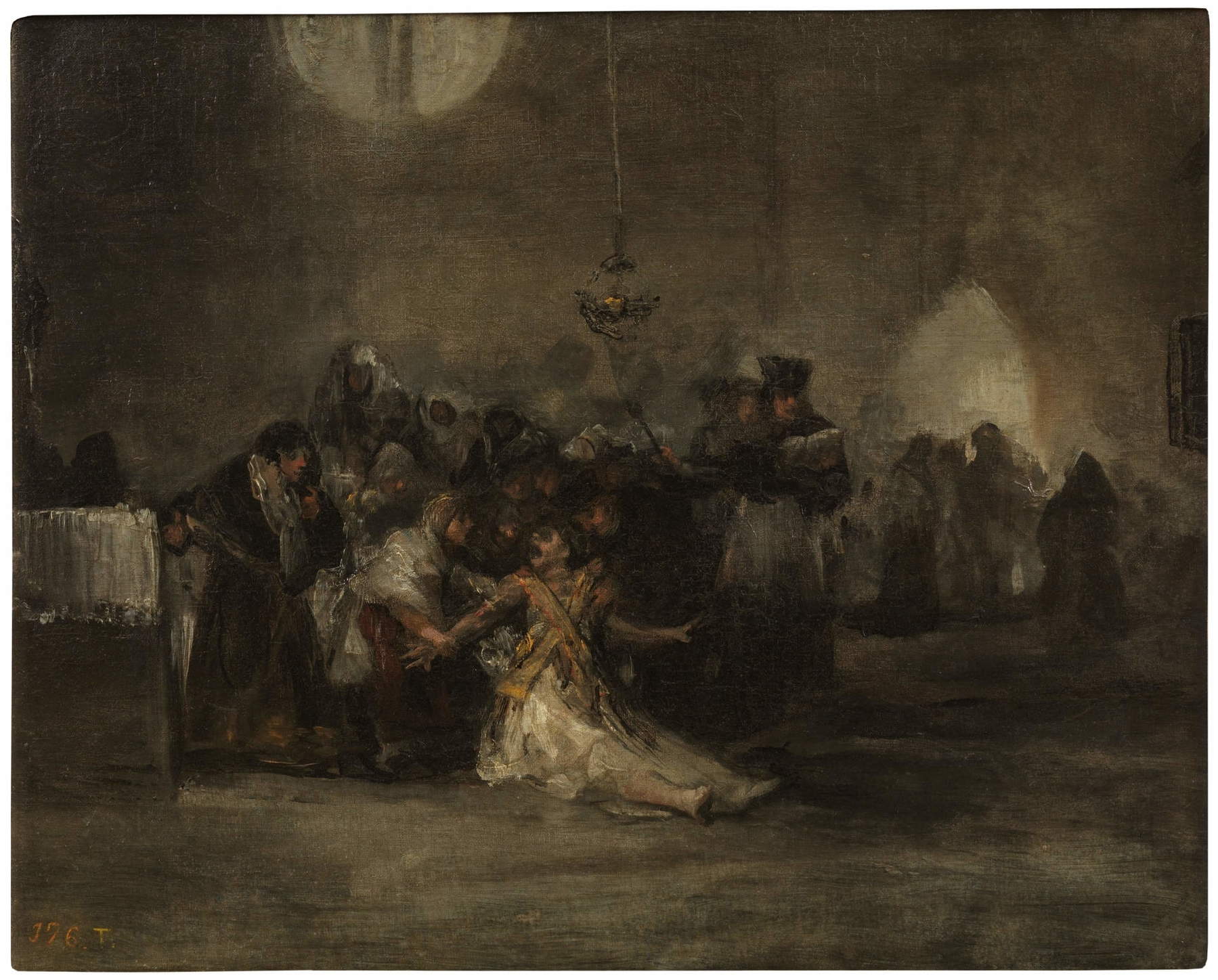
A final example dates to the nineteenth century, a period in which, as mentioned earlier, Pazuzu did not have his own pictorial iconography. The Prado Museum houses *The Exorcism*, an oil on canvas attributed to an anonymous follower of Francisco de Goya, which is not currently on display. Inside a church, a figure of uncertain gender, dressed in white robes and a priestly stole, is seated on the floor, screaming with wide-open eyes fixed on the altar. Two women hold her by the arms, surrounded by other veiled figures, while in the background a priest recites the exorcism ritual and sprinkles the person with holy water. The style, dating from after Goya’s death, echoes the characteristics of his late works, particularly *Scene in a Madhouse*, on display at the Real Academia de Bellas Artes de San Fernando in Madrid since 1838.
This reference may help narrow down the date of the painting’s creation, which attests to the persistence of the theme of exorcism in nineteenth-century figurative art and its affinity with the unsettling world of the Spanish master.
The contrast with the Mesopotamian works is therefore stark. The history of the object housed at the Louvre allows us to interpret with greater precision the character that Blatty and Friedkin introduced into popular culture. In the 1971 novel and the 1973 film, Pazuzu takes on the characteristics of a malevolent entity in a tale of possession and Christian exorcism set within a cultural context far removed from its original one. In Mesopotamian sources, however, the demon is situated within a belief system in which evil could be countered by invoking an equally fearsome force, capable of acting against other harmful spirits. The statuette preserved at the Louvre, with its right arm raised and an inscription proclaiming its lineage and dominion over the winds, bears witness to this use: an object designed to be hung in a room and to watch over those who lived there.
This is perhaps the most intriguing paradox in the story of Pazuzu: a figure created to ward off evil became, in the 20th century, one of its most recognizable faces. Cinema has transformed an ancient protector into a presence to be feared and has exploited precisely those monstrous traits that, for the inhabitants of Mesopotamia, made him effective against hostile forces. Yet, behind the deformed face, wings, and claws of the Louvre statuette lies a nightmarish creature and a reflection of a world in which the line between what threatened human beings and what could save them was far less clear-cut than we imagine. Perhaps this is also why Pazuzu continues to unsettle us: because, nearly three thousand years later, he reminds us that even the face of evil can change, depending on who is looking at it.
Warning: the translation into English of the original Italian article was created using automatic tools. We undertake to review all articles, but we do not guarantee the total absence of inaccuracies in the translation due to the program. You can find the original by clicking on the ITA button. If you find any mistake,please contact us.