


by Federica Schneck 30/10/2026


Categories: Works and artists / Disclaimer
Pietro Roccasalva’s paintings are like dreams of which one remembers very little: his canvases are populated by enigmatic figures, improbable symbols, and unexpected apparitions. A journey into the imagination of an artist who transforms painting into an open-ended story, destined to leave more questions than answers. Federica Schneck tells us more.
If you’re looking for an artist who gives you answers, you’re reading the wrong article. Pietro Roccasalva doesn’t provide answers; he constructs increasingly elaborate questions, and he does so with an almost liturgical patience, as if each work were a ritual whose ultimate meaning eludes even him. Let’s start where we always start, with the facts that academic critics love to pigeonhole but which, in this case, are worth recounting as a physical—almost geographical—journey: Modica, the Baroque Sicily of stone churches carved to the point of exhaustion, where Roccasalva was born in 1970. Then Urbino, where he studied drawing in a city that is itself a treatise on Renaissance perspective set in stone in its streets. Then Milan, the Brera Academy, painting as a discipline to be reclaimed in an era that had already declared it dead at least three times. And then, in 2002, the encounter that perhaps more than any other explains this artist’s mindset: the course at the Antonio Ratti Foundation in Como, the lectures by Giulio Paolini. From then on, for twenty years, Roccasalva would do nothing but construct spaces in which one image generates another image, which in turn generates yet another, without any of them ever presenting itself as a definitive endpoint.


The key term—the one he himself uses and that the curators repeat like a mantra—is “artistic situation.” Not an installation, not simply a painting: a situation. An unstable configuration in which a painting, a sculpture, a video, and a live performance coexist—what he instead calls, using a term that is both technical and visionary, the “construction site.” The “cantiere” is the fluid, ever-shifting phase, teeming with scraps and possibilities; the final painting, on the other hand, is the crystallized phase—the frame that breaks away from the film and is fixed forever, carrying within it, just as a fossil bears the imprint of an extinct animal, the memory of everything that preceded it. Looking at a painting by Roccasalva without having seen the rest of the “situation” is a bit like reading the last page of a novel without having read the preceding ones: you understand that something serious, solemn, perhaps catastrophic, has happened, but the reason why remains buried in the rooms you haven’t passed through.


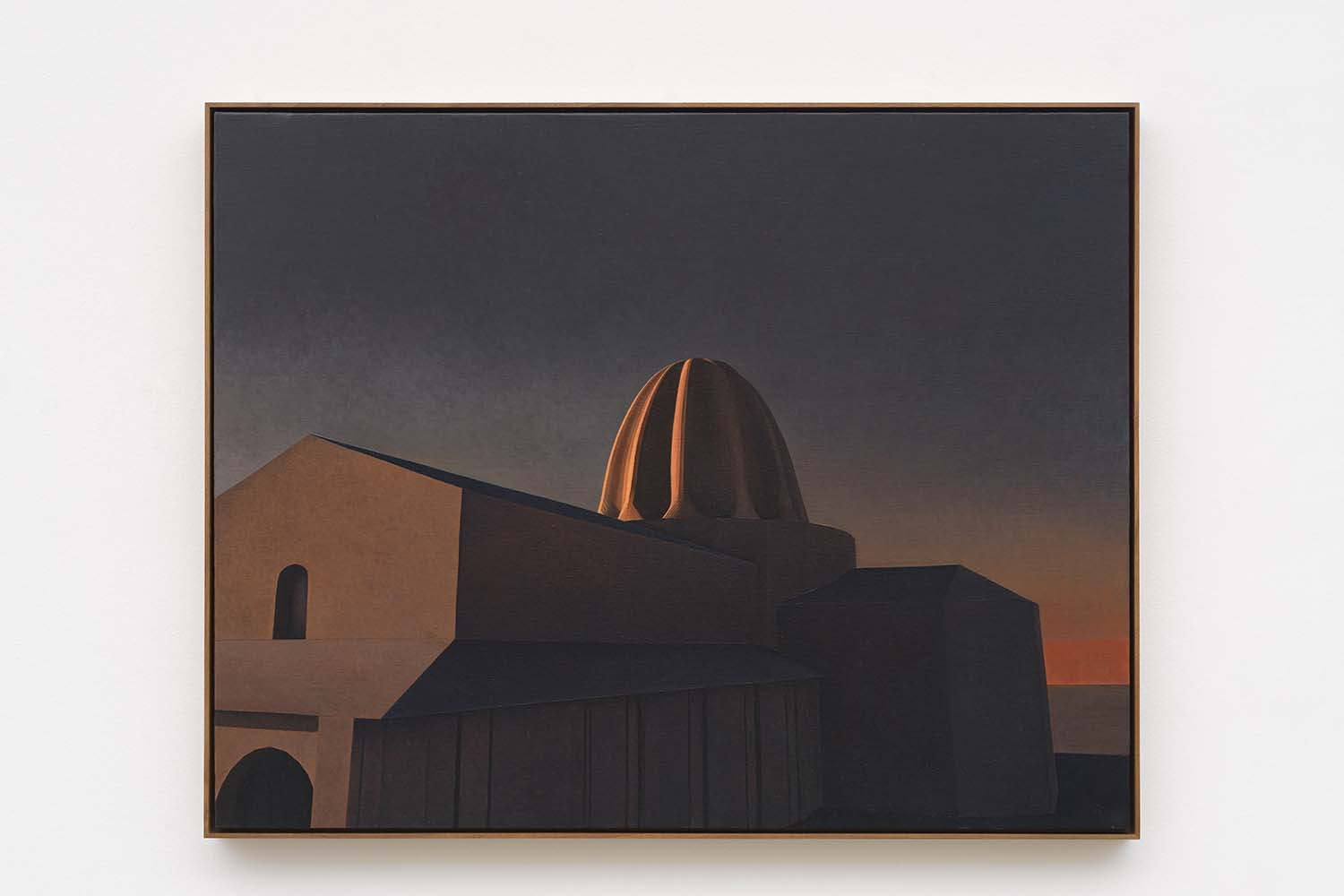
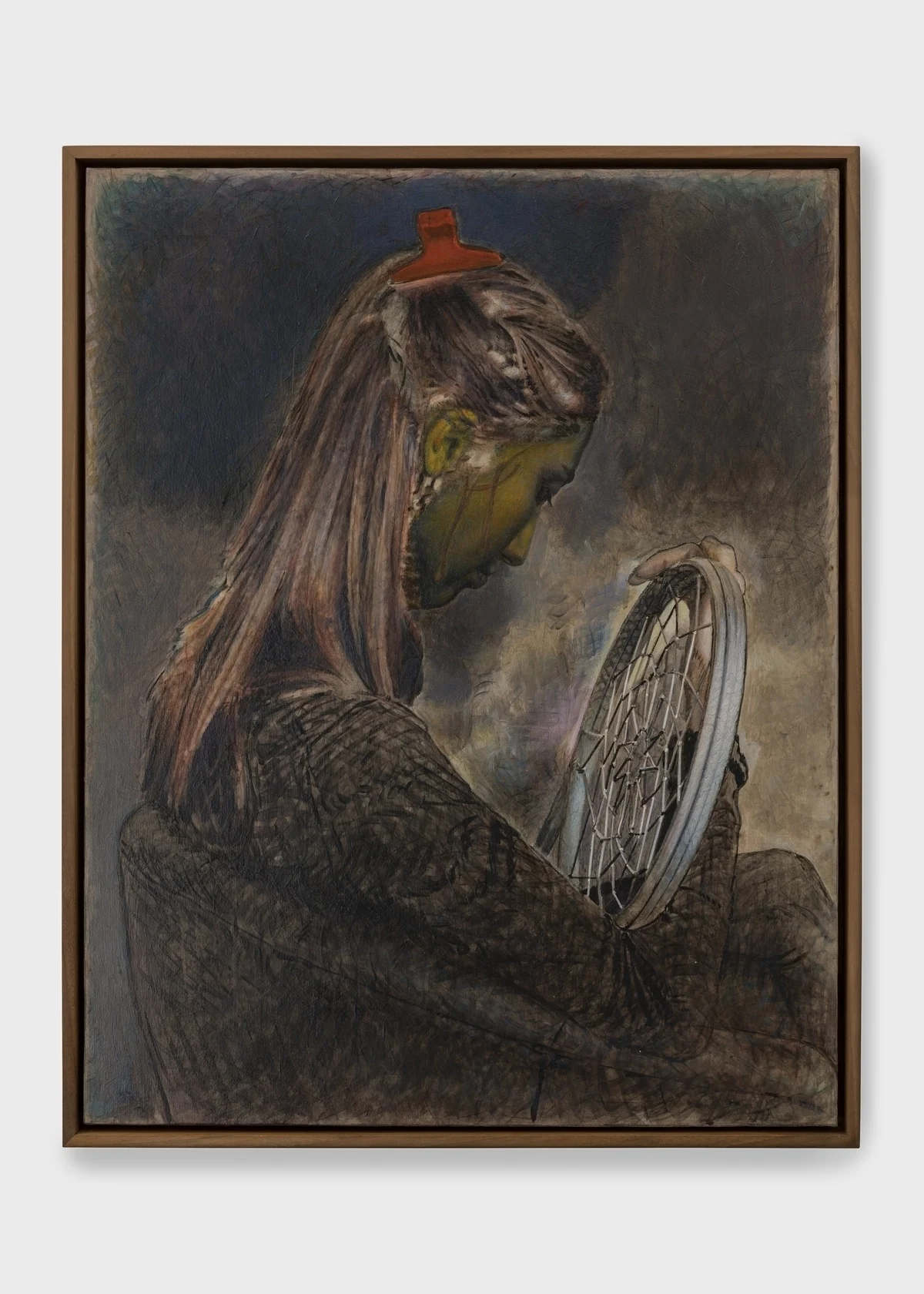
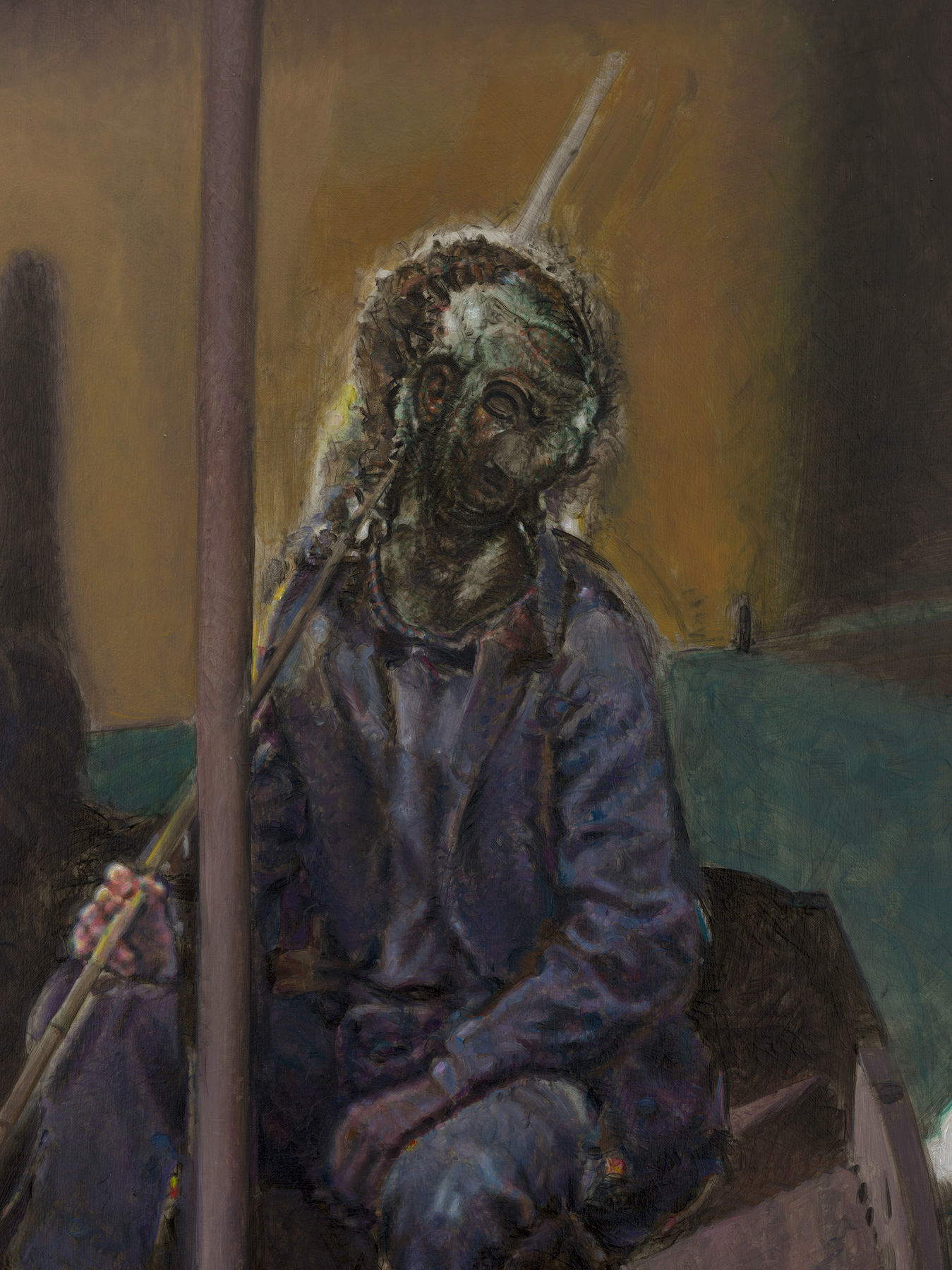
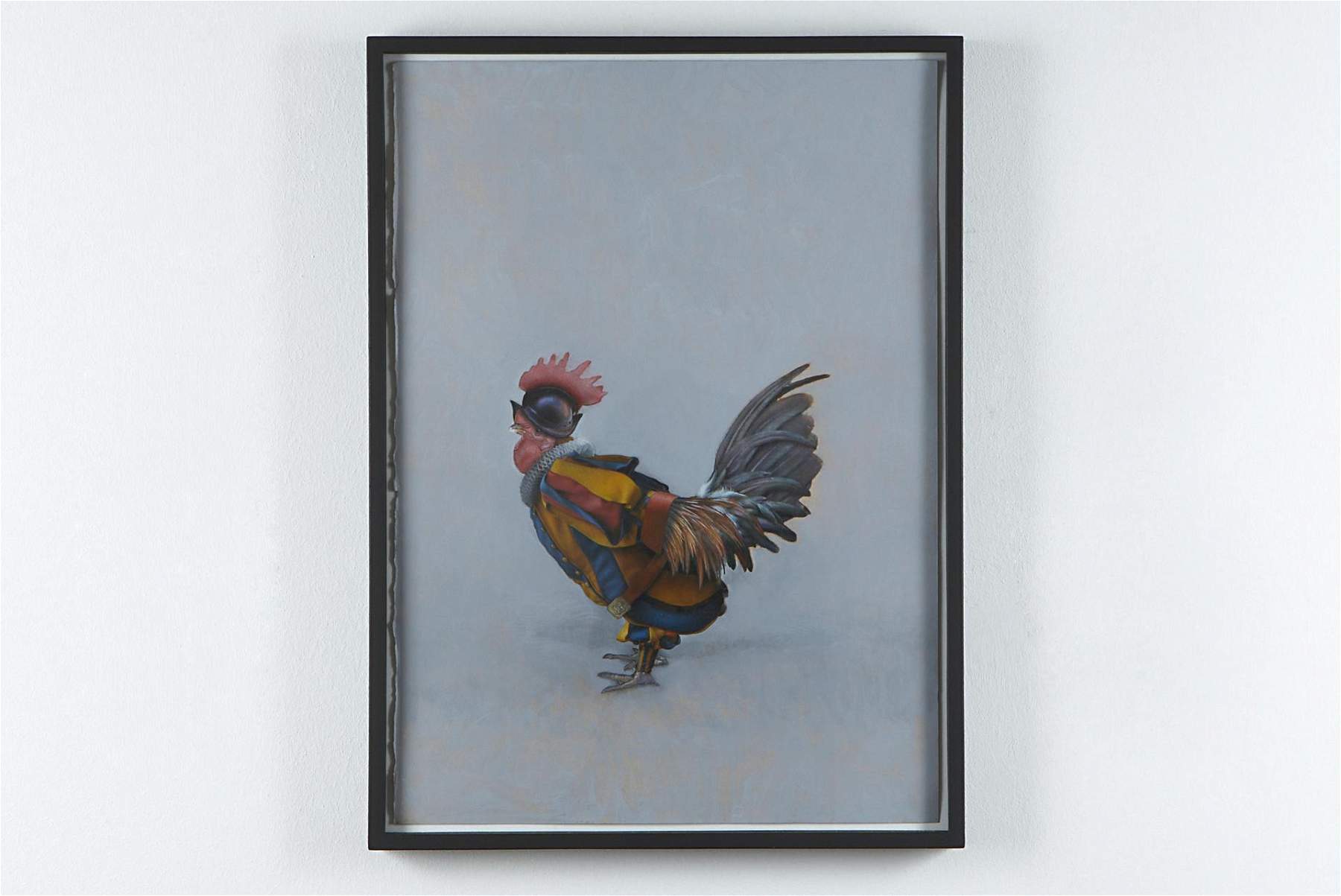
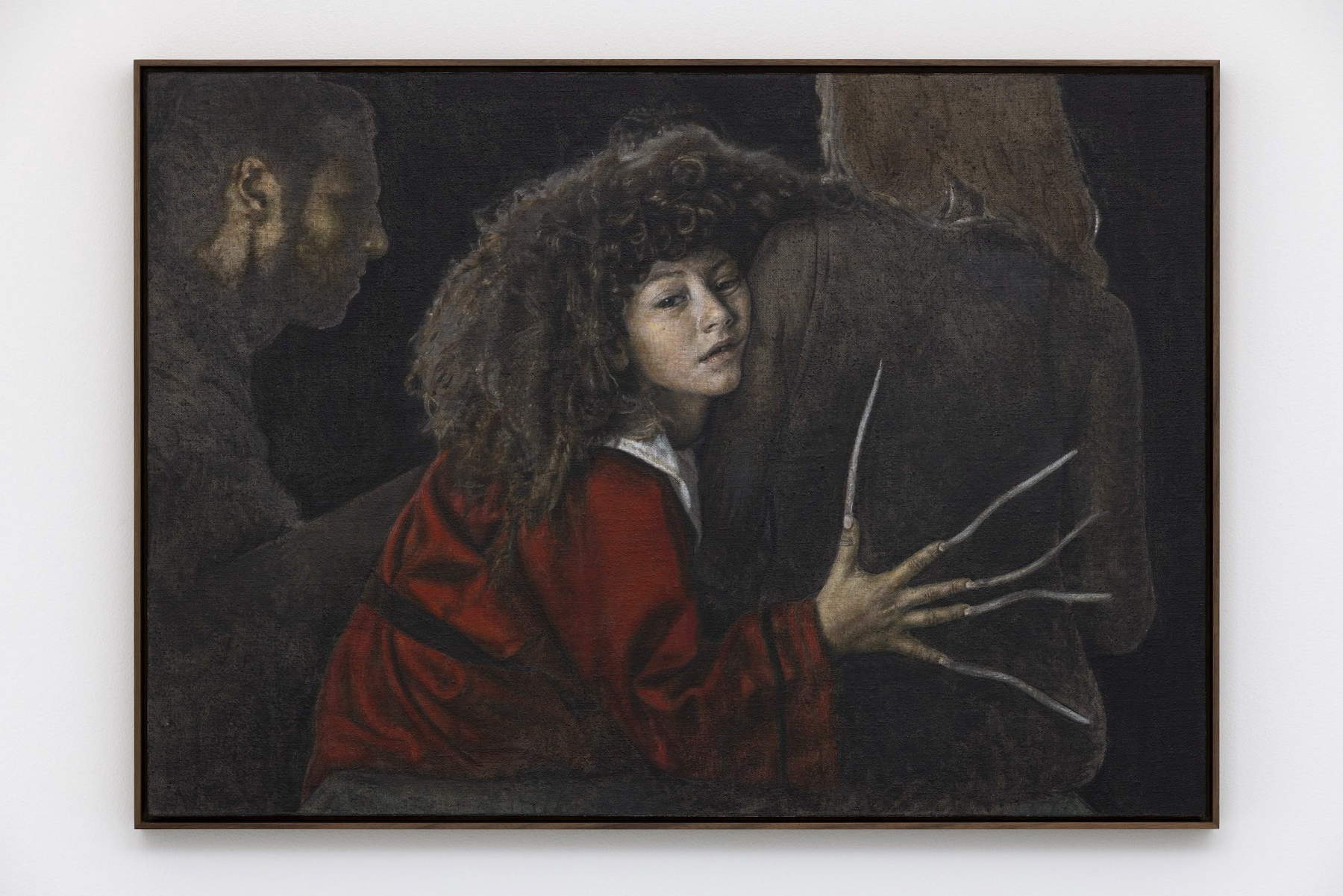
And the rooms, in fact, are filled with characters who return, disappear, disguise themselves, and reappear years later as family ghosts. There is the elevator operator, the quintessential Kafkaesque figure, suspended by definition between one floor and another, unable to belong to any one place because his very profession is one of transition. There is the hot-air balloon, which in his paintings never flies freely but falls, or is about to fall, or hovers in an unnatural balance that the color renders even more unstable. There is the bride armed with a mysterious racket, the little girl with the doll, and the boy with unkempt hair and dirty fingernails who seems to have emerged from a domestic nightmare rather than a happy childhood. There is even, in a small painting that has entered a Swiss collection, a rooster disguised as a Swiss Guard, as if Roccasalva had decided that even the ridiculous, taken to its extreme, can become sacred.


These are not characters in the narrative sense: rather, they are recurring symptoms, icons of a private imagination that draws freely from the Baroque and Futurism, from high art history and pop culture, from cinema, philosophy, and the Sicilian Catholic liturgy of his childhood, without ever explaining to the public where one reference ends and another begins. Time, in this painting, does not flow forward as one might expect: it plunges, crumples, and short-circuits between different eras within the same frame, so that a Baroque gesture and a detail from a film still can coexist on the same canvas without ever resolving into a clear hierarchy.
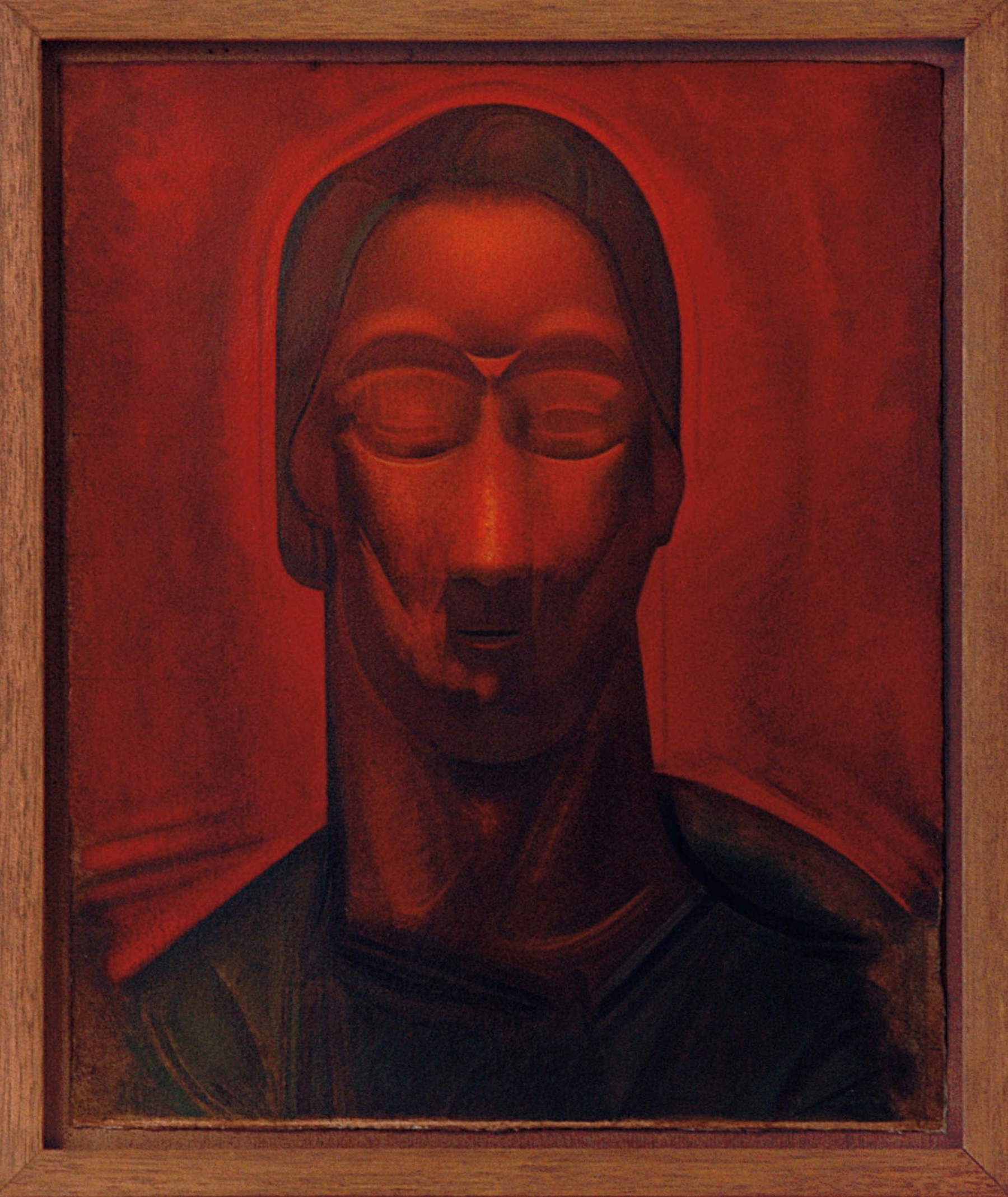
There is also an aspect of his public persona that deserves a chapter of its own, and which the few Italian articles dedicated to him mention almost with embarrassment: Roccasalva does not like to be photographed; he refuses to be portrayed and evades direct self-representation with the same obstinacy with which his characters elude a single, unambiguous interpretation. Someone has described him, half-jokingly and half-seriously, as a ghost, almost a vampire of Italian contemporary art—present everywhere in his works and absent everywhere from the social gossip that usually accompanies successful artists. It is an almost fierce consistency: if his work consists of staging the artifice of representation, his own evasion of photographic representation becomes the ultimate, paradoxical act of that very poetics.
An anecdote circulating among insiders that speaks louder than a thousand statements of artistic intent: some say they have never managed to buy one of his paintings, not even after dedicating a solo exhibition to him, not even after repeated requests—as if, for Roccasalva, the painting, once crystallized outside the “worksite,” still belonged too intimately to the process that generated it to be simply sold, moved, or hung on a wall foreign to its original “worksite.”
Yet it would be a mistake to interpret all this as pure mystification, as a game of mirrors for its own sake. In 2005, the jury of the Furla Prize recognized a specific, almost technical merit in his work: the ability to bring everything that was outside the painting —the installation, the object, the performer’s living body, the very time of the installation— back into the painting without weakening the painting itself; on the contrary, it was strengthened in its role as the ultimate synthesis. It is the paradox that underpins his entire body of work: the more he multiplies languages, media, and references, the more Roccasalva ends up reaffirming—almost with a stubborn defiance of convention—painting as an irreplaceable realm of thought.
From Manifesta 7 in 2008 to the Venice Biennale the following year, from the galleries of MoMA PS1 to major museum solo exhibitions in France and Germany, his career has unfolded at a measured pace, without chasing the immediate visibility that so many of his contemporaries sought during those same years.
When you leave a Pietro Roccasalva exhibition, you’ll carry with you—more than any specific image—a sense of suspension, as if you’d been locked away for an hour inside a dream of which someone else remembers every detail except its meaning. After all, the “construction site” never truly closes: every so often, it simply drops a crystallized fragment—a painting, in fact—so that we, from the outside, can glimpse the shape of everything else that continues, invisibly, to take form in the darkness behind the scenes.
Warning: the translation into English of the original Italian article was created using automatic tools. We undertake to review all articles, but we do not guarantee the total absence of inaccuracies in the translation due to the program. You can find the original by clicking on the ITA button. If you find any mistake,please contact us.