



by Federica Schneck 19/11/2026


Categories: Works and artists / Disclaimer
In Vararo, in the Varese Pre-Alps, a house entirely covered in frescoes houses over two thousand works by an artist who remained secluded from the world for thirty years: Vittorio Aldrovandi, known as Vandi. But the discovery of this artist—a technical draftsman by day and a visionary painter by night—also raises a question: How can we describe his art without reducing it to a legend? An article by Federica Schneck.


When faced with a work of art that doesn’t reveal itself at first glance, almost everyone has said—or heard someone nearby say—at least once: “I could have done that, too.” It’s a defensive remark, a small wall hastily erected between oneself and what eludes understanding. It can be said with skepticism, with irony, with a vague sense of annoyance, and it always conveys the same message: this doesn’t concern me, I don’t understand it, I don’t want to feel excluded.

But all it takes is for someone to place a hand on the arm of the person who said it and begin to tell the story: who painted that canvas, what drove him, what urgency guided his brush, in which room, during which season of life. As the story unfolds, the viewer’s perspective shifts; the artwork remains the same, yet the viewer has perhaps found a new vantage point from which to observe it. It is from this scene that we should begin our exploration of the artist Vittorio Aldrovandi, known as Vandi ( Solbiate Arno, 1934 – Barasso, 2023), as his story puts that very gesture to the test: the ability to tell an artist’s story without betraying him.
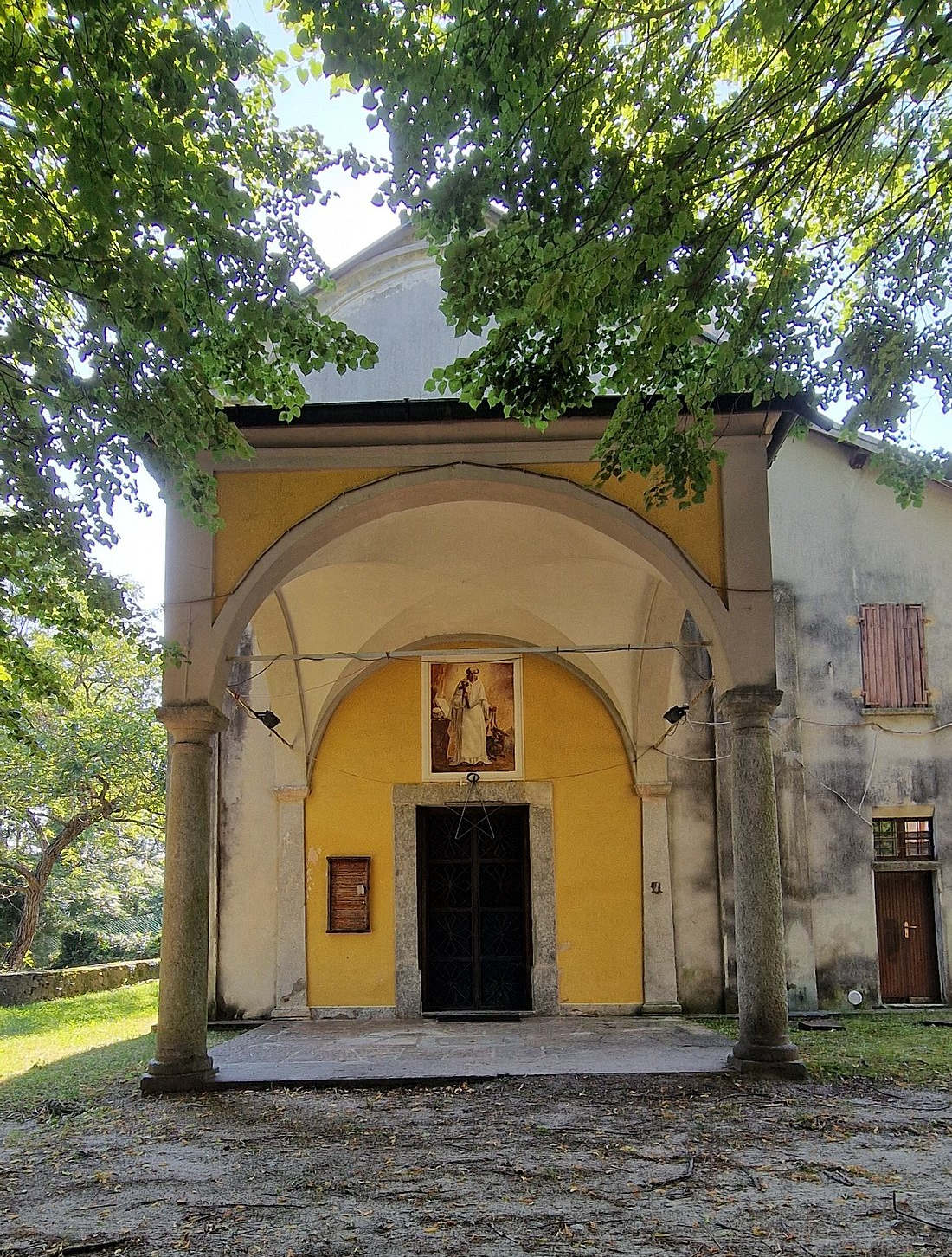
Vararo is located at an elevation of seven hundred meters in the province of Varese. There are just a few houses nestled among the greenery and a small 18th-century church dedicated to Saint Bernard, which features a fresco above one of its side doors. For years, anyone passing by could look up at that image without realizing they were standing beforeVandi’s only public work. A clue left in plain sight that remained silent until the house on the hillside was opened to the public.




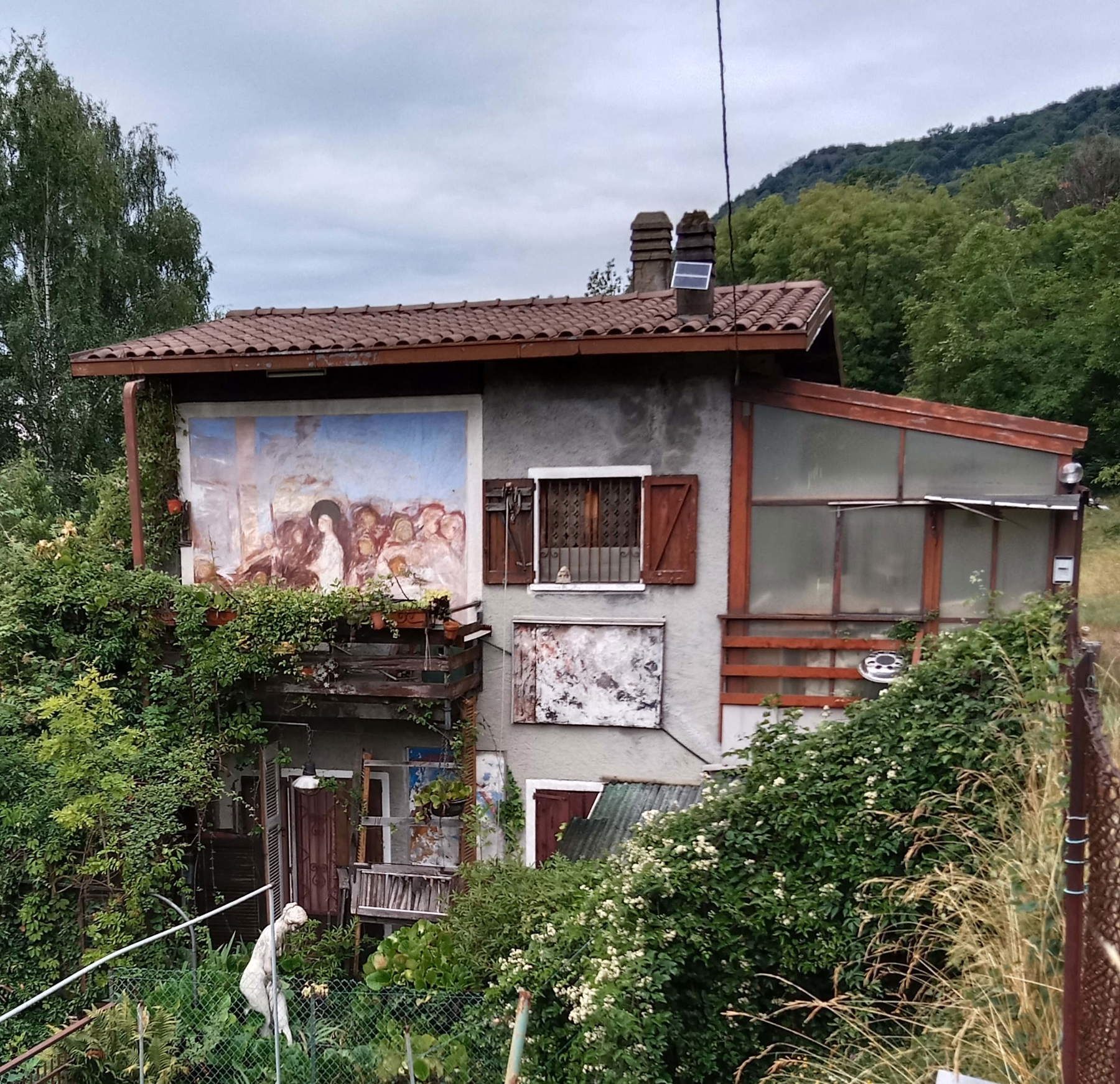
The stories of rediscovered artists often have a similar beginning: an object, a mark, a detail that seemed anonymous and that, in hindsight, turns out to be the tip of an iceberg. Here, the iceberg is a small mountain cottage transformed, over the course of thirty years, into a total work of art.
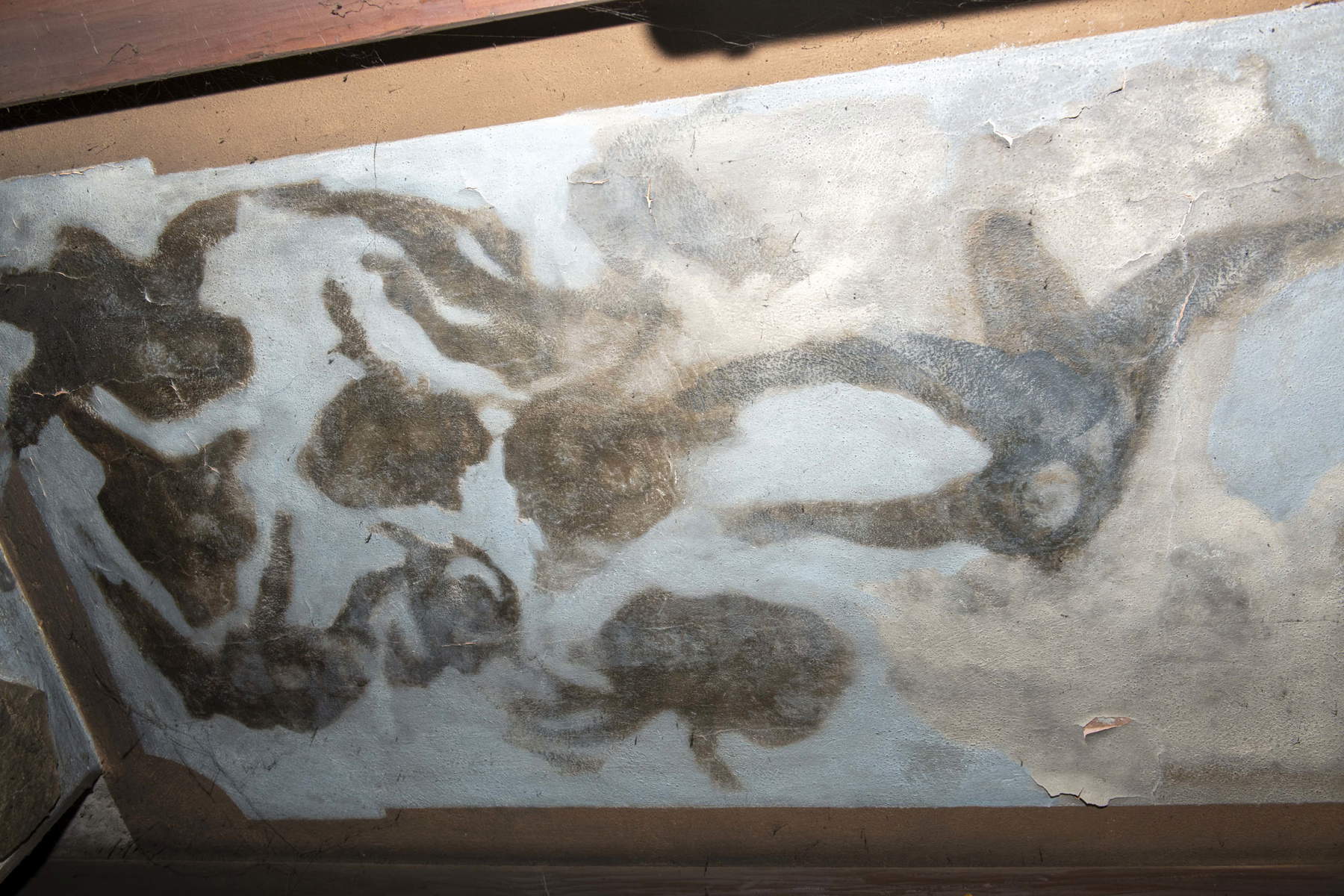
To understand it, we must go back in time. Vandi was born in 1934 in Solbiate Arno, in the province of Varese, and for most of his life worked as a technical draftsman at Aermacchi. The drafting machine, the ruler, the set square: a world in which every line follows a rule and every millimeter has a precise meaning, where discipline, meticulousness, and respect for the logic of machinery are required. It is a job that shapes a way of seeing, and it is worth remembering this, because through that rigor the artist would come to know the world of machines from the inside—a world that is anything but abstract for those who design it.
At night, however, Vandi paints. The hours stolen from work allow his visionary nature—which had to remain in the shadows during the day—to emerge. Suspended between extreme diligence and absolute freedom, he mingled with artists from Varese, participated in local exhibitions, and maintained contacts with the region’s leading avant-garde figures. Yet even then he senses a distance: the world seems far removed from his nonconformist spirit and his disenchanted view of reality.
At a certain point, that distance became a choice. First came his withdrawal from the exhibition circuit in the first half of the 1980s; then, starting in the 1990s, total solitude: Vandi left his job, his family, and his social connections, and shut himself away in his small villa in Vararo, where he would remain until his death in 2023. For about thirty years, painting ceased to be a pastime and becamethe sole purpose of his days. It is said that at night he worked by a light comparable to that of miners’ lamps—a low, subdued glow, just enough to dig into the darkness.
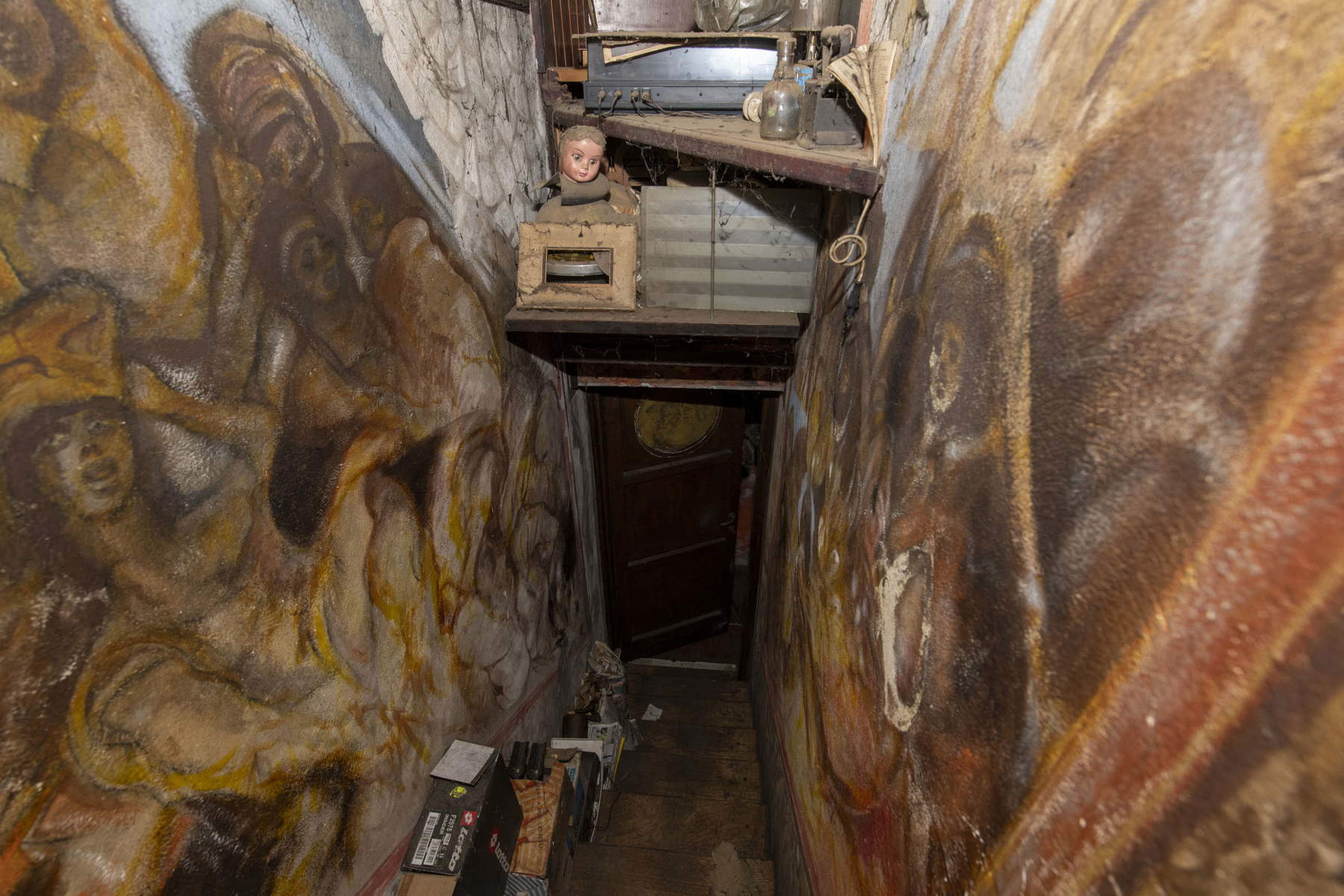
Upon the artist’s death, his son entered the house and found something no one could have foreseen. The small house had been transformed intoa workof art: frescoed everywhere—even on the ceiling and in the most cramped corners—and filled to the brim with paintings created on all manner of surfaces: canvases, panels, cardboard, sheets of paper, tiles, and objects. The walls and doors bear the marks of the brush, and even everyday objects have become part of the visual universe. More than two thousand works were discovered.
For Vandi, that house had not been merely a studio: it wasa physical extension of his creative dimension, a space that satisfied, day after day, an urgent need to paint. His voluntary self-imposed isolation in Vararo should also be understood in this light: rather than isolation for its own sake, it was a necessary condition for protecting himself from a world he perceived as alien and for freely expressing his own restless and tormented inner universe.
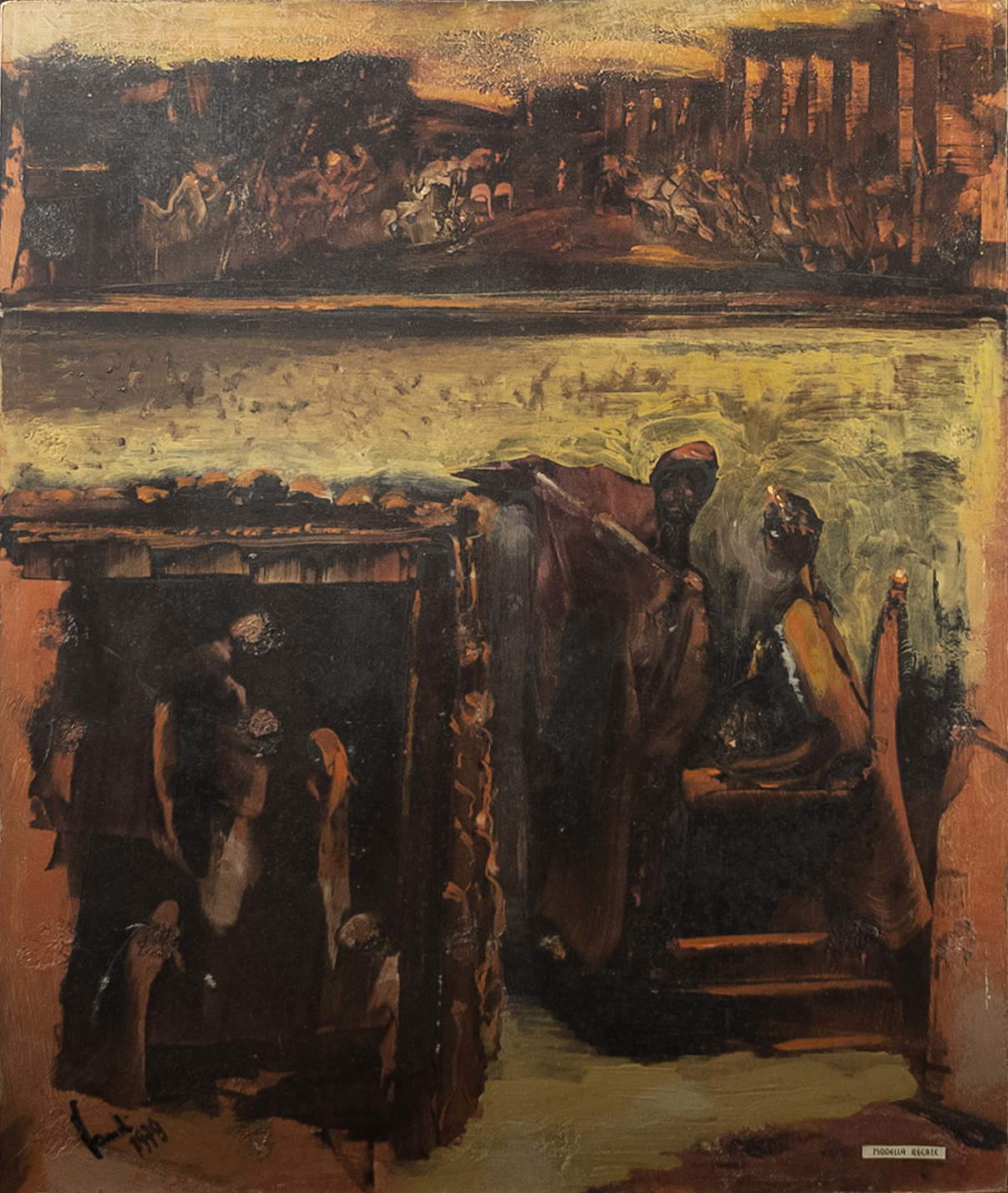
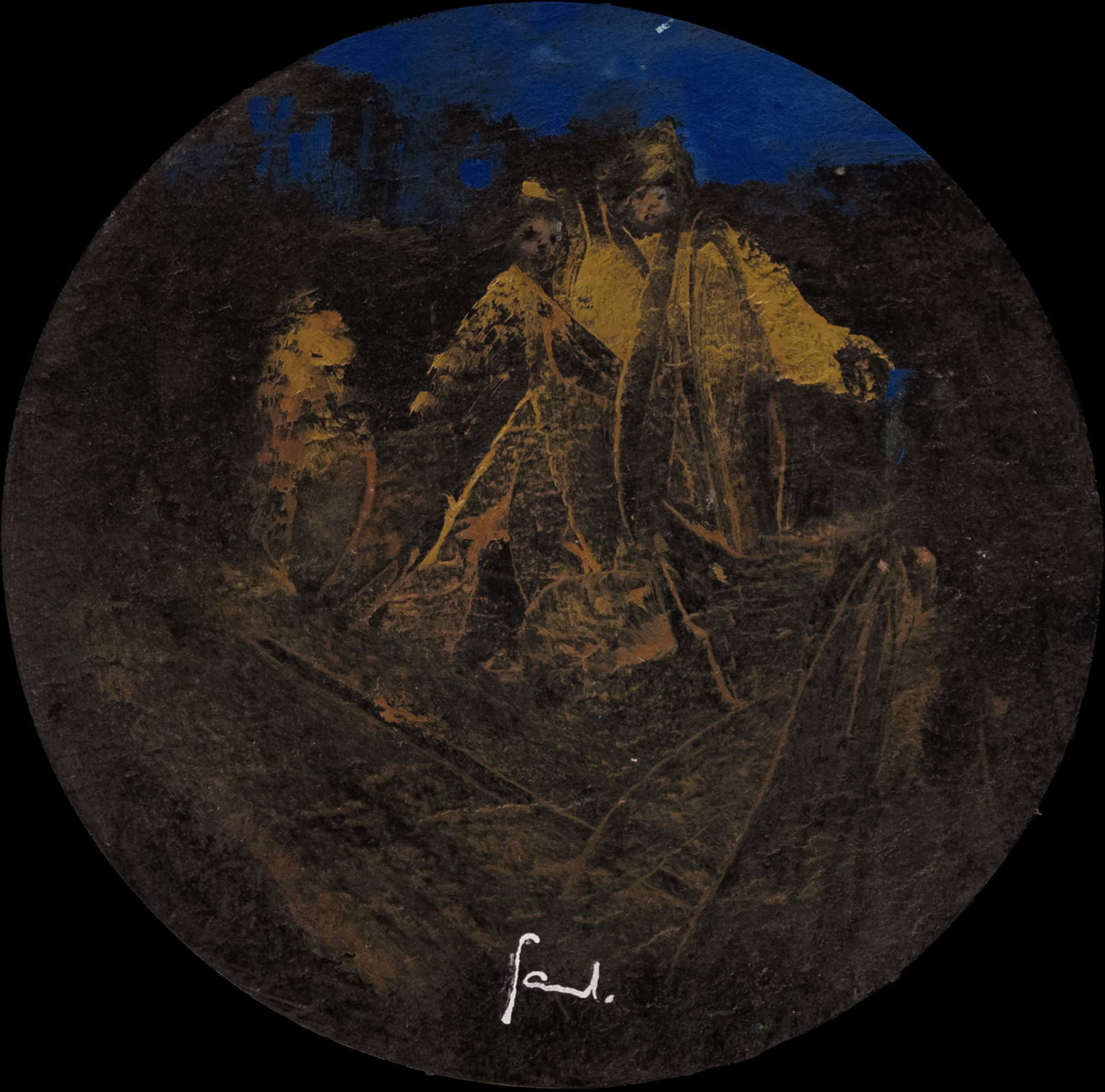
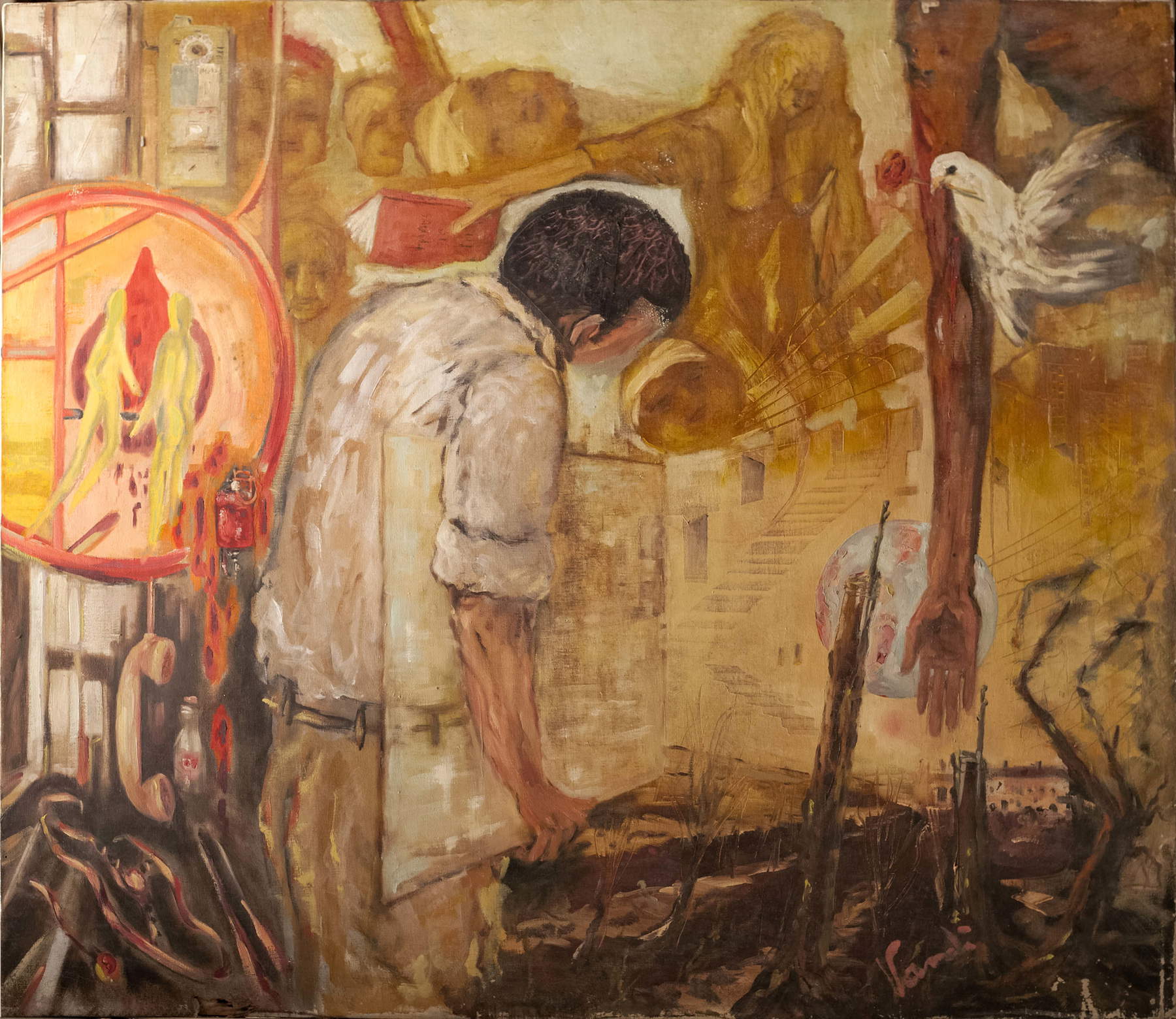
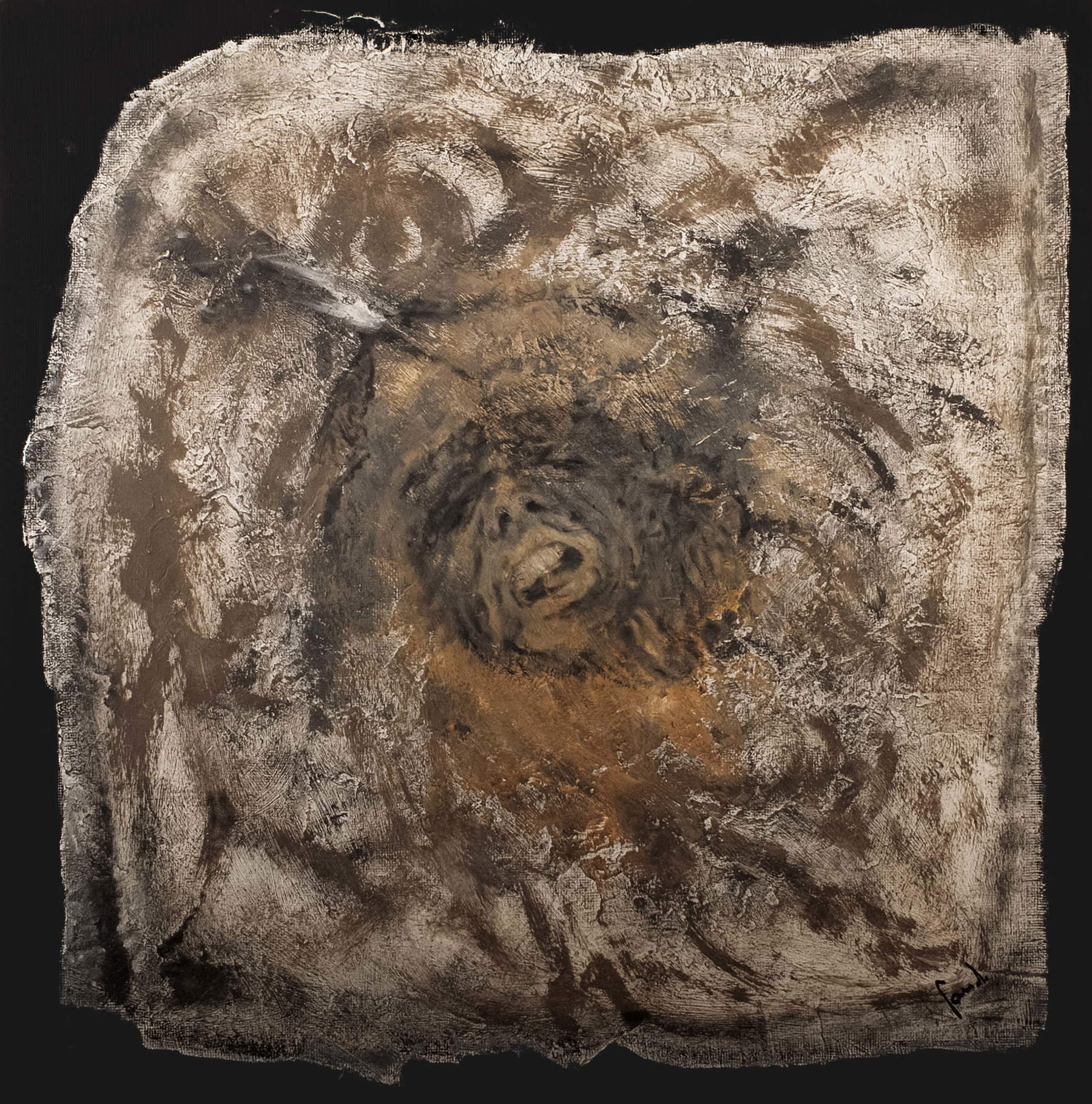
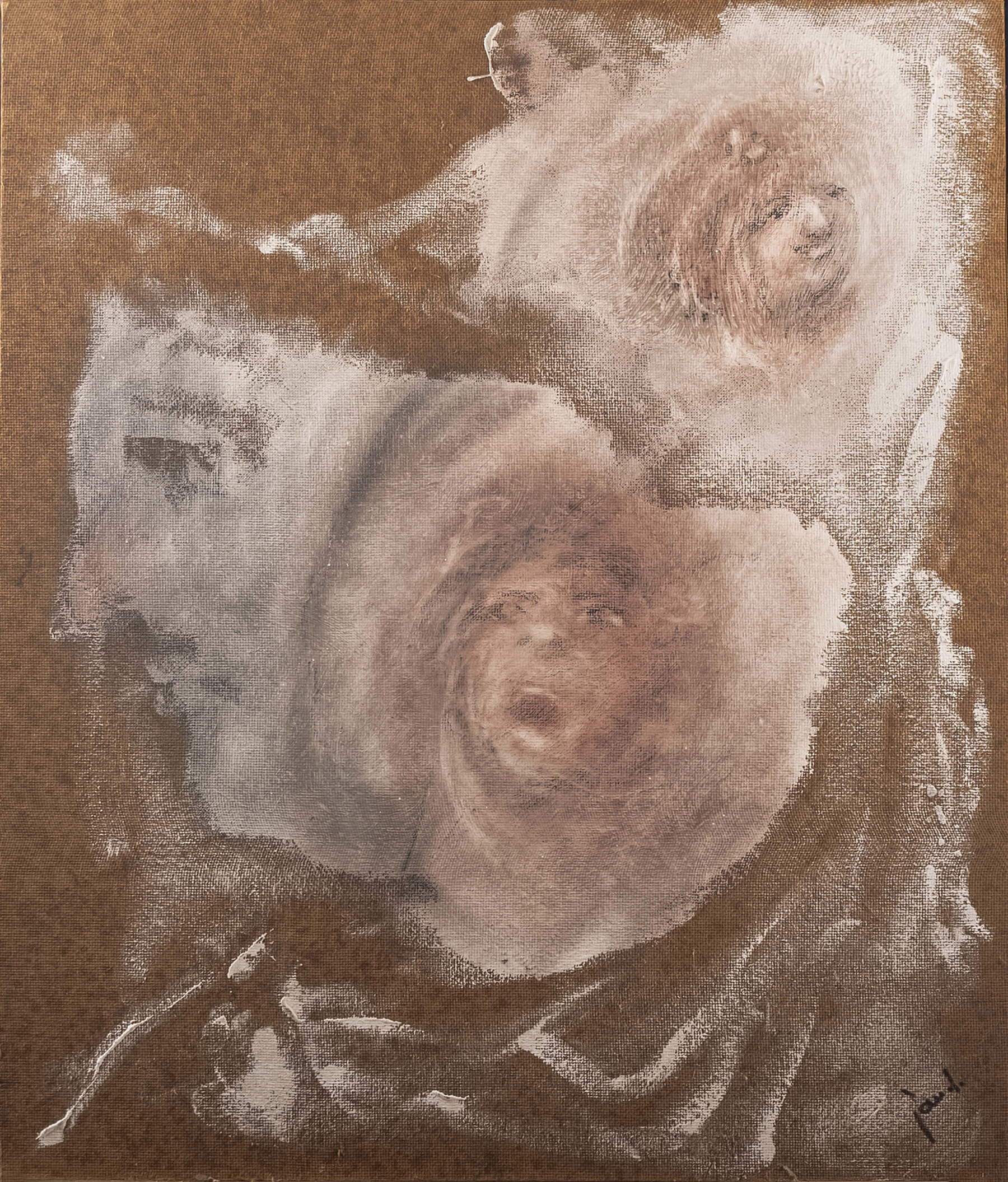
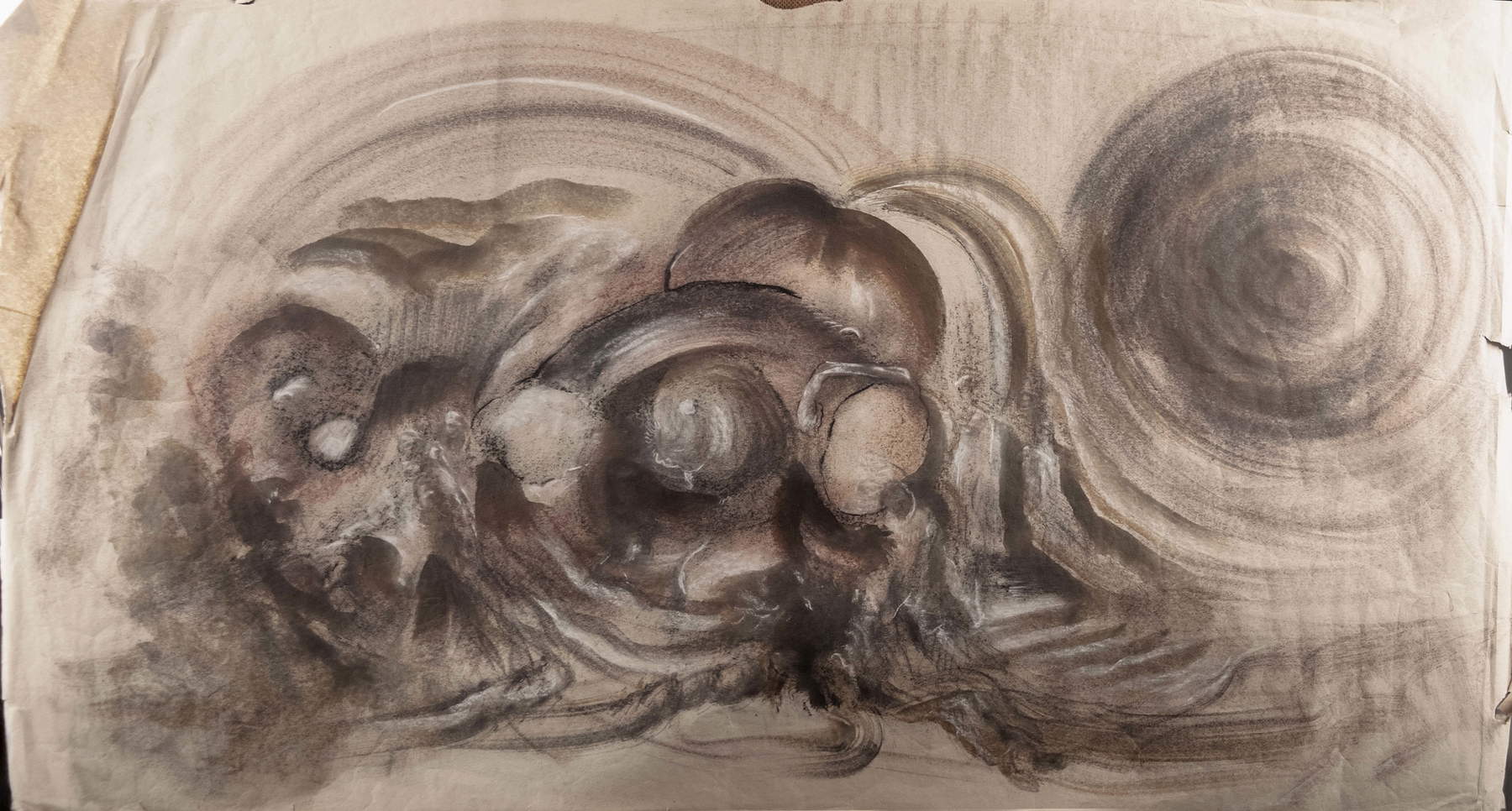

An entrepreneur with a passion for art, struck by the discovery, purchased the house and the works. This opened up the possibility of studying them, cataloging them, and presenting them to the public, and the task was entrusted to art historian Debora Ferrari and writer and historian Luca Traini. An archaeological undertaking, for an archaeology of the soul: reconstructing the development of a vast, previously unseen body of work—lacking definite dates or critical apparatus—starting from walls, panels, and sheets of paper.
Inside that “cathedral in the woods,” as she likes to call it, lives a distinct population. They are ghosts, angels, saints, and martyrs with ethereal forms, evoked and repeated with obstinacy until they become symbols of an inner alphabet. Faces and bodies seem to emerge and dissolve as if trapped in an endless metamorphosis, poised between figuration and hallucination. Reality slips into a nightmare, then into a dream, then into yet another transformation. Through vivid color and vibrant texture, these tragic figures—sometimes majestic, sometimes grotesque—give form to a desperate quest: to understand humanity’s raison d’être, to find a divine sign in a world of cogs.
Self-taught, Vandi possesses a deep and internalized visual culture. His compositions evoke Goya, Rembrandt, Füssli, the Symbolists, the Surrealists, the artists of German Expressionism, and Bacon’s tormented flesh. The viewer recognizes the ghosts ofart history—thoroughly studied and internalized to the point of obsession—and sees them return as a defense: painting is equivalent to protecting one’s own humanity. The result is a hybrid style—cultured and utterly personal—that bears no resemblance to any of its references.
Someone has nicknamed him “the Ligabue of the Varese Pre-Alps”: the comparison is useful because it offers the public an immediate point of reference. But, like all points of reference, it must be let go, for Vandi has his own rhythm, and one need only look at his paintings to realize this. Those familiar with the historyof outsider art will recognize a lineage: Wölfli with his densely packed pages, Zinelli with his figures in rows, Ligabue with his wild animals, the Palais idéal of the postman Cheval, and Picassiette’s house. Places and works in which the inhabited space coincides with the structure of the mind of the personwho built it, and which all tell the same story: art was born before the academies and continues to be born elsewhere.
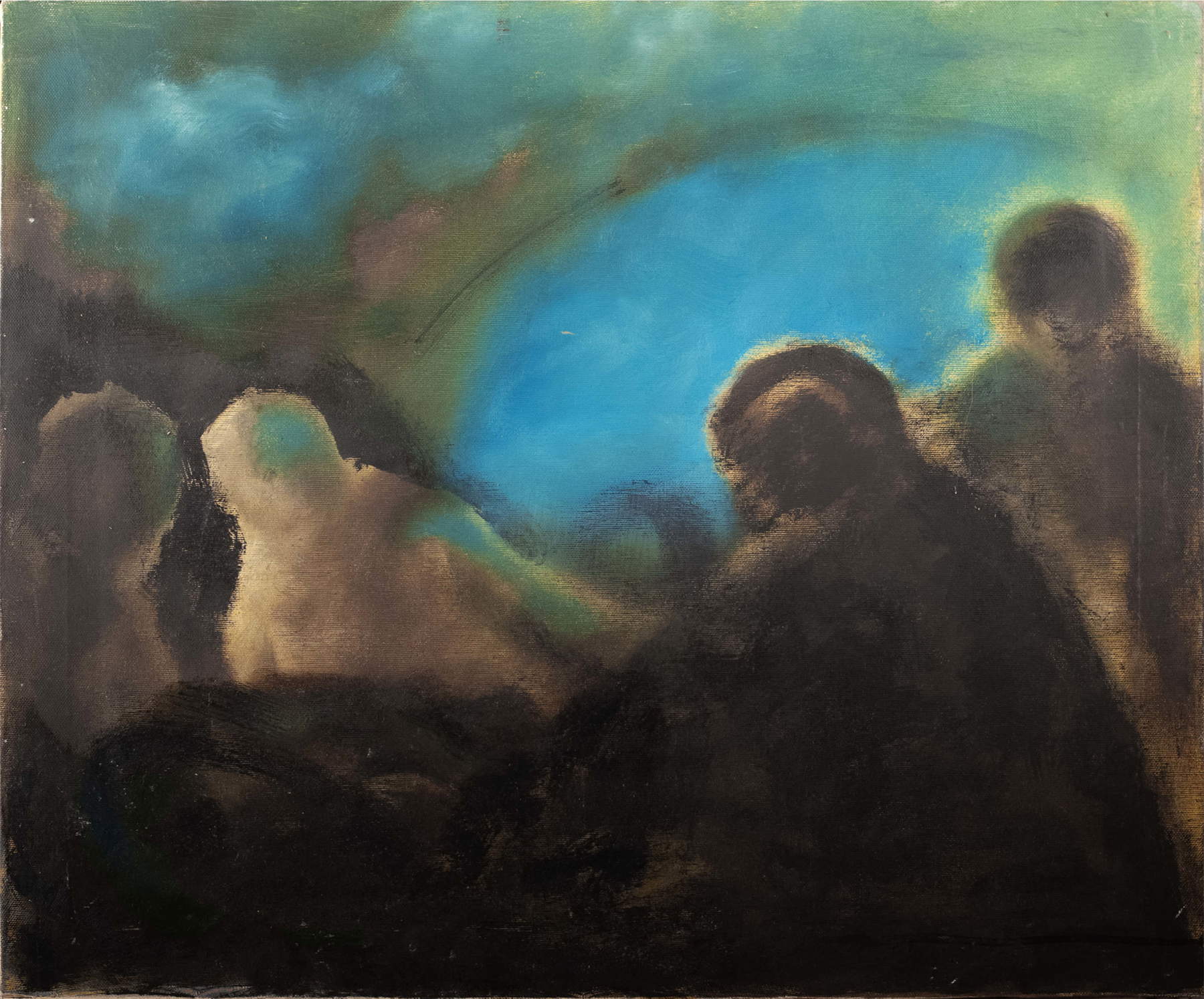
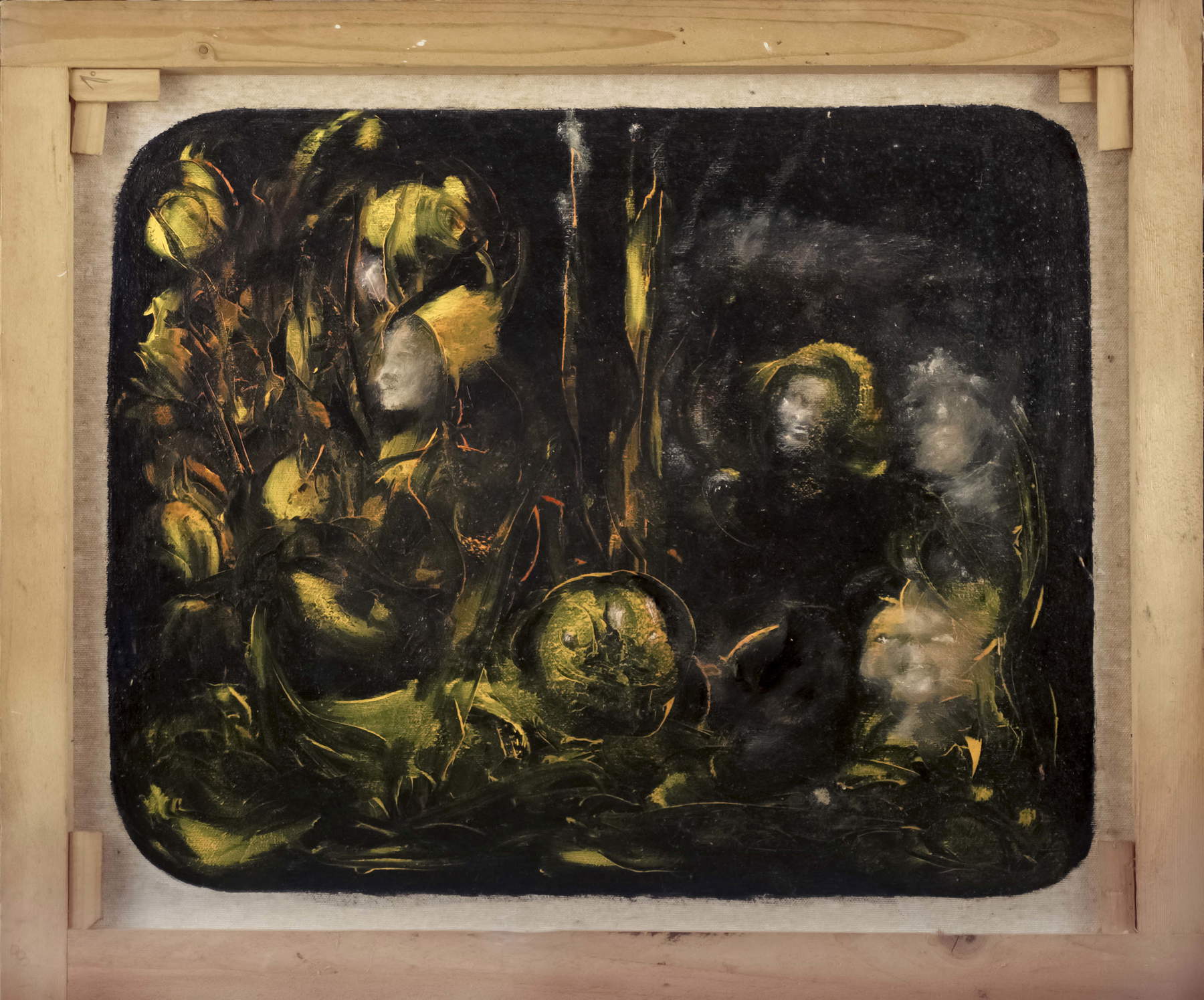
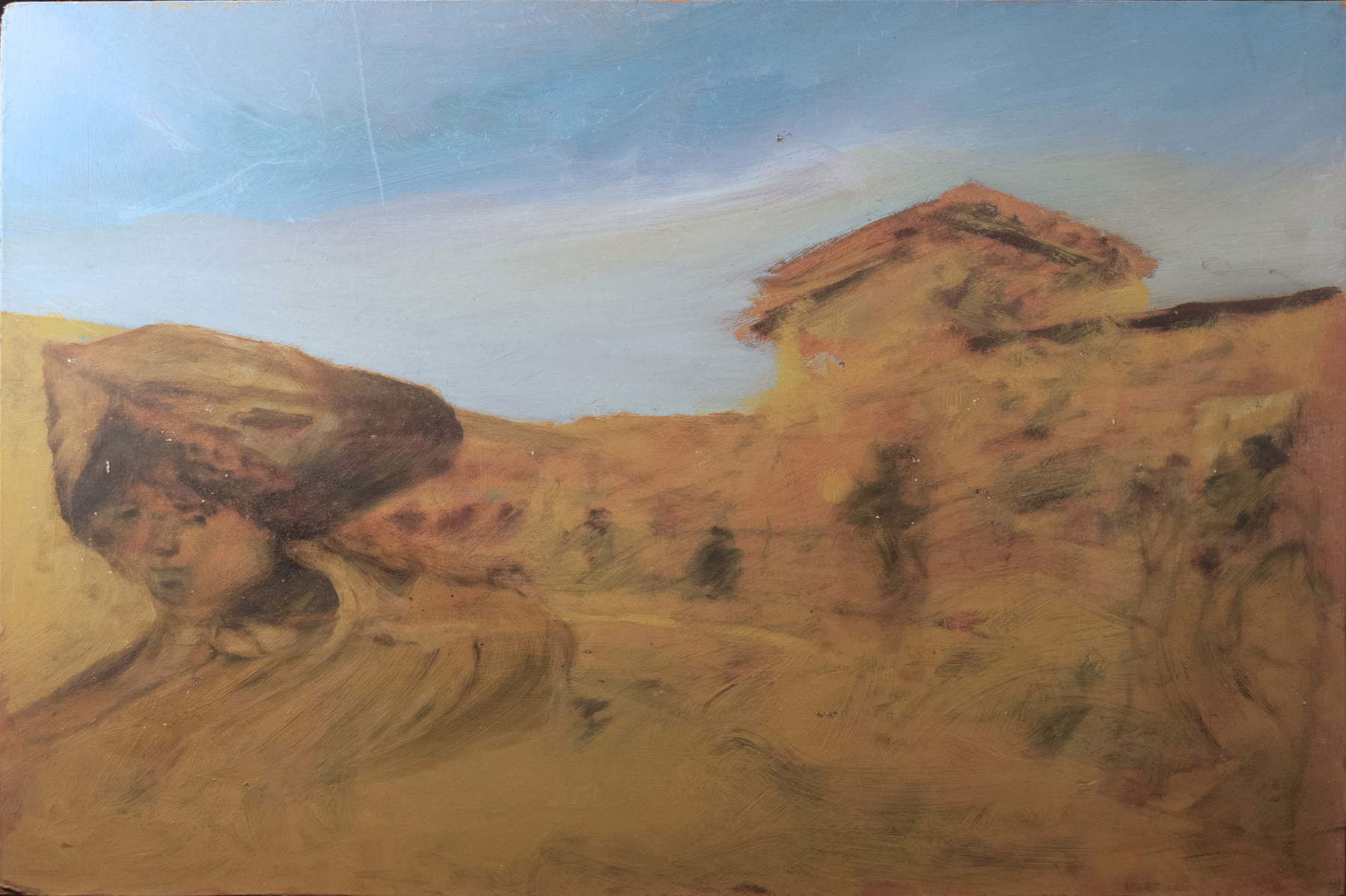
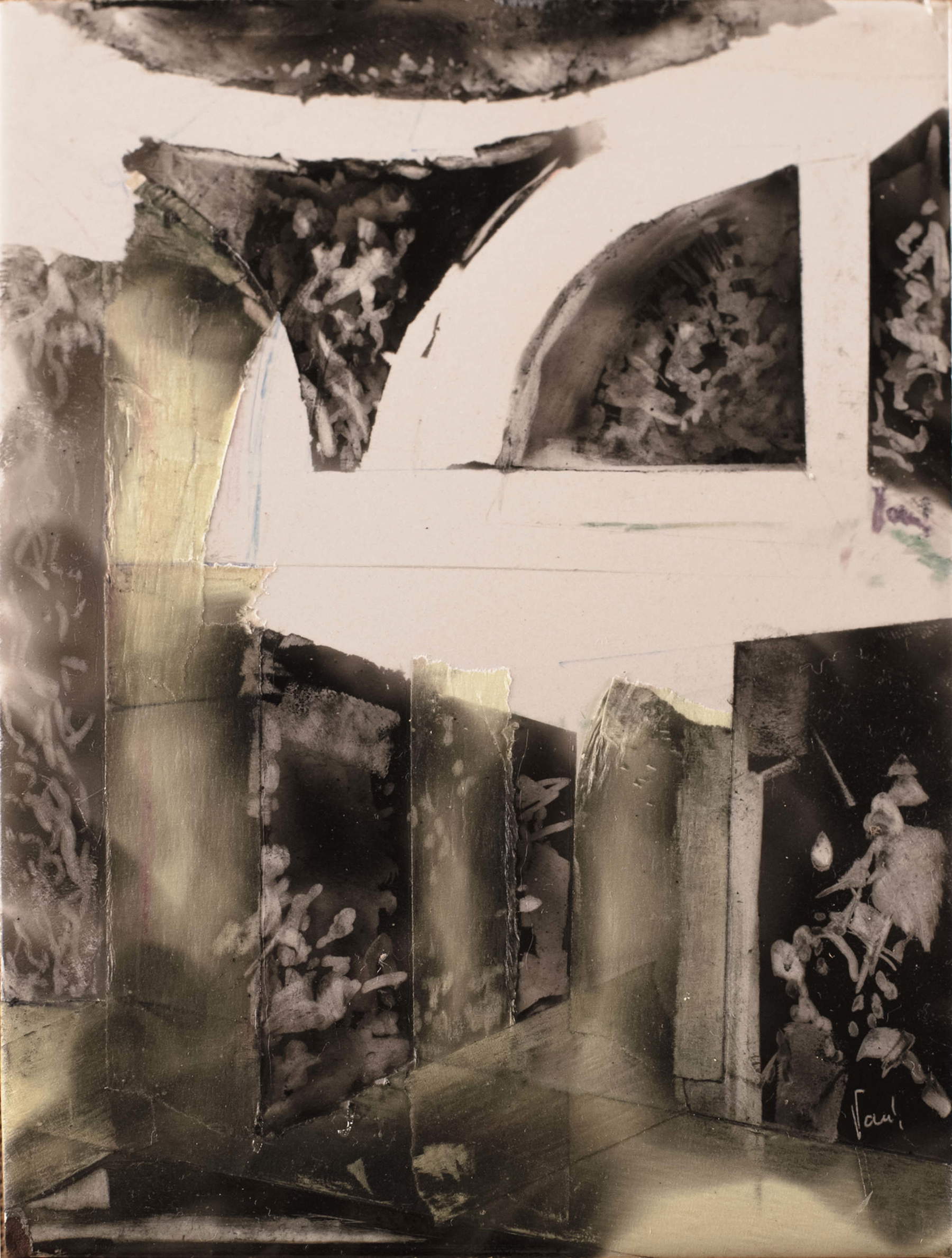
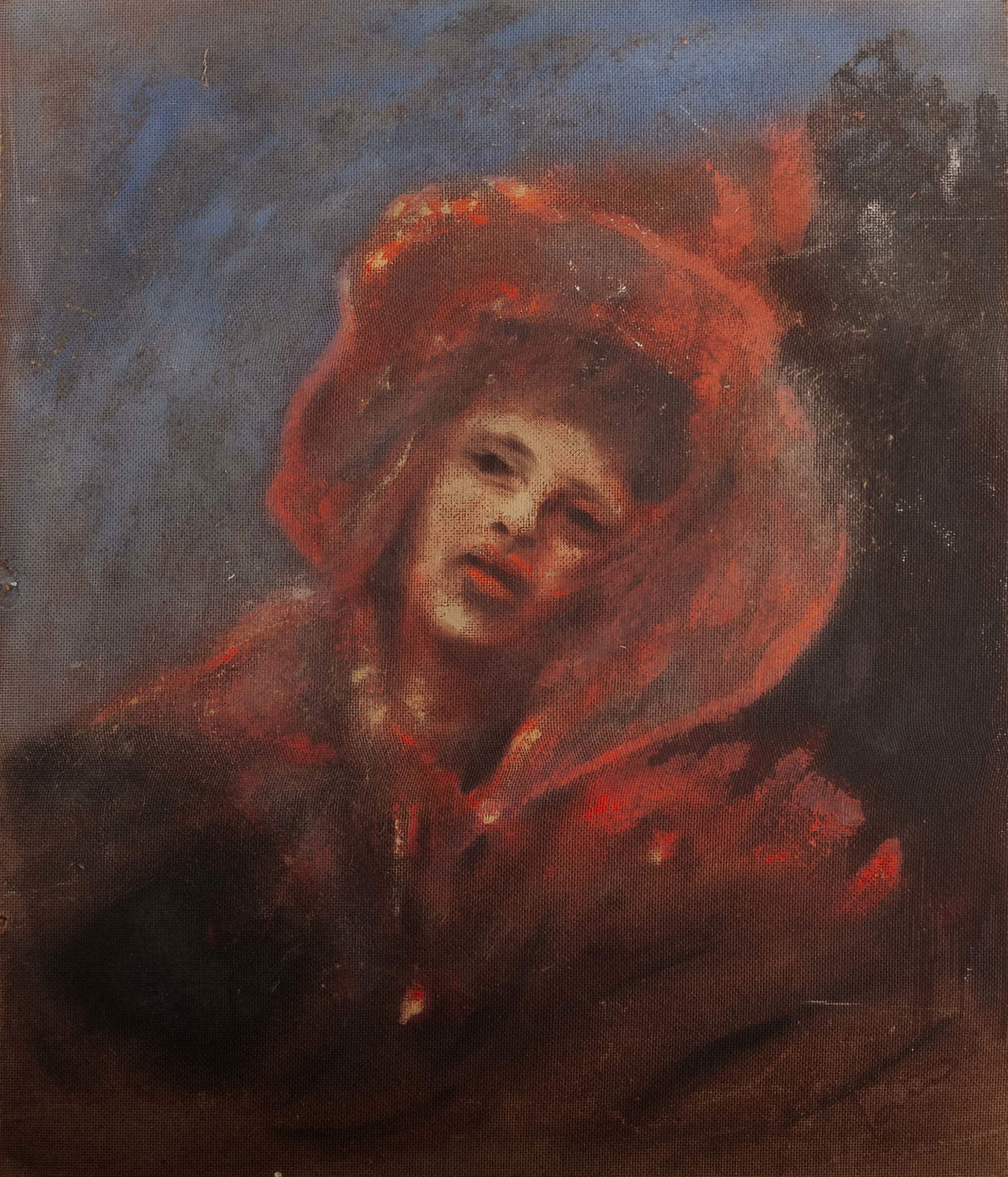
Within this marvelous discovery, however, lies the most delicate question—one that every communicator, curator, and journalist must eventually confront: what words should be used to guide the public into Vandi’s cathedral? The story has all the ingredients that today’s communication landscape favors. A hermit, a forest, a house painted in every corner, a treasure hidden for decades, a discovery made posthumously. These elements work wonderfully in a headline, a caption, or a social media post—and precisely for this reason, they must be handled with care. This is because the story of the discovery risks overshadowing the artwork itself, leading people to remember the house in the woods and forget the paintings. The romantic image of the tormented, solitary, cursed artist casts a shadow over the paintings and turns them into an illustration of the legend.
Then there is the risk of choosing the wrong frame. There are two, and both are convenient. The first is a compassion that grants the artist a seat in the audience and denies him a place at the lectern; the second is the naturalist’s curiosity, which observes the artist as a rare specimen, a showcase case, an anomaly to be displayed. With both, the observer’s gaze remains at a safe distance, and that distance is already a judgment.
The words we use also deserve attention: “outsider,” “misfit,” “brut”—these are useful categories for orientation but become insidious when they turn into labels: they describe what the artist is not, relative to a system that sets itself up as the standard, and remain silent about what the artist is. Vandi knew art history better than many professionals; he simply chose a different way of inhabiting it, and this allows us to officially include him at the table of the masters he looked up to, without asking for the permissions usually required of guests.
For now, there are more questions than answers surrounding Vandi—and that’s as it should be. What led a man to leave his job, exhibitions, and family to shut himself away in a mountain house? What should be done with such a legacy? Can the villa be preserved as an untouched sanctuary, with its painted walls and rooms left just as they were? Or is it more appropriate to bring the works to major museums, alongside the masters with whom Vandi engaged in dialogue throughout his life? Are institutions—accustomed to orderly fields and categories—ready to have their assumptions challenged by a beauty so restless and so difficult to tame?
Research has only just begun. The project is underway, the storage facilities are full, and the works are still waiting to be fully deciphered. Those who have examined the case describe a distinct sensation: that of standing before a submerged continent, of which only the coastlines are known for now. Standing before Vandi’s panels, no one would say, “I could have done that myself,” for that mark springs from a necessity—and a necessity cannot be copied. To bring an artist like him to light means accepting that art history still has many locked rooms, and that sometimes all it takes is a half-open door—a fresco above the entrance to a small mountain church—to realize this. Perhaps the task of those who write and those who exhibit is simply this: to open the door, to accompany those who wish to enter, and to let the ghosts, angels, and martyrs of Vararo speak for themselves, with their alphabet made of night and brushstrokes.
Warning: the translation into English of the original Italian article was created using automatic tools. We undertake to review all articles, but we do not guarantee the total absence of inaccuracies in the translation due to the program. You can find the original by clicking on the ITA button. If you find any mistake,please contact us.