





Perhaps night did not enter the history of gardens late. It entered late into the history that we have written about gardens. The history of gardens has almost always been told in the light of day. From the sacred enclosures of the ancient East to Roman villas, from Islamic gardens to English landscape parks, historians have focused their attention on form, symbolic layout, botany, architecture, and the relationship with the landscape. Far less attention has been devoted to another dimension—one that is seemingly obvious and, precisely for that reason, almost invisible: the night. The question that gives rise to this article is simple only on the surface. Is there a history of the nocturnal garden?
Of course, every garden continues to exist after sunset. But this does not mean it was designed to be experienced at night. It is one thing for a space to survive the darkness; it is quite another for darkness to become part of the design concept. It is in this subtle yet decisive distinction that a historiographical question seems to emerge—one that has remained almost unexplored until now.
Major overviews of garden history have rigorously studied forms, typologies, and meanings. Rarely, however, have they examined the time of their enjoyment. Yet the garden is perhaps the work of art in which the passing of time most profoundly alters the experience of space. Light changes the color of the vegetation; water alters the relationship with the sky; certain plants release their scent when vision loses its sharpness. It is not only the landscape that changes—the way we perceive it changes as well.
It is not, therefore, a matter of identifying a new category of garden, but of tracing the moment when night ceases to mark the end of the experience and becomes part of the design. Rather than seeking an absolute origin, it is better to follow a series of clues. The first leads, perhaps surprisingly, to Roman antiquity.
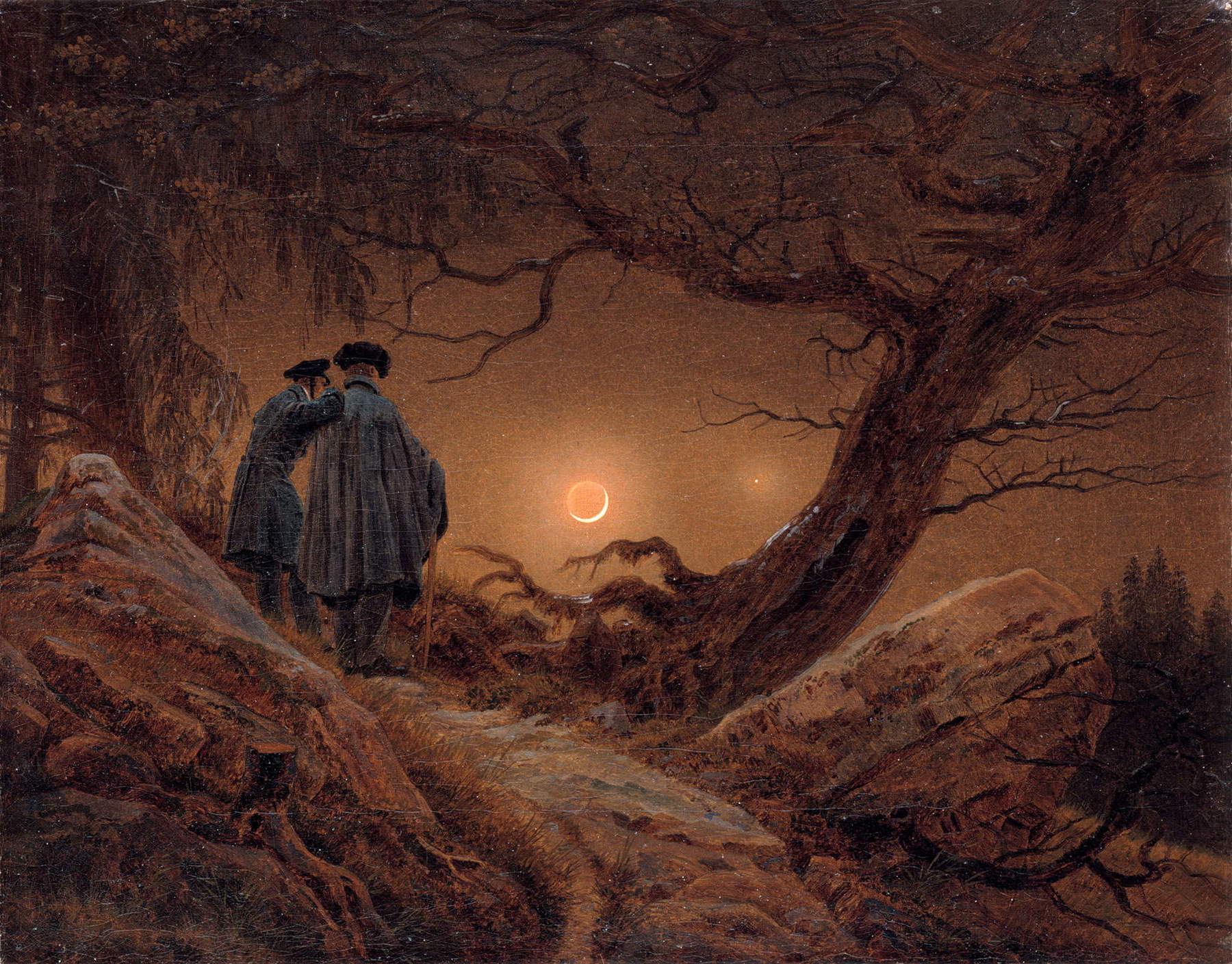
In the letters dedicated to his villas, Pliny the Younger describes with extraordinary attention the orientation of the buildings, the arrangement of the porticoes, and the relationship between the rooms and the sun’s movement. His concern is not merely aesthetic. Light becomes an architectural tool, capable of altering the quality of life within the spaces at different times of the day. Describing his villa in Laurentino, he notes that the portico itself offers “shade in summer, sun in winter, and in the evenings a soft light that does not tire the eyes.” A prime example is Villa Adriana, where the orientation of the pavilions, the interplay between architecture and bodies of water, and the constant alternation of light and shadow demonstrate how the design was conceived to accompany the passing of the hours. The proliferation of water features amplifies the light and transforms the perception of the architecture throughout the day.
It is not yet a nocturnal garden, but it is a space in which the design already takes into account the continuous metamorphoses of light. Night is not yet a design category, but the passage of light is already part of the architecture. In this sense, it is already a garden conceived over time, in which each pavilion reveals different qualities at different times of the day.
This focus on the passage of light does not end with the Roman world. Transformed by the Hellenistic legacy, it reemerges in the East, where the garden gradually becomes a space designed for twilight and night as well.
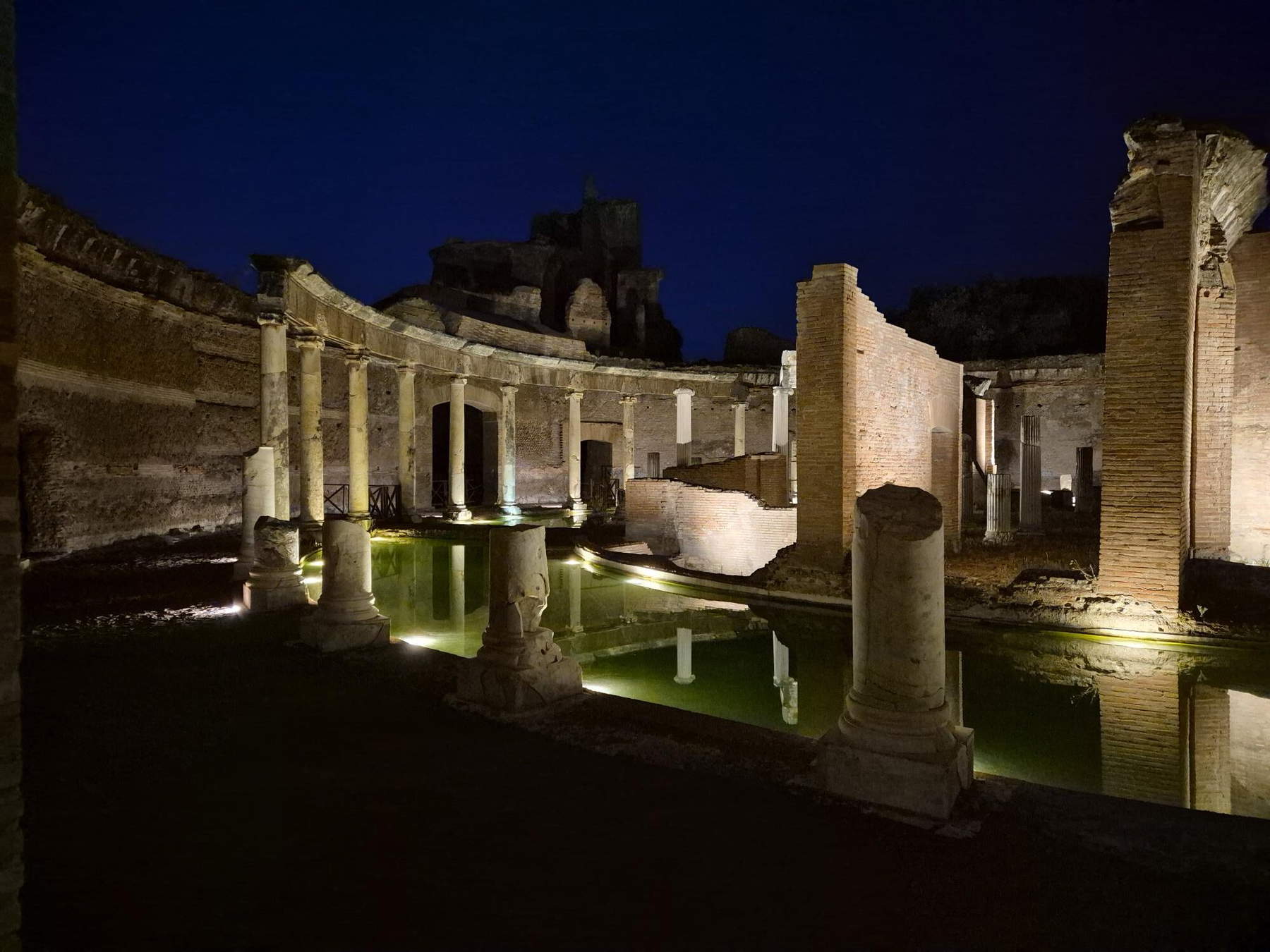
The Persian garden is not merely a space organized according to strict geometry. It is a climatic and perceptual arrangement. Water channels cool the air, organize the space, and multiply reflections. Tradition has interpreted them as an image of the Qur’anic paradise or of the cosmic order. These are well-founded interpretations, but they may not fully capture the issue. Water, in fact, serves not only to irrigate: it transforms the way the garden is perceived. During the day, it amplifies the light; at sunset, it reflects the sky; on summer evenings, it makes a space livable that the daytime heat had rendered nearly inaccessible. The design does not end when the sun sets: it simply shifts gears.
We do not know whether Persian architects explicitly had moonlight in mind. It would be unwise to claim so. We do know, however, that these gardens were enjoyed primarily in the evening hours, when the climate finally allowed people to stay outdoors. This is a seemingly secondary but decisive fact: the time of use begins to influence the design.
This sensibility permeates the Islamic world without losing its coherence. From Iran to Andalusia, the garden is conceived as an environment in which water, vegetation, architecture, and sound create a unified experience. Poetic descriptions emphasize atmosphere more than geometry. Ibn Zamrak, in celebrating the gardens of the Alhambra, speaks of water that sings, of the breeze that carries the scent of flowers, and of light reflecting off the marble. Rather than describing a place, he describes a perception. This is perhaps the decisive shift. The garden is no longer merely something to be seen. It becomes something to be experienced.
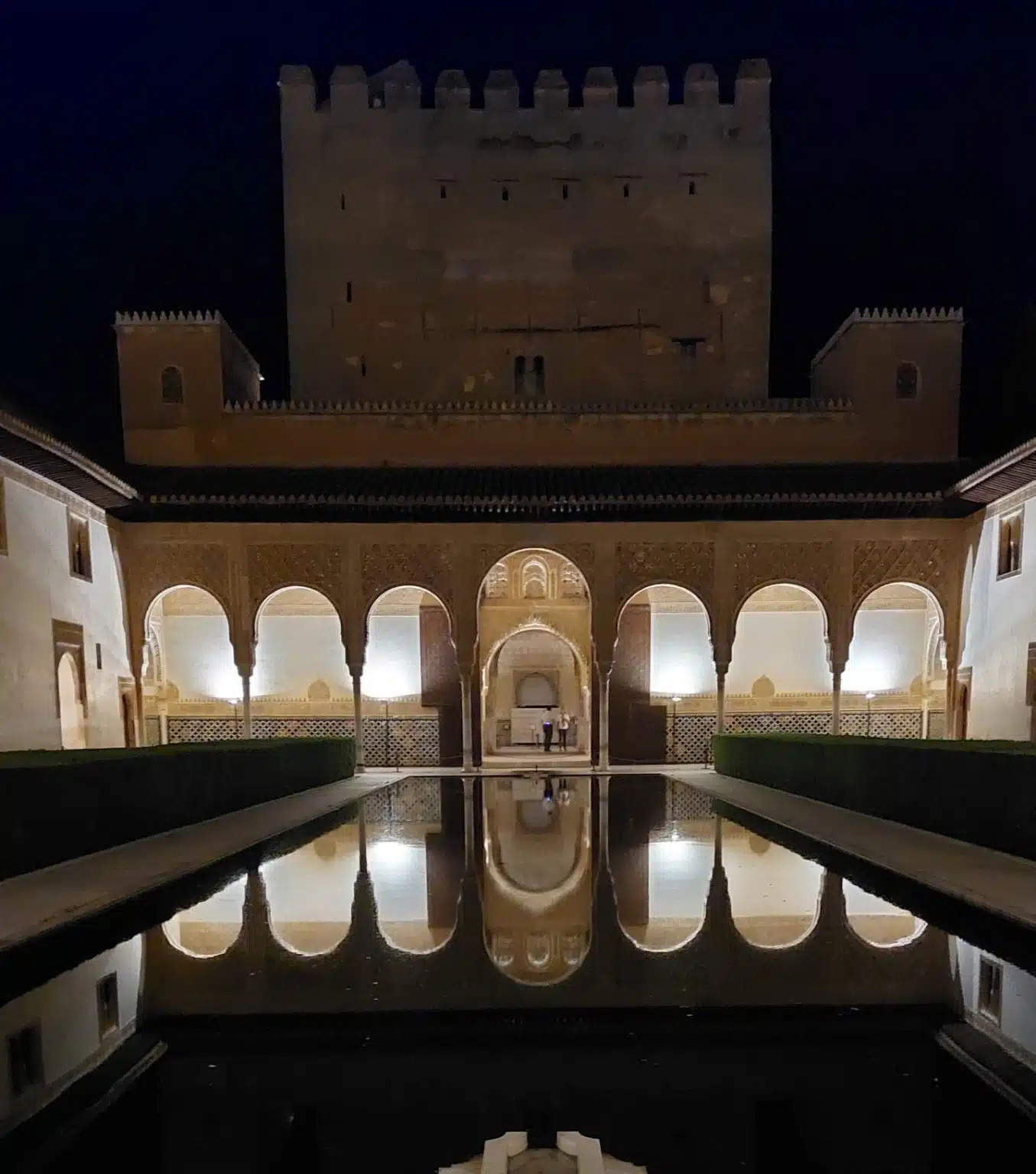
Following this tradition, we arrive at Mughal India, where the idea seems to take on a new significance. The Mahtab Bagh, the “Garden of Moonlight,” stands on the opposite bank of the Yamuna, perfectly aligned with the Taj Mahal. The name alone deserves attention. Mahtab: in Old Persian, reflected light, not direct light. Bagh: an enclosure, but also a place of dwelling. The name itself defines an activity: not looking at the moon, but dwelling in the reflected light. It is not a garden with the moon; it is a garden for the moon.
For a long time, the complex was interpreted through the legend of the so-called Black Taj, the black mausoleum that Shah Jahan allegedly wanted to build opposite his own tomb. Archaeological excavations in the 1990s, however, revealed a different picture. Mahtab Bagh was a garden from the very beginning, conceived as an integral part of the landscape design. Not a missing monument, but a landscape designed to complement the Taj Mahal.
Viewed from here, the Taj Mahal does not appear as an isolated building, but as the culmination of a composition in which the river, the water of the canals, and the moonlight all contribute to the overall image. The garden is not merely a viewpoint: it completes the perception of the monument. The white marble, dazzling by day, becomes almost ethereal in the moonlight. The Mughal design presupposes night as the optimal time to experience it.
It is probably here that a long tradition becomes explicit. Not because the nocturnal garden originated in India, but because, for the first time, night seems to be explicitly incorporated into the design.
At this point, a comparison with Europe becomes inevitable. During the Renaissance and Baroque periods, the great Italian and French gardens were designed primarily for full daylight. Nighttime featured in court festivities, ephemeral displays, and settings illuminated by thousands of candles. In July 1539, the garden of the Medici Palace was covered by a “sky” of canvas and painted cherubs for the wedding of Cosimo I. In 1668, at Versailles, three thousand candles transformed the avenues into artificial constellations. But dawn dismantled it all: the paper sky, the wax lights, the spectacle. Once the celebration was over, the garden returned to its usual state. Artificial light produced an event, not a different conception of space.
It was not until the eighteenth century that the relationship with the night changed radically.
This turning point affected not only the garden but the very way European culture viewed nature. Between the second half of the 18th century and the early Romantic period, night gradually ceased to be perceived as a mere deprivation of light. Reflections on the sublime, a taste for the picturesque, and a new sensibility toward landscape attributed aesthetic value to uncertainty, shadow, and silence. It was no longer full visibility that guaranteed the beauty of the landscape, but its ability to evoke emotions through what remained partially hidden.
William Gilpin, in his *Observations on the River Wye* (1770), noted that at twilight the “roughness” of the landscape does not vanish: it shifts in character, becoming tactile, auditory, and olfactory. The garden does not need to be illuminated; it needs to be experienced through other senses.
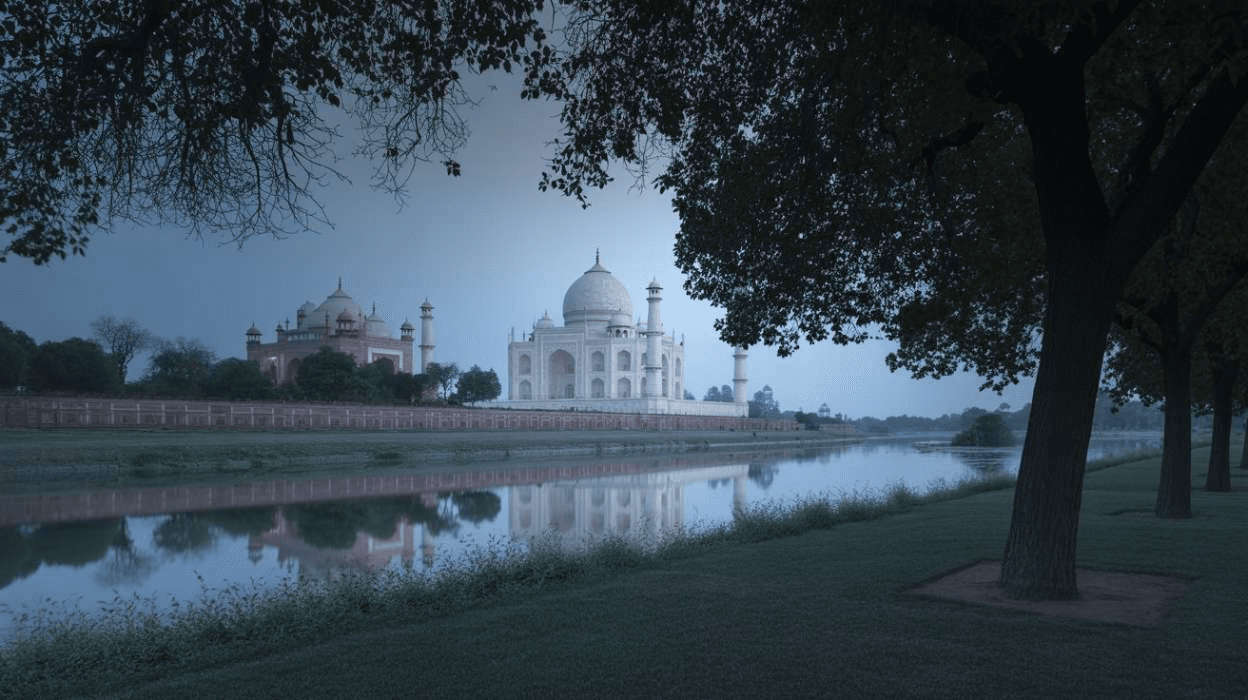
It is within this same cultural climate that Romantic painting ascribes a new meaning to the night. In Friedrich’s landscapes, the moonlight does not simply illuminate the scene: it invites meditation. In Turner’s work, light dissolves forms, transforming the landscape into atmosphere. These are not images of gardens, but they bear witness to a different way of seeing. Even before landscape architects, it was artists and writers who taught Europe that night possesses its own aesthetic quality.
During the same period, albeit through an independent tradition, the Japanese garden also developed a refined culture of chiaroscuro and evening contemplation. Rather than seeking illumination, it emphasized twilight, the reflections on water, and the slow emergence of forms in moonlight, expressing that culture of twilight that Jun’ichirō Tanizaki would later theorize in his essay *In’ei raisan* (*In Praise of Shadows*, 1933), interpreting it as one of the distinctive traits of Japanese sensibility. Here too, however, night does not constitute a type of garden, but rather a different way of experiencing it.
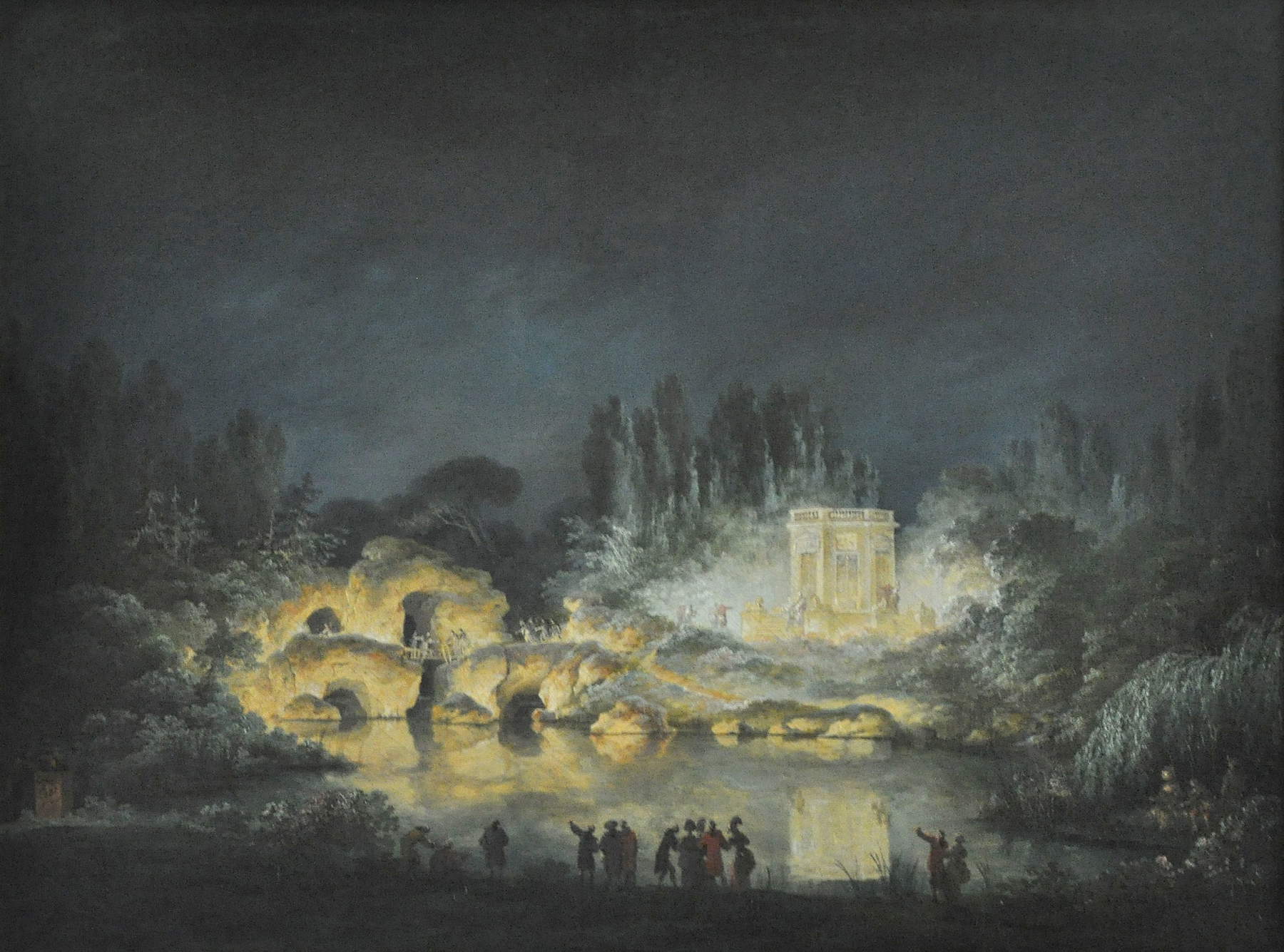
When, between the late nineteenth century and the early decades of the twentieth century, Gertrude Jekyll began to reflect on the relationship between color, light, and the succession of blooms, that shift in sensibility had already taken place. The English landscape architect did not invent the night garden. She did something more subtle: she translated a different way of observing the landscape into design practice.
In *Color in the Flower Garden*, color never possesses absolute value. It exists in relation to the light that falls upon it. Jekyll wrote that white “is not the absence of color, but the presence of all light. At twilight, when other colors fall asleep, white remains awake.” Some hues fade quickly at twilight; others seem to take on a new intensity just as the day draws to a close. Garden design is no longer merely about the arrangement of plants in space, but also about how they will be perceived at different times of day.
This focus on the timing of perception naturally leads to one of the most celebrated achievements of twentieth-century garden culture: the White Garden at Sissinghurst, designed by Vita Sackville-West and Harold Nicolson in the spirit of Jekyll’s teachings.
The decision to limit the color palette to whites, silvery grays, and the lightest greens has often been interpreted as a refined chromatic exercise. In reality, it also responds to a perceptual logic. White flowers retain the residual light of sunset longer; silvery foliage reflects the moonlight; many of the selected species release their fragrance precisely in the evening hours, when the temperature drops and sight gradually gives way to the other senses. Nicotiana alata, which releases its fragrance only after sunset; the “Madame Alfred Carrière” rose, whose white petals capture the last light; Philadelphus coronarius, which fills the air with sweetness once darkness has fully set in. In short, the garden’s structure remains unchanged. What changes is the experience.
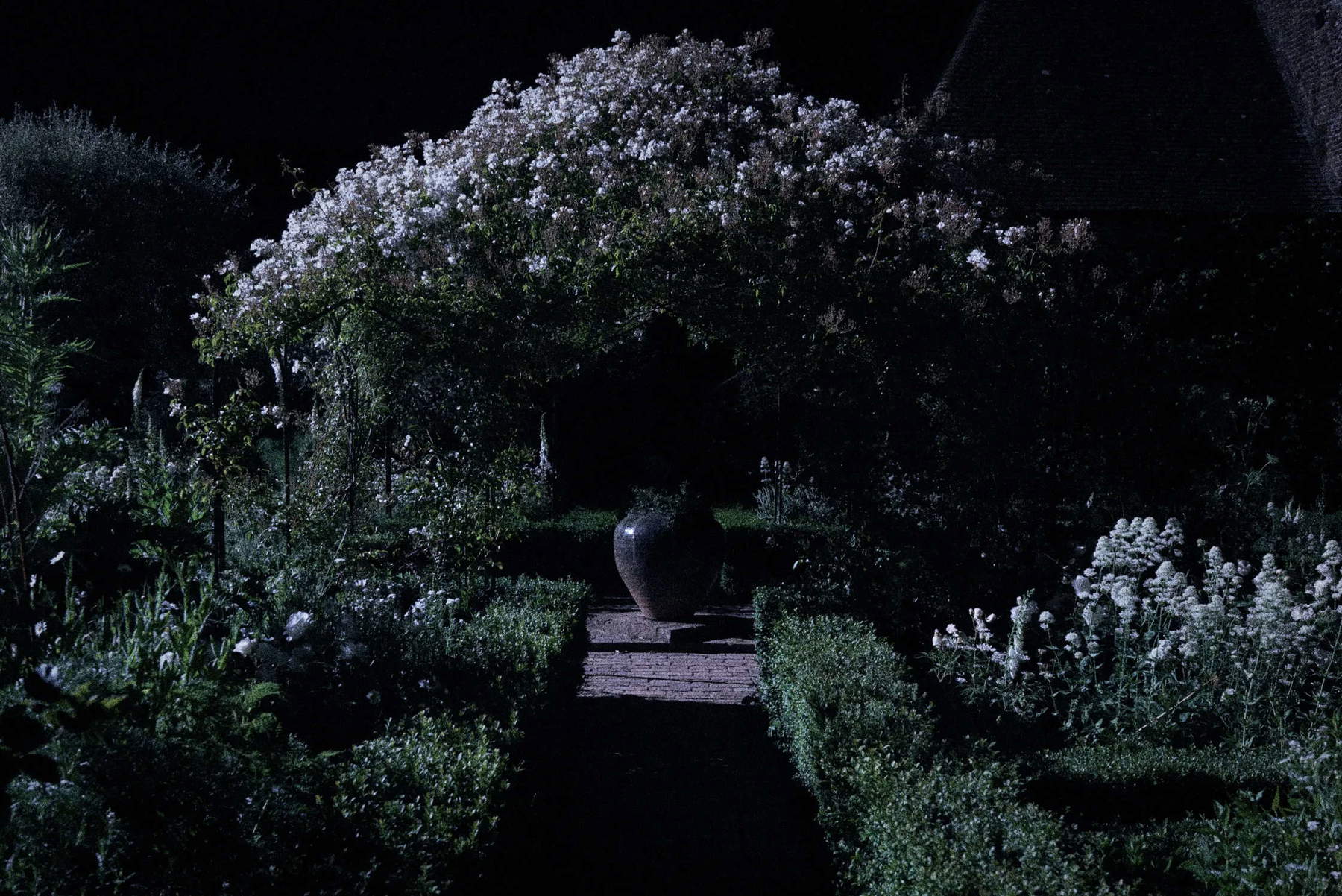
If the White Garden had translated a new focus on twilight and perception into botanical terms, the 20th century further expanded this reflection by entrusting it to other forms of expression as well. Among these, cinema occupies a special place. Rather than merely depicting gardens, it can in fact alter the very way we view them.
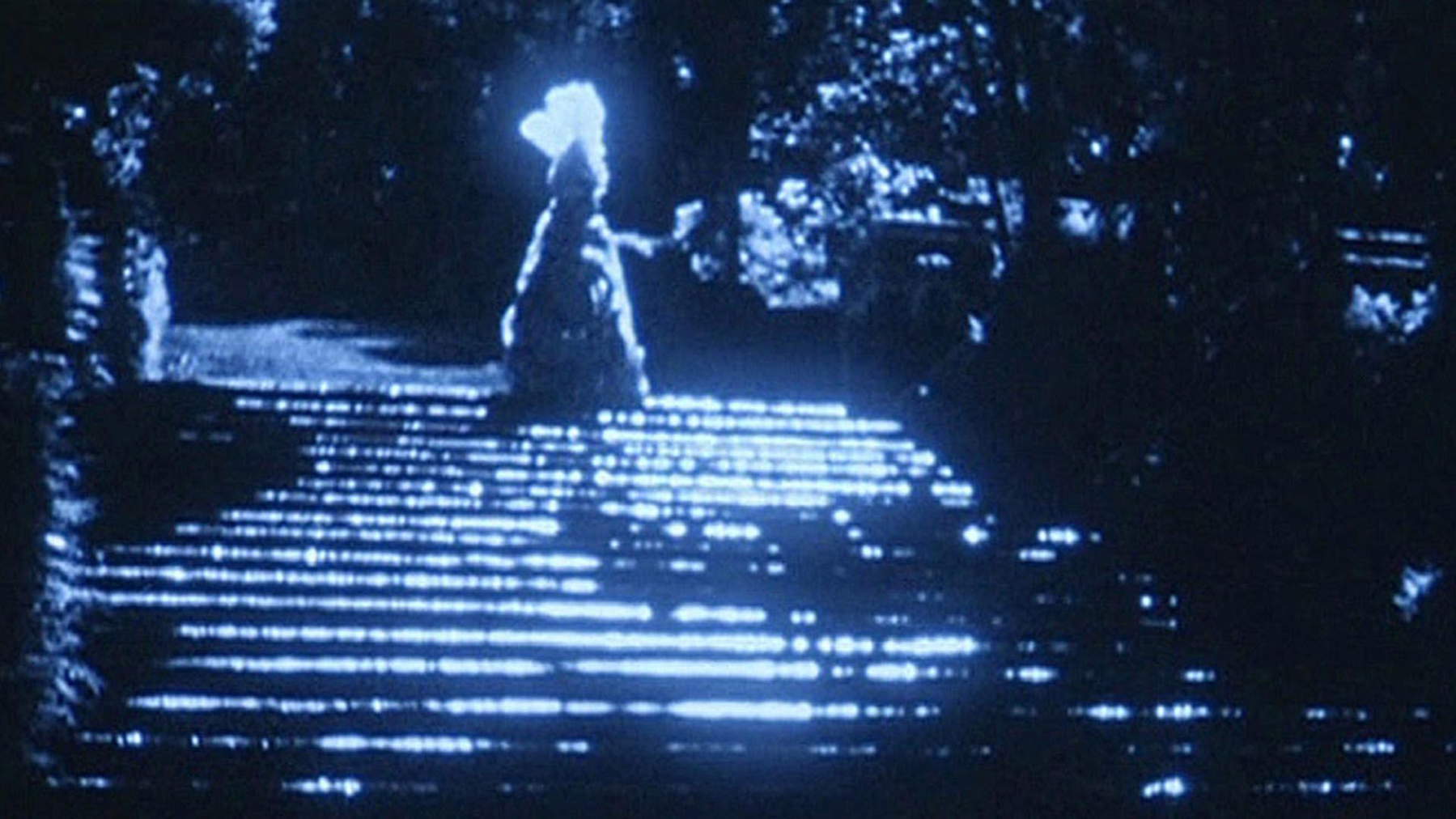
In 1953, Kenneth Anger directed *Eaux d’Artifice*, set at Villa d’Este. It is neither a documentary nor a mere scenic setting. Through sophisticated work with cinematography, lighting, and editing, Anger transforms the famous Renaissance garden into a suspended space, in which fountains, statues, and architecture seem to belong to a timeless nocturnal dimension.
The film’s appeal lies not so much in its historical reconstruction as in the perspective it offers. Villa d’Este is not interpreted as a triumph of Renaissance perspective or hydraulic engineering, but as a place where water, shadows, reflections, and movement create a perceptual experience distinct from that typically recounted by historiography. The film adds nothing to the garden; it makes visible a quality that had always been present but had rarely been placed at the center of interpretation.
It is not necessary to argue that Villa d’Este was designed as a nocturnal garden. More simply, *Eaux d’Artifice* demonstrates how a historic garden can be reinterpreted through a different culture of vision. It is perhaps one of the most eloquent examples of how night can become not merely a time for enjoyment, but a key to interpreting the work itself.
The question from which we began (“when did the nocturnal garden originate?”) likely has no single answer. None of the examples mentioned can be identified as an absolute origin, nor would it be correct to construct a linear genealogy between cultures so distant in time and space.
Yet, when viewed together, these examples seem to trace a path. In Pliny’s villas, the passage of light becomes an integral part of the design; in Persian and Islamic gardens, water, climate, and the evening hours transform the relationship with space; the Mahtab Bagh explicitly highlights the centrality of moonlight; Romanticism teaches us to recognize aesthetic value in shadow and uncertainty; Gertrude Jekyll translates that new sensibility into a precise botanical language; and, finally, twentieth-century cinema shows how the same garden can be reinterpreted through the lens of night.
More than the history of a typology, what emerges is the history of a different sensibility. The nocturnal garden does not necessarily coincide with a place designed exclusively to be experienced after sunset. Rather, it is the result of a growing focus on the timing of perception, on changing light, on the reflections of water, on scents, on sounds—on everything that daylight often tends to conceal.
Perhaps this is precisely the aspect that historiography has left most in the shadows. For a long time, we have told the story of gardens through their forms, styles, and iconographic programs. We have asked ourselves far less about how those places were actually experienced at different times of the day and night.
The invention of the nocturnal garden probably does not coincide with the emergence of a new type of garden. It coincides with the moment when the design ceases to end at sunset. From that moment on, moonlight, the reflections on the water, the scents of the evening, shadows, and time became elements of the composition on par with architecture and plants. Perhaps, then, night did not enter the history of gardens late. It entered late into the history that we have written about gardens.


The author of this article: Andrea Bruciati
Andrea Bruciati (Corinaldo, 1968), storico dell'arte, critico d'arte e curatore, si è laureato in conservazione dei beni culturali presso l'Università degli studi di Udine con una tesi su Lucio Fontana e Piero Manzoni e da allora ha indirizzato le sue ricerche sull'arte del Novecento e sull'arte contemporanea. Nel 2002 è stato nominato direttore della galleria comunale d'arte contemporanea di Monfalcone[1] e dal 2009 al 2012 è stato ideatore del format On Stage all'interno della rassegna scaligera ArtVerona di cui diviene direttore artistico dal gennaio 2013 al febbraio 2017. Dal marzo 2017 al maggio 2025 è stato alla guida dell'istituto autonomo del Ministero della Cultura "Villæ" (nome che lui stesso ha dato all'ente nel 2018), e che include, tra gli altri siti, Villa Adriana e Villa d'Este a Tivoli. A Tivoli ha organizzato convegni su Leonardo da Vinci, Adriano, Nerone, la natura antiquaria del giardino storico, ha ideato il Villae Film Festival, Extravillae.Warning: the translation into English of the original Italian article was created using automatic tools. We undertake to review all articles, but we do not guarantee the total absence of inaccuracies in the translation due to the program. You can find the original by clicking on the ITA button. If you find any mistake,please contact us.






























 IT
IT FR
FR DE
DE ES
ES CN
CN


