





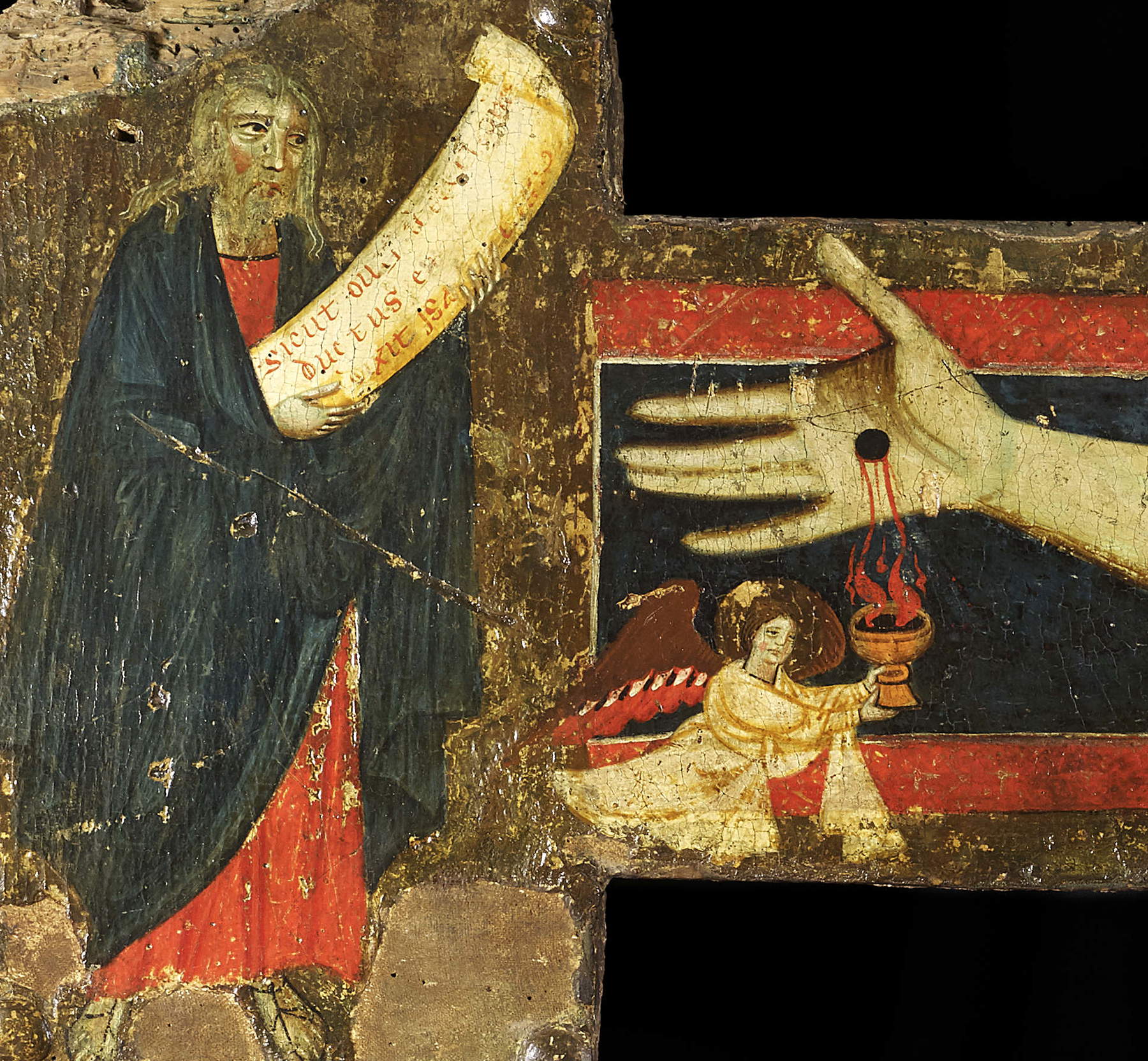
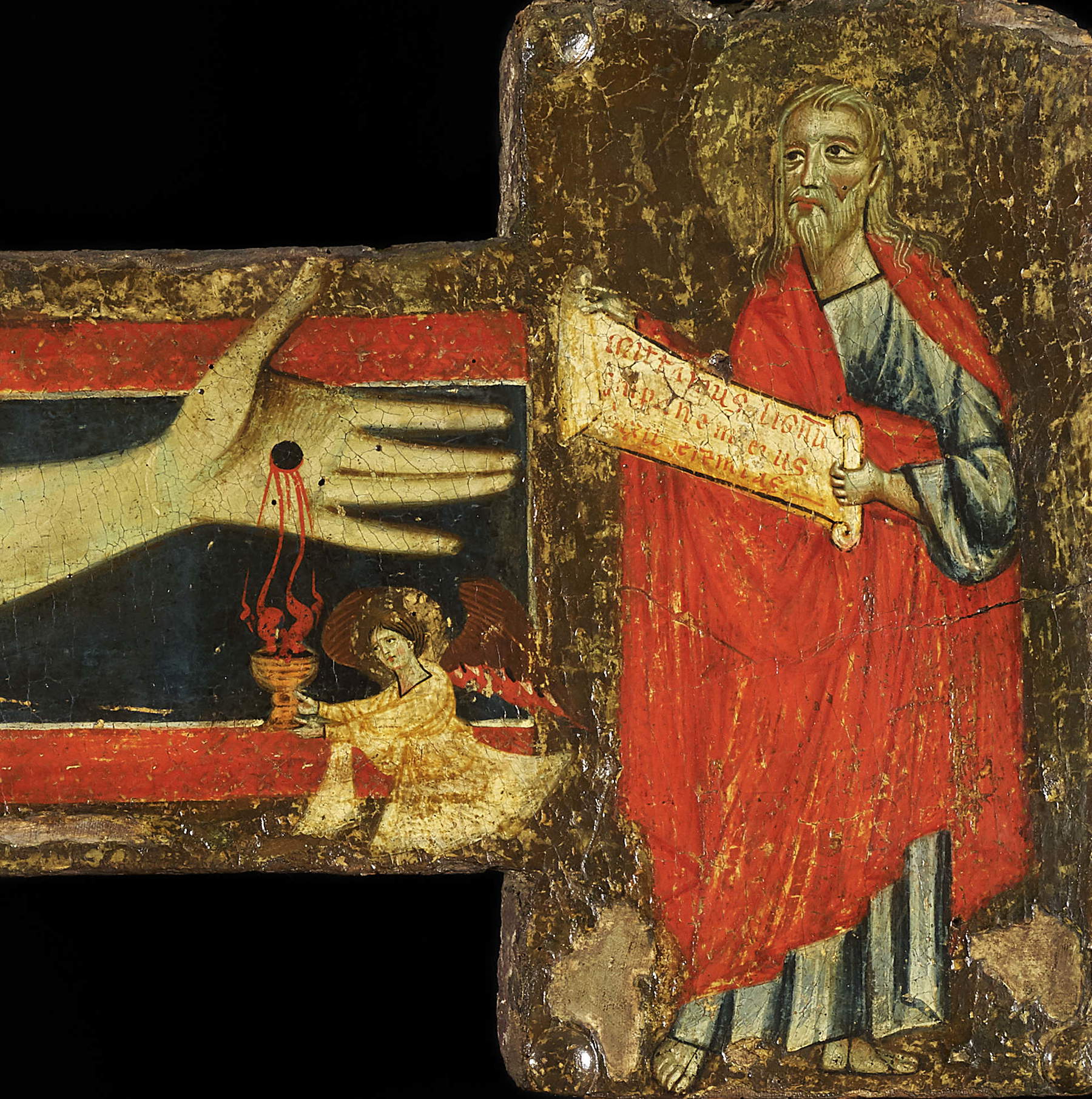
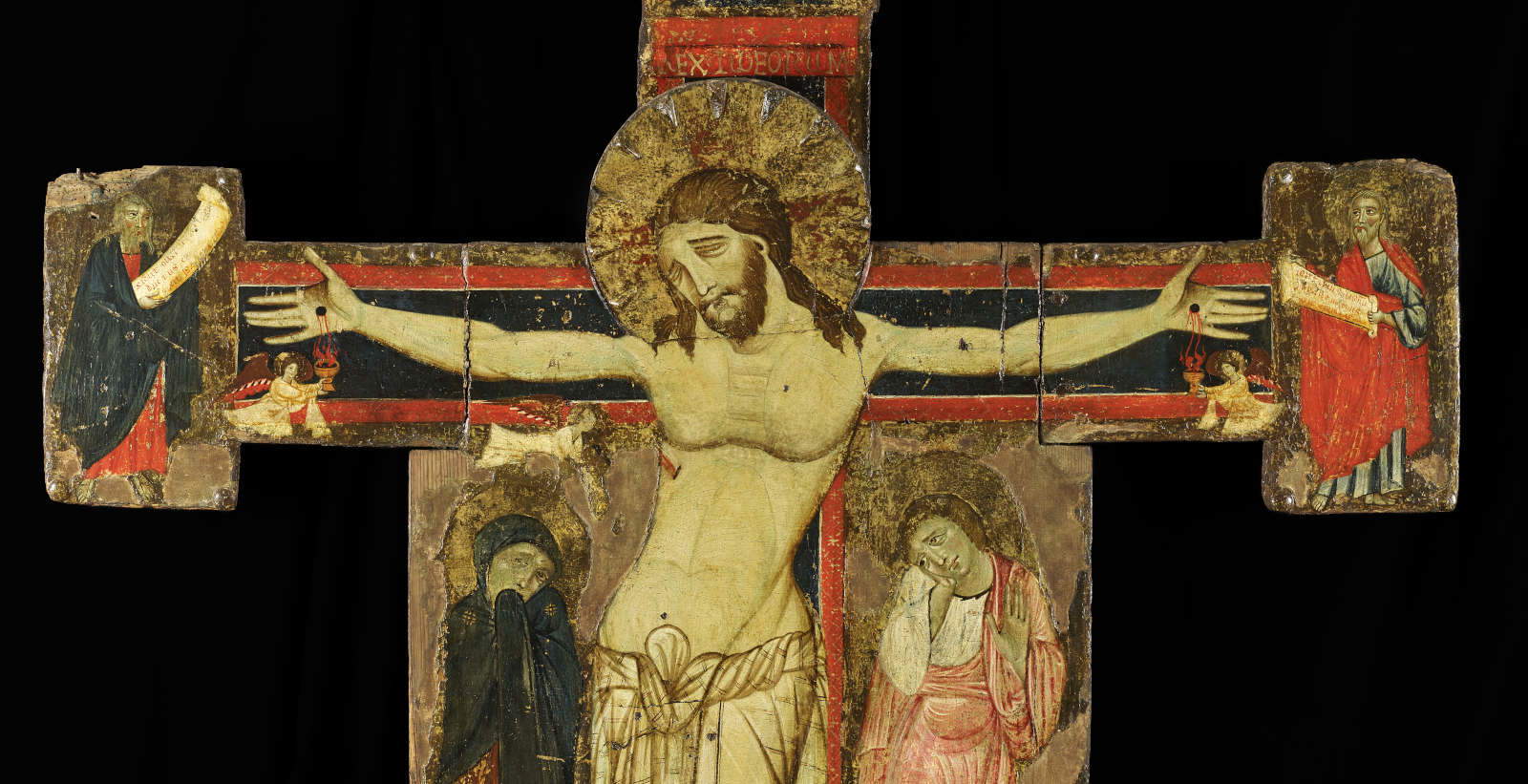
A Madonna covering her mouth with her hand, a Saint John bent over in grief, and three tiny angels collecting the blood flowing from Christ’s wounds in large cups. And, at the bottom, Saint Peter warming himself by a fire while a maidservant points at him, marking the beginning of the sequence of his three denials. The painted crucifix that Galerie Canesso is presenting at the 2026 edition of the Florence International Antiques Biennale—composed of a series of episodes and details that are anything but typical for this type of image— it is the work of Corso di Buono, a Florentine painter documented in 1284 and 1295.
This rare cross, offered with an asking price of 1.2 million euros and available for sale only within Italy due to its registered status, belongs to a particularly significant phase of Florentine painting in the second half of the 13th century: the suffering face of Christ places it, in fact, within the “Christus patiens” tradition, developed from the examples of Giunta Pisano and destined to become one of the primary ways of depicting the Passion in Italian painting of the time. But it is above all the ensemble of figures populating the cross that sets the painting apart: surrounding Christ—who is depicted on a significantly larger scale—are characters and episodes that expand the scene of the Crucifixion with rare iconographic solutions.
Corso di Buono constructs the figure of Christ using a bold and fluid outline. The body, suspended on the cross, dominates the composition; at his sides appear the Virgin Mary and Saint John, both depicted full-length and on a smaller scale. The two mourners seem bent under the weight of Christ’s death. Their very presence constitutes a distinctive feature: the placement of the Virgin and the apostle at the feet of the Crucified One, in fact, refers to a more archaic iconography linked to the tradition of Romanesque crucifixes.
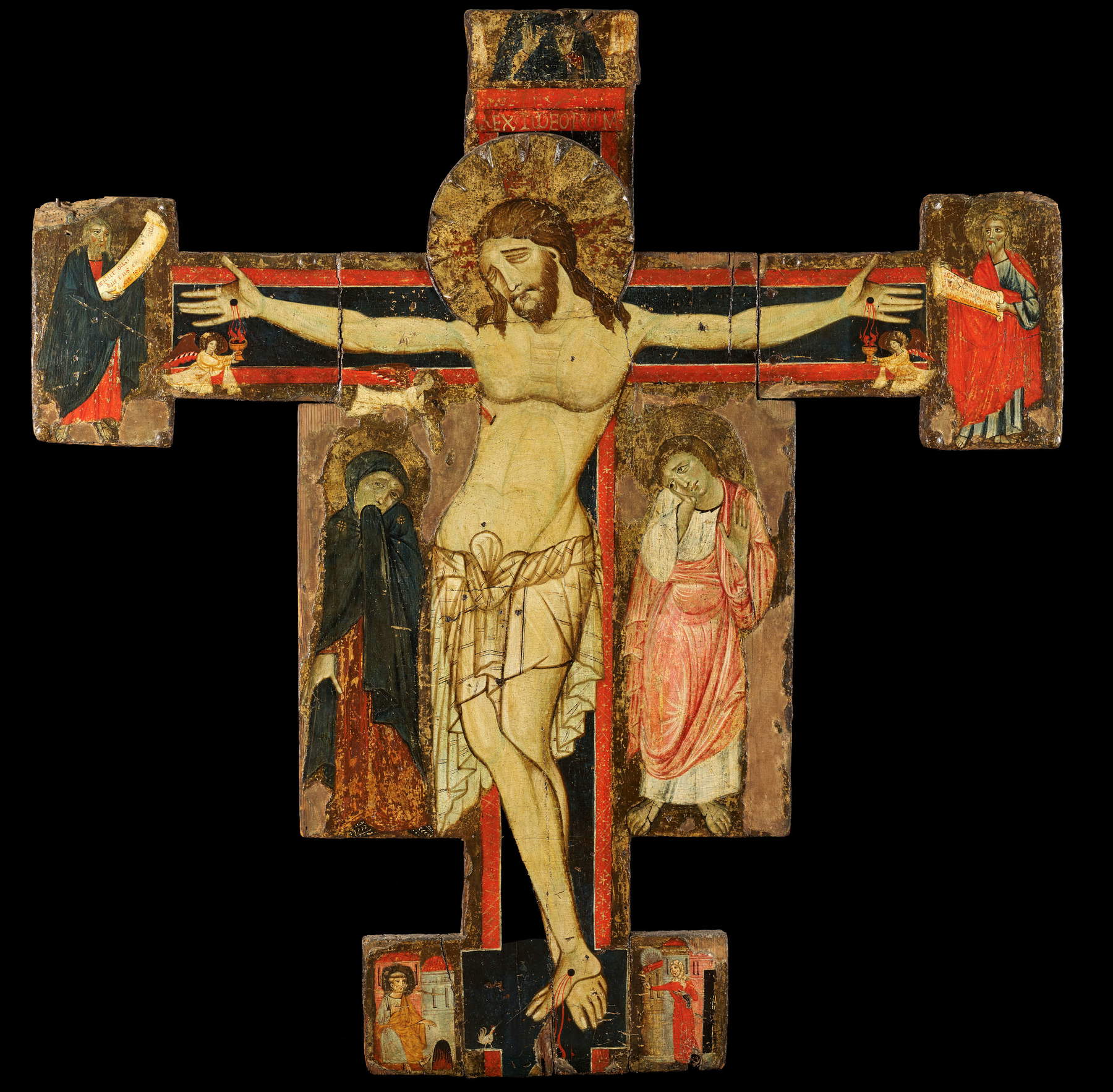
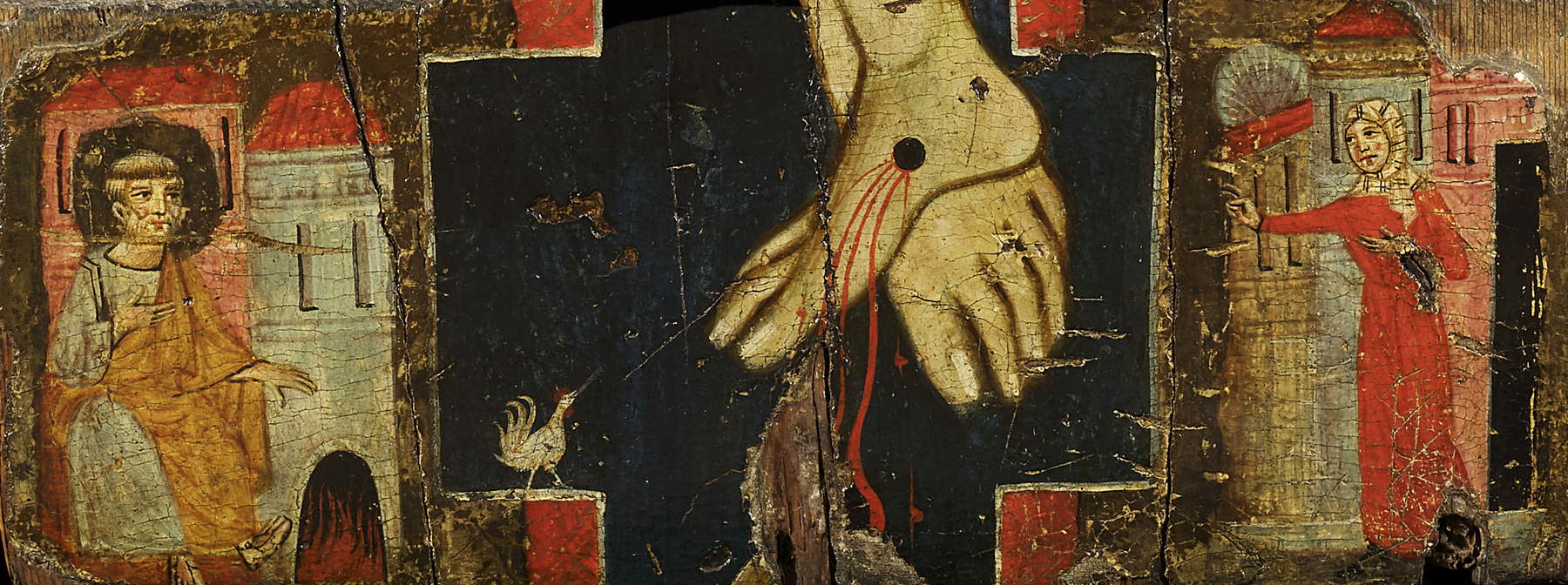
Even more distinctive is the Madonna’s gesture. The Virgin brings her left hand—completely wrapped in her robe—to her mouth. This is a motif of Byzantine origin, attested to at least since the 6th century, which is used to render the figure more natural and expressive in her moment of grief. A similar treatment, from the same period, also appears in the works of Duccio. With her other hand, Mary clutches her blue cloak, while Saint John assumes a subdued and melancholic pose. On the side panels, at the level of Christ’s hands, two standing prophets are also depicted with partially legible scrolls. Their words foreshadow Christ’s sacrifice: on the left, a reference to Isaiah is recognizable, “Sicut ovis [ad occasionem] / ductus est / dixit Isaia,” while on the right is a reference to Jeremiah, “Mittamus lignum / [in pa]nem eius / dixit Jeremias.” The texts were reconstructed by Luciano Bellosi based on the Vulgate. According to the scholar, the presence of full-figure prophets constitutes an extremely rare iconographic solution, and even more unusual is that of the three small angels painted around Christ’s body. They are depicted collecting the blood flowing from the wounds of the Crucified One in large cups. Angels of this type are common in narrative scenes of the Passion, but they are essentially foreign to the tradition of painted crosses.
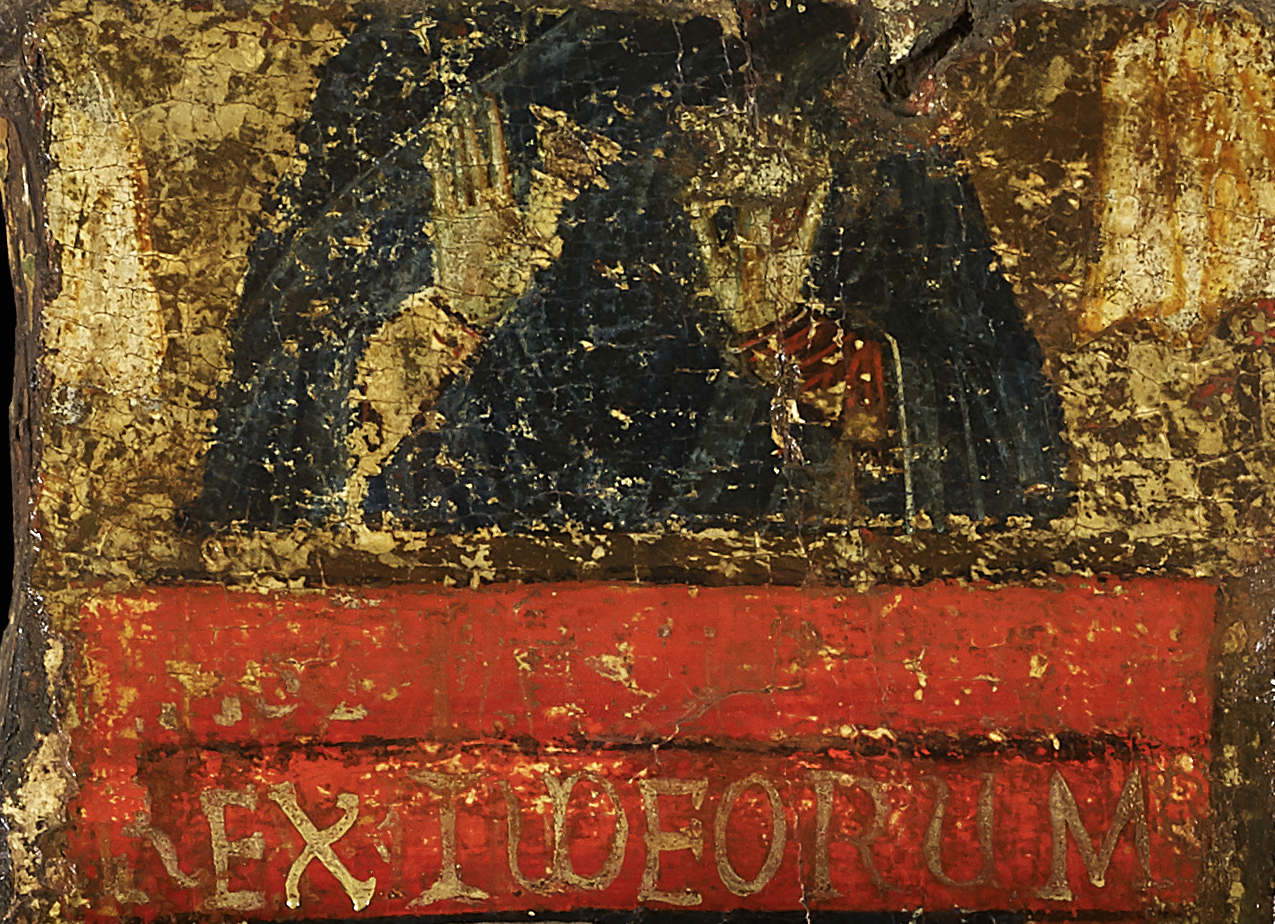
The upper portion also retains traces of a more elaborate composition than what is visible today: the panel has been partially trimmed, but the half-figure of the praying Virgin is still recognizable. Considering, therefore, the theme of the Christus patiens and the overall composition of the work, it is possible to imagine that two angels were depicted on either side of the Virgin and that, in the uppermost part of the cross,the Ascension of Christ was represented. The lower portion, which has also been partially reduced, depicts another moment in the narrative: here, Corso di Buono depicts Saint Peter beside a fire, trying to warm himself by holding out a hand and tilting a foot, while on the other side a maid points at him, having recognized him as one of the apostles; it is precisely this episode that sets in motion the first of Peter’s three denials. Between the two figures there is also a small white rooster, a reference to the three denials (the Gospel account states that Peter denied Jesus three times before the rooster crowed). Further down, there must have been a depiction of Golgotha, of which only a trace remains.
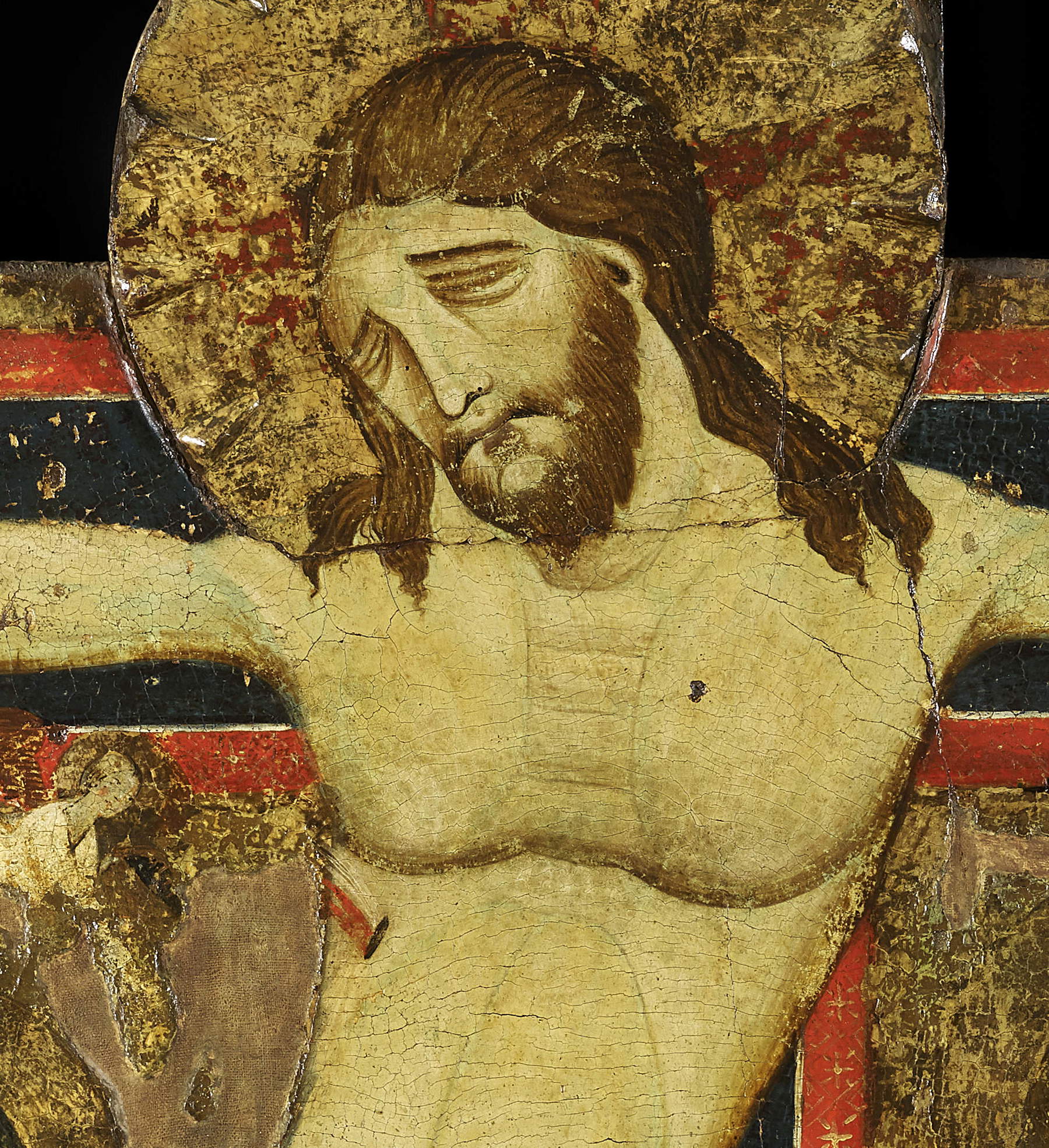
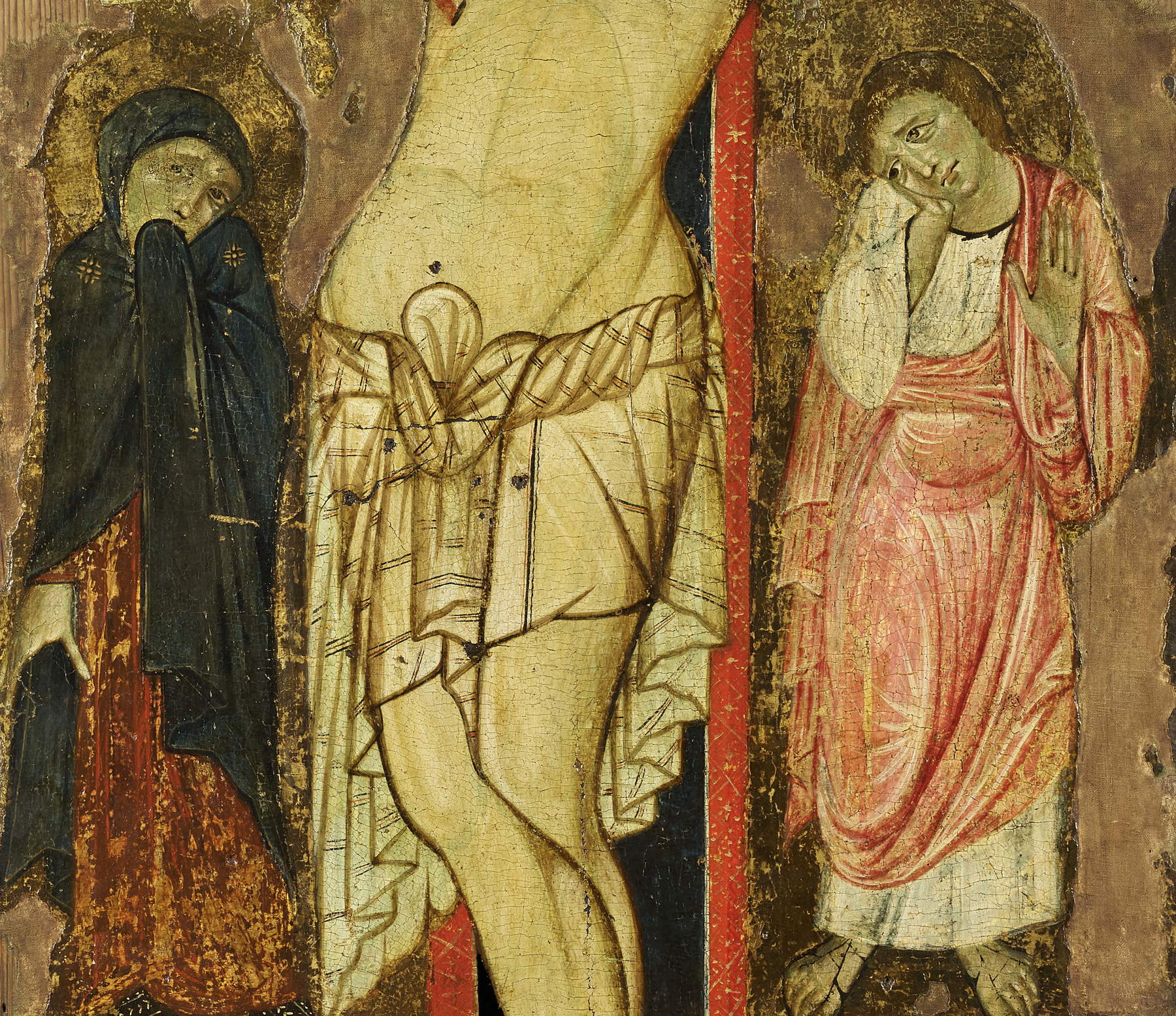
The result is a cross that combines the devotional function of the image with a deeply structured narrative: the monumental figure of Christ constitutes the visual and spiritual center of the composition, while smaller-scale episodes and figures unfold around it. The variety of artistic approaches employed by Corso di Buono thus allows the cross to be interpreted not only as an image of the dead Christ, but also as a sequence of references to the Passion and its prefigurations.
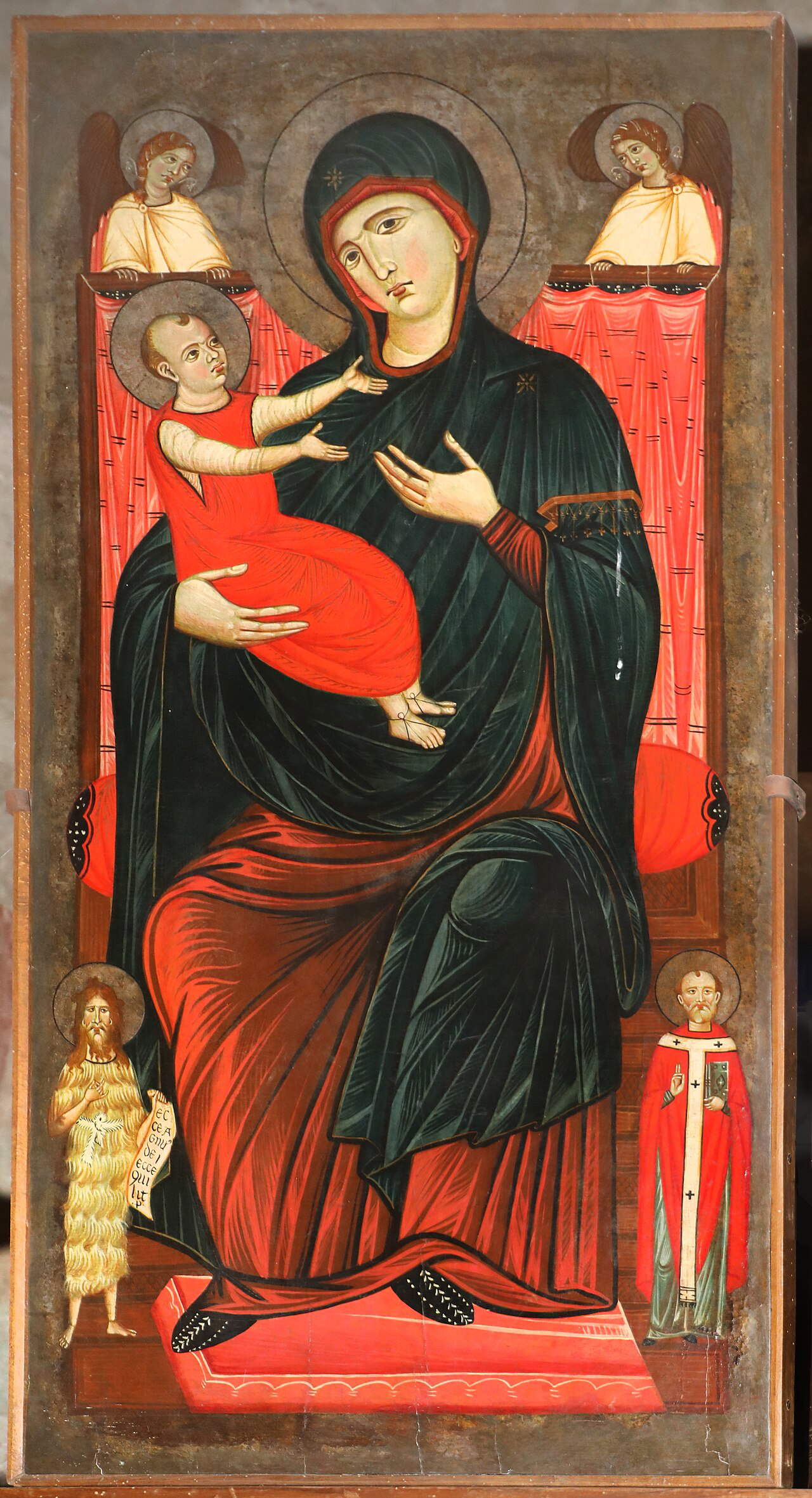
The chronology of the work has been a subject of debate among scholars, partly because Corso di Buono is documented in Florence in 1284 and 1295, and several paintings and cycles from the late 13th and early 14th centuries have been attributed to him. Andrea de Marchi, in an oral presentation on June 16, 2026, at the Galerie Canesso, confirmed the attribution of the cross to Corso di Buono and proposed dating it precisely to the years when the painter was working in the Florentine context marked by Giotto’s innovations. According to De Marchi, in fact, certain technical and compositional innovations present in the cross would be difficult to explain without Giotto’s influence; for this reason, the scholar dates the work to after another known work by Corso—namely, the frescoes at Montelupo Fiorentino, signed and dated 1284— and before his Crucifix of Cambiano, housed at the Museum of Santa Verdiana in Castelfiorentino—another work attributed to Corso di Buono or his very close circle, dated to the early 14th century. However, this chronological proposal is not universally accepted: Luciano Bellosi had proposed a different sequence, placing the Cross before the 1284 Montelupo frescoes and after the Madonna della Pieve di San Giovanni Battista in Remole, identified by the art historian as the oldest known work by Corso di Buono. The difference between the two interpretations indicates that the chronological placement of the panel is part of a broader issue concerning the development of Florentine painting between the last decades of the 13th century and the beginning of the following century. In fact, elements can be identified in the painting’s style that have allowed Bellosi to link the work to Cimabue’s painting: the transparency of the paint, particularly evident in the flesh tones and in Christ’s loincloth, is in fact interpreted by the scholar in light of the influence of Cimabue, who was active during the same decades.
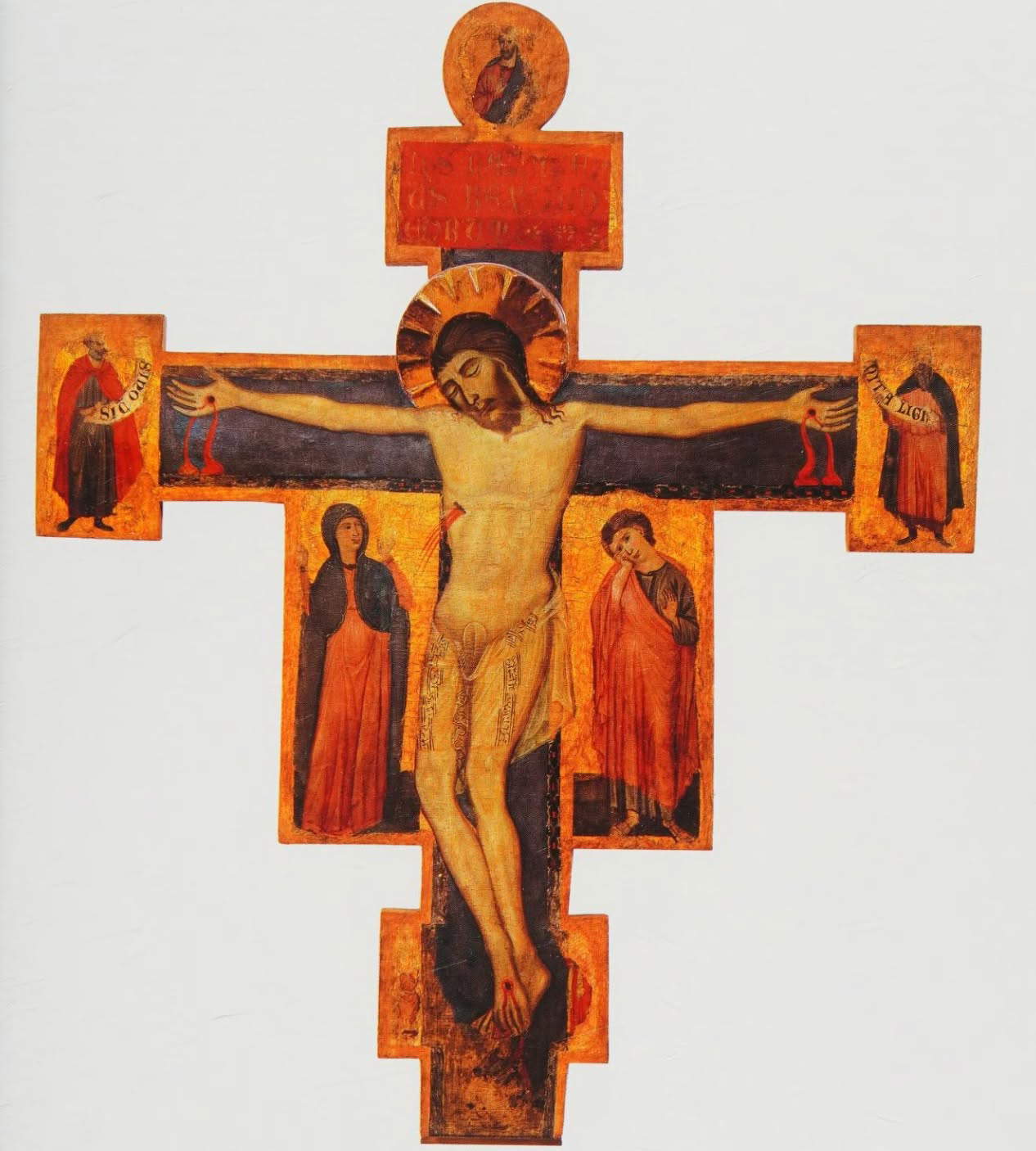
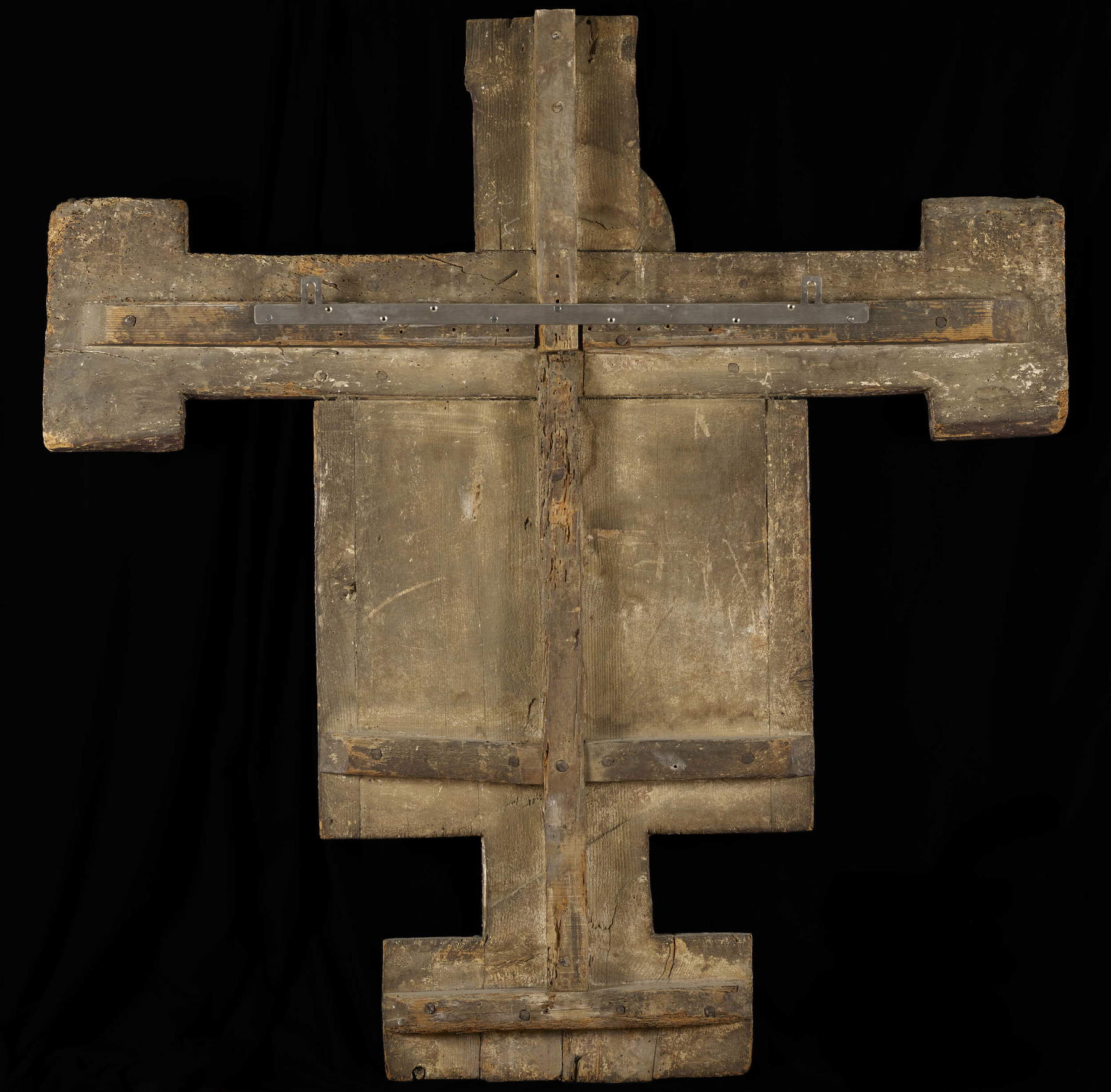
The work, however, has not survived intact: some areas of peeling paint have affected the painted surface, but fortunately not the figures, and in several places it is now possible to see the wood of the underlying panels as well as, in some areas, the canvas applied to the support as a ground. These material elements, too, are part of the cross’s conservation history and allow us to directly observe the structure upon which the painting was built. Given its medium size, Luciano Bellosi hypothesized that the cross was intended for the altar of a small church. The scholar has linked this possible destination to a later visual record: the fourth scene from the life of St. Francis painted by Giotto and his workshop in the Upper Basilica of Assisi in the 1290s, which depicts a similar use of a painted cross.
At the BIAF, Galerie Canesso is therefore presenting a panel that, beyond its economic value, raises a specific art-historical question: how the depiction of the Crucifixion changed in late 13th-century Florence, at a time when the Byzantine tradition and that of Romanesque crucifixes coexisted with a growing emphasis on the portrayal of suffering, narrative, and the construction of pictorial space. And in Corso di Buono’s Cross, this transition is evident in the details: the Virgin Mary hiding her mouth in her robe, the prophets foreshadowing the sacrifice, the angels with cups, Peter by the fire, and the little rooster are episodes that seem secondary to the large figure of Christ, yet they contribute to constructing an image of the Passion composed of gestures, reactions, and textual references. And it is precisely in this combination of tradition and unconventional approaches that one of the most interesting characteristics of the panel submitted to the BIAF lies. Will we see it again in a museum?
 |
| A rare 13th-century painted cross from Corso di Buono at the BIAF: it’s worth 1.2 million |

Warning: the translation into English of the original Italian article was created using automatic tools. We undertake to review all articles, but we do not guarantee the total absence of inaccuracies in the translation due to the program. You can find the original by clicking on the ITA button. If you find any mistake,please contact us.




















 IT
IT FR
FR DE
DE ES
ES CN
CN


