





For nearly two centuries, all trace of Gaudenzio Ferrari’s (Valduggia, 1475 – Milan, 1546) *Saint Anthony of Padua* had been lost. The panel was part of an altarpiece intended for the high altar of the Church of Santa Chiara in Milan, and the saint was depicted alongside the Madonna and Child, Saint Clare, and two little angels holding a crown. When the convent was dissolved in 1782, the altarpiece was dismantled and its components went their separate ways (the Madonna is now at the Accademia Carrara in Bergamo). The painting of Saint Anthony, in particular, came to be believed lost forever. In 1890, Gustavo Frizzoni considered it to have disappeared, speculating that the wood had deteriorated to the point of causing its loss. Instead, the panel reappeared in 1964 in an advertisement by the London art dealer Cornelius Marshall Spink. It would be several more decades before it was once again recognized as part of Gaudenzio Ferrari’s Milanese altarpiece. Its history, reconstructed in studies dedicated to the artist and particularly on the occasion of the 2018 monographic exhibition in Varallo, Vercelli, and Milan, is today one of the elements that make the painting particularly significant.
This is the Saint Anthony of Padua that the Milanese gallery Matteo Salamon is presenting at the 34th edition of the Florence International Antiques Biennale, alongside a selection of works ranging from the late Gothic period to the mid-18th century. The exhibition also includes several rare gold-ground paintings from the early 15th century (including a Crucifixion by Orazio di Jacopo, a registered work), a Madonna and Child by Bernardino Luini created at the height of the artist’s career, and a masterpiece by Canaletto, destined to enrich the landscape painter’s catalog and accompanied by a story linked to its restoration and painting technique. But it is Gaudenzio’s panel, with its history of loss, rediscovery, and reconstruction, that tells the story of a very significant find.
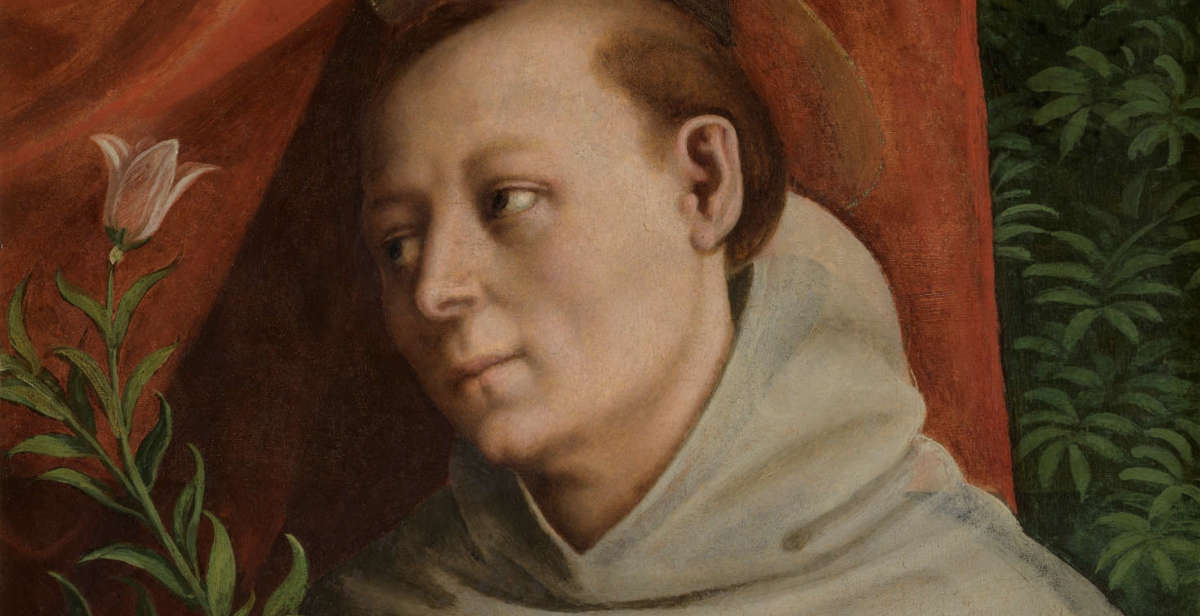
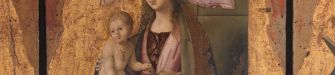
The painting, an oil on panel measuring 60 by 51 centimeters, is dated around 1538. It depicts the Franciscan saint with his customary lily—a symbol of purity—while his face and gestures are characterized by a restrained composure. Behind him, a red background helps to highlight the figure and his contemplative demeanor. The work belongs to Gaudenzio Ferrari’s mature period and is, at the same time, the first surviving painting from his time in Milan. It is precisely this period in Milan that makes the panel important for reconstructing the artist’s career.
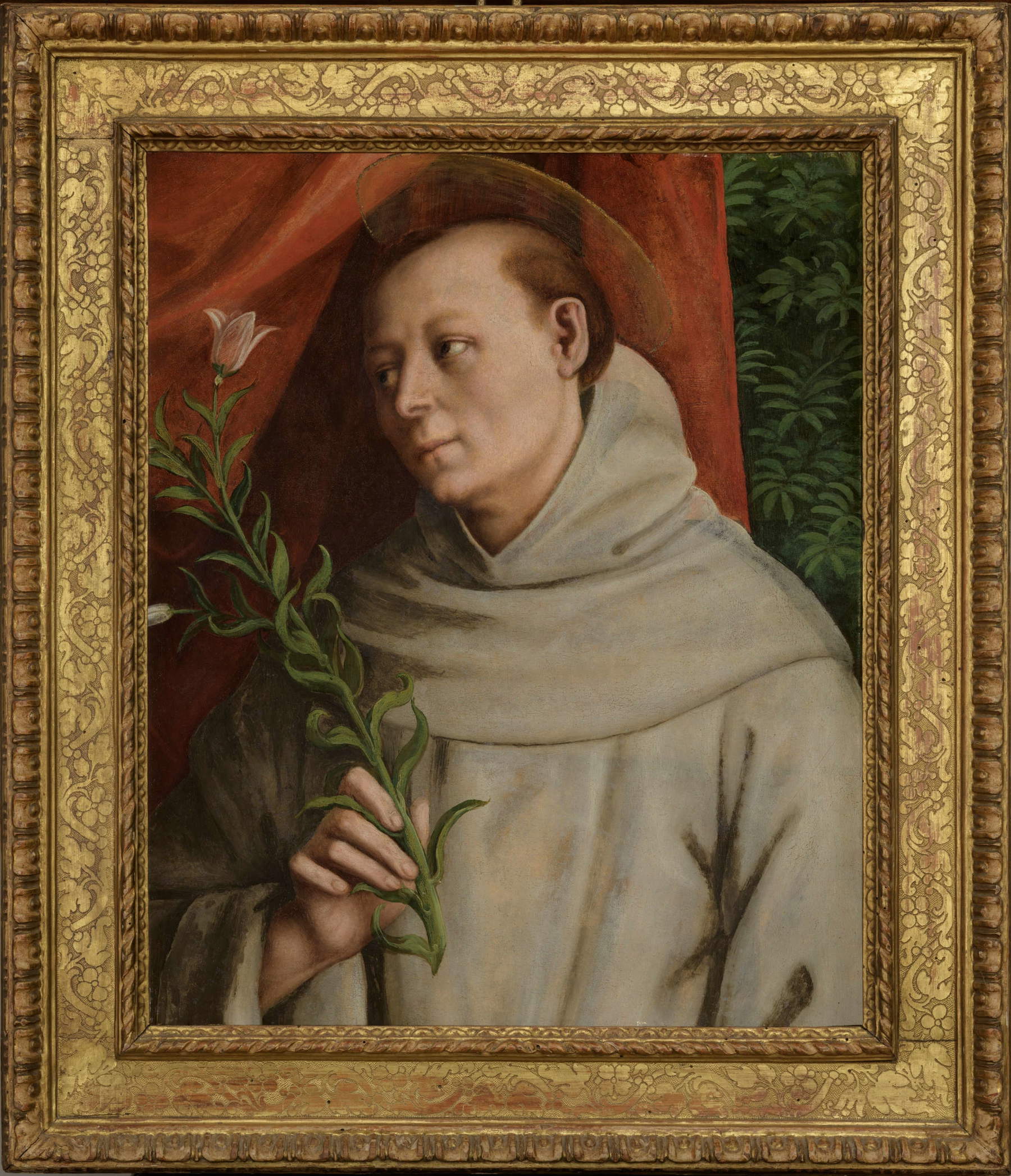
Gaudenzio arrived in the city at an advanced stage of his career: his presence is documented as early as March 21, 1537, when he began working for the Fabbrica del Duomo as a technical consultant for the opening of a new door in the left transept. In the following years, between 1537 and 1541, he also provided the Duomo with several cartoons for a series of tapestries depicting Stories of the Virgin, now lost. The altarpiece of Saint Clare thus dates to the beginning of this Milanese phase. The commission also attests to the relationship Gaudenzio had built with the Observant Franciscans, a bond that dated back to the years of the great construction project at Sacro Monte di Varallo and remained significant throughout the artist’s mature years. To understand the history of the Saint Anthony painting, however, we must return to the church for which it was painted.
Santa Chiara was a religious foundation entrusted to the Observant Poor Clares since the mid-15th century: the nuns often came from among the most prominent families in Milan at the time, and the community was particularly well-organized. Among the documented names are the Vimercati, the Aliprandi, the Lampugnani, and the Gallarati, while the Carcano family maintained particularly close ties with the foundation. These are the names of some of the most prominent families in Milan at the time. The Carcano family, in particular, was also linked to devotion to Blessed Michele Carcano, who lived from 1427 to 1484 and was one of the founders of the Monti di Pietà. His niece, Angela Caterina Carcano, was a Poor Clare and became abbess of the convent in 1536, while her brother, Girolamo Carcano—a senator and jurist—was involved in the administration of the foundation.
It is against this backdrop that Giovanni Agosti and Jacopo Stoppa have proposed the hypothesis that the Carcano family may have been the patrons who commissioned Gaudenzio’s altarpiece. In fact, they explain, the work was “placed in the most prestigious location in the church—namely, on the high altar—and appears stylistically datable to around 1537–1538,” and was, moreover, intended for a setting in which the presence of nuns belonging to the aristocracy and the city’s leading families helped create a particularly distinguished network of patrons.
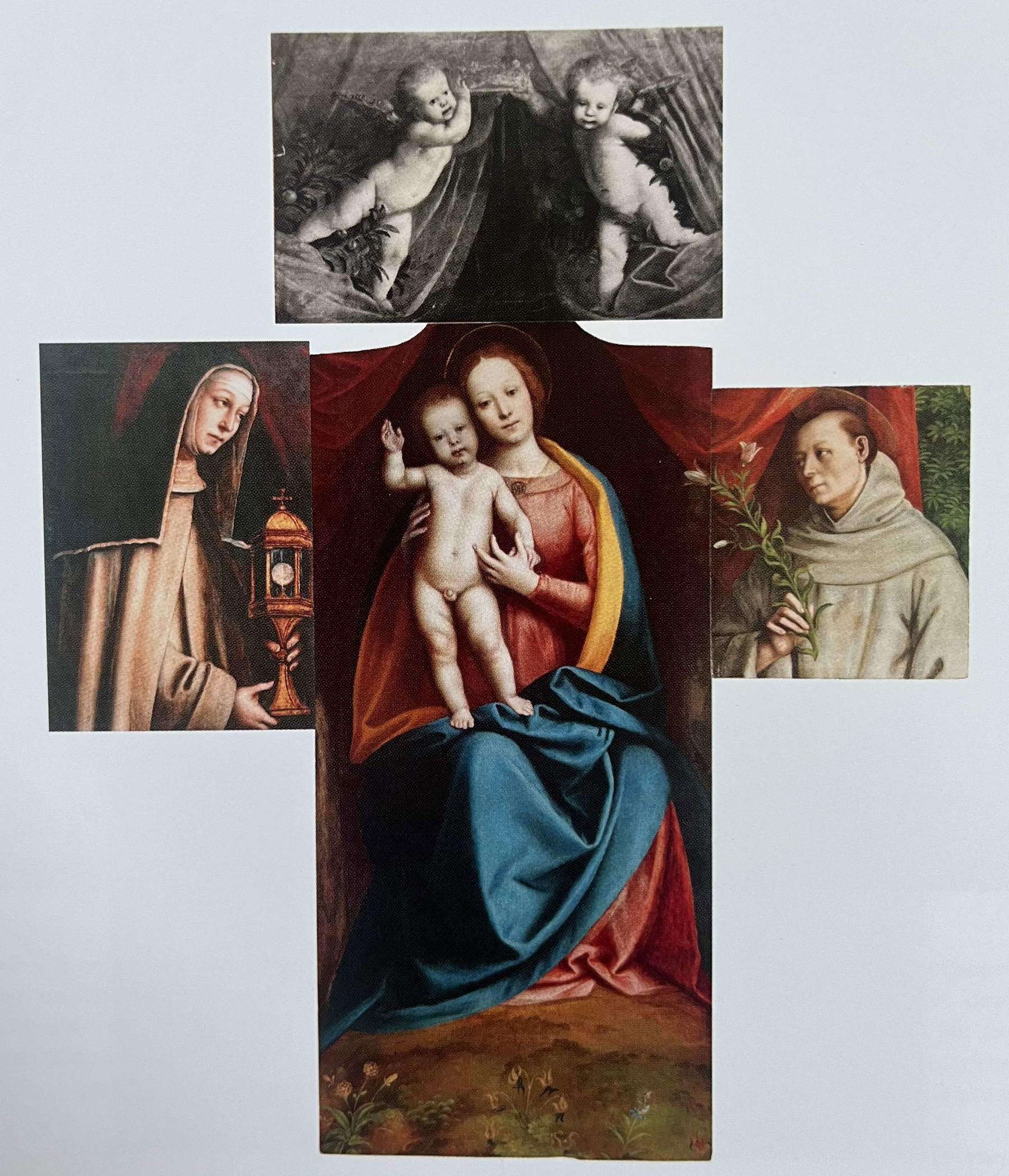
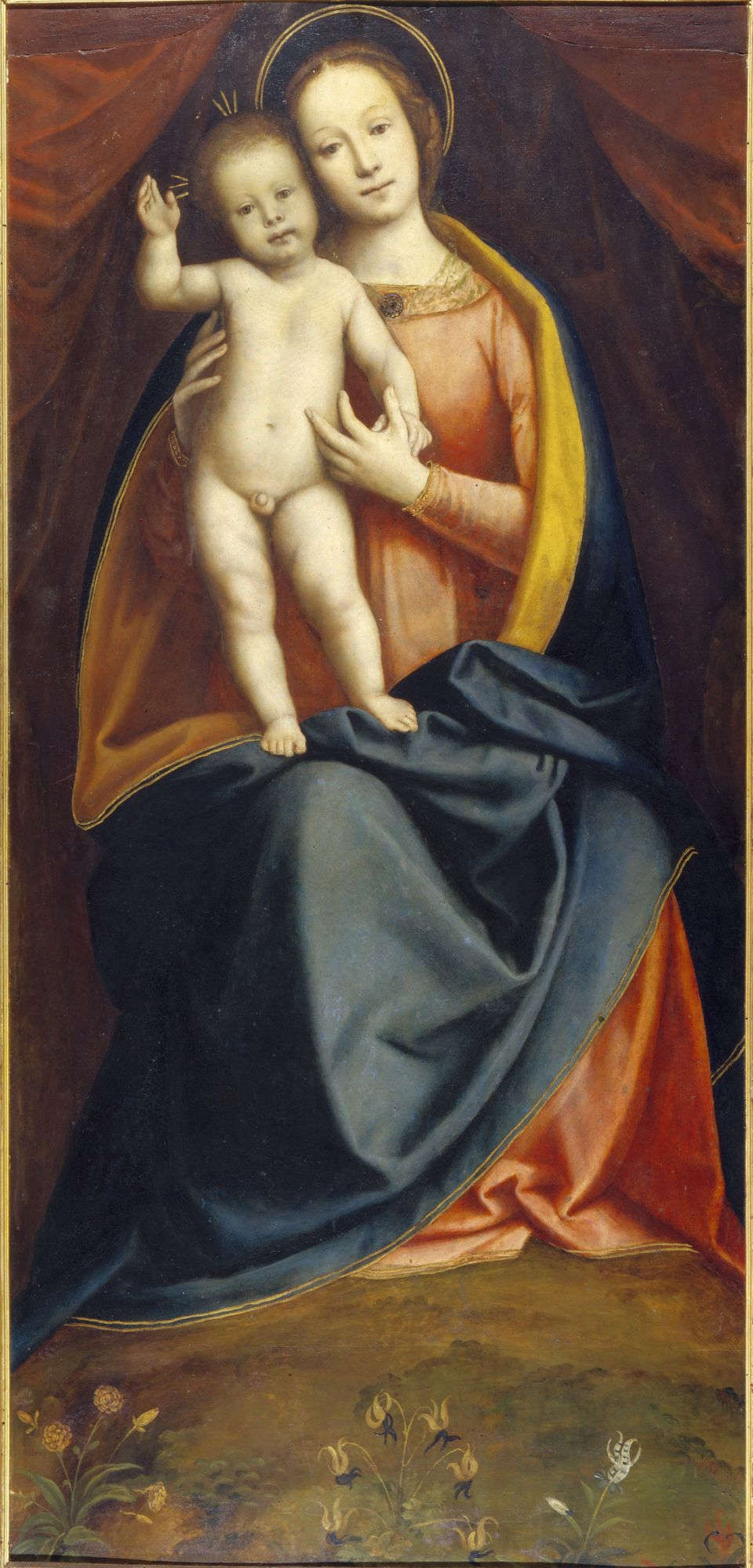
The altarpiece depicted the Virgin and Child at the center, flanked by Saint Clare and Saint Anthony of Padua, while two little angels held a crown above the Virgin. Sources from the 17th and 18th centuries still mentioned its placement on the high altar; subsequently, the complex was swept up in the events surrounding the suppression of the church. On March 28, 1782, the suppression of Santa Chiara was in fact ordered, and a few days later the altarpiece was purchased by Giovanni Battista Monti, a Milanese collector “who took an early interest in the works of the so-called ‘primitives,’” explain Agosti and Stoppa. “He was also the administrator for Giberto V Borromeo, assisting him with acquisitions for his picture gallery; upon his death in 1830, he stipulated that his private collection be incorporated into the Borromeo collection.” The altarpiece, however, did not remain intact: in 1785, while it was still in Monti’s possession, the Milanese restorer Carlo Tagliabue dismantled it into four parts, likely due to the condition of the wooden support. The central section, depicting the Madonna and Child, was reshaped into an arched panel and sold to Count Giacomo Carrara. Upon his death, it entered the collectionsof the Accademia di Bergamo, where it remains to this day. The two small angels holding the crown also had their own history. Initially remaining in the Monti collection, they later passed into the Borromeo collection and then into that of the Pesenti Pigna heirs. Saint Clare, on the other hand, was reduced to a half-figure and appeared in 1821 in the collection of Gaudenzio Bordiga, a scholar and engraver from Valsesia who is credited with playing a role in initiating the modern reappraisal of Gaudenzio Ferrari’s work.
The fate of the Saint Anthony was even more difficult to reconstruct. After the altarpiece was broken up, the painting disappeared entirely from the available records. By the end of the nineteenth century, it seemed there was no longer any hope of tracking it down. In 1890, Gustavo Frizzoni, while reconstructing the surviving elements of the Milanese altarpiece, considered it lost: according to his reconstruction, the fragment had been destroyed “because the wood had become waterlogged.” Its reappearance in 1964 changed the situation, but did not immediately resolve the issue of identification. The panel, as mentioned at the beginning, appeared in an advertisement by the London art dealer Cornelius Marshall Spink, who was offering it for sale. It was not until the 1980s that scholarly studies began to place it more precisely within Gaudenzio’s oeuvre and, above all, to establish its connection to the altarpiece of Santa Chiara.
In 1985, Giovanni Romano mentioned the painting in the catalog of the monographic exhibition dedicated to Bernardino Lanino. On that occasion, he hypothesized that the panel might have belonged to an altarpiece similar to the one from which Lanino’s Saint Francis and Saint Clare—now housed at the Pinacoteca dell’Accademia Albertina in Turin—originated. That same year, Filippo Maria Ferro published an initial reconstruction of the Gaudenzio altarpiece in the journal *Paragone*. The scholar linked the *Saint Clare* and the angels—then in a private collection—to the *Madonna* at the Accademia Carrara and proposed a date for the ensemble of around 1536–1537. Shortly thereafter, he was able to link the *Saint Anthony*—traced down with the help of Giovanni Testori—to the same altarpiece as well. This identification was subsequently incorporated into later studies, including the entry on Gaudenzio Ferrari in the *Dizionario Biografico degli Italiani* (Biographical Dictionary of Italians ), edited by Rossana Sacchi.
The reconstruction of the altarpiece has thus made it possible to view *Saint Anthony* no longer as an isolated painting, but as part of a broader project, intended for one of the most important locations in the Church of Santa Chiara. It is also thanks to this reconstruction that the painting takes on particular significance in the artist’s career: not only because of the quality of the saint’s figure, but because it allows us to trace Gaudenzio’s entry into the Milanese art scene. His stay in Milan was, in fact, more than a mere geographical move. Ferrari arrived in a city where the legacy of the era ushered in by the great figures of the Lombard Renaissance was still strongly felt. His relationship with Milanese artistic circles had also been fostered by the Observant Franciscans, who had supported his connections with the leading figures of local figurative culture—including Bramante and Leonardo—from the very beginning. To these experiences, Gaudenzio had added his familiarity with the paintings of Perugino and Raphael. His artistic maturity also stemmed from his ability to fuse these diverse influences into a personal style, in which figures are not simply arranged in space but are connected through a rhythmic flow and a particular attention to the naturalistic rendering of emotions. This aspect is also evident in *St. Anthony*. The figure is not constructed through a dramatic gesture or an exaggerated expression. On the contrary, the gaze and movements are restrained: the rendering of emotions is conveyed through a series of controlled elements, in which the naturalness of expression plays a central role. This attention to the human dimension of the figures is one of the characteristics that allows us to understand the synthesis achieved by Gaudenzio in his mature phase. His painting does not abandon the influences of the models he encountered throughout his career, but organizes them into compositions in which the figure acquires a presence that is both natural and rhythmic.
The story of the *St. Anthony* rediscovered by Matteo Salamon, therefore, is not limited to the image of the saint. It is also the story of an altarpiece that no longer exists in its original form and that art-historical research has gradually reconstructed through fragments, documents, collections, and attributions. And it is precisely this layering that makes the panel particularly significant today: a work from Gaudenzio Ferrari’s mature period that allows us to observe up close the moment when the painter, having arrived in Milan in 1537, brought to the city the experiences he had gained in Piedmont and Lombardy and combined them with the teachings of Bramante, Leonardo, Perugino, and Raphael.
 |
| A rare fragment of an altarpiece by Gaudenzio Ferrari has resurfaced: Matteo Salamon is bringing it to the BIAF |

Warning: the translation into English of the original Italian article was created using automatic tools. We undertake to review all articles, but we do not guarantee the total absence of inaccuracies in the translation due to the program. You can find the original by clicking on the ITA button. If you find any mistake,please contact us.

























 IT
IT FR
FR DE
DE ES
ES CN
CN


