




by Redazione 07/09/2026



Categories: Ancient art / Disclaimer
The Palazzo Ducale in Mantua is hosting the first major exhibition dedicated to Duke Ferdinando Gonzaga, featuring a painting that symbolizes his patronage of the arts: Guido Reni’s *Nexus and Deianira*, a masterpiece by the Bolognese painter that is returning to Italy after nearly ten years.

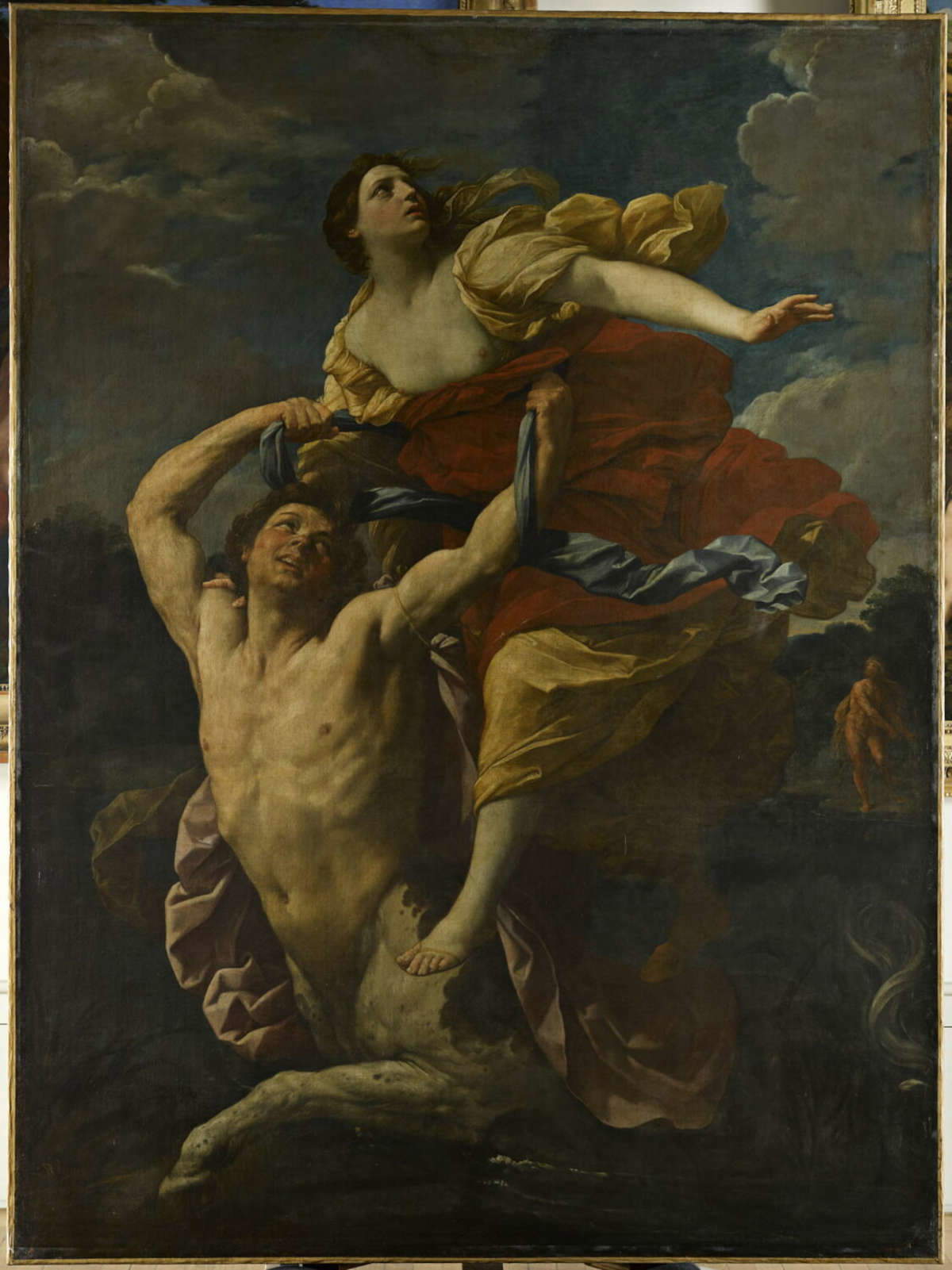
An internationally significant loan to the Palazzo Ducale Museum in Mantua for the exhibition that, running from October 10, 2026, through January 10, 2027, will commemorate the 400th anniversary of the death of Ferdinando Gonzaga, Duke of Mantua from 1612 to 1626. The exhibition, titled “A Sun That Shines with Its Own Light: Ferdinando Gonzaga: Patron and Duke (1587–1626), will be held in the Santa Croce Apartments and will bring Guido Reni ’s painting *Nesso and Deianira* (Bologna, 1575–1642), a work housed at the Louvre and on loan for the occasion.
The painting’s return to Italy is by no means a foregone conclusion. Its last appearance on Italian soil dates back to 2017, when the work was exhibited at the Pinacoteca Nazionale in Bologna from September 4 to the following January 4, as part of an exchange that brought Guido Reni’s *The Massacre of the Innocents* to the Louvre. Before that, to find the painting’s previous appearance in Italy, one must go back to 1986, when it was included in the exhibition *In the Age of Correggio and the Carracci*, curated by Andrea Emiliani and hosted by the National Art Gallery, the Academy of Fine Arts, and the Civic Archaeological Museum of Bologna. This time, the work is coming to Mantua for an exhibition that traces the biographical and cultural journey of a complex figure, Ferdinando Gonzaga, the patron who commissioned *The Naxian Nymph* and *Deianira*: the second son of Vincenzo I Gonzaga and Eleonora de’ Medici, he was initially set on a career in the church—as was often the case for younger sons of prominent families—but after completing his education in Ingolstadt and Pisa, Ferdinando was elevated to the rank of cardinal in 1607 and moved to Rome, a city that allowed him to establish direct relationships with some of the most significant figures in the artistic scene of the time. The course of his life changed in 1612, when the death of his brother Francesco IV called upon him to succeed him as ruler of the Duchy of Mantua and Monferrato, forcing him to abandon the priest’s robe.


The new duke’s romantic and dynastic life was equally tumultuous. Before assuming an official role through marriage, Ferdinando had an affair with Camilla Faà di Bruno, a noblewoman from Monferrato, with whom he fathered an illegitimate son, Giacinto. In 1617, the duke officially married Caterina de’ Medici, daughter of Ferdinand I, Grand Duke of Tuscany—a union that strengthened the ties between Mantua and Florence but did not produce any children for the couple.
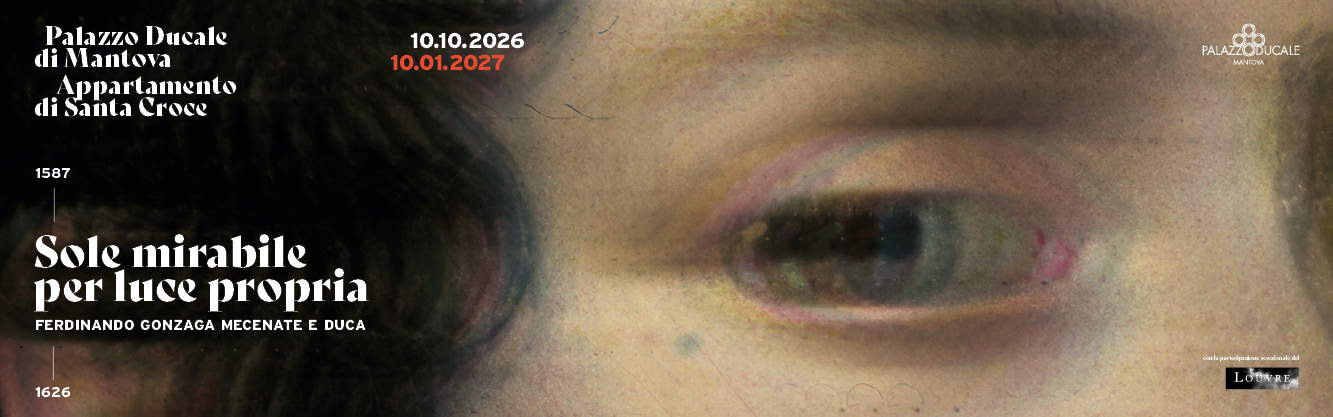
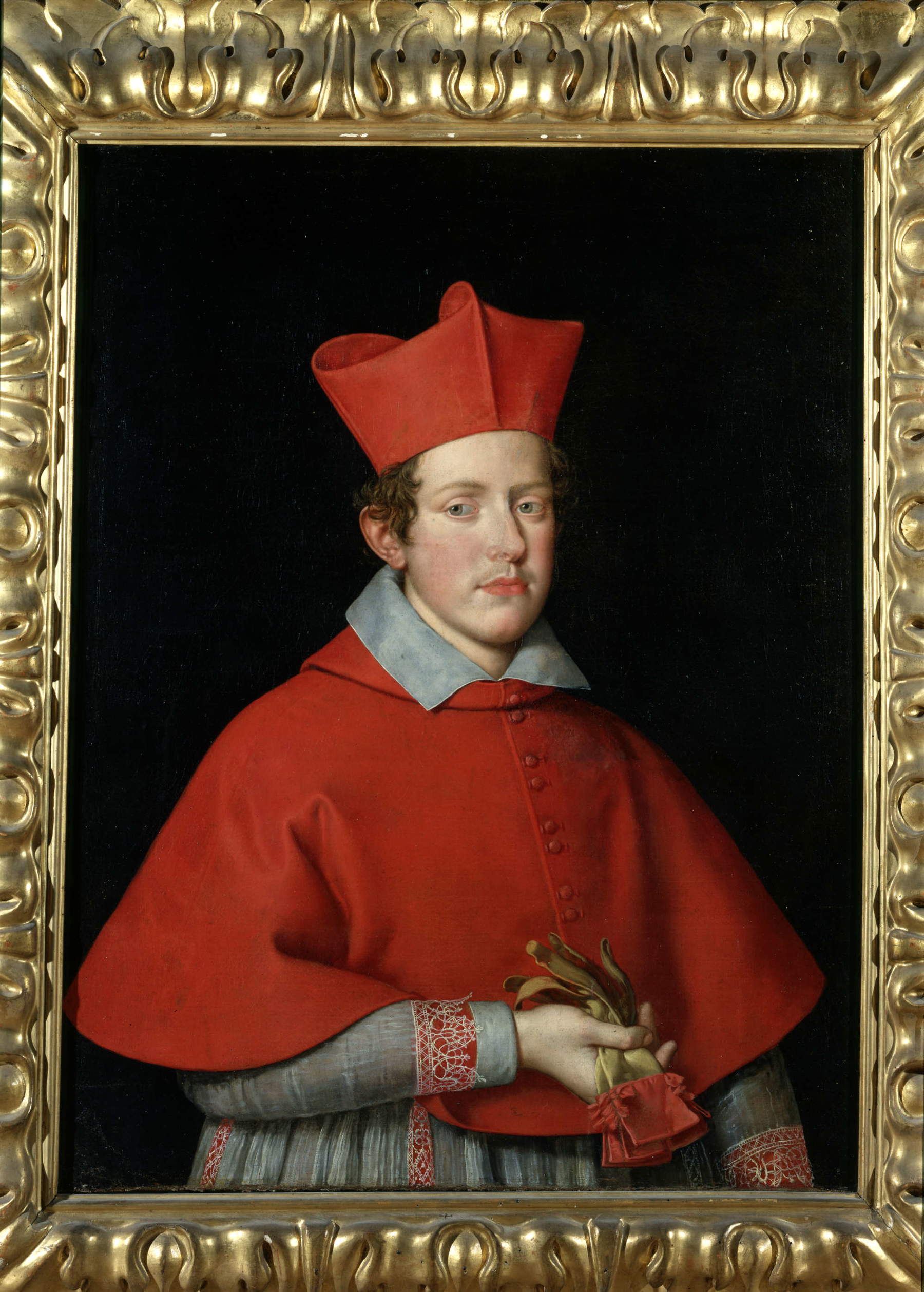
It is precisely the cultural policy pursued by Ferdinando Gonzaga that serves as the central theme of the exhibition, which aims to present to the public the figure of a refined collector and a patron capable of steering the final great era of Gonzaga patronage in a new direction. Unlike his predecessors, the duke took a particular interest in contemporary artists, especially those active in Bologna and Rome, thereby fostering the introduction of the Baroque style into Mantua’s court circles.
This renewal manifested itself on several fronts. In painting, one need only consider the presence of Domenico Fetti, while in literature the Baroque atmosphere was evident in the verses of Giovan Battista Marino, who—owing his release from prison to the Duke’s intervention—declared, in 1620, that he owed his very life to him, and in the writings of Giovan Battista Basile. Ferdinando also supported musicians such as Girolamo Frescobaldi and leading figures in the theater of the time, such as Giovan Battista Andreini, while court life was brought to life through the stage sets designed under the direction of the Mantuan Gabriele Bertazzolo.
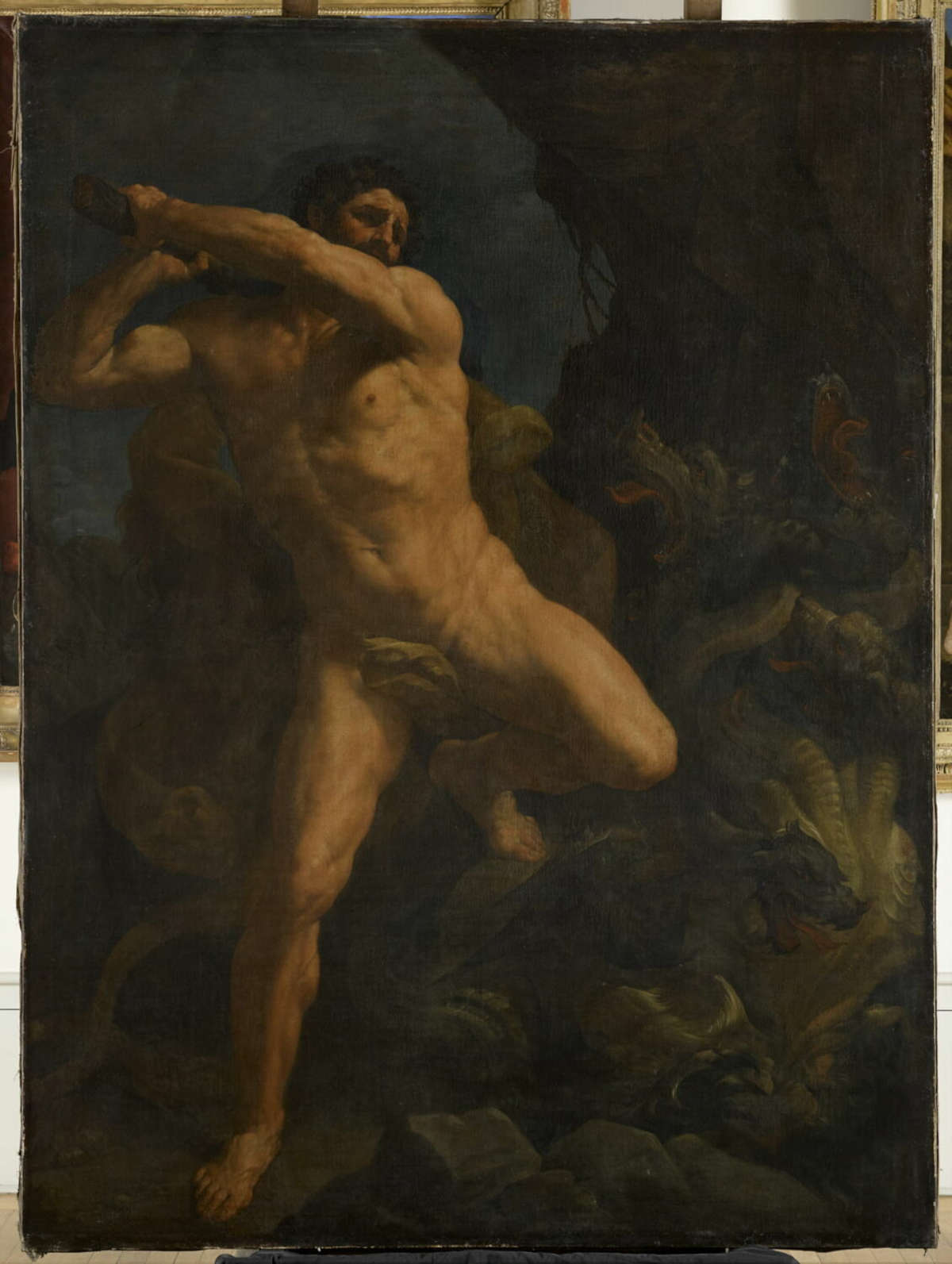
This painting, on loan from the Louvre, is part of the Gonzaga commissions from the time of Ferdinando. Now, regarding the subject: it depicts an episode from Book IX of Ovid’s *Metamorphoses*: during a journey, Hercules and his wife Deianira arrive at a river where the centaur Nessus serves as a ferryman. As he carries Deianira to the other side, the centaur attempts to rape her, but Hercules, who has already reached the shore, strikes him dead with an arrow shot from his bow. Reni chooses to capture the very moment of the assault, rendering the human form with anatomical precision and revealing, in the expression on the face of the young centaur attempting to abduct Deianira, an almost joyful fervor that scholars have repeatedly highlighted as a distinctive feature of the composition.
The work is part of a cycle of four canvases dedicated to the stories of Hercules—all of which are now housed in the Louvre—that Ferdinando Gonzaga commissioned from Guido Reni for a room in the Villa Favorita, near Mantua, and which were painted between 1617 and 1621. Two students of the Bolognese painter, Francesco Gessi and Giovanni Giacomo Sementi, contributed to the fresco decoration of the Hall of Mirrors in the Ducal Palace around 1618. The origins of the commission can be reconstructed thanks to the correspondence that the Mantuan agent in Bologna, Count Andrea Barbazzi, maintained with the duke. As early as 1614, Ferdinando had sought to secure Guido Reni’s collaboration for a fresco cycle in his suburban villa, but the difficulties the painter encountered with this technique led him to decline the commission, redirecting the work instead to Sementi and Gessi. It is likely that this refusal prompted the duke to propose, as an alternative, the creation of four canvases dedicated to the myth of Hercules. Reni arrived in Mantua shortly after July 7, 1617, so much so that Ludovico Carracci, his former teacher, reported to a correspondent that the student had been summoned by the duke to paint several works for him.
On November 1 of that same year, Barbazzi informed the duke that Reni had just completed a first painting, which was delivered ten days later; on December 20 of that year, Mantua sent the painter an advance payment for the continuation of the work, a detail that suggests either that the entire series had been conceived as a whole from the outset, or that the duke had waited for the arrival of the first painting before confirming the commission for the other three. A letter from January 1619 indicates that the first work sent was *Hercules on the Pyre*, while the other three, intended for the same room, were completed over the next three years: a second painting was completed before mid-July 1619, a third was ready for shipment in April 1620, and the last, completed by July of that same year, was awaiting only the final varnish. The four canvases (in addition to *Hercules and Deianira*, Reni painted *Hercules and the Hydra*, *Hercules and Achelous*, and *Hercules at the Stake*) were thus completed between November 1617 and July 1620, for a fee that, according to a later letter from 1622, ranged between two hundred and two hundred fifty ducats per work.
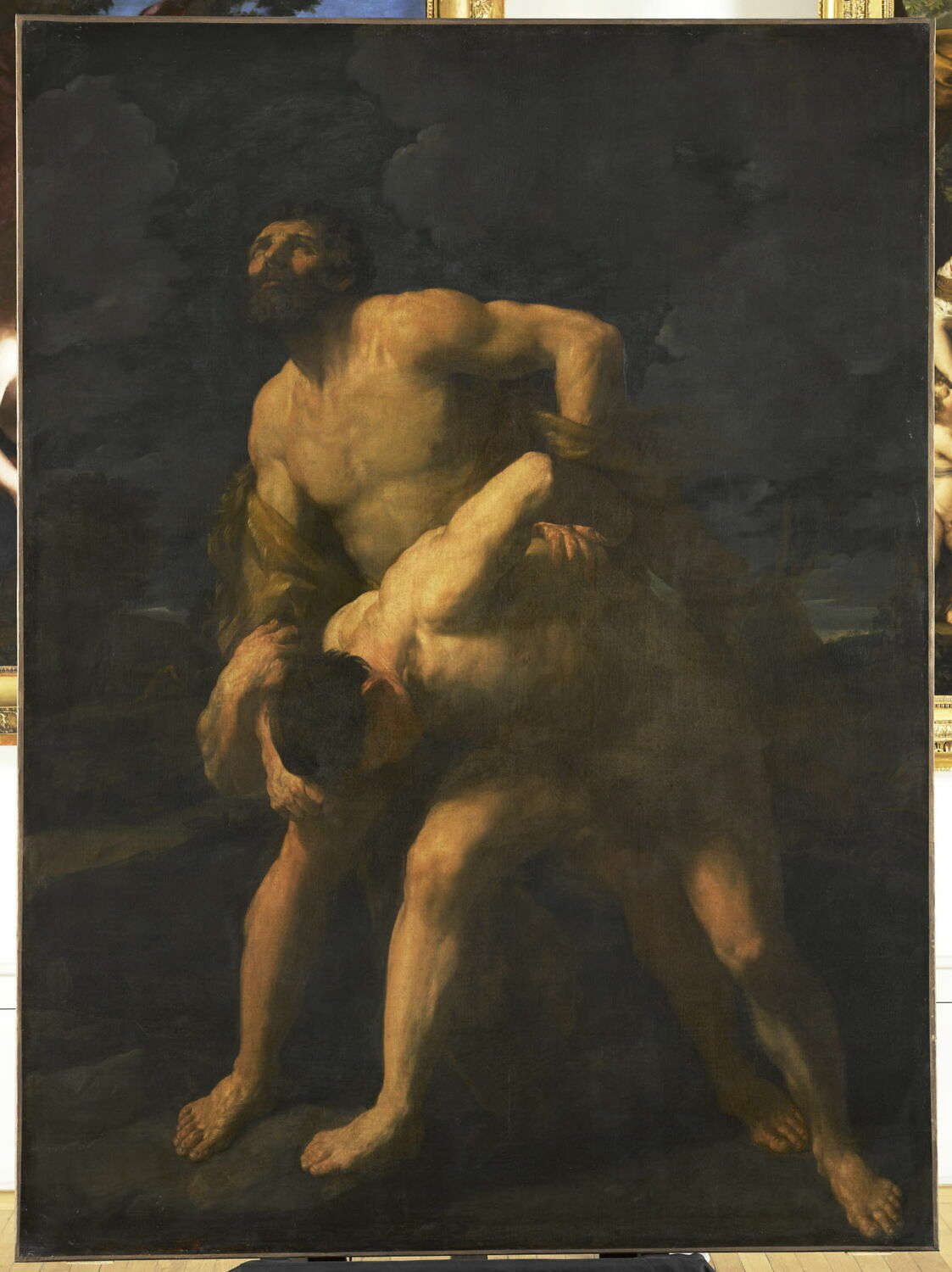
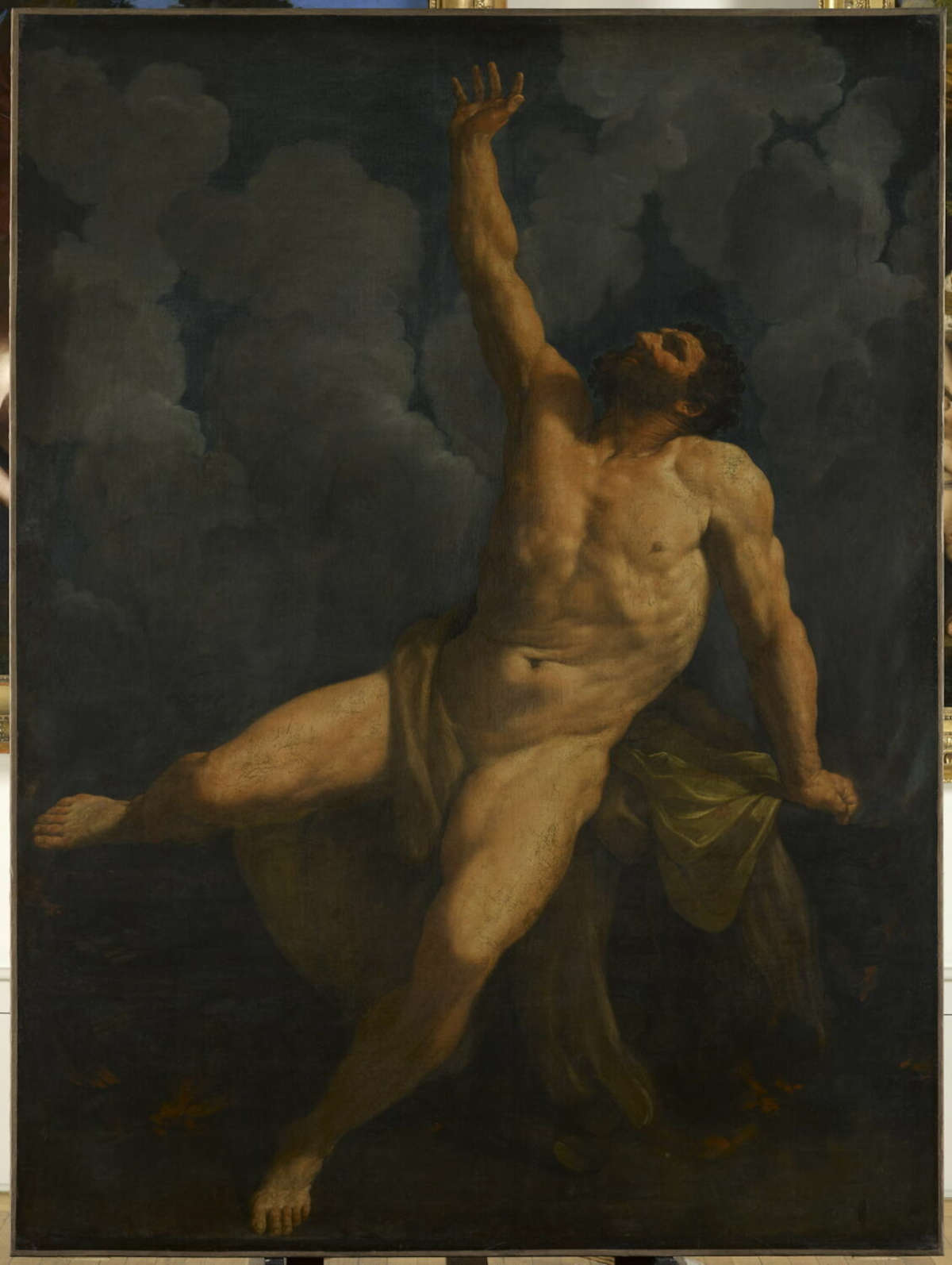
The well-documented history of these four paintings traces a journey through some of Europe’s most important collections. Included in the inventory drawn up in 1627 following the death of Ferdinando Gonzaga—where they were valued at 1,440 lire— the works soon passed into the collection of Charles I of England (when a large part of the “Celeste Galeria,” the Gonzagas’ extraordinary collection, was sold to the English king) and were placed around 1640 in the gallery at St. James’s Palace in London. Put up for auction following the English Revolution, they were exhibited at Somerset House in 1650 and purchased the following year, for four hundred pounds, by a certain Grynder. They then passed into the hands of a Cologne merchant and collector, Everhard Jabach, who had faithful copies made by the painter Louis de Boulogne and had three compositions engraved by François Chauveau. In 1662, Louis XIV purchased the entire group of paintings from Jabach himself, and from that moment on, they were held in high esteem at the French court: nine engravings were produced in 1669 by Gilles Rousselet, who was paid three thousand pounds for the four prints intended for the royal collection, and subsequently by Benoît Audran. From 1682 onward, the canvases were housed in the Palace of Versailles, in the Hall of Apollo, which served as the throne room, where they remained until the French Revolution. Transferred to Paris in 1791 to the Tuileries Palace, they have been on display on the walls of the Louvre Museum since 1793 and have remained there ever since. The original frames, by Caffieri, were replaced in 1746, while those currently on view date from 1784, when the Count d’Angiviller, then in charge of the royal buildings, commissioned François-Charles Buteux to create them.
Although the series is often referred to generically as “the Labors of Hercules,” strictly speaking, only two of the depicted episodes—the battle against the Hydra and the clash with Achelous—correspond to two of the hero’s legendary trials. The other two subjects—the abduction of Deianira by Nessus and the death of Hercules at the stake—belong instead to later moments in his story, also recounted in Book Nine of *The Metamorphoses*. For a long time, the four paintings were interpreted as mere illustrations of the myth, before critics began to question a possible connection between the choice of episodes and the biography of Ferdinando Gonzaga himself. The use of Herculean subjects to decorate princely residences was, after all, a well-established tradition in the sixteenth century, and it has been suggested that, in the case of Mantua, they were intended to celebrate—in almost allegorical terms—the strength and heroic wisdom of the duke’s rule. This interpretation was subsequently explored in greater depth, identifying more specific allusions within the cycle to the personal story of Ferdinando, a cardinal who in 1612 returned to the lay state to assume the government of the duchy and ensure the dynastic continuity of his house: “Hercules Fighting,” explained Stéphane Loire, “should be linked to Adam’s victory over the serpent in resisting temptation; his battle with Achelous would represent his rejection of pagan sensuality; the abduction of Deianira by Nessus would symbolize pagan carnal love and virility; and Hercules’s trial by fire and his redemption must allude to those of Christ. As surprising as such an interpretation may seem today, the symbolic significance of the series is quite plausible when one examines in detail the use of the figure of Hercules in medieval and Renaissance thought: the texts ofthe *Ovide moralisé*, where Hercules appears both as a mortal hero and a foreshadowing of Christ. The various possible meanings that can be associated with the different episodes are so numerous and of such great significance that one can very well suppose that their selection was made in accordance with a program that entailed moral, historical, dynastic, and political implications.” We do not know who conceived the iconographic program: it is likely attributable to Ferdinando Gonzaga himself, or to Count Andrea Barbazzi.
The question of the original placement of the paintings within the Villa Favorita remains open. In 1619, Guido Reni himself requested precise details regarding the room’s floor plan and lighting conditions, since two of the paintings are illuminated from the left and the other two from the right—a detail that might reflect their relative arrangement on the walls. It is not plausible, however, that the room intended to house them was the duke’s bridal chamber, given the fateful role played by Deianira in her husband’s death—a theme ill-suited to celebrating a marital union; moreover, by the time the last three canvases were delivered, Ferdinand’s marriage had already taken place several years earlier. By analogy with their later placement in the Throne Room at Versailles, it has been hypothesized that the four works had already adorned a ceremonial room in the villa prior to 1627, intended to publicly exalt the virtues and ambitions of the Duke of Mantua.
The four paintings are nonetheless considered among the most significant examples of Guido Reni’s full artistic maturity, demonstrating his ability to create monumental figures projected in the foreground against dark, uniform backgrounds, with minimal attention paid to the surrounding landscape. Critics have recognized the influence of ancient sculpture in the rendering of the figures, citing in particular the Borghese Centaur, now also in the Louvre, which Reni may have studied during his stay in Rome, as well as a more general comparison with classical sculptural models reinterpreted according to Baroque sensibilities. Several preparatory drawings, some specifically related to the study of the centaur Nessus, also attest to the artist’s use of live models during the development of the figures.
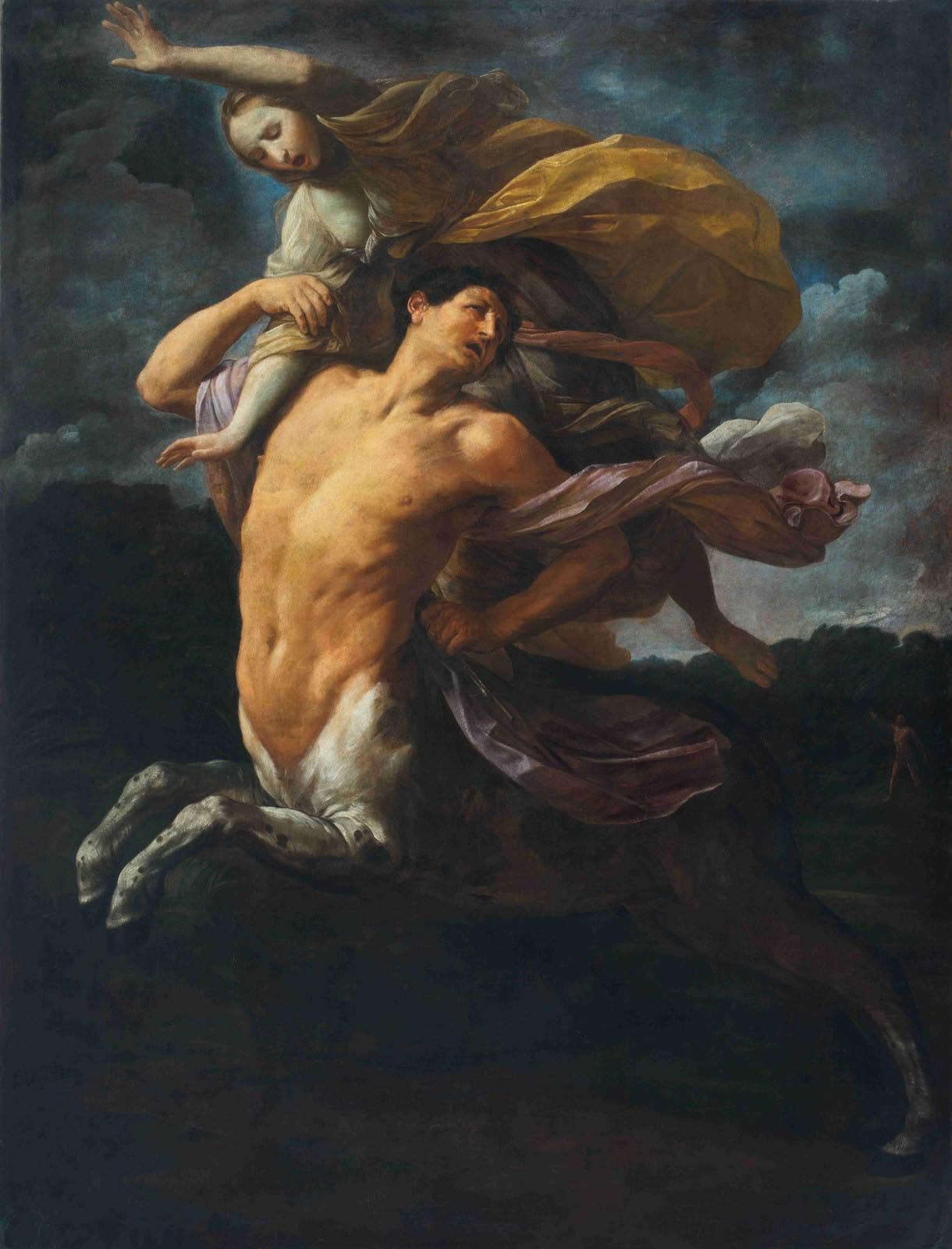
Finally, a topic still debated among scholars concerns the existence of an alternative version of the subject, housed in the Prague Castle Picture Gallery and long considered a mere workshop copy. Some more recent critical studies have re-proposed an autograph attribution for this version, hypothesizing that it may be the first draft of the composition, completed by 1620, and that the canvas now in the Louvre, on the other hand, corresponds to a reworking carried out by Reni himself around 1623 to emphasize, within the scene, the theme of Hercules’ rescue of Deianira rather than that of the centaur’s death. The documentary sources relating to the Parisian painting, however, make no mention of any replacement, and the X-ray examinations conducted on the work have not revealed any revisions consistent with such an extensive intervention—factors that lead us to still consider the traditional identification of the Louvre canvas as one of the four delivered to the Duke of Mantua by 1620 to be valid.
It is within this interweaving of art history, collecting history, and dynastic biography that the loan granted by Paris for the Mantua exhibition takes place, an opportunity that allows the Italian public, nearly a decade later, to once again encounter one of the most intense works Guido Reni created for the Gonzaga court.
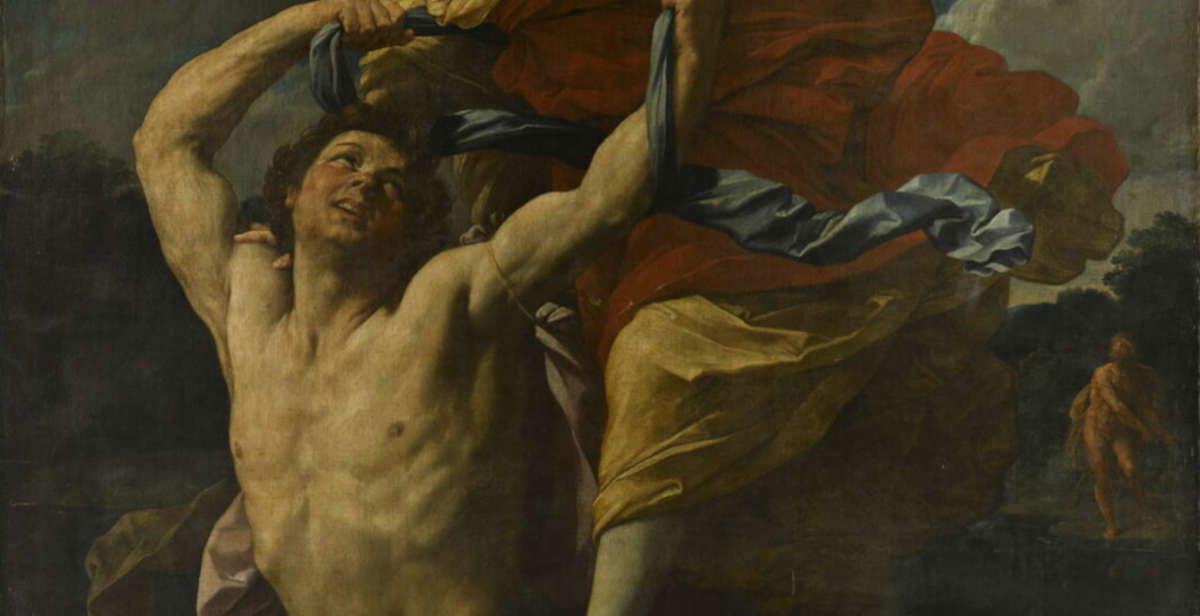 |
| Guido Reni’s *The Nexus* and *Deianira*, on loan from the Louvre for the exhibition on Ferdinando Gonzaga |
Warning: the translation into English of the original Italian article was created using automatic tools. We undertake to review all articles, but we do not guarantee the total absence of inaccuracies in the translation due to the program. You can find the original by clicking on the ITA button. If you find any mistake,please contact us.