





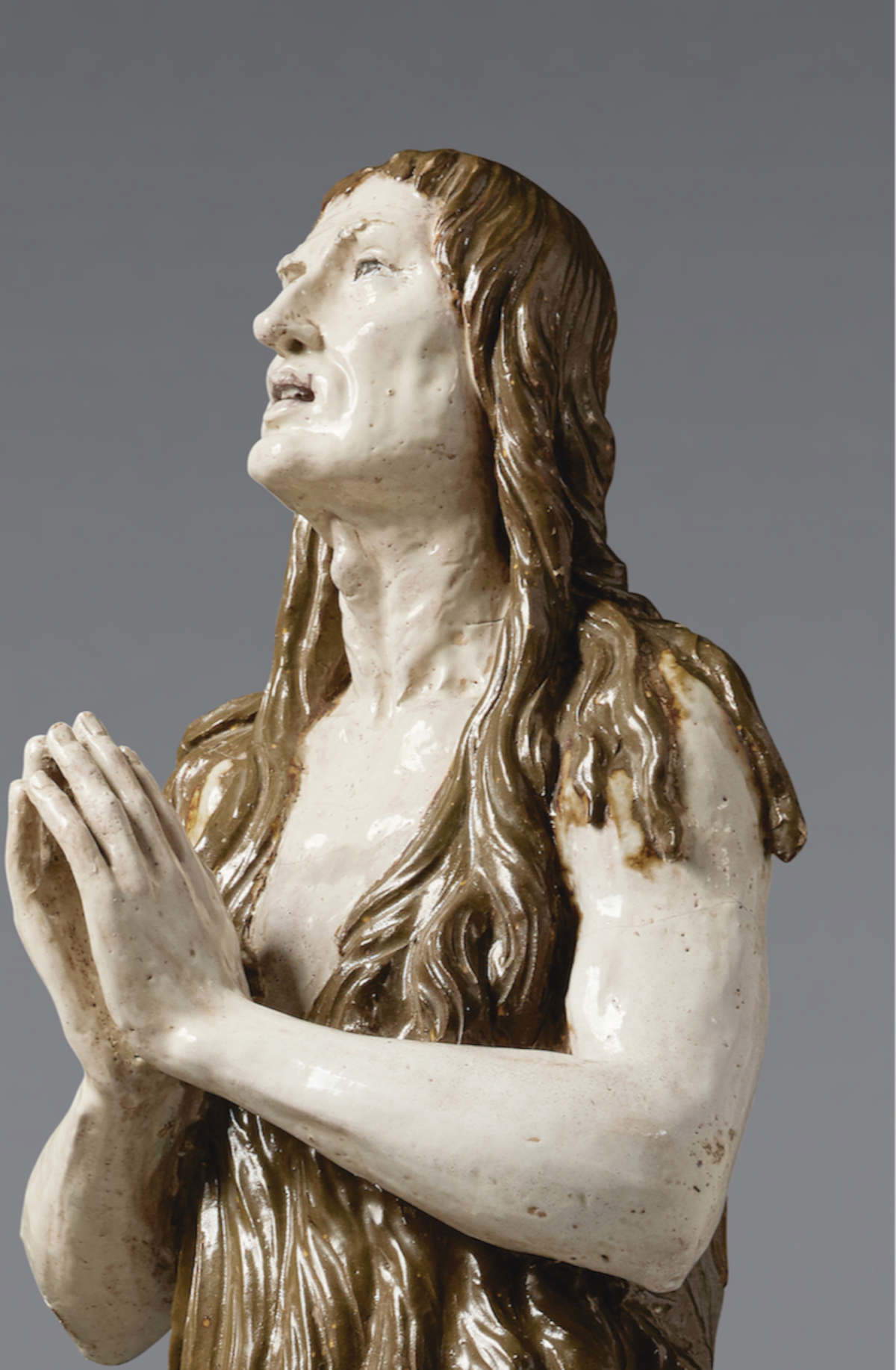
There is no trace of the composed reassurance found in much Renaissance art in the gaunt face of the Penitent Mary Magdalene that once stoodin the hermitage of Santa Maria Maddalena in Cascio, in Garfagnana. In this glazed terracotta sculpture, the saint’s cheeks appear hollowed out by her rigorous penance, her jawline is sharply defined, and the tendons in her neck are taut beneath the skin. It is, however, above all a sculptural detail that catches the eye and instills a sense of unsettling naturalism: the saint’s lips part ever so slightly, revealing a row of small teeth inside her mouth.
This sculpture, which has returned to the antiquities market thanks to the efforts of the Flavio Gianassi Fine Art Ltd gallery—which exhibited it at the 34th edition of the Florence International Antiques Biennial (BIAF) in 2026 with an asking price of 175,000 euros. Although little known, it proves to be one of the most fascinating and intellectually provocative works of early 16th-century Tuscan ceramics—and not just ceramics. The work, which still retains its original base painted to resemble porphyry, commands the viewer’s attention with an austere and hieratic frontal pose that is at once archaic and radically modern. The head is tilted upward as if in prayer; the flesh retains pale tones, subtly livid around the knees and cheeks; the thick brown hair falls over the shoulders and chest in heavy, parallel locks: however, this is not a work intended to console the faithful, but—one might think—to confront them, to the point that the glaze on the terracotta serves here as a tool of psychological and dramatic immediacy, rather than a decorative coating.
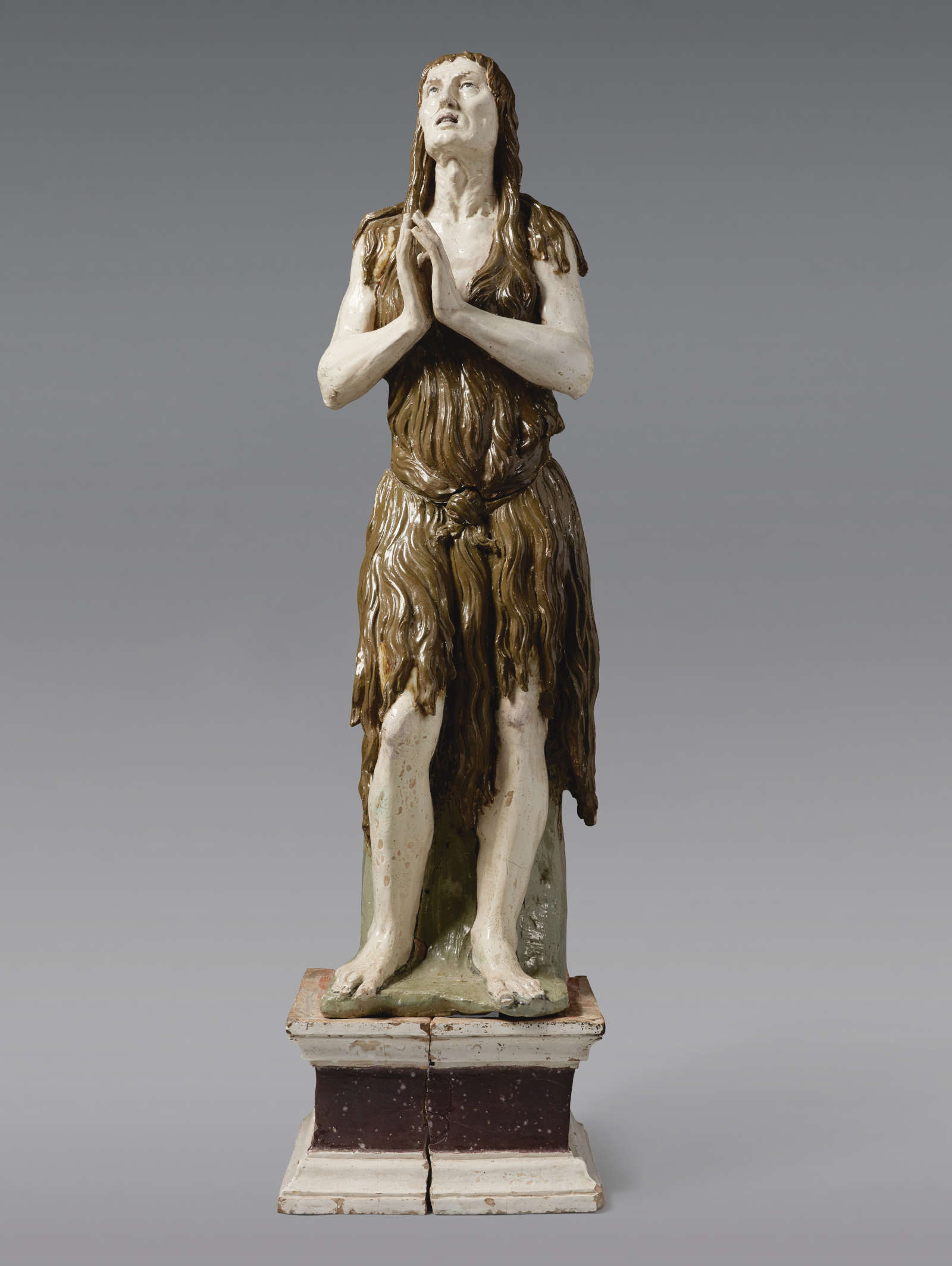
We do not know who created this Magdalene. Art criticism has long wavered between attributions to Giovan Francesco Rustici and the young Baccio Bandinelli; yet the Magdalene of Cascio resists complete assimilation into the documented catalog of either master. What emerges clearly from the most recent studies, however, is the independent profile of a distinct artistic personality, today provisionally designated as the “Master of the Cascio Magdalene,” precisely because there is nothing else comparable to it. At most, we can venture to suggest a Florentine origin for this artist, for reasons that will be discussed later, and his work in any case crystallizes a moment of extraordinary and fruitful sculptural experimentation dating from between 1515 and 1520, when sculpture in Florence was navigating a delicate balance between Leonardo-inspired expressiveness, archaizing monumentality, and classicist ambitions.
The material history of this masterpiece and its centuries-long journey take us to Garfagnana, inside the small sandstone oratory located in Cascio, a village that is now a hamlet of the municipality of Molazzana: at the time, the oratory was under the jurisdiction of the monastery of Santa Maria Forisportam in Lucca , and it is here, in the small church of Cascio, that archival sources document the statue’s constant presence for centuries. A plausible context for the commissioning of the work can be found in the records from 1531, when the usufruct of the oratory was granted to the Rampalli and Simonelli families, who undertook the responsibility of funding the Masses and ensuring the maintenance of the altar. Beginning in 1570, pastoral visits systematically recorded its location within the niche of the hermitage’s altar. The reports of ecclesiastical visitors (which were made in 1580, 1629, 1679, 1680, and up to the 1683 visit recorded in the 1684 manuscript compiled by Giovanni Francesco Turriani and preserved at the State Library of Lucca) describe the sculpture on several occasions. In archival documents, the statue is sometimes described as “marble” and at other times as terracotta: a fluctuation that reveals, on the one hand, the perceived preciousness of the work, and on the other, the unique visual ambiguity created by its glazed surfaces. Designed for devotional purposes, the sculpture was draped in fabric and framed within a carved and painted wooden structure, and for over four centuries it served as a sort of spiritual focal point for the community of Cascio.
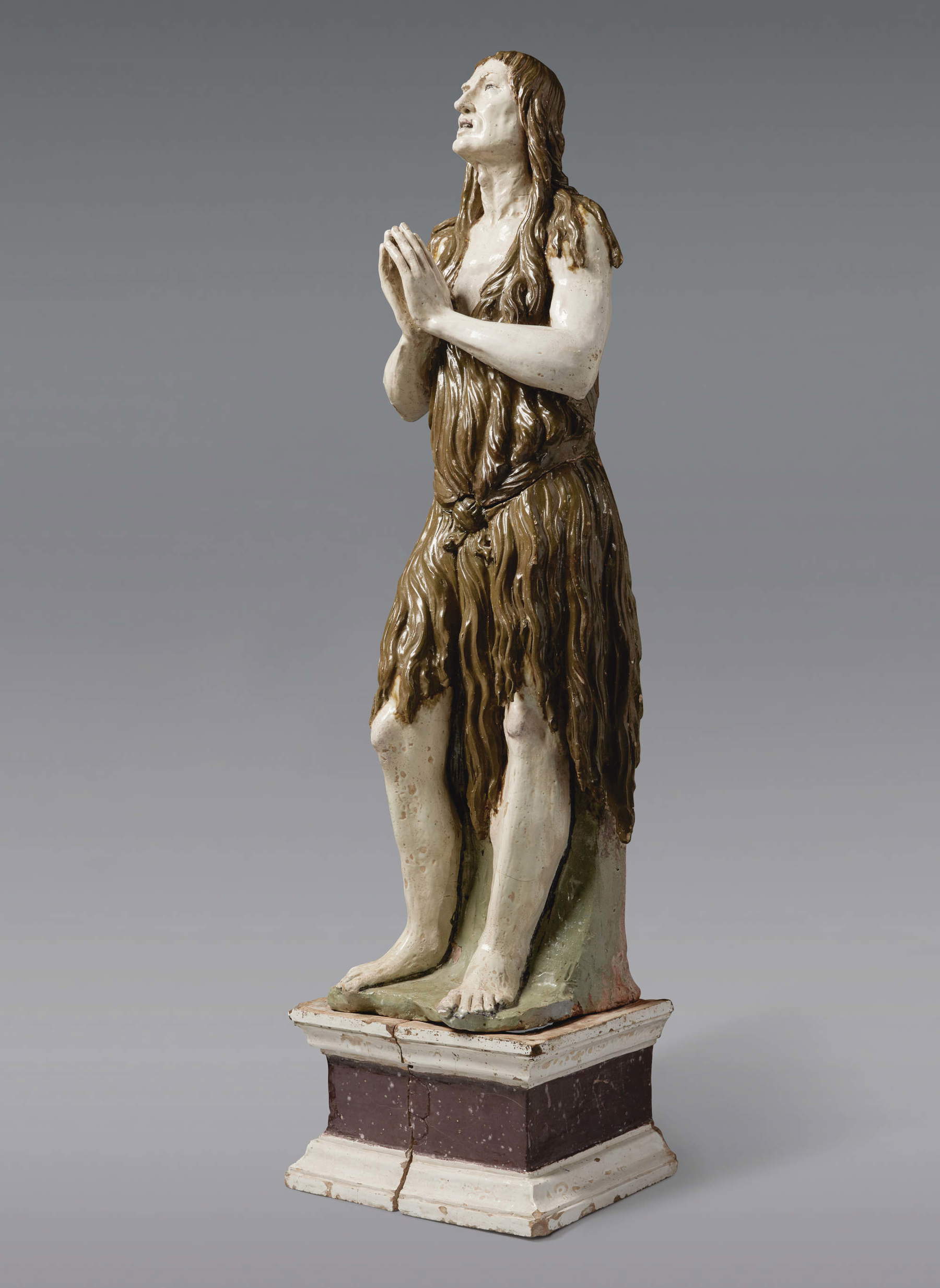
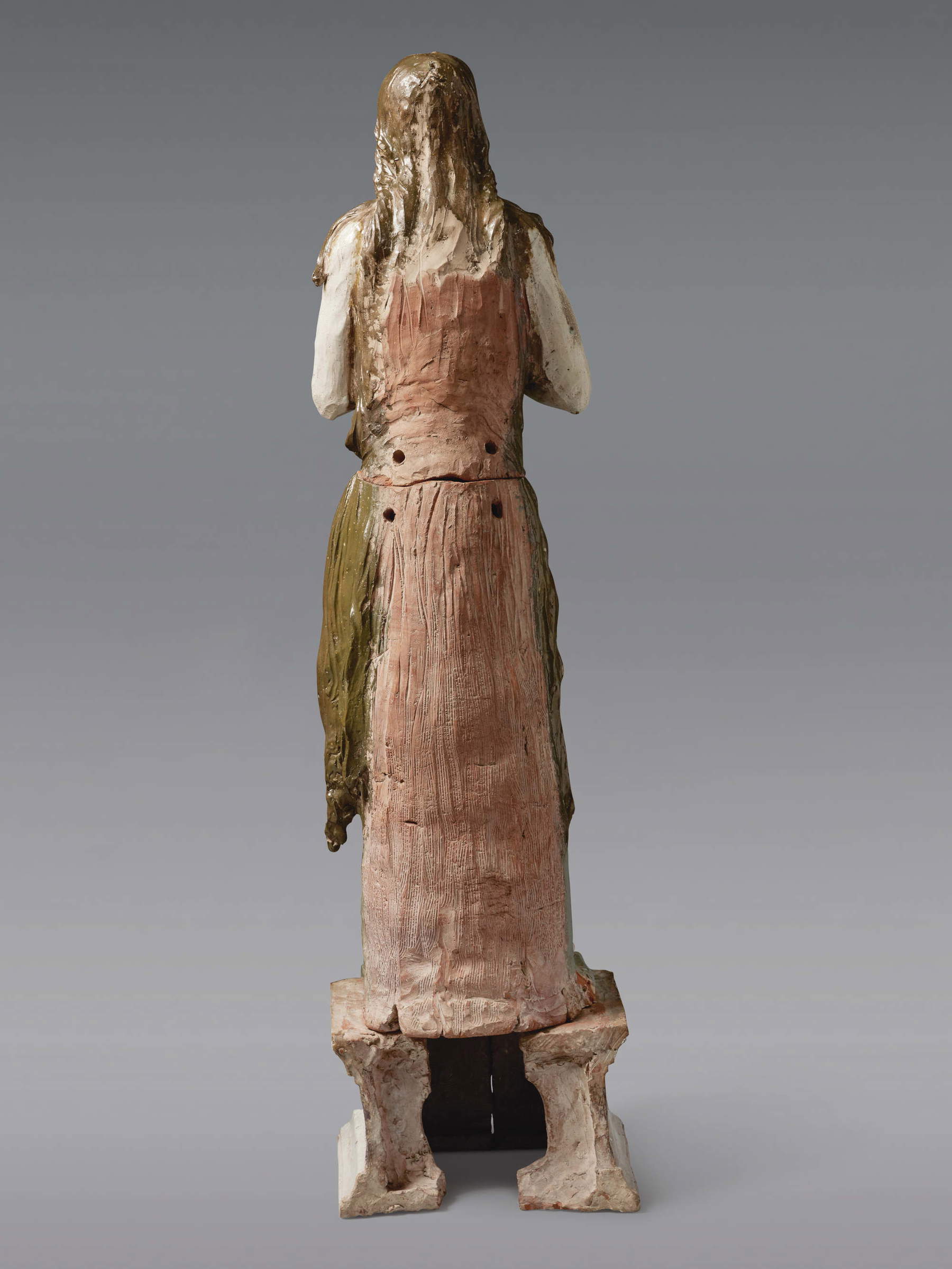
There was then a turning point in the complex history of the Magdalene’s ownership, which occurred toward the end of the 1920s. Removed, for reasons unknown to us, from its historic location and acquired before 1927 by Isabella Croce’s collection in Florence, the statue left the Garfagnana, although this removal, paradoxically, ensured its preservation, as it spared it from the wartime devastation that would have struck the Serchio Valley during World War II—Garfagnana being a battleground, a region of destruction and massacres.
From that moment on, the sculpture embarked on a long journey through the international art market: after passing through Sandro Morelli’s Florentine collection, it reappeared at auction at Sotheby’s in London on December 7, 1989 (lot 64). It was subsequently featured and exhibited at the Salander-O’Reilly Gallery in New York between 2005 and 2006, before reappearing in Sotheby’s New York auction catalog on January 28, 2022 (lot 554: at the time, it was attributed to Rustici or Benedetto Buglioni, but the auction catalog had not acknowledged its provenance from the Cascio hermitage, and the reverse chronology stopped at 1989), before entering a private collection and now being presented at the BIAF. The work’s extensive bibliographic history also includes critical essays by Giancarlo Gentilini, contributions to the 1999 conference on the Garfagnana under the House of Este, studies by Carlo Cinelli, Philippe Sénéchal, and Marco Verdigi; research by Alessio Guidugli on local hermitism; and recent catalog entries by Valérie Anselmi.
To understand the stylistic value and significance of Cascio’s Magdalene, it must be analyzed in close comparison with the principal prototypes of Renaissance sculpture of its time, and in particular with what its creator had been able to see and learn in Florence. The first and most obvious point of comparison is the famous Penitent Magdalene, a wooden sculpture by Donatello— perhaps created for the Florence Baptistery—now housed in the Museo del Duomo. But whereas Donatello’s saint appears skeletal, emaciated, hollowed out, almost withered and consumed by spiritual fervor, Cascio’s sculpture retains a firm and vigorous physical integrity: beneath the thick mane of hair, the body reveals a solid structure, with muscular thighs and powerful knees. The Magdalene by the Master of Cascio does not dissolve into the rigor of asceticism but, on the contrary, sustains and embodies it. While Donatello dematerializes the flesh, the anonymous sixteenth-century master returns to rendering it as matter, channeling all inner anguish into muscular tension, in an approach fully consistent with the anatomical inquiry of the early sixteenth century. Equally significant is the departure from the fifteenth-century models attributable to the workshops of Don Romualdo da Candeli or Neri di Bicci: their sculptures conveyed a devotional gentleness and a measured composure intended to reassure the viewer. Cascio’s Magdalene, on the other hand, rejects any form of tranquil consolation: her hair is not an ornament, but rather a heavy garment that envelops and weighs down her body, while her facial features express a genuine existential despair.
Even a comparison with the Della Robbia tradition—to which Cascio’s Magdalene has been variously linked—highlights a profound formal divergence. Andrea della Robbia’s glazed Magdalene, preserved in Borgo a Mozzano—and thus not far from Cascio—adheres to canons of enameled luminosity and rigorous restraint in the style of Savonarola. In contrast, the figure from Cascio (which, in all likelihood, underwent the glazing process near Giovanni della Robbia’s workshop) employs polychromy grounded in bodily immediacy. The glaze does not function as a glossy surface coating, but becomes a sculptural and expressive tool capable of pushing terracotta toward a material realism that rivals polychrome wood sculpture directly.
The effectiveness of this visual approach would leave a profound mark on contemporary sculpture. In 1519, Francesco da Sangallo carved his Praying Magdalene in wood—currently housed at the Diocesan Museum of Florence—faithfully replicating Cascio’s model: the frozen posture, the hands clasped in prayer, and the enveloping cascade of hair. However, in Sangallo’s version, the formal distortions become more pronounced in a Mannerist direction; the facial features become more angular, and the hair stiffens into a marked graphic style. According to the study presented by Flavio Gianassi at the BIAF, the sculpture by the Master of Cascio emerges as the original generative model from which Sangallo drew inspiration, amplifying a formal language he had already independently developed.
This raises a question once again: who was the artist capable of such modernity? The core of the critical debate centers precisely on the complex formal relationships between Cascio’s sculpture and the artistic explorations of the masters of early 16th-century Florence—in particular, as noted, Giovan Francesco Rustici and Baccio Bandinelli. In his pioneering volumes of 1992 and 1998, Giancarlo Gentilini proposed a cautious association with Rustici’s circle, noting certain technical irregularities in the firing and application of the glaze that suggested an empirical and highly experimental approach to the material. A comprehensive and decisive reinterpretation was subsequently proposed by Carlo Cinelli in 2002: Cinelli developed an in-depth morphological analysis by placing the “Maddalena di Cascio” in direct comparison with the marble “Saint Peter” sculpted by the young Baccio Bandinelli for the Cathedral of Santa Maria del Fiore. The physical similarities between the two works appear very compelling: the marked tension of the neck muscles, the square shape of the skull and jaw, and the breadth of the face marked by sunken cheeks and protruding cheekbones are all similar. This combination of anatomical features also recurs in other works by Bandinelli.
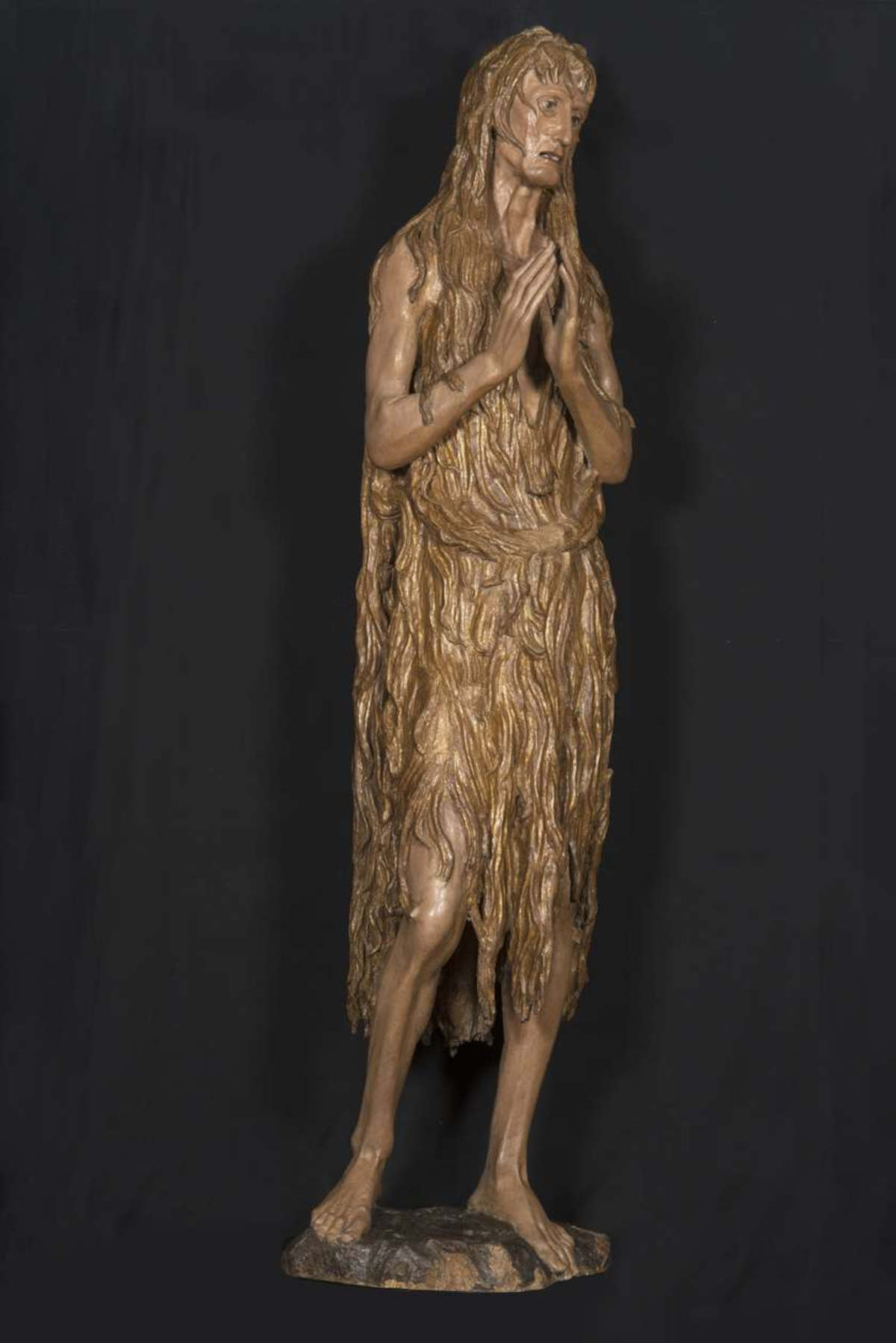
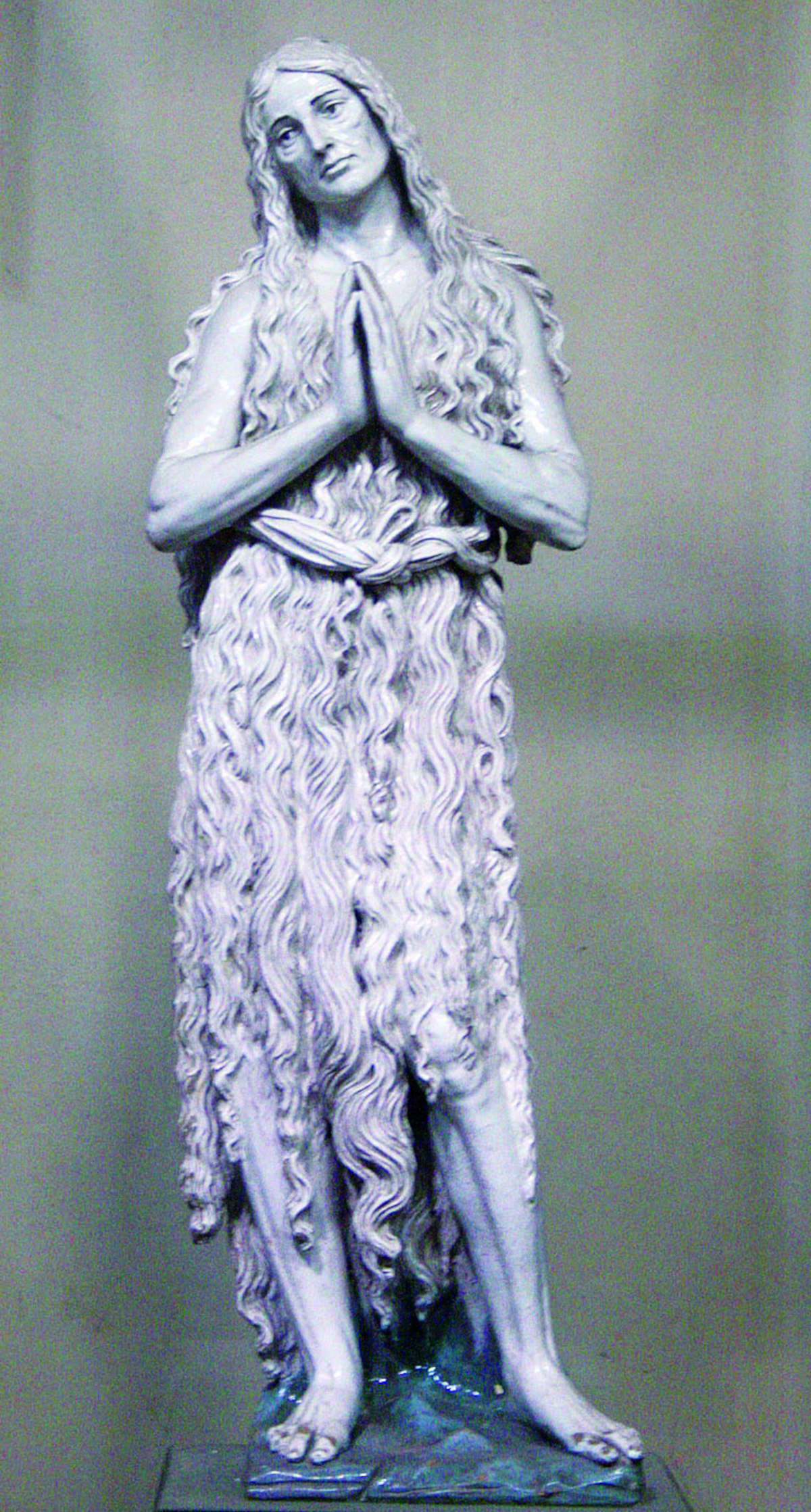
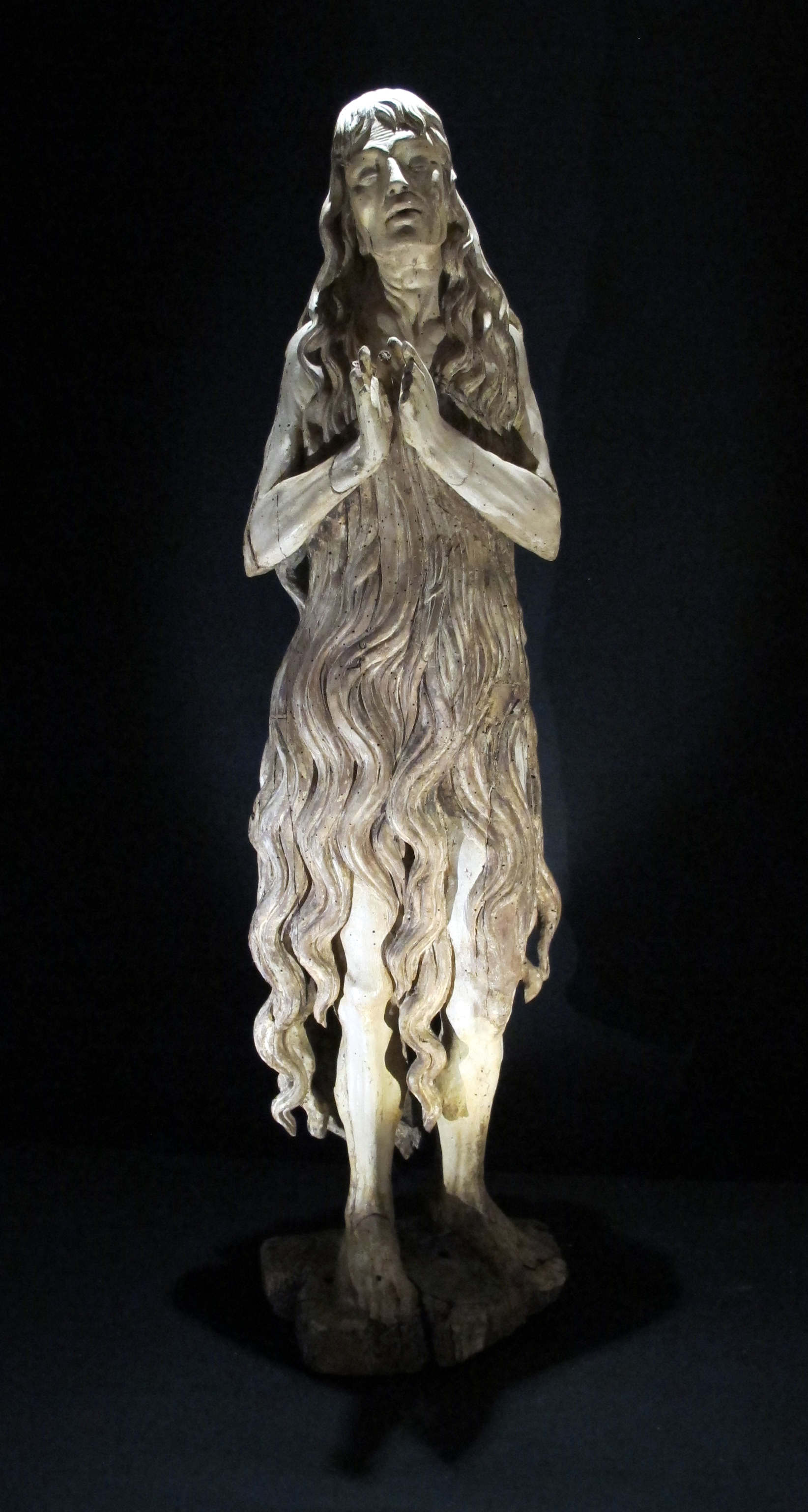
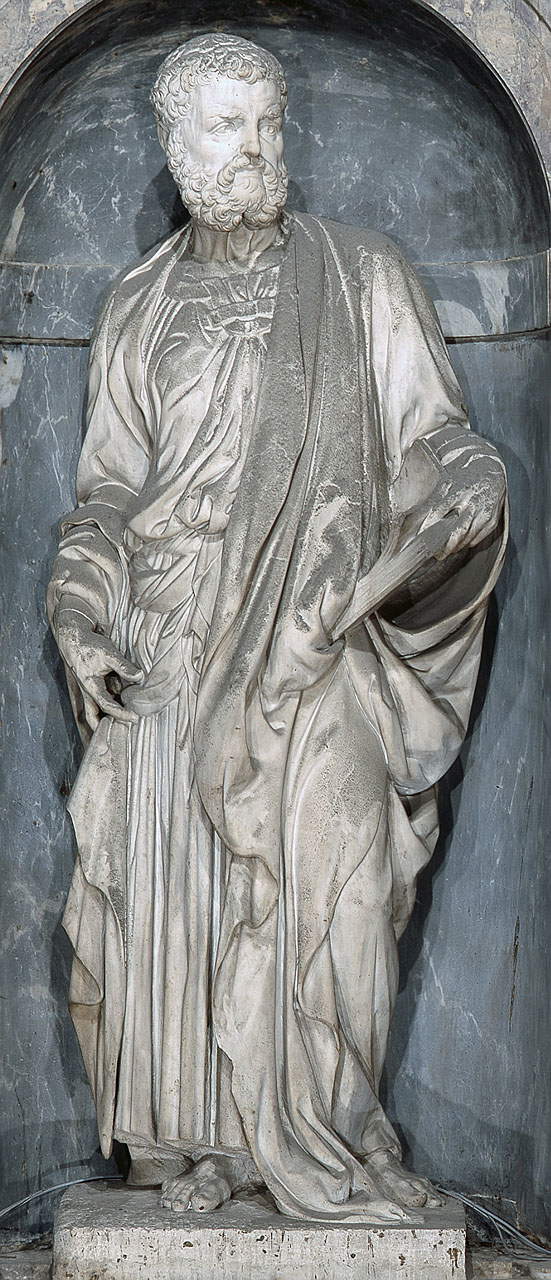
According to Cinelli’s hypothesis, these similarities are not mere iconographic coincidences but rather part of a specific artistic approach developed within the vibrant context of Florentine anatomical research in the early sixteenth century. The scholar has suggested that the powerful expressiveness of the marble Saint Peter presupposed, in fact, a series of preliminary studies conducted on malleable materials such as terracotta, where direct modeling allowed for freedom of action and immediate formal experimentation. From this perspective, Cascio’s “Magdalene” would constitute a fundamental document for reconstructing Bandinelli’s early sculptural explorations between 1515 and 1520.
In any case, despite these similarities, a direct comparison also reveals decisive compositional, conceptual, and technical differences, which call for great caution regarding Bandinelli’s authorship. Whereas Bandinelli constantly seeks the dynamic twist of the torso and a monumental projection into space, the “Magdalene” remains anchored to a hieratic and solemn frontal pose. Furthermore, in none of his documented works has Bandinelli ever ventured into polychrome glazing with such expressive audacity. While there is undeniably a shared anatomical ambition between the two works, the divergence appears clear in terms of the chosen medium and spatial conception.
When compared with Donatello’s transcendence, with the devotional tenderness of the fifteenth century, with Robbia’s formal clarity, with Sangallo’s reinterpretation, and with Bandinelli’s marble and graphic explorations, Cascio’s Magdalene demonstrates, one might say, a grandeur that is entirely its own. A modern work, certainly, yet with an archaic composition; a polychrome yet austere work, devotional yet dramatically frontal; a work still in search of an author but situated in that borderland of intense experimentation between Rustici’s expressive legacy of Leonardo and Bandinelli’s nascent classicism. And precisely because of these characteristics, it can be said that the Master of the Cascio Magdalene asserts himself today not as a passive reflection, but as a modern artist who was able to forge an autonomous language within the most daring period of Florentine Renaissance sculpture. And now that the work is once again on the market, with no major doubts regarding its provenance, one wonders where it will end up next.
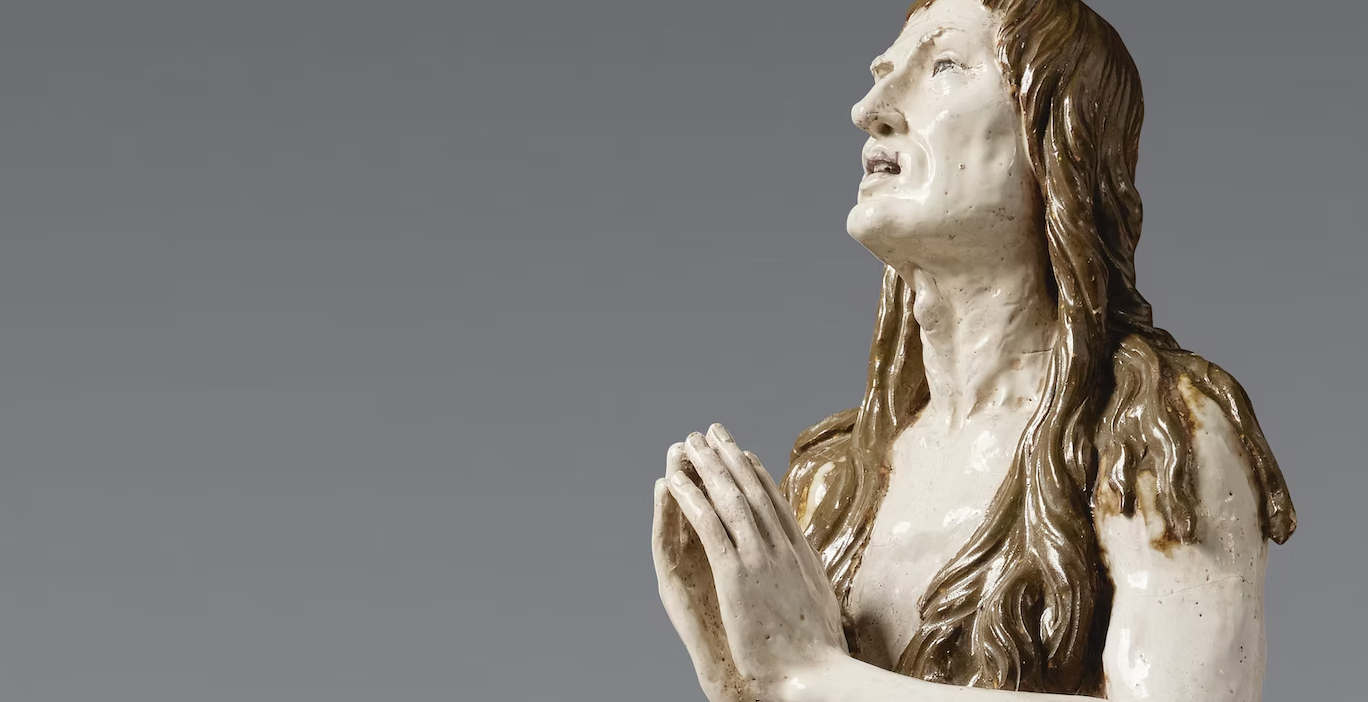 |
| The enigmatic Renaissance Madonna of Magdala, removed in the 20th century from the hermitage of Cascio in Garfagnana, is now on the market |

Warning: the translation into English of the original Italian article was created using automatic tools. We undertake to review all articles, but we do not guarantee the total absence of inaccuracies in the translation due to the program. You can find the original by clicking on the ITA button. If you find any mistake,please contact us.

























 IT
IT FR
FR DE
DE ES
ES CN
CN


