





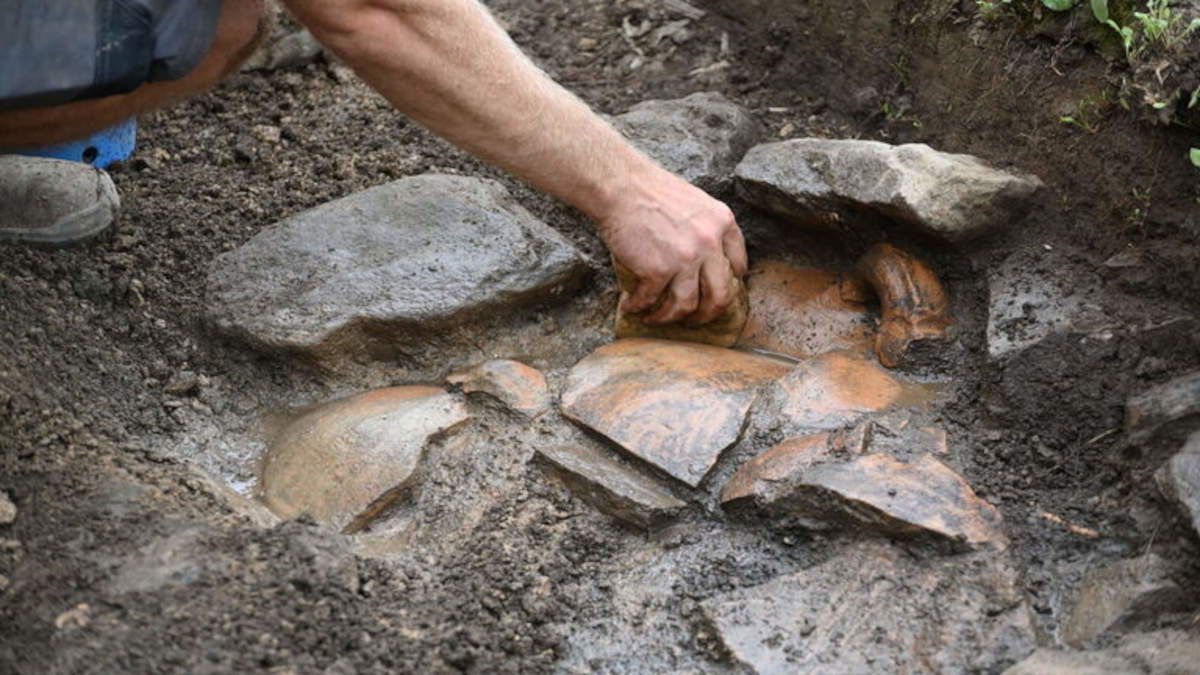
In the Taunus Forest in Hesse (Germany), just a few centimeters below the surface, archaeologists have uncovered a Roman temple dedicated to Mars, along with votive stones, a statuette of the goddess Victoria, and fragments of what may be a statue of the god of war. The discovery stems from investigations conducted since 2024 by hessenARCHÄOLOGIE and the Department of Archaeology of the Roman Provinces at Goethe University Frankfurt in the vicus of the Roman fort at Kapersburg, one of the best-preserved settlements of the Upper Germanic-Rhaetian Limes in Hesse. The news was announced by HESSEN Landesamt für Denkmalpflege – Hessen,the State Office for the Preservation of Historical Monuments in Hesse.
The Kapersburg fort is considered one of the best-preserved and best-known forts of the Upper Germanic-Rhaetian Limes in Hesse. For about 150 years, a Roman auxiliary unit, the Numerus Nidensium, was stationed there; its name indicates that its members came from what is now the Heddernheim neighborhood in Frankfurt, corresponding to the ancient town of Nida. In the mid-3rd century, the fort was abandoned by the Romans as part of the so-called “collapse of the Limes,” according to a well-established historical account that appears to be confirmed by the early excavation campaigns conducted by the Reichs-Limeskommission (the Imperial Limes Commission) under the direction of Louis Jacobi.
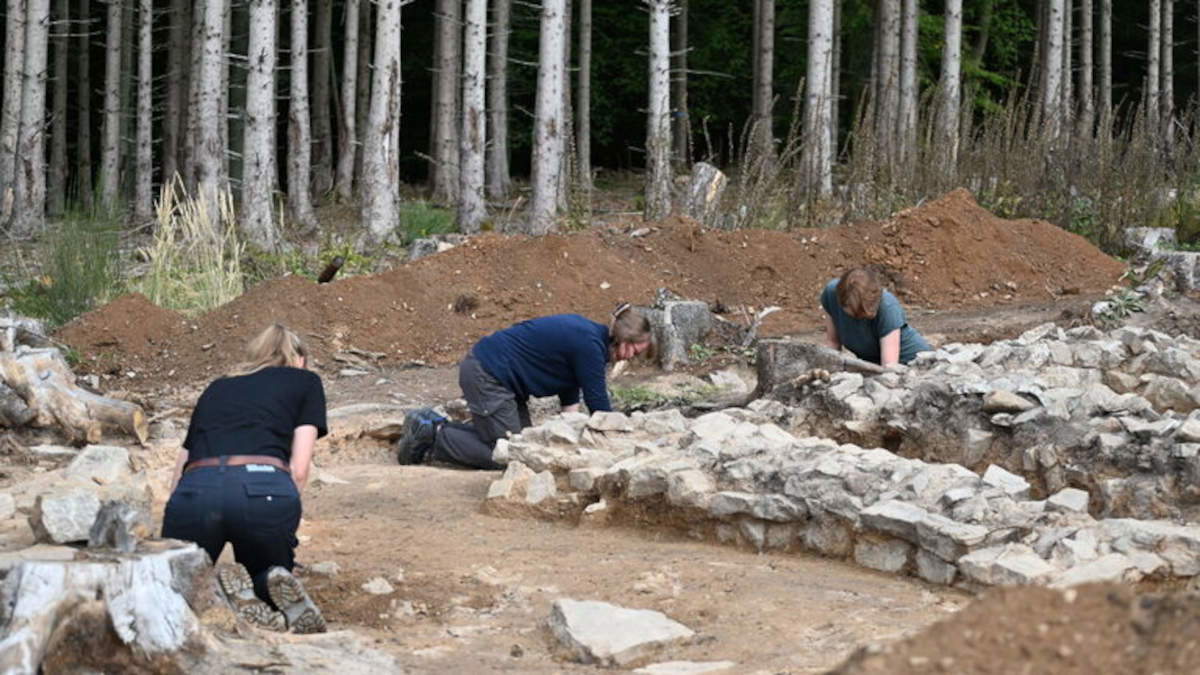
The history of Kapersburg, however, extends beyond the fort’s structures. Just a few meters away, in the wooded area, archaeological investigations are in fact focusing on the vicus, the civilian settlement established to serve the military garrison. While past research had focused primarily on the fort, the village has only recently become the focus of archaeological activities. The excavations conducted since 2024 are thus providing new insights into its layout, the activities carried out within it, and the duration of the Roman presence. The site’s location, nestled in the wooded areas on the slopes of the Taunus, has contributed to the preservation of the structures.
The research team, led by district archaeologist and Limes coordinator Kai Mückenberger and excavation director Manuel Pieper, M.A., has been able to identify archaeological structures that are still well-preserved just a few centimeters below the forest floor. The third excavation campaign also yielded finds and evidence useful for reconstructing the history of the vicus.
“Here we have preservation layers that are unparalleled in Hesse, precisely because agriculture has never taken hold in this area,” says Kai Mückenberger, Limes coordinator and district archaeologist. “The forest has preserved everything over the past few centuries, keeping it largely intact and allowing us to find layers that have always been lost elsewhere.”
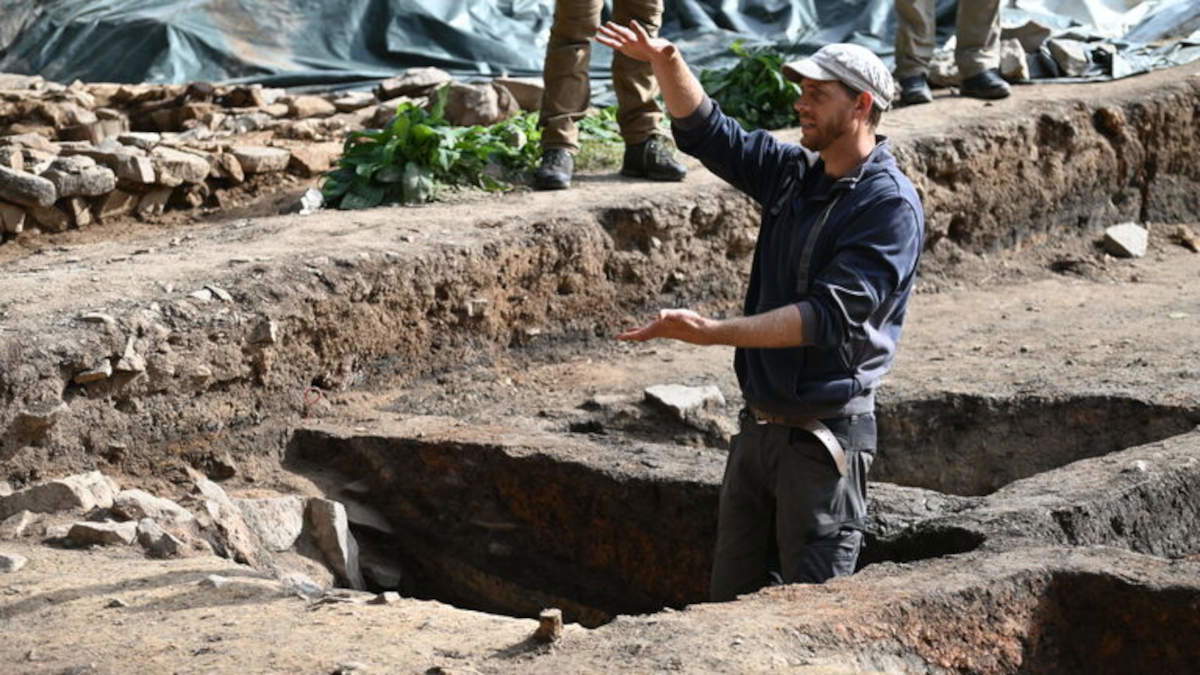
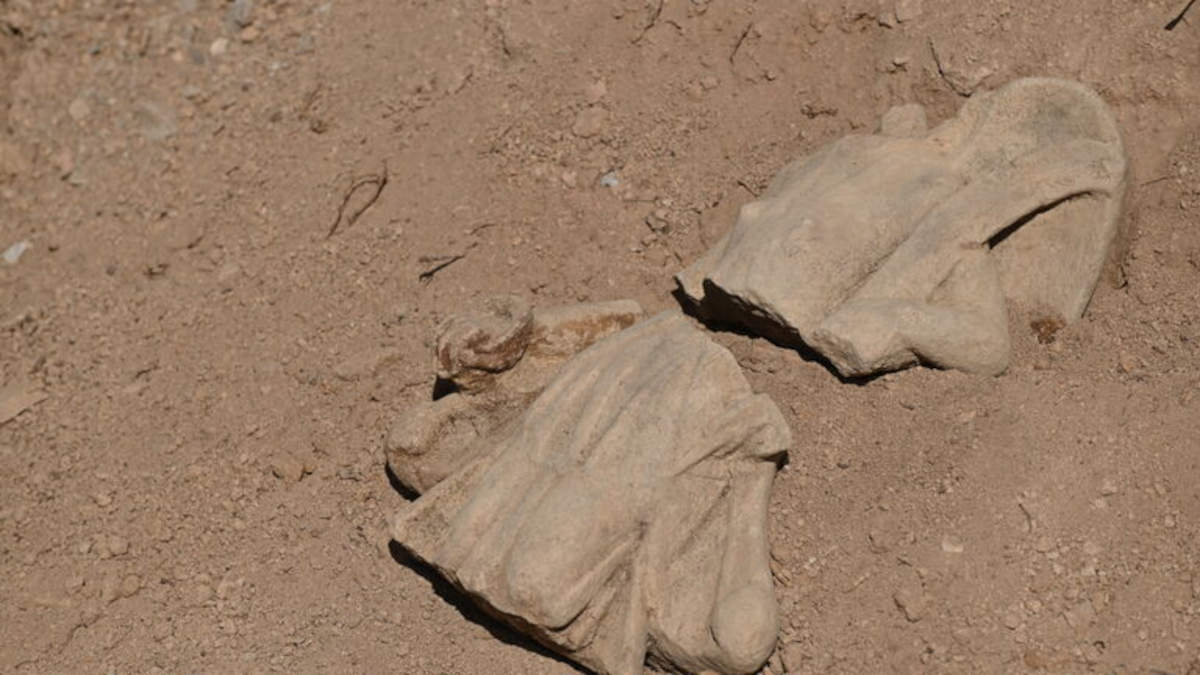
Among the most significant finds from the new excavation campaign is a Roman temple discovered within the settlement and dedicated to Mars, the god of war. The discovery expands our understanding of the religious life of the community that lived near the fort and provides new insights into cult practices in a border region of the Empire. In addition to the place of worship, two new votive stones, a statuette of the goddess Victoria, and fragments of another statue—which may depict Mars himself—have been uncovered. The inscriptions on the votive stones are currently being studied in collaboration with the University of Frankfurt, specifically with Professor Markus Scholz. The same scholar contributed to the translation of the votive stone discovered during the previous excavation campaign.
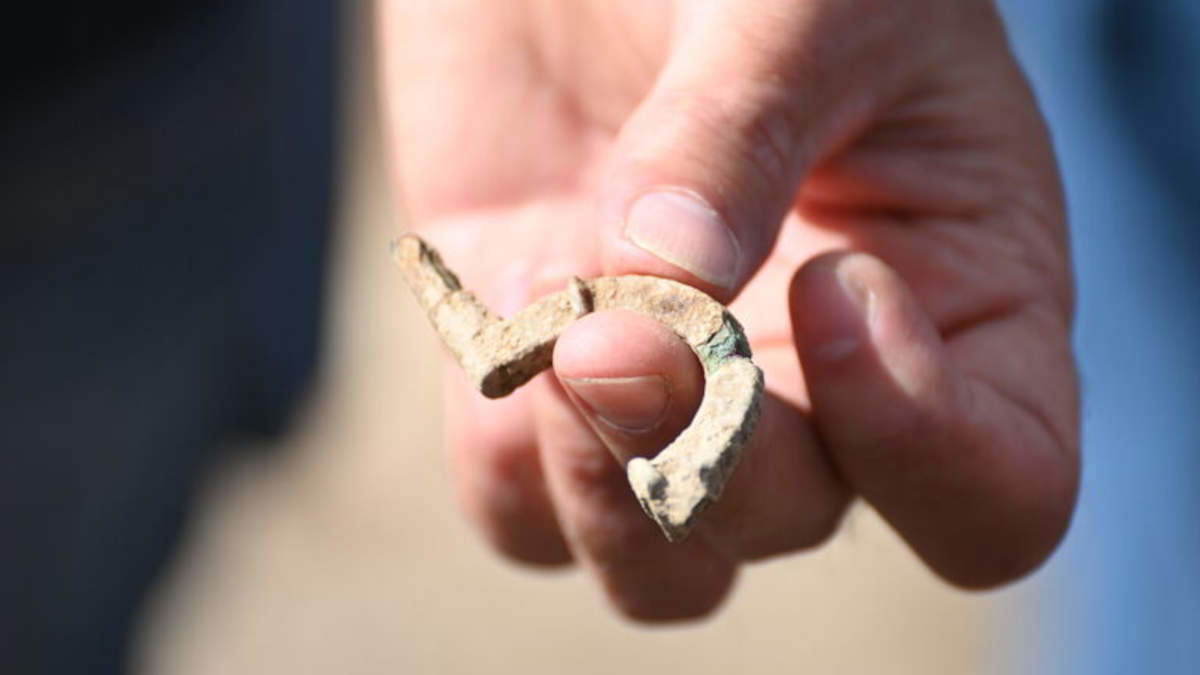
The discovery of the temple is thus part of a series of finds that are making it possible to reconstruct various aspects of life in the vicus, from spatial organization to religious practices, right up to the later phases of the area’s occupation. One particularly significant finding concerns the possibility that the site was used even after the end of the Roman presence, traditionally dated to the mid-3rd century. In fact, a late antique fibula was recovered in the temple area along with fragments of hand-made pottery. According to the archaeologists, this represents the first archaeological evidence of the area’s use following the Limes period. Based on the finds, this occupation could be attributed to the Alemanni, a people settled in the nearby Wetterau region. However, further investigations will be needed to determine whether there are other traces in the area that can help reconstruct the village’s later history.
The research is also shedding new light on the period preceding the abandonment of the vicus. Archaeologists have identified substantial remains attributable to craft activities, including the site of a blacksmith’s forge. Several leveling layers indicate that, as part of a reorganization of the settlement, the Romans leveled the area where craft activities took place, subsequently replacing it with residential buildings.
Traces of the Roman road network and the presence of terraces are also making it possible to define the organization and extent of the vicus with greater precision. The combination of building structures, road networks, production areas, and religious remains makes it possible to progressively outline the layout of the settlement that developed alongside the fort and to trace its transformations throughout its history. The archaeological work at Kapersburg has also attracted public interest, with visits from the press and the general public during the excavation campaigns. The project also involves students from the University of Frankfurt, who participate in research activities conducted in collaboration with hessenARCHÄOLOGIE.
The new excavation campaigns could help shed further light on both the organization of the settlement and its history in the periods following the Roman presence. The research at Kapersburg is part of a broader context of studies on the Limes and the Roman presence in present-day Hesse. Twenty years have passed since the Limes was designated a World Heritage Site, and more than 125 years since the investigations conducted by Louis Jacobi and the Reichs-Limeskommission at the fort. However, the current excavations in the vicus at demonstrate that even archaeological sites that are already well-known and studied can yield new information when attention is directed toward areas that have remained relatively unexplored until now.
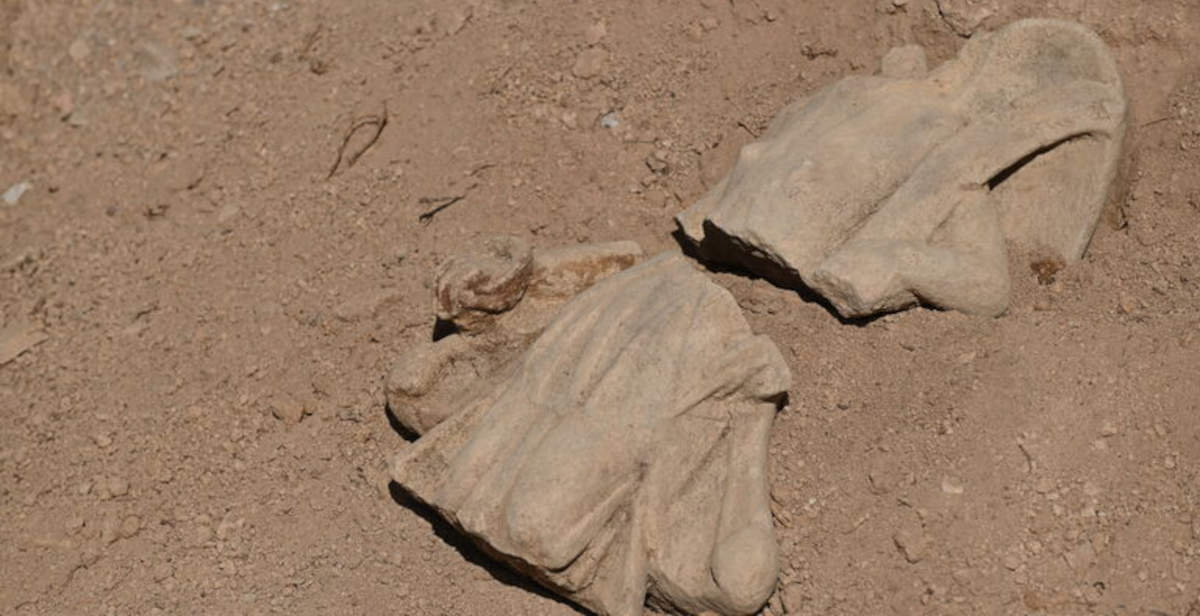 |
| Germany: A Roman temple dedicated to Mars has been unearthed beneath the Taunus Forest |

Warning: the translation into English of the original Italian article was created using automatic tools. We undertake to review all articles, but we do not guarantee the total absence of inaccuracies in the translation due to the program. You can find the original by clicking on the ITA button. If you find any mistake,please contact us.




























 IT
IT FR
FR DE
DE ES
ES CN
CN


