





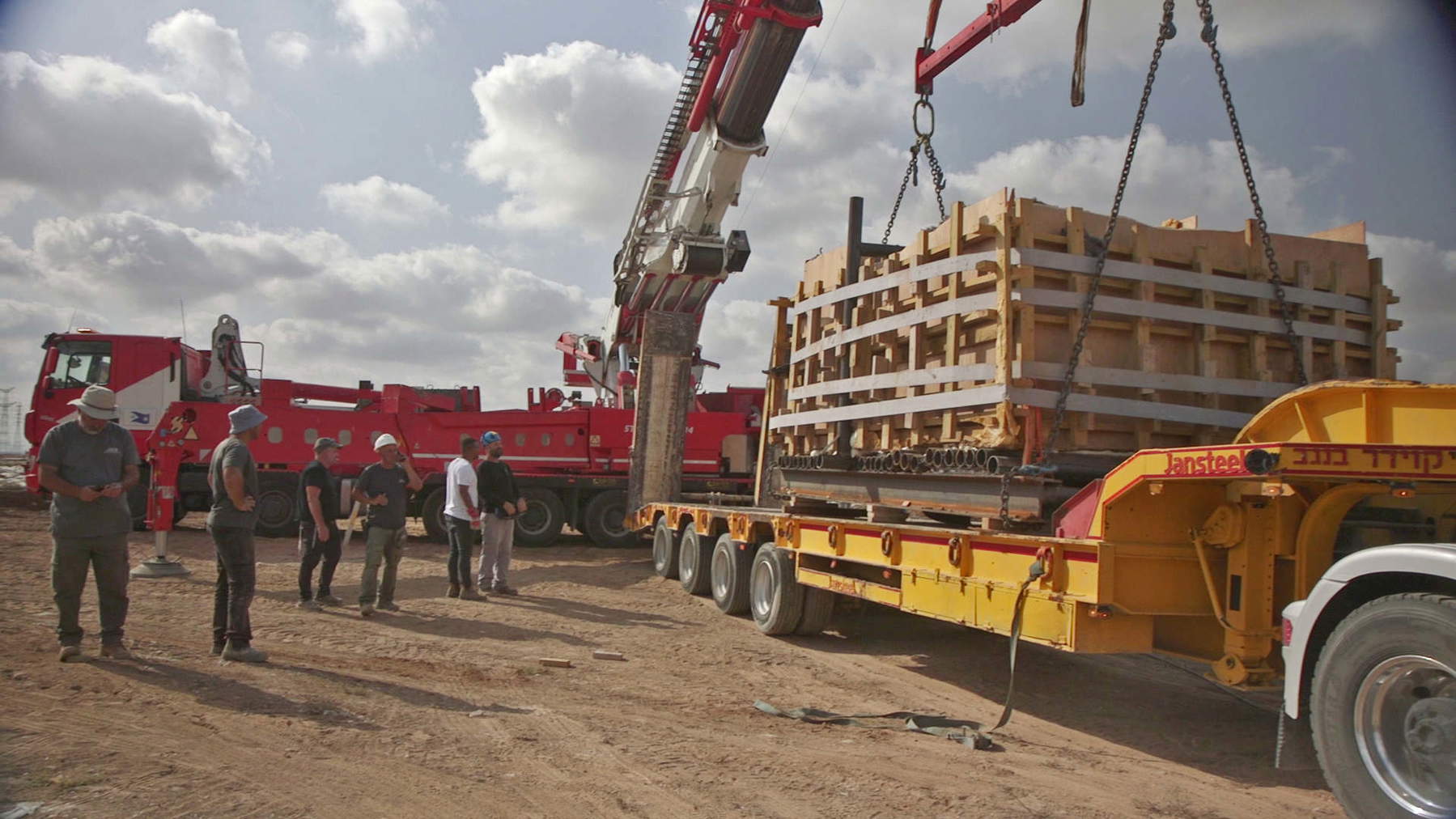
An ancient Jewish ritual bath, approximately 2,000 years old, four meters wide, and weighing 25 metric tons, was excavated intact from beneath the ground in Kiryat Gat, in southern Israel. Moving it required a crane with a lifting capacity of 300 metric tons, while transporting it to the Beit Guvrin storage facility necessitated the temporary closure of the road and the use of escort vehicles. However, this complex operation was not undertaken solely for the preservation of an archaeological artifact. The mikveh—the bath used for ritual purification in Judaism—is, in fact, one of the main findings from an excavation that uncovered a Jewish settlement dating back to the Second Temple period (515 B.C. – 70 CE), in an area where the presence of such a settlement had not previously been documented.
The discovery was made in the Carmei Gat neighborhood during an archaeological excavation conducted by the Israel Antiquities Authority in preparation for construction work, while the investigations were funded by the Israel Land Authority, which covered costs of approximately 28 million shekels (about 8 million euros) for the salvage excavations. As construction work progressed, the challenge arose of how to protect the ancient structure without destroying or dismantling it; the solution was to temporarily relocate the mikveh in its entirety, after which, once the work is completed, the structure is expected to return to the Carmei Gat area and be installed in an open-air public space in the heart of the new neighborhood.
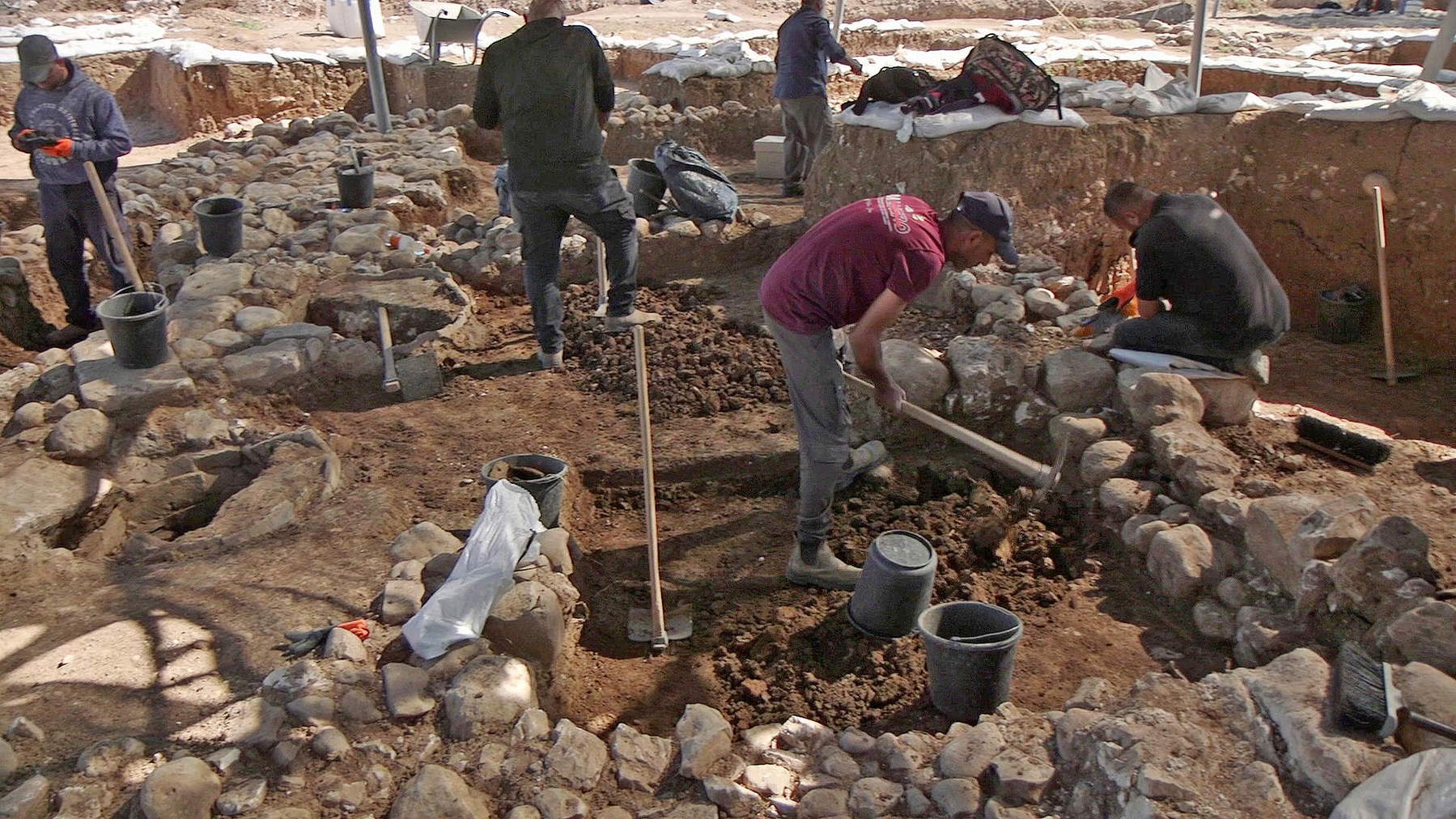
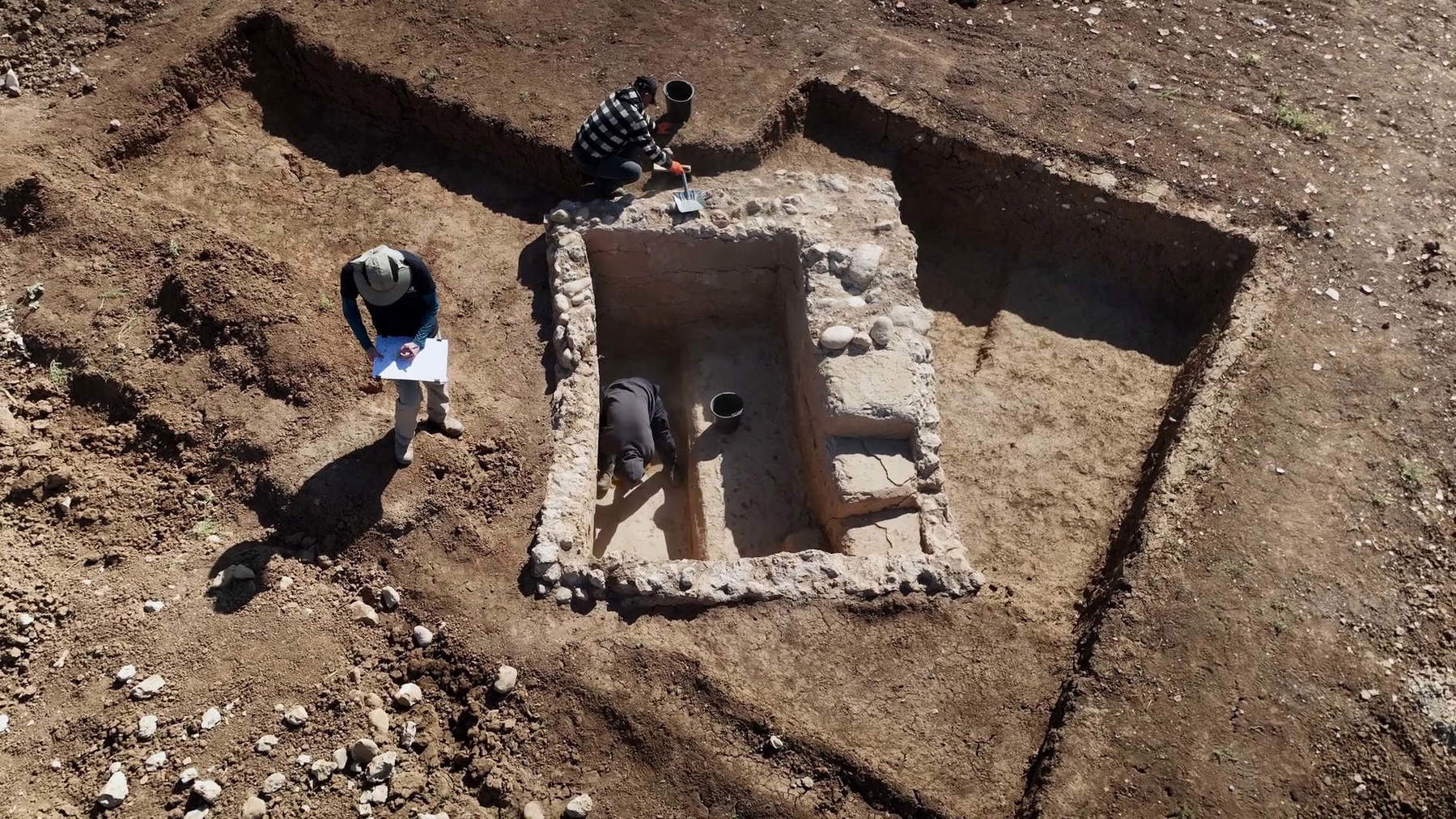
The discovery is particularly significant because it revises our understanding of the ancient Jewish presence in this part of the region. “The Jewish settlement we discovered here is the first and only one known in this area,” explained Elena Kogan-Zahavi, Maayan Margulis, and Shira Lifshitz, directors of the excavation on behalf of the Israel Antiquities Authority. “Many Jewish settlements from the Roman period are known in the Judean lowlands, but no Jewish settlement was known until now in the border area between the Judean lowlands and the northern Negev.”
Other artifacts discovered during the excavation also support this interpretation: among them are stone measuring vessels, objects that were widely used in Judaism during the Second Temple period because they were considered immune to ritual impurity. The findings also indicate that the settlement did not have a long-term continuity: according to the excavation data, it was abandoned during the Bar Kokhba revolt in the 2nd century CE. The area was then inhabited again about five centuries later, during the Byzantine era, but with a different demographic composition.
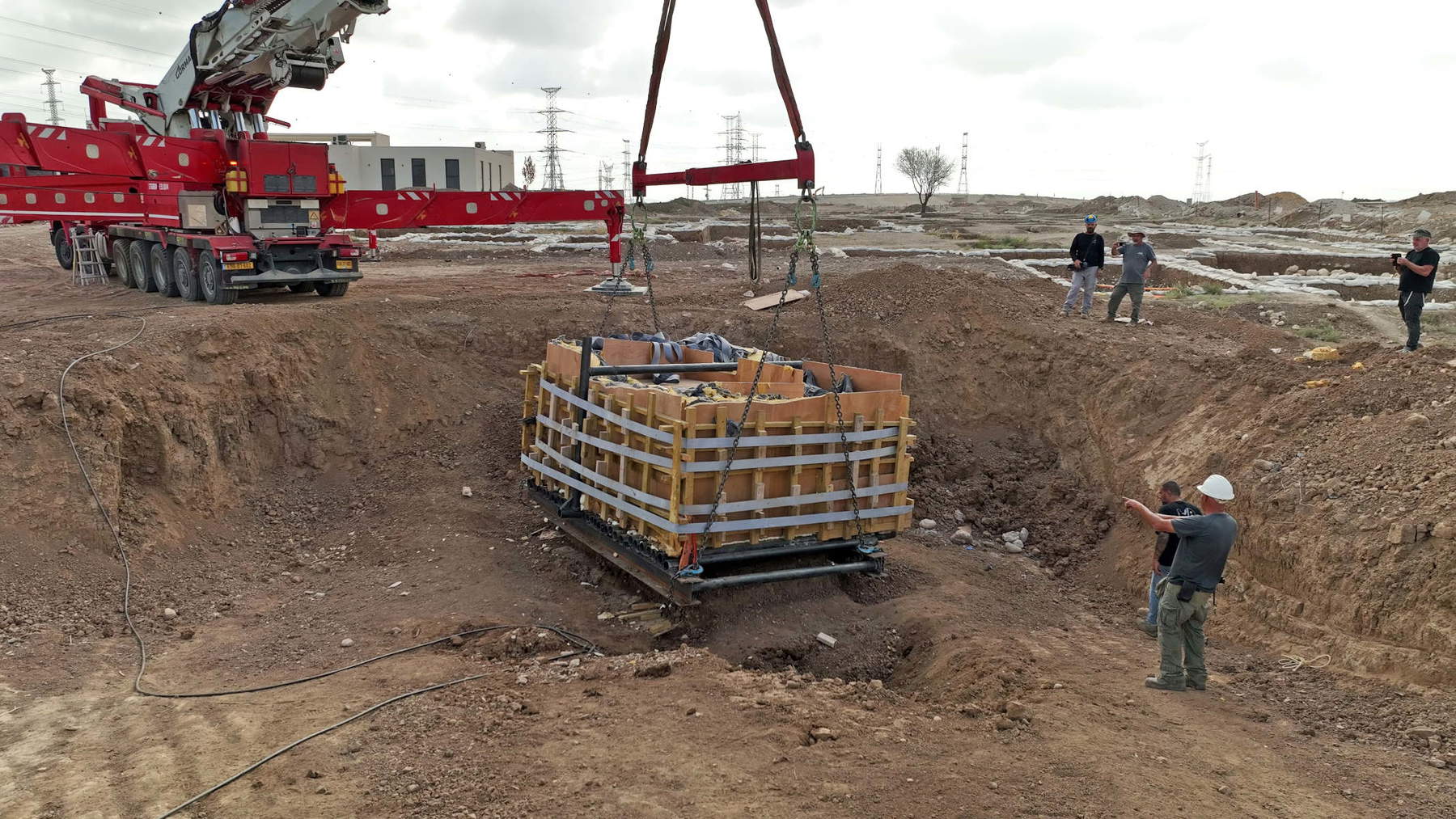
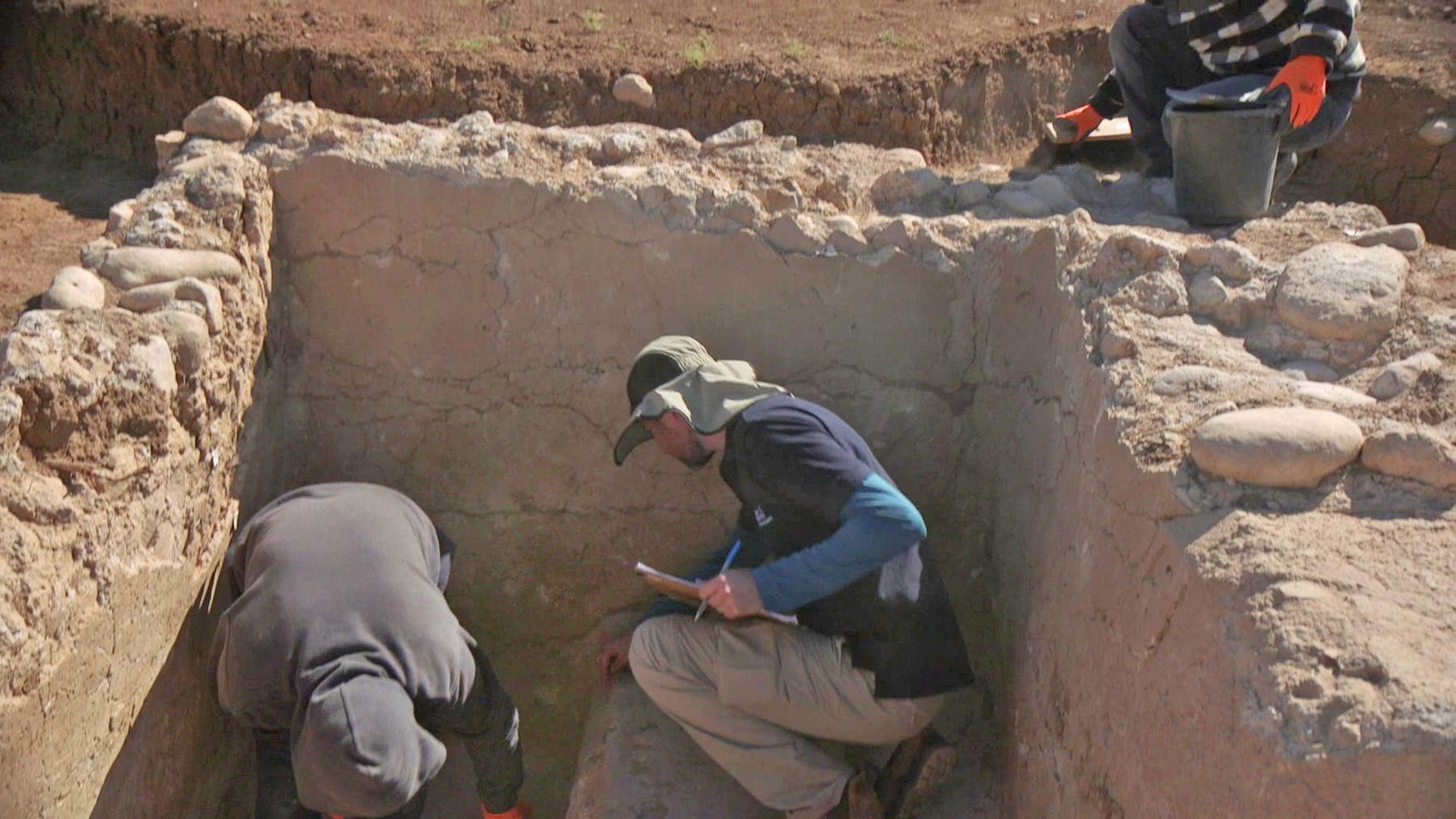
The relocation of the mikveh, for its part, represented a conservation effort described by archaeologists as exceptional. The structure, buried in the ground, was prepared over the course of about two weeks by four conservators from the Conservation Department of the Israel Antiquities Authority: the first step involved excavating the entire perimeter until all sides of the structure were accessible. The main challenge, however, was to separate the mikveh from the ground without causing deformation or fractures, and to do so, numerous holes were drilled beneath the structure, through which steel beams were inserted; these served as a sort of temporary support, allowing the pool to be reinforced and detached from the ground. Particular attention was paid to the ancient plaster covering the walls: the vibrations caused by the lifting and, above all, by the subsequent transport could have caused it to detach; consequently, the plaster was covered with gauze and adhesive tape, while the entire structure was wrapped and reinforced with foam material to protect it from impacts and vibrations.
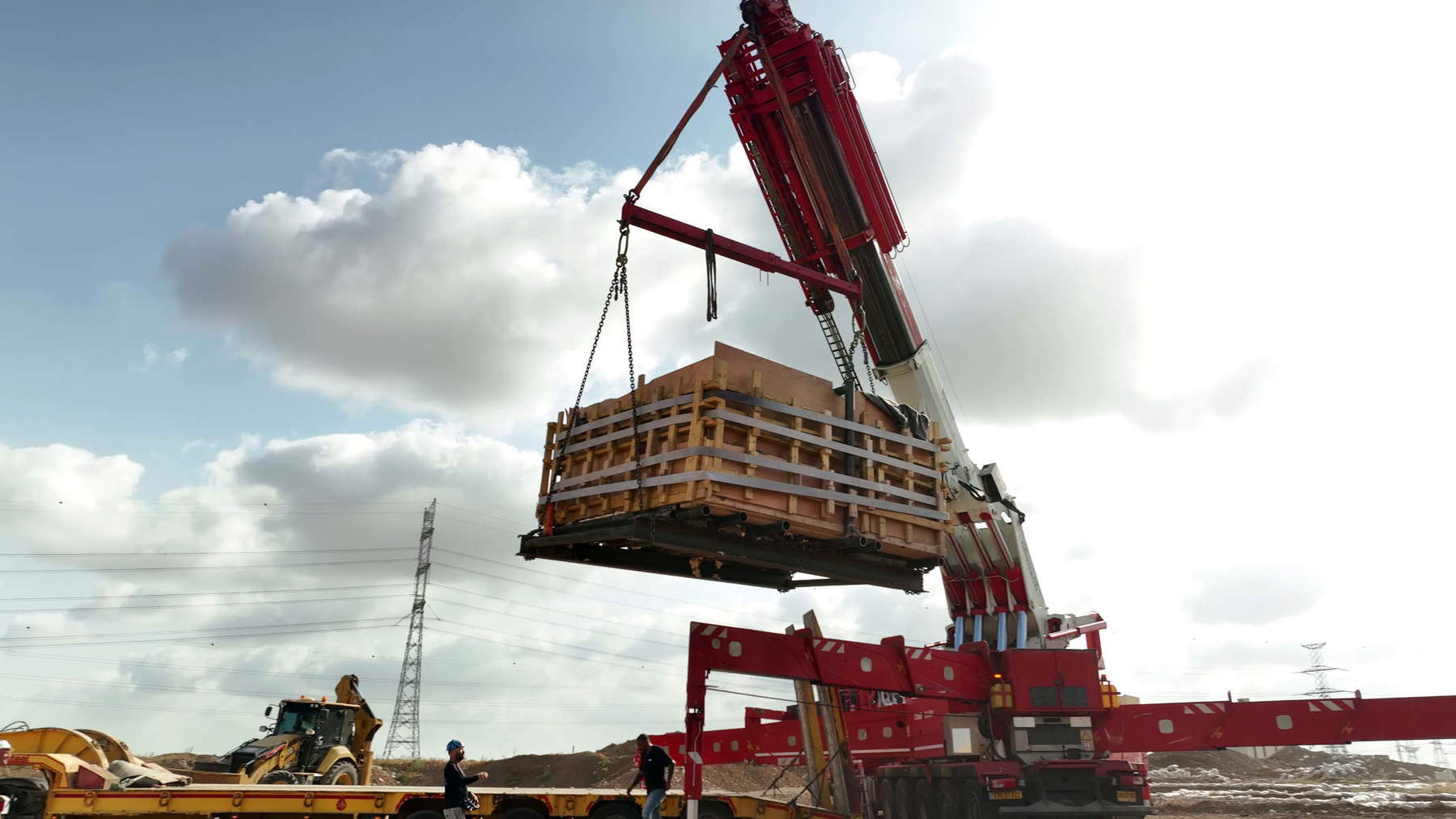
At that point, the crane came into play (the distance between where it could be positioned and the mikveh’s location made it impossible to use a standard-sized vehicle): a 300-metric-ton crane was used to lift the structure, which, as mentioned at the beginning, weighs about 25 metric tons. The dimensions of the basin—which is about four meters wide—also required a vehicle designed for transporting oversized loads. The journey to the Beit Guvrin storage facility was another delicate phase: the road was closed to traffic to allow the passage of the vehicle transporting the mikveh, accompanied by escort vehicles. “Once a structure like this is lifted, there’s no turning back,” explained Eyal Kaho, senior conservator at the Israel Antiquities Authority and head of the operation. “If it were to collapse, we would have lost the mikveh. Therefore, every detail must be considered in advance. The day before an operation like this, you don’t sleep. You’re under pressure, because the responsibility is entirely ours, and there’s simply no price that can make up for any mistakes. Even after 36 years with the Israel Antiquities Authority, my adrenaline still spikes every time.”
“It’s always a deeply moving experience,” said Avital Kotzer Adari, director of the Israel National Tourist Office in Milan, “to come into contact with history that bears witness to a tradition spanning millennia, a symbol of Jewish civilization and culture.” In Israel, you walk in the footsteps of history every day, encountering different religions and cultures that coexist—not only in museums, but also in cities and national parks. In Italy, too, it is possible to discover this ancient Jewish tradition by visiting examples of mikvehs such as those in Syracuse, Palermo, Ostia, and Trani.”
The term “mikveh” literally means “water pool”: it is a basin fed by natural water and used for ritual purification. The practice of immersion has ancient origins and has been part of Jewish history for millennia (ritual purity, in the Jewish context, does not in fact coincide with personal hygiene: rather, it concerns a condition governed by religious law and necessary for certain acts of communal and religious life). During the Second Temple period, these pools were widespread in various areas of the Land of Israel: numerous examples have been discovered, particularly in Jerusalem, Judea, Galilee, and Qumran. Their presence can be of particular significance to archaeology because, along with other evidence, it helps identify the presence of observant Jewish communities. Mikvehs were generally constructed by carving a basin into the rock and included a staircase to allow for a gradual descent into the water; religious law establishes precise conditions for their use, including requirements regarding the quantity and source of the water, which must be natural, such as rainwater or spring water. The function of the mikveh has remained relevant even in contemporary Judaism: ritual immersion may accompany various moments in religious life, including conversion, certain holidays, marriage, and the observance of rules pertaining to family life.
In the case of Kiryat Gat, therefore, the significance of the discovery also lies in the opportunity to trace, through a tangible structure, the history of a community that inhabited this area some two thousand years ago. The fact that the mikveh was excavated without being dismantled will also make it possible to preserve its original configuration and, once the work is completed, to return it to the public setting for which it was intended. The structure will thus return to the site where it was discovered, this time no longer buried in the ground but visible to visitors, as tangible evidence of a settlement that until now was unknown to scholars.
|
| Israel: A 2,000-year-old Jewish ritual bath weighing 25 metric tons has been discovered. It was moved using a crane. |

Warning: the translation into English of the original Italian article was created using automatic tools. We undertake to review all articles, but we do not guarantee the total absence of inaccuracies in the translation due to the program. You can find the original by clicking on the ITA button. If you find any mistake,please contact us.




























 IT
IT FR
FR DE
DE ES
ES CN
CN


