




by Redazione 24/07/2026



Categories: Archaeology / Disclaimer
The Archaeological Park of Pompeii presents the restoration of the vaulted ceiling of the House with a Bakery in Regio IX, a fresco dedicated to the Dionysian theme that once again showcases the refinement of the ancient city’s residences.
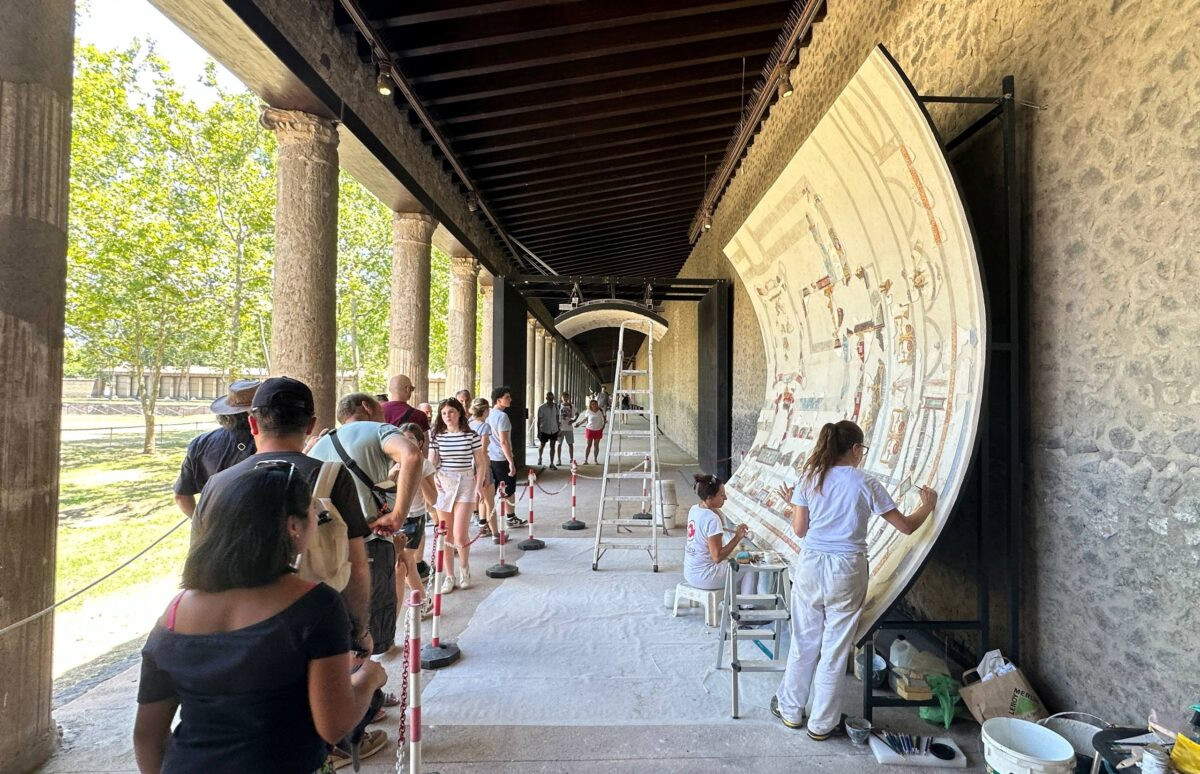
The vaulted ceiling in one of the rooms of the House with a Bakery in Regio IX within the Archaeological Park of Pompeii has been restored: the project, which reveals an important example of the decorative richness of Pompeian homes and the prevalence of themes related to the cult of Dionysus, was presented in the Palestra Grande at the excavations. The presentation concluded the international workshop “Pompeii: Ongoing Excavations and Research,” held in the Auditorium of the Archaeological Park. The event brought together Italian and foreign institutions and universities engaged in research activities at the archaeological site, fostering discussion on excavation campaigns and the sharing of the latest scientific findings.
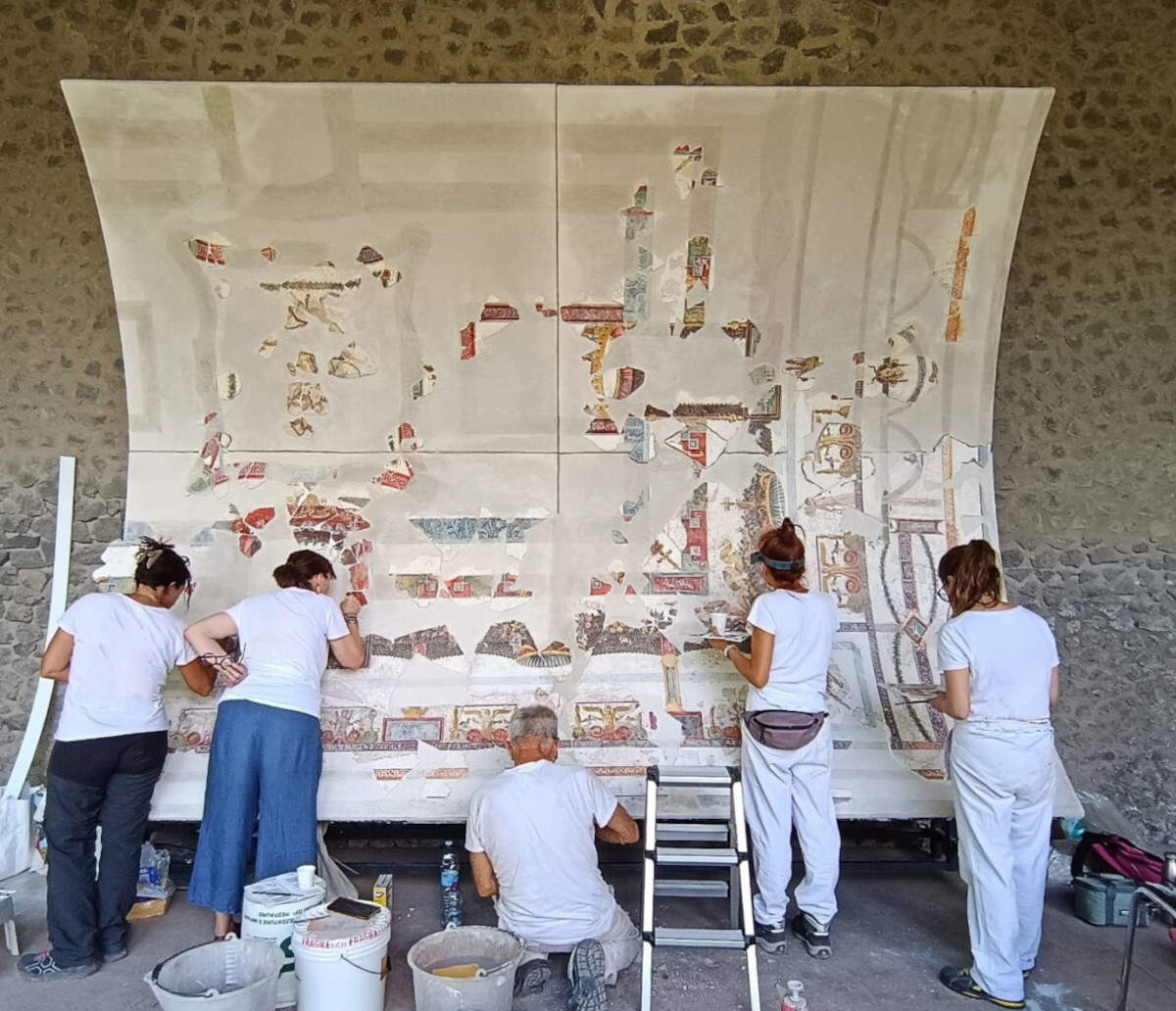
The restoration focused on the fresco fragments recovered during the archaeological excavations and made it possible to reconstruct more than a quarter of the original composition. The project was conceived as an ongoing process, leaving open the possibility of further additions that may emerge as investigations continue. The fragments belong to the vaulted ceiling of a banquet hall that was located on the upper floor of the residence. The discovery of the fragments at the exact point of the collapse allowed archaeologists to identify their provenance with certainty and to begin preliminary reconstruction work during the excavation itself, identifying the connections between the various parts of the decorative ensemble.


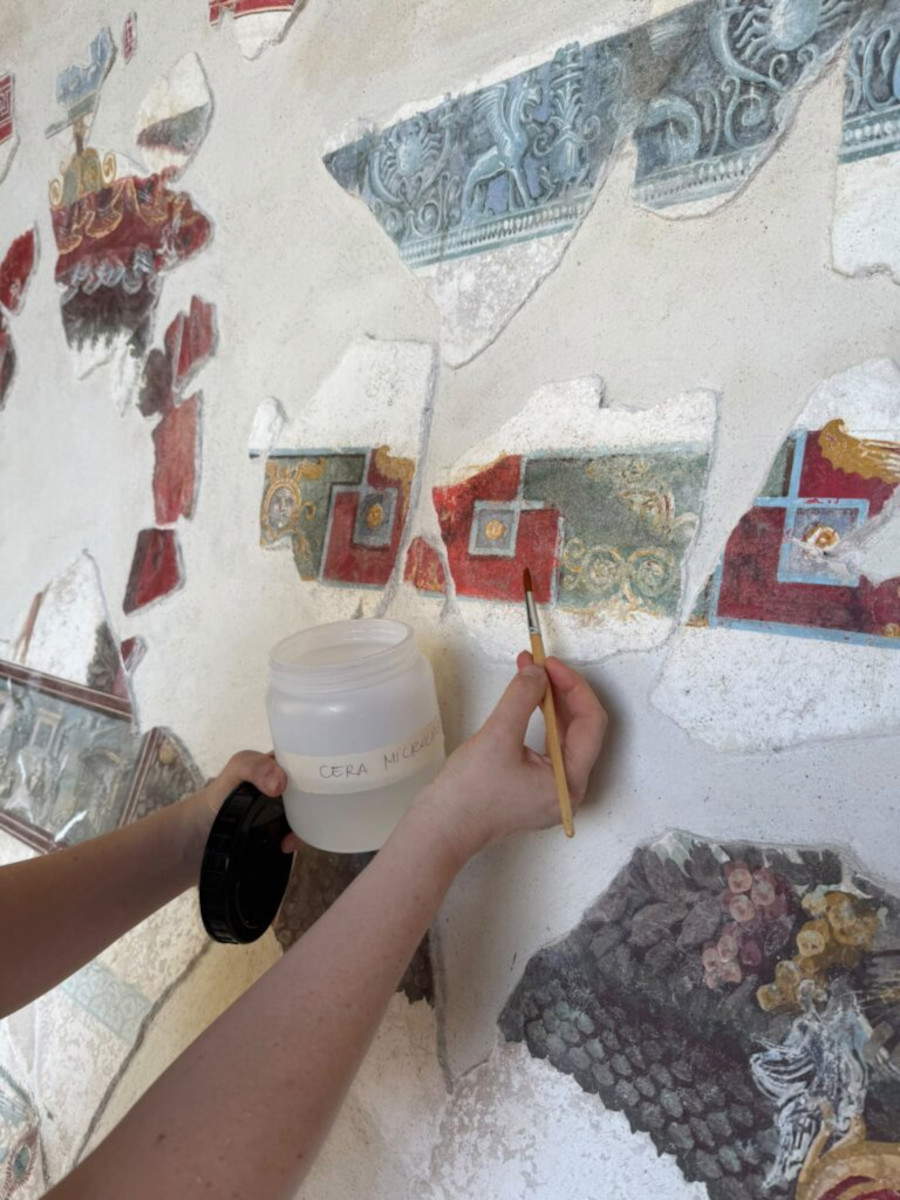
The restoration was carried out on this basis, combining conservation efforts, archaeological research, and museum design. Only those fragments whose original positions were precisely documented were reinstalled, thereby ensuring a scientifically accurate reconstruction in full compliance with the principles of recognizability and reversibility that guide restoration efforts.
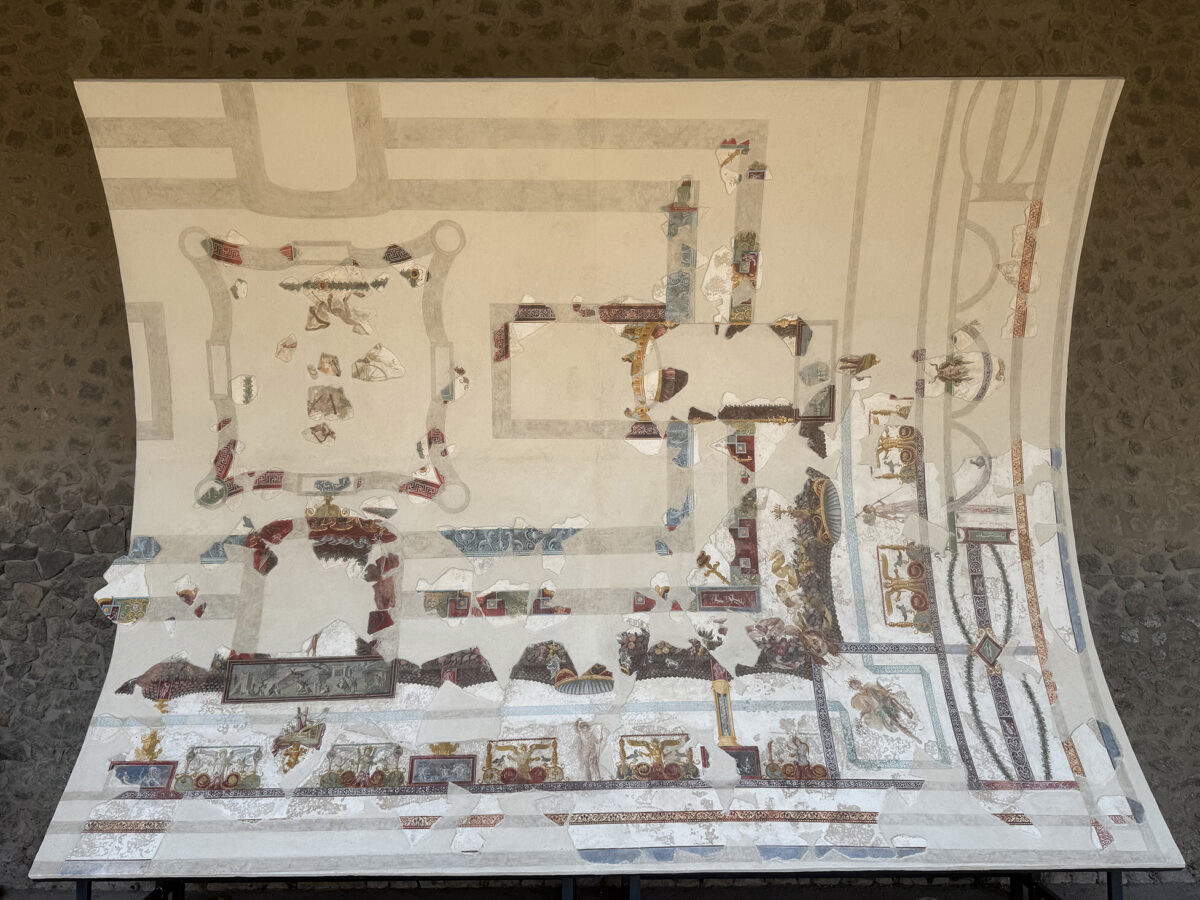
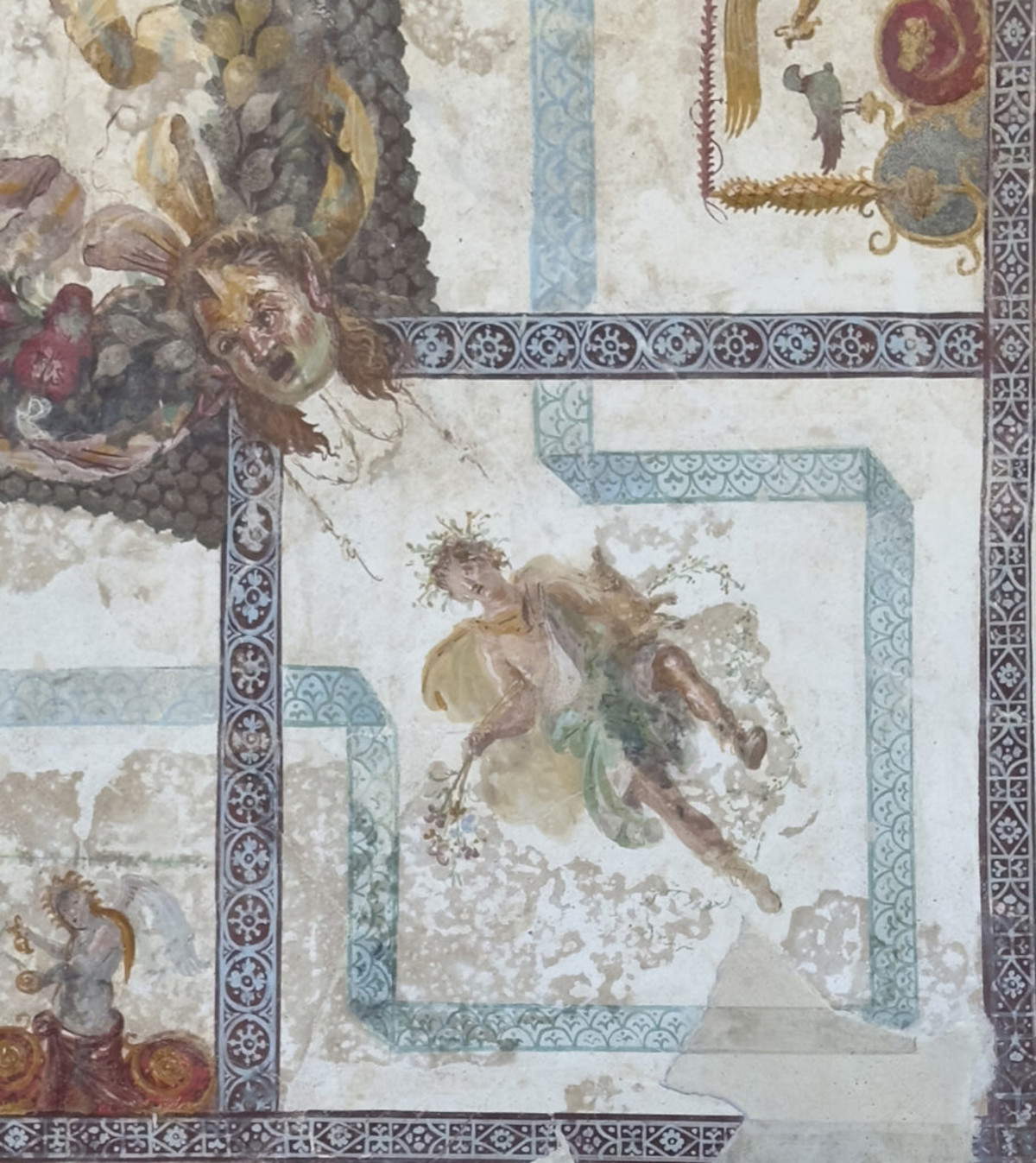
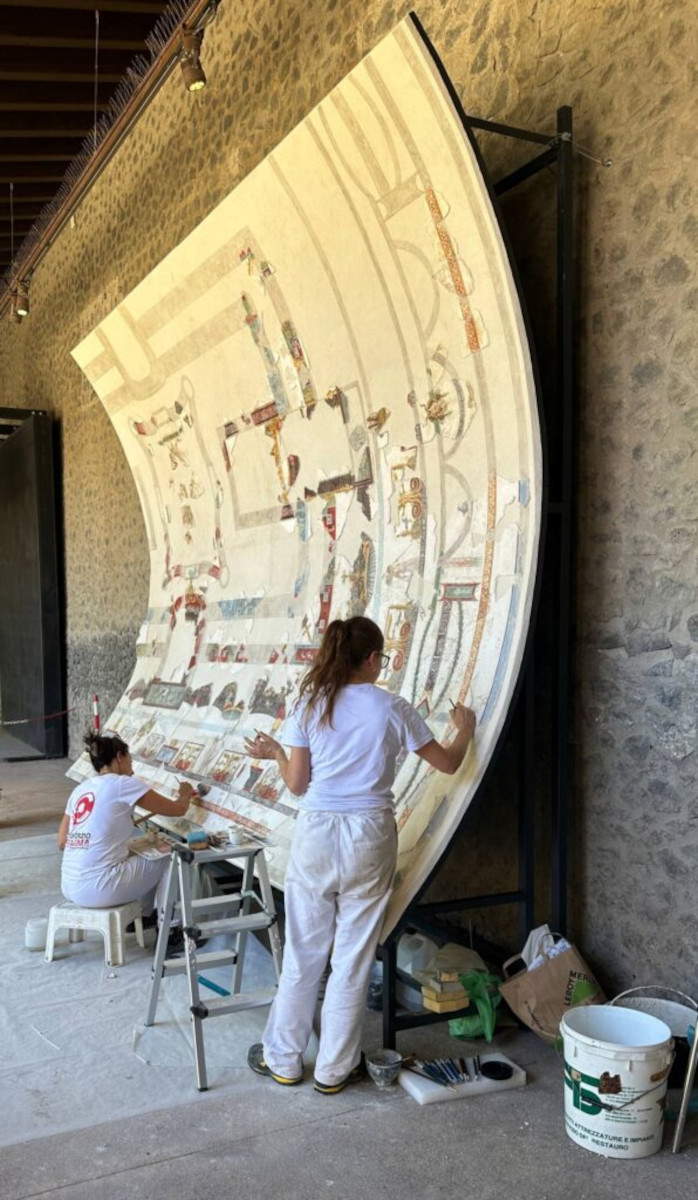
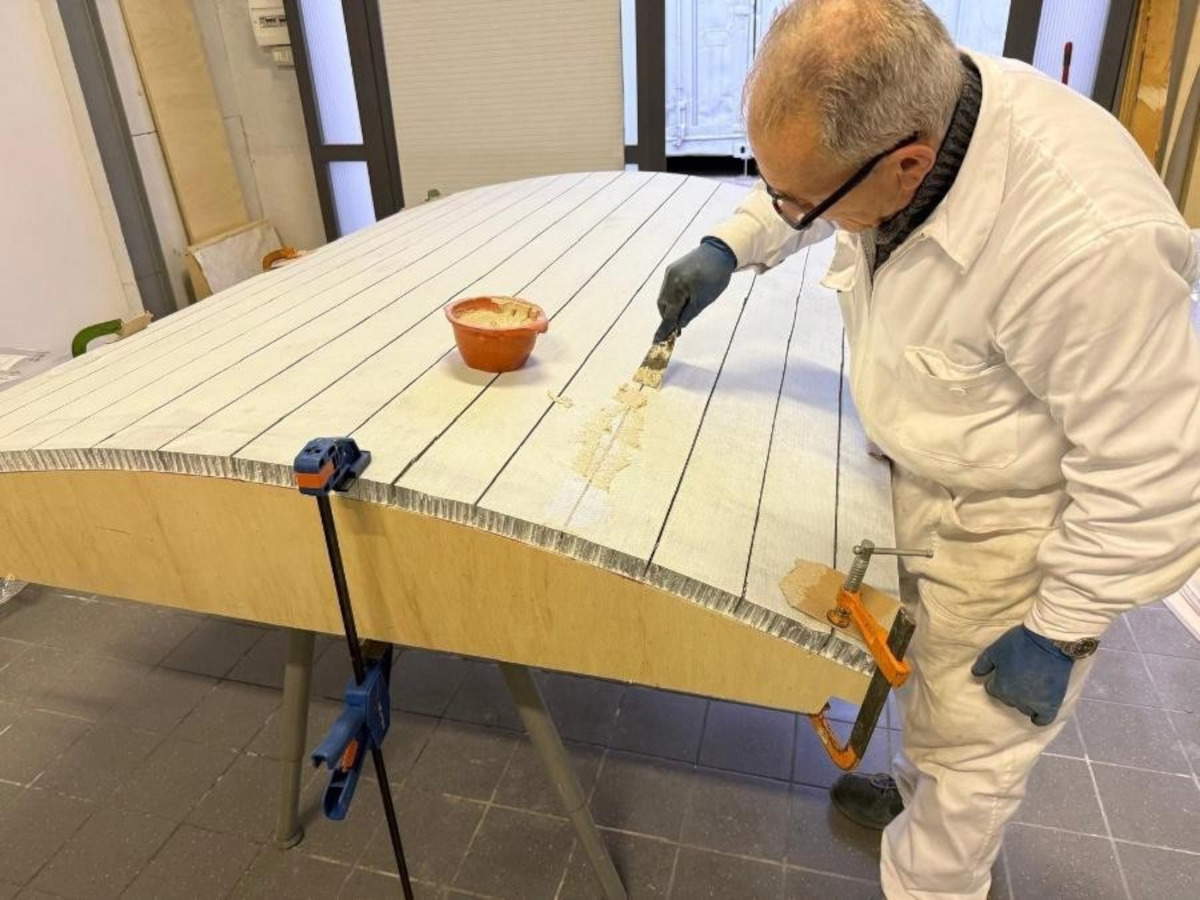
The most innovative aspect of the project involves the creation of the new support structure designed to house the reassembled fresco. Unlike traditional flat structures, the system was designed to follow the original curvature of the vault, which was progressively defined during the reconstruction work. This solution not only restores the three-dimensionality of the decorative elements but also preserves the fragments and allows for the addition of new ones in the future without compromising the work already done. The modular nature of the support structure makes the restoration an open-ended and adaptable process. Numerous fragments attributed to the ceiling are still under study, while additional fragments may emerge from future excavation campaigns in Regio IX. The structure will therefore allow for the gradual expansion of the reconstruction based on new archaeological discoveries.
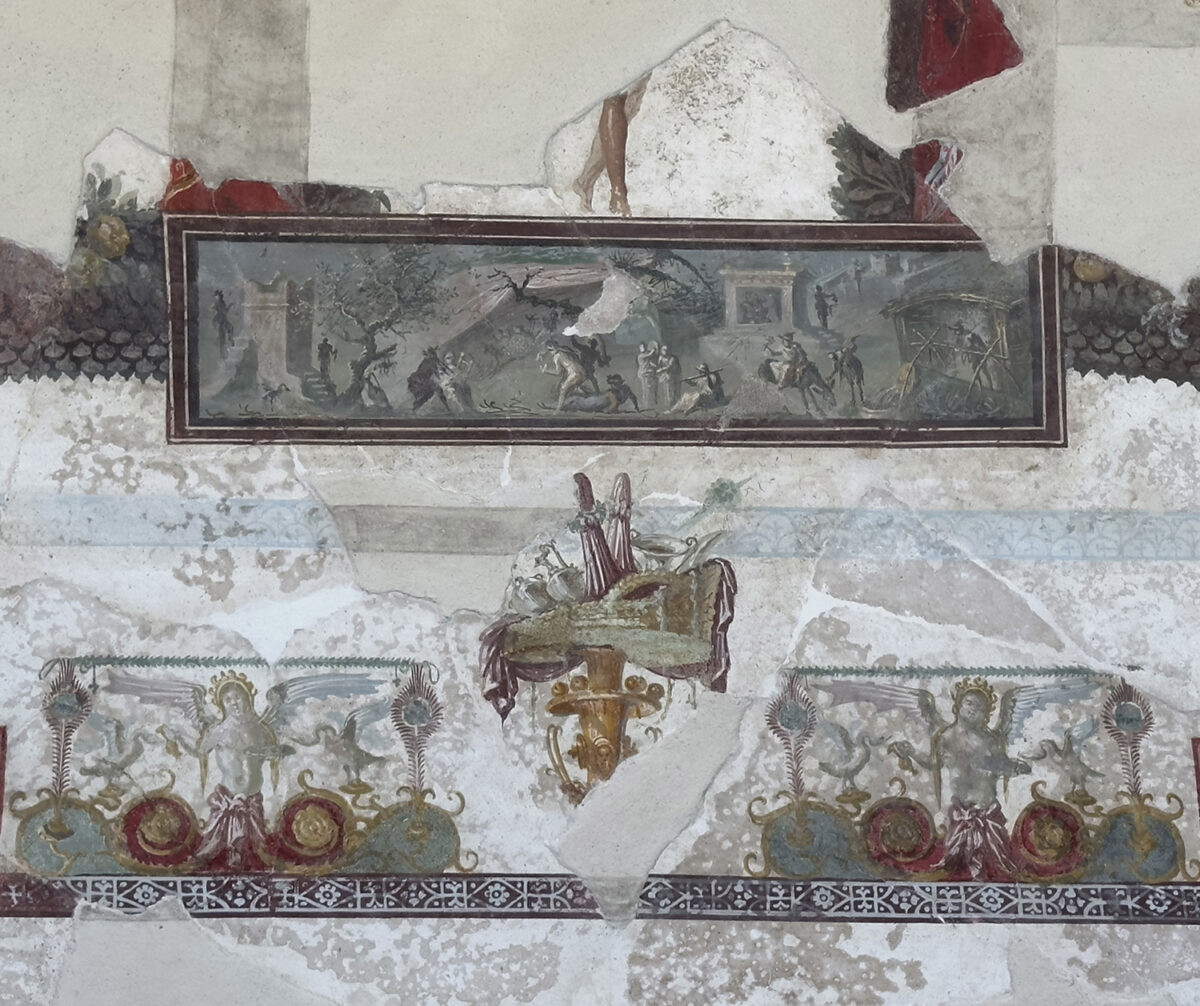
The reconstructed section reveals highly refined decoration, organized around a large central panel framed by aedicules, plant garlands, ornamental motifs, allegorical figures of the seasons, and winged genii. The intense polychromy and the complexity of the decorative scheme attest to the high artistic level achieved in the decoration of Pompeian residences.
The main subject of the fresco is the hierogamy, the sacred union between Dionysus and Ariadne. Although the central scene has survived only in fragments, comparison with other ancient works has made it possible to reconstruct its iconographic meaning. Dionysus is depicted reclining on his chariot, while Ariadne, accompanied by a lyre-playing Eros, plays the harp; the chariot is drawn by two centaurs playing musical instruments, in a composition rich in symbolic references. The entire decorative scheme reinforces the connection to the Dionysian world through the presence of garlands laden with fruits and flowers, theatrical masks, vessels used for libations, and numerous other elements associated with the cult of the god.
The restoration of the fresco is part of the study program that the Archaeological Park of Pompeii is dedicating in 2026 to the theme of Dionysus, chosen as the central theme for the year’s cultural and scientific activities. This research initiative is also inspired by the significant discoveries made between 2024 and 2025 in the House of the Thiasos, also located in Regio IX, where one of Pompeii’s most significant megalographies—depicting a procession dedicated to the god—was unearthed. The second edition of Esopop – Storie in Festival, titled “Ecstatic Pompeii,” will also be dedicated to the mysteries of the Dionysian cult. From August 28 to September 26, 2026, every Friday and Saturday, the Archaeological Park will host live theatrical performances at sites in the Vesuvian area during evening openings, with the aim of fostering a dialogue between archaeological research, new discoveries, and the languages of contemporary culture.
“Italy is a world leader in archaeological restoration, and Pompeii, with its team of conservators,” stated the Park’s director, Gabriel Zuchtriegel, “is a central part of that. That is why we are happy to share the results of our conservation projects with the whole world, as these projects are always opportunities for research and exchange.”
|
| Pompeii: The frescoed vaulted ceiling of the House with Bakery, dedicated to the Dionysian theme, has been restored |
Warning: the translation into English of the original Italian article was created using automatic tools. We undertake to review all articles, but we do not guarantee the total absence of inaccuracies in the translation due to the program. You can find the original by clicking on the ITA button. If you find any mistake,please contact us.