





A major archaeological discovery is rewriting the history of ancient Celio. During work funded by the National Recovery and Resilience Plan (PNRR) to consolidate the historic wall of Villa Celimontana, the Special Superintendence of Rome of the Ministry of Culture has unearthed a building from the Imperial period decorated with mosaics, frescoes, and marble cladding of great value. The discovery comprises eight rooms—five of which have been fully excavated and three only partially preserved—belonging to a complex built in the 2nd century A.D. and extensively remodeled in the following century. Its architectural and decorative features make this find one of the most significant to emerge in recent years in the heart of ancient Rome.
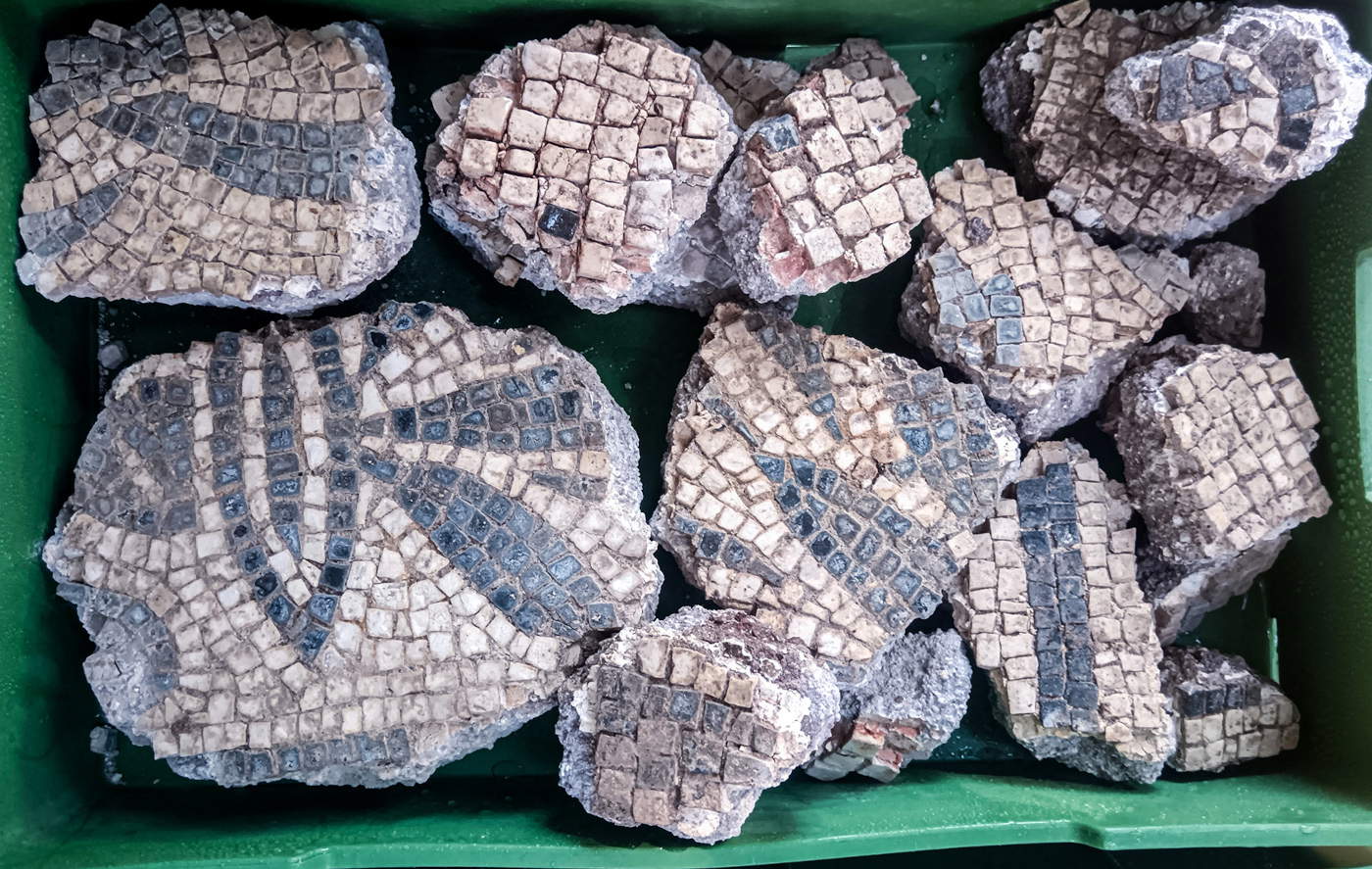
Among the most spectacular finds is a large mosaic featuring geometric patterns and a marine emblem, depicting a dolphin, a fish, a lobster, and a crab arranged around a krater, the large, two-handled vessel used in antiquity to mix wine and water. During the excavation, fragments of an earlier mosaic floor were also uncovered, likely dating to the Antonine period, featuring elegant floral motifs in black and white tiles, as well as large sections of the frescoed ceiling, painted with large red and blue circles, framed by white stucco moldings with serrated edges.
Numerous remains of opus sectile, featuring slabs of white and polychrome marble from the floor and wall coverings, further attest to the building’s remarkable decorative quality.
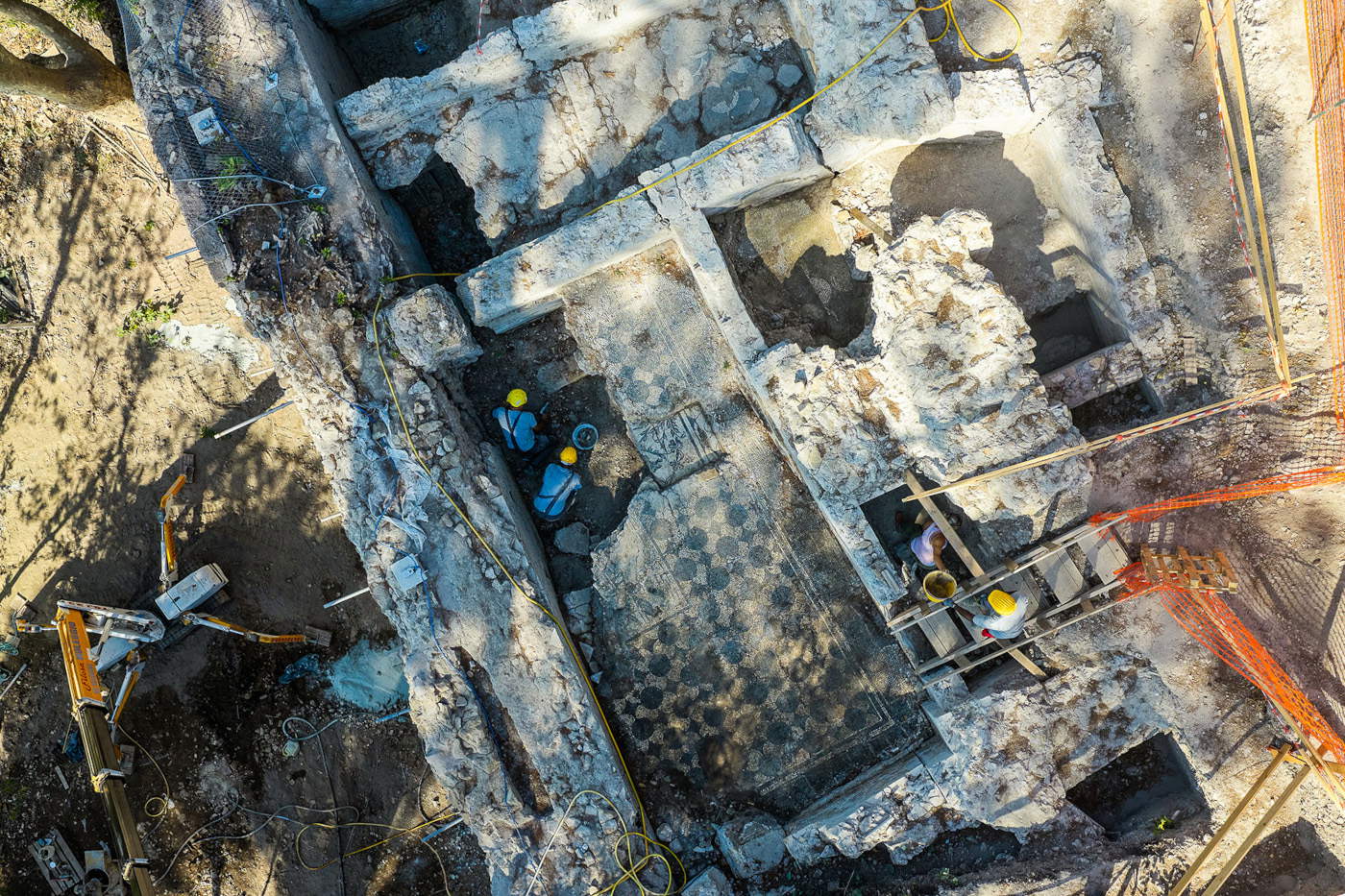
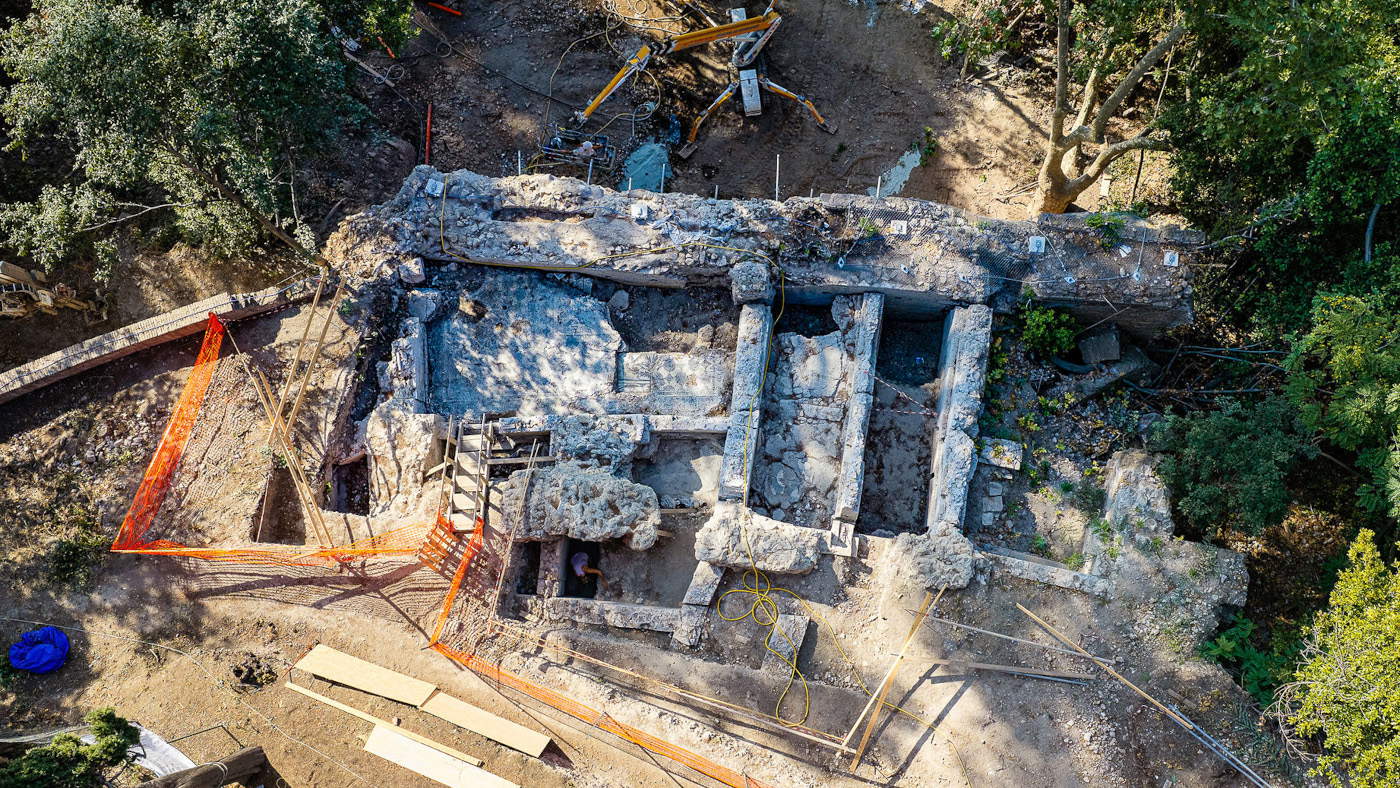
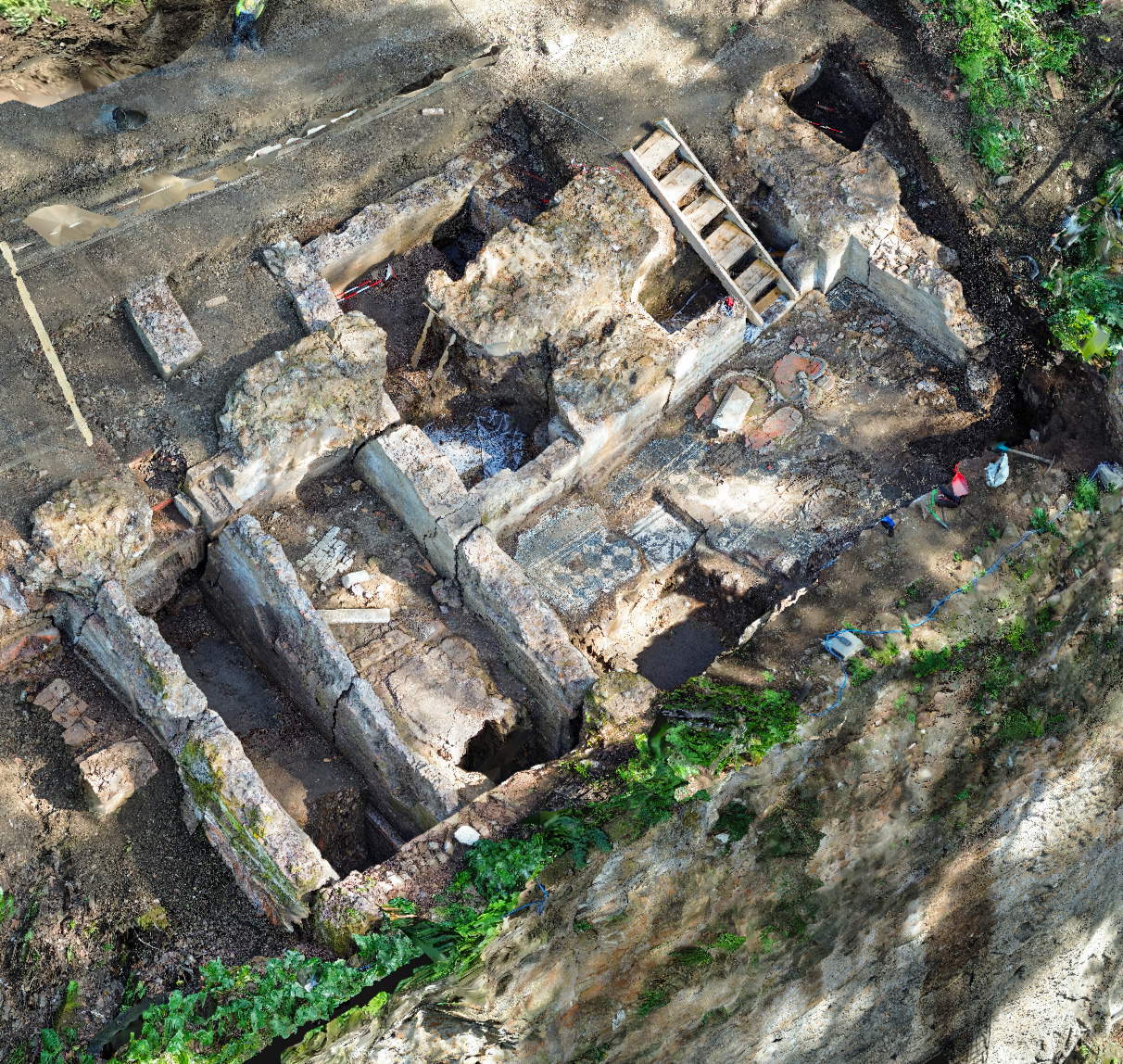
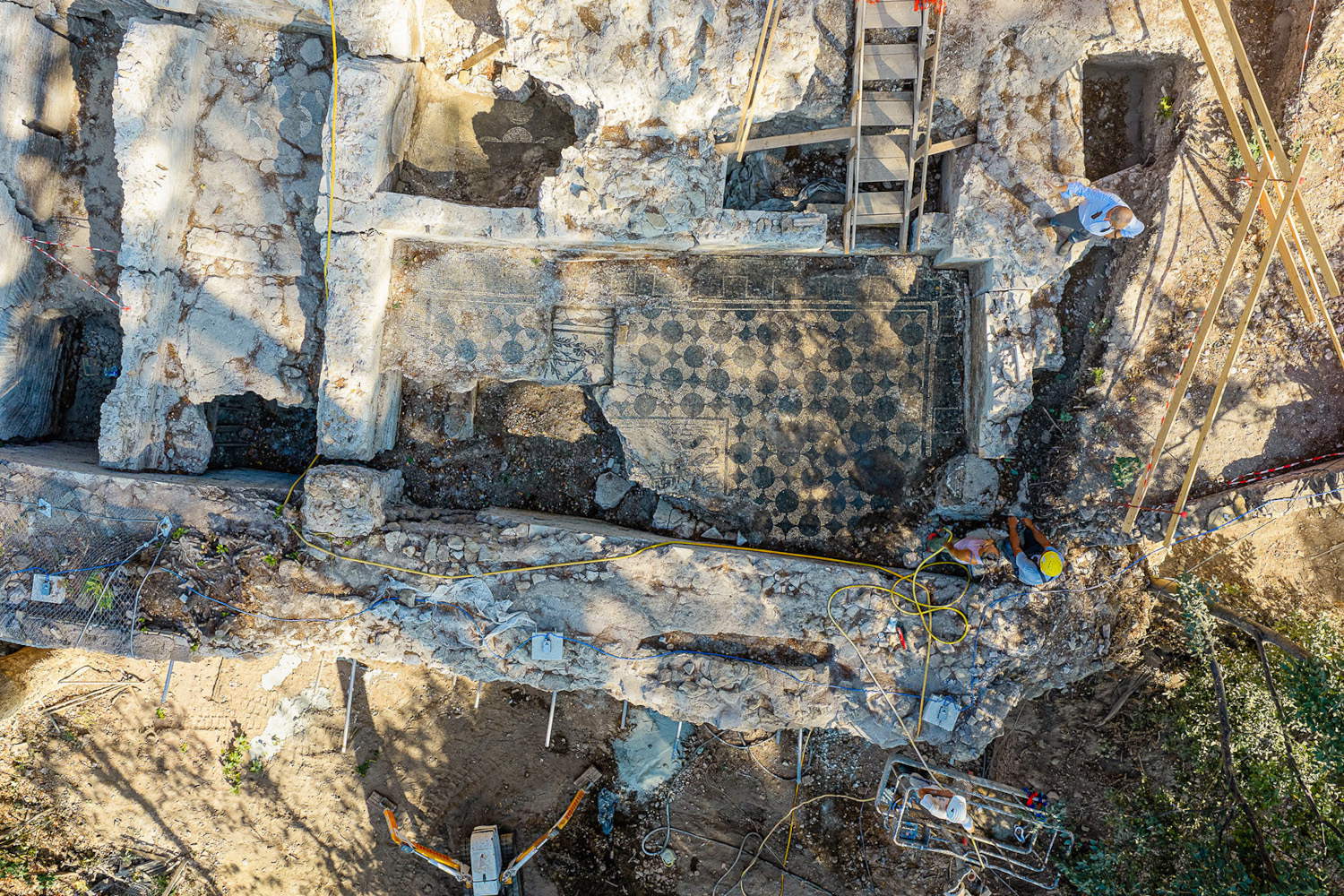
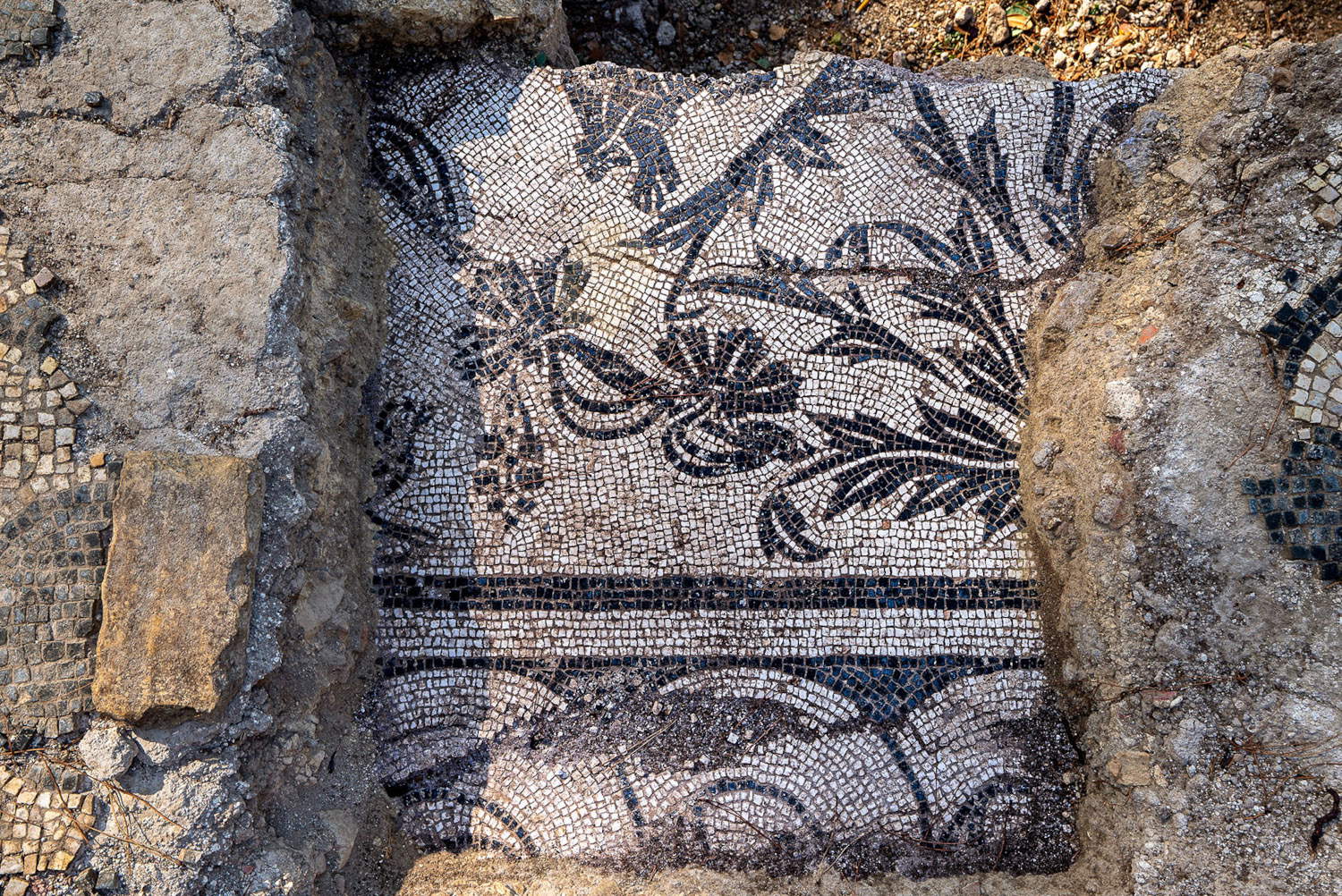
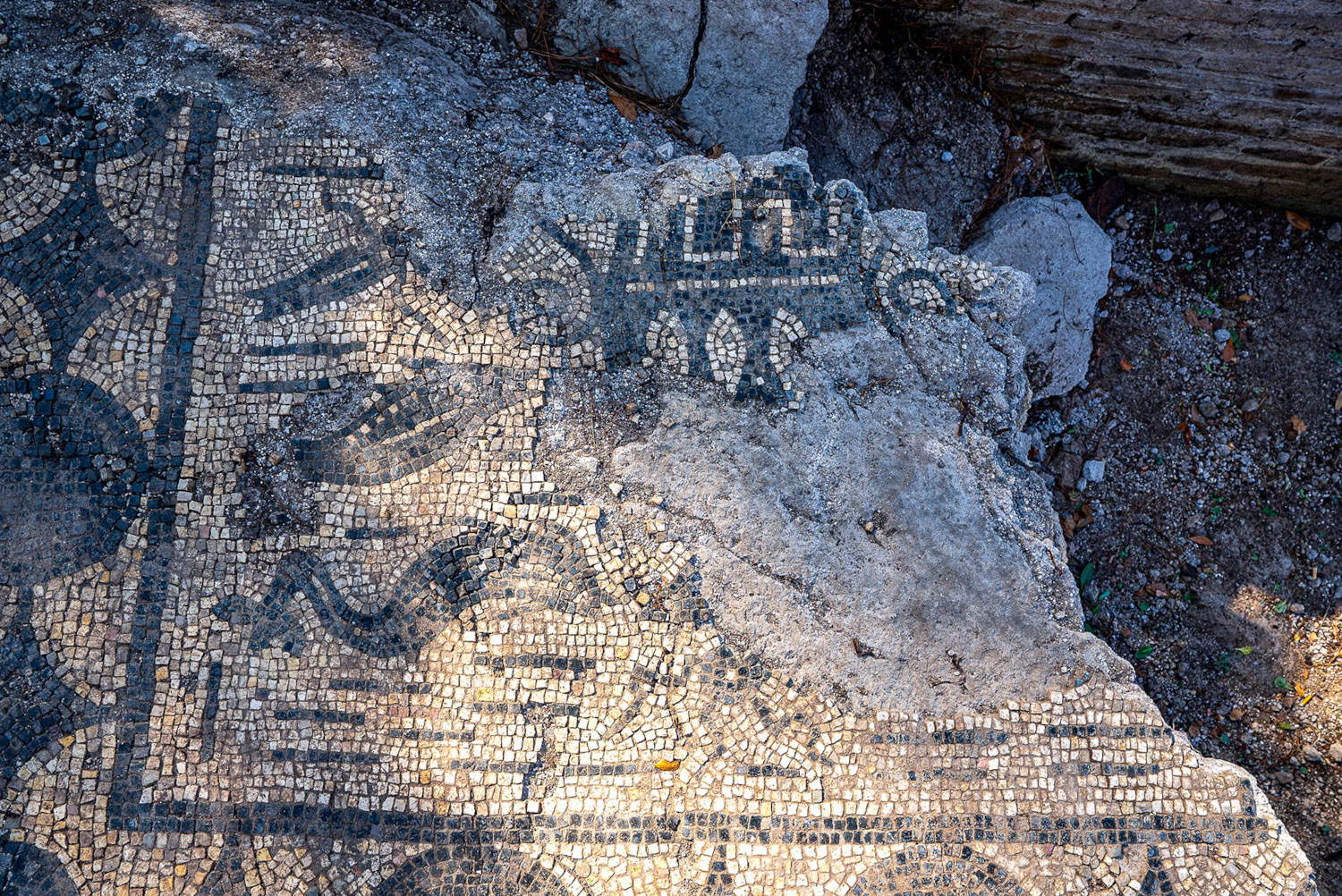
The function of the complex is still under study and represents one of the most fascinating aspects of the discovery. On the one hand, the richness of the decorations and the layout of the rooms seem to suggest the presence of an aristocratic domus, an urban residence that belonged to a member of the Roman elite. On the other hand, the building’s strategic location and certain elements uncovered during the excavations give rise to a different and intriguing hypothesis: the complex may have belonged to the barracks of the 5th Cohort of the Vigiles, the corps responsible for fire prevention and maintaining public order at night in Imperial Rome. Several clues support this interpretation, including the past discovery of statue bases bearing the list of cohort members and modular structures that can be interpreted as quarters for the Vigiles. The mosaic depicting a krater also echoes similar decorations found in the Vigiles barracks at Ostia, where this ornamental motif appears in the areas designated for the soldiers’ communal life.
If the barracks hypothesis were confirmed, the discovery would make it possible to redefine the extent of one of the most important military complexes in Imperial Rome. Archaeologists believe, in fact, that the station of the 5th Cohort may have occupied a much larger portion of the Caelian Plateau than previously assumed, utilizing the hill’s substructures as a fortified perimeter. The complex would have included not only the quarters for soldiers and officers, but also service buildings and a lavish Augusteum, as evidenced by the precious colored marbles discovered in the area as early as the late 16th century and later reused to clad the Sala Regia in the Vatican. The structure’s location, between Via della Navicella and the Clivo di Scauro—both ancient Roman thoroughfares—would also have ensured rapid access to the areas under the 5th Cohort’s jurisdiction. Also crucial was the proximity of the Celimontano Aqueduct, which fed a large cistern used to supply water to the carts employed in firefighting operations.
The building was abandoned between the 5th and 6th centuries AD. In modern times, part of the structure was cut through and damaged during the construction of the loggia of Villa Mattei; archaeologists have also uncovered the foundations of this loggia, which rest directly on the Roman walls. Subsequently, the complex was gradually covered by thick layers of soil, preserving beneath the current ground level floors, decorations, and masonry structures that had remained hidden for centuries.
Research will continue with the study of the materials and structures that have come to light, which is essential for clarifying the building’s actual function and its relationship with the urban fabric of ancient Celio. The discovery represents one of the most significant recent archaeological finds in the capital. The mosaics, frescoes, and decorative elements open up new avenues of research into one of the most significant neighborhoods of the ancient city.
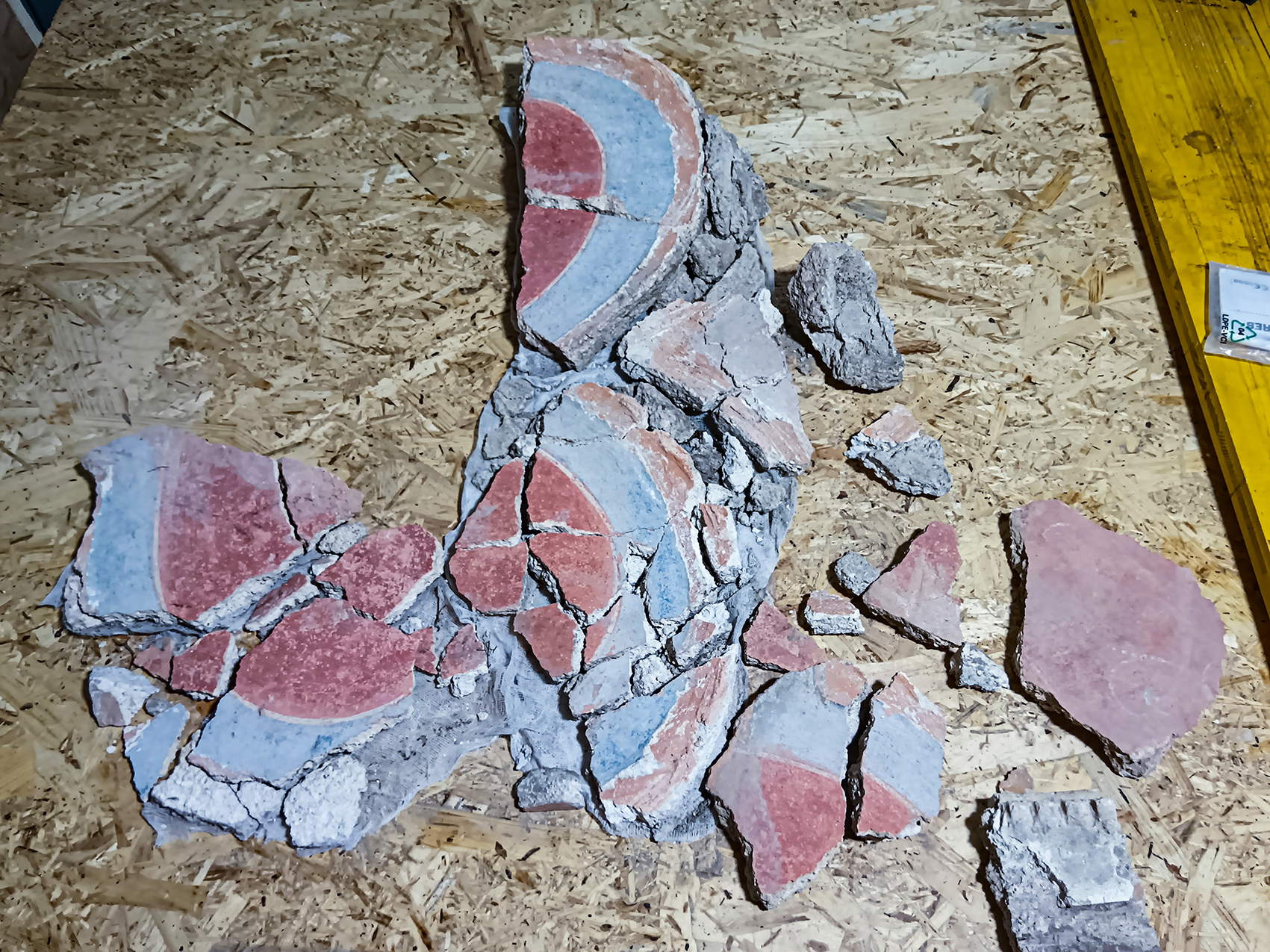
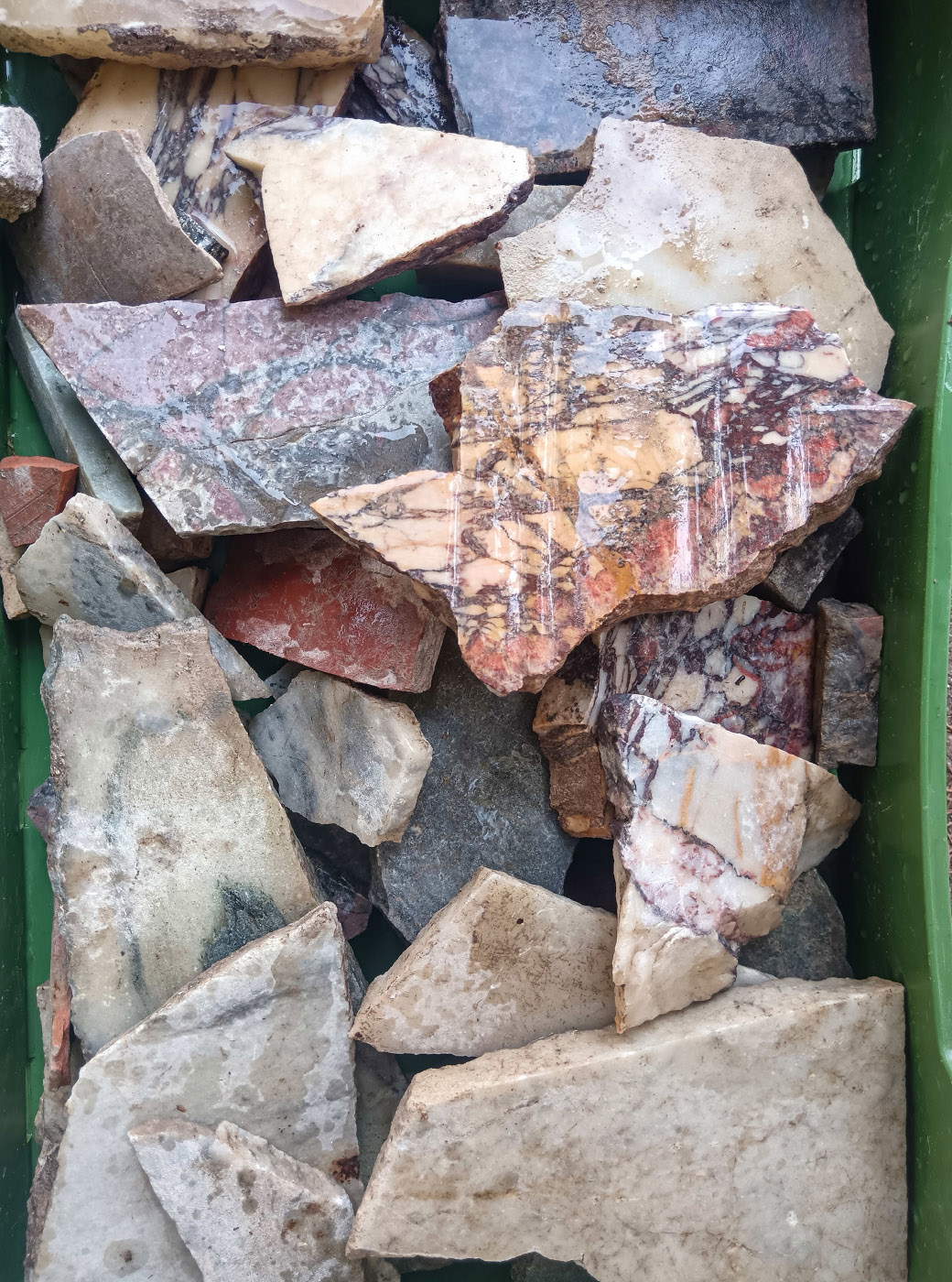
“I am here to convey the greetings and message of the Minister of Culture, Alessandro Giuli,” said Valentina Gemignani, Chief of Staff at the Ministry of Culture (MiC). “The project at Villa Celimontana exemplifies the Ministry’s ability to utilize PNRR resources: a construction site originally established to reinforce a Roman retaining wall has been transformed—thanks to the discovery of an important 2nd-century AD building—into an archaeological research site. It demonstrates how conservation, research, and enhancement can proceed hand in hand.”
“Rome continues to amaze us,” said Daniela Porro, Special Superintendent of Rome, “by revealing artifacts that expand our knowledge of the ancient city. Using PNRR funds to secure an ancient retaining wall, the Superintendency has also made an archaeological discovery of great scientific value, which opens up new avenues for research and preservation.”
“The excavation has yielded a wealth of data of extraordinary interest, but the most delicate and complex phase begins now. It will be the analysis of the structures, materials, and context that will allow us to verify the various interpretive hypotheses and understand the building’s true function,” added Simona Morretta, the excavation’s scientific director.
|
| Rome: Major Discovery at Villa Celimontana—An Imperial-Era Building with Mosaics and Frescoes Unearthed |

Warning: the translation into English of the original Italian article was created using automatic tools. We undertake to review all articles, but we do not guarantee the total absence of inaccuracies in the translation due to the program. You can find the original by clicking on the ITA button. If you find any mistake,please contact us.






















 IT
IT FR
FR DE
DE ES
ES CN
CN


