





Neapolitan artists have crossed the Tyrrhenian Sea many times throughout history—with their canvases and panels, of course, but just as often, and perhaps even more so, with paper: sheets of drawings in pen, ink, and watercolor that passed from hand to hand among workshops, auctions, and aristocratic collections. Many of these sheets found their way to Madrid, where they formed one of the most important collections of Neapolitan drawings in the history of art at the Museo Nacional del Prado ; this significant heritage, however, remained on the margins of scholarly research for decades. Filling that gap is a new book (Museo Nacional del Prado. Italian Drawings: Naples between the 17th and 18th Centuries) by Viviana Farina, an art historian and university professor, published by Editori Paparo in collaboration with the Museo Nacional del Prado: a catalog dedicated to Italian drawings from the Neapolitan and Sicilian regions dating from the late 16th century to the dawn of Neoclassicism, housed in the graphic arts collections of the great Madrid museum.
The book is the result of a four-year research project, launched in 2021 thanks to a fellowship from the Fundación Gondra Barandiarán, which enabled the author to spend an initial period at the Prado between May and July of that year. The original project had a specific goal: to identify and catalog Neapolitan Baroque drawings held in Madrid’s public collections, including not only the Prado but also the Real Academia de Bellas Artes de San Fernando and the Biblioteca Nacional de España. The work, which continued between 2022 and 2024 with a second stay as a visiting researcher at the museum’s Centro de Estudios, ultimately focused on the collection held at the Prado and resulted in a corpus of 109 entries included in the volume, each accompanied by an illustration. This figure is not insignificant when considering the Madrid institution’s publishing history: the Prado had, in fact, already published three catalogs dedicated to Italian drawings, all organized chronologically by century: the volume on the sixteenth century, edited by Nicholas Turner in collaboration with José Manuel Matilla, head of the drawings collection, prints, and photographs from the museum, published in 2004; and the two catalogs dedicated to the 17th and 18th centuries, edited by Manuela Mena Marqués in 1983 and 1990, respectively. However, unlike what institutions such as the Louvre or the British Museum had done, there was no catalog organized by regional school, capable of isolating and tracing over time a graphic tradition linked to a specific territorial context rather than to a single chronological framework. This is the gap that Farina has chosen to fill, selecting Naples—and, more broadly, Southern Italy—as the key to understanding the subject.
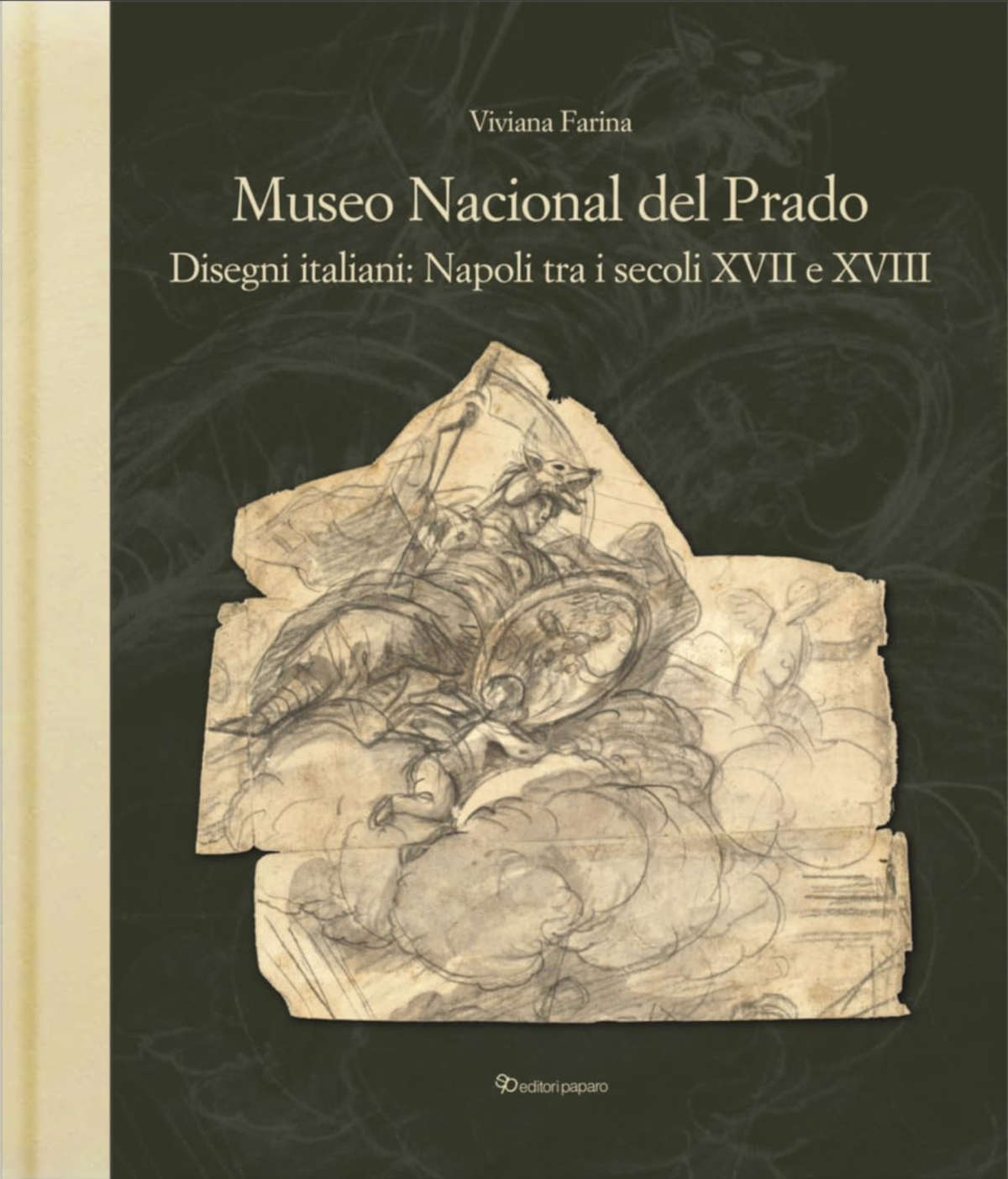
The choice is no accident: between the sixteenth and eighteenth centuries, Naples and Madrid were in fact linked by a dense network of exchanges—not only administrative (the Neapolitan city was long the capital of the Spanish Viceroyalty) but also artistic and cultural. The book seeks to convey precisely this dimension, which the history of painting alone does not fully capture: a dialogue between Neapolitan artists turning their attention to the court of Madrid and Spanish eyes resting on the art scenes of Southern Italy. This is a story that has been less explored than that of the great pictorial masterpieces housed in the same museum, yet it is no less significant in reconstructing the relationships between the two shores of the western Mediterranean.
One of the author’s most decisive choices concerns the most famous protagonist of this story: José de Ribera (Xàtiva, 1591 – Naples, 1652), who was active in Italy from his teenage years onward. Despite his linguistic and stylistic roots in the Neapolitan tradition—so much so that he can rightly be considered a Neapolitan painter—Ribera, due to his Spanish origins, appears in the Prado’s official classification among the artists of the Spanish school. Farina has chosen to respect this institutional classification, refraining from including the artist in her own catalog: an openly stated methodological decision that makes the volume a deliberately partial history—as the author herself declares in the book—built around what the Prado’s collection allows us to tell, rather than an exhaustive picture of southern drawing.
While Ribera remains outside the scope of the volume, his influence nonetheless extends across many of the entries, serving as a stylistic point of reference for an entire generation of draftsmen. The true quantitative protagonist of the catalog, however, is another: Luca Giordano (Naples, 1634–1705), represented by nearly twenty drawings—a number that alone attests to how widespread his popularity as a draftsman already was among nineteenth-century collectors who contributed to the Prado’s collections. Among these works is a red-pencil study featuring angels and cherubs in flight, dating to the 1650s, when the young Giordano (still mindful of the lessons in the style of Ribera learned in the workshop) was experimenting with a shading technique achieved by pulverizing the pencil and spreading the powder with his fingers, seeking an almost painterly effect on the paper. The drawing had been considered a copy of a painting housed in a church in Portici: Farina’s analysis, however, restores it to the status of an original work, with direct implications for the chronology of the related paintings, ranging from a work in Madrid’s Church of the Encarnación to a canvas now in Belgium.
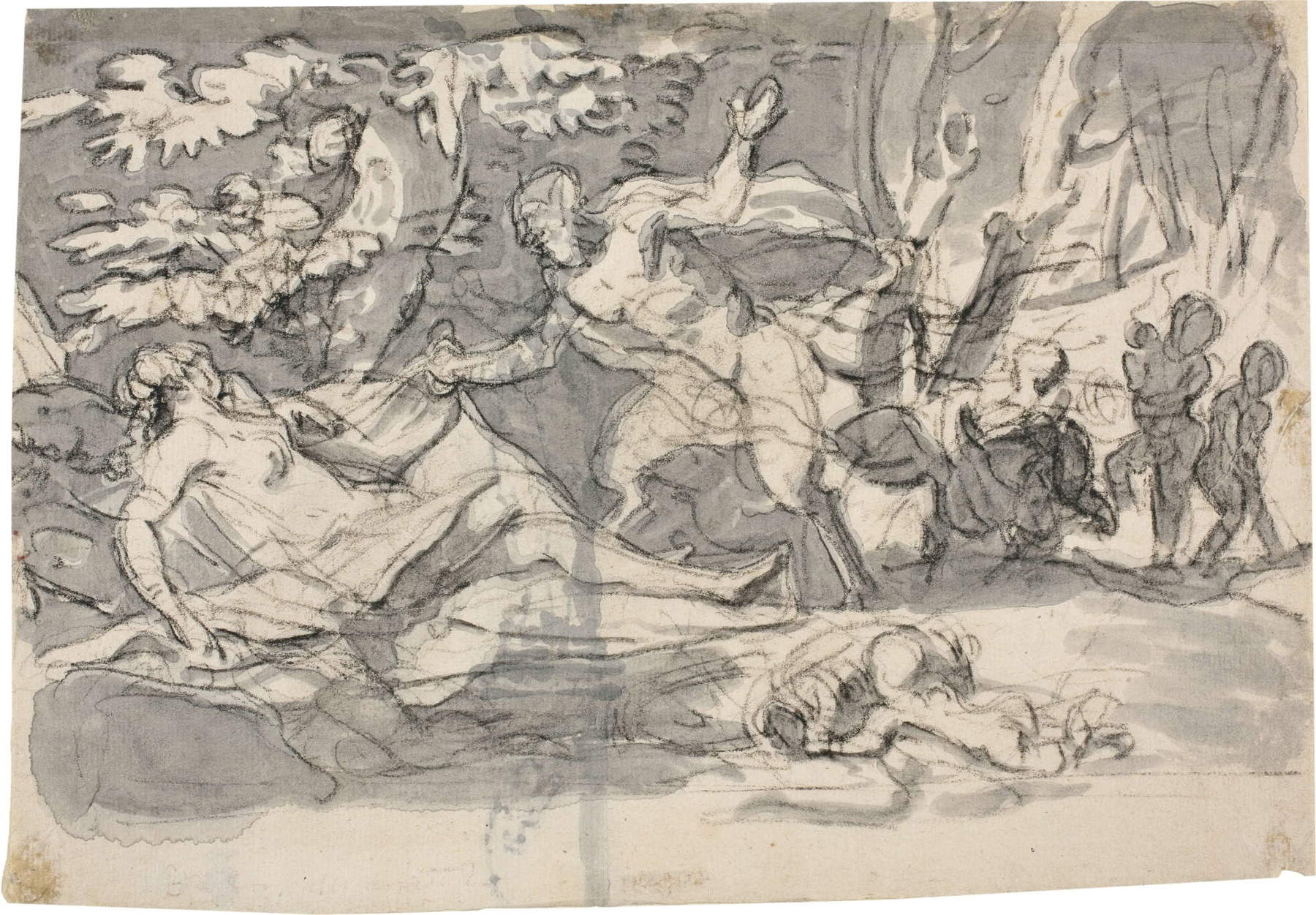
Alongside Giordano, the name that appears most frequently is that of Salvator Rosa (Naples, 1615 – Rome, 1673), a Neapolitan by birth and a Roman by adoption, whose apprenticeship with Aniello Falcone leaves recognizable traces in some of the oldest sheets in the collection. A pen drawing featuring two nude male figures—interpreted as bathers pulling on a rope—had been attributed for centuries to Agostino Carracci based on a nineteenth-century annotation; comparison with other early drawings by the artist—from the Teylers Museum in Haarlem to the Columbia Museum of Art—has made it possible to attribute it to Rosa’s earliest phase, dating to around 1640, when the painter was still drawing on the repertoire of Filippo Napoletano before moving to Florence. In this case as well—as is often the case in this volume—a handwritten note by a nineteenth-century collector (Isidoro Brun, a key figure, as will be seen later, for the Prado’s collection of drawings) proves decisive in reconstructing the work’s provenance.
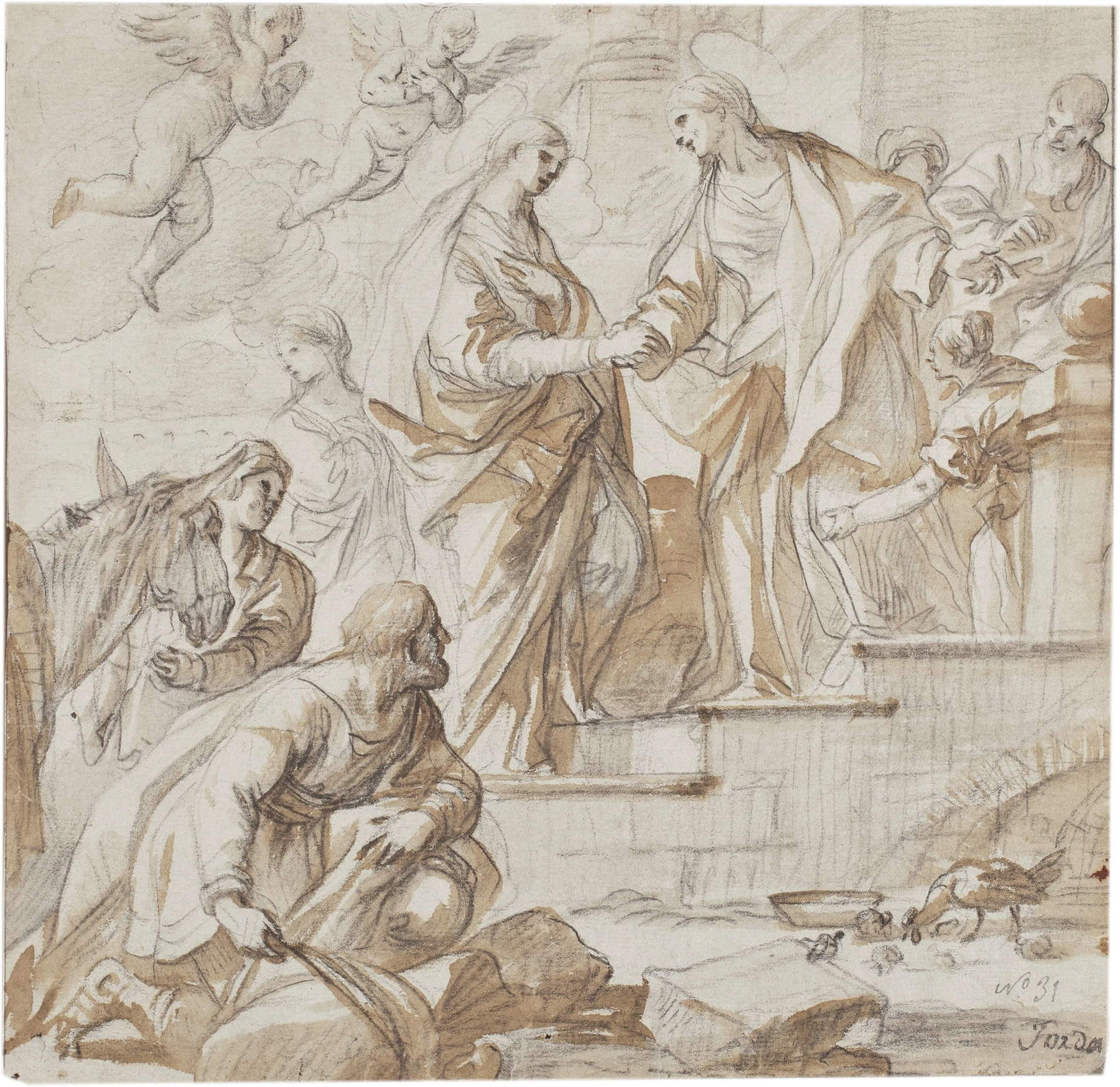
The collection also features the great names of the High and Late Neapolitan Baroque. Francesco Solimena (Canale di Serino, 1657 – Barra, 1747), the “leading figure of the mature Neapolitan Baroque” according to the definition the author cites in the entry for his *The Incredulity of Saint Thomas*, appears alongside works associated with his school and circle, including the aforementioned *The Incredulity of Saint Thomas*, which reworks a Caravaggesque prototype that had passed through Malta. In this very entry, the catalog opens a window onto the next generation—that of Francesco De Mura (Naples, 1696–1782), Solimena’s favorite pupil—whose rare autograph works are cited as points of comparison for evaluating the quality of certain disputed attributions. Going further back in time, the brothers Cesare and Francesco Fracanzano, originally from Puglia but active in the Neapolitan art world, are at the center of a particularly complex chapter on attribution: a sheet depicting the musical contest between Apollo and Marsyas, long attributed to Salvator Rosa due to a misleading inscription on the front, is now attributed to Cesare Fracanzano based on comparisons with paintings already discussed by Farina herself in previous studies, in a web of references linking works scattered across Naples, Budapest, and the United States.
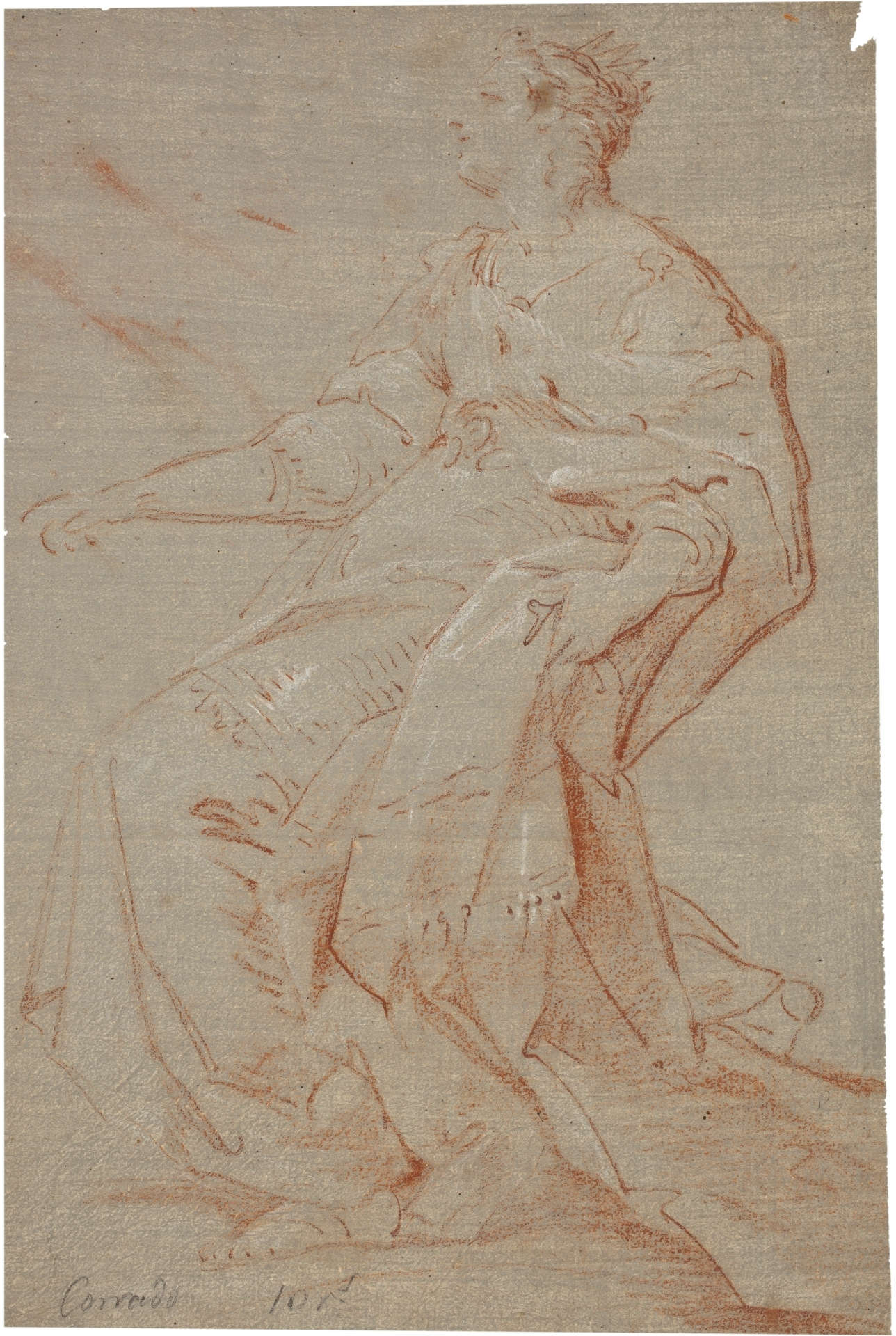
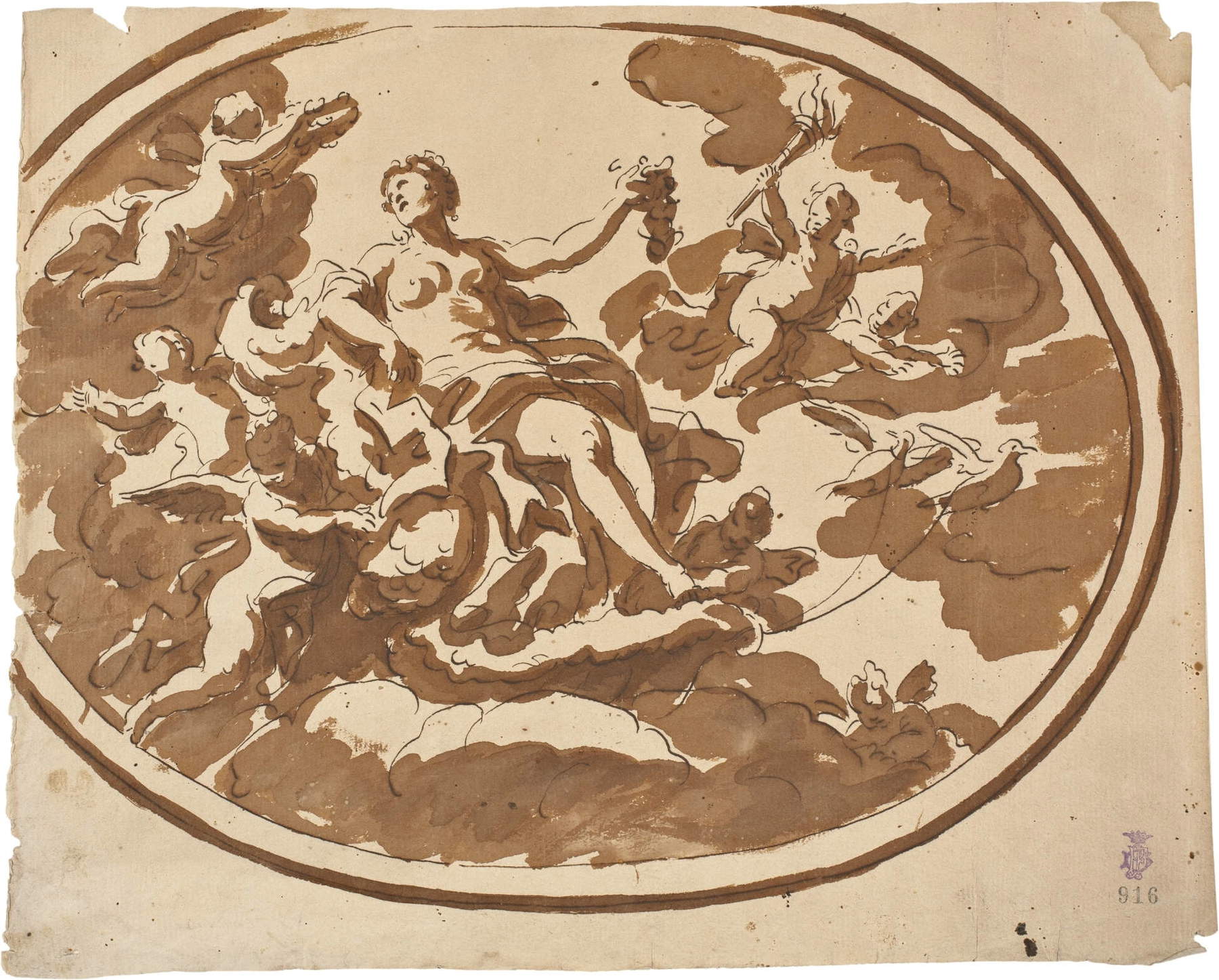
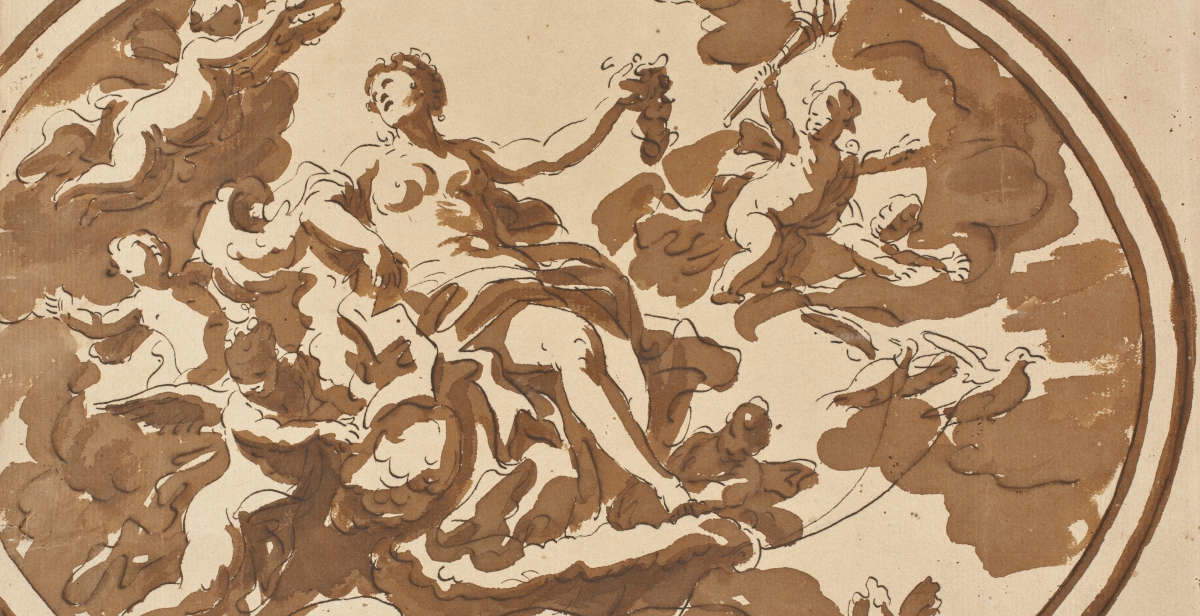
The Neapolitan 18th century is represented primarily by Corrado Giaquinto (Molfetta, 1703–Naples, 1766), a painter from Molfetta who later worked in Rome, Naples, and at the court of Madrid, and by Paolo De Matteis (Piano Vetrale, 1662 – Naples, 1728), whose fluid style, overlaid with broad strokes of gray watercolor, repeatedly serves as a point of comparison for works of uncertain attribution (he is credited with a *Triumph of Venus* that was previously considered the work of an anonymous artist). This sequence of key figures is ideally rounded off by Antonino Grano, a painter from Palermo whom the volume presents as a leading figure in the Sicilian graphic tradition, fully integrated into the narrative precisely by virtue of that shared geopolitical framework (the Spanish Viceroyalty) that the catalog adopts as its interpretive key. Overall, rather than a gallery of isolated masterpieces, the volume reveals a network of exchanges, imitations, and derivations spanning a vast period of time, in which the very same compositional innovations passed from hand to hand between masters and students, between Naples and the Spanish courts, leaving traces on the page that scholars are still called upon to decipher today.
It should also be noted that the catalog departs from another convention: the Prado’s collections of Italian drawings are not organized by regional schools or individual artists, but follow the progressive inventory numbering system. Farina’s volume overturns this criterion and proposes an ascending chronological sequence, capable of tracing the evolution of the leading figures in Neapolitan drawing (and, at the end, the Sicilians, whose work is traced back to the same geopolitical and artistic context of the Viceroyalty), followed by the anonymous works, which are also arranged by period. This structure is designed not only to guide the reader but also to highlight the cultural trajectories and intersections that, over the course of two centuries, have intertwined the two regions of southern Italy.
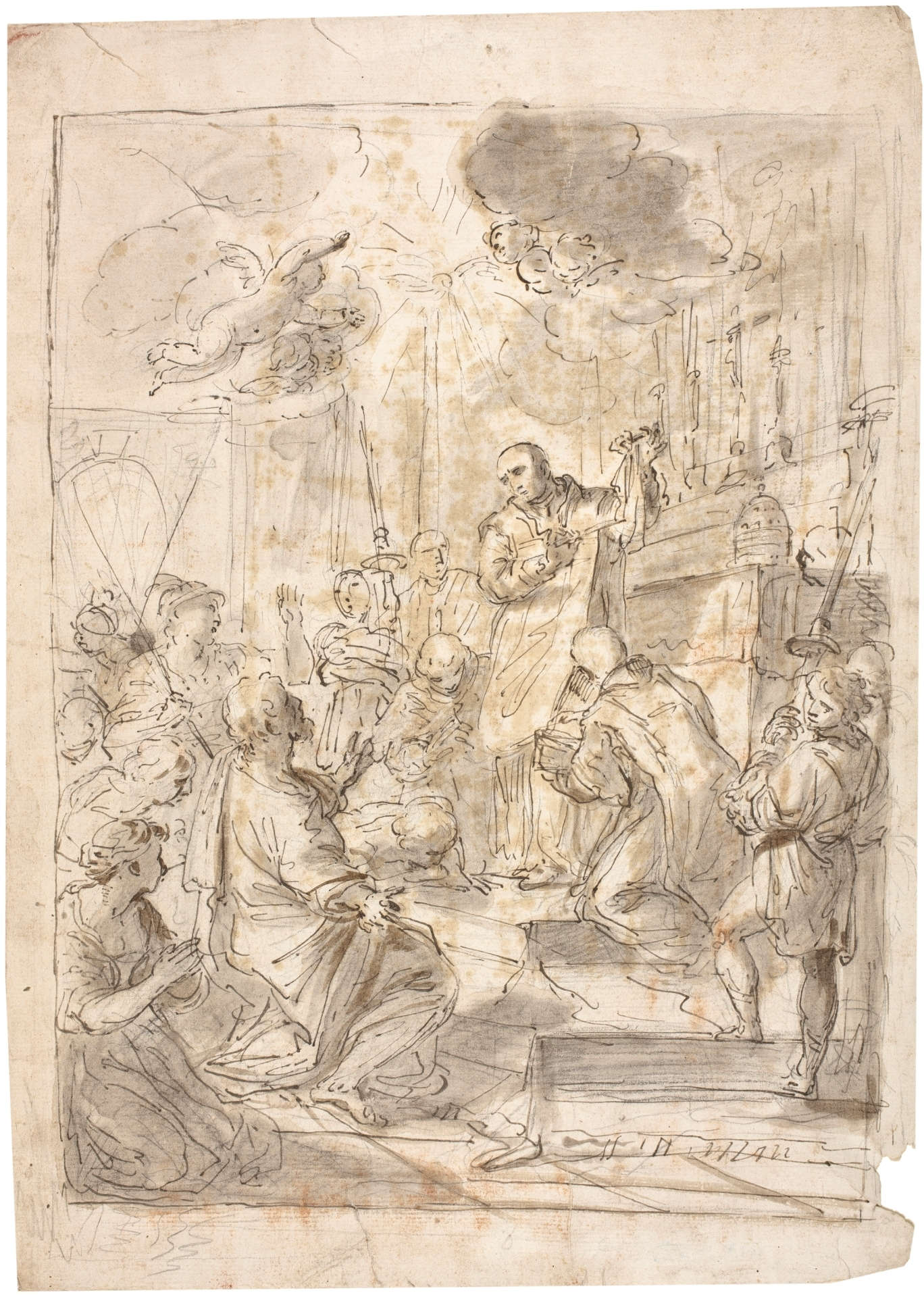
Preceding the individual entries is a five-column cross-reference table (catalog number, drawing number, current inventory number and old corresponding number, current attribution, and previous attribution) intended as a quick guide for those wishing to verify the changes in attribution. The attributions themselves constitute one of the most delicate aspects of the entire project: on the one hand, the volume proposes new attributions to the Neapolitan school, reclassifying some drawings previously considered Genoese, Bolognese, or Roman as belonging to the South, based on more precise stylistic and technical comparisons; on the other hand, it performs the opposite operation, which is equally delicate from a methodological standpoint: namely, some drawings previously attributed to the Neapolitan school are here reassigned to other contexts (Genoese, Roman, Venetian, or Sienese) following a comparison that the author describes as one of the most challenging aspects of the research, conducted in consultation with other specialists in the field and supported, on a case-by-case basis, by precise arguments (this is the case, for example, with a *Mass of St. Gregory* previously attributed to Corrado Giaquinto, but now cataloged by Farina as a drawing by an anonymous Roman artist). In some instances, the attribution is deliberately left open, but even in these cases, the volume documents the analytical elements that motivated the decision, to ensure the traceability of the revisions.
Alongside the analysis of individual works (the main new findings regarding attributions are summarized in a section of the introductory essay), the book devotes ample space to reconstructing the history of the collection that brought these drawings to Madrid. The largest core of the Prado’s Italian print collection comes from the bequest of the aristocrat Pedro Fernández Durán, which arrived at the museum in 1931. But behind that bequest lies a lesser-known story, which the author has chosen to explore in depth: that of Isidoro Brun y Aguilar, a painter and restorer from Madrid who lived from 1819 to 1898, himself the son of a restorer who worked at the Museo de la Trinidad and the Real Academia de San Fernando. Brun assembled, primarily between 1868 and 1883, a collection of approximately three thousand drawings purchased in Paris, carefully documenting the provenance of the works and often noting in pen the opinions of his friend and expert Valentín Carderera y Solano. It was Brun himself, toward the end of the nineteenth century, who sold the entire collection to Fernández Durán, perhaps to ensure that the collection remained intact rather than being scattered on the market.
The reconstruction of this story is based on an almost investigative study of the drawings’ original supports: collection marks, stamps, clippings from auction catalogs glued to the backs of the mounts, autograph letters, and even a handwritten monogram intertwining Fernández Durán’s initials. Thanks to these physical clues, the book also identifies the intermediaries through whom Brun operated in the Parisian auction market (including the French bookseller François Louis Brachet) and proposes the identification of a collector not previously mentioned in the bibliography or the museum’s database, the Belgian August Schoy, whose collector’s mark appears on some sheets now attributed to the Neapolitan circle.
As Farina herself notes, the book is not intended solely for specialists: the decision to accompany the entries with references to databases, digital archives, and institutional portals (from the Prado’s database to the platforms of major European and American museums that house sheets attributable to the same authors) stems, in fact, from the desire to connect the catalog to a broader ecosystem of resources, “allowing,” writes the author, “the attributions and critical comments to be contextualized, and avoiding the usual restrictions arising from copyright.” This approach was also designed with a younger audience in mind: “The target audience for my work,” explains Farina, “includes a generation of young art students with whom I have been working for over a decade as an academic instructor: a digitally native generation that requires clear and traceable consultation pathways, especially during the first three years of their studies. From this perspective, references to institutional portals and technical data sheets provide organized access to information that is often unavailable in print. Furthermore, many notes refer to resources for finding comparative images; for the sake of brevity, these will not be listed individually.” The Italian print edition, moreover, precedes a digital version in Spanish, produced in collaboration with the Prado Museum and intended for the Madrid institution’s portal and online archives.
The volume also includes a more personal and symbolic dimension. The Italian-language publication in 2025 was conceived as a tribute to the city of Naples, marking the 2,500th anniversary of its founding as part of the Napoli2500 celebrations. In the concluding pages, the author references the legend of the siren Parthenope, whose death from unrequited love for Odysseus is, according to the myth, the origin of the city’s name. The author links this reference to her own personal history, explicitly stating the emotional and biographical bond that ties her to Naples, the city where she was born.
In terms of scholarly content, the catalog entries convey the complexity of a work that interweaves connoisseurship, the history of collecting, and the philology of material media. One example is provided by the entry dedicated to a drawing depicting a faun discovering a sleeping nymph, cautiously attributed—based on philological analysis—to the Flemish painter Karel Philips Spierincks, who was active in Rome within the circle of Nicolas Poussin in the first half of the seventeenth century: an attribution based on stylistic comparison with other works by the artist, including those held in Brussels and in the British royal collections. Another case concerns a drawing depicting a woman with a child, long attributed to a mysterious “Mecarino” (a nickname similar to “Mecherino,” by which the Sienese artist Domenico Beccafumi is known), but has instead been reattributed to Giovan Battista Spinelli, an artist possibly of Bergamasque origin who was active in Naples until the mid-17th century—again, thanks to a comparison between the handwriting of the old annotations on the mounts and that already known to belong to Isidoro Brun.
In the background lies a more general consideration regarding the way in which a scholarly catalog is compiled today: an endeavor that goes beyond simply cataloging individual works, but aims to offer the scholarly community—and others as well—a coherent tool capable of restoring the cultural, artistic, and collecting contexts to which the drawings preserved at the Prado belong. In this sense, the volume dedicated to Neapolitan and Sicilian drawings is intended not as a final destination, but as a foundation for further exploration of a graphic tradition that, due to the complexity and fragmentary nature of its sources, remains one of the most elusive in the field of studies on modern Italian drawing.
 |
| A book to discover the drawings by Neapolitan artists at the Prado: Viviana Farina’s book |

Warning: the translation into English of the original Italian article was created using automatic tools. We undertake to review all articles, but we do not guarantee the total absence of inaccuracies in the translation due to the program. You can find the original by clicking on the ITA button. If you find any mistake,please contact us.

























 IT
IT FR
FR DE
DE ES
ES CN
CN


