



by Federica Schneck 24/10/2026


Categories: Exhibition reviews / Disclaimer
The AURA exhibition juxtaposes Ewa Juszkiewicz’s paintings with Valentino Garavani’s historical garments to explore the cult of recognizability. In Rome, the faces stripped from Juszkiewicz’s women take on a life of their own, capable of eluding gazes and definitions. A review by Federica Schneck.


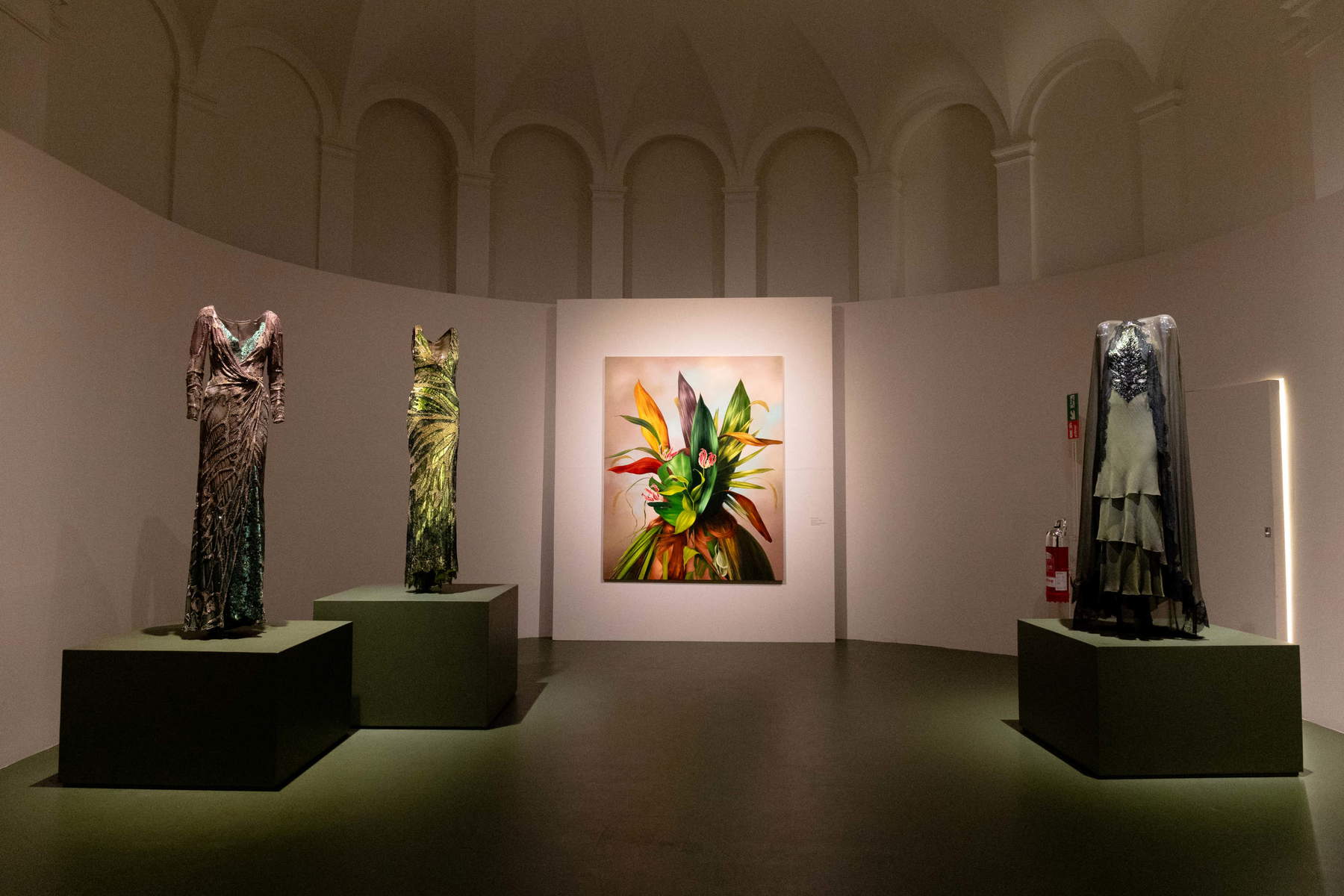
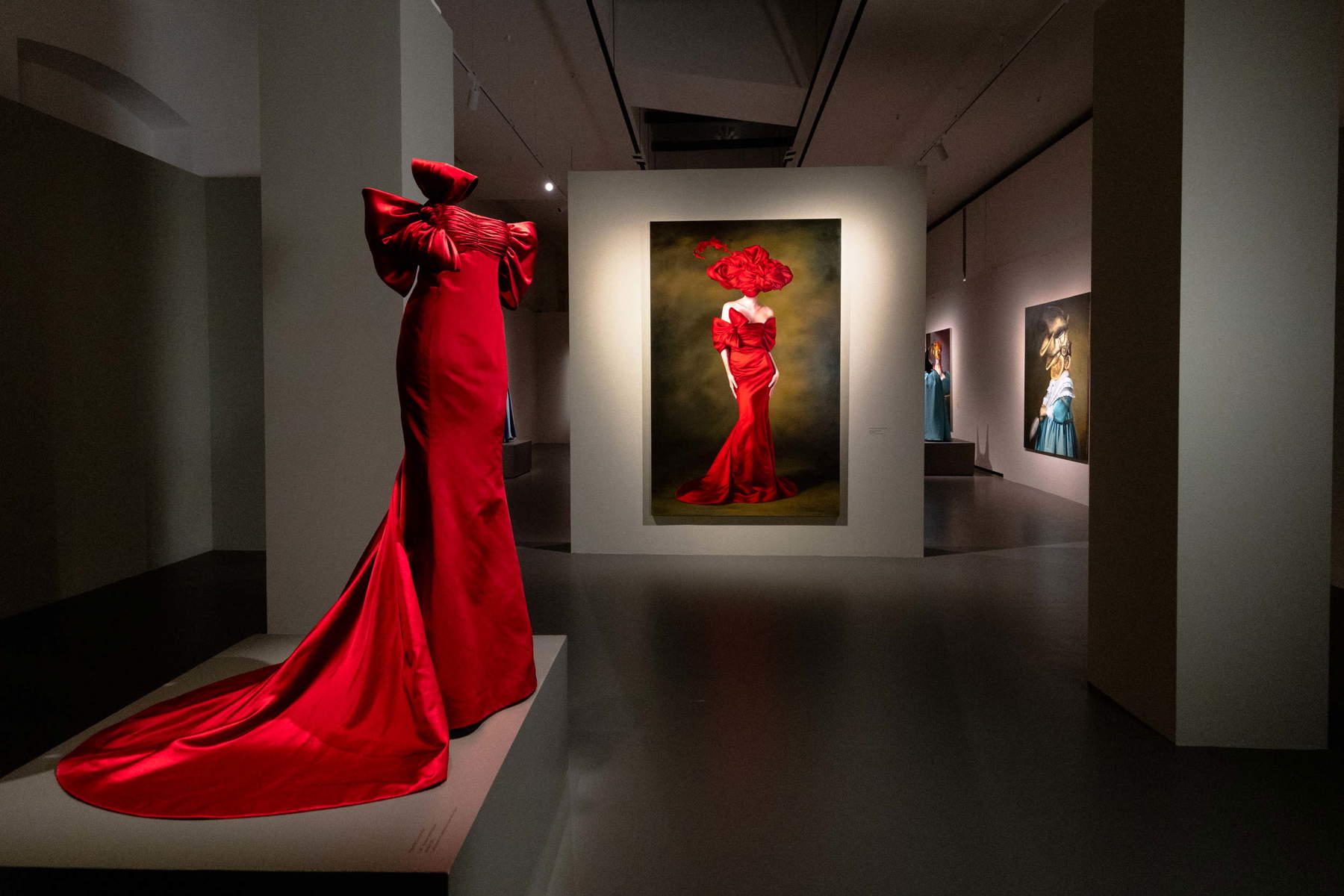
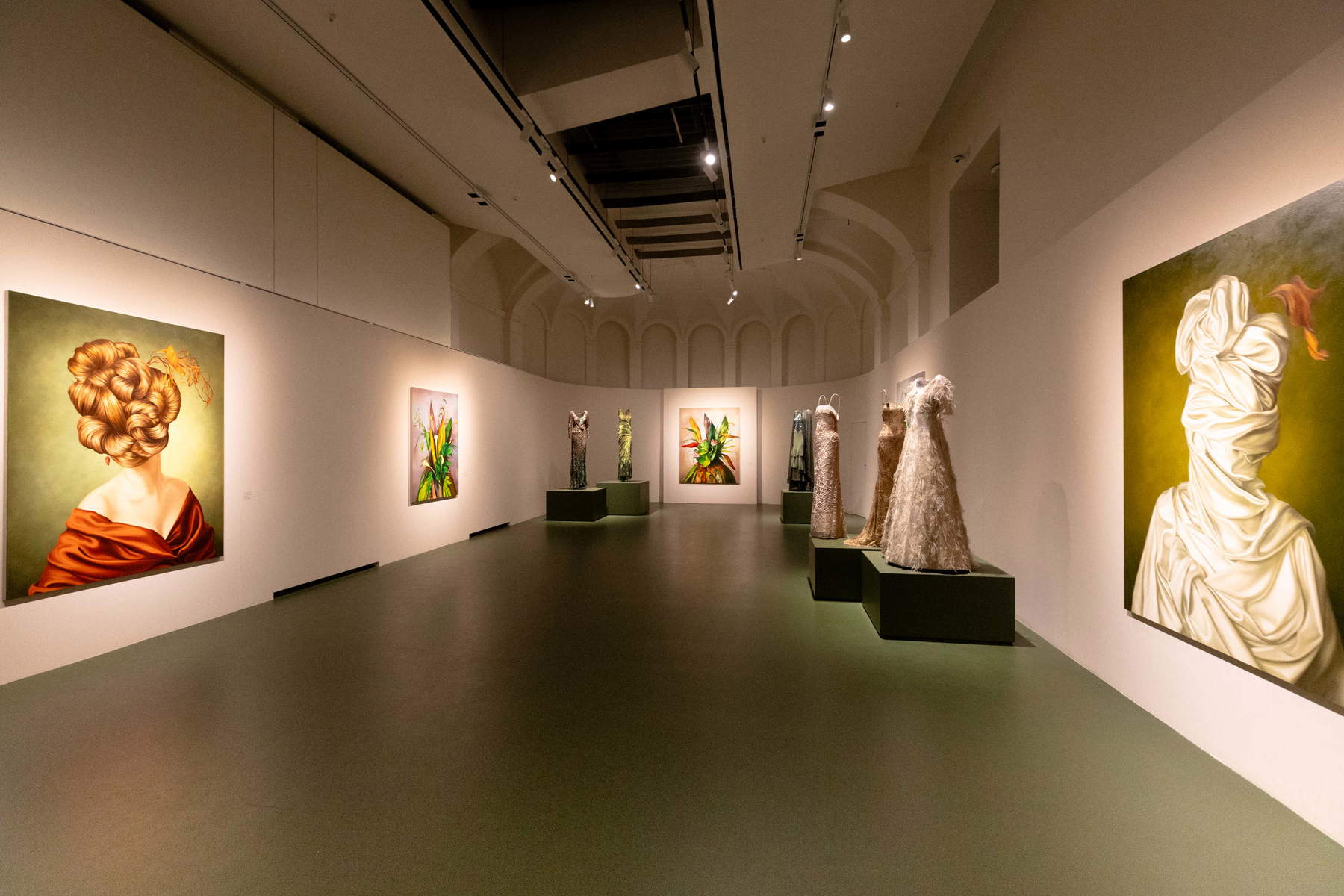
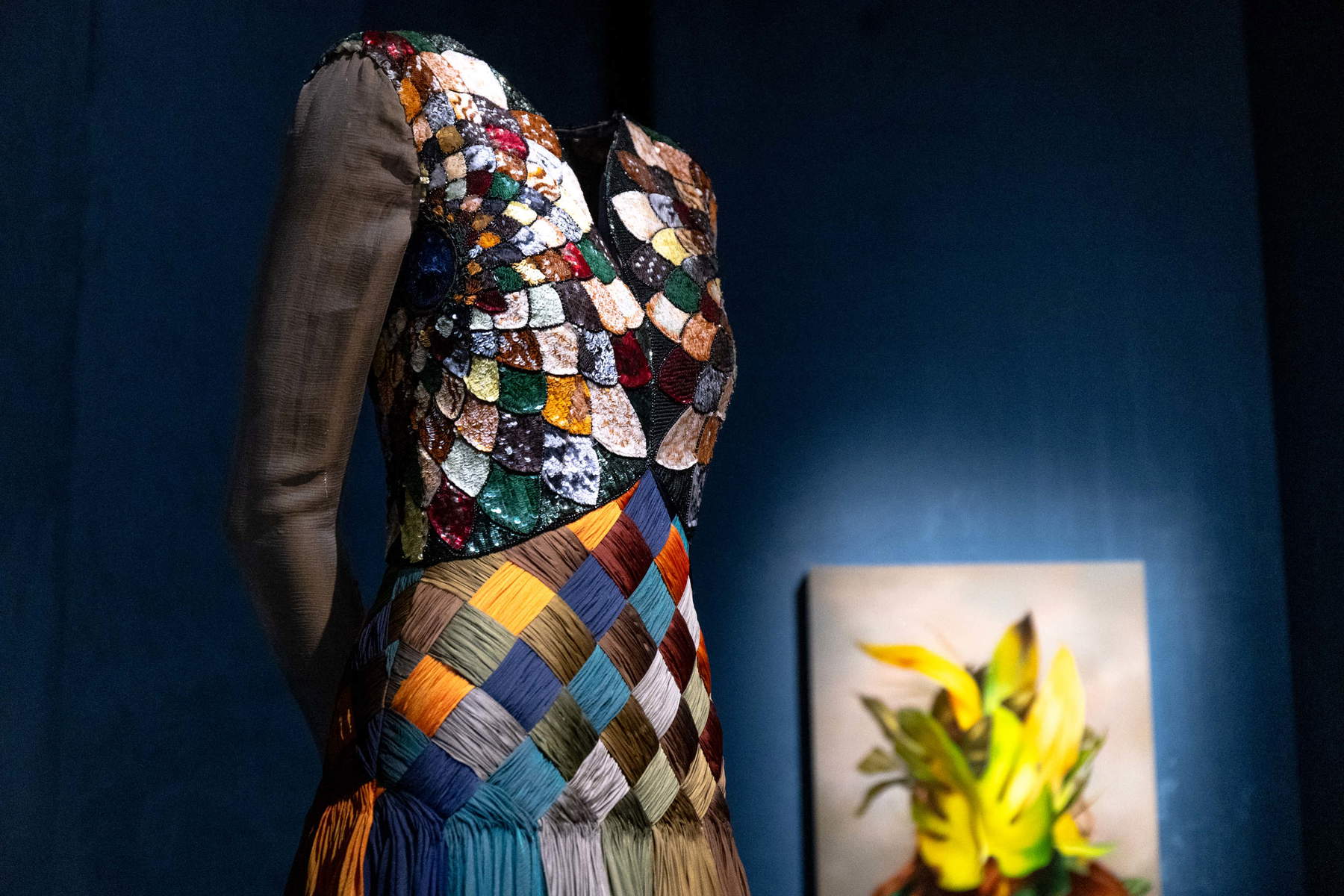
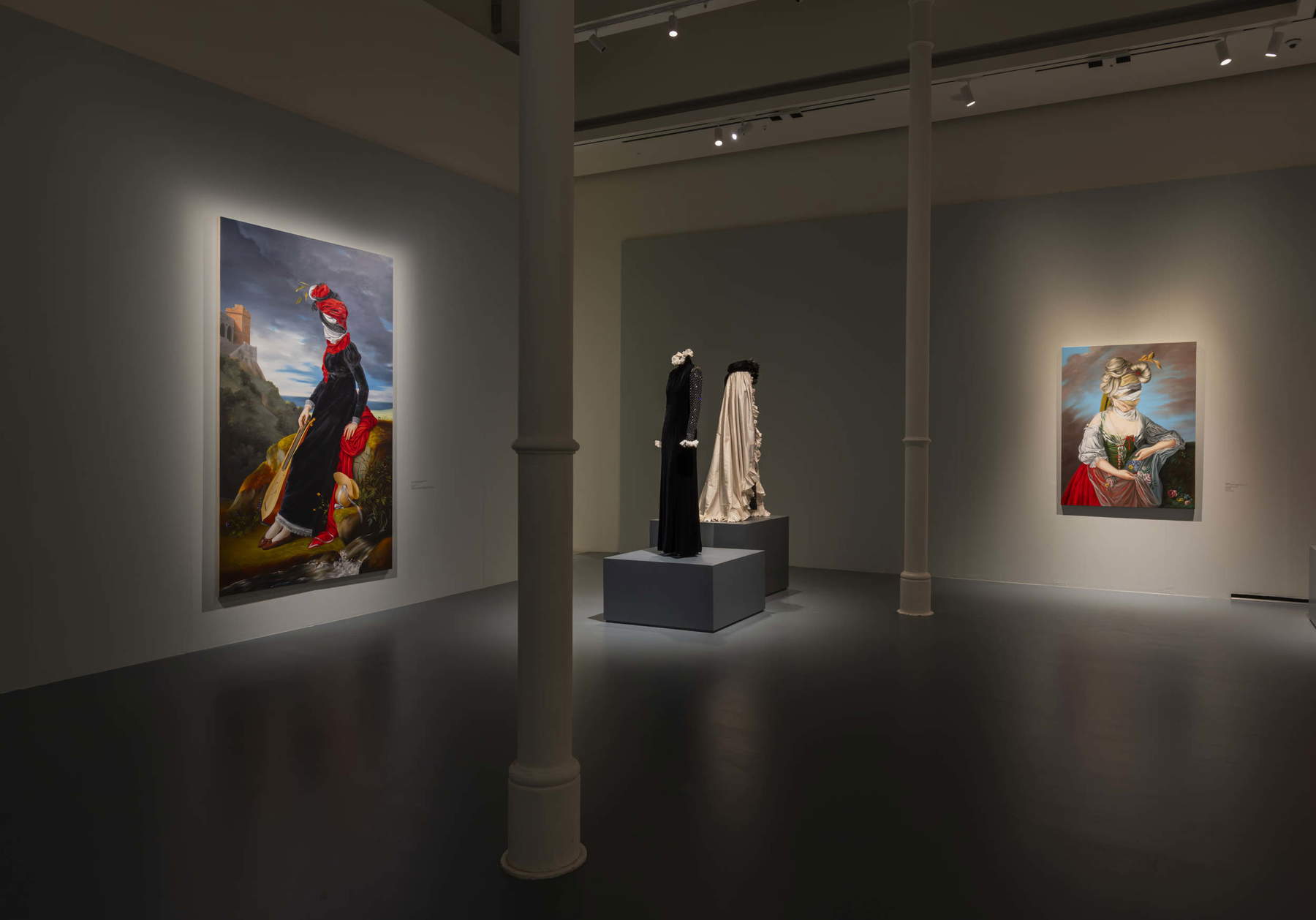
At PM23 in Piazza Mignanelli in Rome—where the Valentino Garavani and Giancarlo Giammetti Foundation hosts its cultural initiatives—the exhibition *AURA. Valentino Garavani and Ewa Juszkiewicz* begins with absences. The walls feature twenty-six canvases by Ewa Juszkiewicz, a Polish painter, who reinterprets female portraits from past centuries by concealing the faces. Where we would expect to see eyes and a mouth, we instead find knotted fabrics, hair, fruits, leaves, and flowers. All around them are thirty-eight dresses selected from the Valentino archives—ranging from haute couture to ready-to-wear—spanning nearly half a century of work, from 1963 to 2008.

The juxtaposition seems like a gamble. On one hand, a master who made a woman’s stage presence the measure of his aesthetic, endowing her with a visual regality composed of sculptural lines, precise cuts, and colors recognizable at first glance; on the other, a painter who methodically erases facial features, canvas after canvas. Then, however, as you walk through the galleries, you realize that the two bodies of work revolve around the same central theme: fabric, drapery, and form as tools of presence and reappropriation. It is a matter of power and gazes that stretches back in time, inscribed in the very history of representation.


Between the seventeenth and nineteenth centuries, posing for a portrait was a full-time job: the lady would remain still for hours, smile with restraint, gaze without defiance, and offer an expression that the patron, her family, and society could recognize as appropriate. Decorum, modesty, idealization: the face served as a canvas upon which an era inscribed its expectations. That gaze, which seemed spontaneous, was nonetheless a mask, worn with the discipline of a bust. The rest of the painting, by contrast, enjoyed surprising freedom. In the drapery, the painter displayed his skill and the patron his wealth, so much so that in some workshops there were specialists tasked solely with painting the drapery. The face had to conform; the silk could be exaggerated.

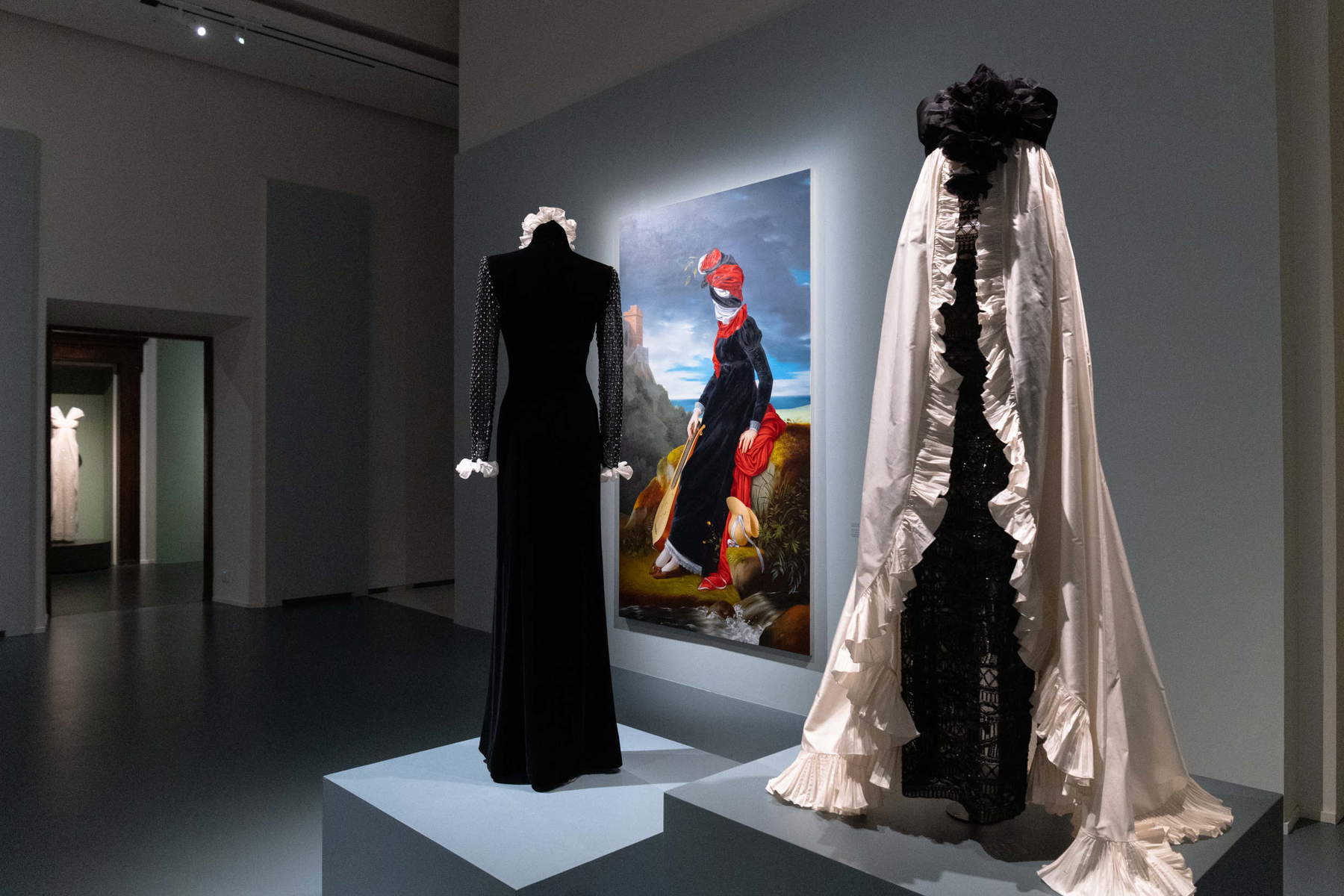
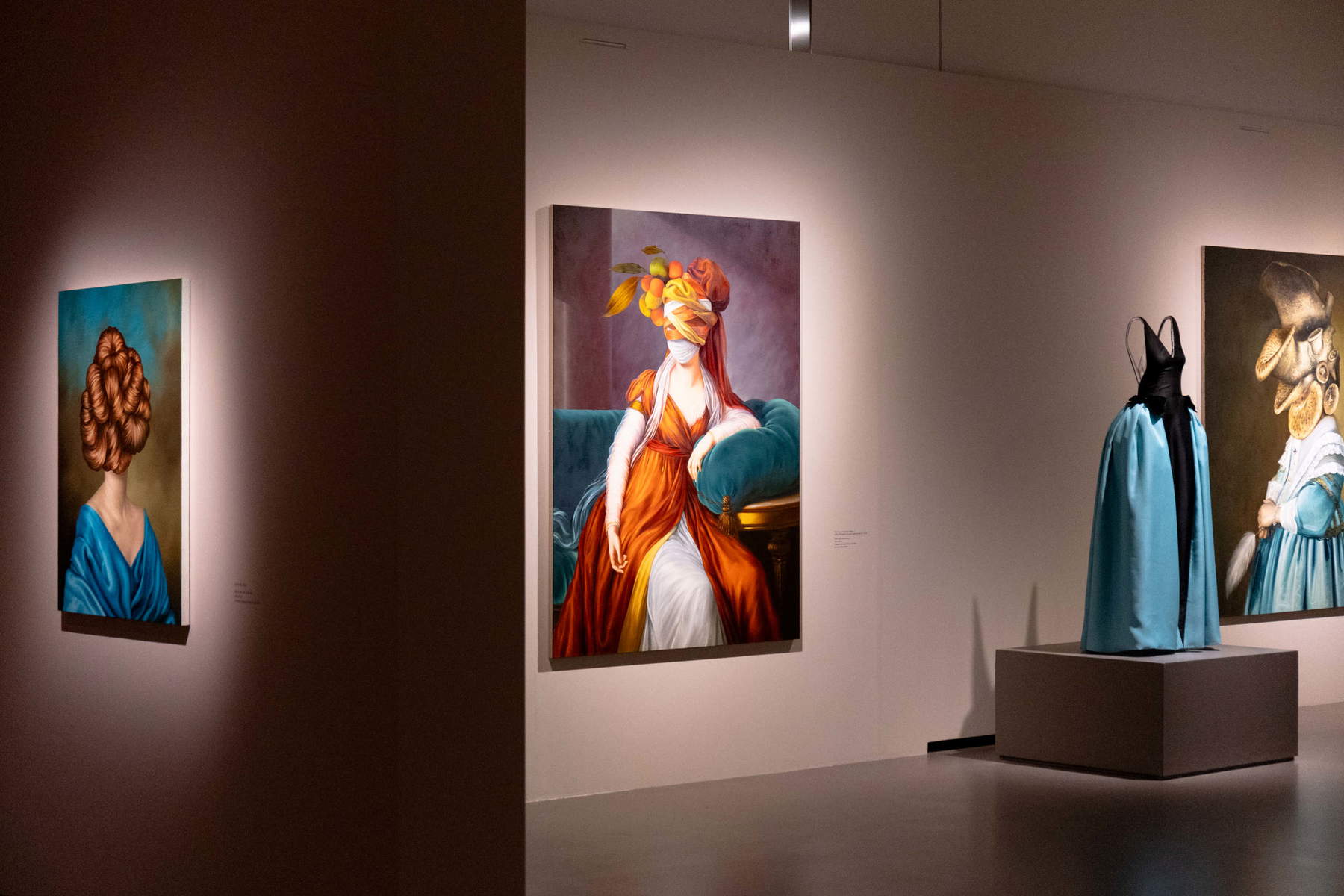
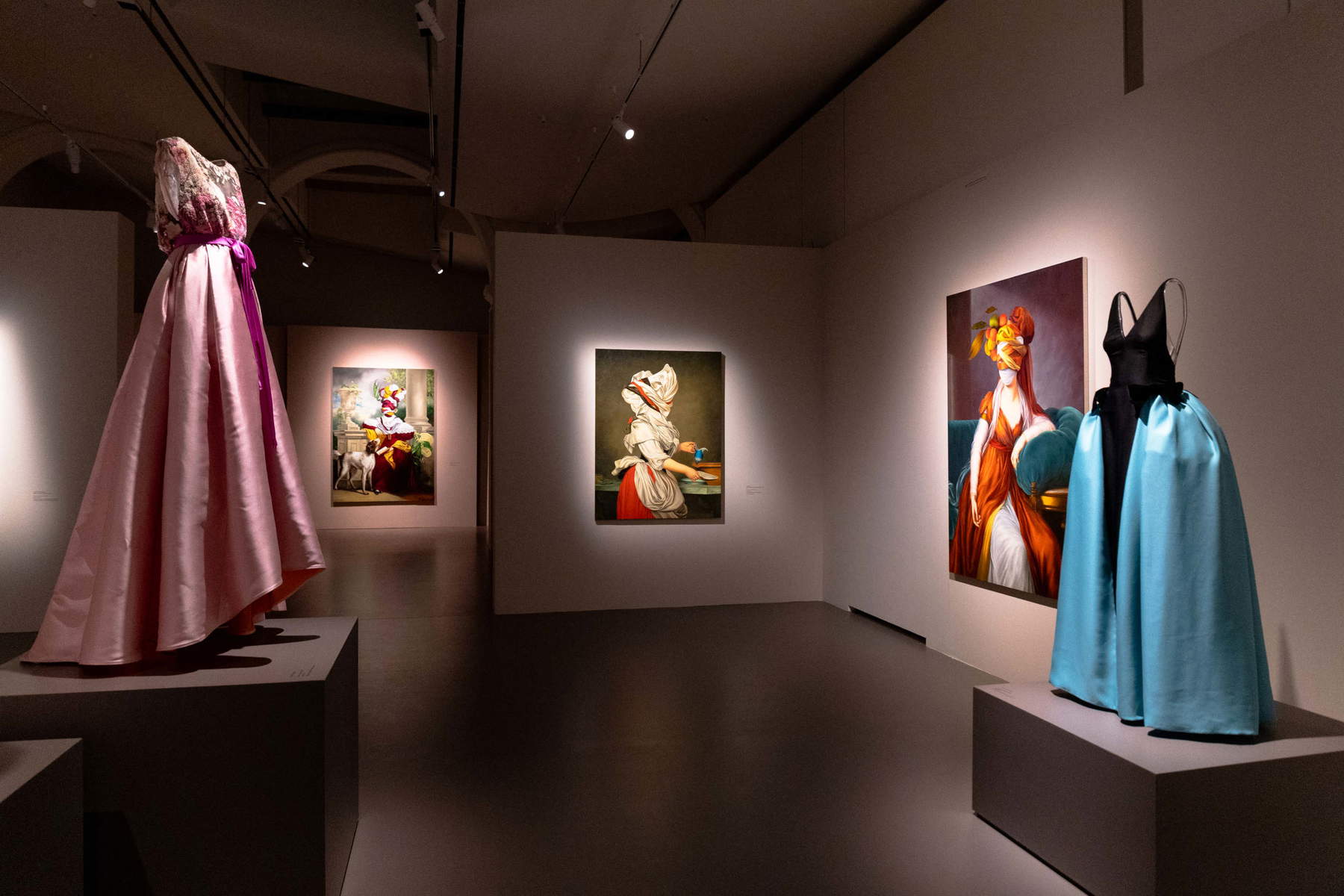
Juszkiewicz takes this asymmetry as her starting point and turns it on its head with impeccably executed subversion. As the artist herself explained, concealing the face is not an act of defense or subtraction, but a gesture of clear liberation: removing facial features means breaking free from the cage of historical and aesthetic expectations that have confined the female figure for centuries. This process is explicitly stated: fifteen of the twenty-six canvases reveal in their titles the paintings from which they derive, referencing masters such as Vigée Le Brun, Wright, Gérard, Boilly, or Sully. This is how the exhibition notes take shape before the visitor’s eyes. Without the familiar outline of a reassuring face, the figure ceases to be a passive object offered up for the viewer’s contemplation and eludes any single interpretation. No one has to please anyone anymore.
Faced with such a rupture, the first reaction is almost one of defense. One is instinctively led to think of an erasure, a figurative act of violence, something that has been taken away. Juszkiewicz’s painting, however, moves in the opposite direction: where the standardized physiognomy of the past fades away, an organic, three-dimensional vitality flourishes. Tangled masses of fabric, monumental hairstyles, spherical volumes of silk, fruits, and botanical elements that must neither smile, nor lower their eyes, nor appear modest. They remain there, enormous and glossy, and their presence is the answer.
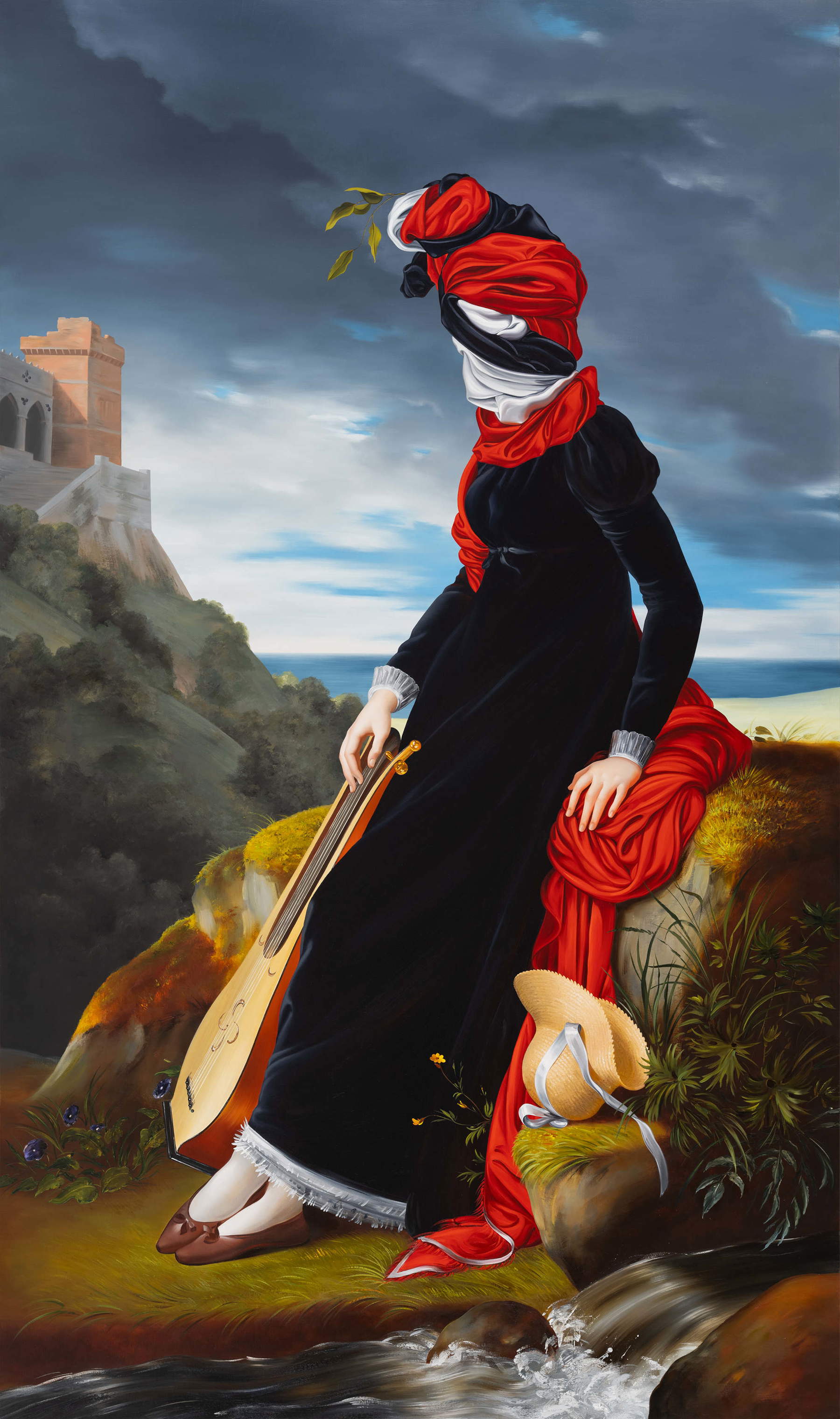
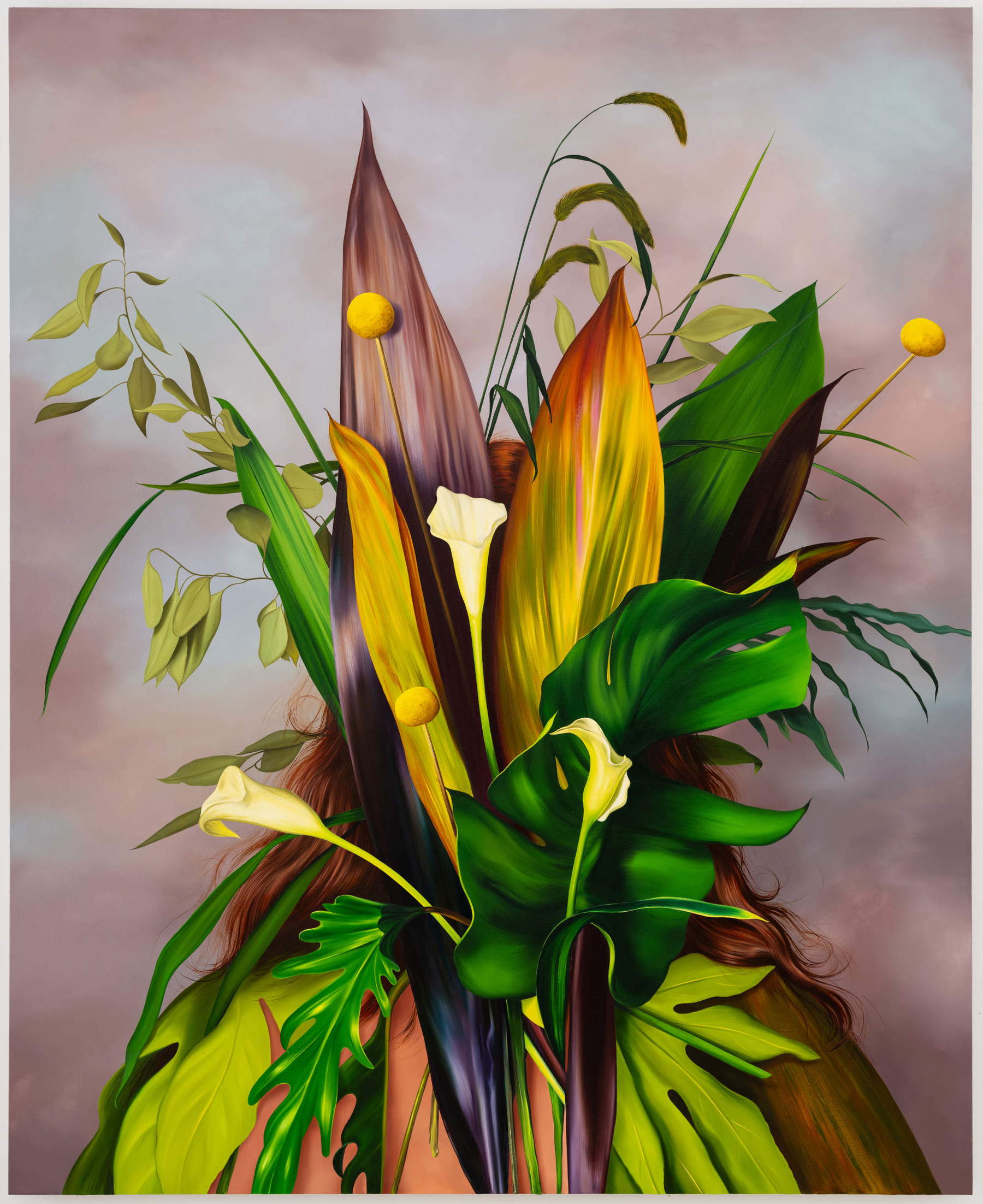
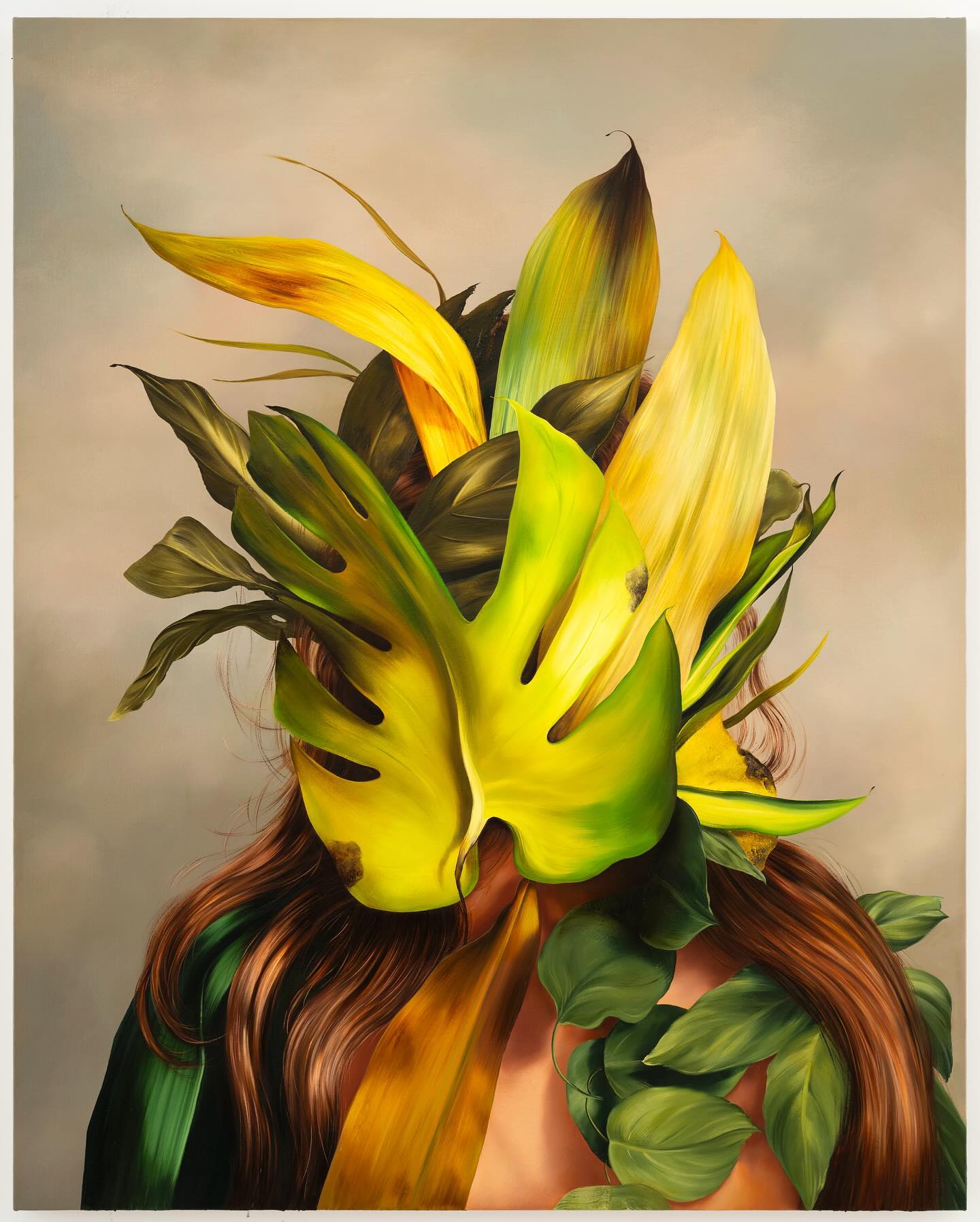
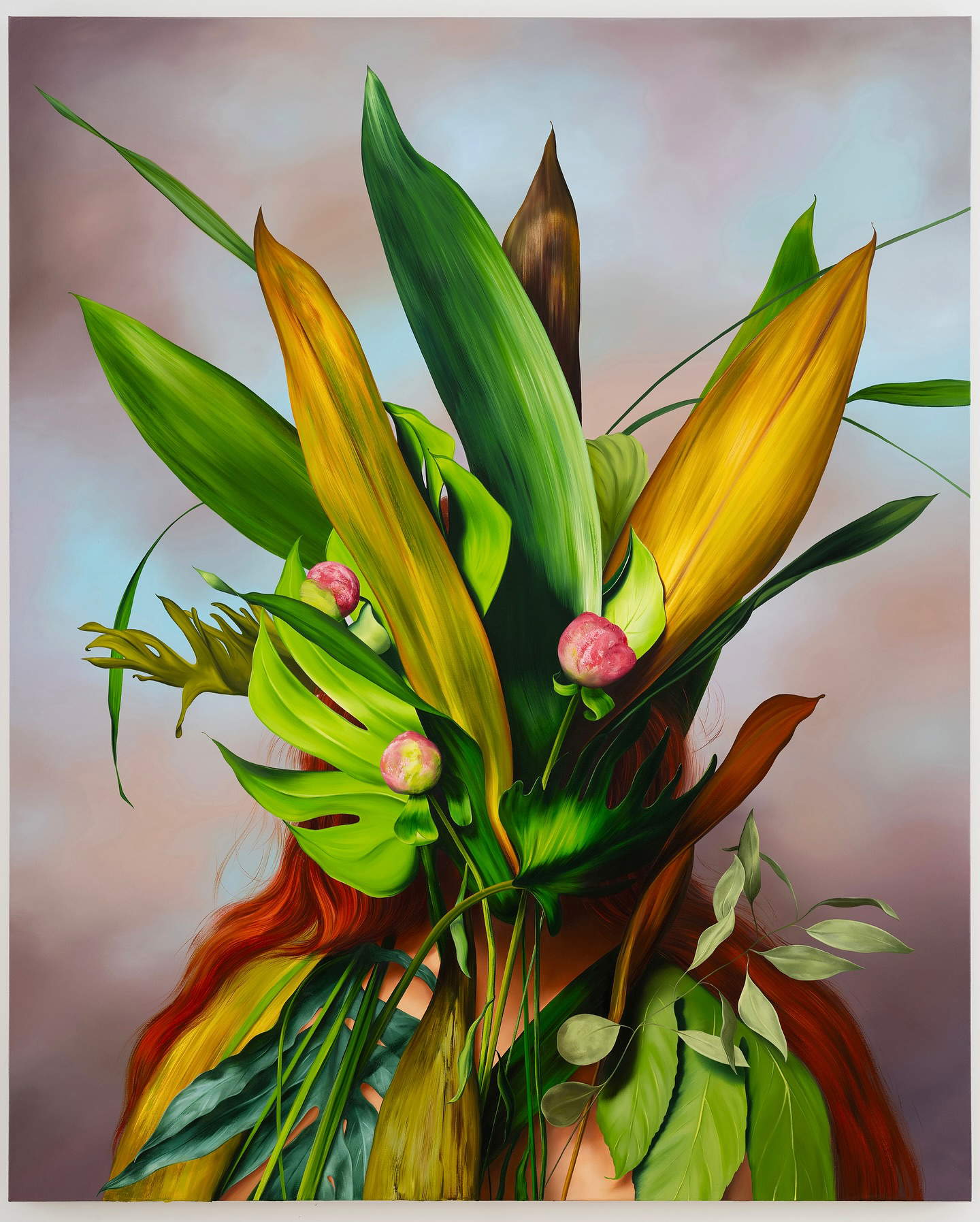
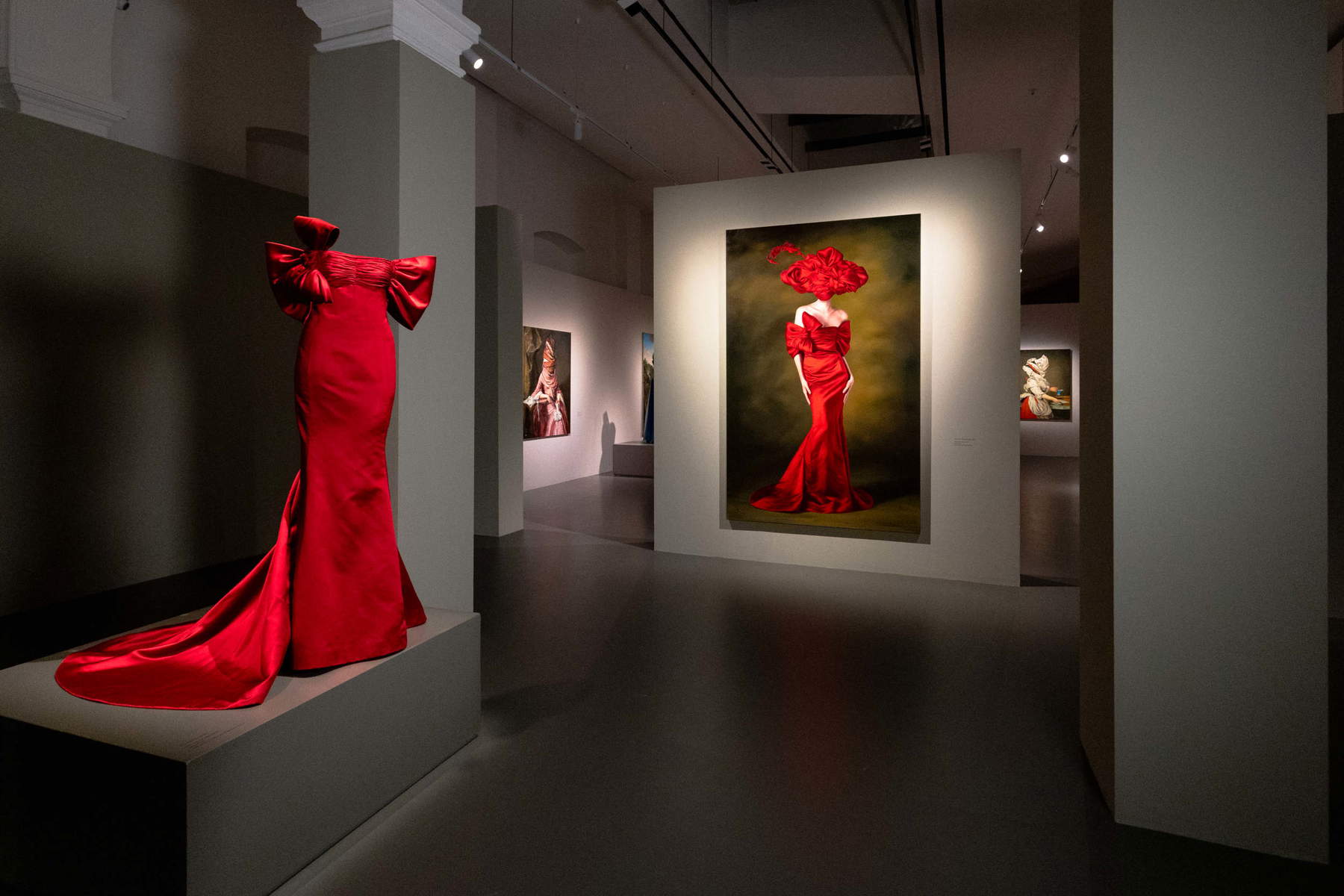
The large leaves of *Monstera* (2024) and the dense composition of *Portrait with Peonies* (2025) thus take the place of the face in their own right, transforming its absence into a new visual focal point. And at this point, the dialogue with Valentino becomes clear. In haute couture, fabric functions like a chisel: from the red duchesse satin of the Fall-Winter 2007/2008 Haute Couture collection to the velvets and taffetas of the 1980s, the couturier’s grand evening gowns sculpt the body and endow it with an almost monumental solemnity. Behind every line lies a workshop of patience—composed of cuts, fittings, and rethinking—of hands that know where silk yields and where it resists. Haute couture tailoring is a science of the surface, and Juszkiewicz knows this well.
With a refined technique that evokes the aesthetics of the paintings from which she draws inspiration, the painter borrows from tailoring its obsession with detail, the sheen of silk, the softness of velvet, and the way light enters the folds of taffeta. She borrows another’s craft and returns it in the form of painting. And it is precisely in this return that the codes are inverted and juxtaposed. For a century, haute couture has constructed its own image of women—solemn, sculpted, recognizable—and that, too, is a code. The fact that a fashion house hosts a painter in its spaces who deconstructs the codes of portraiture suggests that the two languages feel solid enough to spark a direct confrontation.
Portrait in Valentino Red (2026), a work conceived specifically for the exhibition and inspired by the archives of the Fall/Winter 2007–08 Haute Couture collection, fits into this relationship of exchange. Here, Valentino Red abandons its ornamental function to take on the form of an autonomous architecture: the physiognomic element gives way to a complex and exuberant modulation of satin and flowing fabric, suspended between the rigor of a tailored pleat and the power of an organic form. Through meticulous painterly rendering, the drapery ceases to be a device for concealing or veiling, instead taking on the role of the subject’s actual anatomical structure.
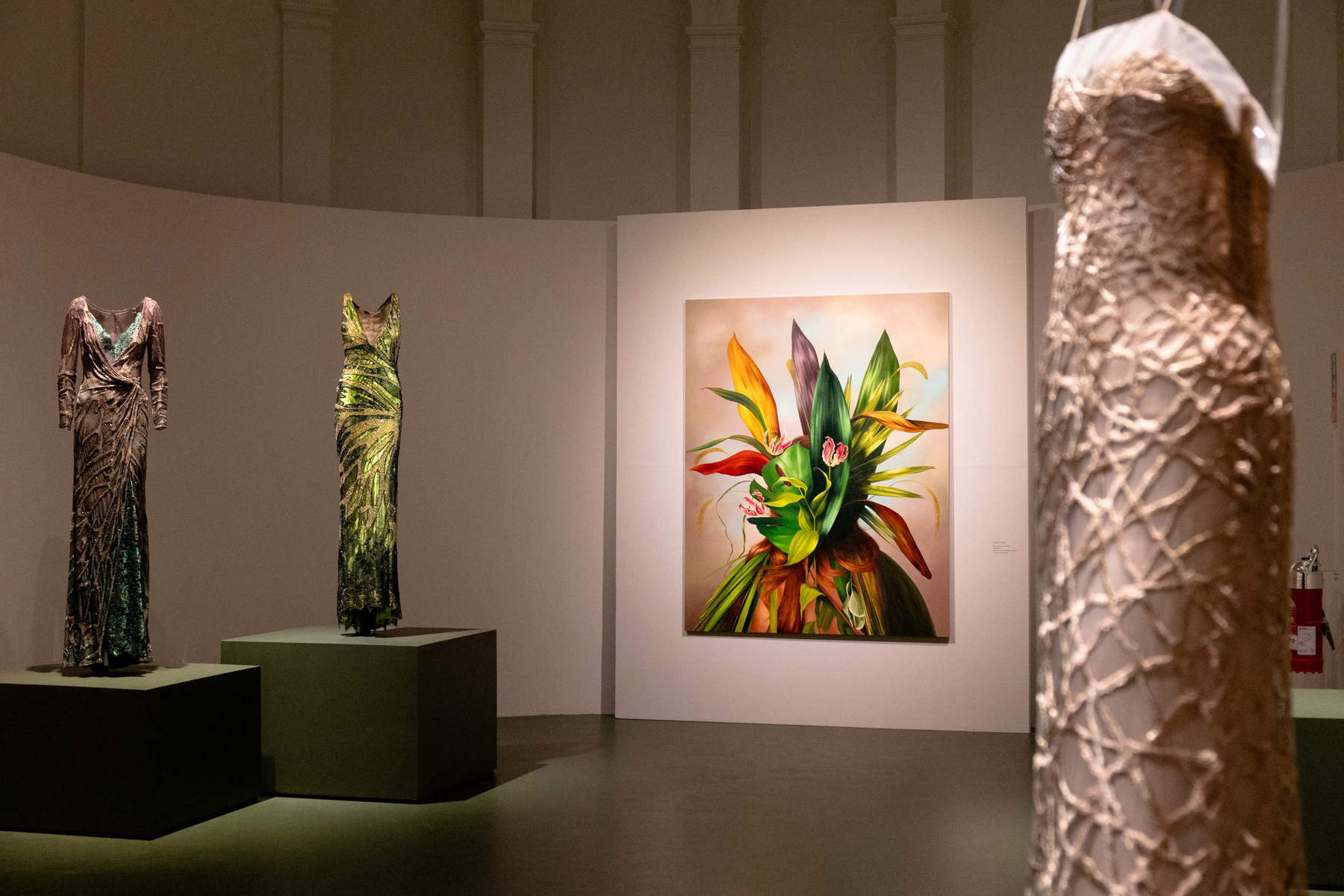
Yet, once the mystery of form has been solved, the promise contained in the title remains to be unraveled: where, in the end, does the aura reside? Walter Benjamin used the term to describe the uniqueness of an apparition—that unrepeatable presence that technical reproduction tends to consume. Here, the aura has a different purpose, as it must be sought in the visual and emotional resonance that remains once conventions have been dismantled. When the face is removed, the void does not follow. What remains is the tension in the neck, the proud posture of the shoulders, the intensity of the pigments, the weight of the material, and the mysterious energy of a presence that refuses to be categorized.
The face, after all, is the most frequently reproduced part of a person—the first to be photographed and recorded—the bulwark that defends our identity and, at the same time, opens the gateway to our digital secrets. Removing it is a more radical gesture than it seems, because it deprives us of the one piece of information we’re accustomed to seeking from a portrait: who the person is.
In an era saturated by an obsession with the instant image, the constant display of the face, and digital recognizability, the exhibition AURA. Valentino Garavani and Ewa Juszkiewicz offers a counter-current detour, suggesting that to rediscover the truth of a figure, we must sometimes learn to observe its transformation.
Warning: the translation into English of the original Italian article was created using automatic tools. We undertake to review all articles, but we do not guarantee the total absence of inaccuracies in the translation due to the program. You can find the original by clicking on the ITA button. If you find any mistake,please contact us.