





A monumental stained-glass window, paintings, collages, drawings, and liturgical vestments chronicle the artistic and spiritual journey of Father Costantino Ruggeri, a Franciscan friar, painter, sculptor, and architect originally from Franciacorta. From October 1 to November 8, 2026, the Diocesan Museum of Brescia will host “Sorella Luce,” an exhibition bringing together a selection of works created by the Franciscan friar between 1962 and 2004, tracing his creative journey and his dialogue with some of the leading figures in 20th-century art and architecture.
Born in Adro, in the province of Brescia, in 1925, Ruggeri developed a body of work that intertwines artistic experimentation, spirituality, and the design of sacred spaces, taking his works to three continents. Throughout his life, he met and associated with artists such as Lucio Fontana, Carlo Carrà, Roberto Crippa, Gianni Dova, Giuseppe Capogrossi, Le Corbusier, and Alvar Aalto. Through the Frate Sole Foundation, which he founded, he also promoted international dialogue on religious architecture, establishing the quadrennial Frate Sole Prize, awarded between 1993 and 2004 to architects such as Tadao Ando, Álvaro Siza, and Richard Meier.
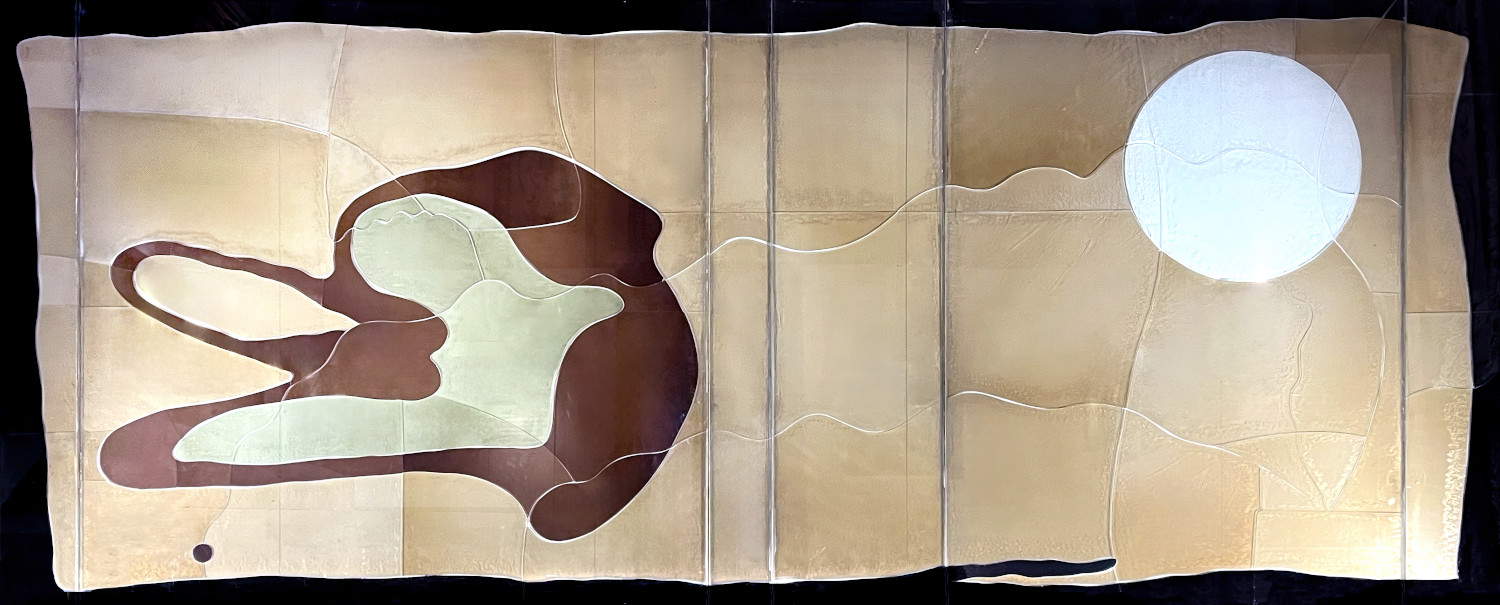
The centerpiece of the exhibition is a large stained-glass window from 1975, crafted from sheets of Murano glass. This monumental work, with its refined composition, serves as the starting point for exploring a body of work that includes approximately 650 artistic stained-glass windows created by Father Ruggeri throughout his career, both in Italy and abroad. Alongside the stained-glass window, the exhibition features paintings on canvas and paper, collages, and studies from the Frate Sole Foundation in Pavia, which allow visitors to trace the various phases of the artist’s creative research and development.
The composition on display in Brescia also stands out for its monochromatic nature, an unprecedented approach in the artist’s body of work. It features two recurring elements of his visual language: the dove surrounded by a cloud and the white sun. The former, whose form is inspired by the works of Georges Braque and Henri Matisse, symbolizes the Holy Spirit triumphing over evil; the latter, meanwhile, evokes the consecrated Host, toward which the bird is flying. The technique used also contributes to the uniqueness of Ruggeri’s works. The glass tiles are glued individually, without resorting to traditional lead-based assembly. The mouth-blown glass, characterized by bubbles, streaks, and variations in thickness, is chosen by the artist for its ability to allow light to pass through and to bring out the colors.
The 1975 stained-glass window was originally created for the chapel of the Casa della Provvidenza on Via Martinengo da Barco in Brescia. Subsequently donated to the Diocese, it was granted on a perpetual loan to the Diocesan Museum, where, at the end of the exhibition, it will remain on permanent display in the Sala delle Colonne on the ground floor. To showcase it effectively even in the absence of natural light, the exhibition design includes a special lighting system designed to simulate the refraction of sunlight through the glass panels. The exhibition thus also serves as an opportunity to permanently incorporate a significant work from Father Ruggeri’s body of work into the museum’s permanent collection.
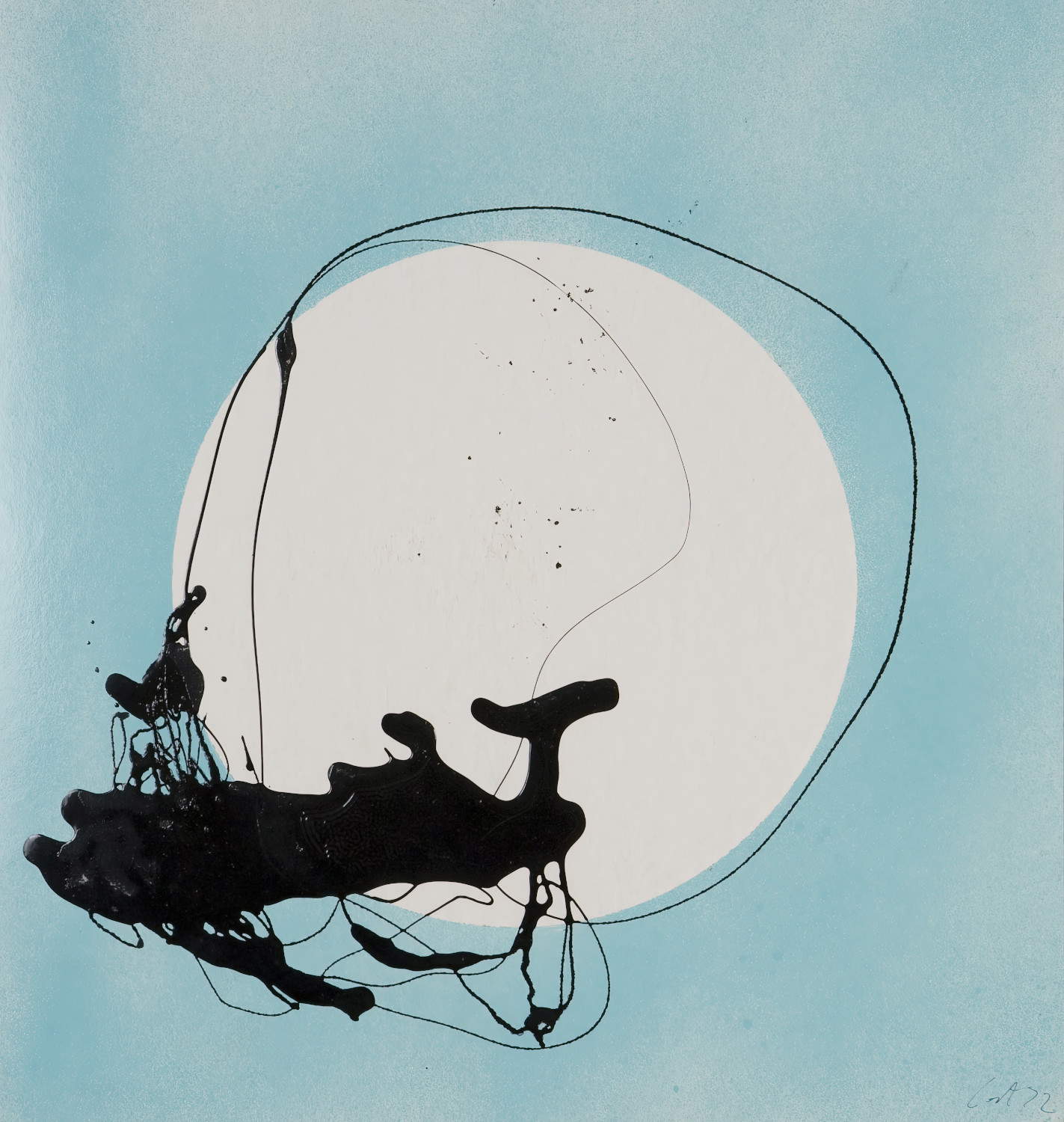
The exhibition itinerary also explores the painterly experiments through which Ruggeri developed a personal artistic language, reinterpreting some of the artistic movements of the 20th century from a Christian perspective. In the 1950s and 1960s, while frequenting the Milan studios of artists such as Lucio Fontana, Carlo Carrà, and Roberto Crippa, the Franciscan friar forged friendships and engaged in artistic dialogue based on shared interests. Among these were light, understood as a manifestation of the divine and the transcendent, along with the search for new expressive possibilities through different materials and techniques. After moving to Pavia in 1959, Ruggeri continued this exploration by developing his own interpretation of avant-garde artistic languages. The affinities with Fontana’s Spatialism emerge above all in the idea of light as a pictorial medium, while the *Macchie Guidate*—created by pouring glossy black or blue enamels onto white cardboard—show parallels with Crippa’s informal experiments.
In some of the *Macchie* from 1972, the motif of the white sun reappears, while in the *Collage* from 2004, the dove takes center stage. These elements allow us to establish a direct connection with the symbolism of the large stained-glass window and to recognize the continuity of Ruggeri’s artistic exploration across different techniques and materials.
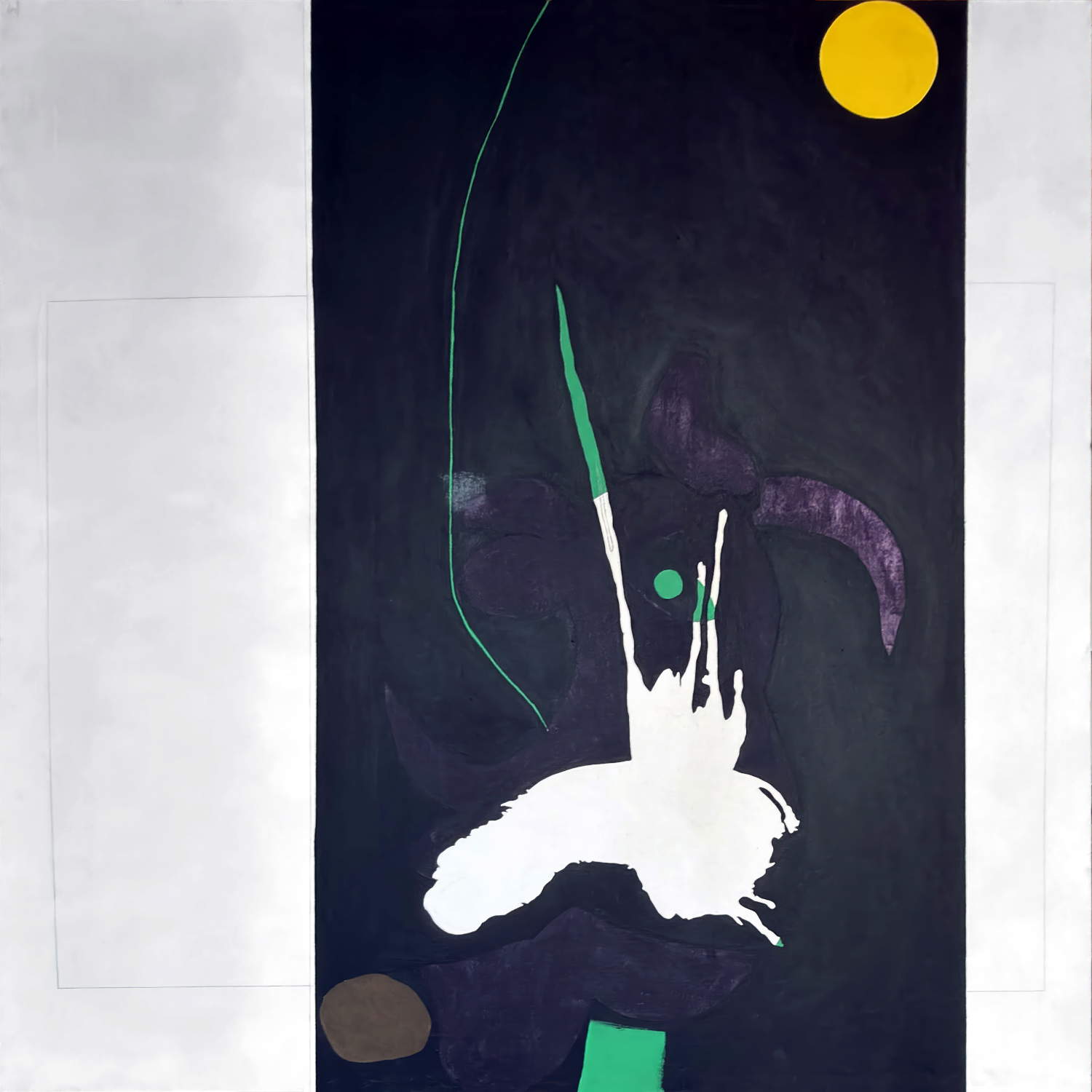
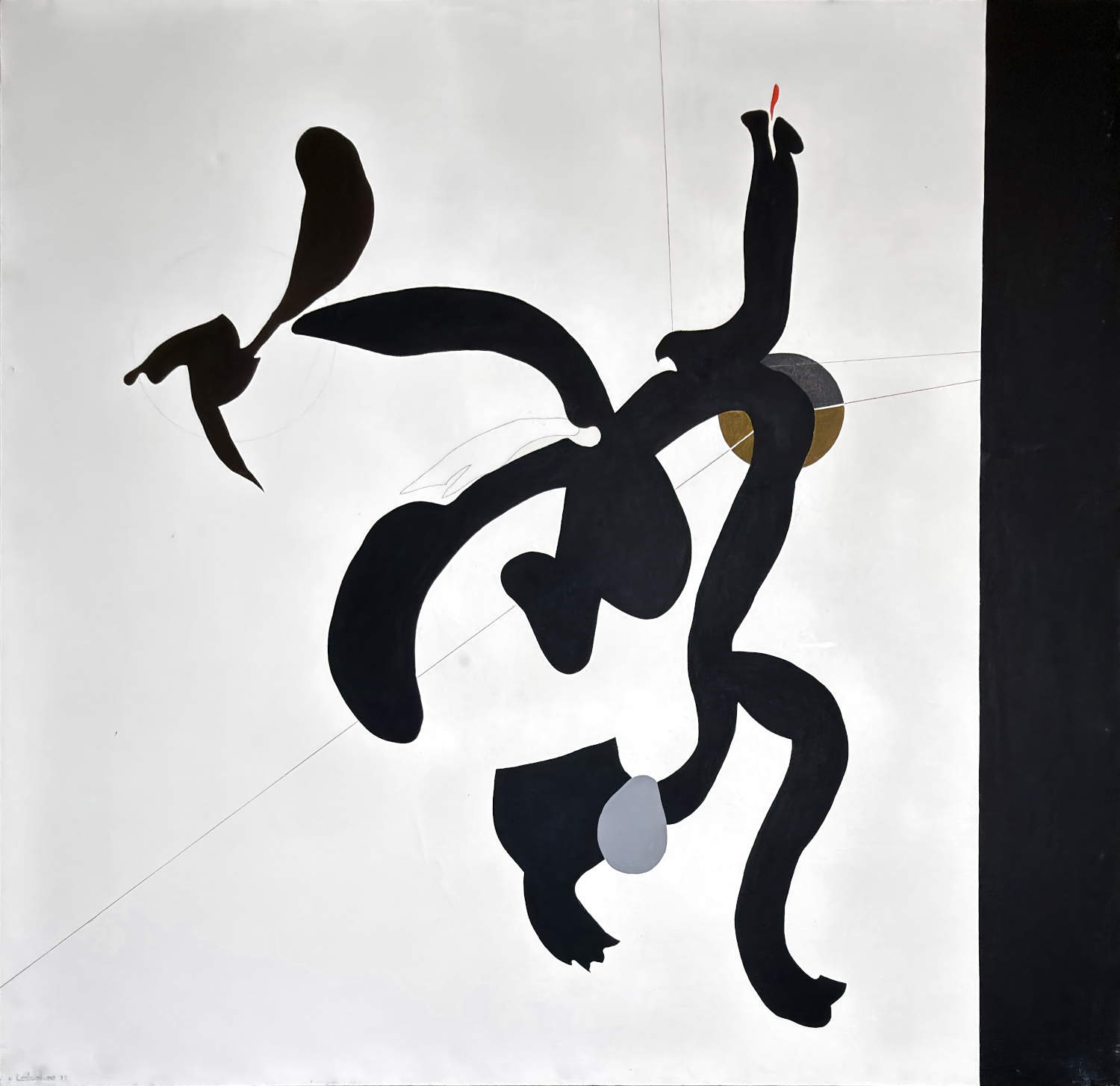
Among the works on display are also *The Meteorite* and *On the Road*, both tempera on canvas from 1962. The former brings together some of the characteristic motifs of the artist’s style, including the sun and the abstract element. The second, devoid of color, stands out instead for a composition that suggests a winding, dynamic, and non-linear path, without any obvious parallels to other works from the same period. The two paintings will remain on view even after the conclusion of *Sorella Luce*, through February 15, 2027, on the first floor of the Diocesan Museum, as part of the *Opera Ospite* series.
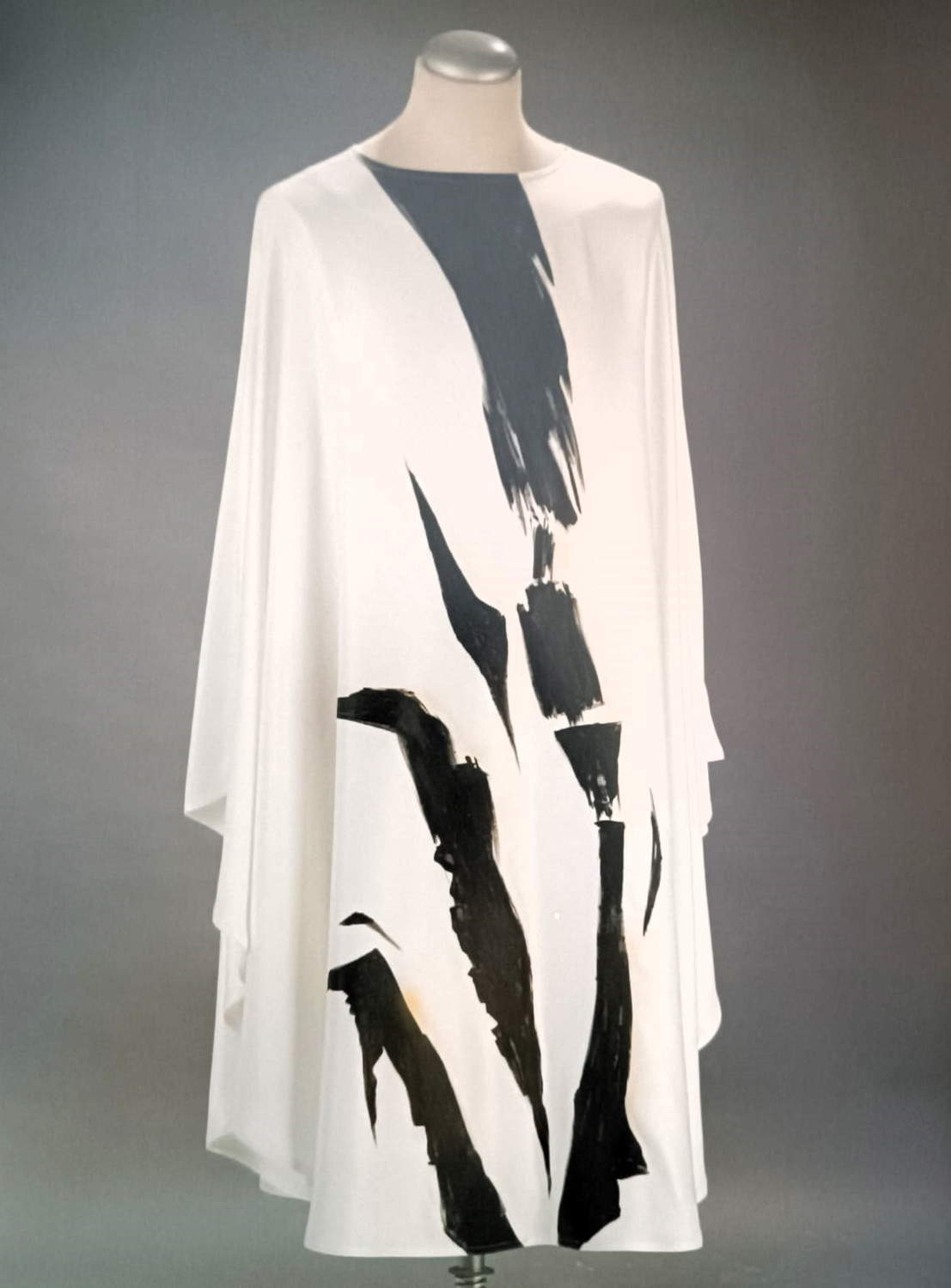
Rounding out the exhibition are two examples of liturgical chasubles—the wide, circular vestment worn by priests and bishops over the alb and stole during the celebration of Mass. These vestments, part of a larger collection donated to the museum, exemplify the transposition of Father Ruggeri’s visual aesthetic onto fabric. His interest in liturgical vestments dates back to the 1950s, when he began creating his first designs. In the 1960s, he produced numerous sketches in tempera and brushwork, developing various models—especially chasubles—sometimes embellished with handcrafted details. Although he never embarked on systematic production of vestments, Ruggeri considered these objects an integral part of the design of religious spaces, convinced that every element intended for the liturgy should contribute to the artistic and spiritual quality of the environment.
Born Carlo Ruggeri, Father Costantino was born in Adro in 1925. After completing his classical studies at the Franciscan monasteries of Saiano and Sabbioncello and his theological studies in Busto Arsizio—where he also created a series of frescoes—he devoted himself to painting under the guidance and with the esteem of Mario Sironi. In 1951, upon completing his theological studies, he was ordained a priest in Milan Cathedral by Cardinal Schuster. That same year, he held his first exhibition at the Galleria S. Fedele in Milan, curated by Sironi himself. At the convent of Sant’Antonio, he continued both his priestly ministry and his artistic work. In 1954, he won first prize in the S. Fedele Painting Competition and third prize in the Marzotto Competition.
In the late 1950s, he turned to sculpture, and between 1958 and 1962, he attended the Brera Academy, earning his diploma with a thesis on Christian epigraphic symbols in the catacombs, supervised by Luciano Minguzzi. During those years, he expanded his network of contacts with internationally renowned artists and architects, including Fontana, Dova, Capogrossi, Crippa, Le Corbusier, and Alvar Aalto. In 1959, he left Milan and moved his studio to the Canepanova convent in Pavia. There he continued to paint and sculpt, working with terracotta and ceramics, before gradually focusing his artistic exploration on sacred space. Alongside painting and sculpture, he designed chapels, furnishings, liturgical objects, and vestments, developing a unified vision of religious art and architecture.
In the 1960s, he experimented with the use of colored Murano glass set into concrete panels, and, beginning in 1966, he began producing artistic stained-glass windows made of antique blown glass, joined with lead. At the same time, he collaborated with architects such as Luigi Figini and Gino Pollini, Gio Ponti, Ignazio Gardella, Giuseppe Vaccaro, Glauco Gresleri, Giorgio Trebbi, and Pierluigi Nervi on the construction of new churches.
Later, together with architect Luigi Leoni, he directly designed buildings and complexes intended for worship: churches, shrines, chapels, and places of prayer for religious institutions. Among his completed works are the Church of Santa Maria della Gioia in Varese (1977), the Churches of the Tabernacle and the Madonna della Provvidenza in Genoa, San Paolo in Rho, Santo Spirito in Pavia, and San Bernardo in Rome, as well as three churches in Burundi. In 1986, he was commissioned to design the Weekday Chapel of Milan Cathedral, for which he created all the elements of the new liturgical space in patinated bronze. The following year, he was commissioned to design the new Sanctuary of the Madonna del Divino Amore in Rome, which was consecrated by Pope John Paul II on July 4, 1999.
After several study trips to Japan, in 1993 he designed the new Sanctuary of St. Francis Xavier in Yamaguchi, which was solemnly inaugurated on April 29, 1998. That same year, through the Frate Sole Foundation, he launched a quadrennial award dedicated to promoting sacred architecture. Between 1993 and 2004, the award was presented to architects Tadao Ando, Álvaro Siza, and Richard Meier. His international work continued until his final years. At the end of 2006, the new Chapel of the Theotokos, Mother of God, was consecrated in Bethlehem, next to the Shrine of the Milk Grotto, which Ruggeri had overseen the restoration of.
On June 24, 2007, his final sculptural work, depicting the face of Franciacorta, was unveiled in Adro. Father Costantino died the following day, June 25, at the hospital in Merate, near the monastery in Sabbioncello, where he had spent the last weeks of his life.
The exhibition is open to the public on Mondays, Thursdays, and Fridays from 10 a.m. to 12 p.m. and from 3 p.m. to 6 p.m.; on Saturdays, Sundays, and holidays from 10 a.m. to 6 p.m. It is closed on Tuesdays and Wednesdays (group tours and workshops are available by reservation).
|
| A monumental stained-glass window and 40 years of research on light: Brescia dedicates an exhibition to Father Costantino Ruggeri |

Warning: the translation into English of the original Italian article was created using automatic tools. We undertake to review all articles, but we do not guarantee the total absence of inaccuracies in the translation due to the program. You can find the original by clicking on the ITA button. If you find any mistake,please contact us.



















 IT
IT FR
FR DE
DE ES
ES CN
CN


