





From November 28, 2026, to April 4, 2027, Biella will host one of the most comprehensive exhibitions dedicated to Italian Divisionism, with a particular focus on its evolution in the early 20th century. Palazzo Gromo Losa and Palazzo Ferrero will host the exhibition *Divisionism 1900–1930. The Mark of the Avant-Garde in Italy, curated by Niccolò D’Agati and Sergio Rebora. This exhibition project, featuring over 150 works, aims to reinterpret one of the fundamental movements in Italian painting by highlighting its role in shaping the avant-garde movements of the 20th century. The exhibition offers a different perspective from the traditional interpretation of Divisionism, focusing not so much on its origins in the last decade of the 19th century as on its evolution between 1900 and 1930, when this painterly exploration became one of the most innovative languages of Italian art. The curators’ goal is, in fact, to demonstrate that Divisionism cannot be considered a phenomenon that ended with the close of the 19th century. Originating in the 1880s and conventionally inaugurated in 1891 with the exhibition of Giovanni Segantini’s *Le due madri*, the movement continued to develop in the following decades, exerting a decisive influence on new generations of artists and contributing significantly to the emergence of the historic Italian avant-garde movements.
The exhibition brings together over 150 works by some of the leading figures of this artistic period. Alongside the great masters of Divisionism—such as Giovanni Segantini, Giuseppe Pellizza da Volpedo, Gaetano Previati, Vittore Grubicy de Dragon, Emilio Longoni, and Plinio Nomellini—the exhibition will also feature artists who would later contribute to the development of the 20th-century avant-garde movements, including Giacomo Balla, Umberto Boccioni, Carlo Carrà, Anselmo Bucci, Leonardo Dudreville, Luigi Russolo, and Guido Marussig.
Through this dialogue between different generations, the exhibition aims to highlight the continuity between Divisionist experimentation and subsequent developments in Italian art. In fact, the exhibition traces the moment when the technique of color decomposition ceased to be merely a painterly solution tied to the representation of light and became a tool capable of redefining the very language of painting.
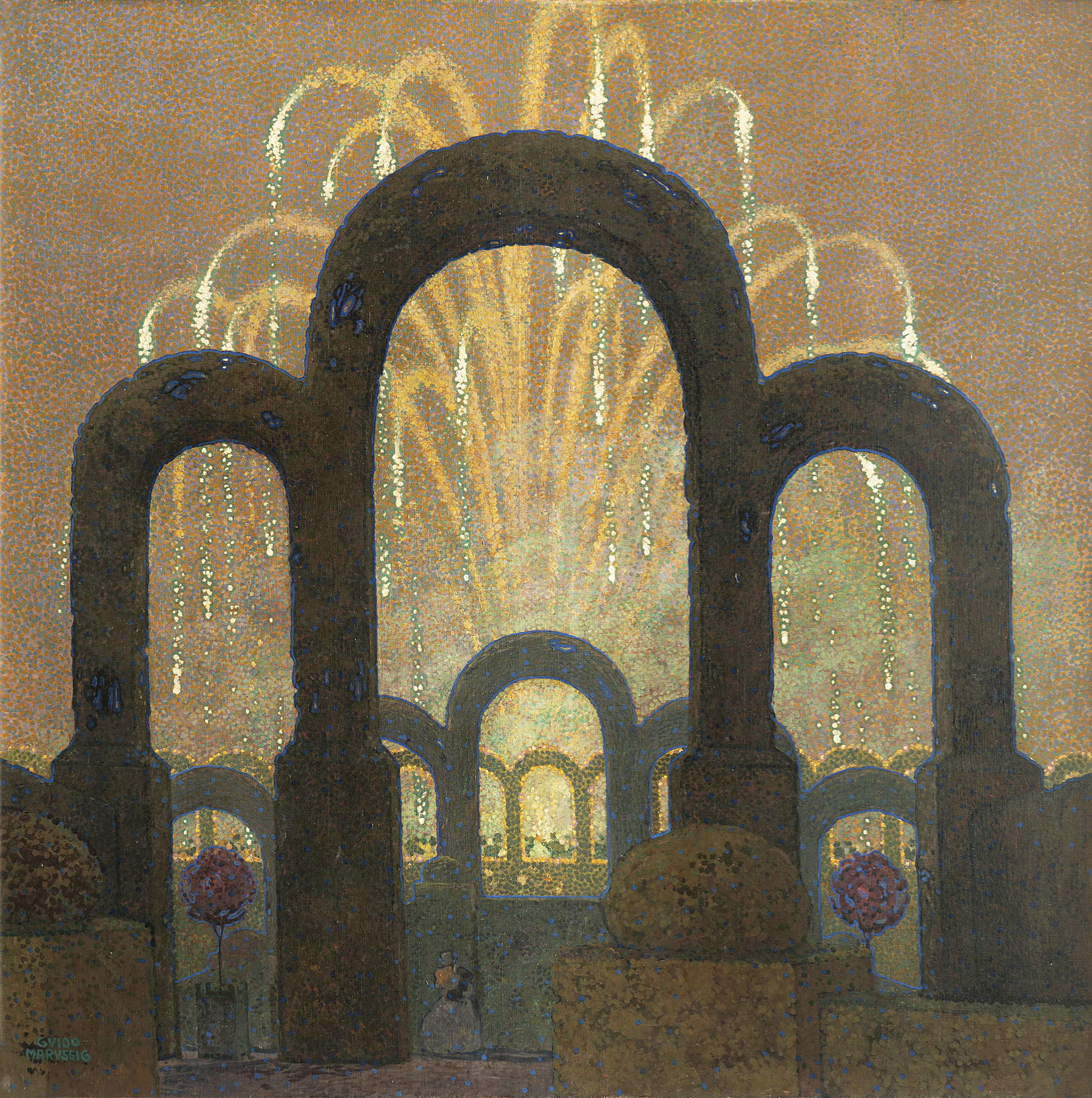
The exhibition’s narrative symbolically begins in 1899, the year of Giovanni Segantini’s death. The artist’s passing is seen as the turning point between the era of the great founders of Divisionism and that of the new generations who, by taking up their legacy, took the movement far beyond its original objectives. The young artists of the early 20th century viewed the work of Segantini, Pellizza, Previati, and the other leading figures of the early Divisionist period not as a model to imitate, but as a treasure trove of expressive possibilities to be further developed. The decomposition of color, the exploration of light, the fragmentation of the brushstroke, and the intensification of chromatic values thus became tools for experimenting with new ways of representing reality.
According to the exhibition’s framework, it was precisely in the early decades of the 20th century that Divisionism fully manifested its innovative potential. Originating primarily within the artistic cultures of Lombardy and Piedmont, the movement gradually transcended the geographical boundaries of its origins and established itself as a national artistic language, capable of engaging artists active in different regions of the peninsula. The evolution of Divisionism also coincided with a profound shift in the conception of painting. The decomposition of color and the exploration of light effects ceased to be merely tools intended to faithfully reproduce natural reality. Instead, they became the starting point for a new way of understanding the image, aimed at evoking sensations, emotions, and moods through the rhythm of the brushstroke and the chromatic construction of the pictorial surface.
From this perspective, elements such as luminous intensity, color saturation, the dynamism of the brushstroke, and the autonomous value of the painterly mark take on particular importance. Artists who embraced the Divisionist tradition transformed these aspects into tools for an increasingly radical exploration, intended to open up new expressive possibilities and challenge traditional models of representation. The so-called “divided mark” thus becomes the foundation upon which many of the experiments that would characterize early 20th-century Italian art develop. The technique, which originated in the nineteenth century, is reinterpreted and adapted to the needs of a generation called upon to confront modernity, the transformations of industrial society, and the progressive renewal of the European artistic language.
It is precisely this capacity for evolution that serves as the central theme of the entire exhibition project. Rather than presenting Divisionism as a closed phenomenon, the exhibition interprets it as an open, dynamic, and constantly evolving language, capable of accompanying some of the most important Italian artistic movements between the 19th and 20th centuries. The exhibition, in fact, documents how the Divisionist legacy continued to exert an influence even into the 1920s. During this phase, the artistic explorations developed in previous decades entered into dialogue with Art Deco culture and the so-called “Return to Order,” demonstrating Divisionism’s ability to adapt to changing tastes and the new expressive needs of Italian painting.
Through this chronological progression, the exhibition highlights how Divisionism represented much more than a simple technique based on the decomposition of color. It became, in fact, a method of exploring the relationship between light, form, perception, and representation, destined to profoundly influence artists who would later follow very different paths.
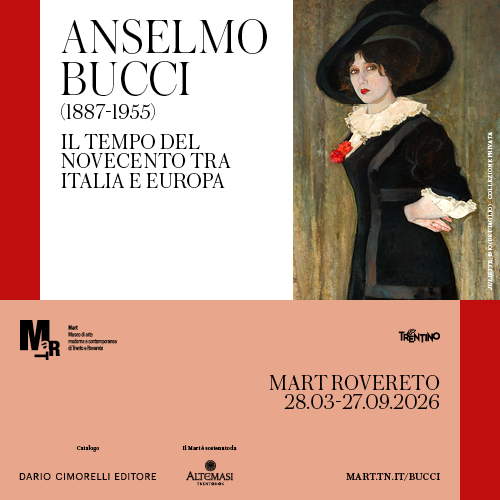
The presence of figures such as Balla, Boccioni, Carrà, and Russolo attests precisely to this continuity. Many of the leading figures of the Italian avant-garde found in Divisionist experimentation an initial ground for exploration, subsequently developing independent artistic languages that would contribute to the emergence of Futurism and other fundamental movements in 20th-century art. Alongside the major figures now firmly established in art history, the exhibition also highlights artists such as Anselmo Bucci, Leonardo Dudreville, and Guido Marussig, helping to paint a broader and more nuanced picture of the history of Divisionism during the first three decades of the century.
Divisionism 1900–1930. The Mark of the Avant-Garde in Italy is organized by Palazzo Gromo Losa Srl, an operating company of the Fondazione Cassa di Risparmio di Biella, and by Dario Cimorelli Editore, in collaboration with the City of Biella, Palazzo Ferrero—Fondazione Accademia Perosi ETS, and Biella, a UNESCO Creative City. The initiative also benefits from the support of the Banca di Asti Group.
“This major new exhibition on Divisionism,” says Michele Colombo, president of the Fondazione Cassa di Risparmio di Biella, “represents a fundamental step toward the growth of our region. This initiative stems from a strong collaboration among local institutions, united by the common goal of promoting the Biella region. The project is not only a high-profile cultural event but a concrete driver of tourism. Through art, we aim to attract visitors from outside the province, offering an experience that combines culture, hospitality, and identity. The Cassa di Risparmio di Biella Foundation firmly believes in this regional network, which has the potential to drive development. We invite everyone to discover an event that demonstrates how local synergy can produce great results. Biella thus reaffirms itself as a dynamic, open destination capable of competing on the national cultural scene.”
“Major exhibitions,” says Marzio Olivero, mayor of Biella, “have the power to leave a mark that goes beyond the visit itself: they invite us to pause, observe more closely, and reflect on our times through the universal language of art. In particular, Divisionism—the theme of the exhibition, which will open on November 28—represents a movement that transcended the boundaries of representation to become a social language. Culture, therefore, is one of the most powerful tools for a community’s growth, but it is also a strategic investment for the region. Exhibitions of this caliber strengthen Biella’s identity within the national cultural landscape, attract new visitors, and generate value for the local economy and tourism sector. “We want Biella to continue to be a city where art is not merely admired, but becomes an experience capable of stirring emotions, helping us to be innovative and creative, and truly contributing to the city’s evolution.”
“Partnering once again with the Fondazione Cassa di Risparmio di Biella for the exhibition ‘Divisionism 1900–1930: The Mark of the Avant-Garde in Italy, ’” concludes Maurizio Rasero, president of the Banca di Asti Group, “renews our commitment to the local area and its cultural growth. We believe that the value of a local bank is also measured by its ability to contribute to the cultural and social development of the community, by promoting initiatives that foster participation, inclusion, and shared growth.”
 |
| An exhibition in Biella explores Divisionism as the origin of the Italian avant-garde |

Warning: the translation into English of the original Italian article was created using automatic tools. We undertake to review all articles, but we do not guarantee the total absence of inaccuracies in the translation due to the program. You can find the original by clicking on the ITA button. If you find any mistake,please contact us.




















 IT
IT FR
FR DE
DE ES
ES CN
CN


