



by Redazione 09/11/2026


Categories: Exhibitions / Disclaimer
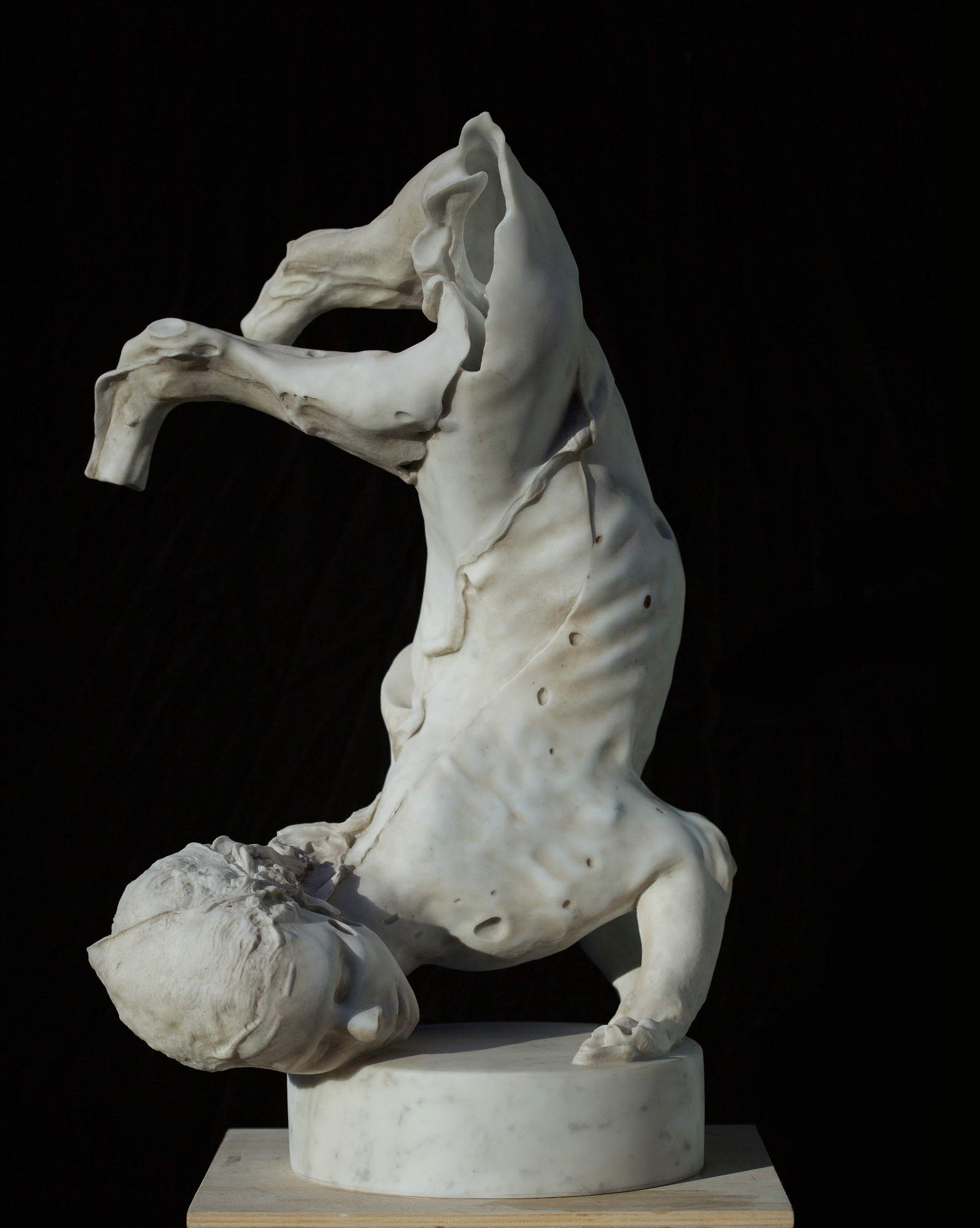
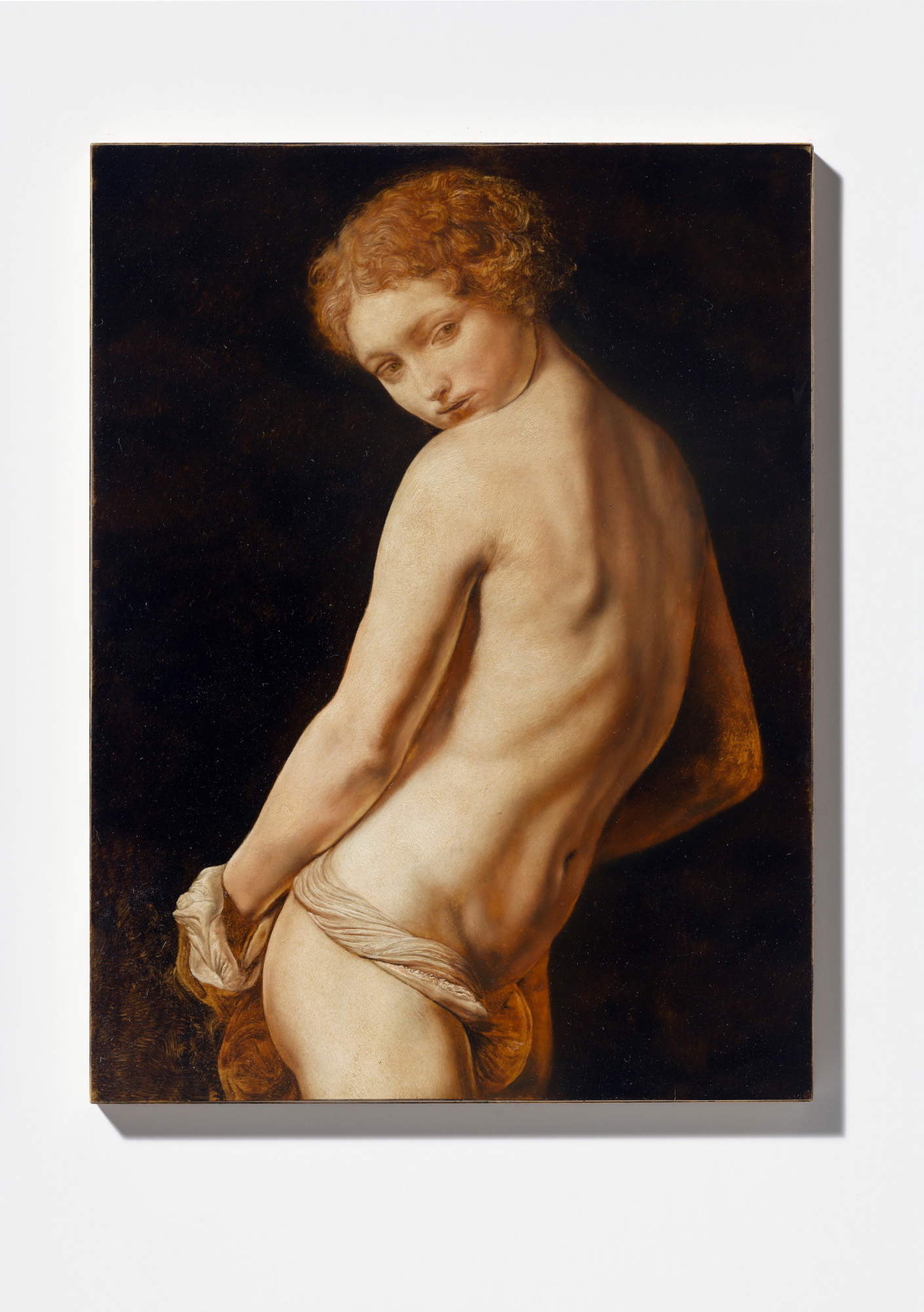
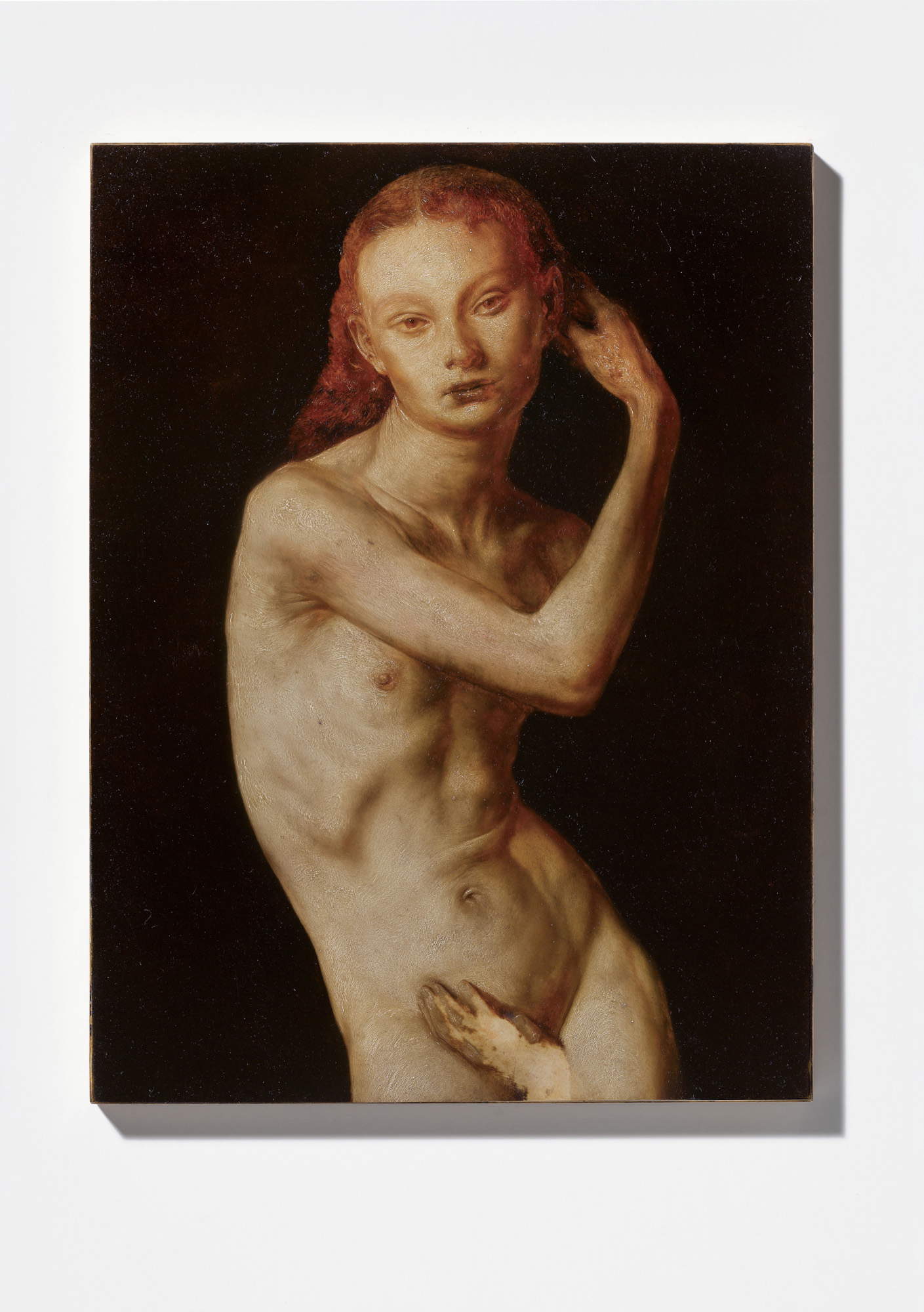
At the MAR in Ravenna, Nicola Samorì juxtaposes his works with a little-known cast by Canova, *The Dying Horse*, and with *The Sleeping Endymion*. The exhibition *Supremalia* brings the artist back to the city of mosaics, the marbles of San Vitale, and the Gipsoteca, where he received his training.

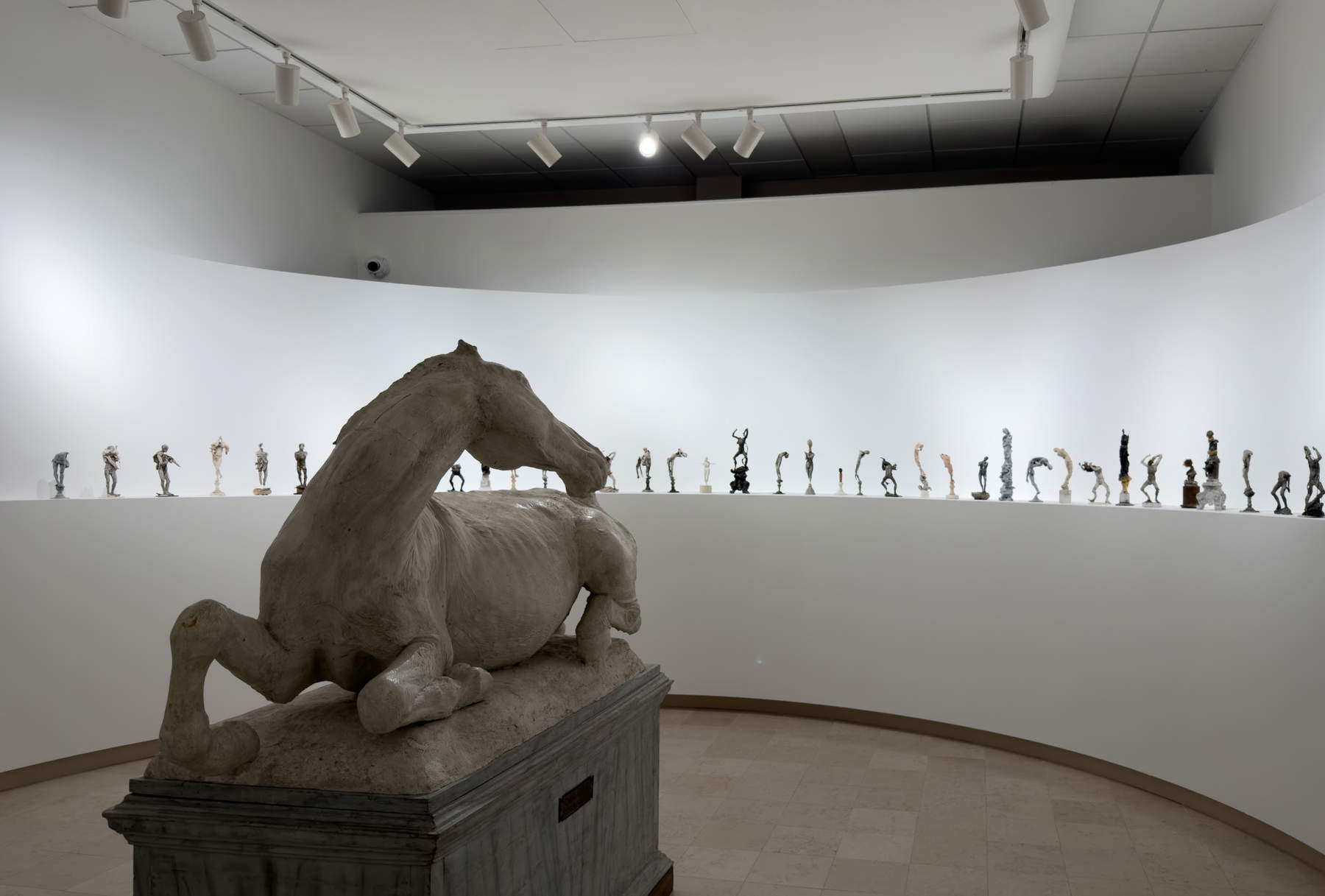
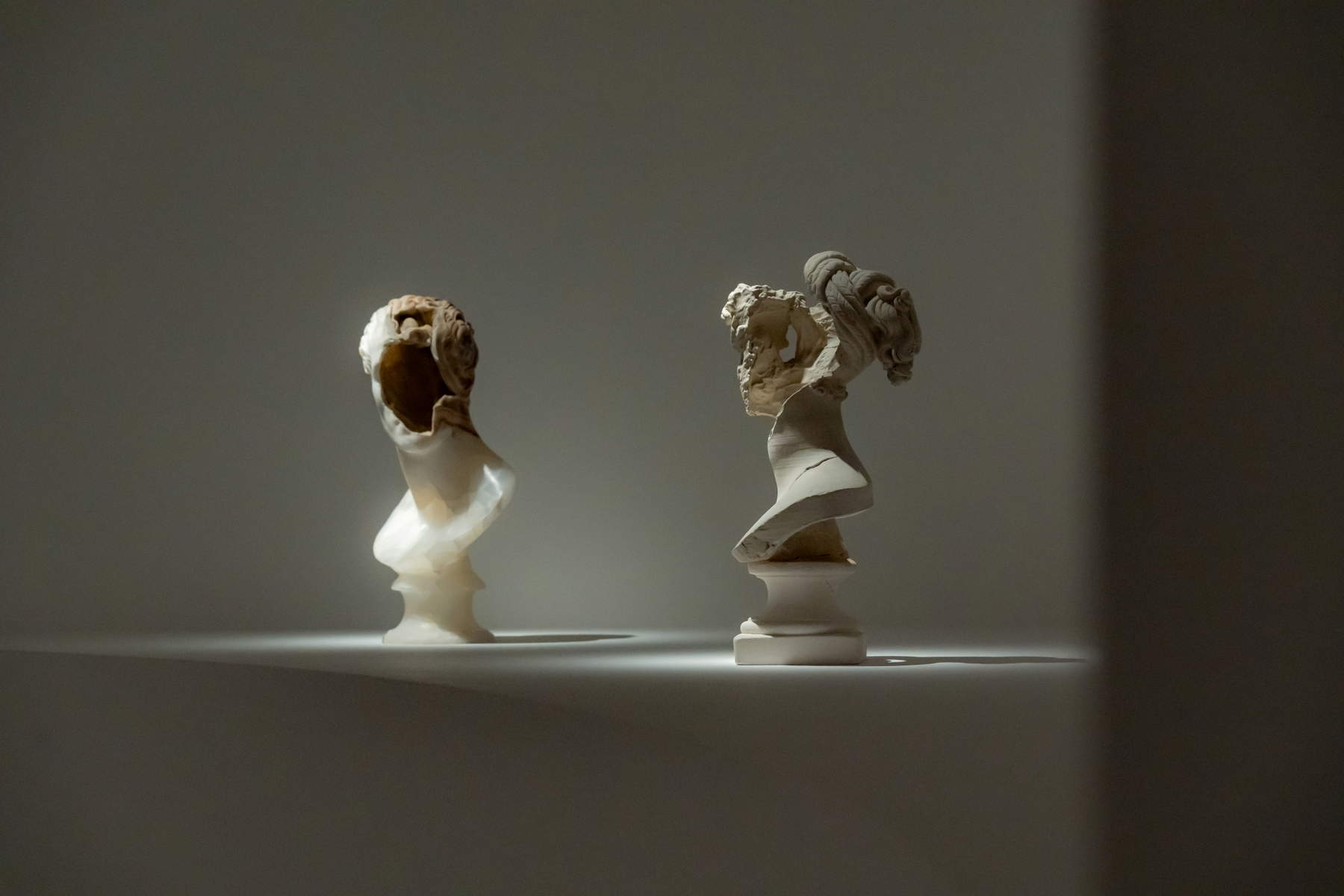
A horse lying down, its body sprawled on the ground. It is neither one of Antonio Canova’s colossal horses nor one of his polished, perfect figures: it is a plaster cast that the sculptor made of the reclining animal as a study, modeling its postures according to what he was interested in exploring. Among Canova’s many horses, this is one of the least well-known, yet it was a difficult work to execute and is of great interest. This plaster cast is housed in the Gipsoteca of the Academy of Fine Arts in Ravenna, now part of the MAR, the Art Museum of the City of Ravenna.


What is particularly striking is what is missing: in *The Dying Horse* , there is none of the expressive elegance and polished surface that characterize so much of Canova’s work. In their place is a sense of living, monumental presence and an eroticism that is not idealized but entirely tied to the material itself. It is precisely for this reason that, for a long time, the cast has been an object of admiration for Nicola Samorì (Forlì, 1977), who has now chosen it as the focal point of his solo exhibition at the MAR. *Supremalia*, curated by Denis Isaia, runs through January 17, 2027.
Starting from here means choosing an unconventional Canova. The sculptor’s name usually evokes perfectly finished surfaces, marble that resembles skin, and idealized bodies. The Dying Horse, however, reveals the less public side of his work: it is a study, a trial, a moment in the creative process where the form has not yet been smoothed out. For an artist like Samorì, who focuses his artistic intervention precisely on the surface of the image, it is a logical starting point.



From Studio to Studio
The comparison with Canova is unprecedented. Next to the horse, Samorì has arranged a series of small models that he uses in his work to study the dynamism of the figures. On one side, then, is the studio of a neoclassical sculptor; on the other, the working tools of a contemporary artist. The poses and materials of the two artists converge, and the dialogue takes place on common ground: workshop practice, research on the body, and the transition from model to finished work.
Neither of the two works in this comparison is a finished piece in the traditional sense: Canova’s cast is a study, and Samorì’s models are tools—objects that usually remain in the artist’s studio and are rarely seen by the public. Placing them side by side shifts the focus from the result to the process—that is, to the way in which two artists, two centuries apart, observe a body, experiment with its positions, and test its materiality.
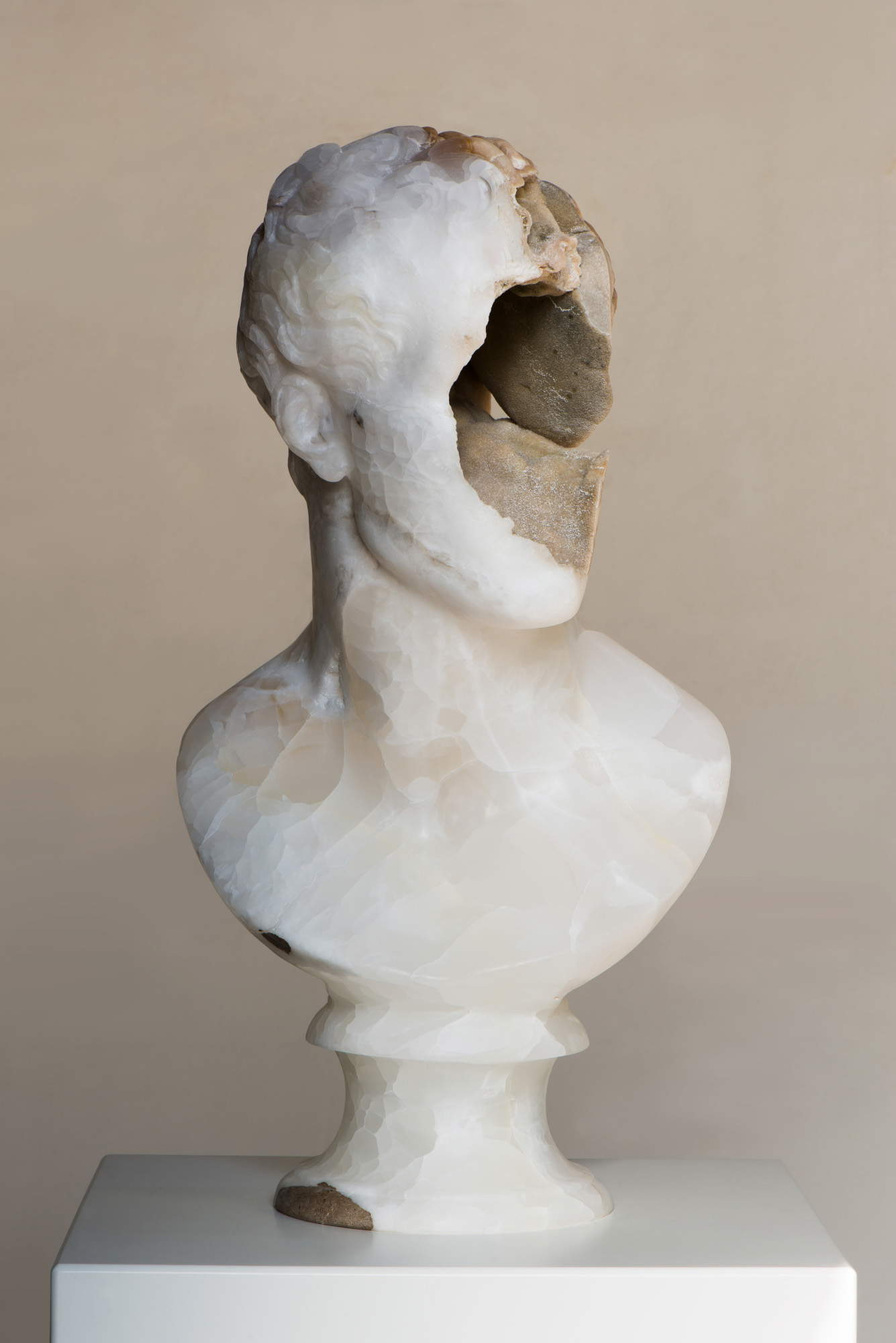
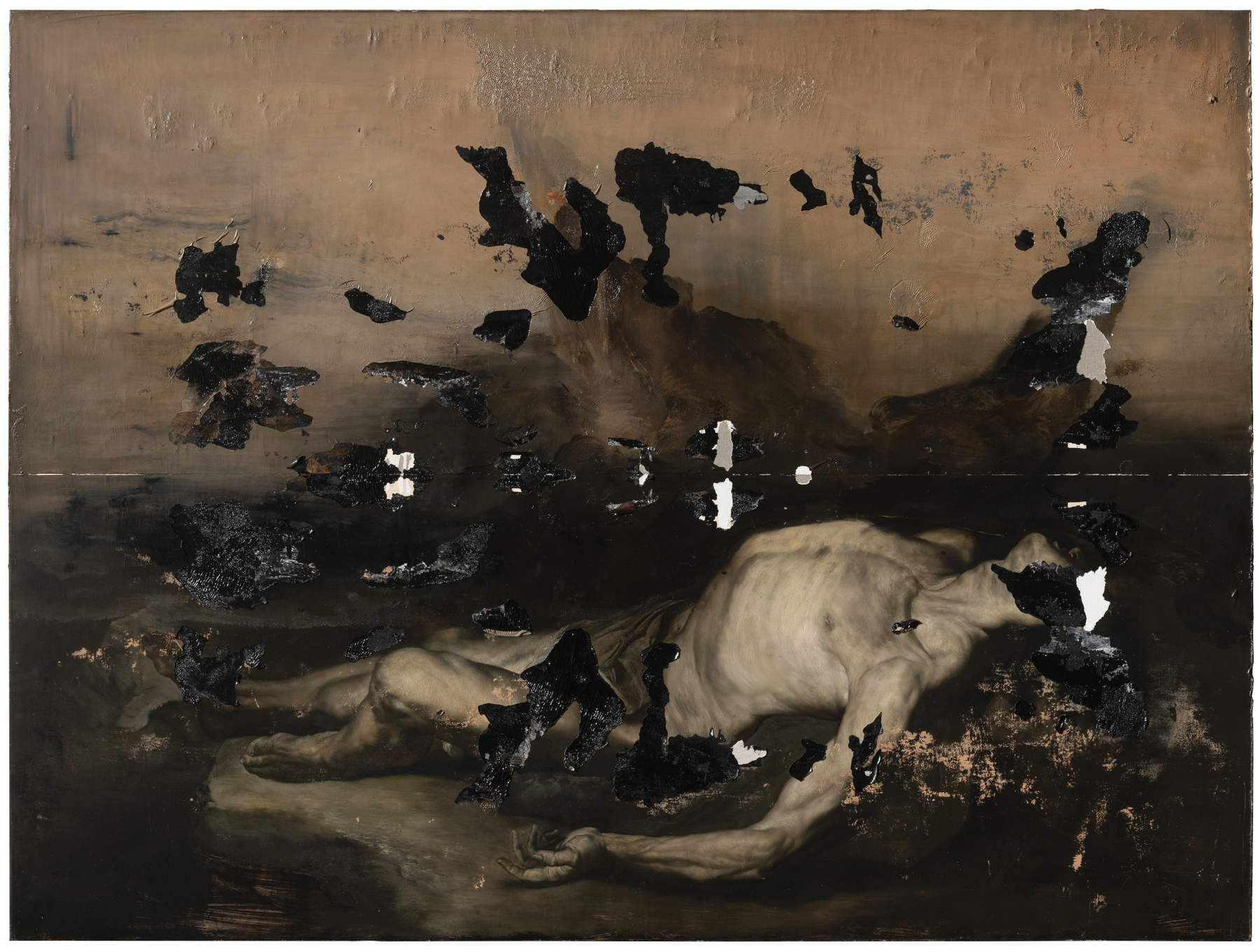
The exhibition texts speak of a pursuit “that unfolds within the craft,” played out, for both Samorì and Canova, “among the flesh and skins of art history.” The reference to skins is no coincidence for those familiar with Samorì’s work, as he has for years intervened on the surfaces of his paintings and sculptures by abrading, flaying, and deforming them.
Canova, however, does not merely appear at the center of the exhibition: he opens and closes it. The dialogue with what the exhibition describes as the most classical and sumptuous of Italian sculptors accompanies the visitor’s first steps and bears witness to an age-old connection between the two artists. The Dying Horse occupies the center of the exhibition, while a second plaster cast by Canova,the Sleeping Endymion, appears at the end. It connects the final room to its extension in the loggia that houses the plaster cast gallery. Here, Samorì’s works continue to engage with the classical models in the collection.
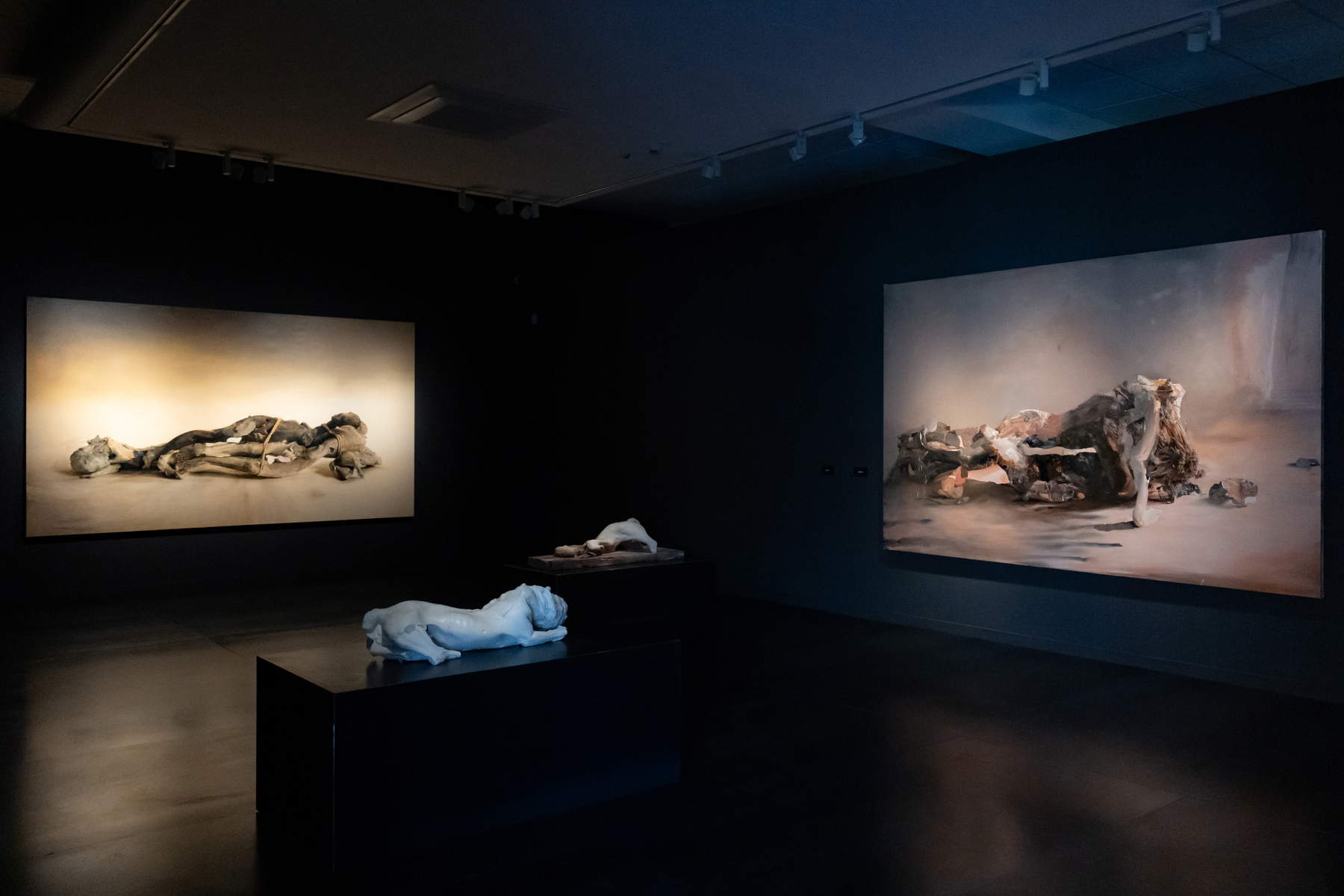
The exhibition itself provides the key themes of the journey: tension, memory, and wound; permanence and metamorphosis; canon and rupture. Between *The Dying Horse* and*The Sleeping Endymion*—the two Canova plaster casts that frame the exhibition—lie Samorì’s works, imbued with a profound reflection on the figurative tradition, the body, and painterly matter.
A Return to the City of Mosaics
The choice of Ravenna is no coincidence. Samorì was born in Forlì in 1977 and lives and works in Bagnacavallo, but a significant part of his artistic development took place in Ravenna itself. Here, while still very young, he began to develop his own visual language by studying the Byzantine mosaics, the marble of the basilicas, and the plaster casts in the very same Gipsoteca that today hosts this dialogue with Canova. According to the exhibition’s introduction, it was this heritage that shaped the artist’s perspective, through which he would later engage with the great European figurative tradition.
Ravenna is also the city where he made his exhibition debut: in 1998, Samorì staged his first solo exhibition there, in the Gardens of the Provincial Palace. Two more exhibitions followed—at the Church of San Domenico in 2001 and at Santa Maria delle Croci in 2002—which marked the completion of his early phase. Nearly thirty years after that first solo exhibition, the artist returns to the city with works, some of which have never been shown before.
There is something circular about this return. As a young man, Samorì viewed the plaster casts in the Gipsoteca as a cultural heritage from which to learn, and today his works are displayed alongside those very same casts. A collection of casts in an academy of fine arts is created for the study of those who are learning: in this exhibition, it once again becomes a point of reference—but for an artist who, in the meantime, has exhibited in major Italian and international museums.
The connection to Ravenna, as intended by the exhibition, is meant to emerge naturally rather than didactically. The monumentality of the marbles of San Vitale, the evocative power of the mosaics, and the city’s figurative tradition resurface in his work as profound influences. The exhibition texts also draw an analogy with the mosaic. A mosaic constructs an image by arranging tiles side by side, and in the same way, Samorì works with his materials through layering, transformation, and recomposition, creating images that preserve the memory of the past while speaking the language of today. The works on display engage, in fact, with Canova’s plaster casts, the marbles of the Basilica of San Vitale, and, more broadly, with that culture of material, light, and transformation that has defined the city’s identity for centuries. From this perspective, Ravenna is not merely the venue for the exhibition but, as stated in the introduction, a living presence that continues to permeate the artist’s work, nearly thirty years after his first solo exhibition.
Stripping Painting Down to Its Essence
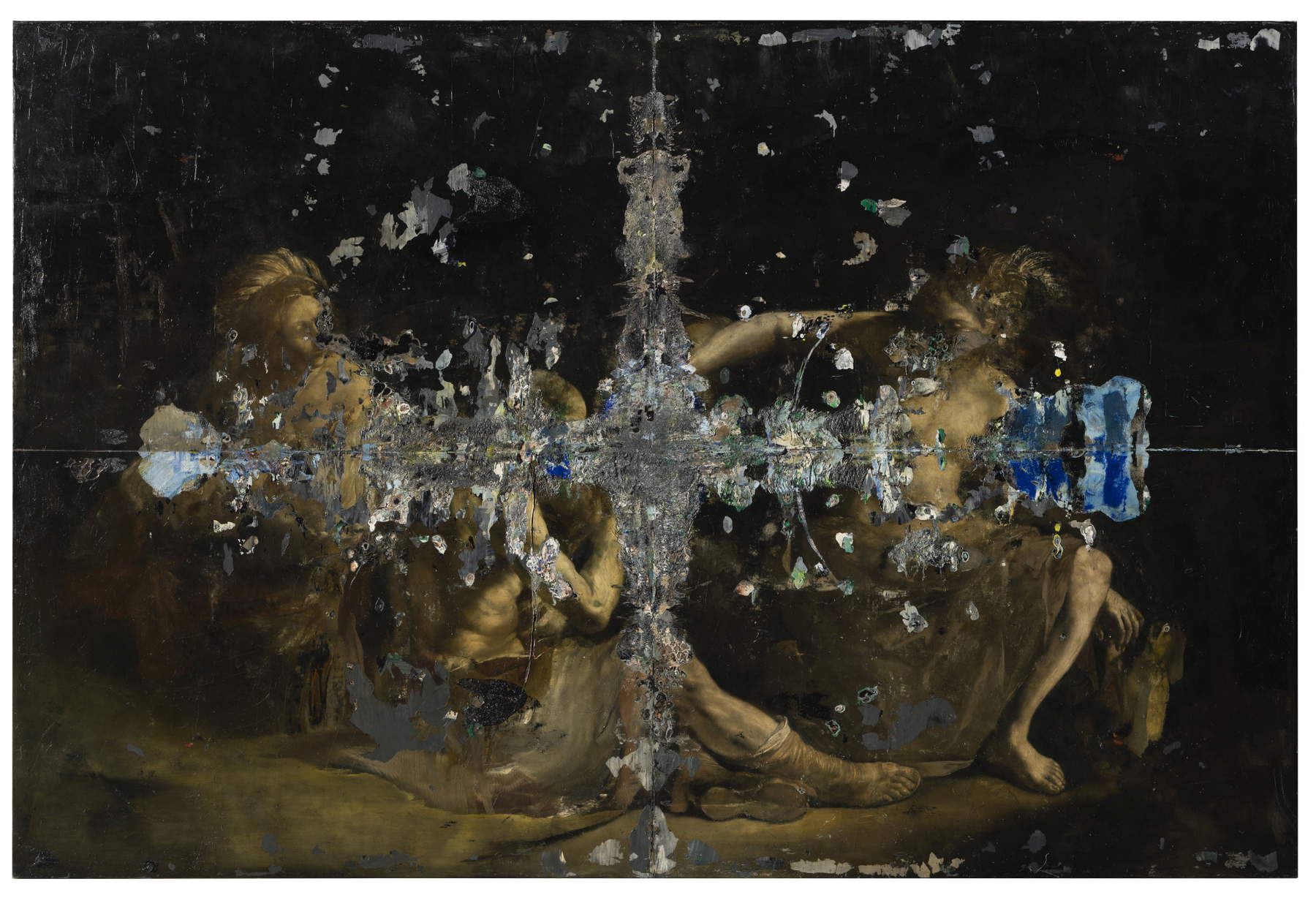
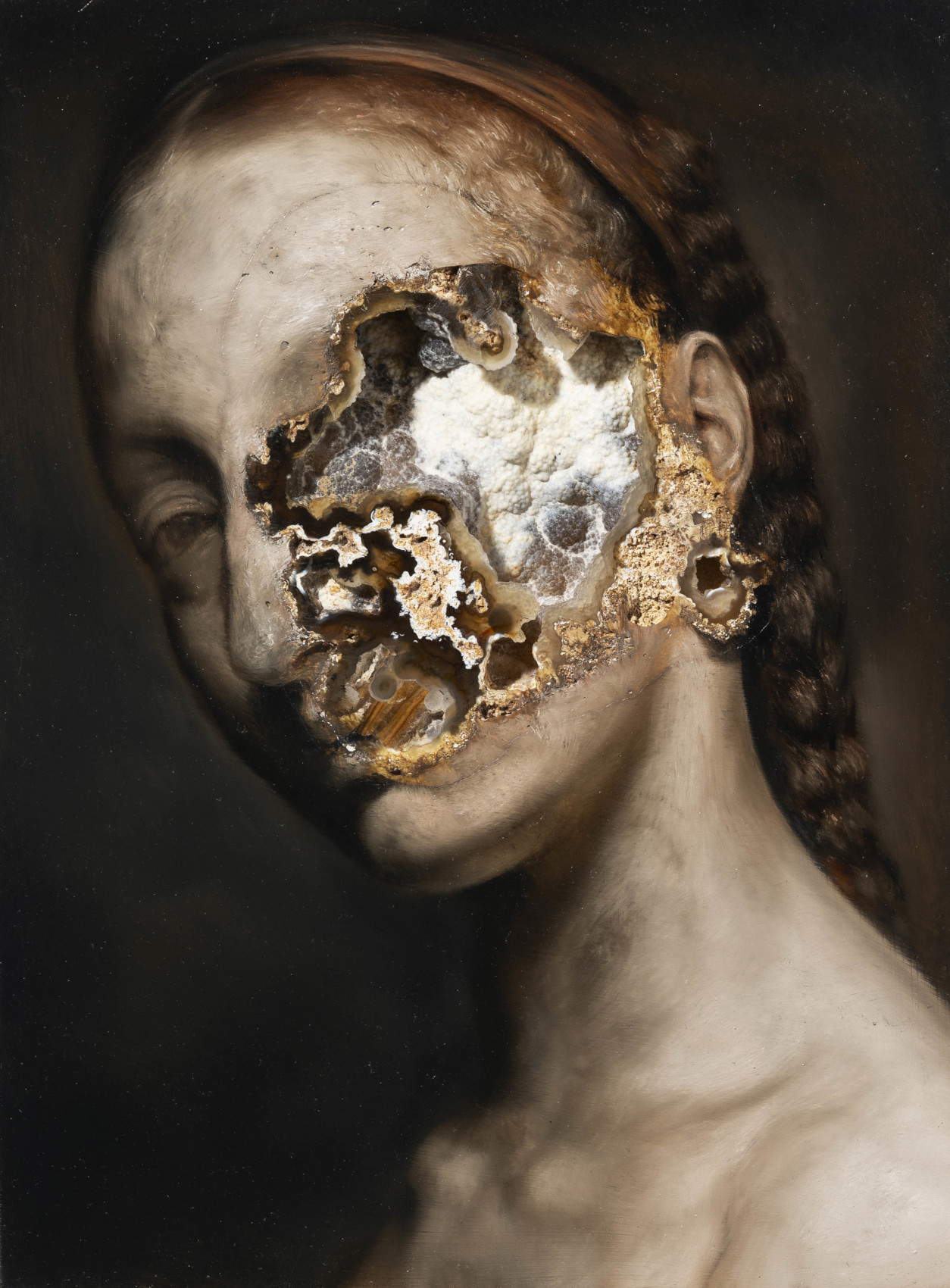
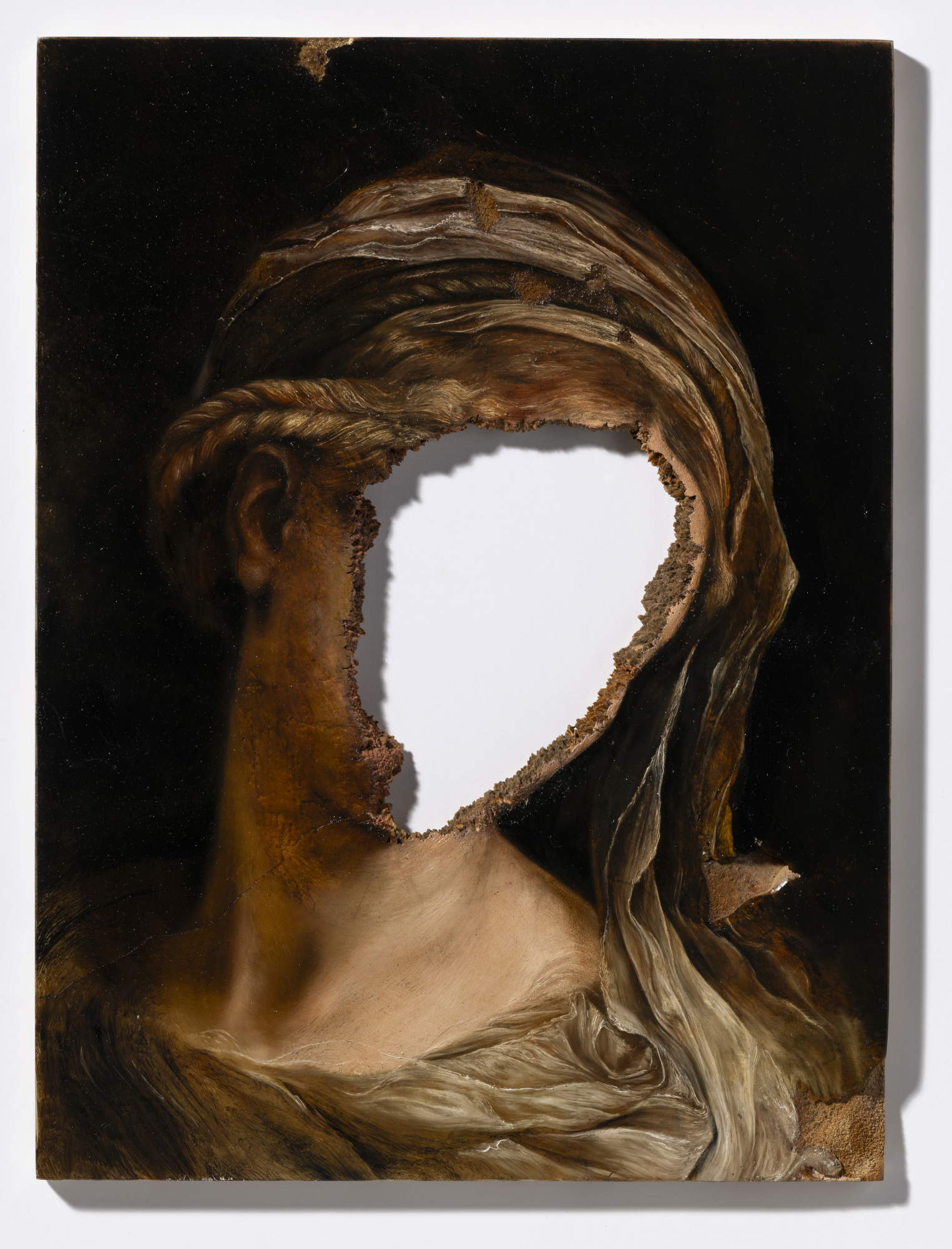
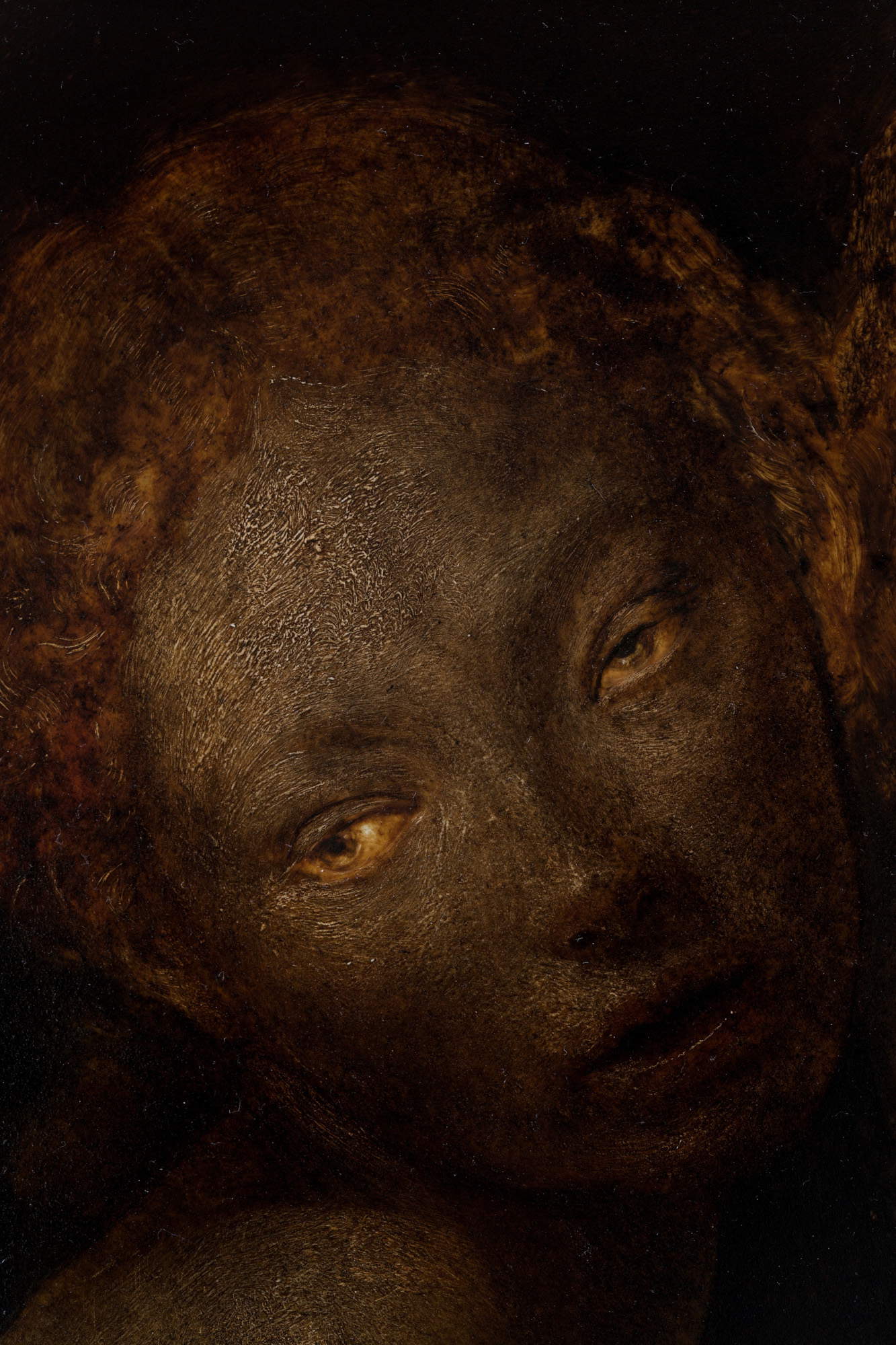
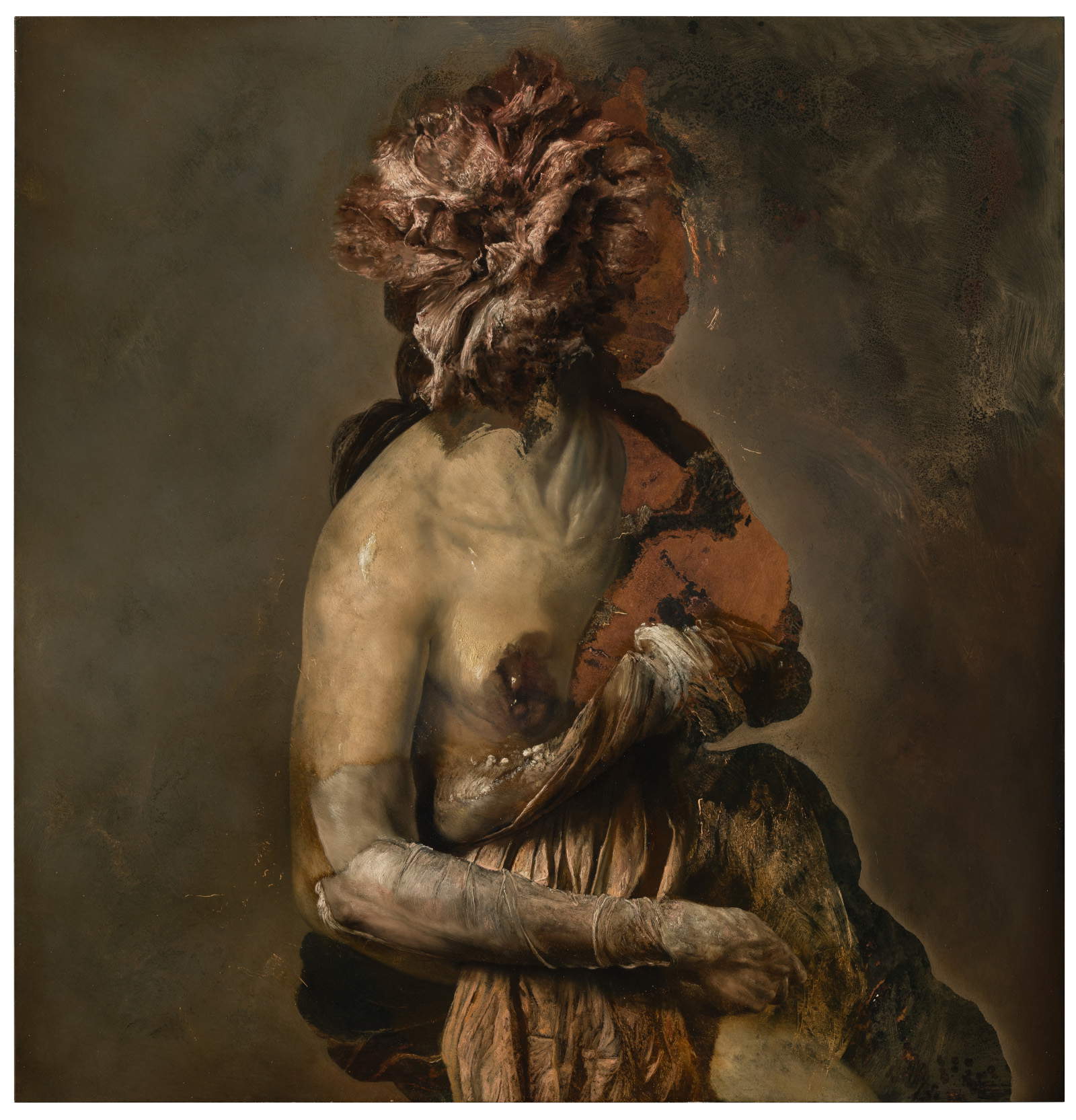
To understand why a plaster cast like *The Dying Horse* might hold such interest for Samorì, one must examine his working method. Trained at the Academy of Fine Arts in Bologna, the artist has developed a body of work rooted in Baroque and Caravaggesque painting. His relationship with art history, however, is not merely one of homage. Samorì challenges its formal integrity through processes of abrasion, flaying, and deformation which , in the interpretation proposed by the exhibition, do not destroy but rather generate. The image is opened up, torn apart, and transformed, and from this process a new image emerges.
Here, the connection to *The Dying Horse* also becomes clearer: what Samorì admires in that plaster cast, according to the exhibition, is precisely the renunciation of the smoothness and elegance that make Canova recognizable, in favor of a more material and less idealized presence. In a sense, this is what he himself does to traditional images when he breaks their surface: he removes the perfect finish and allows the material, the body, and the wound to emerge.
His practice encompasses painting and sculpture, and he uses a wide variety of media: canvas, wood, copper, and hard stones such as marble and onyx. Recurring themes include the relationship between beauty and transformative power, between memory and loss, and between body and matter—always caught in the tension between tradition and the contemporary.
A direct engagement with the masterpieces of the past has already been at the heart of some of his most recent projects. Her works have been exhibited alongside Raphael’s cartoon for *The School of Athens* at the Pinacoteca Ambrosiana in Milan and Bruegel’s *The Parable of the Blind * at the Capodimonte Museum and Royal Park in Naples. This is the trajectory of the exhibition *Classical Collapse*, staged across the two venues and concluding on March 1, 2026. *Supremalia* follows a few months later and revisits the same principle of juxtaposition, this time with Canova’s plaster casts and Ravenna’s cultural heritage. After Raphael and Bruegel at the Ambrosiana and Capodimonte, the focus shifts: no longer a famous masterpiece, but a little-known plaster cast, preserved in the city where the artist began his career.
Throughout his career, Samorì has won, among other awards, the Morandi Prize in 2002 and the Michetti Prize in 2006, and he represented Italy at the Venice Biennale in 2011 and 2015. He has exhibited in major museums and exhibition spaces in Italy and abroad, and the MAR presents him as one of the most influential Italian artists on the international contemporary scene.
Even the exhibition’s title is an invention: “Supremalia” is a neologism that combines the prefix “super”—meaning that which is above, the highest, excellence—with the word “malia,” which evokes charm, enchantment, and a power of seduction that is difficult to resist. “Malia” also evokes the power of a bewitching gaze, capable of attracting and captivating the viewer. The title thus conveys the idea of seduction taken to its utmost intensity, in which attraction and desire become the center of the visual experience.
This interpretation can also be applied to the comparison with Canova. Indeed, regarding *The Dying Horse*, the exhibition emphasizes precisely its material, non-idealized eroticism—that is, a form of attraction that stems not from polished beauty but from the physical presence of the body.
A project for the first floor of the MAR
Supremalia was conceived specifically for the MAR and the city’s artistic heritage. The exhibition project was conceived by the artist in collaboration with curator Denis Isaia and was realized by architect Emiliano Leoni with the museum staff. All the first-floor galleries were designed to enhance the dialogue between the works and the spaces.
The result is a journey that does not end within the temporary exhibition halls but continues through the museum’s permanent collections. Visitors encounter Canova at the entrance, find him again in the center with *The Dying Horse*, and leave him with *The Sleeping Endymion*, which accompanies them out of the last room and into the loggia of the Gipsoteca. There, the dialogue continues between Samorì’s works and the classical models in the collection, and the boundary between the exhibition and the museum becomes less distinct.
The exhibition also coincides with a major change for one of the museum’s most significant collections. The Plaster Cast Gallery of the Academy of Fine Arts in Ravenna is, in fact, undergoing a redesign, carried out with funding from the Emilia-Romagna Region as part of the 2026 Museum Plans, and is set to open by the end of the year. Samorì’s exhibition, which uses the Plaster Cast Gallery itself as a point of dialogue, thus also becomes an opportunity to rediscover it.
For the occasion, Moebius Books in Milan has published the catalog *Nicola Samorì Supremalia*, featuring texts by Denis Isaia and Giovanni Gardini and a collection of short critical essays from 1998 to 2005—a span of years that also encompasses the artist’s early work in Ravenna. It is a way to trace—including through the words of critics—the journey that, from his first exhibitions in the Gardens of the Palazzo della Provincia, in San Domenico, and in Santa Maria delle Croci, has led Samorì to this return.
Practical Information
Nicola Samorì. Supremalia is on view at the MAR—Museum of Art of the City of Ravenna—through January 17, 2027. The exhibition, which opened on October 16 and has been open to the public since October 17, 2026, is organized by the City of Ravenna and the MAR, with support from the Emilia-Romagna Region and the Fondazione del Monte di Bologna e Ravenna. Hours are Tuesday through Saturday from 9 a.m. to 6 p.m., and Sundays and holidays from 10 a.m. to 7 p.m. The museum is closed on Mondays, and the ticket office closes half an hour earlier.
|
| Canova’s Horse Meets Nicola Samorì: The Artist Returns to Ravenna, Where He Began His Career |
Warning: the translation into English of the original Italian article was created using automatic tools. We undertake to review all articles, but we do not guarantee the total absence of inaccuracies in the translation due to the program. You can find the original by clicking on the ITA button. If you find any mistake,please contact us.