



by Redazione 17/11/2026


Categories: Exhibitions / Disclaimer
Through March 29, the Peggy Guggenheim Collection in Venice is showcasing Egidio Costantini’s *Fucina degli Angeli*, which brought great artists such as Ernst, Arp, Fontana, and Picasso to the glassworks of Murano. The exhibition features over one hundred works and highlights the decisive role played by the American collector.


Thirty-two pieces of glass—sixteen blue and sixteen pink—arranged on a sixteen-square-meter chessboard in the final position of a famous game: the one played in London in 1851 between Adolf Anderssen and Lionel Kieseritzky, which went down in history as the “Immortal Game.” Max Ernst, a great chess enthusiast, in fact called it *Immortal*. The Venetian Egidio Costantini created it in the Murano glassworks and presented it on July 22, 1967, at the Ca’ Pesaro International Gallery of Modern Art, in the presence of Ernst himself. It had been a massive undertaking, one that had put his gallery’s finances—and his own health—at risk. Just a few months earlier, the high water of November 4, 1966, had severely damaged his business. Costantini, however, was proud to have “achieved what seemed like an impossible dream.”
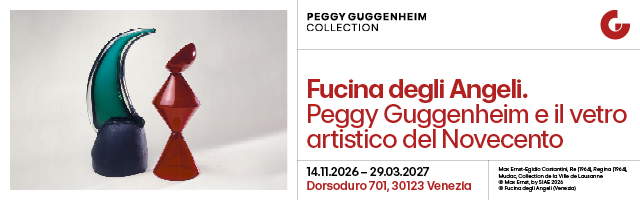

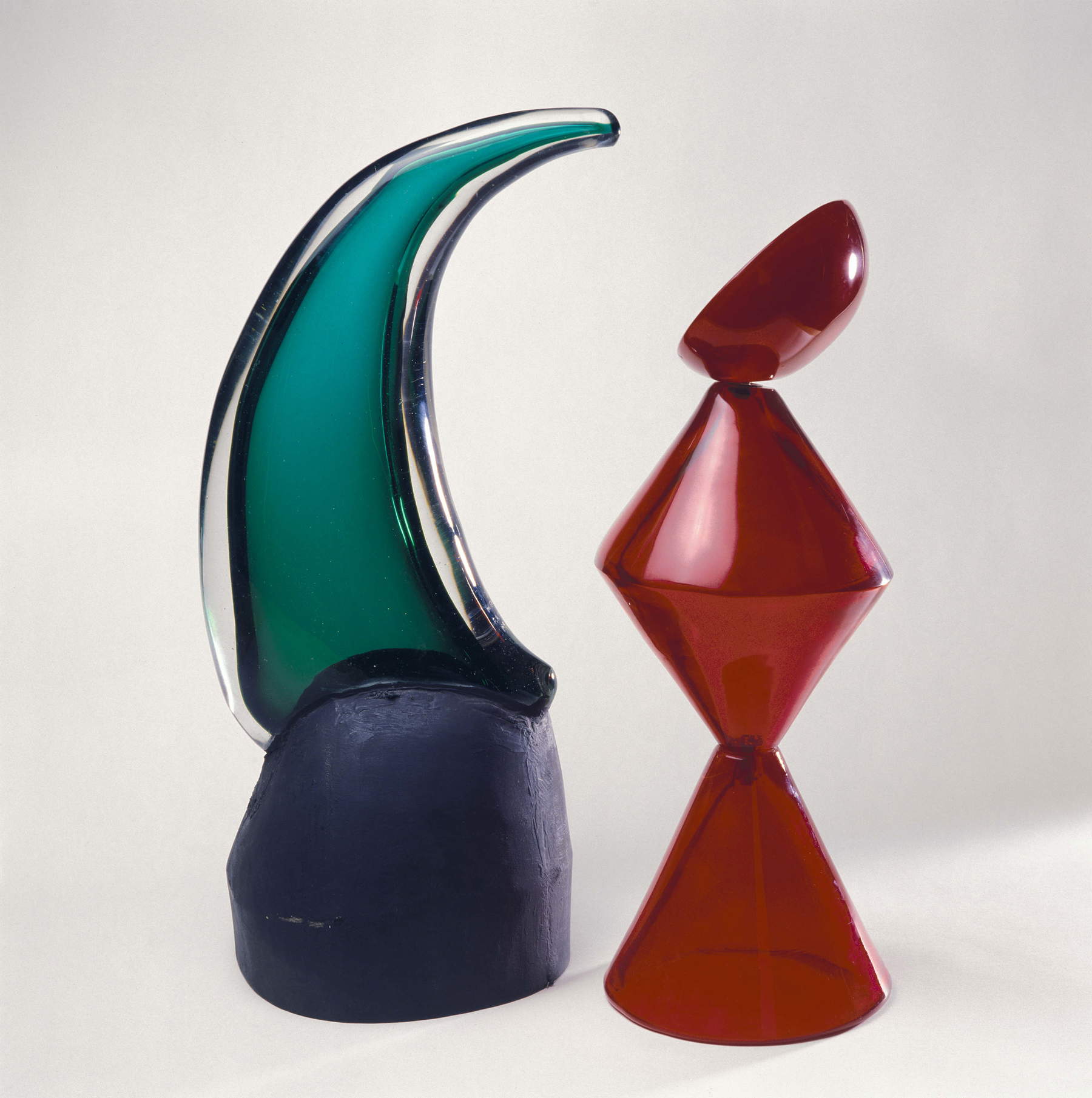
The prototypes of that chessboard are on display in Venice at the Peggy Guggenheim Collection, in the exhibition *Fucina degli Angeli: Peggy Guggenheim and 20th-Century Art Glass*, open through March 29, 2027, and curated by Cristina Beltrami. On display are the King, made of crystal glass with a green glass core, and the Queen, ruby red, both from 1964. At the time, a critic—who didn’t know what they were intended for—mistook the King for a “giant rhinoceros horn.” There is also a blue pawn from 1967, a test piece for the complete work. Next to it are the wooden pieces from which it all began: Ernst had designed them in 1944 for a New York exhibition dedicated to chess and gave a version to Costantini as a gift. The photographs on display also document the handover: in December 1967, Costantini brought*L’Immortale* to Ernst at his home in Seillans, France.


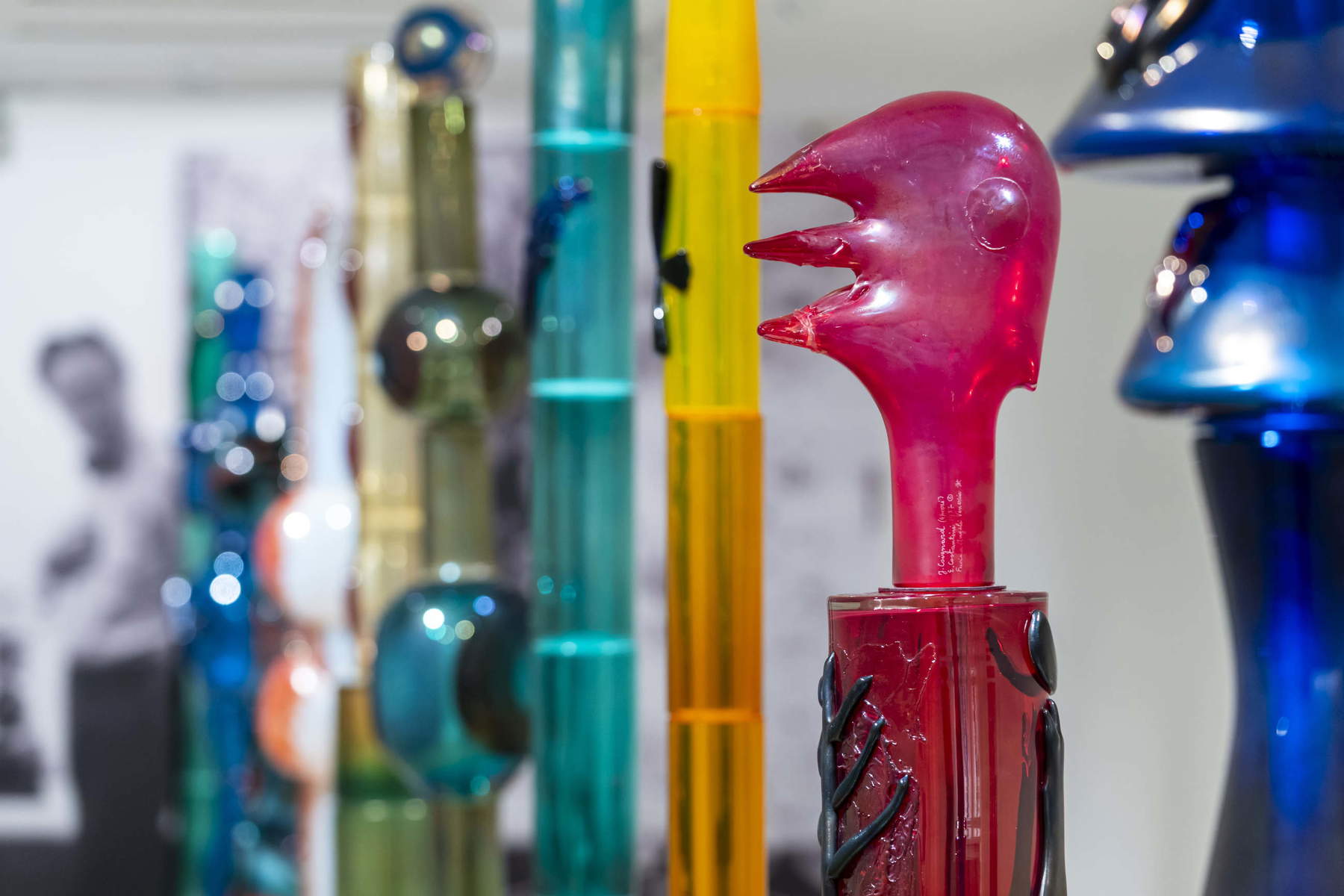
The work arrived at just the right moment: in October 1967, Venice hosted an international chess congress at Palazzo Vendramin Calergi featuring Soviet champion Tigran Petrosian, and Ernst’s chessboard became its symbol. A few weeks later, it was exhibited at the Martano Gallery in Turin, then at the Galleria Blu in Milan, and, in January 1969, at the Galleria Forni in Bologna. Critics were particularly struck by the size and weight of the pieces. The catalog recalls some of the reactions. The writer André Verdet spoke of a game worthy of “the Mayan emperors or the pharaoh-kings.” Critic Paolo Fossati emphasized its “motionless transparency, brimming with shadows.” Marco Valsecchi described “stunning blocks of glass that conceal within themselves a geological crystal-like brilliance.” Franco Solmi, then director of the Gallery of Modern Art in Bologna, wondered whether Ernst, as a “diabolical alchemist,” had succeeded in creating “a new mystery, a new dimension.”

The chess pieces are merely the most spectacular moment in a long and little-known story, which the exhibition reconstructs through more than one hundred works. According to the museum, this is the first exhibition dedicated to the Fucina degli Angeli since the 1992 show at Ca’ Pesaro. At the heart of this story lies an ambitious idea: Costantini wanted to free Murano glass from its role as a decorative art and transform it into a medium for modern sculpture, inviting the great artists of the 20th century to design works to be rendered in glass. The painter Virgilio Guidi had already expressed this view in 1953, stating that a work of art in glass would appear in an exhibition “no longer in a secondary position compared to a painting or a sculpture.”
Born in Brindisi but raised in Venice, Egidio Costantini (1912–2007) played a leading role in the Murano scene of the 1950s, when international artists and some of the most skilled master glassmakers worked together. After his experience with the Centro Studio Pittori nell’Arte del Vetro, active between 1953 and 1955, he opened a gallery specializing in artistic glass in Venice in 1955, on Campo Santi Filippo e Giacomo. The name, “Fucina degli Angeli,” was suggested to him by Jean Cocteau; the symbol—a star—was designed by Jean (Hans) Arp. Costantini oversaw every stage of the process: the concept, often based on the artists’ drawings; the production in the Murano furnaces; and the presentation to the public. Every glass work in the exhibition, the catalog notes, was created in collaboration with him, except for the *Pesce (Abissale) * by Alexander Calder and the sculptures loosely inspired by the ceramics of Georges Braque and Pablo Picasso.
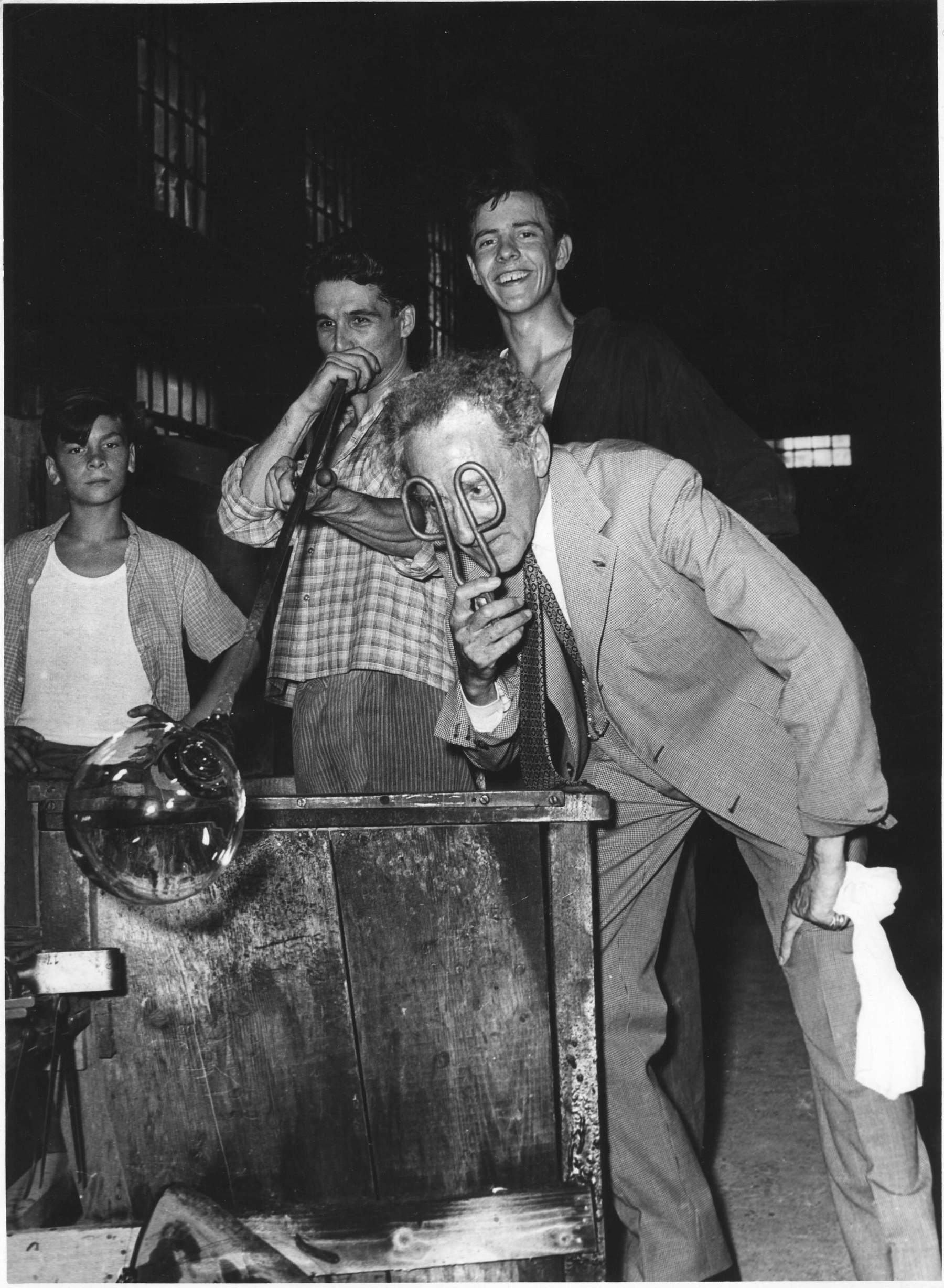
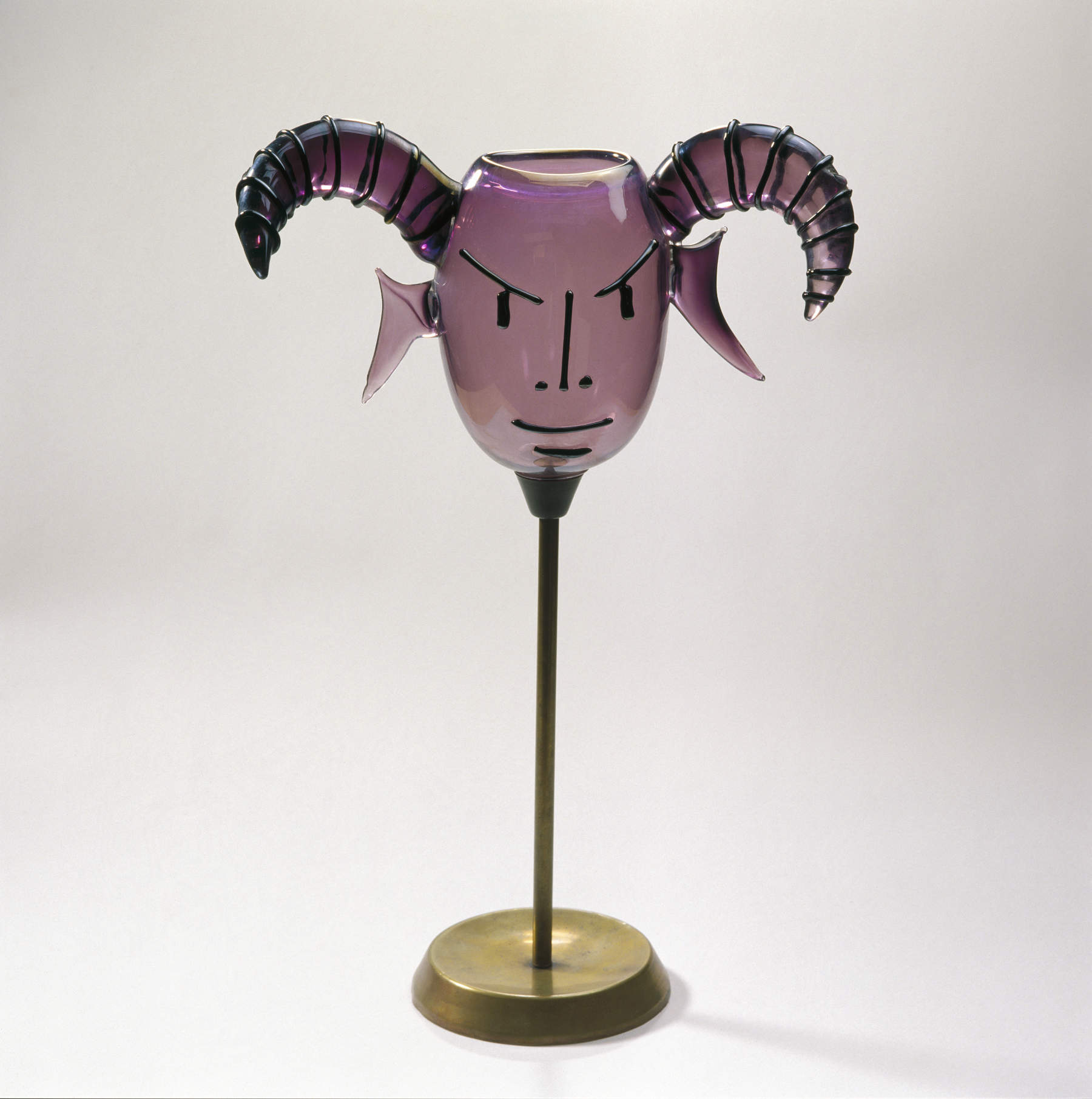
The first galleries chronicle the early days. They feature works inspired by Picasso’s ceramics—such as the fauns, centaurs, and the Condor in milky and black glass—as well as those inspired by Braque. There are experiments with Oskar Kokoschka, one of the first artists to enthusiastically embrace working with Murano glass, represented here by the *Baccantes* from 1952–1953 and an *Italian Woman*. Alongside them are pieces by Gio Ponti, Walter Bodmer, and Gino Krayer. Despite these important collaborations, however, the company struggled to cover its costs.
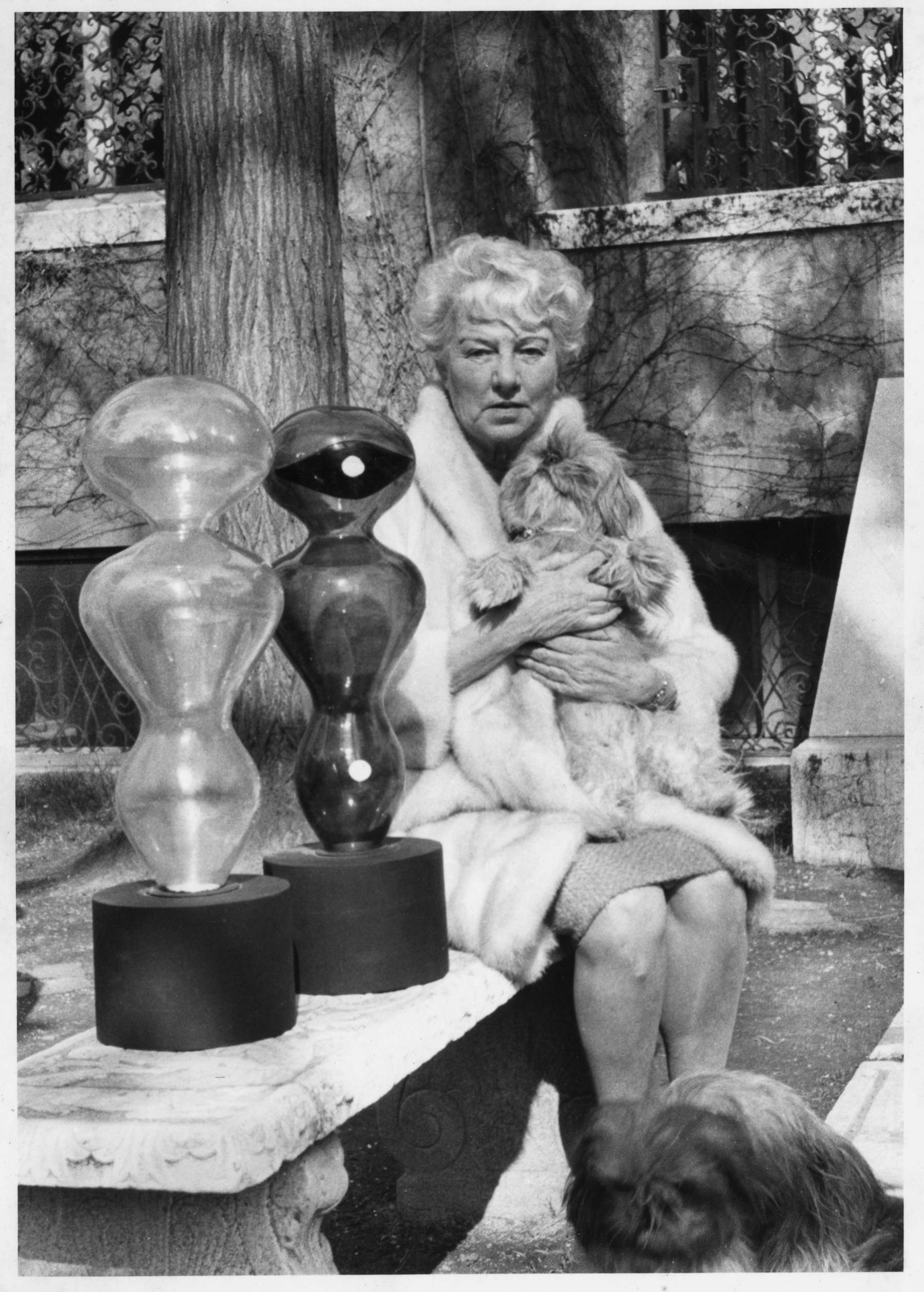
It was Peggy Guggenheim who changed things. The American collector, who lived in Venice at Palazzo Venier dei Leoni, purchased many works from La Fucina, displayed them in her home, and, above all, introduced Costantini to her network of contacts, even suggesting a strategy for exhibiting and promoting his work. “I was happy when Egidio Costantini came to me and asked me to help him create glass objects based on drawings by contemporary artists,” she wrote in 1964. In October 1963, Costantini confided to Max Ernst that “thanks to the Lady, I have become more at peace with my work, since I will finally enjoy in the future that moral support which men who embark on new paths so desperately need.” Years later, the collector would describe him as “the only person in Venice since the 18th century who produces truly artistic glass sculptures.”
It was Peggy Guggenheim herself, in 1963, who facilitated his meeting with Max Ernst and Dorothea Tanning, and later with Arp, with whom one of the Fucina’s most productive collaborations began. In June 1964, she served as the patroness of the 9th International Exhibition of Art Glass, held in the Sala delle Colonne at Ca’ Giustinian. From that year on, thanks to her, the Fucina’s works were exhibited in leading galleries: the Galleria del Naviglio in Milan, between 1964 and 1965, and the Galleria dell’Obelisco in Rome, in 1965. On November 16, 1965, they arrived at the Museum of Modern Art in New York for *Sculpture in Glass*, the museum’s first exhibition entirely dedicated to glass sculpture. Thirty-three pieces, selected by Director Alfred H. Barr Jr. and Peter Selz, focused on three artists: Arp, Ernst, and Picasso. Photographs of the exhibition layout show fourteen of Picasso’s Nymphs and Fauns in the central display case, alongside Arp’s Three Graces in various shades of blue, Picasso’s Condor, Arp’s Dove, and an early prototype of Ernst’s King. On that occasion, *Time* magazine described Costantini as “a contemporary Venetian visionary, dedicated to restoring to glass the magnificence of centuries past.”
In the exhibition galleries, the glassworks are displayed alongside paintings, drawings, and sculptures by the same artists, to demonstrate how their engagement with glass opened up new avenues in their artistic exploration. For example, there is *Coppia zoomorfica*, Ernst’s 1933 painting held in the museum’s collection. Letters, photographs, drawings, and catalogs document the professional and personal bond with Jean Cocteau, who affectionately called the Costantinis his “famille angélique.” There is also the 1966 “Clementine” series, designed by Pegeen Vail, daughter of Peggy Guggenheim: twelve Plexiglas boxes featuring glass scenes populated by figures from her paintings.
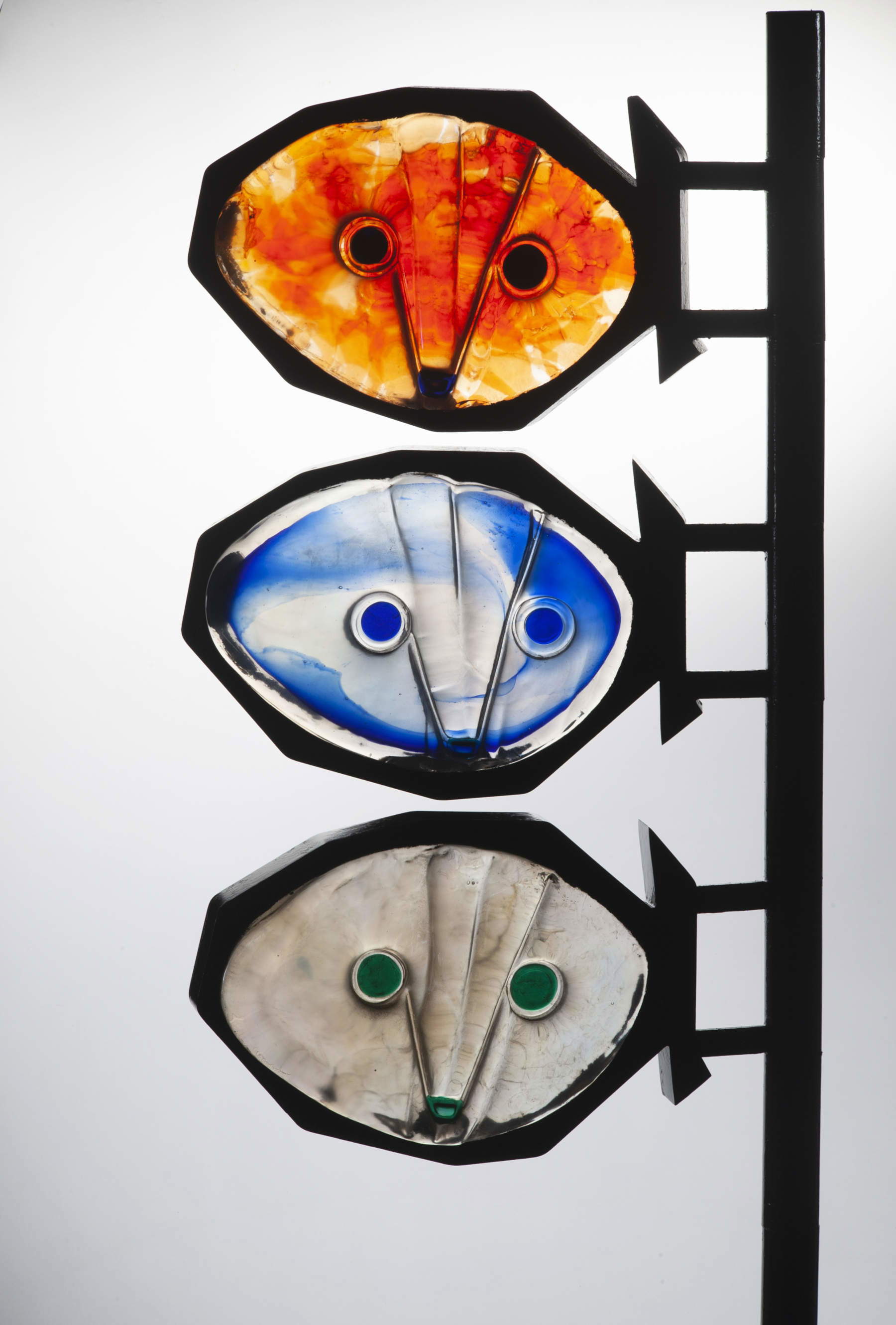
In the 1960s, the scope of the exhibition broadened. Artists such as Arman, Paul Jenkins, Matta, and Mark Tobey joined the lineup; in 1968, Tobey recognized Costantini as one of the few capable of “breathing new life into the art of beloved Venice.” A significant portion of the exhibition is dedicated to the abstract and spatial explorations of Remo Bianco, Giuseppe Capogrossi, Lucio Fontana, and Luigi Veronesi. In 1964, Fontana turned to La Fucina to create several *Spatial Concepts* using blown glass spheres. ““I work the glass, I pierce it, and my awl is Costantini!” he reportedly confided to his friend Roberto Crippa in 1968. According to the catalog, at first Costantini had the glass elements blown in Murano according to the artist’s instructions and shipped them to Milan for assembly. Later, as a sign of growing trust, the works were assembled directly in Venice. On view are seven previously unpublished preparatory drawings from this series and one of the very first examples, *Spatial Concept – Construction* from 1964. Fontana gave it to Peggy Guggenheim as an Easter gift in 1965, and she later donated it to the Museum of Fine Arts in Boston, which has loaned it for this exhibition. On a metal-covered wooden base, the blue glass spheres trace an orbit that interacts with the holes the artist cut into the surface. The following year, emboldened by that result, Fontana created another *Spatial Concept*, also on display, mounted on a copper base: he fixed fourteen blown-glass elements to it, deliberately leaving impurities suspended within them, with three larger spheres at the center of a sort of galaxy of smaller circles.
Another section is dedicated to Japanese artists active in Venice during the 1960s and 1970s. The central figure is the architect Ōmura Mikuni, who came from Japan to study at the Academy of Fine Arts and who, in January 1966, married Maddalena Costantini, Egidio’s daughter. It was he who designed the interior of the new Fucina headquarters, inaugurated in June 1966 on Calle Corona, and who, in turn, experimented with glass. A variation of his *Foresta architettonica* (Architectural Forest), *Opera 3*, from around 1968–1969—which was acquired at the time by Peggy Guggenheim—is on display in the museum’s sculpture garden. This is followed by works by Miki Tomio, Narita Katsuhiko, and Yokoo Tadanori. The final room, dedicated to the theme of the totem, brings together La Fucina’s later collaborations—up through the 1980s—with Remo Bianco, James Coignard, Pino Mucchiut, and the American architect John C. Portman.
The exhibition thus illustrates Costantini’s determination to take glass beyond the realm of the decorative arts. As early as 1968, Roberto Crippa, commenting on a Fucina group exhibition at the Galleria Blu in Milan, had hit the nail on the head: “It’s the break: glass becomes marble, oil, tempera, wood—it becomes a new medium at the artists’ disposal.” But glass, Beltrami observes in the catalog, unlike those materials, requires an expert craftsman and often a skilled mediator who understands its possibilities and limitations and knows how to achieve a result faithful to the artist’s vision. This was Costantini’s role. Art historian Giuseppe Mazzariol, in an interview recorded in 1989 at the Peggy Guggenheim Collection itself, summed it up this way: “La Fucina degli Angeli brought the most advanced artistic culture into dialogue with the magic of Murano glass.” With this exhibition, the museum also continues its work of rediscovering the Venetian artists and institutions supported by its founder, following previous exhibitions dedicated to Tancredi Parmeggiani, Edmondo Bacci, and Marina Apollonio.
The works come from international institutions such as the Fondation Marguerite Arp in Locarno, the Historisches Museum in Basel, the Kunstmuseum Walter in Augsburg, the Mudac in Lausanne, and the Museum of Fine Arts in Boston. Also included are works from the Murano Glass Museum, the Fucina degli Angeli Archive, and the Peggy Guggenheim Collection, as well as loans from galleries and private collections. The catalog, published by Marsilio Arte and edited by Cristina Beltrami, features essays by Marianna Rossi and Stefano Turina. The exhibition is sponsored by the City of Venice and is part of the “Le Città in Festa” program. It is accompanied by a free program of public and educational activities, made possible by the Araldi Guinetti Foundation in Vaduz. The transport of Fontana’s “Spatial Concept” from Boston was supported by Apice.
“Fucina degli Angeli: Peggy Guggenheim and 20th-Century Art Glass” is on view at the Peggy Guggenheim Collection in Venice through March 29, 2027, daily from 10 a.m. to 6 p.m., except Tuesdays. General admission is 17 euros and includes access to the permanent collection. Free guided tours of the exhibition are offered daily at 4 p.m.
|
| From Max Ernst to Picasso: Great Artists and Glass—La Fucina degli Angeli Comes to Life at the Peggy Guggenheim |
Warning: the translation into English of the original Italian article was created using automatic tools. We undertake to review all articles, but we do not guarantee the total absence of inaccuracies in the translation due to the program. You can find the original by clicking on the ITA button. If you find any mistake,please contact us.