



by Redazione 10/04/2026



Categories: Exhibitions / Disclaimer
From April 11 to July 19, 2026, the Museo civico del Risorgimento in Bologna is exhibiting for the first time the most complete corpus of military figurines by Faustino Joli, a 19th-century Brescian painter. The exhibition reconstructs the link between the "Ten Days of Brescia" and 1848 between Bologna and Lombardy.
The Museo civico del Risorgimento in Bologna dedicates an exhibition to Faustino Joli (Brescia, 1814 - ivi, 1876) on the occasion of the 150th anniversary of the Brescian painter’s death, presenting for the first time in an organic way the most complete corpus of his military figurines. The exhibition, entitled Il Quarantotto di Faustino Joli. Painting the Risorgimento between Bologna and Brescia, is curated by Isabella Stancari and Otello Sangiorgi and will be on view from April 11 to July 19, 2026, with opening set for April 10 at 5 p.m.
The initiative is part of the program of the Civic Museums Sector of the Municipality of Bologna and is organized in collaboration with Fondazione Brescia Musei, Istituto per la storia del Risorgimento - Comitato di Bologna and 8cento APS. The exhibition project was also created as an opportunity to enhance the permanent collections of the Bologna museum, putting them in dialogue with institutions and collections dedicated to the memory of the Risorgimento, particularly the Museo del Risorgimento Leonessa d’Italia in Brescia.
At the center of the exhibition is the production of military figurines by Joli, a painter active between Lombardy and Emilia and known for a production linked mainly to the representation of Risorgimento episodes. A figure defined in historiographical circles as a “chronicler with a paintbrush,” Joli distinguished himself for his ability to combine documentary attention with the pictorial rendering of historical events, particularly those related to the uprisings of 1848 and the Brescian resistance.


The Brescian painter, trained in a family context linked to painting and decoration, developed a particular penchant for landscapes and depictions of animals, but his best-known production remains linked to the “Ten Days of Brescia” of 1849, a central episode in the city’s resistance against Austrian repression. In those days, the city was later celebrated with the appellation “Lioness of Italy,” an expression made famous by the literary tradition of the Risorgimento.
Joli’s works dedicated to these events restore a detailed narrative of the clashes and urban life during the insurrections, with special attention to the city’s topography and the depiction of the movements of the people in arms. Alongside these works, the Bologna nucleus of military figurines represents one of the most important iconographic ensembles dedicated to the uniforms of the corps that took part in the First War of Independence of 1848-1849, encompassing regular, volunteer and free corps units.
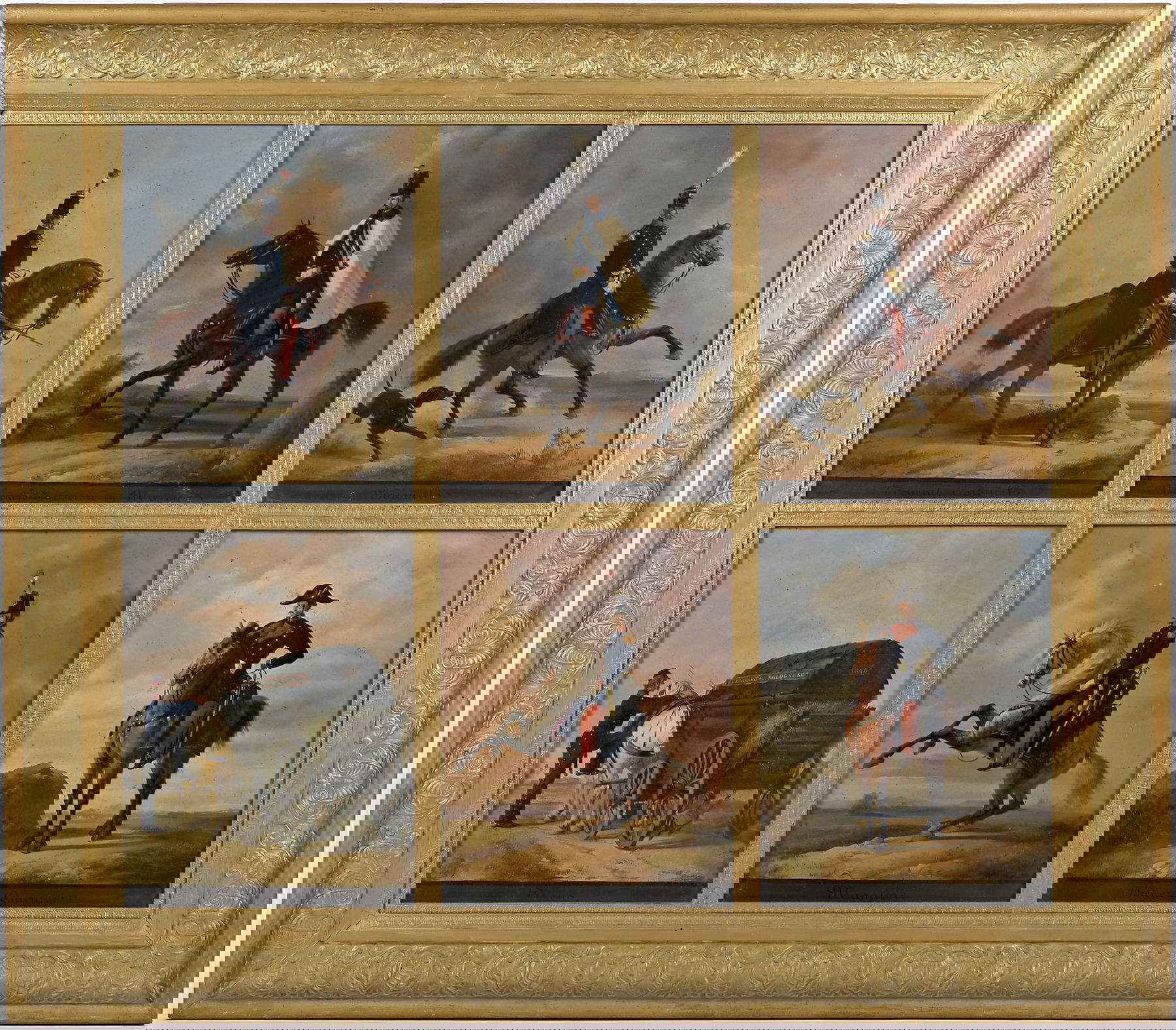
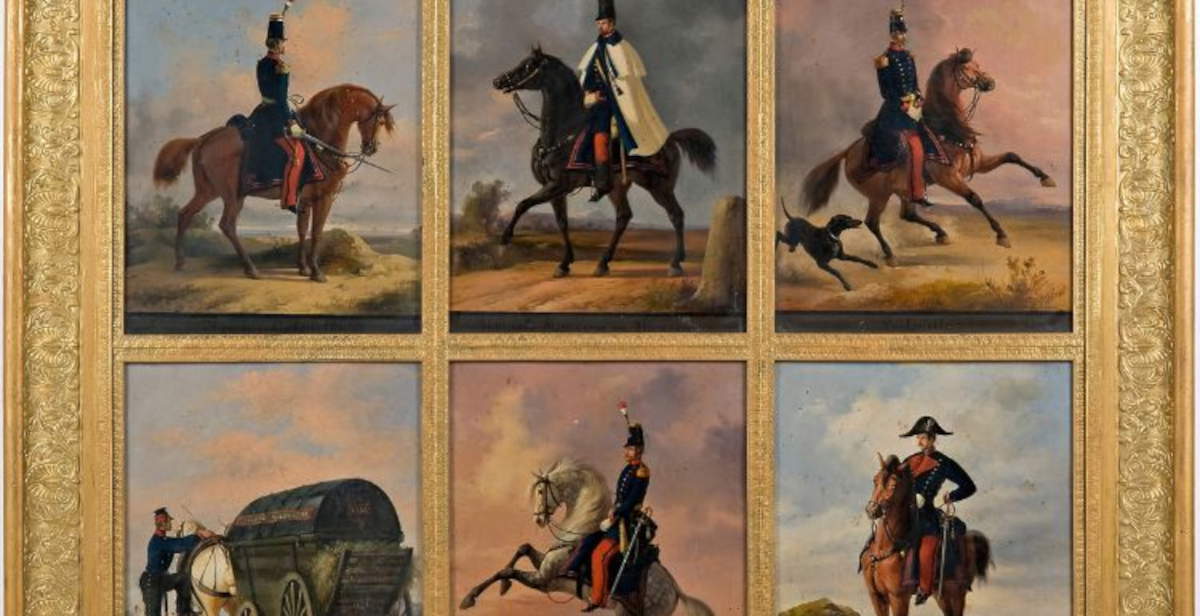
The corpus exhibited in Bologna consists of 77 small oil paintings on cardboard, organized in nine paintings with gilded wooden frames. It is a series that, according to historical reconstructions, was conceived with a high degree of descriptive precision, so much so that it can be read as a true visual cataloguing of the military uniforms of the time. The set has been compared with other nuclei attributed or traceable to Joli’s model preserved at the Museo Byron e del Risorgimento in Ravenna, the Museo delle Storie in Bergamo, and the Museo del Risorgimento in Milan, highlighting formal affinities and technical differences related to materials and methods of execution.
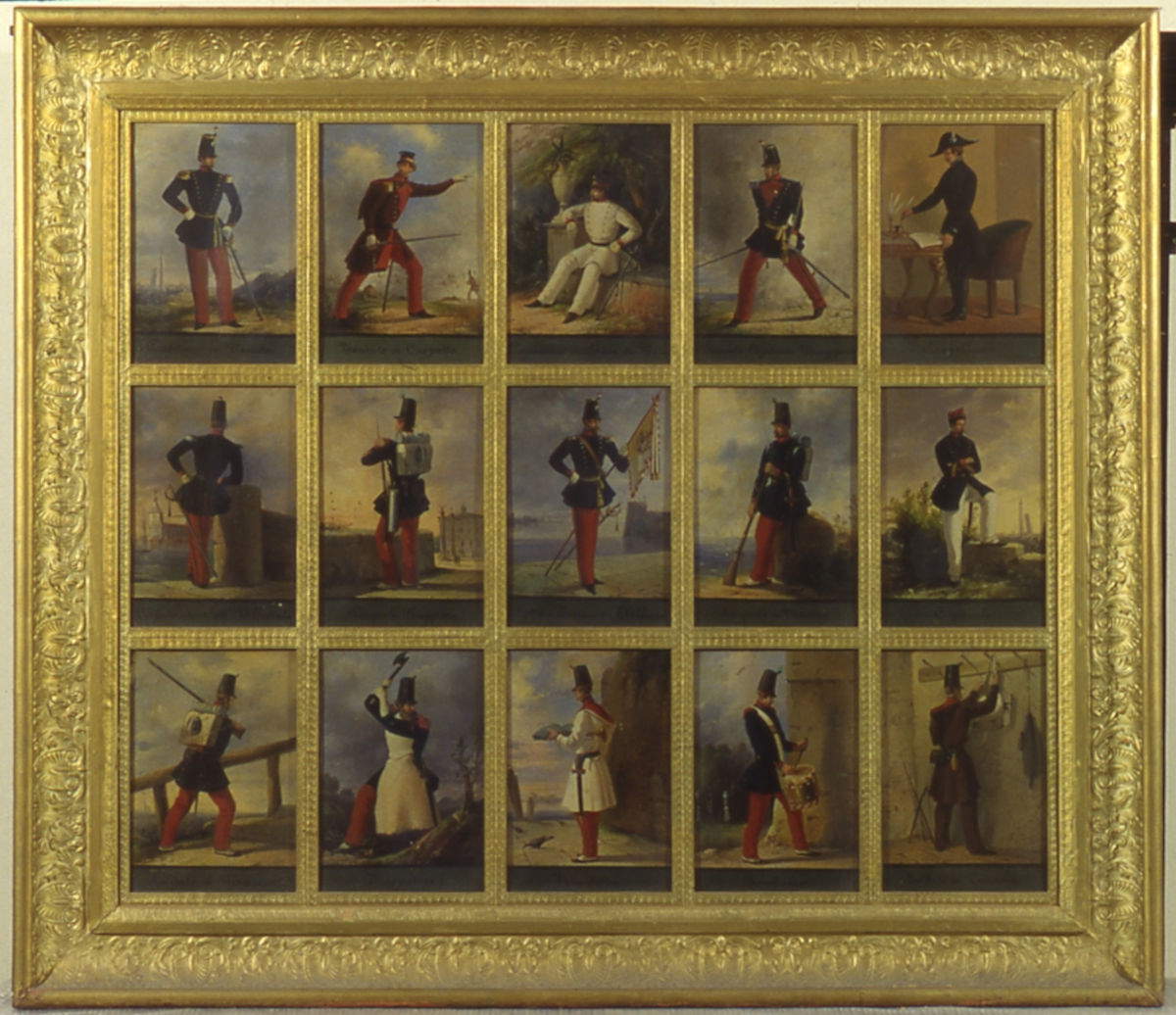
A central element of the itinerary is the comparison of the figurines and drawings made by Joli himself around 1849, contained in a notebook now kept at the Biblioteca Queriniana in Brescia. In this notebook of visual notes, the painter jotted down and sketched uniforms, street scenes, and groups of soldiers, often accompanied by detailed descriptions of military clothing. Many of these drawings turn out to be directly traceable to the Bolognese figurines, highlighting a continuity between direct observation, graphic annotation and pictorial translation. The notebook also testifies to the artist’s interest in the military and civil dynamics of the two-year revolutionary period, with particular attention to Venetian and Lombardy-Venetian events.
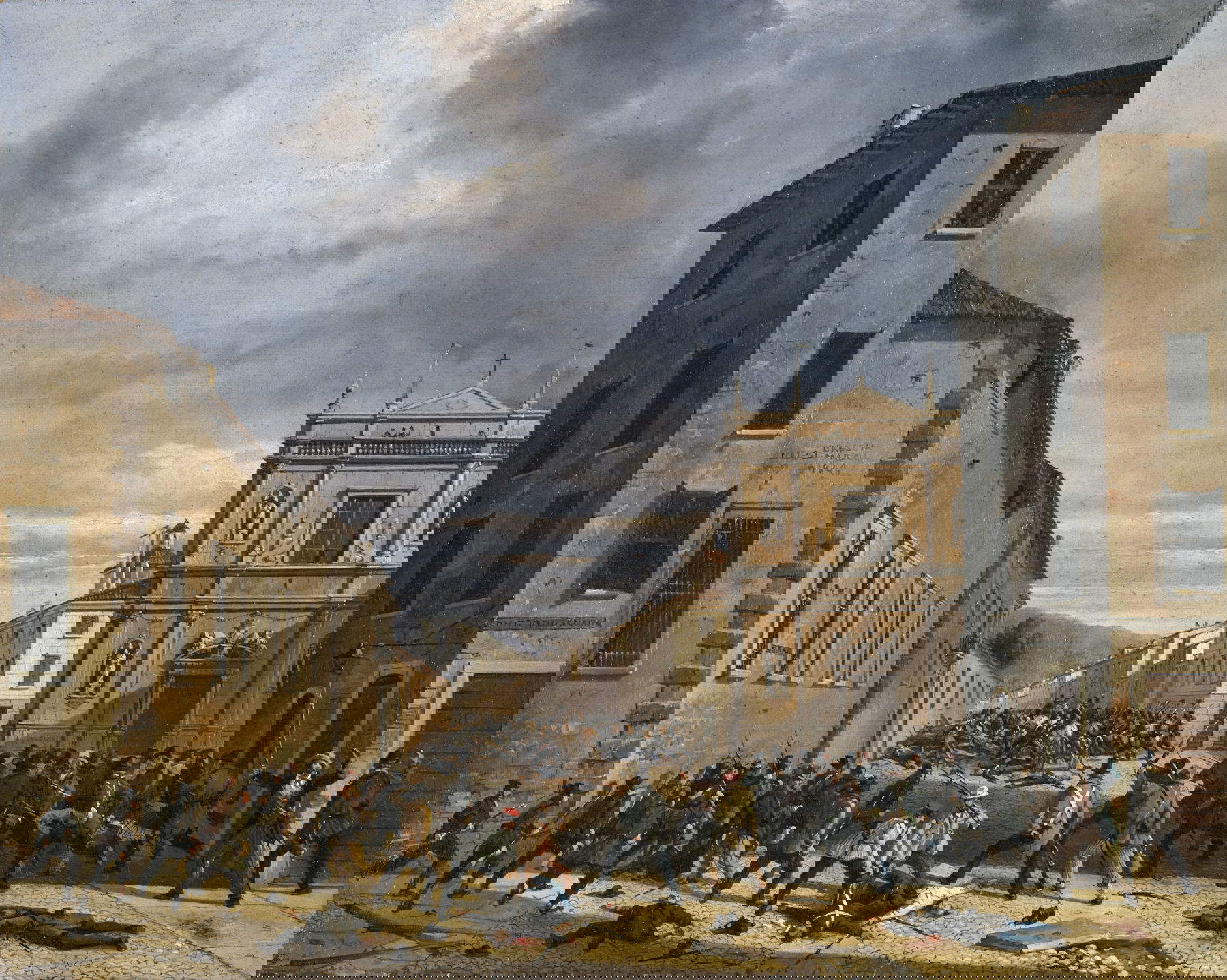
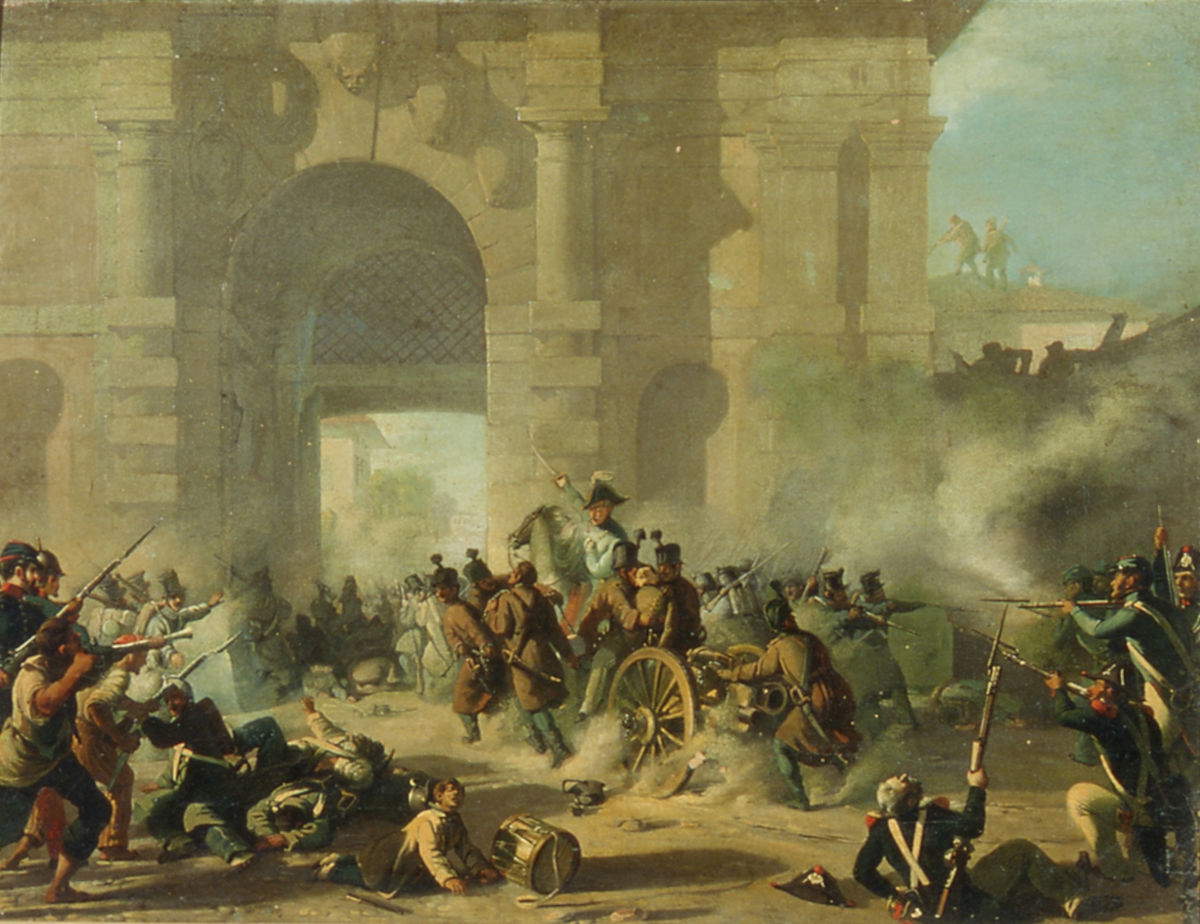
Within the exhibition there is also a dialogue with other contemporary works, in particular with Gaetano Belvederi ’s (Bologna, 1821 - ivi, 1872) painting depicting the Expulsion of the Austrians from Porta Galliera, dated 1848. The comparison between this work and Joli’s painting Le dieci giornate a San Barnaba, from the Museo del Risorgimento “Leonessa d’Italia” in Brescia and exhibited for the first time in Bologna, allows us to relate two central episodes of the Italian urban Risorgimento.
Although the two works refer to different urban contexts, they have a similar narrative and compositional structure. Both describe episodes of urban guerrilla warfare in which the protagonist is the urban populace, organized according to spontaneous and territorial dynamics.
The exhibition is enriched by the presence of uniforms and original objects from 1848 preserved in the collections of Bologna’s Museo civico del Risorgimento. The direct comparison between historical artifacts and painted figurines highlights the descriptive accuracy of Joli’s work, which seems to be based on the observation of real objects belonging to the military corps of the time. The exhibits also include theuniform of the Legione Bolognese, recently found and attributed to a volunteer corps that left Bologna and was active in Veneto during the First War of Independence.
The exhibition also includes materials related to the collecting history of Joli’s figurines. In fact, the nine paintings now preserved in Bologna have a complex exhibition history: already in private collections, they were exhibited in 1884 at the Risorgimento Exhibition in Turin and later in Bologna in 1888. They were later donated to the nascent Museo del Risorgimento thanks to Count Agostino Salina. The works were made with an oil technique and protected by glass adhering to the pictorial surface, in a manner that helped preserve their chromatic vividness.
Additional nuclei of figurines attributed to Joli are preserved in other Italian institutions. Twenty-four figurines that belonged to Umberto II of Savoy are found at the Museo del Risorgimento in Ravenna, while ten specimens are kept at the Museo delle Storie in Bergamo and still others at the Museo del Risorgimento in Milan. Qualitative and technical differences can be observed in these cases, with versions often simplified compared to the Bolognese models, particularly in the rendering of landscapes and uniformological details.
The exhibition project is also part of the calendar of the International History Festival, coordinated by the University of Bologna through the International Center for the Didactics of History and Heritage. The opening of the exhibition also opens the program of historical re-enactment initiatives curated by 8cento APS, which includes performance interventions dedicated to the reconstruction of the uniforms and social and military roles of 1848.
The tour is accompanied by a brochure-sized catalog with texts by Isabella Stancari and a preface by Otello Sangiorgi. Guided tours with the curators and public initiatives are planned during the opening period, including Sunday appointments and a visit to the Certosa Monumental Cemetery dedicated to the figures and events of the Spring of Peoples.
 |
| In Bologna, Faustino Joli's Risorgimento figurines: the Quarantotto cycle on display |
Warning: the translation into English of the original Italian article was created using automatic tools. We undertake to review all articles, but we do not guarantee the total absence of inaccuracies in the translation due to the program. You can find the original by clicking on the ITA button. If you find any mistake,please contact us.