Caravaggio's Wine: What Does the Goblet Offered by the Uffizi's Bacchus Signify?
by Federico Giannini e Ilaria Baratta 21 August 2026
Destination: Toscana
In Caravaggio’s *Bacchus*, the masterpiece housed in the Uffizi, wine is not merely an attribute of the god: the goblet offered to the viewer may hold meanings related to conviviality, the transience of life, sensuality, and even Christian symbolism. And that wine appears to have just been poured.

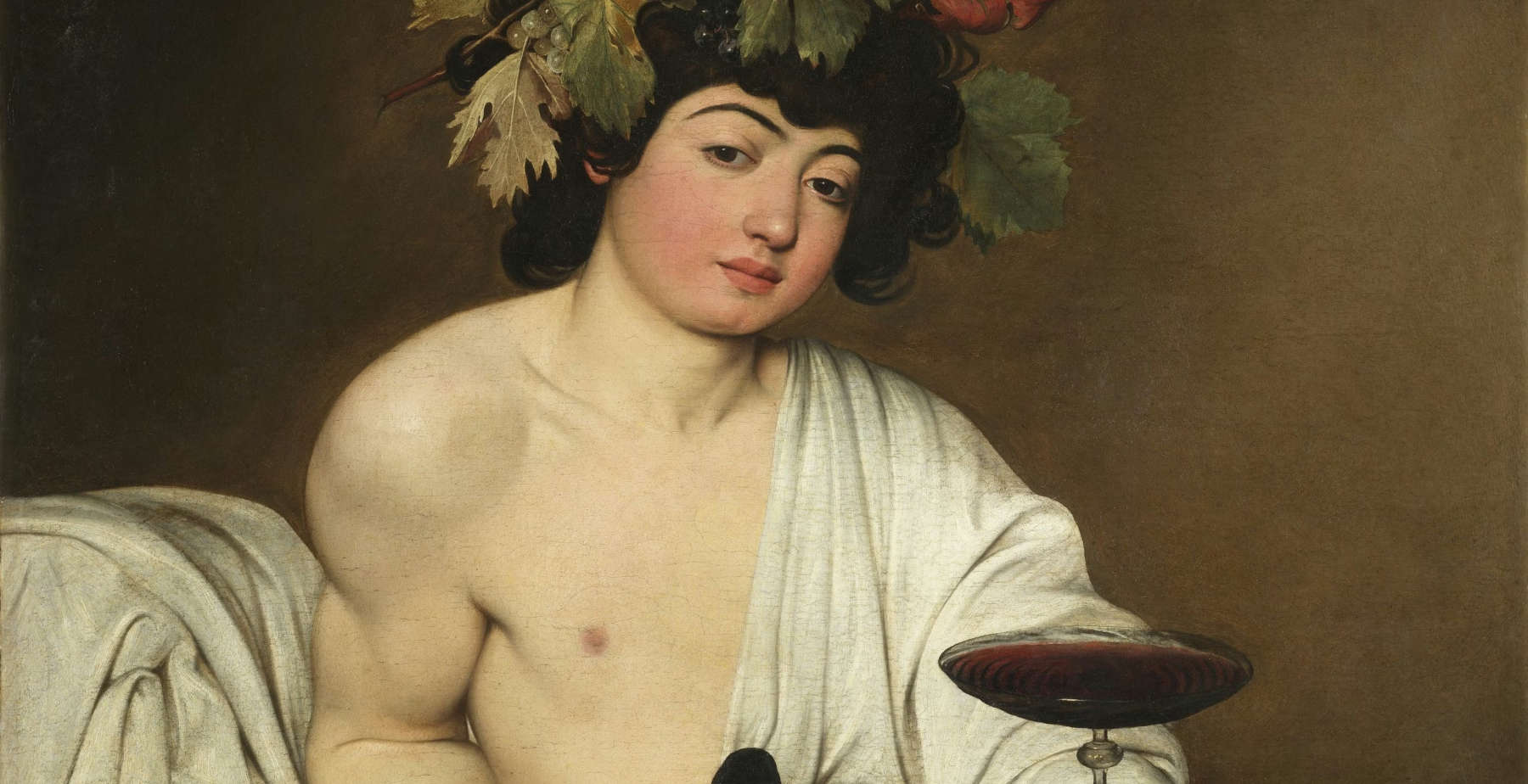
One could almost say that Caravaggio’s*Bacchus* (Michelangelo Merisi; Milan, 1571 – Porto Ercole, 1610), now housed in the Uffizi Gallery, is a 20th-century painting: for more than three centuries, in fact, the painting depicting the Roman god of wine and the grape harvest was not recorded in any inventory (or at least, no ancient inventories mentioning it have ever been found), was never cited by ancient sources related to Caravaggio, and remained relegated to the ranks of discarded canvases in the Florentine collection. Its rediscovery, which took place in the second decade of the 20th century, restored to art history one of the Lombard painter’s most complex and debated works—a piece that continues to be the subject of technical investigations and critical interpretations more than a century after its rediscovery.
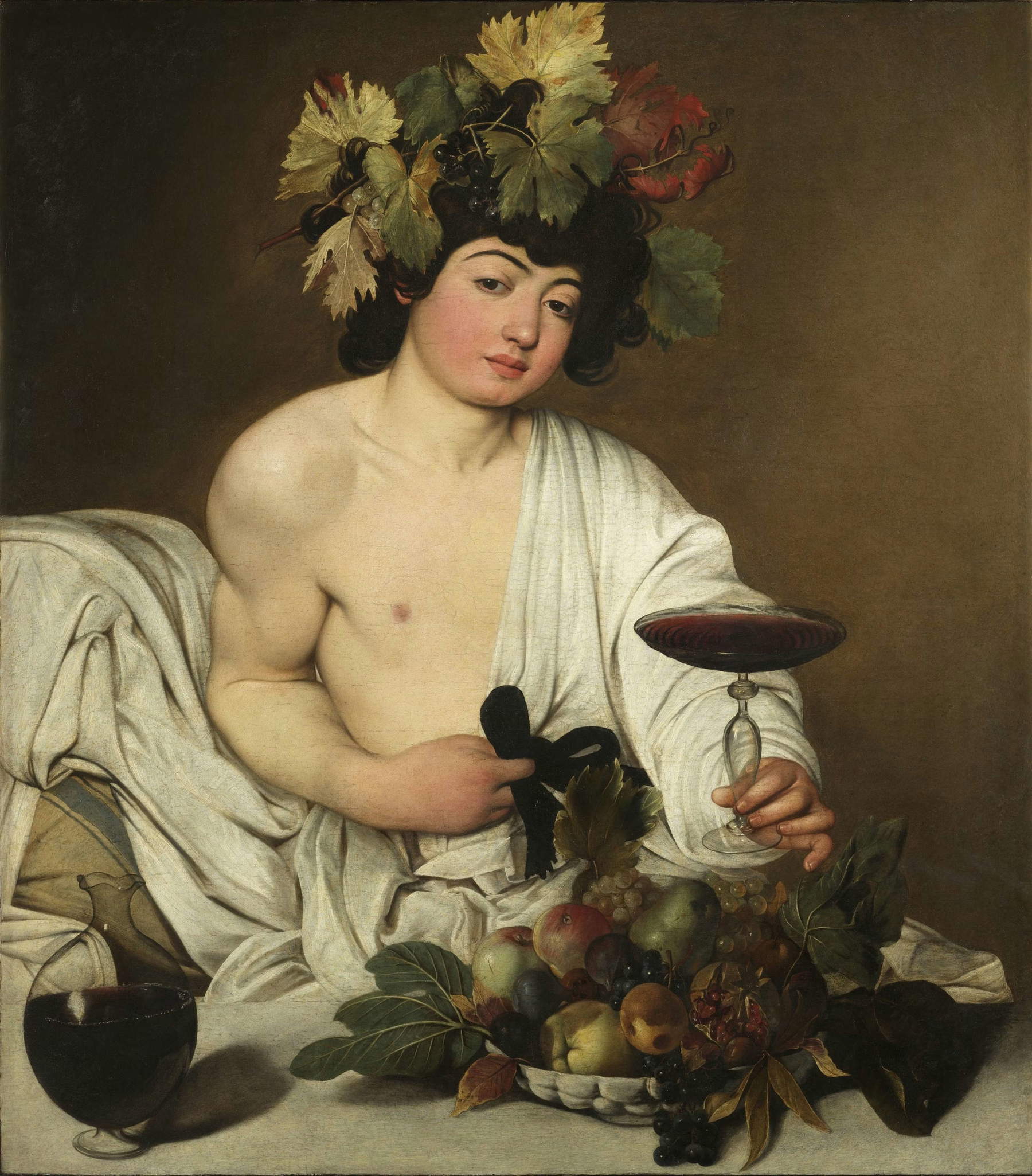
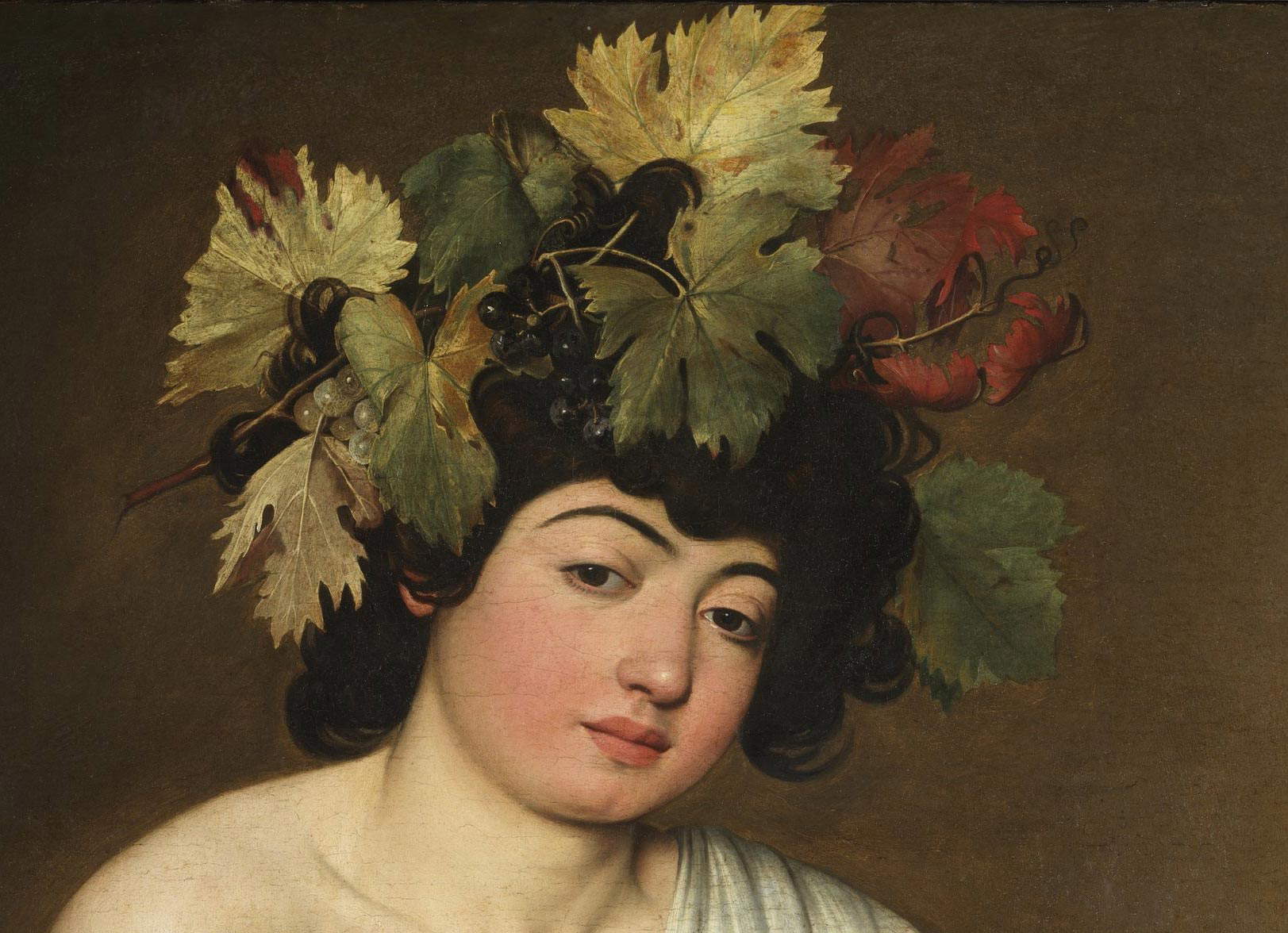
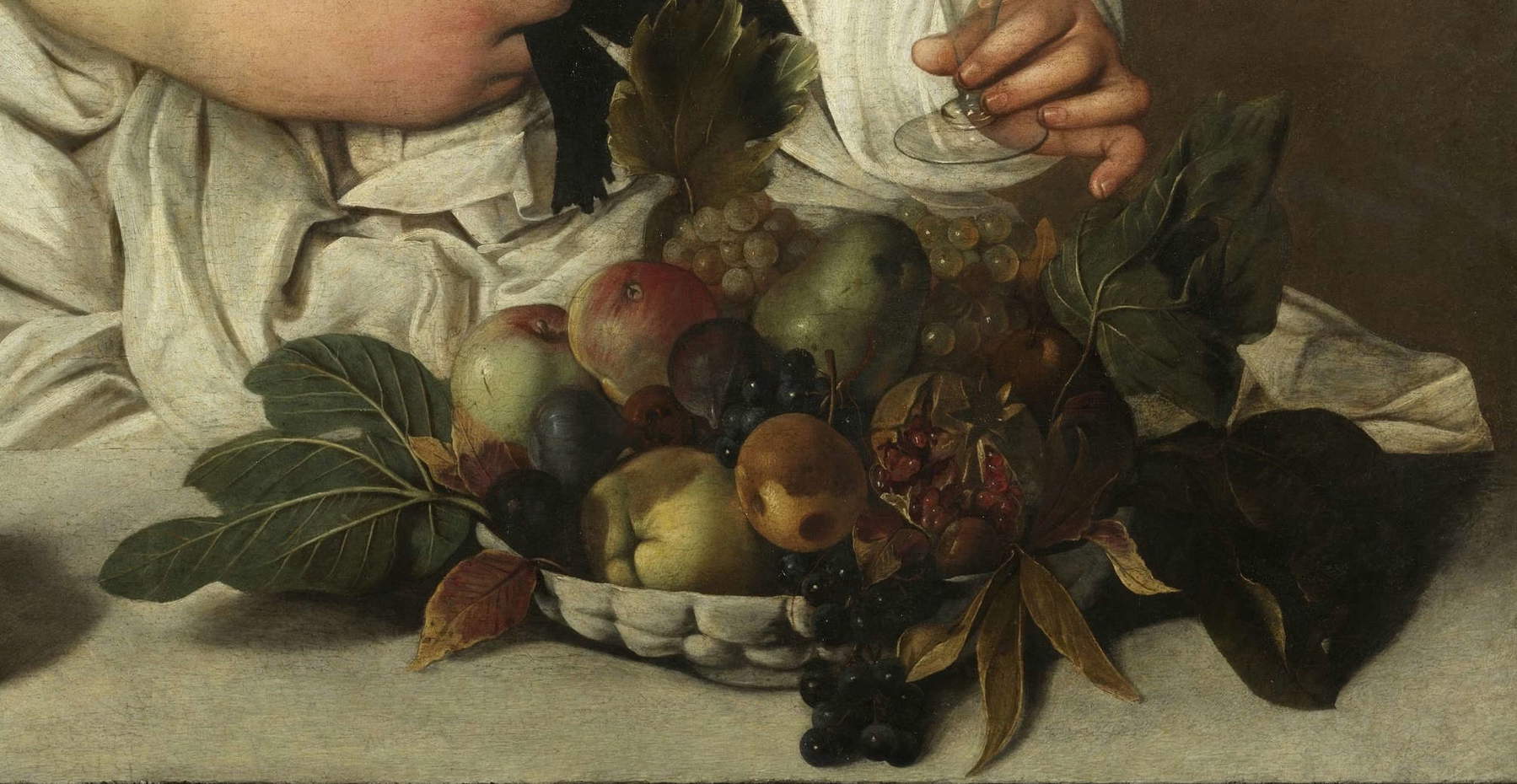
The painting, an oil on canvas in a vertical format measuring 95 by 85 centimeters, depicts a young man crowned with vine leaves, reclining on a makeshift triclinium and covered with white sheets, as he offers the viewer a cup brimming with red wine. Before him lies a basket of partly bruised fruit (it contains the typical fruits of late summer and early fall: figs, grapes, a worm-eaten red apple, a barely touched green one, another yellow one that is in a more advanced state of decay, a pear, and an open pomegranate with seeds spilling out) occupies the foreground along with a glass carafe, also filled with wine. It is an image that constantly oscillates between a scholarly allusion to classical antiquity and an almost folk-art-like realism, betweenallegory and portraiture. And it is precisely in this ambiguity that the painting’s charm lies.
The story of the painting’s discovery is well known and has been recounted many times by the man who found it, the art historian Matteo Marangoni. In 1913, Marangoni—then an inspector and later director of the Florentine Superintendency—stumbled upon the canvas in one of the Uffizi’s storage facilities located on Via Lambertesca. The painting was in a pitiful state, as his account reveals: “I found the canvas of the ‘Bacchus’ in a pitiful state, missing two of the four stretcher bars, with flaking paint on the figure’s chest, and the lower portion completely caked and yellowed from the many layers of varnish it had undergone, and bearing a majestic ‘4’ in chalk on the painting, signifying ‘fourth category’—that is, the lowest (rejects) of the four classes into which, in times past, these thousands of canvases had been categorized as unworthy of being exhibited in the Gallery.” Marangoni went on to recount how he had been bewildered by such an unusual and “modern” work, initially unable to understand what kind of painting it was. It was not until 1916, when Roberto Longhi asked to visit the Uffizi’s storage areas, that the question of attribution was resolved. Accompanied by Marangoni himself, Longhi examined the *Bacchus* and initially hypothesized that it might be an old copy derived from a lost Caravaggio original. Doubts about its authenticity, however, were gradually dispelled, until they vanished entirely in 1922, when a Florentine exhibition at the Pitti Palace dedicated to 17th- and 18th-century painting finally made it possible to compare numerous works attributed to Merisi, establishing a more reliable catalog of his output. This identification was also confirmed by a passage in Giovanni Baglione’s *Vite*, published in 1642, which recounts that among Caravaggio’s early works was precisely “a Bacchus with several bunches of grapes of different varieties, executed with great diligence; but in a style that was not quite dry,” and although the correspondence between this account and the Florentine canvas is not unanimously accepted by all scholars, it is an element that has long been considered a plausible reference.
The debate over the dating of the *Bacchus* remains open. Some scholars have proposed the years 1593–1594, others have favored the period 1596–1597, while a few have even suggested a later date, around 1602. The Uffizi Gallery considers a date of around 1598 to be the most likely. In any case, what most reconstructions have in common is that they place the work before 1600, during the period when Caravaggio was under the patronage of Cardinal Francesco Maria del Monte (Venice, 1549 – Rome, 1626), his patron during his stay in Rome.
It is precisely this connection with Del Monte that has fueled the most widely accepted hypothesis regarding the commission. The cardinal, in addition to being a passionate collector, had a particular interest in the iconography of the god of wine: according to a reconstruction also endorsed by the Uffizi, it was he who commissioned the painting with the intention of donating it to the Grand Duke of Tuscany, Ferdinando I de’ Medici, to strengthen a friendship that had been crucial to his ecclesiastical career. Del Monte had previously sent the grand duke the shield bearing the head of Medusa—which is also now in the Uffizi—and, according to the hypothesis accepted by the Florentine museum and supported by art historian Mina Gregori, the gift of the Bacchus painting was made on the occasion of the wedding of Ferdinando’s son, Cosimo II, and Archduchess Maria Maddalena of Austria, celebrated in 1608. In support of this interpretation, it has been noted that the first certain documentary evidence of the painting’s existence dates back to 1618, when the canvas was recorded at the Medici villa in Artimino, just eight years after Caravaggio’s death. Since then, the work has always remained in the possession of the Medici family, a fact that explains its current location in the Florentine collections. Not all scholars, however, agree with this reconstruction, partly because the interval between the actual date of creation (the last decade of the sixteenth century) and its shipment to Ferdinando de’ Medici on the occasion of his son’s wedding (1608) is too long: there are therefore those who believe the painting was executed before Caravaggio’s stay with the cardinal, and others who have hypothesized that the painting was purchased only around 1618–1619 in Rome on behalf of Cosimo II by one of his intermediaries in what was then the capital of the Papal States. However, there is a possible argument against this hypothesis: namely, the fact that a painting by Caravaggio purchased in Rome during that period would certainly not have gone unnoticed; on the contrary, it would have caused quite a stir. At present, however, we lack evidence to establish with certainty how the painting arrived in Florence.
Upon examining the canvas, one can see that Caravaggio’s depiction of Bacchus deliberately departs from the solemn iconography of the classical deity. The Lombard painter does not, in fact, intend to present the figure as a full-fledged deity, but rather as a boy—a young man who, far from reclining on an authentic ancient triclinium, lies on a simple tavern mattress, whose cushions—covered in a modern blue-striped fabric—are barely concealed by a white cloth thrown over them almost hastily: the model’s face and hands appear flushed from intoxication.
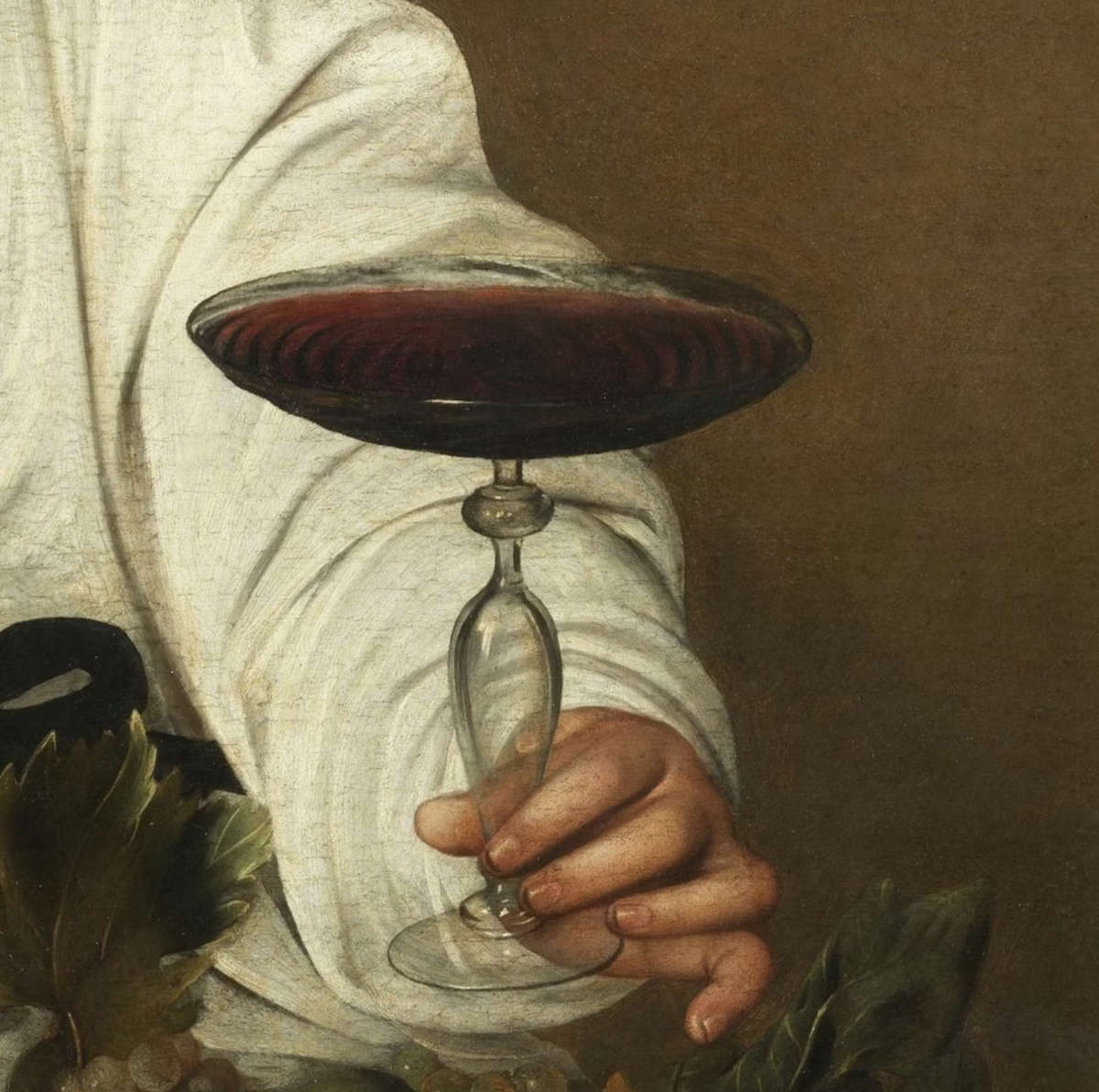
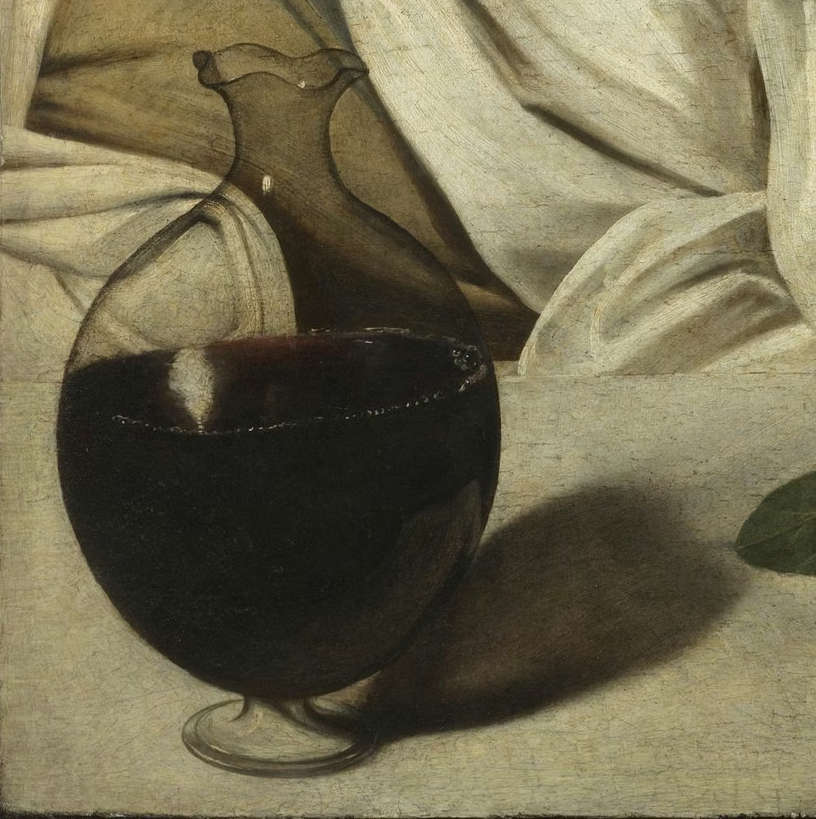
Intoxication, indeed: wine plays a central role in the painting’s iconography, not only as a traditional attribute of the depicted deity, but also as an element capable of conveying layered symbolic meanings, which have been extensively explored by critics over time. Meanwhile, the wine gives us the impression of witnessing a scene in motion, with the arm of the young god of wine having just moved forward, as we can tell from the concentric ripples in the wine within the goblet—a sign that his hand is anything but still, perhaps already intoxicated, perhaps on the verge of spilling the cup. In any case, it should be noted that not all scholars agree on this interpretation: art historian Sybille Ebert-Schifferer has proposed a different interpretation, arguing that the small waves visible in the goblet are actually concentric grooves etched into the glass itself, an object that several experts have identified as a refined Venetian goblet, which would, moreover, point to a culture in which wine was regarded as a noble, prized beverage that abounded even on the tables of the wealthiest classes, although the appearance of this Bacchus suggests an entirely different context. Even the carafe from which the wine was poured, positioned on the left side of the composition, displays details of remarkable artistic finesse: tiny bubbles are visible on the surface of the liquid, and the wine appears almost unstable, as if it had been poured just moments earlier. This effect of immediacy, achieved through close observation of reality, has repeatedly been cited by critics as one of the most innovative elements of Caravaggio’s technique, capable of capturing a fleeting moment with almost photographic naturalism.
Several scholars have interpreted the goblet offered by the young god as a Horatian-inspired invitation to a frugal life, conviviality, andfriendship—a theme that would align well with the hypothesis that the commission was linked to the relationship between Cardinal Del Monte and the Grand Duke of Tuscany. Art historian Alfred Moir also detected a moralizing undertone in the painting, identifying in the motif of the bubbles—destined to dissolve quickly—a parallel with the protagonist’s own youth, destined to vanish just as swiftly. A similar interpretation was proposed by Helen Langdon, who drew on the elegies of the Latin poets Tibullus and Propertius to explain the subtle melancholy that pervades the image, despite the opulence of the autumn fruits that the deity offers the viewer. The god, the scholar wrote, “offers the riches of autumn, of the harvest, of wine, but the leaves are already curled, and the still life—so voluptuous, so opulent—is already imperfect: autumn gives way to winter, and the desire to drink with Bacchus conceals the fear of old age and death, conveying a passionate desire to seize the moment.” The painting thus implies “a lyrical and courtly ideal of the beauty of young men and women” but is set against “a subtle sense of a more violent reality.” Carlo Del Bravo’s interpretation, on the other hand, draws on the poetry of Horace, interpreting the wine (and the “modest country fare”) as “an invitation to a frugal life and friendship.”
There are also those who have interpreted the goblet of wine as a reference to the Eucharistic dimension: from this element, therefore, arise the possible Christological implications of this painting, which, as Maurizio Calvesi wrote, “is certainly not devoid of cultured and intellectual allusions to Christ himself or, indeed, to the Bridegroom of the Song of Songs,” since “the myth of Bacchus, the Greek Dionysus (who died and rose again), could be interpreted in its deepest meanings as a foreshadowing or a mystical proclamation of the Redeemer.” The figure of Dionysus can be linked to that of Christ through the theme of the transformation of wine into blood, according to a Neoplatonic tradition widespread in Renaissance culture that regarded classical myths as prefigurations of the Christian message (Pico della Mirandola, as Calvesi himself noted, wrote that Bacchus reveals the invisible signs of God in his mysteries—that is, in the signs of nature.Neoplatonic Hermeticism derived from Ficino was, moreover, a widespread school of thought among the French community living in Rome during Caravaggio’s time, and Francesco Maria del Monte was close to the French nation (he himself was a scholar of Neoplatonic philosophy). But that is not all: this line of thought, in its references to the mysteries of Dionysus, “did nothing more than take up,” writes Calvesi, “that theme of ‘spiritual intoxication,’ a motif already developed by the Church Fathers in their commentaries on the Song of Songs, where the Bride and the Bridegroom utter phrases such as these: ‘Your navel is a rounded cup, never lacking wine,’ ‘I have drunk my wine and my milk; eat, too, my friends, drink and get drunk.’ Expressions that theologians unanimously linked to the passage from the Gospel: ‘Then he took the cup and gave it to them, saying, “Drink from it, all of you, for this is my blood of the covenant.”’” The reference to the passage from the Song of Songs might also explain the gesture of the god who, with his hand adorned with a bow, clutches his tunic right at his navel. Charles Dempsey, however, takes a completely different approach; in the sensuality of this Bacchus—recognized by many commentators— starting with Mina Gregori, has chosen to see a young man offering his carnal services to the viewer, interpreting the gesture of offering wine as an allusion to his sexual proposition. The wine, therefore, could also be linked to the homoerotic dimension of the painting.
Alongside these symbolic interpretations, however, the naturalistic element remains fundamental: the wine, together with the partially bruised fruit in the basket in the foreground, helps to create that atmosphere of transience and reflection on the passage of time that many commentators, starting with Langdon herself, have identified as a distinctive element of the entire composition.
Finally, there is one last element to which attention must be drawn, a small detail almost invisible to the naked eye: the reflection of a human figure on the surface of the glass jug placed next to the fruit basket. It was Marangoni himself, in 1922, who first noticed, reflected in the glass, a small head reminiscent of Caravaggio’s features: large eye sockets, a broad and slightly snub nose, and full, half-open lips. A direct observation of this detail is virtually impossible, as one can discern only a hint of dark hair, a barely perceptible facial profile, and a touch of white that might correspond to a collar. Mina Gregori identified it as a figure portrayed in profile, as if positioned next to an easel. Several 20th-century interpretations even suggested that the face of Bacchus himself was a self-portrait of the painter, while other scholars have argued that the self-portrait is to be found precisely in that tiny figure reflected in the carafe, based on an interpretation of Baglione’s account, which recalls that Caravaggio had painted several small works depicting himself in a mirror.
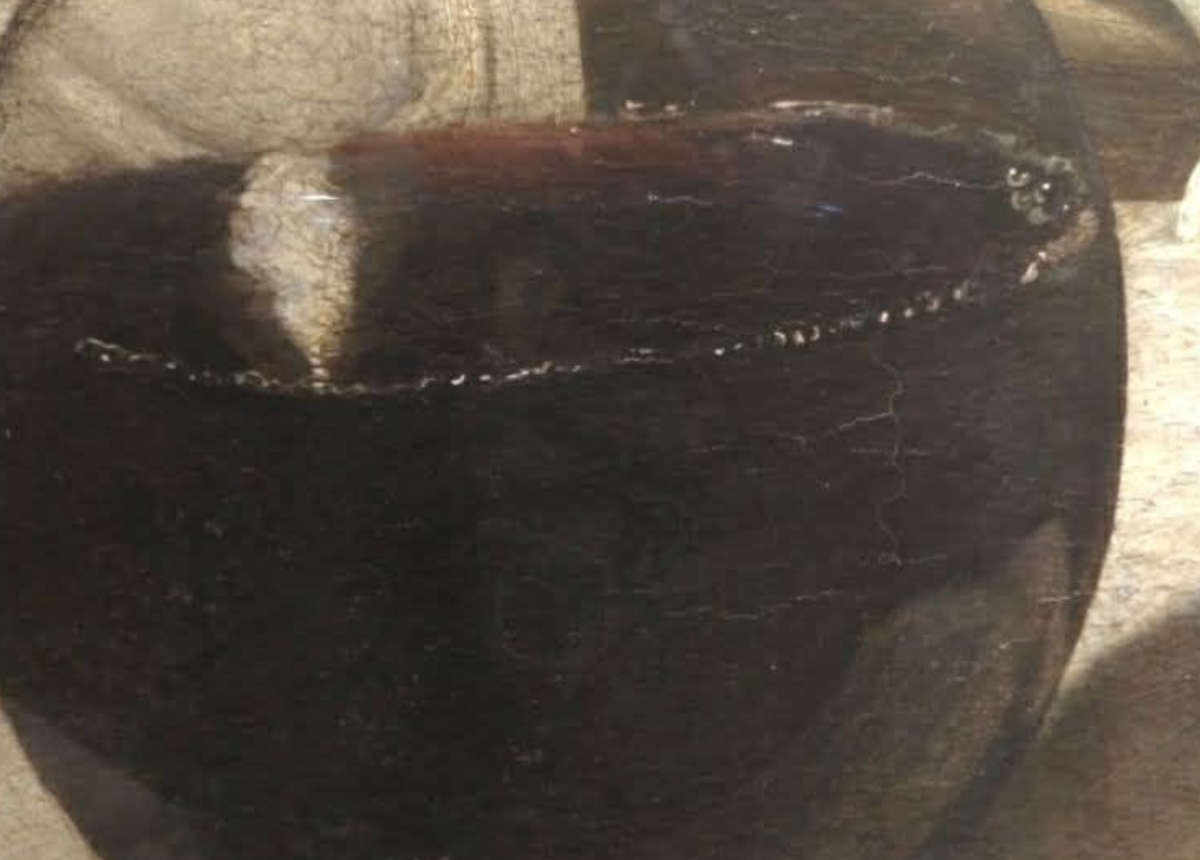
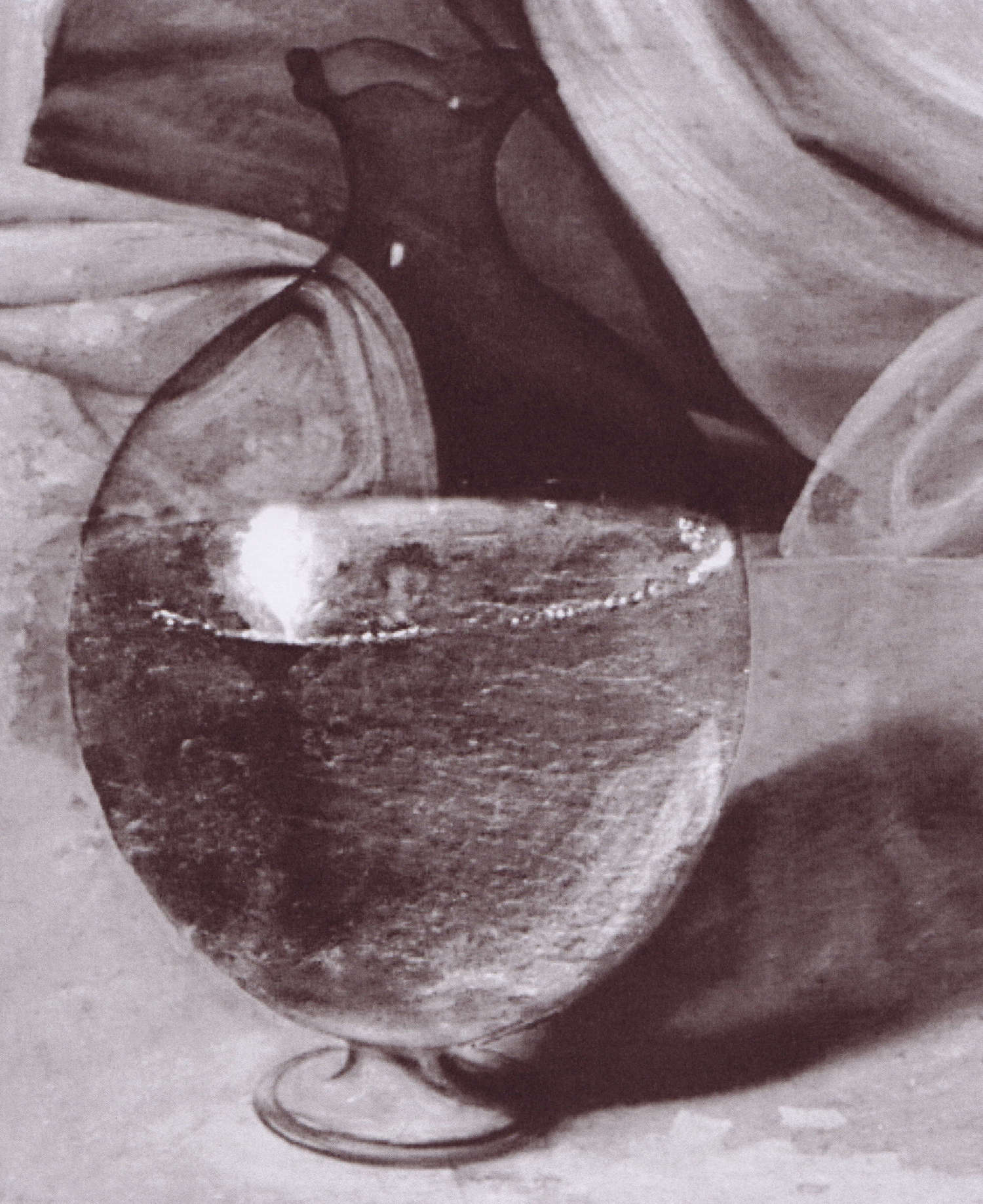
Diagnostic investigations conducted in recent years have added new elements to these interpretations. An infrared analysis carried out in 2009 by Roberta Lapucci and Anna Mazzinghi confirmed what Marangoni and other scholars had only intuited: by observing the images acquired in the spectral band between 700 and 1050 nanometers, the silhouette of a figure standing upright clearly emerged, with distinguishable facial features, particularly the nose, eyes, and collar. The figure appears to be holding an object that could be a paintbrush, while in front of them can be seen what might be a flap of canvas or a panel to which the painted surface is attached, as if the figure were in the process of creating the composition we are observing.
To the naked eye, this figure is virtually indistinguishable, and the two scholars explained the reason for this illegibility: the area has been extensively retouched as part of a restoration effort that partially overlaid it with a dark-toned varnish, perhaps applied to conceal the effects of time and previous damage. It is a plausible hypothesis that whoever carried out the restoration did not understand the significance of that detail, inadvertently diminishing its legibility. From an interpretive standpoint, the two researchers also raised the possibility that the wedge-shaped outline identified beneath the figure could correspond to a concave mirror—an instrument that, according to some theories regarding Caravaggio’s use of optical systems, the painter may have employed for his composition.
Over the decades, various hypotheses have been put forward regarding the identity of the young man depicted as Bacchus. Some scholars have insisted on the theory that it is a youthful self-portrait, while others have proposed the name of his painter friend Lionello Spada, who, according to Cesare Malvasia’s account, also posed for Caravaggio in nude poses. Another hypothesis, now the most widely accepted among scholars, identifies the model as Mario Minniti, the Sicilian painter who, as a young man, lived in Rome alongside Merisi in the late sixteenth century, and who appears with very similar facial features in other works such as *The Boy Bitten by a Green Lizard * and *The Lute Player*, and who may also have posed for *Bacchus*.
In any case, more than a hundred years after its rediscovery in the Uffizi’s storage, Caravaggio’s *Bacchus* continues to serve as a prime case study for understanding the young painter’s working method, poised between meticulous observation of reality and erudite references to classical antiquity and philosophy. The question of the precise identity of the model who posed for the painter remains open—and is likely to remain so—as does that regarding the exact date of execution and the circumstances of the original commission. Nevertheless, the discussion regarding the significance of the wine offered by the god to the viewer can also be considered open. What appears beyond dispute, however, is the extraordinary technical and expressive complexity of a work that, although dating from the early stages of Caravaggio’s career in Rome, already foreshadows many of the formal solutions that would characterize his mature work—from the treatment of light to the almost tactile rendering of materials, right down to his ability to blend the lofty register of classical tradition with a realism capable of upending every figurative convention of the time.