



by Redazione 25/11/2026



Categories: Exhibitions / Disclaimer
On Friday, November 27, 2026, the Deambrogi Gallery will inaugurate its new location at Via Vincenzo Monti 12 with a solo exhibition by the artist, featuring thirteen large canvases and a work on plywood created specifically for the Milanese space. The exhibition will run through January 30, 2027.


Kazimir Malevich’s Black Cross glows with the golden hues of Byzantine mosaics, while a motif inspired by Ambrogio Lorenzetti’s frescoes becomes a pictorial reflection on the relationship between the individual and the community. These are some of the elements that characterize the work of Andrew Huston, the featured artist in the solo exhibition that will open the new location of the Galleria Deambrogi—at Via Vincenzo Monti 12 in Milan—on Friday, November 27, at 6:00 p.m. The exhibition will remain open to the public through January 30, 2027.


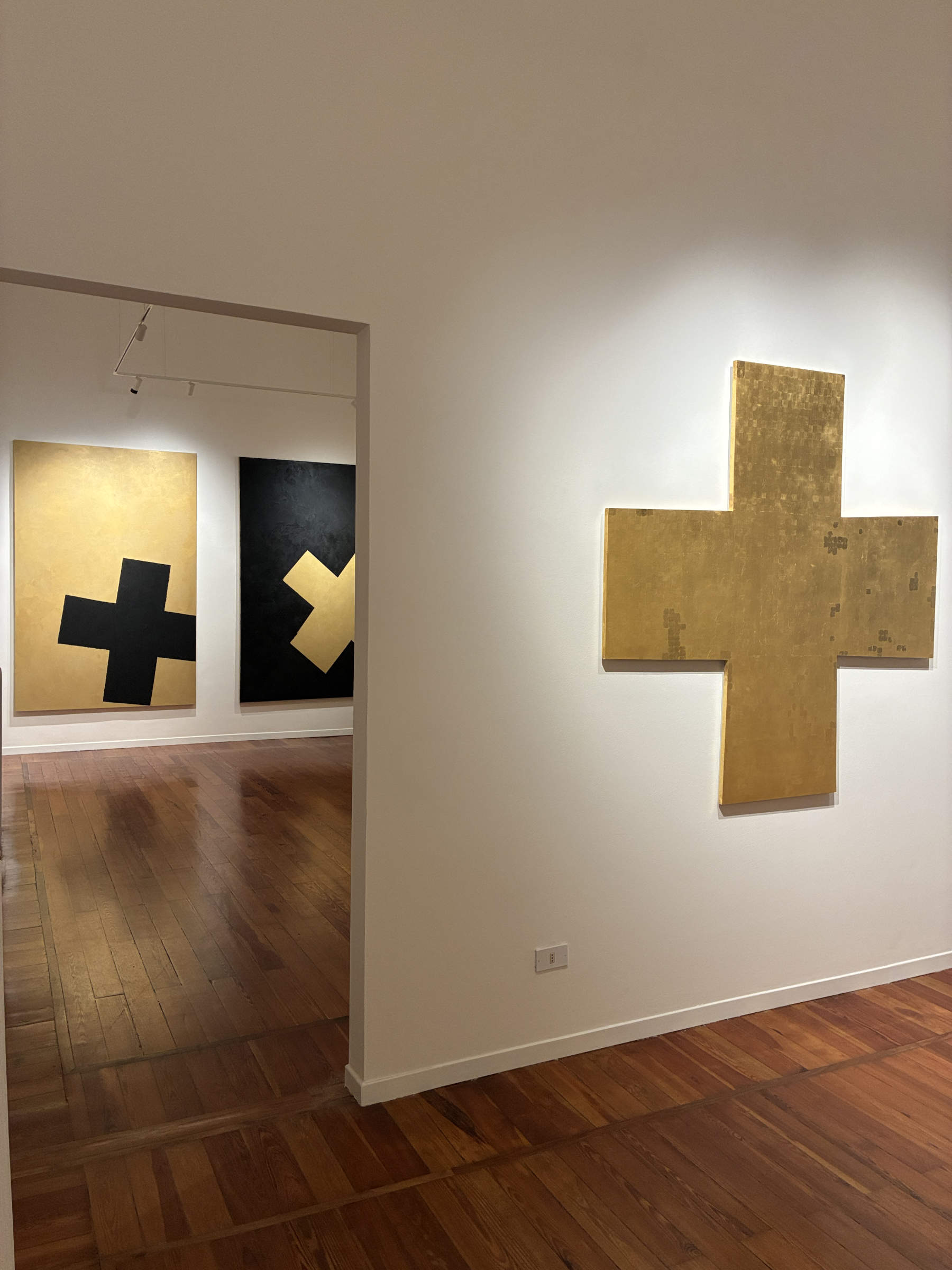
The exhibition was conceived specifically for the gallery’s spaces and brings together thirteen large canvases and a *Cross (Malévich) Gold*, a work created on plywood measuring 150 x 150 centimeters. The exhibition explores some of the recurring themes in the artist’s practice, whose work has taken a distinct direction since his move to Venice in 2017.


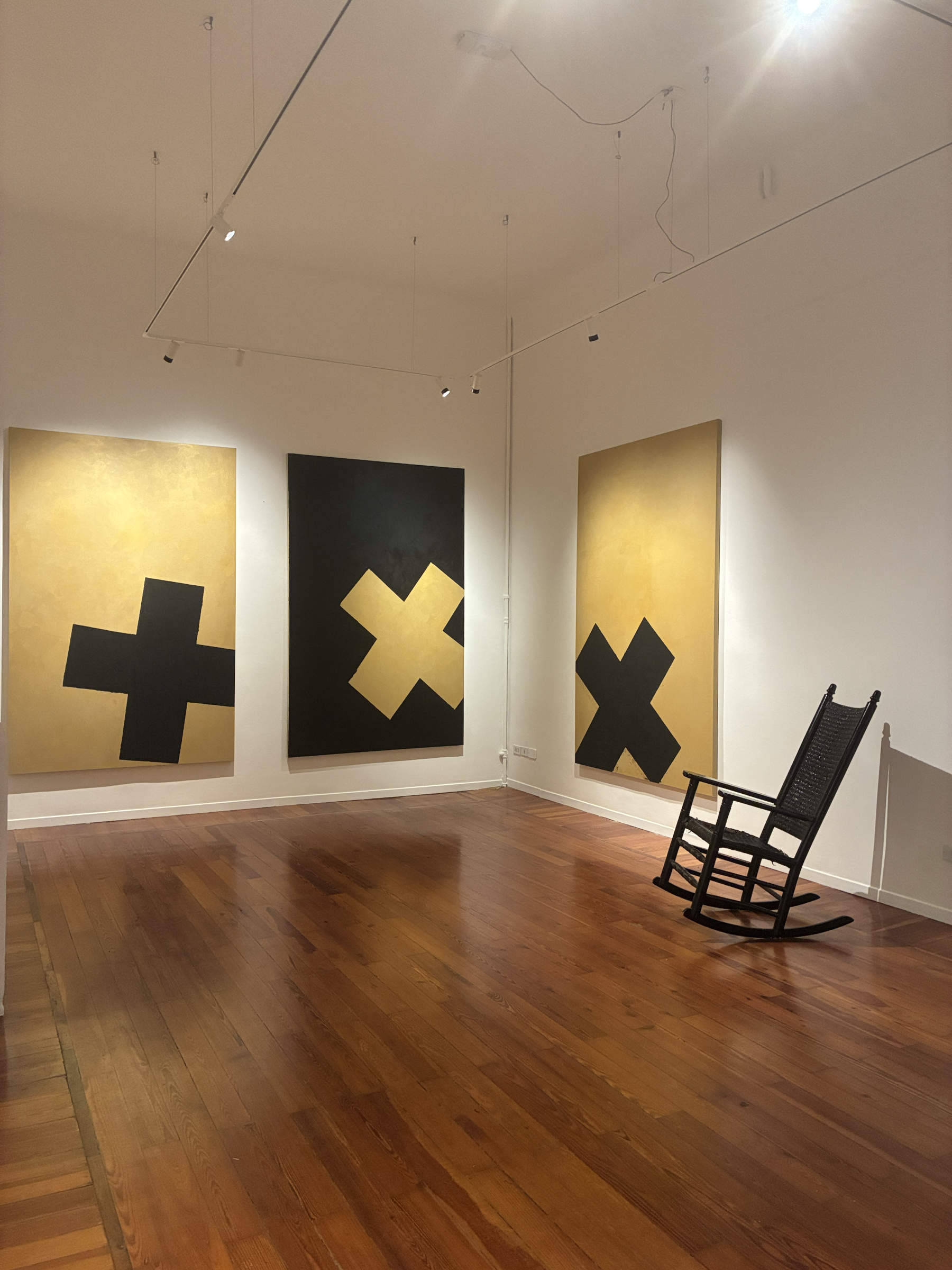
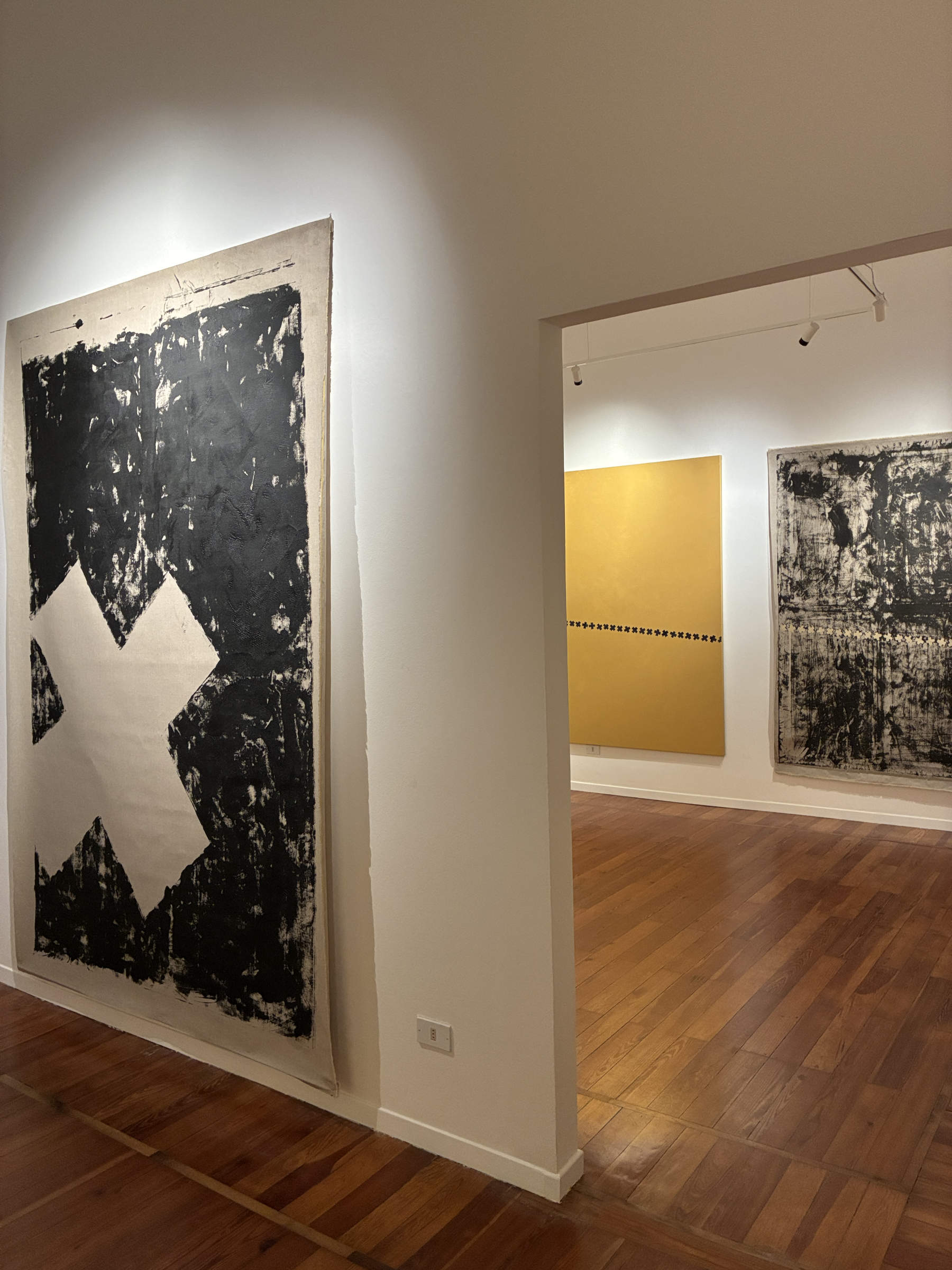
Born in England and raised in Australia and the United States, Huston has found in his relationship with the lagoon city a defining influence on the development of his painting. It is above all Venice’s artistic and architectural heritage—with its mosaics and gilded surfaces—that has contributed to the transformation of a fundamental geometric element such as the black cross, inspired by Kazimir Malevich. In the artist’s works, black thus meets gold and the light reflected by the glass paste tiles, in a dialogue that also draws on the mosaics of Ravenna, Constantinople, and, more generally, the Byzantine tradition.


The spiritual dimension constitutes one of the core elements of his artistic exploration, though it does not correspond to any specific religious affiliation. Rather, the works arise from questions about existence and morality, addressed through a visual language that primarily alternates and juxtaposes black and gold. The shape of the cross recurs consistently, evoking the icons of the Byzantine world and becoming a recurring element in the composition.
A different facet of Huston’s work emerges in the Citizen Paintings series, in which the historical-artistic reference shifts to 14th-century Italian painting. The artist draws on the motif of the rope from certain detailsof Ambrogio Lorenzetti’s*Allegory of Good and Bad Government*, a cycle of frescoes housed in the Palazzo Pubblico in Siena. In his works, the detail is isolated from its original context and transformed into an autonomous, repeatable sign that takes on a meaning linked to the individual’s presence within a community.
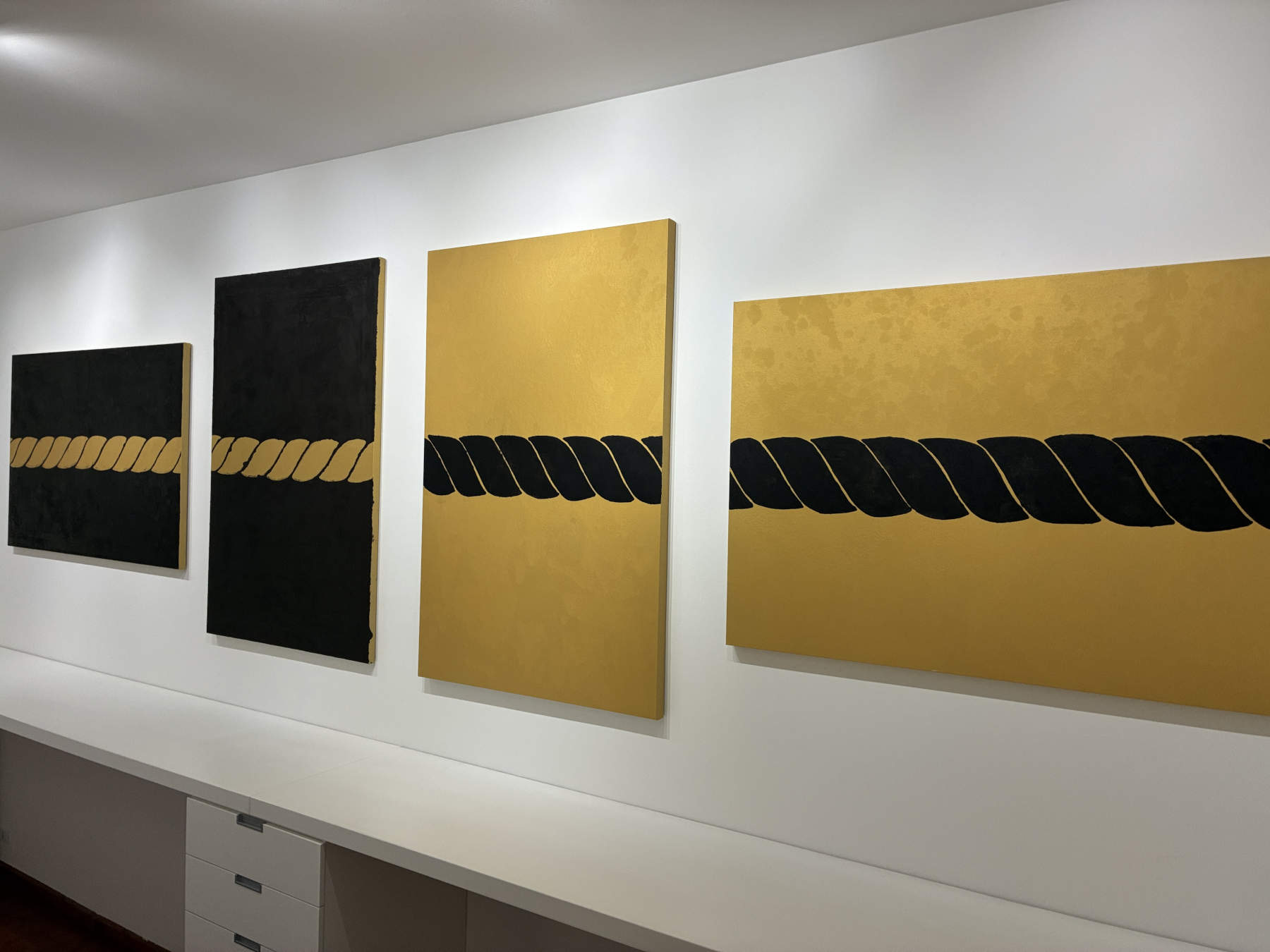
The rope thus retains its symbolic value as a bond, evoking the concepts of harmony and solidarity. On a formal level, this motif enters into a dialogue with Barnett Newman’s “Zips.” Huston connects these references to construct a reflection on the civic dimension of existence, pairing his exploration of spirituality with an inquiry into the relationships between individuals, their differences, and the elements that can unite them.
Founded in 1976, the Deambrogi Gallery has hosted exhibitions by Italian and international artists throughout its history. Among the artists featured are Abate, Balestrini, Bertozzi & Casoni, Bertrand, Botta, Brandl, Calzolari, Caramelle, Carr, T. Cascella, Cavellini, Colin, Cucchi, Del Re, Faggiano, Fortuna, Gallo, Ghibaudo, Huston, Leccia, Mach, Mondino, Mullican, Paladino, Pascali, Penone, Piacentino, Rizzoli, Shanahan, Simoni, Spaeti, Stefanoni, Stingel, Tirelli, Vaccari, Vieille, and Zorio.
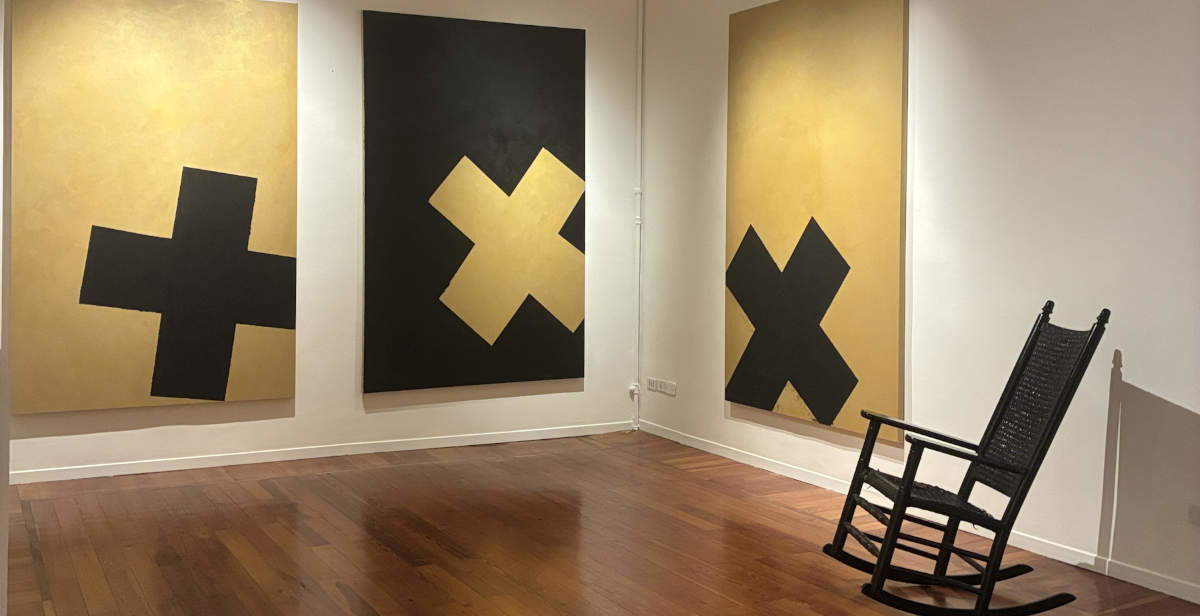 |
| In Milan, Andrew Huston’s paintings offer a fresh interpretation of Byzantine icons and Ambrogio Lorenzetti |
Warning: the translation into English of the original Italian article was created using automatic tools. We undertake to review all articles, but we do not guarantee the total absence of inaccuracies in the translation due to the program. You can find the original by clicking on the ITA button. If you find any mistake,please contact us.