





“Ispirazione Europa: Artistic Dialogues Between the 19th and 20th Centuries” is launching in Vicenza —a new exhibition project sponsored by the City of Vicenza that aims to explore, through art, the formation and evolution of the European spirit from the modern to the contemporary era. Curated by Gabriella Belli and Valerio Terraroli, the trilogy is produced in collaboration with the Andrea Palladio International Center for Architectural Studies and the Fondazione Teatro Comunale Città di Vicenza. The project is sponsored and organized by Marsilio Arte, with Intesa Sanpaolo as the main partner. The initiative will unfold over three years and offers a journey through five centuries of European cultural and artistic history, focusing on artists, intellectuals, ideas, and relationships that have transcended national borders. The first exhibition, “Italy–Germany,” opens on November 13, 2026, and will run through May 2, 2027. It will be followed by “Italy–France” in 2027 and “Italy–Spain” in 2028.
The project stems from a desire to explore the role played by the arts in building a shared culture in Europe. Over the centuries, painters, sculptors, architects, designers, musicians, photographers, and intellectuals have created a dense network of influences, encounters, and cross-pollinations capable of transcending political and geographical boundaries. Each exhibition will feature approximately one hundred works, including paintings, sculptures, photographs, works on paper, and documents, creating a narrative in which the history of art intertwines with the continent’s political and social history. It will therefore not be a simple comparison of different national artistic schools, but rather a reconstruction of those cultural dialogues that have often foreshadowed profound transformations in European society.
The first exhibition in the trilogy, Italy Germany, spans two centuries of cultural relations between the two countries, with a particular focus on the 20th century. It was during this period that exchanges between Italian and German artists, intellectuals, architects, and designers became one of the driving forces behind European modernity. The exhibition, organized in special collaboration with the Mart, Museum of Modern and Contemporary Art of Trento and Rovereto; the Antonio Canova Gypsotheca Museum in Possagno; and the Goethe House in Rome, is held under the patronage of the German Embassy. The project is also part of the initiatives organized to celebrate the 75th anniversary of the resumption of diplomatic relations between Italy and Germany. The exhibition is divided into chapters that trace the most significant moments of cultural exchange between the two countries, relating them to the artistic, political, and social transformations of the era.
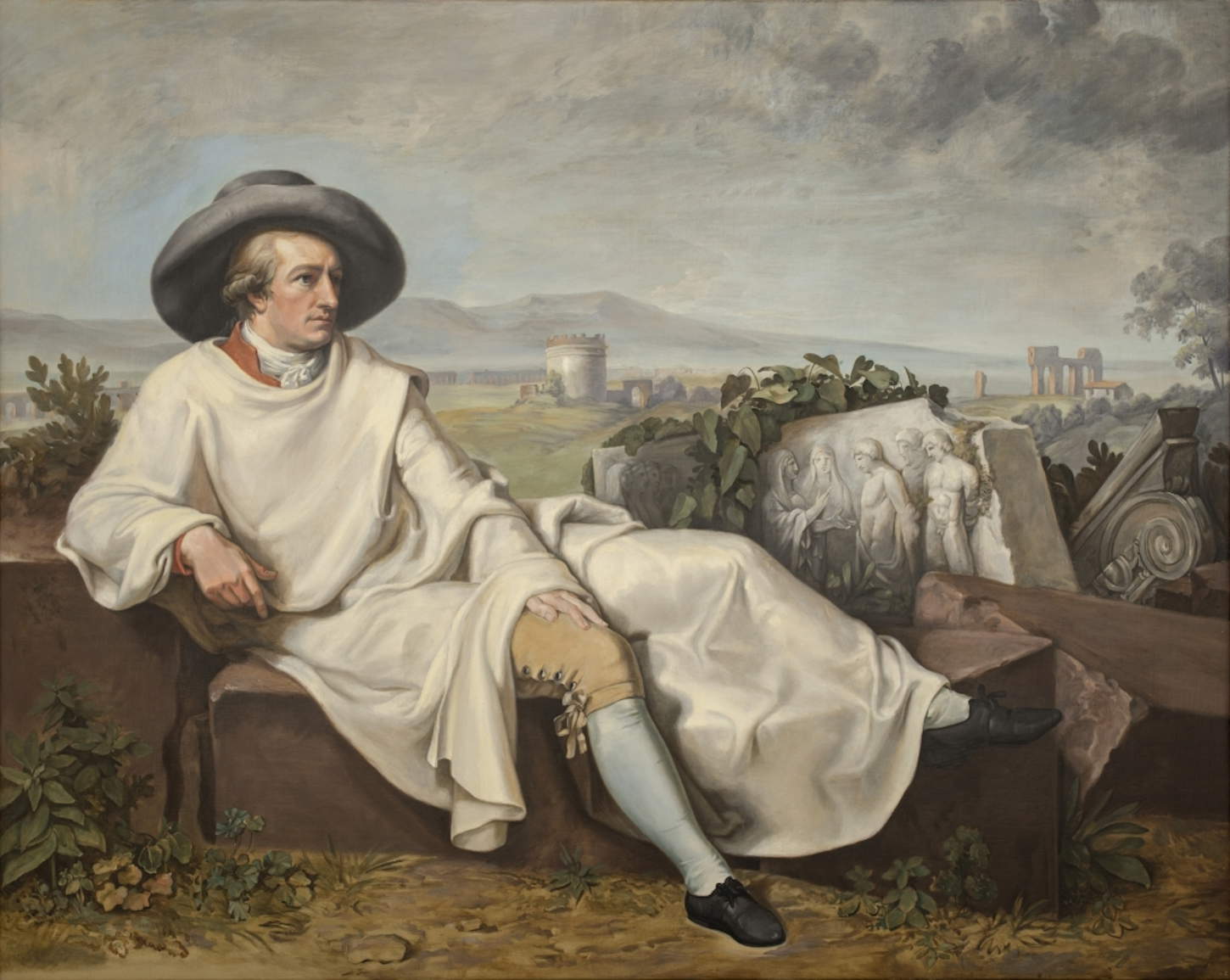
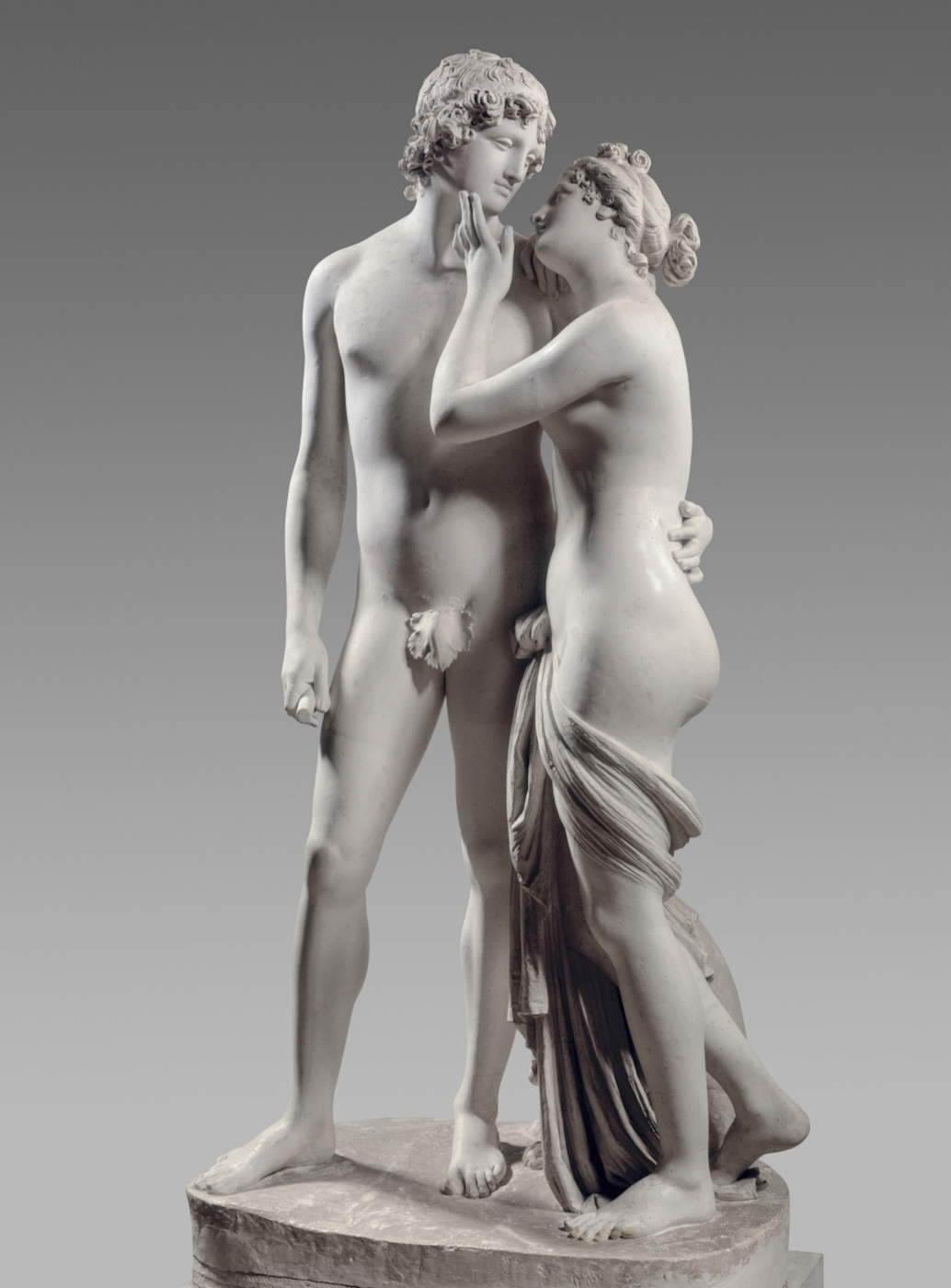
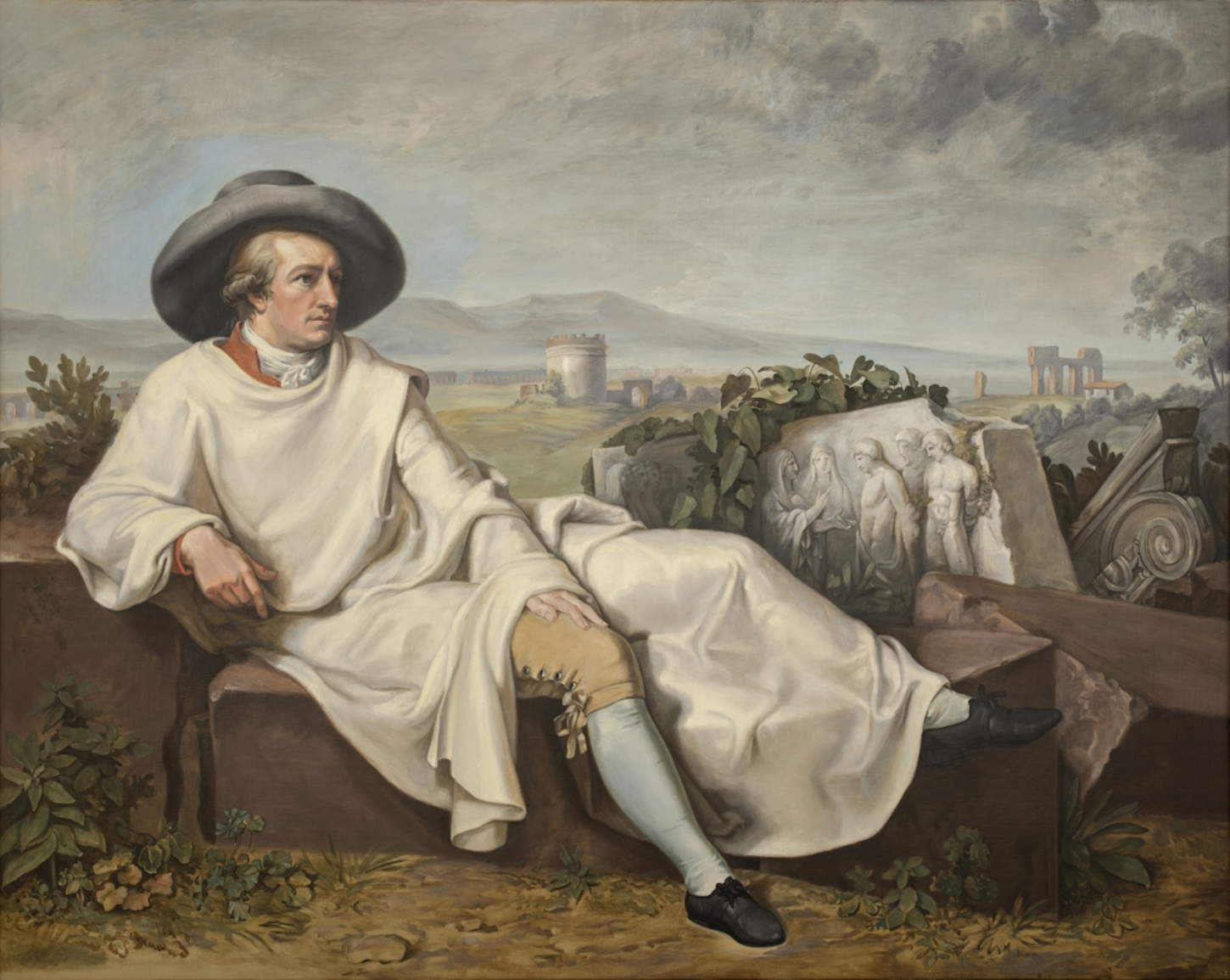
The narrative begins at the end of the 18th century, when Italy became a key destination for German artists and intellectuals. Between 1786 and 1788, Johann Wolfgang von Goethe undertook his famous journey through Italy, which was destined to become one of the foundational texts of European culture. His journey helped reinforce the image of Italy in the German-speaking world as a place of artistic and spiritual renewal. Consequently, the community of the Nazarenes was founded in Rome—German painters who chose to live and work together, reviving a moral and religious conception of painting inspired by the purity of Italian Renaissance art. Among the leading figures of this movement was Friedrich Overbeck, an emblematic figure of one of the first major moments of modern dialogue between the two cultures. At the same time, a debate developed over the various interpretations of European classicism, fueled by the theories of Johann Joachim Winckelmann and exemplified by the work of Antonio Canova, which was contrasted with that of the Nordic sculptor Bertel Thorvaldsen.
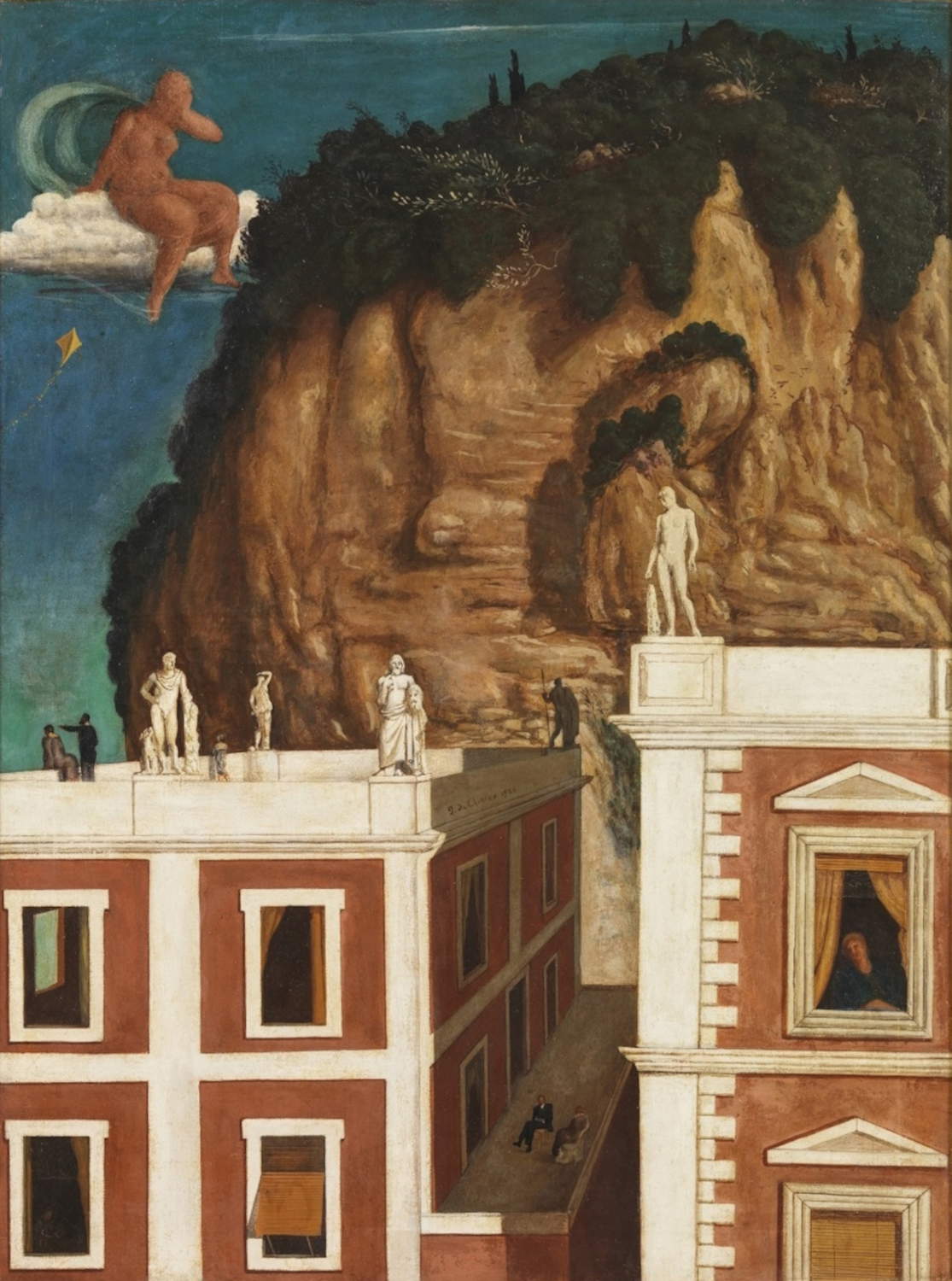
By the end of the nineteenth century, these exchanges became even more intense thanks to the Secession movements, particularly that of Munich. Giorgio de Chirico’s visionary work also fits into this context, engaging in dialogue with that of Franz von Stuck, as well as with the Symbolist tradition of Max Klinger and Arnold Böcklin, who were active in Italy for many years. With the dawn of the 20th century, the relationship between Italy and Germany entered a decisive phase. In 1912 and 1913, the Berlin gallery Der Sturm hosted two historic exhibitions in which the Italian Futurists also participated. It was one of the most significant moments in the encounter between the European avant-gardes: Umberto Boccioni, Carlo Carrà, and Gino Severini established connections with the German Expressionists of the Brücke and the Blaue Reiter, including Franz Marc, August Macke, Carlo Mense, Heinrich Campendonk, Emil Nolde, and Karl Schmidt-Rottluff. The exchange between these movements, despite their differing starting points, helped expand the language of European painting and redefine the possibilities for representing modernity.
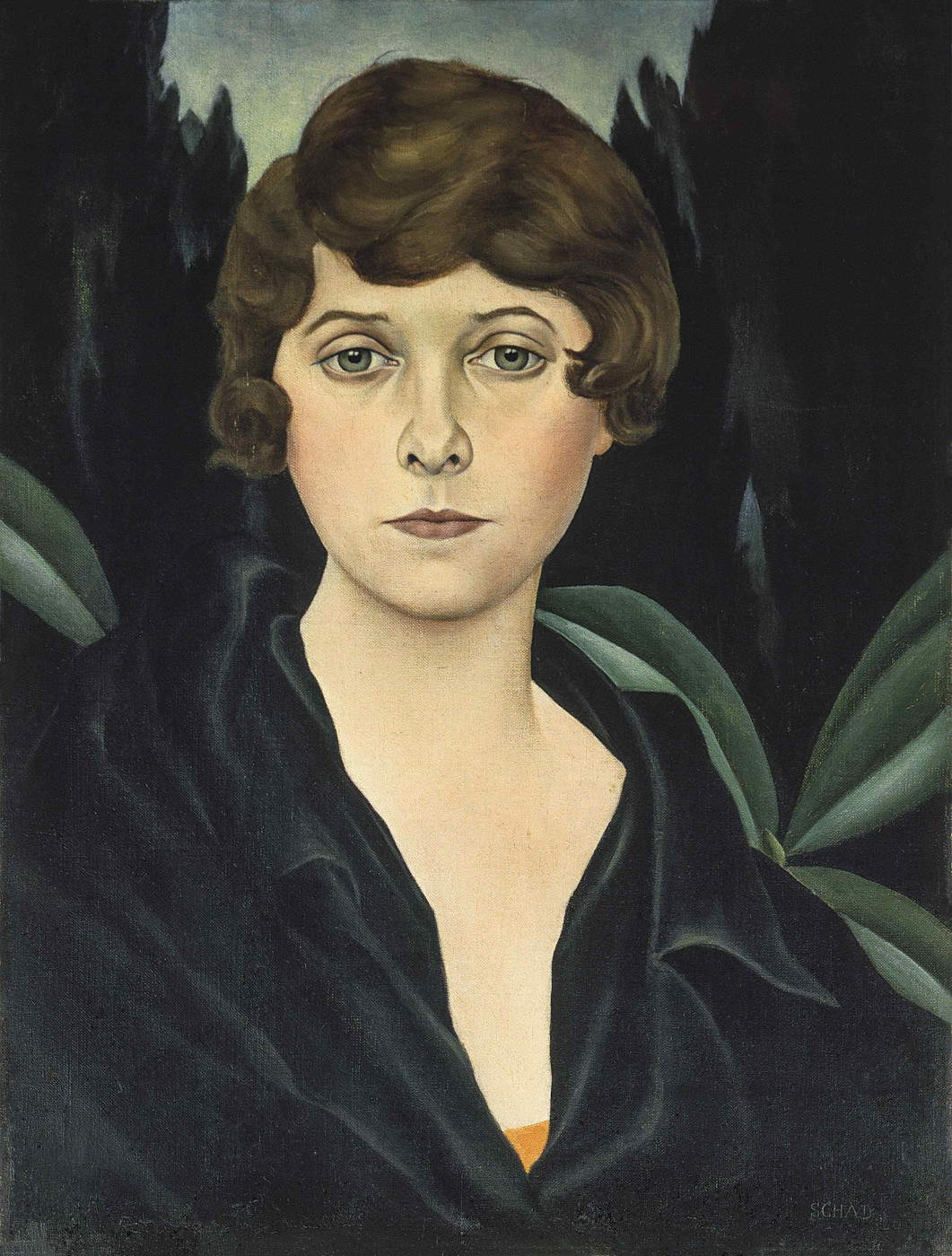
In the 1920s, this dialogue took on an even more complex dimension, reflecting the political and social tensions of the period. Italian Magic Realism and German Neue Sachlichkeit displayed striking affinities in their approach to reality, through a style of painting poised between precision and unease. Italian artists such as Felice Casorati, Antonio Donghi, Gino Severini, and Cagnaccio di San Pietro thus entered into an ideal dialogue with Otto Dix, George Grosz, Heinrich Maria Davringhausen, Christian Schad, Georg Schrimpf, and Alexander Kanoldt—leading figures of the German art scene associated with Weimar Germany. Another fundamental chapter is thatof abstraction. The experiments developed around the Bauhaus profoundly transformed the relationships between art, architecture, design, and society. In Italy, especially in Milan, these ideas found fertile ground at the Galleria Il Milione, where a new generation of artists experimented with radically innovative artistic languages. The works of Wassily Kandinsky, Josef Albers, and Willi Baumeister exerted a strong influence on Mauro Reggiani, Mario Radice, Luigi Veronesi, Carlo Rho, Alberto Magnelli, Fausto Melotti, and Lucio Fontana.
After the deep wounds of World War II, cultural dialogue between Italy and Germany resumed in a climate of reconciliation. In 1958, an exhibition organized in Rome by the National Gallery of Modern Art, and later at the Städtische Museum Morsbroich in Leverkusen, brought together Italian and German artists in the exhibition *Contemporary German and Italian Painters*. Among the Italian participants were Alberto Burri, Piero Dorazio, Antonio Sanfilippo, Giuseppe Santomaso, Tancredi Parmeggiani, and Toti Scialoja, while the German contingent included Karl Fred Dahmen, Fritz Winter, Hermann Bachmann, Peter Herkenrath, Bernard Schultze, and Ernst W. Nay. In the postwar period, German art academies became venues for international exchange. It was in this context that the ZERO group was founded in Düsseldorf in 1957 by Heinz Mack and Otto Piene, who were later joined by Günther Uecker.
The group maintained close ties with Italy, where, centered around the magazine *Azimuth*, artistic explorations similar to those in Germany were developing through Enrico Castellani, Piero Manzoni, Agostino Bonalumi, and Lucio Fontana. Another central figure was Joseph Beuys, an artist, theorist, and professor who, over the course of his career, forged a particularly close relationship with Italy. His conception of art as a tool for political and social reflection also intersected with early ecological thought and the explorations of Arte Povera, particularly those of Mario Merz, Giuseppe Penone, and Gilberto Zorio, which were theoretically supported by Germano Celant. Emilio Vedova, who taught in Düsseldorf for a time, also became a key figure in the relationship between art and civic engagement, connecting his own work with that of artists from the German-speaking world such as Arnulf Rainer, Günther Brus, and Hermann Nitsch. From the late 1970s onward, this dialogue continued through internationally renowned figures such as Sigmar Polke, Gerhard Richter, Anselm Kiefer, and Georg Baselitz, whose works also addressed the themes of historical memory and Europe’s cultural responsibility in the wake of the tragedies of the 20th century. In the 1980s, reflections on identity and the past reemerged in the work of the Neue Wilde, including Markus Lüpertz, Helmut Middendorf, and Rainer Fetting, and later in the younger generation of the Leipzig School, represented by Neo Rauch. These movements intersect with the Italian Transavantgarde scene, theorized by Achille Bonito Oliva and represented by artists such as Sandro Chia, Francesco Clemente, Enzo Cucchi, Mimmo Paladino, and Nicola De Maria.
The “Italy–Germany” exhibition concludes with a focus on the present, through a new generation of Italian and German artists who continue to engage with and collaborate, keeping the cultural exchange between Rome and Berlin alive.
The second exhibition in the trilogy, scheduled for 2027, will be dedicated to artistic relations between Italy and France, with a particular focuson the 19th century—a pivotal period for the birth of modern painting. One of the symbolic moments will be the famous 1874 exhibition in photographer Nadar’s studio, in which the Italian artist Giuseppe De Nittis also participated. With the Impressionists, painting definitively broke free from the confines of the academy to engage with light, landscape, and contemporary life. Exchanges were, however, already intense, thanks in part to the international market promoted by Goupil & Cie, which facilitated the inclusion of numerous Italian artists in French art collections, including Boldini, De Nittis, Michetti, Corcos, Morelli, and Mancini. The exhibition will compare the Barbizon School—featuring Jean-François Millet and Jean-Baptiste-Camille Corot—with the Tuscan Macchiaioli and the Lombard Scapigliatura, represented by Tranquillo Cremona and Daniele Ranzoni. An important role will also be attributed to the art dealers Vittore Grubicy de Dragon and Alberto Grubicy, key figures in the dissemination of new explorations of light and color. The dialogue will continue between French Pointillism—featuring Georges Seurat, Paul Signac, and Henri-Edmond Cross—and Italian Divisionism, represented by Giuseppe Pellizza da Volpedo, Giovanni Segantini, Angelo Morbelli, and Gaetano Previati. At the end of the nineteenth century, the artistic exchange between Paul Cézanne and Segantini will ideally pave the way for the painting of the new century, from Cubism to Futurism. This will be followed by a dialogue between Giorgio de Chirico’s Metaphysical Art and André Breton’s Surrealism, featuring André Masson, Hans Arp, and Yves Tanguy in relation to Savinio.
The exhibition will finally reach the post-World War II period, comparing the French Informel of Jean Fautrier, Jean-Paul Riopelle, and Hans Hartung with the Italian Informel of Burri, Vedova, Morlotti, and Afro.
The third exhibition, scheduled for 2028, will broaden the scope even further, tracing the artistic connections between Italy and Spain from the late 16th century to the 20th century. The exhibition will begin with El Greco, who trained in Venice and was influenced by the paintings of Titian and Tintoretto, and with Caravaggio’s naturalistic revolution, whose influence would prove decisive for 17th-century Spanish painting, from Diego Velázquez to Jusepe de Ribera. In the 17th and 18th centuries, these exchanges intensified: Italian artists such as Luca Giordano and Giambattista Tiepolo worked in Spain, while Francisco Goya spent time in Italy. Among the figures bridging the two worlds was Francisco Preciado de la Vega, who was active in Rome for many years. Between the 19th and early 20th centuries, Rome and Venice became favored meeting places for Spanish artists such as Mariano Fortuny y Marsal, Ignacio Zuloaga, and Joaquín Sorolla, who were also prominent figures at the early Venice Biennales. The 20th century would be dominated by the figure of Pablo Picasso, who arrived in Italy in 1918 to collaborate with Sergei Diaghilev and the Ballets Russes, coming into contact with artists such as Giacomo Balla and Fortunato Depero. The artistic explorations of Salvador Dalí, Joan Miró, Juan Gris, Julio González, and Pablo Gargallo would engage in a dialogue with the Italian painting and sculpture of the time, while Surrealism would find a significant point of connection with the vision of de Chirico and Savinio. The narrative will conclude in the post-World War II period with a comparison between Emilio Vedova’s “For Spain” cycle and artists such as Antoni Tàpies, Manolo Millares, and Eduardo Chillida, extending to the artistic movements of the 1960s with the Equipo Crónica group, Manolo Valdés, and Eduardo Arroyo, in dialogue with the Italian scene represented by Festa and Schifano.
With “Inspiration Europe,” Vicenza thus charts a course through centuries of artistic and cultural exchange, demonstrating how encounters, travels, exhibitions, and cross-pollination have helped define a European identity capable of extending beyond the borders of individual nations.
 |
| Inspiration from Europe: Three Exhibitions in Vicenza Explore Artistic Dialogues Between Italy and Germany, France, and Spain |

Warning: the translation into English of the original Italian article was created using automatic tools. We undertake to review all articles, but we do not guarantee the total absence of inaccuracies in the translation due to the program. You can find the original by clicking on the ITA button. If you find any mistake,please contact us.
























 IT
IT FR
FR DE
DE ES
ES CN
CN


