




From September 26 to November 7, 2026, the Sandra and Giancarlo Bonollo Foundation for Contemporary Art will present ,in the former Chiesa delle Dimesse in Thiene, in the province of Vicenza, “The leaves were brighter than the grass,” a solo exhibition by Kate Newby (b. 1979, Aotearoa, New Zealand), curated by Lisa Modiano. The opening is scheduled for Saturday, September 26, at 5:00 p.m.
The exhibition stems from the New Zealand artist’s site-specific practice, which evolved from her observation of places and their characteristics. Architecture, light, and materials intertwine with the uses of spaces, pathways, and elements that normally remain on the margins of attention. Through sculptures and installations created primarily by hand, Newby intervenes in spaces without occupying them, instead altering how they are perceived. Ceramics, glass, textiles, and collected materials and objects become tools in a practice that explores the relationship between matter, space, and experience.
For over twenty years, the artist has pursued an international practice that progressively expands the field of sculpture, challenging the boundaries between object, architecture, landscape, and everyday life. Her work has evolved through exhibitions, public commissions, and museum projects in Europe, Asia, Australia, the Middle East, and North America, often in locations outside the traditional centers of the contemporary art world. Windows, floors, walls, doors, and landscapes thus become active elements in his research, with which the works establish a direct relationship.
“I see my work as the creation of a space where things can happen,” says Newby.
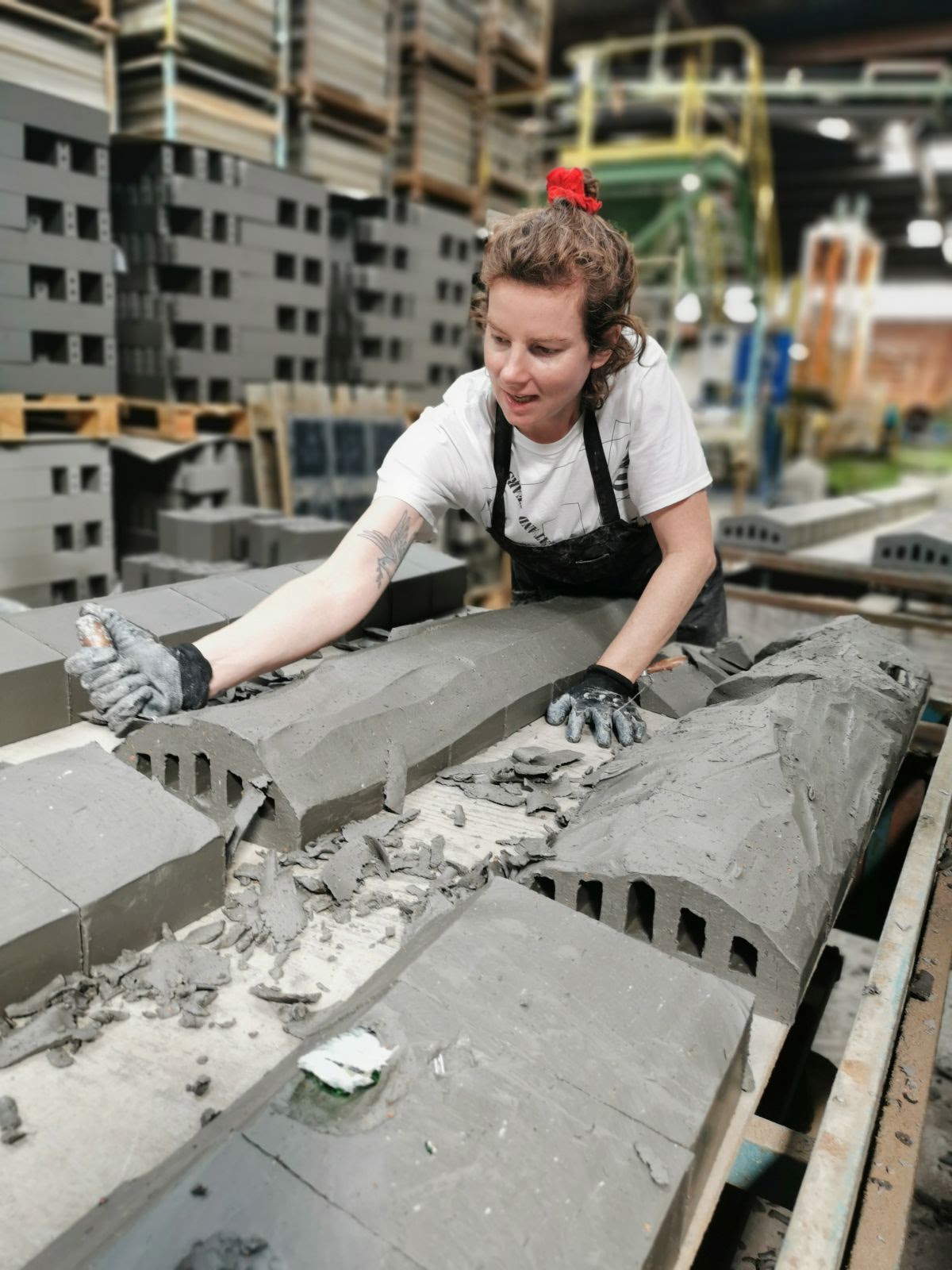
The movement of the audience is also part of the experience. Walking, crossing a space, touching, or choosing a direction become actions through which the work is perceived. The sculptures are therefore conceived not merely as objects to be observed, but as interventions capable of acting upon space and attention, bringing to the forefront elements normally left in the background.
It is within this framework that Newby’s focus on the everyday also takes shape. Found materials, overlooked objects, minute details, and ordinary situations are lifted out of their marginal status and take on new significance. The artist does not necessarily seek a moment separate from reality, but rather embeds the artistic experience within what is already present and visible to the eye, even when it appears ordinary or unnoticed.
For the Sandra and Giancarlo Bonollo Foundation, this approach engages with a space characterized by the layering of eras and artistic languages. The exhibition takes shape in the former Chiesa delle Dimesse, an 18th-century building that now houses the Foundation, which retains traces of its religious function and various elements attributable to the late Baroque period: stucco work, statues, niches, the polychrome marble altar, and the carved larch portal. The exhibition route also extends into the contemporary addition adjacent to the chapel, characterized by white walls and minimalist neon lighting, in stark contrast to the church’s historic features.
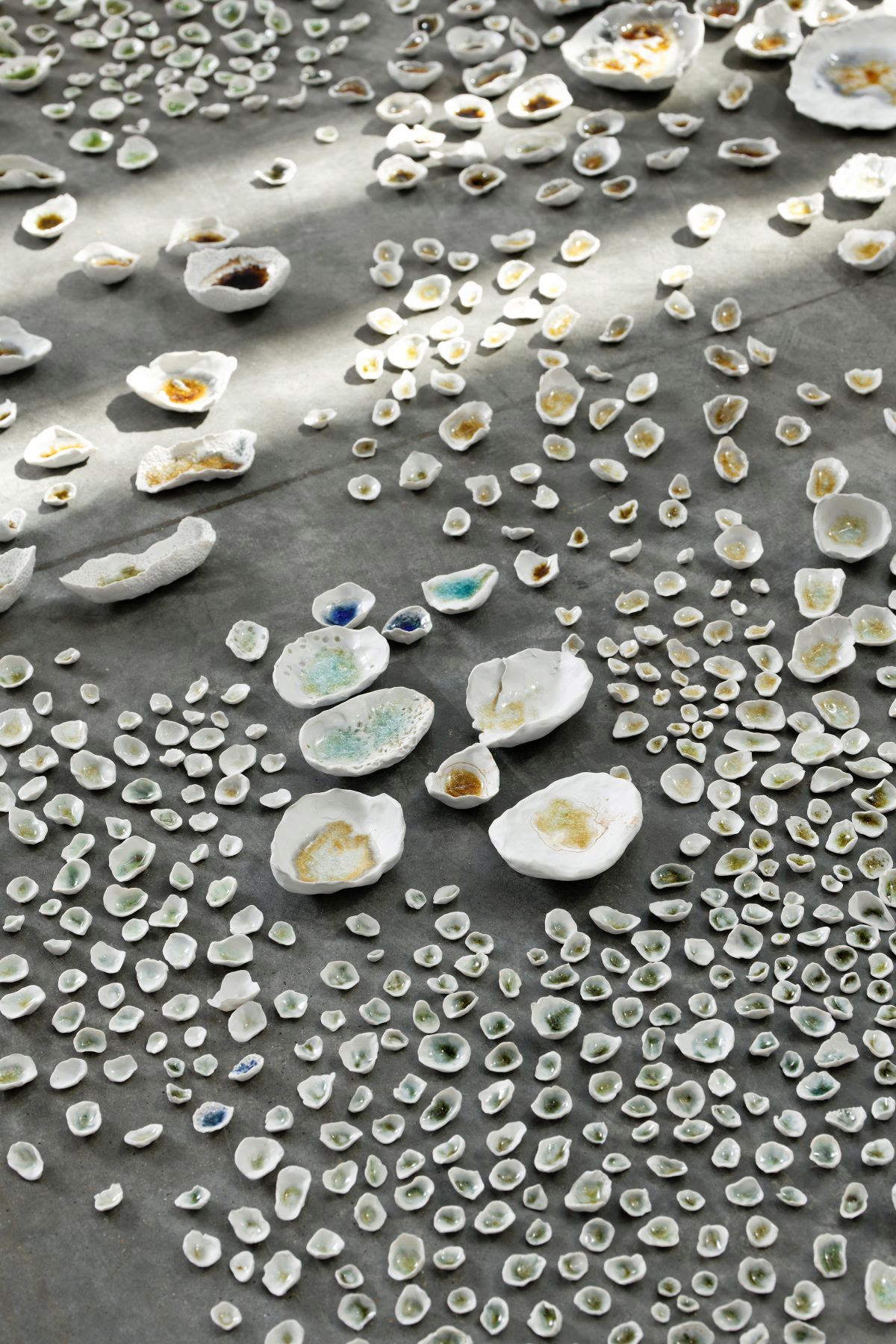
It is precisely this juxtaposition of different architectural and aesthetic conditions that serves as the starting point for Newby’s work. Inside the church, at the foot of the empty altar, a large installation brings together thousands of porcelain puddles embedded with colored glass. The ensemble takes on the appearance of an offering left by the sea, without, however, claiming any sacred function or meaning. The sculptures are described as “anti-relics” and echo several recurring elements in the artist’s practice: a focus on the fragment, the minutest detail, and the salvaged object.
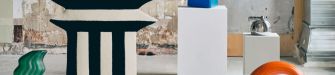
In the contemporary spaces adjacent to the church, the exhibition continues with a group of larger stoneware puddles, a blue wind chime, and an installation composed of numerous ropes arranged within a constellation of glass and bronze elements created by the artist. The work spans the exhibition space and invites the public to walk beneath and through the installation, experiencing different viewpoints and thereby altering their relationship with the artwork and its surroundings.
In both contexts, the works establish a relationship between the ornamental richness of historic architecture and the austerity of contemporary spaces. This creates a tension between enduring structure and ephemeral gesture, modest materials and a precious setting, measured interventions and the building’s monumental scale. While the Baroque establishes its presence through abundance, accumulation, decoration, and the theatricality of light, Newby, on the other hand, intervenes through subtraction, restraint, and attention to emptiness.
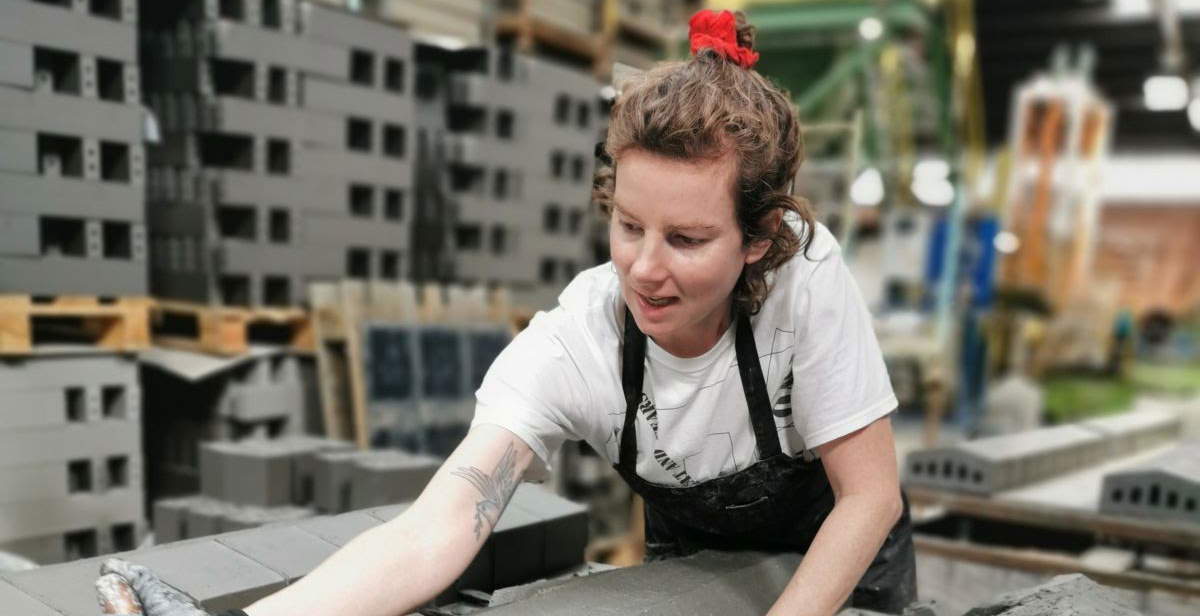
Another element linking the work to the space is the traces of manual labor. The sculptures, in fact, retain the imprints of the artist’s hands and fingers and, in some cases, even those of elbows and knees. The body is not depicted, but remains recognizable in the material through the gesture that produced it. The reference to the monument thus gives way to that of the trace, understood as a sign of an action and a presence that manifests itself through the material.
“The leaves were brighter than the grass” thus brings together three distinct dimensions of the exhibition space: the monumental and religious dimension of the Baroque church, the stark and neutral dimension of contemporary architecture, and the minimalist and earthly dimension introduced by Newby’s works. His sculptures do not overlap with the architecture but are temporarily inserted into it, taking on the function of new ornamental elements and altering the perception of the space.
 |
| Kate Newby brings her “anti-relics” to the former Chiesa delle Dimesse in Thiene (Vicenza) |

Warning: the translation into English of the original Italian article was created using automatic tools. We undertake to review all articles, but we do not guarantee the total absence of inaccuracies in the translation due to the program. You can find the original by clicking on the ITA button. If you find any mistake,please contact us.















 IT
IT FR
FR DE
DE ES
ES CN
CN


