





For Mimmo Rotella (Catanzaro, 1918 – Milan, 2006), tearing was never merely a gesture: removing a poster from a wall meant appropriating an existing image, taking it out of its context, and transforming it into something else. In the final decades of his career, that principle did not disappear but shifted in scale: the image expanded, invaded the support, merged with the paint, was erased, recomposed, and manipulated once more. It is this monumental dimension of Rotella’s work that emerges in the exhibition Catanzaro is dedicating to its native son twenty years after his death. From October 8, 2026, to January 8, 2027, the San Giovanni Monumental Complex will host the exhibition *Mimmo Rotella. Monumentale, curated by Alberto Fiz. Twenty-five large-scale works have been brought together for the occasion, all drawn from his body of work spanning the 1980s to 2005—that is, the final decades of a career in which the artist continued to redefine his relationship with images from mass media. This chronological approach allows us to view Rotella from a perspective different from that associated with his most famous invention, the décollage. Not because that technique has been abandoned, but because it serves as the starting point for a series of further transformations. The practice of tearing is complemented by overpainting, pictorial interventions, metal supports, “blanks,” large-scale ready-mades, and, in recent years, the so-called “new icons.”
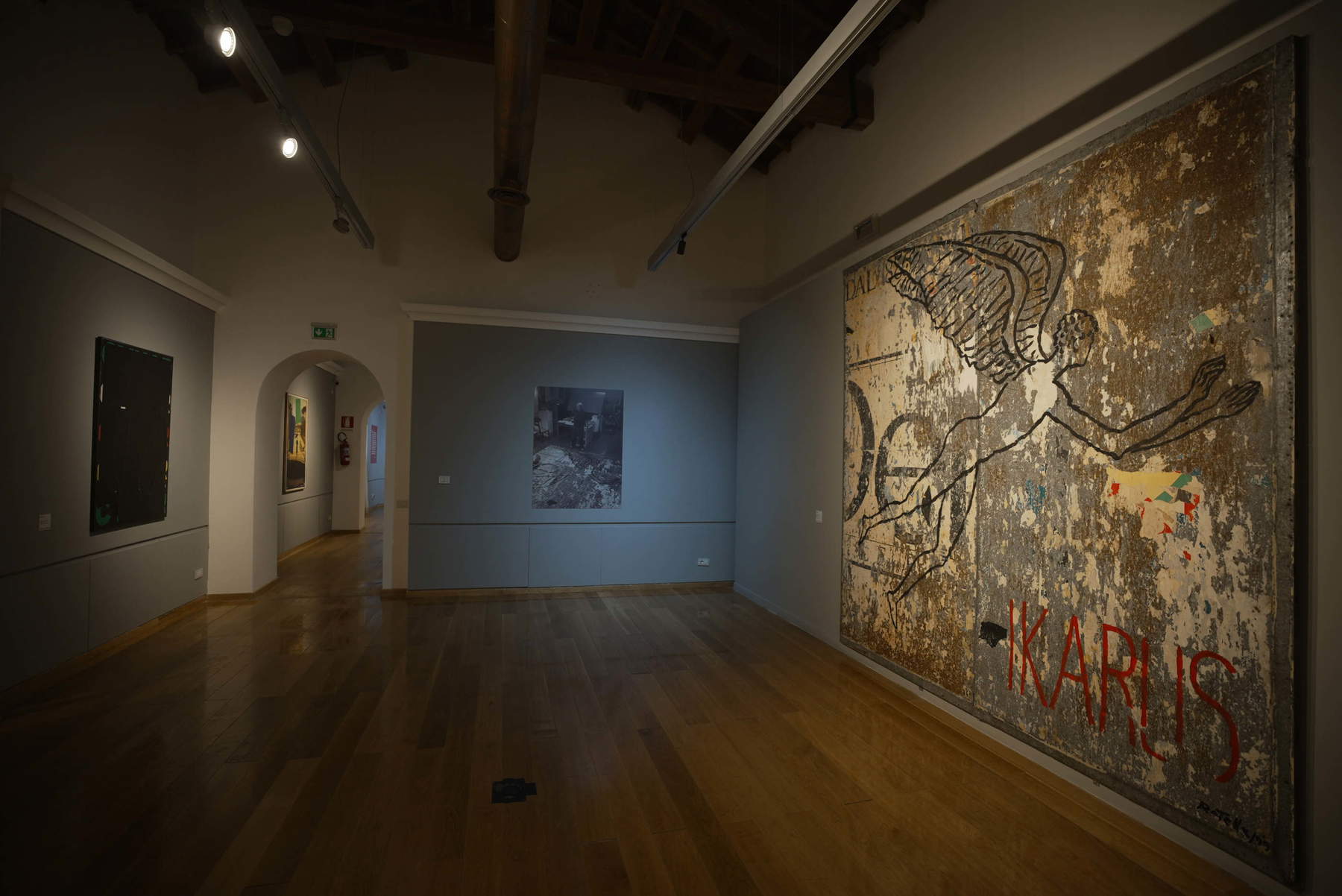
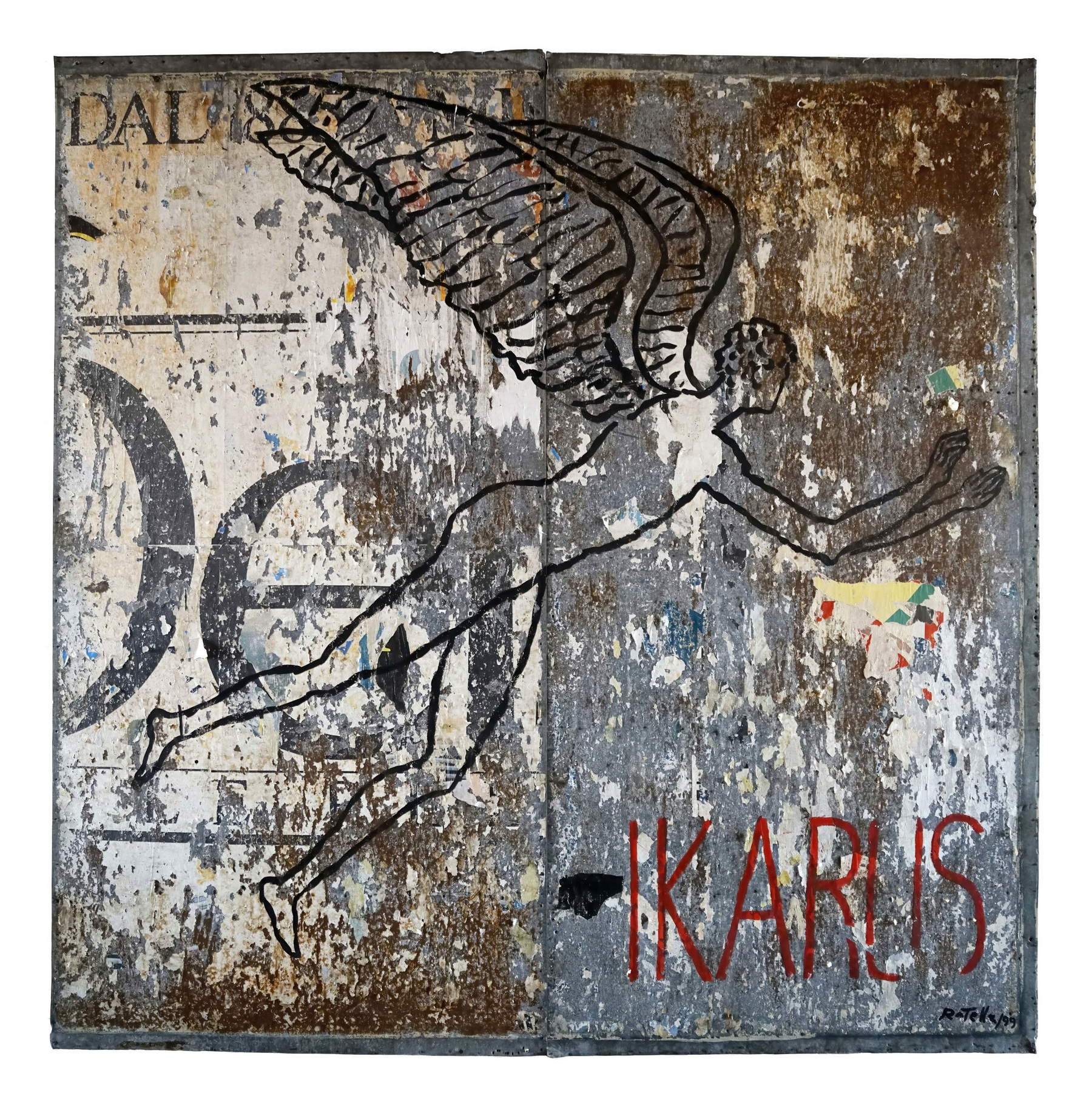
It is above all the scale of the works that makes the change evident. *Pan Am*, from 1986, is an overpainting on a five-meter-long canvas; *Matrix* and *Shaolin* are large décollage works on sheet metal linked to cinematic imagery; Fort Apache and L’ultima vendetta, both from 2004, bring the Western film genre back into the artist’s work (the latter work is on loan to the Magna Græcia University of Catanzaro). Then there is *Ikarus*, created in 1999 and three meters tall, which was on display for a long time at the Lamezia Terme Airport and was made available by Sacal, Calabrian Airport System (the reference to the myth of flight introduces another of the recurring images in Rotella’s work, but above all it concretizes that relationship between the artwork and public space, which constitutes one of the central themes of the exhibition).
Monumentality, in this sense, does not simply coincide with large dimensions. It concerns the way in which an image can occupy a space and alter the viewer’s perception. It is an issue that has accompanied Rotella since the origins of décollage and that resurfaces with particular prominence in his later work. In the 1950s, the artist had identified city walls as a sort of open-air museum. Torn posters became images stripped of their advertising function and transformed into artistic material. Beginning in the 1980s and especially in the 1990s, that insight was reimagined through works that drew on cinema, advertising, current events, and the collective imagination as materials for a new visual construction. “My goal is to give the advertising panel the status of a sculpture-architecture,” Rotella stated: this phrase helps us understand why the relationship with the public dimension of the image remains so important even in his later works. And so the poster is no longer just something to be torn down: it can become a surface, a structure, an object, a space.
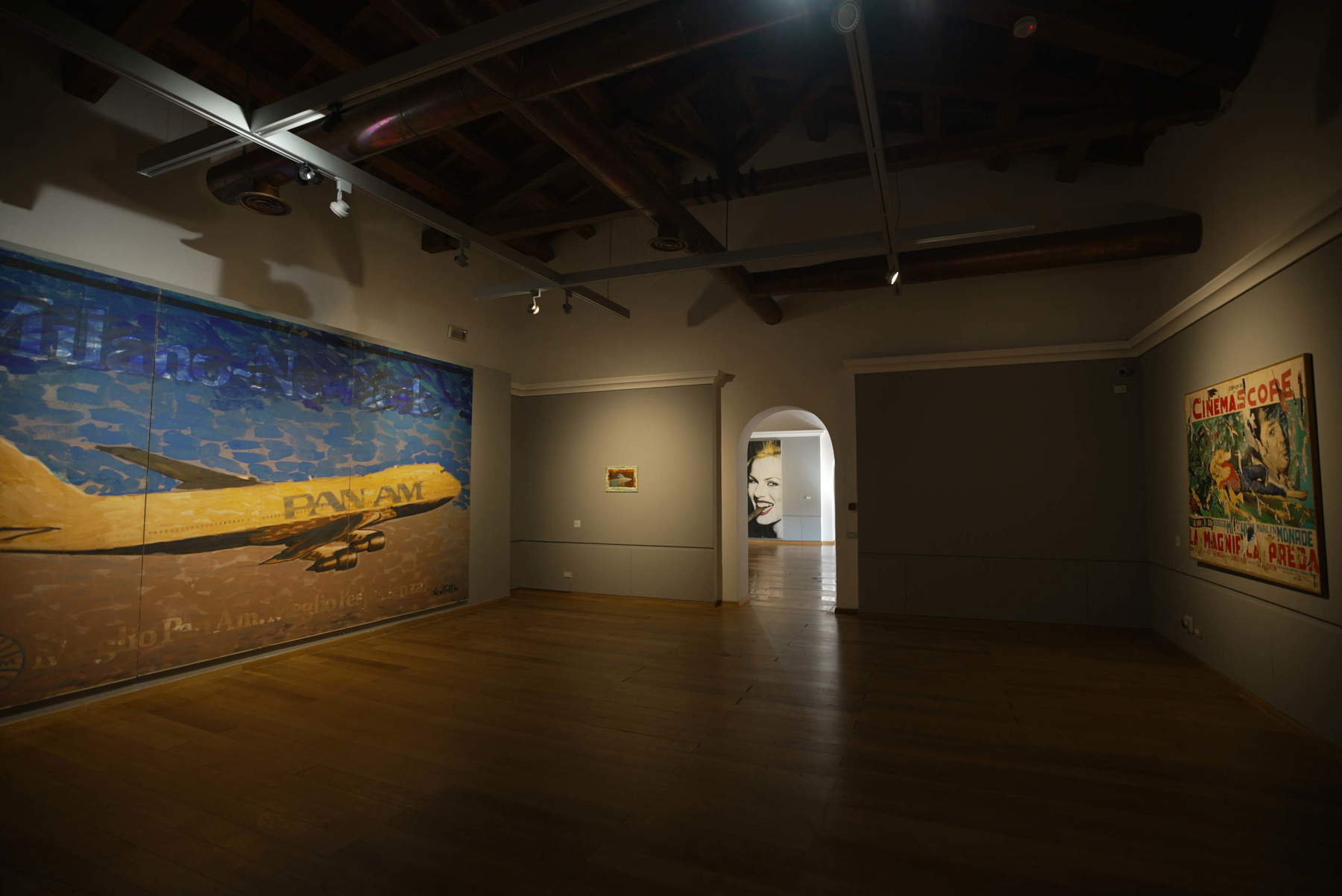
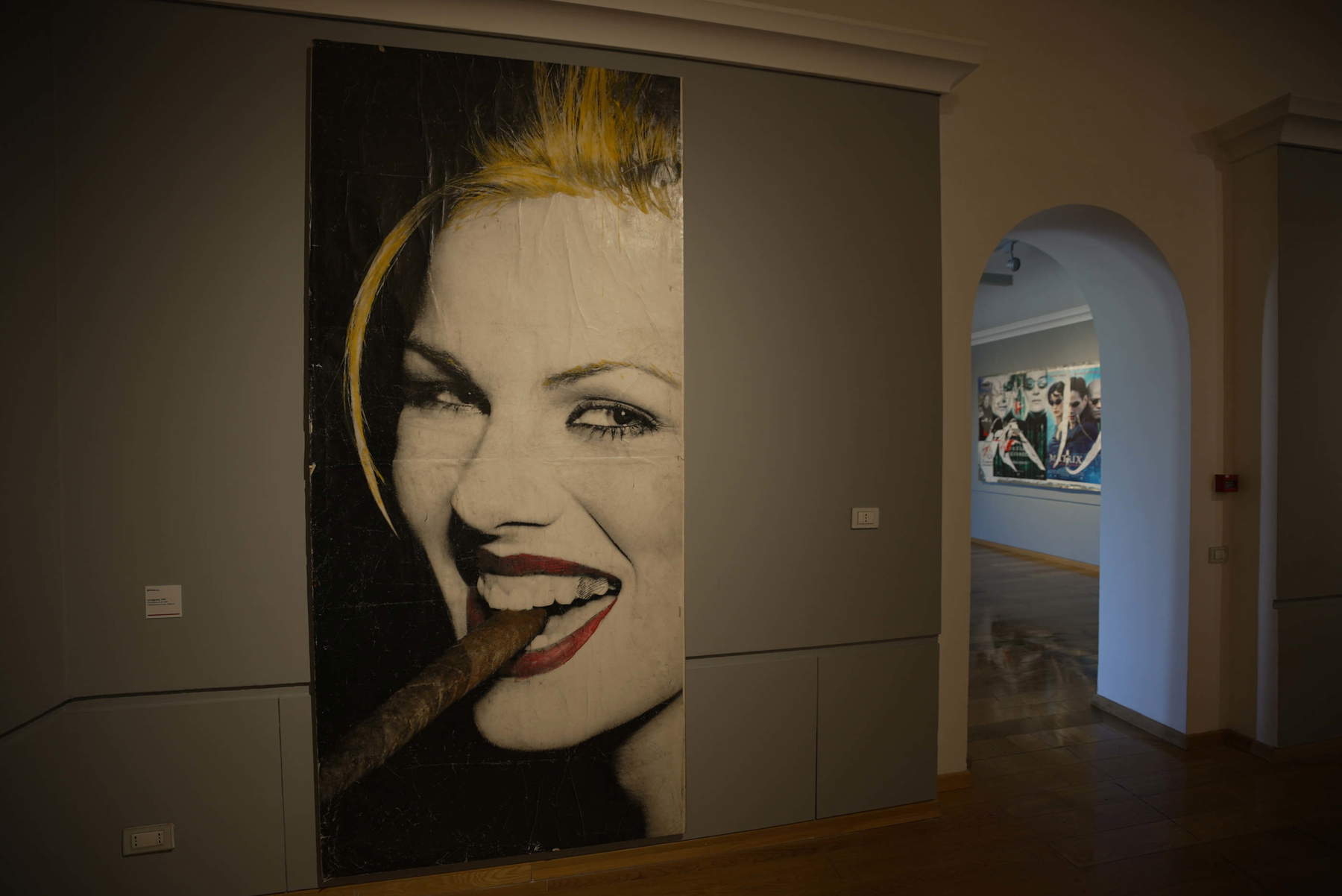
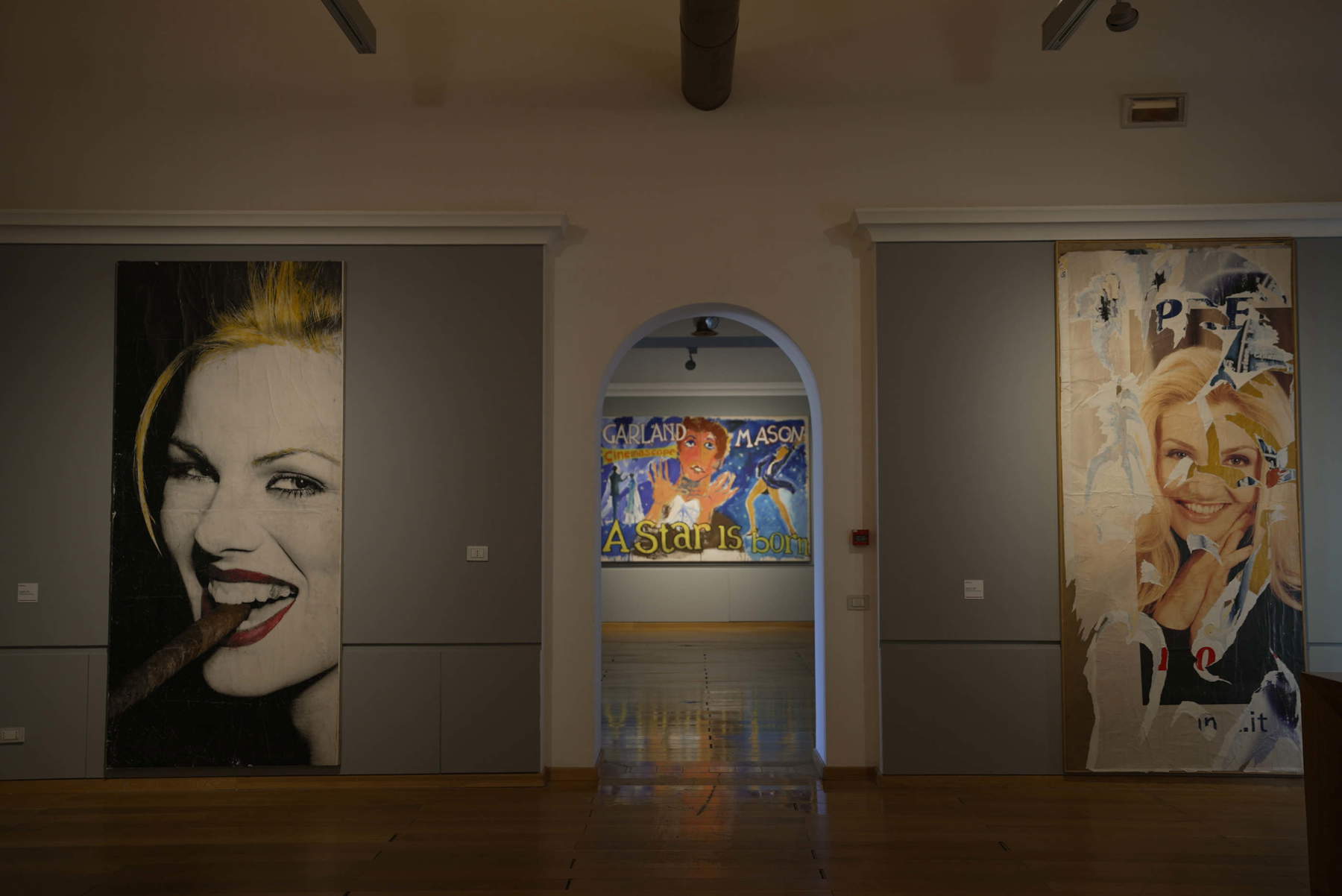
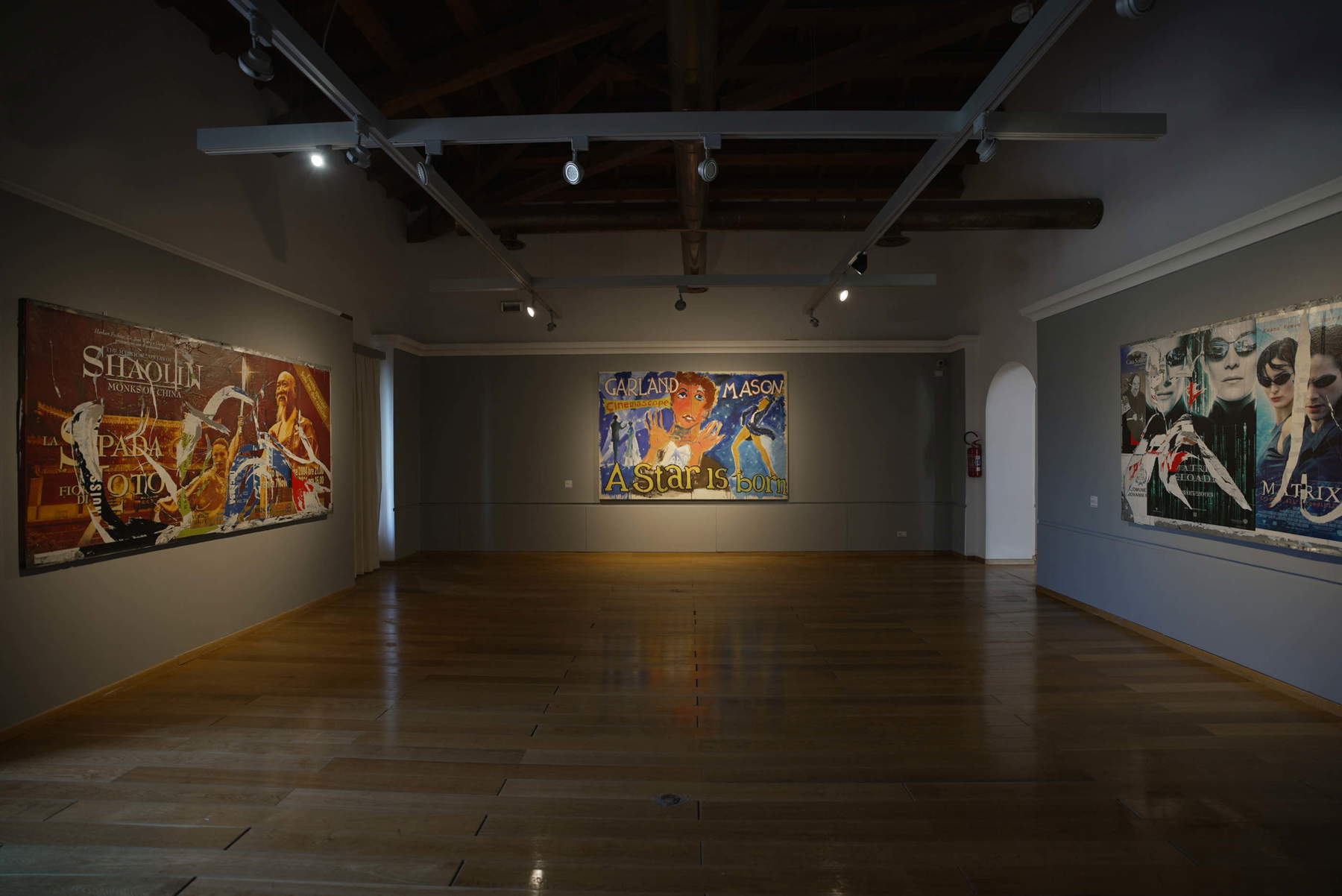
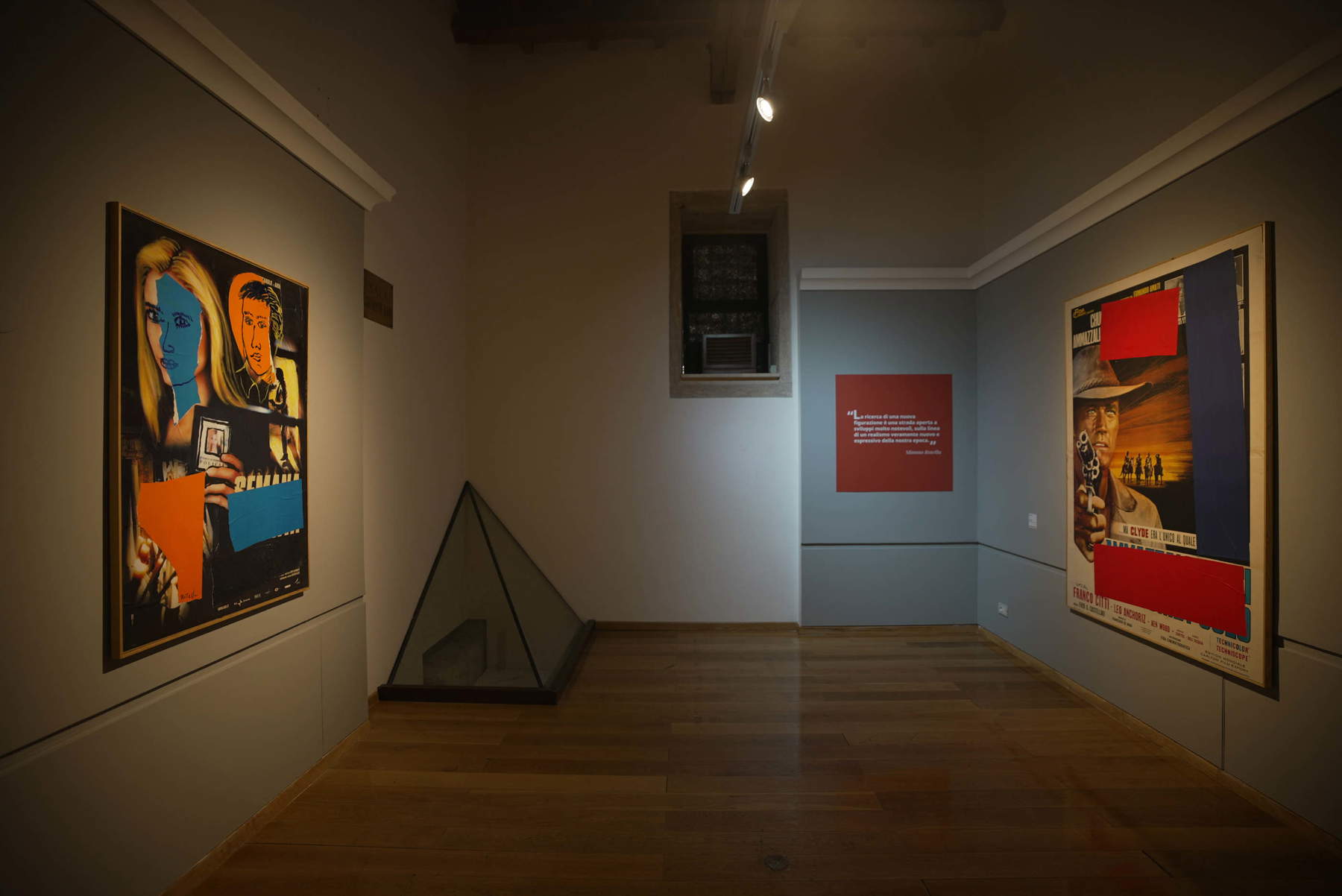
The exhibition itinerary begins in the 1980s precisely to highlight this phase of continuous transformation. Décollage retains its own autonomy but also becomes the foundation upon which the artist intervenes once again. Painting once again takes on an important role, as does overpainting, which adds a new surface to the image and alters its meaning. One example is *A Star is Born*(1984), a work dedicated to cinema in which overpainting alters the pre-existing image. The process therefore does not simply consist of removing material, as was the case with the act of tearing, but rather of adding, covering, and transforming. The image undergoes a new form of manipulation that renders its meaning unstable.
It is precisely this willingness to continually question his own inventions that interests Alberto Fiz, the exhibition’s curator. “The exhibition,” he explains, “explores a historical period that has not been sufficiently highlighted, emphasizing Rotella’s experimental streak as he continued his lifelong exploration of techniques and materials without ever stopping, constantly challenging himself. It is no coincidence that one room of the exhibition is dedicated to the ‘new icons,’ his latest invention, dating back to 2002, which create moments of silence and suspension in the interpretation of the fragmentary and fragmented image. Each time, his interventions in the media universe surprise us.” The “New Icons” date back to 2002 and represent one of the latest developments in Rotella’s research; their inclusion in an exhibition dedicated to the artist’s monumental style allows us to observe an aspect less immediately associated with his best-known imagery: not only the visual explosion of torn posters, but also the possibility of interrupting, suspending, and even erasing the image. In this sense, the “blanks”—in which erasure becomes part of the work—and the gigantic ready-mades, which update Duchamp’s principle of appropriating objects and images, also take on significance. Rotella thus continues to work with materials drawn from everyday reality, but he strips them of their original function and places them within a different system of meanings.
Cinema remains one of the primary fields of this exploration. *Matrix* and *Shaolin* bring cinematic imagery to sheet metal, while *Fort Apache* and *The Last Revenge* draw on the Western genre. However, these are not merely cinematic references. Cinema is one of the great repositories of images through which contemporary culture constructs its collective memory, and Rotella’s work continues to engage precisely with that visual heritage. The same principle applies to advertising: ever since the early days of décollage, the poster had represented for the artist a material already present in the city, destined to be replaced and forgotten. Rotella radically alters its function: the image designed to quickly capture attention becomes an object to be observed, deconstructed, and reinterpreted.
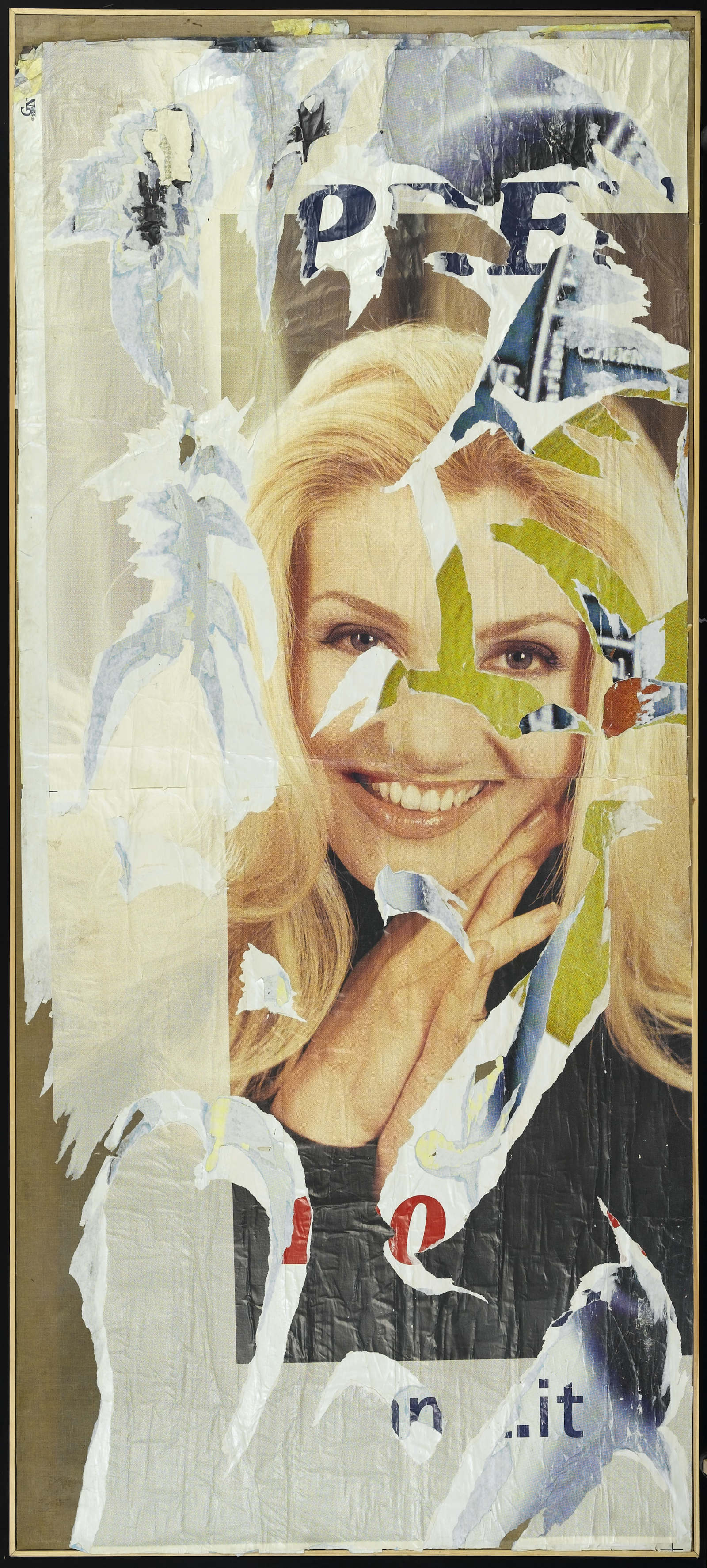
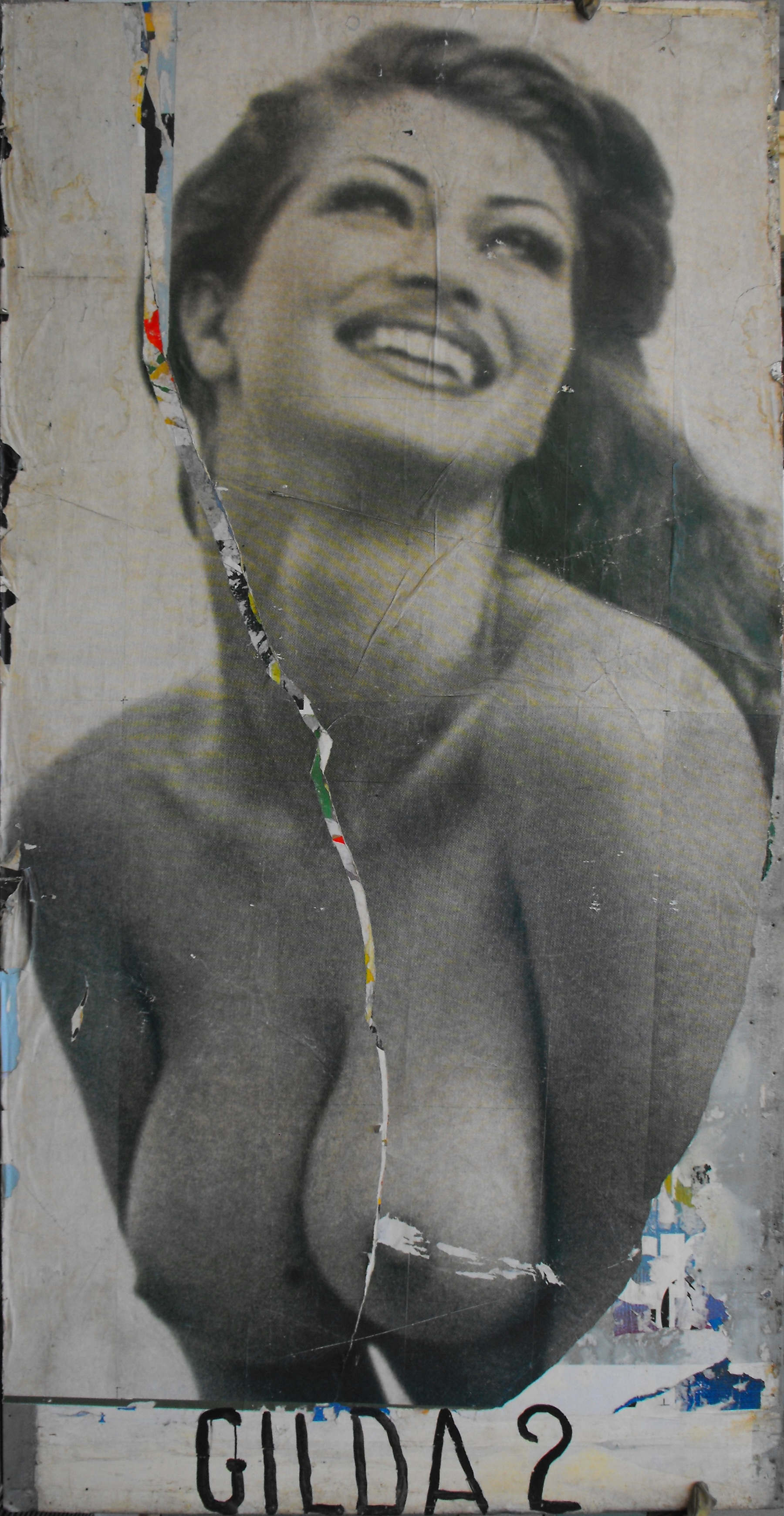
Irony, too, remains a component of his personal mythology of everyday life. On view are *Tarzan*(1986) and *La sigaraia*(1997), alongside works in which his engagement with images from popular culture takes on different forms. Rotella’s repertoire thus remains tied to the visual reality that surrounds him, yet without ever becoming fixed in a single formula. The exhibition in Catanzaro emphasizes precisely this point: the act of tearing is not repeated as a mere technique. It becomes a creative principle capable of generating diverse processes. Décollage can be combined with painting; the surface can be covered; the material can be transferred to another support; the image can be erased or transformed into an object of such dimensions that it takes on an environmental presence.
It is a continuity of transformation that runs through the entire final phase of Rotella’s work: the artist does not abandon the innovations of the past, but subjects them to new scrutiny. In this sense, the exhibition does not present the 1980s, 1990s, and 2000s as a mere epilogue to the era of décollage: it considers them a period in which that artistic exploration is put to the test once again.
According to Mayor Nicola Fiorita, “It was our express duty to pay tribute to an artist who made one of the most original and significant contributions to contemporary art through the ingenious invention of décollage and its progressive variations. An extraordinary career for a talent recognized and celebrated by critics and audiences internationally—one who took his first steps in one of the alleys of our historic center.” The exhibition is thus also linked to the city’s collective memory: “Rotella turned walls into a collective memory to be questioned, torn apart, and restored, and his journey began in this city,” states Councilor for Culture Donatella Monteverdi. “Today, at the San Giovanni Monumental Complex, that vision returns, and this return is intended to serve as an inspiration for young talents to recognize their roots and opportunities in their homeland, and for everyone to strengthen the spirit of community, in the name of one of the most important masters of the 20th century.”
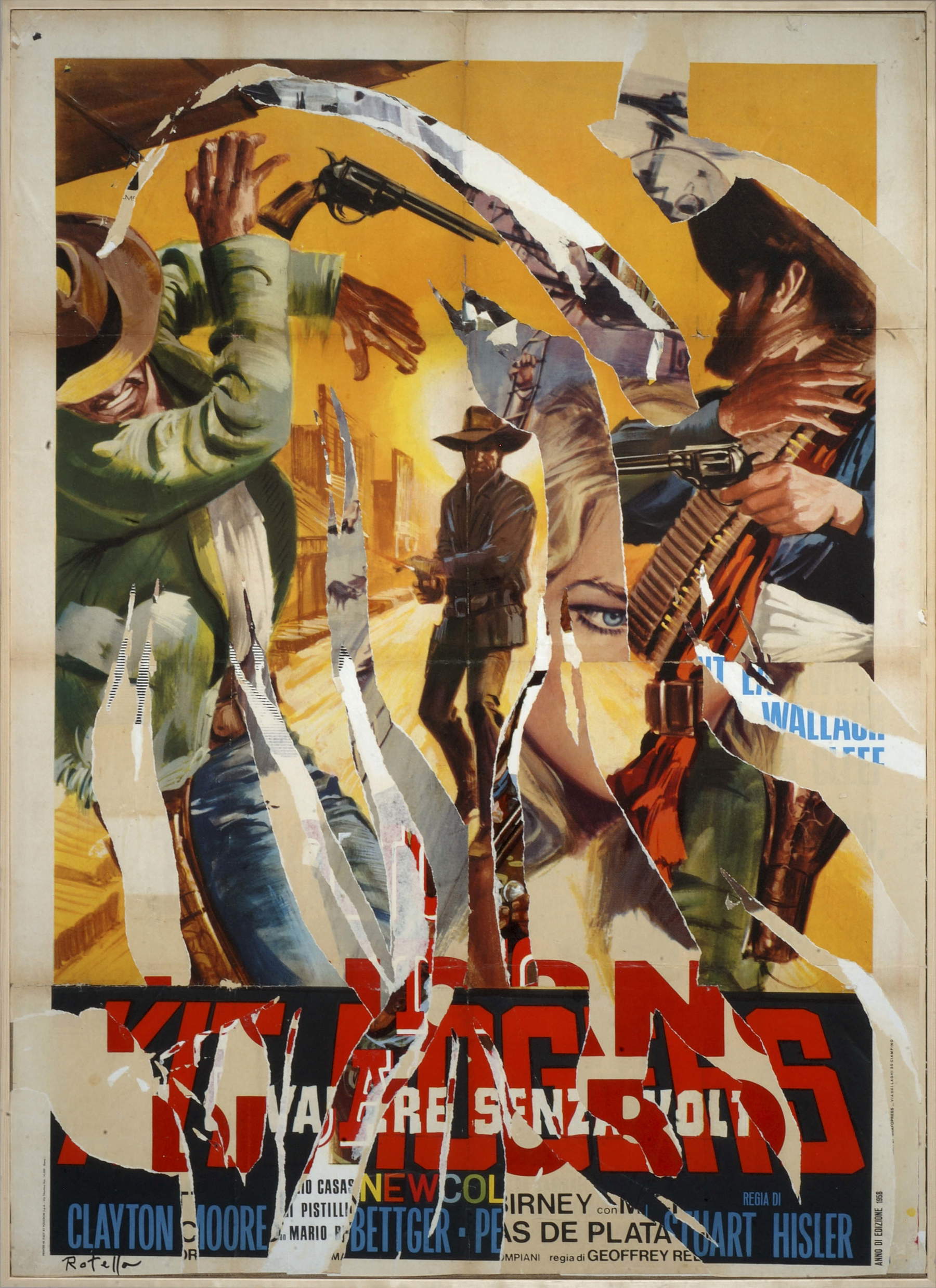
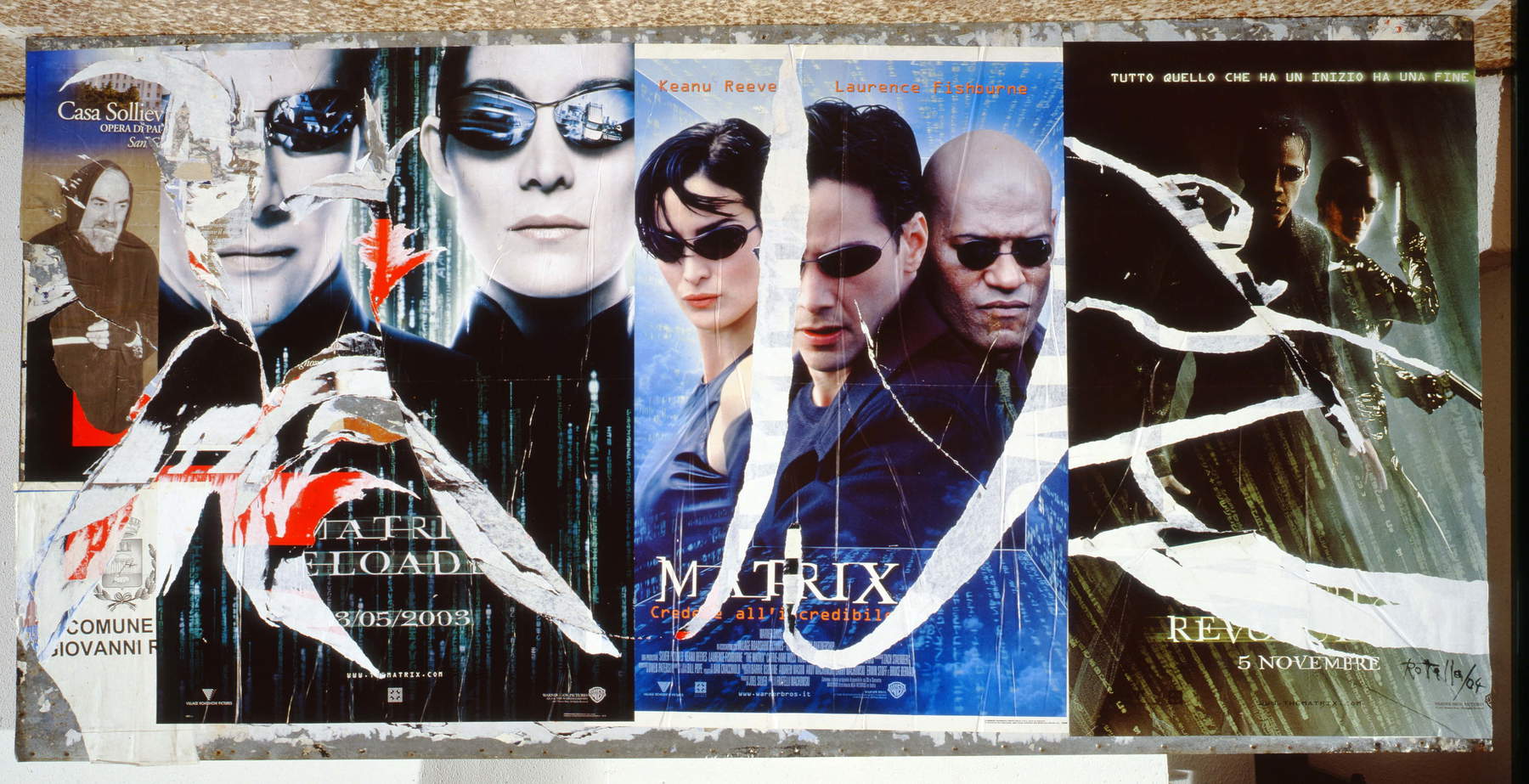
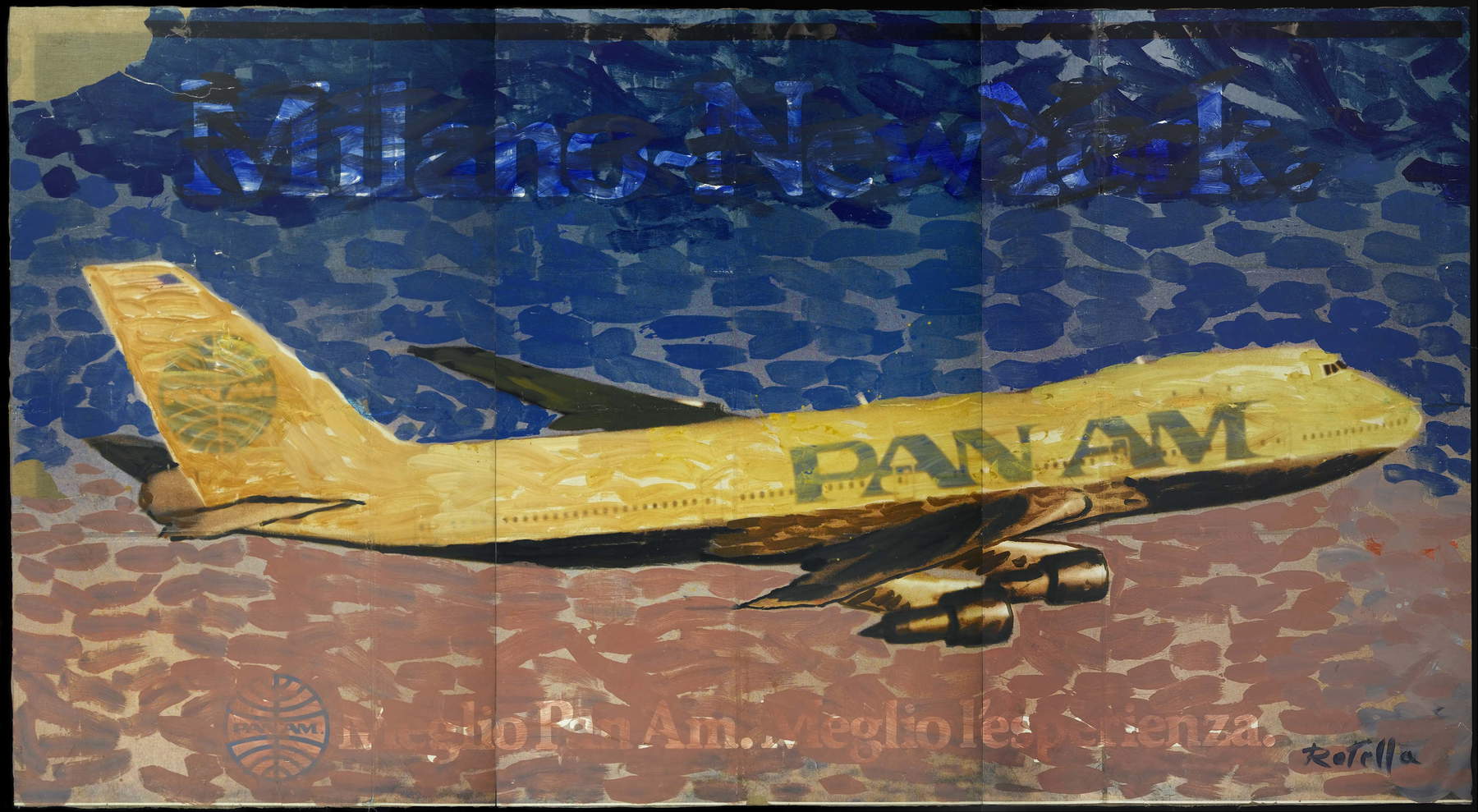
The connection to Catanzaro is also underscored by the choice of dates. The exhibition opens on October 8, Mimmo Rotella’s birthday, and closes on January 8, the anniversary of his death. This coincidence establishes a precise temporal framework for a project that aims to focus not only on the artist’s legacy but also on a specific phase of his career. “On the twentieth anniversary of Mimmo Rotella’s passing, as part of the commemorative and celebratory tribute to the Master, it was essential for the Foundation to reaffirm, once again, the greatness and relevance of his artistic exploration,” emphasizes Nicola Canal, president of the Mimmo Rotella Foundation. “This exhibition, held in Catanzaro—his birthplace—on his birthday, in collaboration with the City of Catanzaro and its administration, represents a particularly significant opportunity to explore Rotella’s monumental works in greater depth.” The project, Canal adds, aims to showcase “a ‘monumental’ aspect of his body of work that has rarely been on display,” placing it within the framework of initiatives dedicated to the 20th anniversary of his passing.
Looking at the works gathered in San Giovanni, Rotella’s monumentality thus appears as something more complex than mere scale. It is the result of an exploration of the image that, in recent decades, has become increasingly physical: the advertising surface is torn, reassembled, painted, covered, erased, or transformed into a large object. The material of mass communication loses its original function without ceasing to carry with it the memory of the world from which it originates. It is in this tension between appropriation and transformation that one of the most persistent characteristics of Rotella’s work is found. The artist starts with images that belong to everyone (film, advertising, popular figures, current events) and reimagines them in a form that prevents them from being consumed as quickly as they were originally intended.
|
| Monumental Mimmo Rotella: 25 major works from the 1980s to 2005 on display in Catanzaro |

Warning: the translation into English of the original Italian article was created using automatic tools. We undertake to review all articles, but we do not guarantee the total absence of inaccuracies in the translation due to the program. You can find the original by clicking on the ITA button. If you find any mistake,please contact us.





















 IT
IT FR
FR DE
DE ES
ES CN
CN


