



by Luca Rossi 05/09/2026



Categories: Interviews / Disclaimer
On the occasion of his exhibition *NIGHT* at the Neue Nationalgalerie in Berlin, Luca Rossi interviews Maurizio Cattelan, who once again discusses art, the art market, power, artificial intelligence, and the need for visibility. And with his usual penchant for paradox, he also challenges the very system that has turned him into an icon. An interview not to be missed.
Fifteen years later, Luca Rossi returns to interview Maurizio Cattelan. Back then, there was a retrospective at the Guggenheim; today, there is NIGHT at the Neue Nationalgalerie in Berlin. In the meantime, the art world has changed, the market has changed, and the images that populate it have changed. Cattelan, however, seems to have retained his ability to hit the nail right on the head. In this conversation, he doesn’t hold back when it comes to the art system, the market, museums, social media, or artificial intelligence. But above all, he doesn’t spare himself, revealing an irony that is often sharper than any provocation. What remains of art when everything must be measured, explained, shared, and sold? And what happens when even provocation becomes a product perfectly integrated into the system? Luca Rossi asks him this without mincing words. Cattelan, as always, responds in his own way—without offering much consolation.
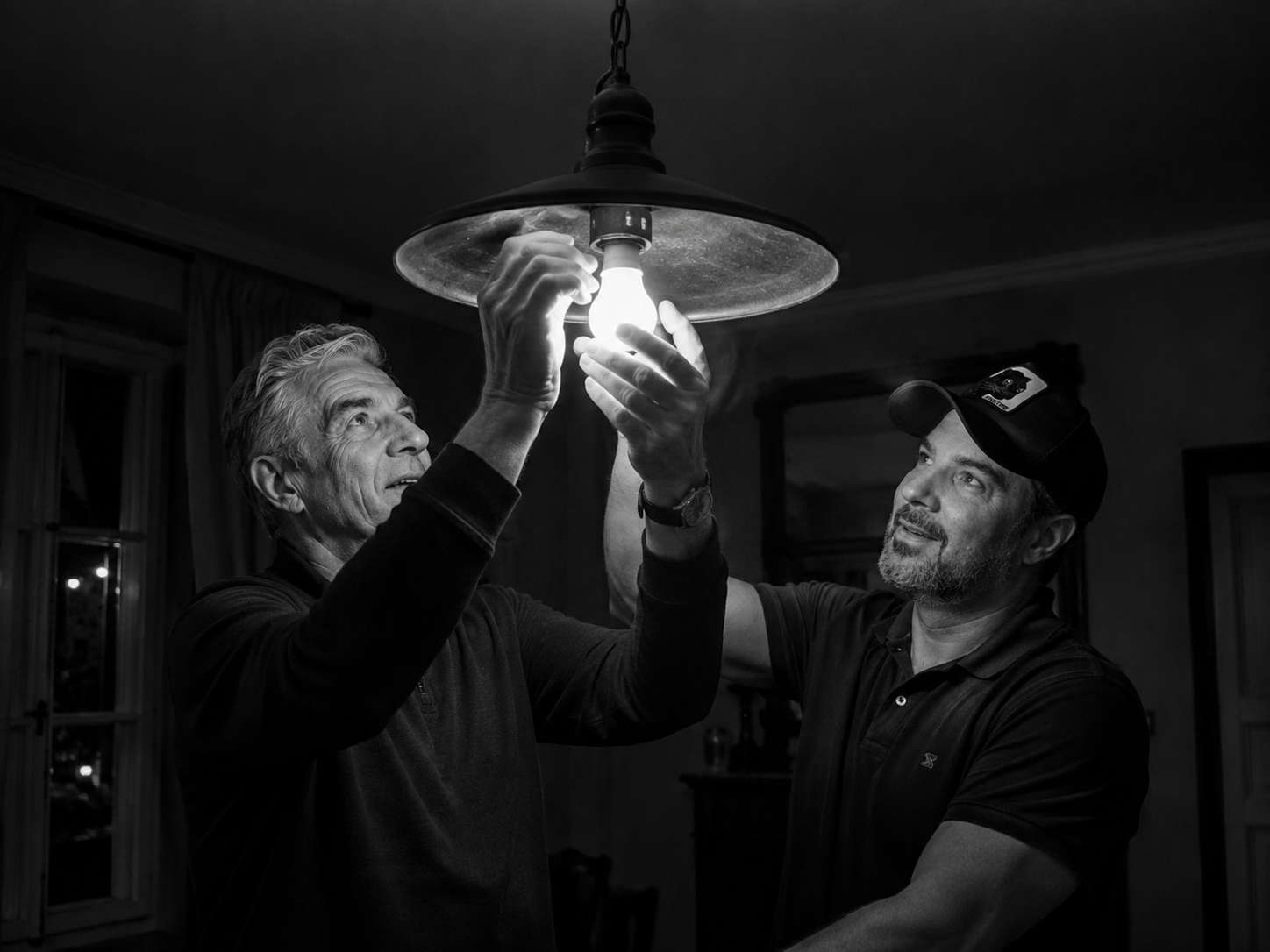
LR. Fifteen years have passed since our last interview, on the occasion of your retrospective at the Guggenheim. Today you’re opening NIGHT at the Neue Nationalgalerie in Berlin. In the meantime, the world has changed, the art system has changed, and even the way we look at images has changed. If you had to sum up these fifteen years in a single sentence?


MC. We’ve learned to measure everything. Except what really matters.
And what is it that continues to matter when almost everything is transformed into data, statistics, and performance metrics?
What continues to waste your time without promising you anything in return.
Fifteen years ago, we talked about price as a critical shortcut. Today, the market seems even more powerful, but at the same time, everything seems to have a price and everything seems equivalent. In the end, what value does a work of art really have?
Price continues to be the quickest way to avoid thinking.
The poster for NIGHT shows you completely covered by a veil. It made me think of a saint, a ghost, but also a child hidden under a blanket. Is it an image that protects, or an image that refuses to be recognized?
That veil doesn’t hide a person. It hides the habit of recognizing things too quickly. When an image becomes immediately readable, it often ceases to be interesting.
Looking at your entire body of work, I get the impression that your true material has never been marble, taxidermied animals, or provocation. Your true material seems to be religion, even when you don’t mention it.
The Devil has a better press office. God stubbornly continues to refuse to give interviews.
In 2011, you said that one had to distance oneself from the system in order to see it more clearly. Today, however, you’re one of the artists who most represent that system. Do you still feel distant enough to be able to observe it?
Anyone who spends enough time in a museum risks, sooner or later, becoming a bench.
Many of your works seem to mock power. Yet power keeps buying them. Is this a sign that art has won, or that power manages to absorb everything?
Power buys everything it can’t eliminate. It’s its way of turning a problem into decor.
Today, everyone is constantly called upon to prove something: the artist, the curator, the museum director, the collector, even the public. We have all simultaneously become both the controlled and the controllers. Is the art system the perfect laboratory for this condition?
The perfect prison is one in which everyone builds their own cage. The art world is no exception.
You’ve always given the impression of wanting to bite the hand that feeds you. Yet you’ve never really let go of that hand.
Smart dogs don’t bite their owners. They bite the leash.
Artificial intelligence produces images with astonishing ease. Many believe it will permanently change the role of the artist.
The number of images will change. Art has never had a problem with production. It has always had a problem with necessity.
Today, anyone can produce images.
We’ve finally realized that producing images doesn’t mean seeing.
Many museums seem afraid of disturbing the public. They must be inclusive, reassuring, and accessible.
The museum hasn’t become any quieter. It’s the world outside that has learned to talk too much.
Even provocation seems to have turned into a marketing category. Can it still hurt?
Provocation is no longer a risk. It has become a service.
Today, at times, being excluded from a system seems to generate more visibility than being welcomed into it.
Such is the fate of all successful revolutions. They end up in a museum or a souvenir shop.
In recent years, even the curator seems to have become an artist.
The curator is like a referee. You only notice they exist when the game isn’t going well.
If I were twenty-five and had to start over today?
I’d try to be invisible. Today, everyone is competing to be visible. There’s little space left to hide.
And what advice would you give to an artist your own age?
Not to ask for advice from sixty-five-year-old artists.
I get the impression that today, true censorship isn’t the kind that prevents you from speaking, but the kind that forces everyone to speak constantly. Is there still any space left to escape to?
Today, even silence must be justified. It’s become suspect because it doesn’t produce content.
Have social media changed art?
It has changed the speed at which we get bored.
Has the market become more powerful than art?
The market always gets there first. Art, when it works, arrives at the wrong time.
What really scares you?
Works that seem to be right even before they’ve been looked at.
And what keeps giving you hope?
Every now and then I meet someone who asks a question instead of presenting a project.
I get the impression that many young artists no longer seek conflict but validation. They’re afraid of being excluded before they’ve even started.
No one wants to be excluded from a party they don’t really like. That’s the funny part.
Even the viewer’s silence seems to have become unbearable. Today, every artwork must be accompanied by a text, an explanation, a guide.
We’re afraid that, if we leave them alone, they’ll start asking questions.
I know you’re thinking of a work dedicated to children. It’s a surprising direction.
Because they’re the only ones who don’t yet distinguish between a monument and a toy. They have a relationship with things that we lose very early on. And often, they’re the ones who are right.
At the end of the day, who used whom? Did you use the system, or did the system use you?
It’s a question straight out of a marriage. After so many years, no one knows the answer anymore.
Have you ever felt used?
All love stories are an exchange of illusions. Some last longer than the people who started them.
For nearly twenty years, “Luca Rossi” has remained an ambiguous figure. Perhaps the question “Who is he?” has become more interesting than the answer. Who do you think Luca Rossi is?
If, after twenty years, the question is still alive, it would be a shame to ruin it with an answer.
Warning: the translation into English of the original Italian article was created using automatic tools. We undertake to review all articles, but we do not guarantee the total absence of inaccuracies in the translation due to the program. You can find the original by clicking on the ITA button. If you find any mistake,please contact us.