





On the occasion of the tenth Lerici Music Festival—an initiative that, for the third year, presents an unprecedented dialogue between contemporary art and music, curated by Carlo Orsini and organized in collaboration with Galleria Continua— Villa Marigola in Lerici is hosting a solo exhibition by Giovanni Ozzola (Florence, 1982) titled *I miei orizzonti e Tu*. We caught up with the artist to hear not only about his site-specific project for Villa Marigola, but also about the themes and recurring elements in his work, as well as other insights into his artistic practice. The interview is by Ilaria Baratta.
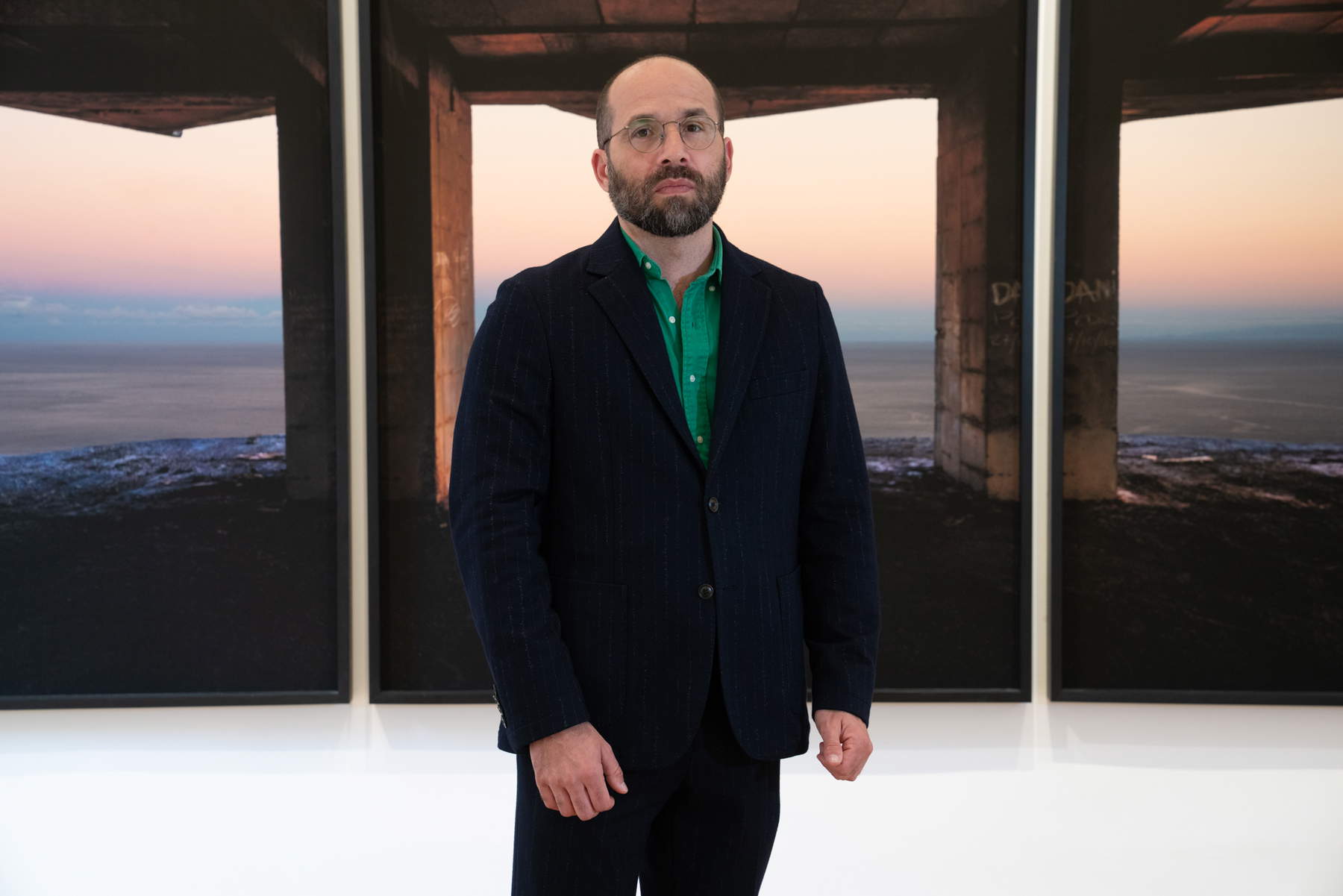
IB. Let’s start with the new exhibition, which runs through August 2, 2026, at Villa Marigola in Lerici as part of the tenth Lerici Music Festival. The exhibition is titled *I miei orizzonti e Tu*,a title that suggests a very intimate yet relational dimension. Who is the “you” you’re referring to?
GO. Yes, that “you” is fundamental, because “my horizons” are, of course, my works: the way I try to explore these two unknowns—these two places, both physical and mental—that we all find ourselves living in: the inner one and the outer one. On the one hand, there is tomorrow, life, and the encounter with the other; on the other, that inner world made up of images, symbols, memories, experiences, and sensations. The “you,” on the other hand, refers to the people visiting the exhibition—or even simply to those reading its title—because they are being called into the picture. I believe that each of us can be an opportunity for everyone else, for all of humanity. I believe that each of us must explore our own horizons not only for ourselves, but because every step toward self-knowledge also becomes a step for others. Because, as I often say, the difference between a herd and a group is that a group is made up of individuals who have a point of view and share it with others. This search for oneself, this continuous effort—which has no definitive endpoint—to define oneself, to ask questions, and to confront one’s own fears, in some way makes us individuals. We do this so that we can truly encounter the other.
This exhibition was conceived specifically for Villa Marigola and the Gulf of Poets. How did the dialogue with this place influence the works and the exhibition layout?
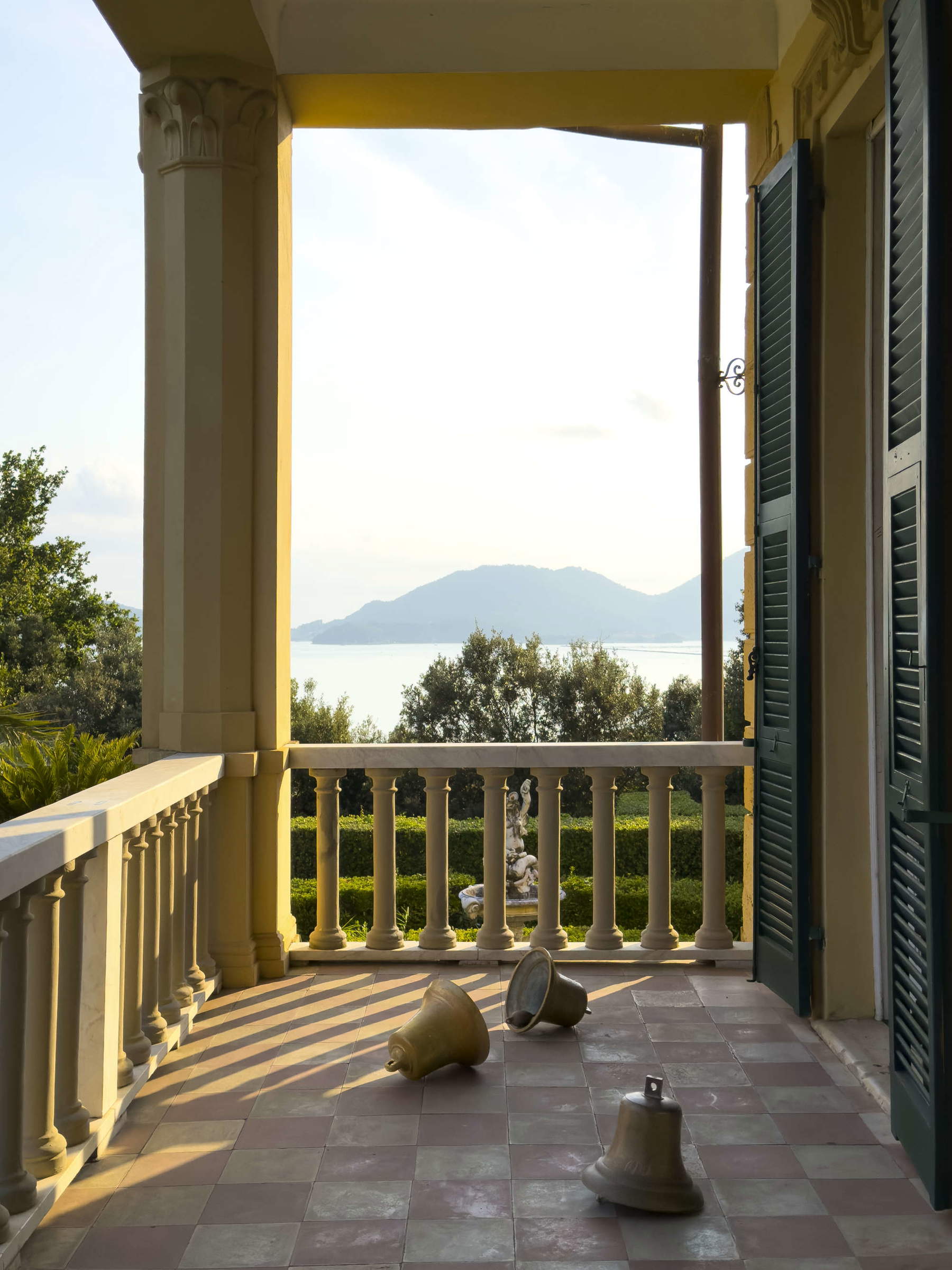
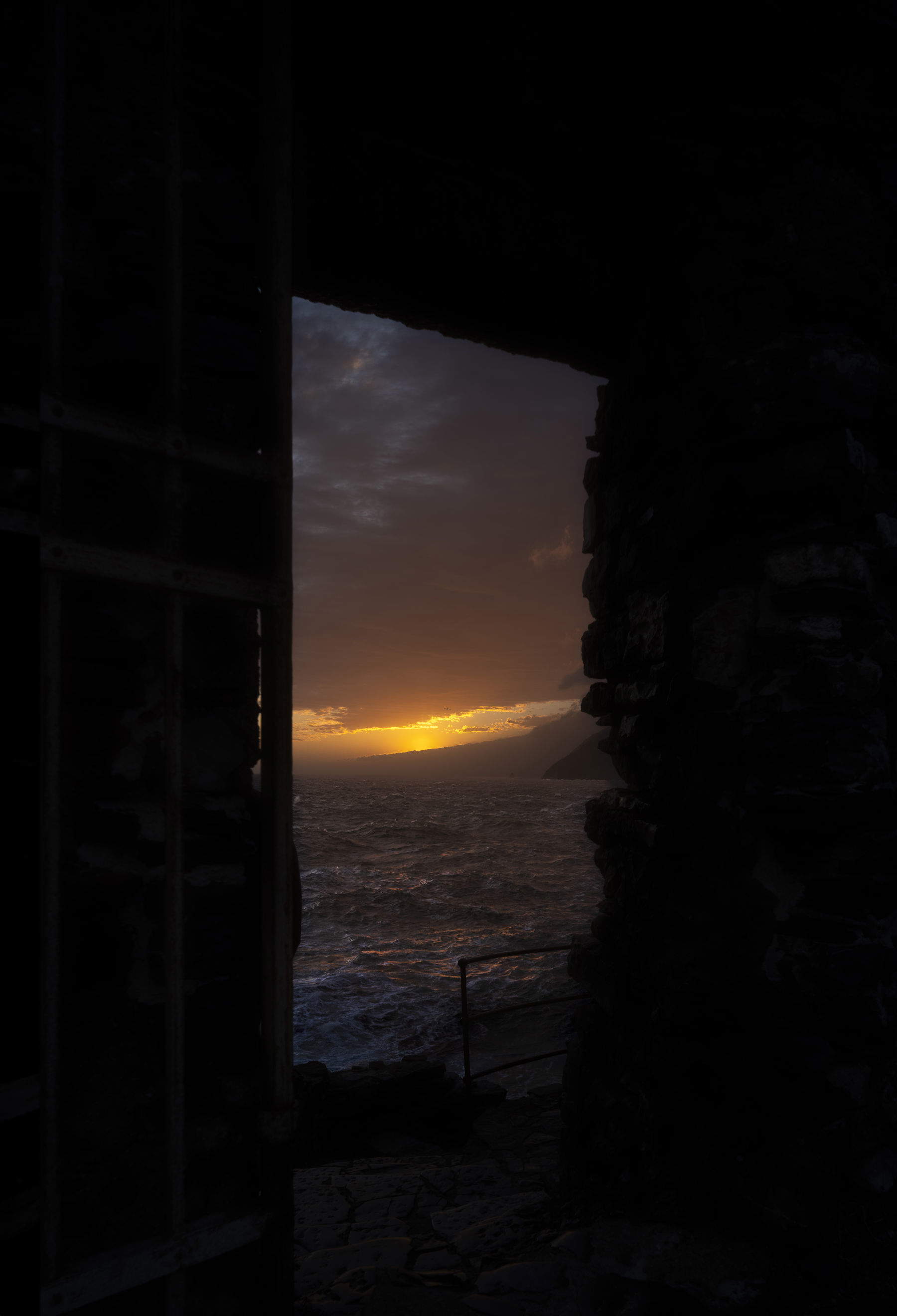
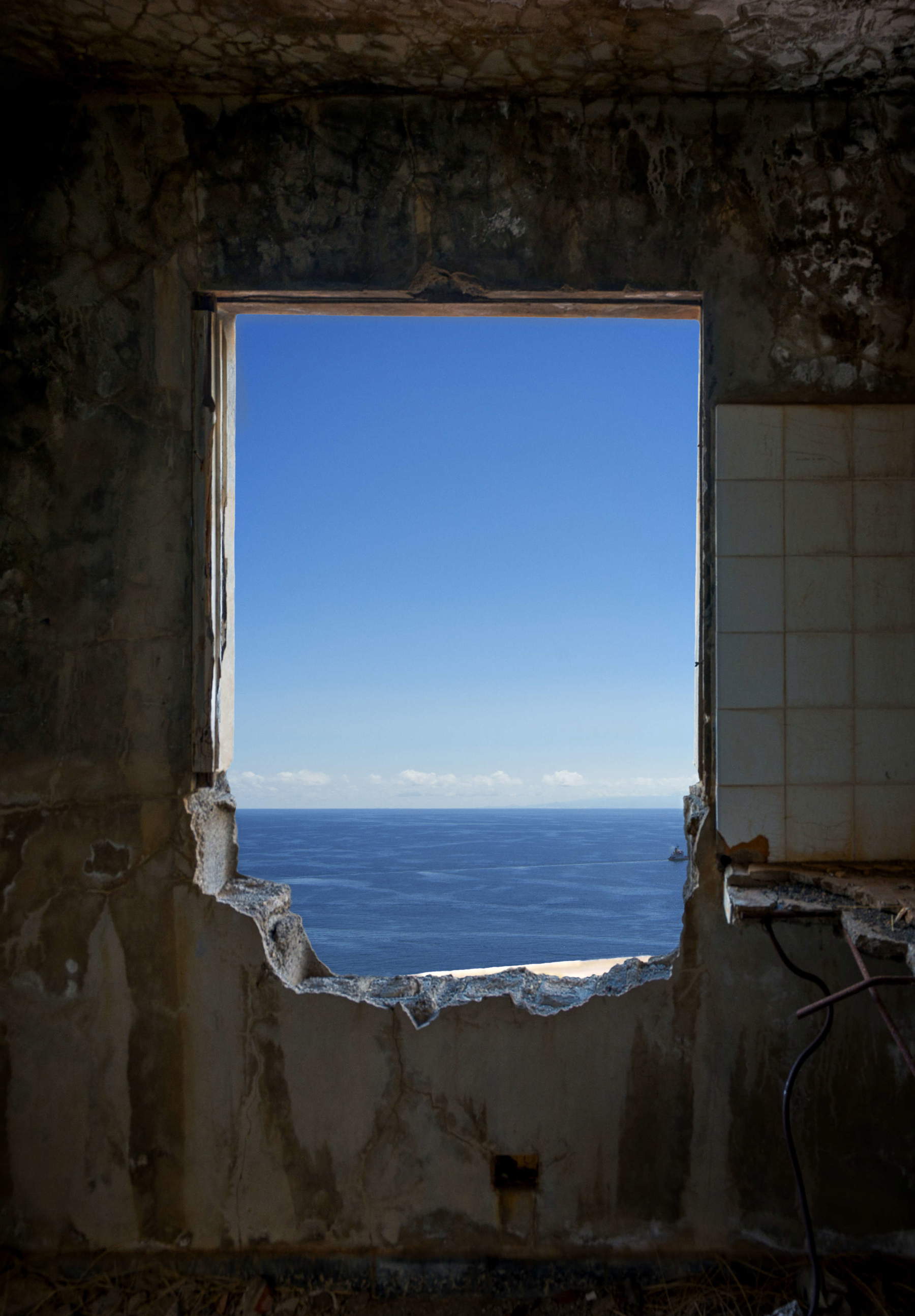
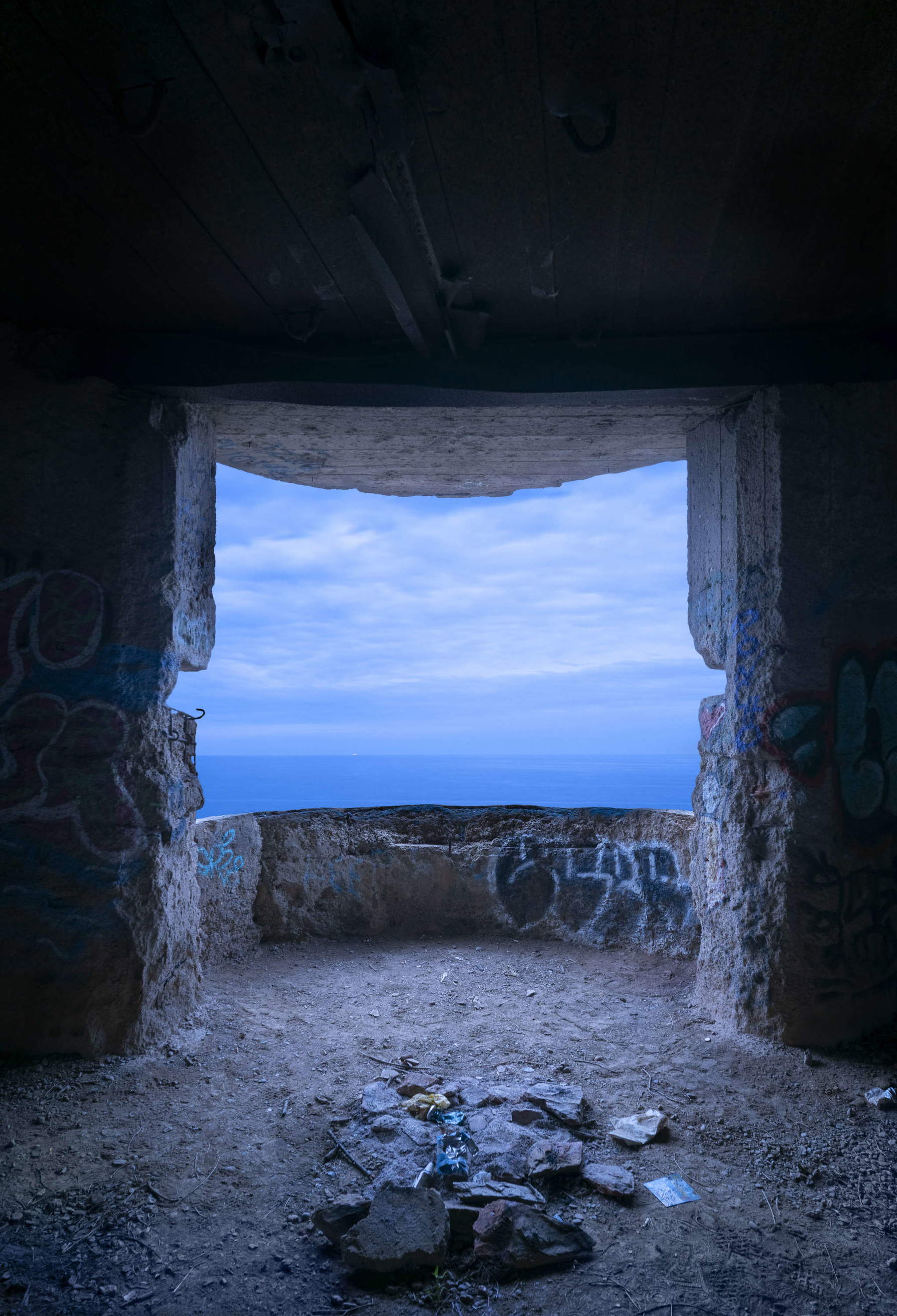
Yes, this was the first time the Festival directly commissioned a group of works. I started with the space itself, which possesses an extremely strong identity and a very intense spirit: it is welcoming and beautiful by nature, full of symbols, yet it is also a watchtower. It is a place that overlooks the Gulf of the Poets but which, as we know, has always been fortified as well, because the sea has been both a welcoming route and a potential threat. It has this dual nature: hospitality and vigilance, openness and defense. Building on these observations, I developed five works created specifically for this project, as part of a journey that spans fifteen years of my research. There are two bunkers, two images I took at Punta Bianca, and others at Portovenere. Rather than imposing something on the space, I sought to listen to it, allowing the space itself to suggest the form of the exhibition. I created a sort of organism in which one room has natural light and the other artificial light. That is the first difference, but both are united by a structure formed by each individual work. In the grammar of the exhibition, each individual work is a word that contributes to building a narrative—almost like a poem. Each work has its own independent reason for existing, but when placed alongside the others, it tells a deeper story, just as we do when we are together. This exhibition, too, is an example of how the actions of the individual take on greater meaning when they intersect with those of others. This project was conceived by Margherita Amirkhanian, Carlo Orsini, and Galleria Continua, and from the very beginning we shared a desire to move together in a single direction.
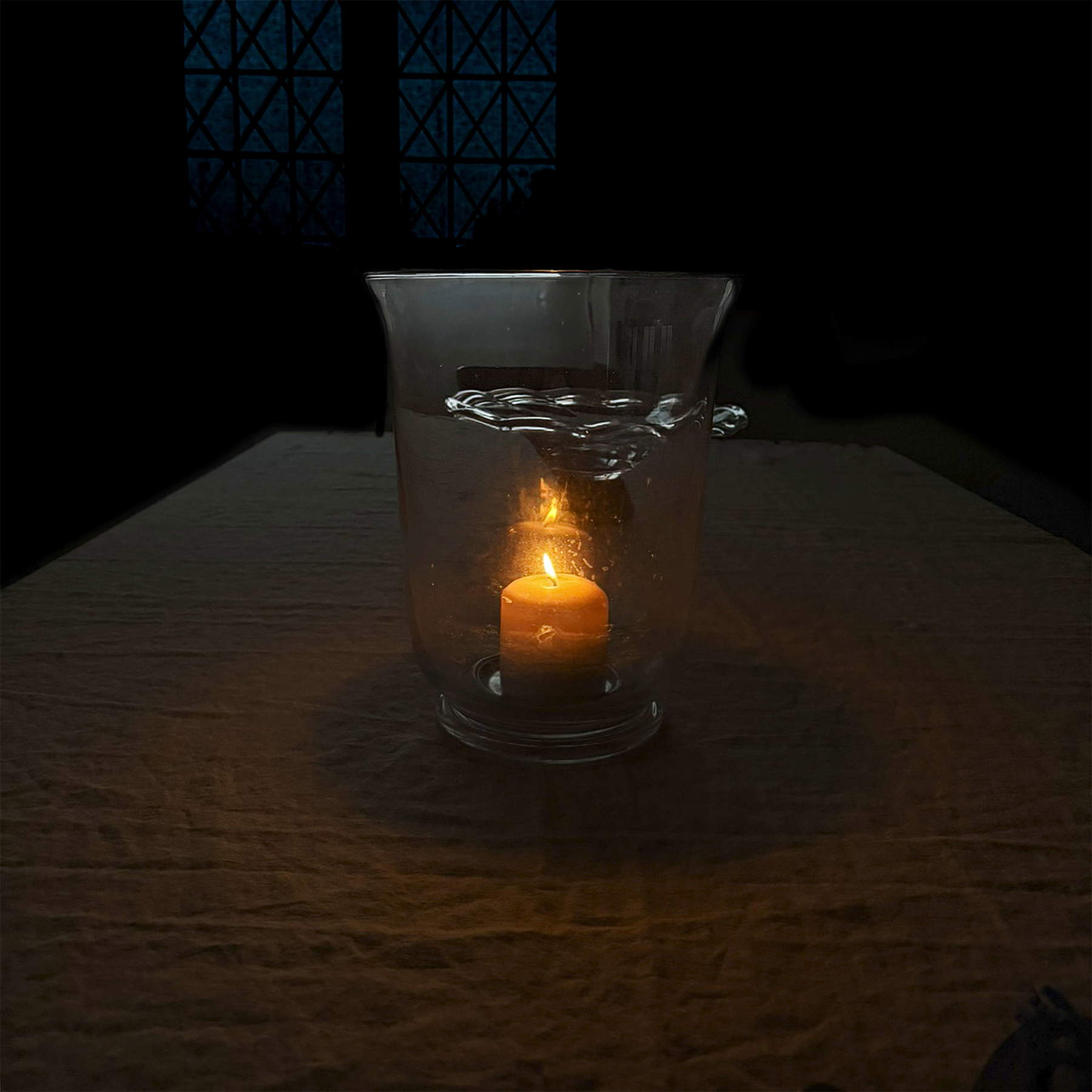
The sea often recurs as a central element in the works on display, both as a view on the horizon and as an element in the installations (for example, in the nautical bells placed on the ground or in the large floor installation, or even in the video work *Sin Tiempo*, where a man addresses the sea in an ancient whistled language native to the Canary Islands, the *silbo gomero*). What does the sea represent to you? I believe it’s not just a landscape for you, but that it has a much deeper meaning.
Yes, you’ve correctly identified the presence of the sea in all the works. It’s obvious that it takes on different meanings. For example, in the geographical maps, I’m more interested in the idea of the horizon—that place we can never reach, which is constantly shifting—than in the sea itself. In the central work, however, the sea is that immense space traversed by generations of people who have sought to push the boundaries of the unknown ever farther. Even in the video work you mentioned, there’s this connection to the Canary Islands, where I’ve been living for many years now. That’s where that language originated, recognized by UNESCO since 2009. The sea, the ocean—there they call it “the father.” I find it fascinating that the same expanse of water changes meaning depending on our approach. Then there’s the idea of the wave, which also resonated with the Festival’s theme. I believe there’s always an almost wave-like movement in all my works: a continuous ebb and flow. It is precisely in this movement that, in my view, the artwork comes into being. There is always an affirmation—whether in the bell installations, the ground-based works, or the video—of one’s own position: “I am here. This is my story. These are my scars. This is the space I inhabit.” And, at the same time, there is a movement toward something greater, where the individual realizes that they are never truly alone. The artwork is born precisely in the continuous oscillation between these two conditions: self-affirmation and openness toward that which transcends us.
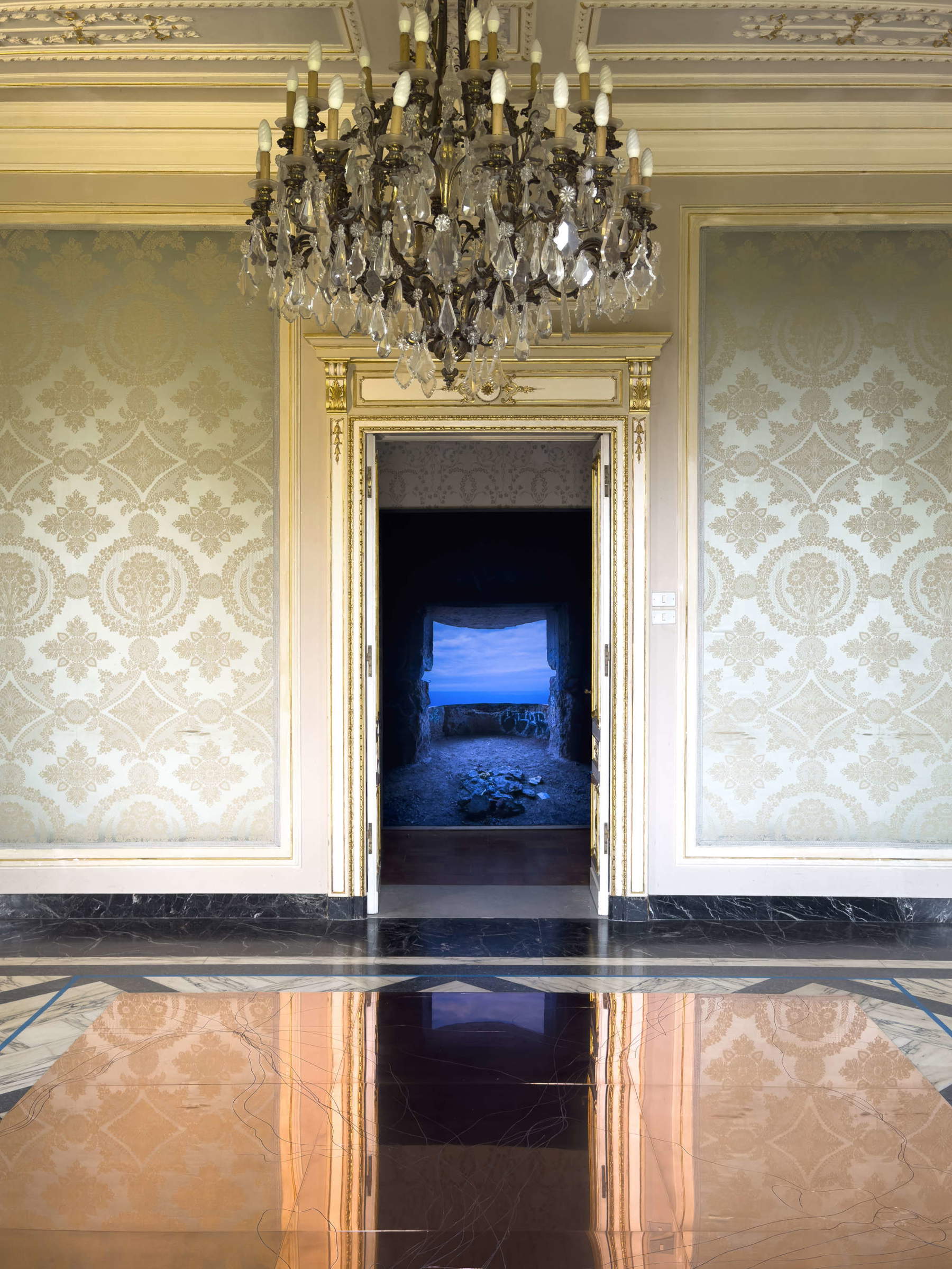
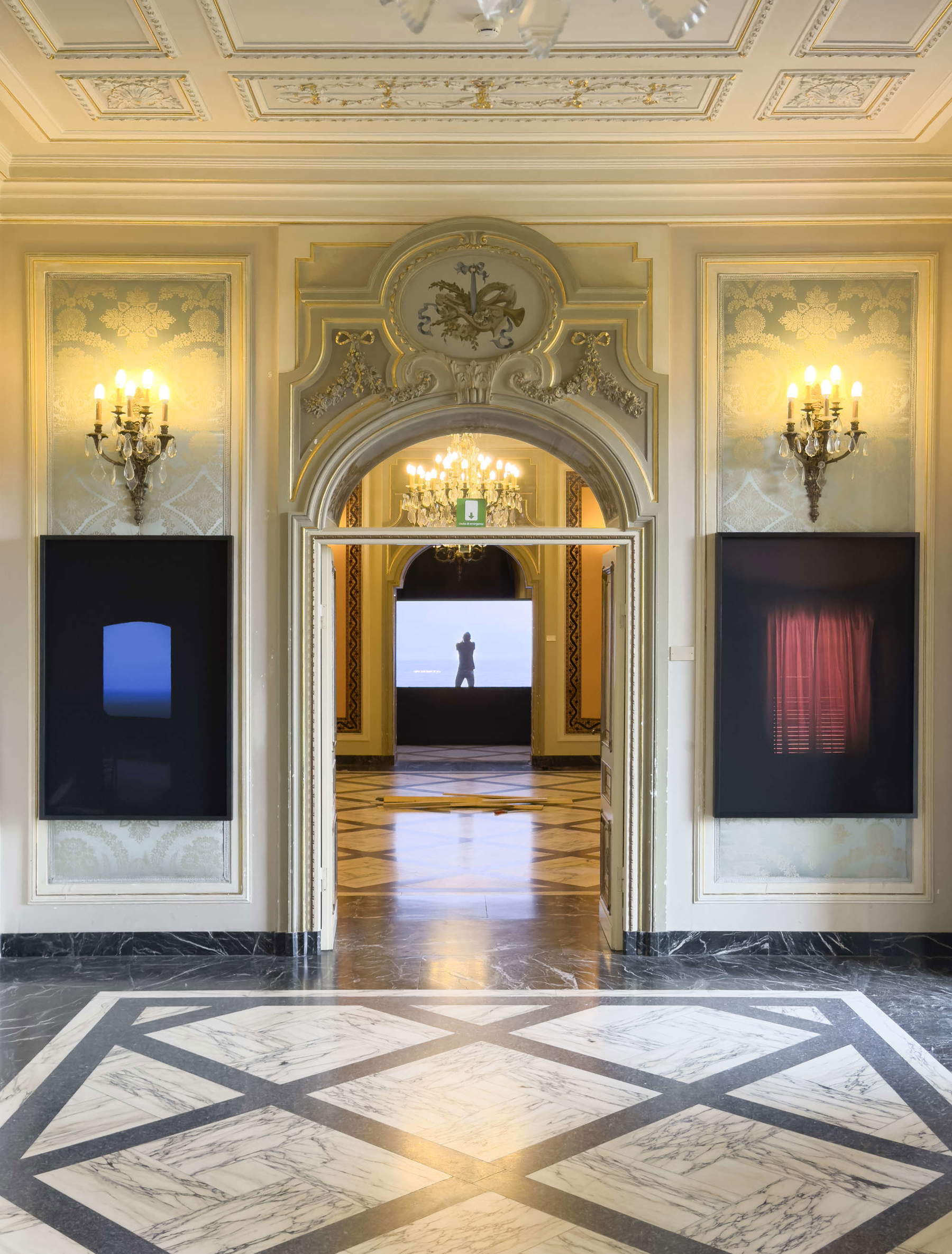
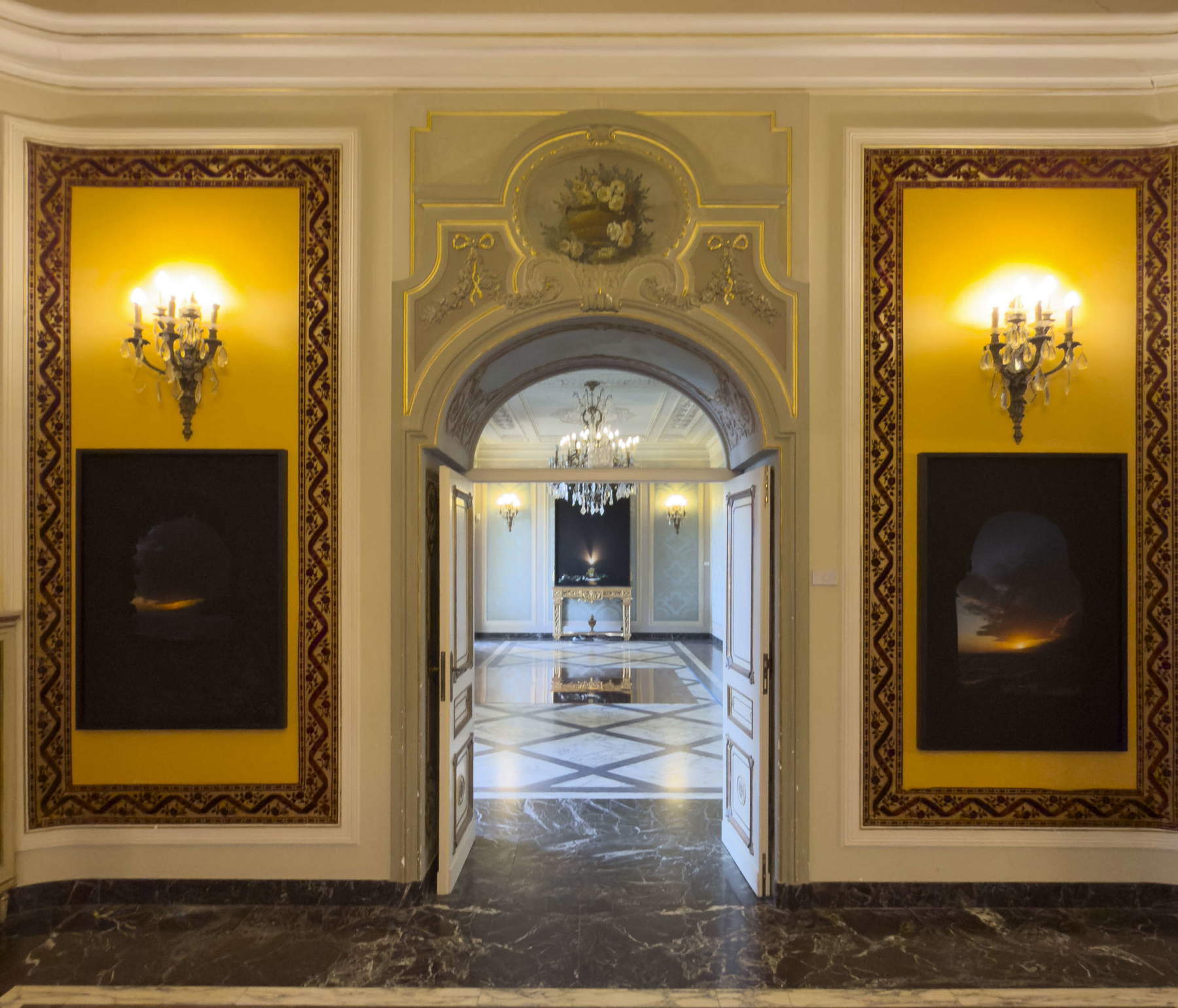
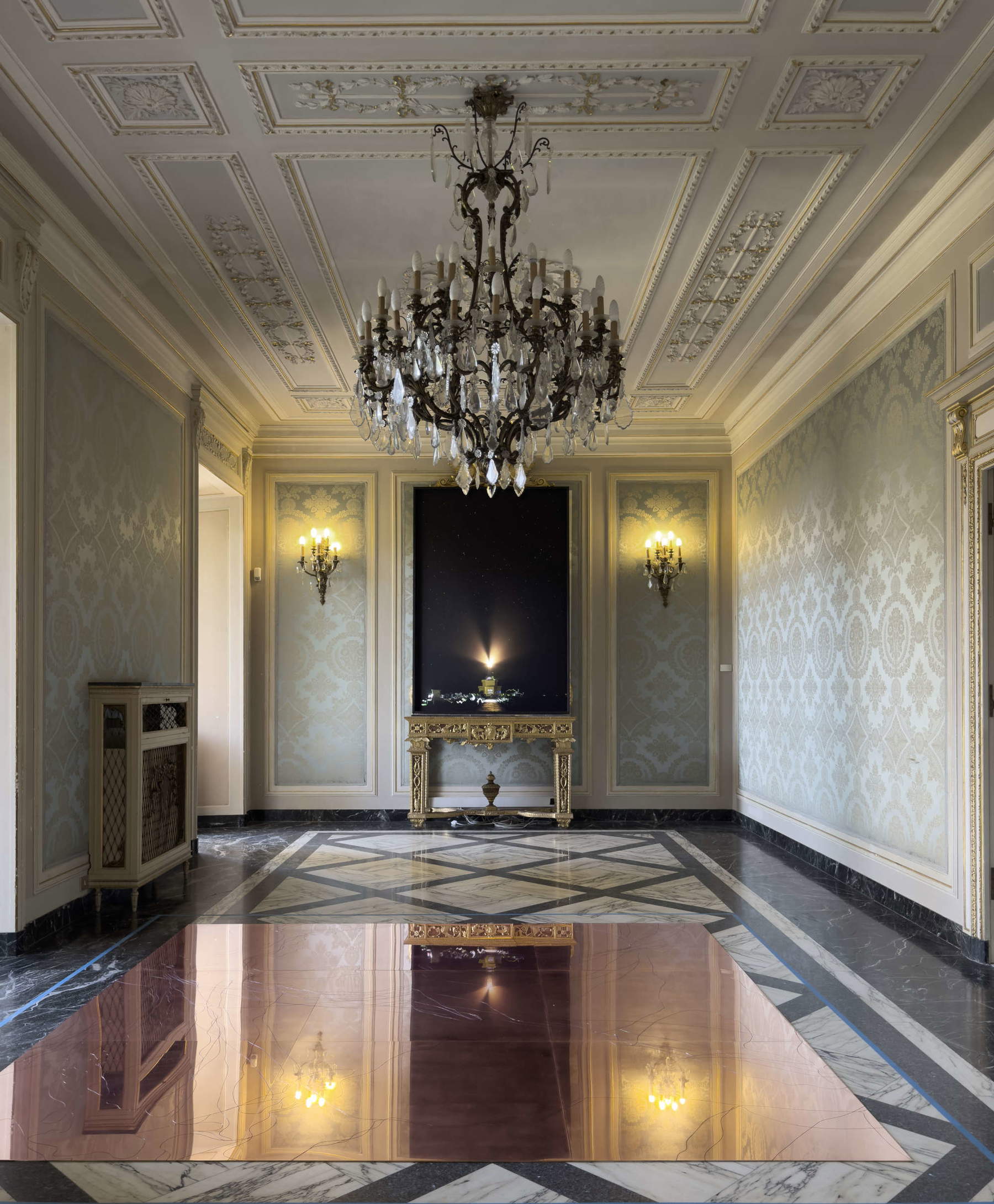
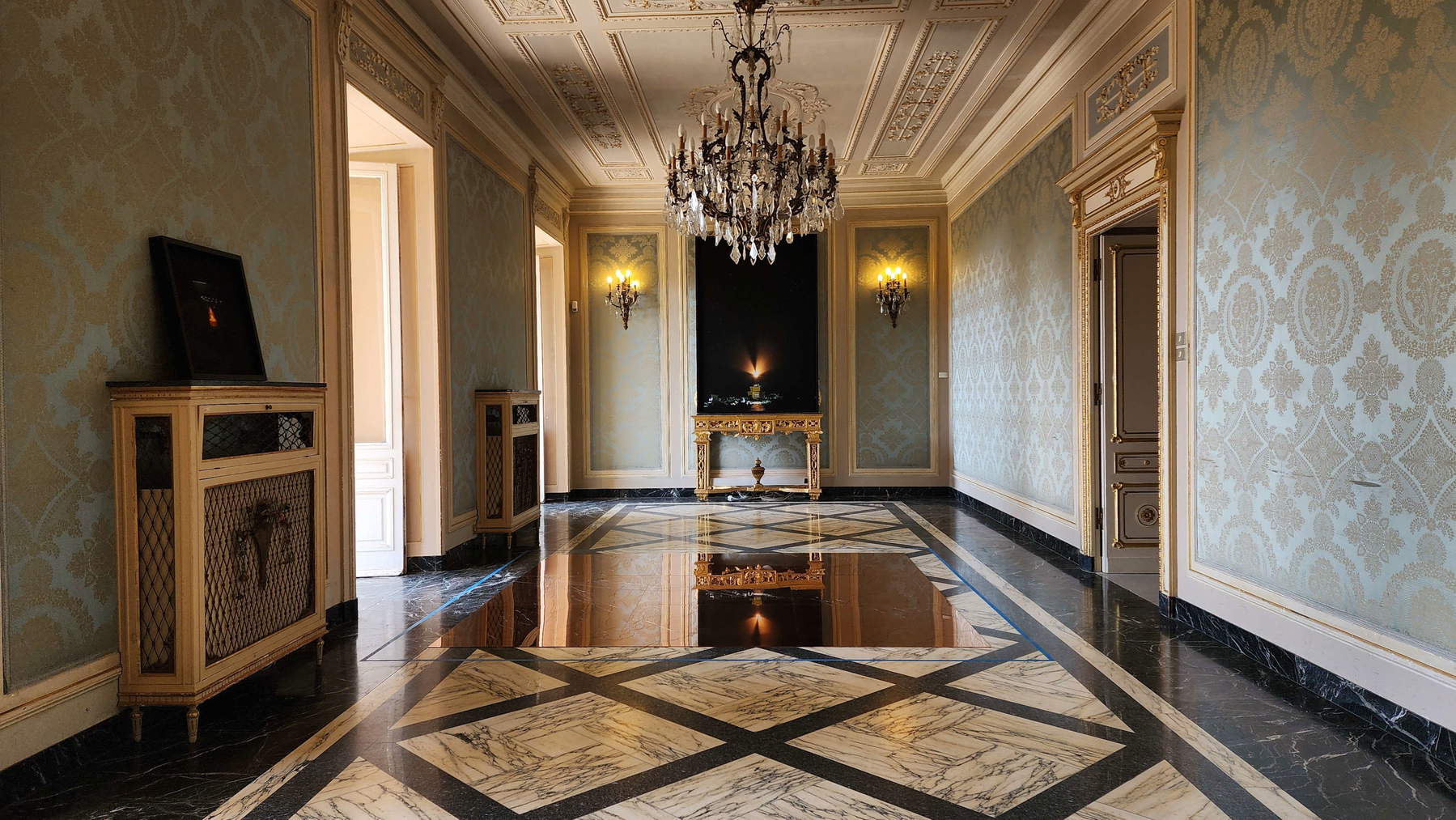
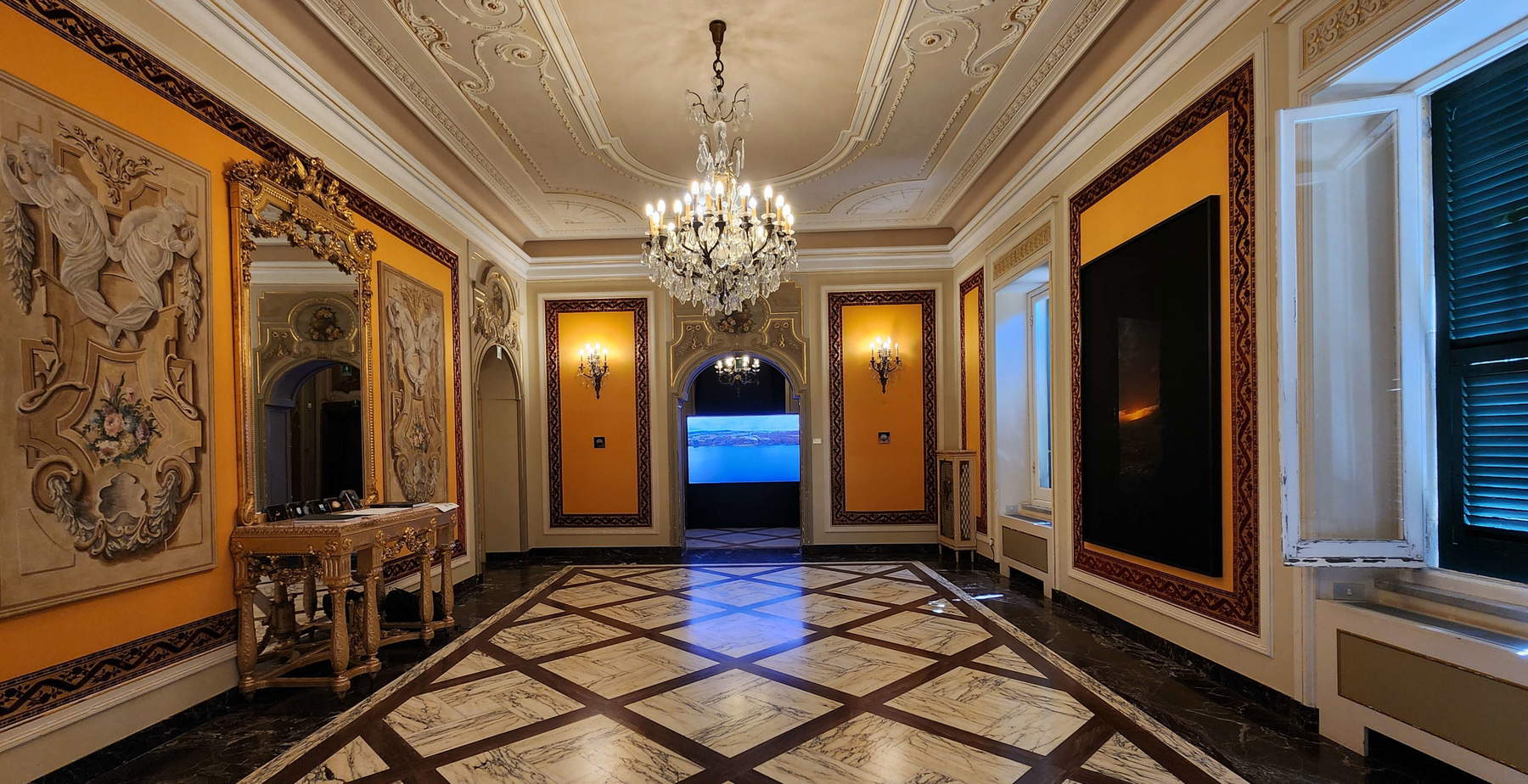
The exhibition opens with a site-specific photograph that visitors encounter before entering the first room: a bunker overlooking the sea, which also bears signs of abandonment, with graffiti in spray paint. What are you looking for in these spaces and in these unusual contexts?
For me, these places represent a primal intuition. I’ve always felt a strong pull toward these spaces, and over the years, I’ve tried to understand why these images are so powerful to me. A profound insight came to me from Antony Gormley, who told me: “Giovanni, experiencing your images is like being inside a skull”. Those slits, those openings, are like eyes. Indeed, if you interpret the image this way, all those marks—the abandoned, broken, etched space with its spray-painted graffiti—become our memories, our recollections, our experiences, our wrinkles, our scars. It’s a place from which, in some way, you also want to escape: you wouldn’t be able to survive there without that window, without that possibility that is the other, that is the horizon, that is the landscape, that is what exists beyond ourselves. But, at the same time, that gaze toward something greater leads you into a dimension where your self seems to dissolve. It is redemptive, because you manage to break free from all those marks, but at the same time you risk losing the perception of your individuality. So the return to the image—which is why I was talking about the wave—that return to the abandoned place, full of signs, which in some way protects you and constitutes you, gives you a body. The answer lies in neither one nor the other. It is precisely in the continuous movement between these two states that, for me, the work takes shape.
How do your photographic works come about? Do you find inspiration by chance during your walks, or is there always a process of exploration that precedes the photograph?
It depends. My approach has changed a lot over the years, because today it’s often the work itself that shows me the way. It’s often people, through their work, who suggest places they feel belong to my research. For example, for years people had been telling me that there were places in Liguria that might interest me, but I’d never gone there. Then Margherita asked me to put together this exhibition, and suddenly all those suggestions I’d gathered over the years made sense. I rarely set out with the idea of looking for a specific image. Sometimes it happens. For example, a collector friend wanted to take me to Namibia to show me some abandoned cities. We left from South Africa and traveled all the way to Namibia just to see those places. I like to think that images always come through relationships. It’s different with videos. It’s not that there’s no intention in photography, but when I make a video, there’s a much more in-depth process. Even so, inevitably, everything changes. It’s a bit like writing a book: you can have a very specific idea—a vision you cling to—and try to steer everything in that direction. But then, reality, the people you meet, and the unexpected transform that project into something that never perfectly matches what you had imagined.
The exhibition at Villa Marigola includes photography, installation, and video. Is there a medium through which you feel you can express yourself more freely?
No. I’m curious about all the forms of expression that can give the right form to an intuition. I believe in this deeply. A work is born in a moment of intuition, of clarity, and then I pursue the most appropriate form to give it substance in every way possible. I think through images. The image comes first; the medium of expression comes later. It is always the image that governs the creation of the work.
Recurring elements in your artistic practice are space, the relationship between humans and space, and light—even in darkness. I’m thinking, for example, of the installation you presented at the last Quadriennale, where visitors suddenly found themselves beneath a starry sky—which, in a certain sense, also conveys a sense of infinity, much like your horizons. How important is it for you to continue exploring these elements without ever ceasing to question them?
It’s precisely my way of mapping my unknown and, ultimately, my own story. It’s part of how I live. In the work you mentioned from the Quadriennale, there was an astronomical image taken of the sky over Mount Teide, one of the three places on Earth where the deep universe can be best observed. There’s always this state of contemplation, this predisposition: the awareness of belonging to something infinitely greater than ourselves. When you experience this, even the role of the individual regains its proper perspective. That work also stemmed from my passion for Beato Angelico and, in particular, forthe Annunciation in Cell No. 3. It’s a different kind of Annunciation from the one we normally imagine, because it has no details, no drapery, and no colors. Kaplan said it was humanity’s first attempt to represent the invisible. There is this incredibly powerful light that completely fills the architectural space, with an extremely classical composition—just as I had also tried to do at the Quadriennale. The light permeates everything: the architecture, the space, and even Mary’s body. I’m fascinated by this idea of a single substance that holds everything together. The other thing I like to recall is a quote from Leonardo. Leonardo writes that a shadow is light that the eye does not perceive. Here, too, the idea of the whole returns. It’s not that light disappears: it’s that we are unable to perceive its full spectrum. It’s a thought I find extremely fascinating. Leonardo imagined that the light of the subject and that of the eye belonged to the same substance, almost as if to suggest that vision is not a passive act but a relationship. I am self-taught, but I continually encounter ideas that open up vast new perspectives and help me see the world differently.
You live and work in the Canary Islands. What led you to leave Italy, and how much has this decision influenced your artistic practice?
It wasn’t a plan. Once again, it was my work that led me there. For two years, I researched the journeys of the great explorers who, throughout history, have ventured into the unknown. In the course of this research, I discovered that, during the last great explorations, the Canary Islands represented the last known place before what was called “the great leap.” People would arrive in the Canary Islands and then set off into the unknown. For the Romans, the true Pillars of Hercules were not Gibraltar, but the Canary Islands. This is a simplification we’re often taught, but the Romans were already aware of lands beyond Gibraltar. The true Pillars of Hercules were Mount Teide and Pico de las Nieves, two mountains that rise from the ocean and form a sort of gateway to what, at that time, was still unknown. When we went there to conduct research in 2013–2014, we stayed first for three weeks, then a month, then three months. It’s truly the opposite of Florence: Florence is a man-made city; the Canary Islands are a landscape that still retains an extraordinary freedom from human intervention. I was born in the center of Florence. There, you’re constantly walking through a space designed by someone. Even the Tuscan countryside, which everyone considers nature, is actually the result of human labor. It’s beautiful, but it’s a constructed nature. The Canary Islands, on the other hand, retain a much freer dimension, where the landscape continues to exert a primal force. I believe this has profoundly changed the way I view the world and, consequently, my work as well.
How did you get into the art world, and when did you first decide to become an artist? Your earliest works—photographs of domestic settings that focused primarily on light—date back as far as 1999, when you were only 16 or 17 years old, and you even had the opportunity to exhibit them at that age. Can you tell me how that came about?
I left home very early and found myself working as a photographer’s assistant in London. I had a small box with some of my own images. I didn’t even think they were meant to be seen. In London, I met someone who told me I was being very selfish to keep them to myself. To me, they were still images without a physical form. When I returned to Italy, thanks to that person, I met Pier Luigi Tazzi. I showed him those photographs. He saw something that I, at that moment, couldn’t yet see. A few months later, he wrote me a text that began with a sentence I still remember today: “It’s best not to mention the ages of X and Y.” I was so young that he didn’t even remember my name. He gave me a beautiful text, which I recently published in my monograph *Atlas*, published by Quodlibet as part of an Archivorum project. From that moment on, the journey began almost naturally. One exhibition after another, until I reached the one in Lerici. I simply followed the path that, little by little, opened up before me.
To conclude, what do you think is the state of contemporary art in Italy and also abroad, given that you, living abroad, can make this dual comparison?
Art and symbols, for me, are inseparable. They are elements that touch us deeply at our core. We think in images; the sign itself is within us. When art is authentic, symbols speak to different cultures in different ways, yet they retain their power. This happens to me often: when I exhibit a work in Europe and then take it to Asia, I receive completely different interpretations. It’s an experience that deeply enriches my work, because it reminds me that a symbol never belongs to a single culture. There is also a great deal of art that serves other purposes: entertainment, storytelling, decoration. And I’m not saying this as a value judgment, but as an observation: these are different needs, all of them legitimate. There are works that pose profound questions, others that seek beauty above all else, and still others that respond to a need for entertainment or a relationship with space. I believe there are many forms we need, and that each plays a different role in how we inhabit the world. Whenever I say the word “art,” I capitalize the “A.” For me, it represents something to which I owe a great deal. It has shaped the way I view the world and live my life; that’s why I take it very seriously. In recent years, I’ve also been trying to make an extra effort: to focus my attention on what builds, on what opens up possibilities, and on the people and ideas capable of generating something positive. It’s the way I try to be in the world and, perhaps, also the way I try to make art.

The author of this article: Ilaria Baratta
Giornalista, è co-fondatrice di Finestre sull'Arte con Federico Giannini. È nata a Carrara nel 1987 e si è laureata a Pisa. È responsabile della redazione di Finestre sull'Arte.
Warning: the translation into English of the original Italian article was created using automatic tools. We undertake to review all articles, but we do not guarantee the total absence of inaccuracies in the translation due to the program. You can find the original by clicking on the ITA button. If you find any mistake,please contact us.




















 IT
IT FR
FR DE
DE ES
ES CN
CN


