



by Redazione 26/10/2026


Categories: Market / Disclaimer
The painting, created between 1915 and 1916 and considered one of Gustav Klimt’s most evocative landscapes, is the highlight of Christie’s 20th Century Evening Sale in New York. After nearly thirty years in the same private collection, the work is returning to the market with an estimate of $60–80 million.


A masterpiece by Gustav Klimt is going up for auction with an estimate of between $60 million and $80 million: it is *Litzlbergkeller*, one of the Austrian painter’s most captivating landscapes, which Christie’s has selected as the highlight of its Fall 2020/21 Marquee Week in New York. The painting, created between 1915 and 1916, will be the centerpiece of the 20th Century Evening Sale on November 17, 2026.


The work, which had remained in the same private collection for nearly thirty years, had already attracted the attention of the international market in May 1997, when, during the sale of the collection of Serge Sabarsky, co-founder of the Neue Galerie, it set a world record for a Klimt painting. Prior to the New York auction, *Litzlbergkeller* will be on view at Christie’s Hong Kong from October 27 to 29, before moving to the Rockefeller Center in New York starting November 7.
From 1900 until his death in 1918, Klimt spent most of his summers on the shores of Lake Attersee in the Austrian countryside. That landscape became for him a special place for artistic exploration, far from Viennese high society and the expectations of his patrons.



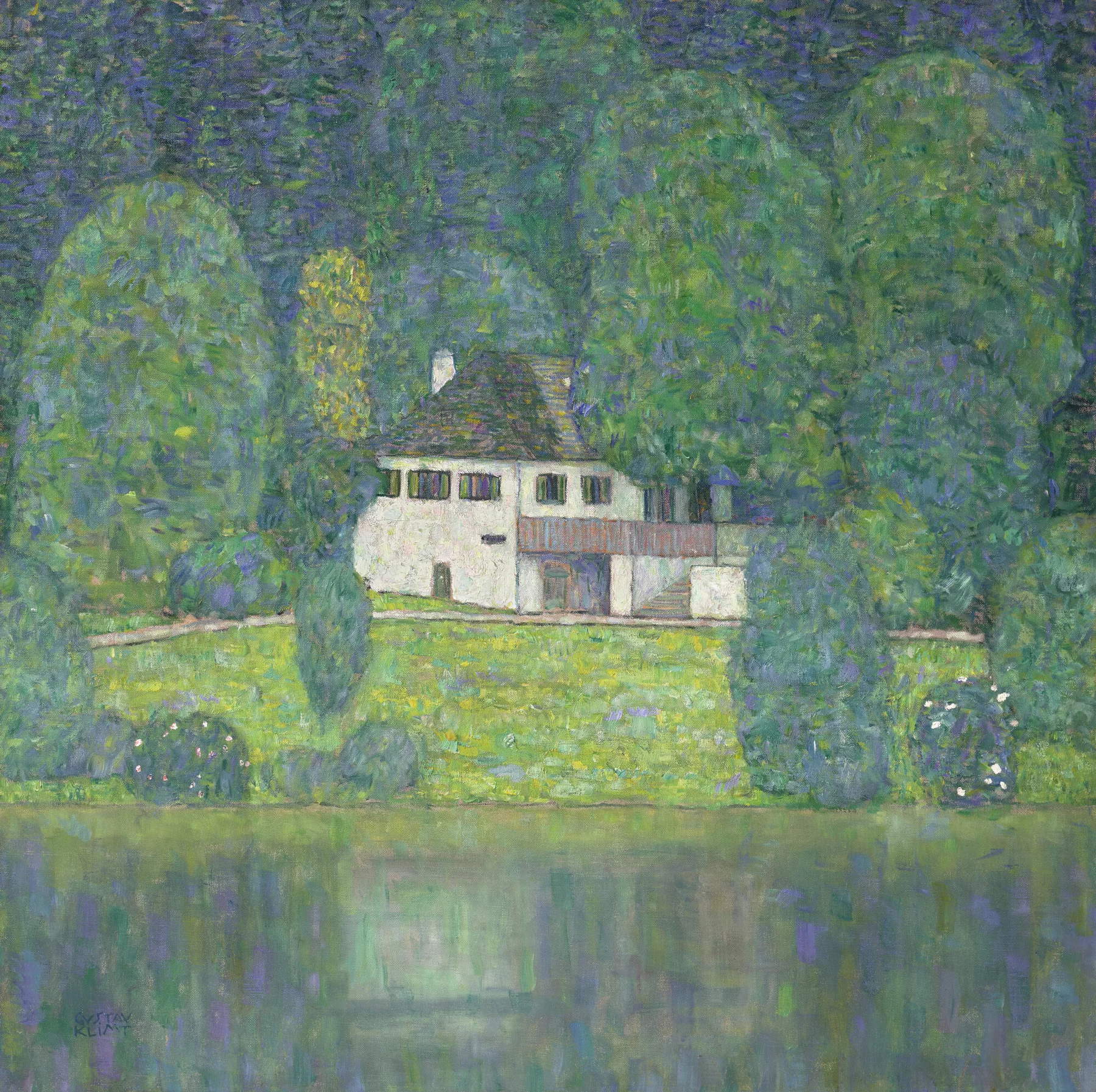
*Litzlbergkeller* depicts a view of the lake centered on the inn and brewery of the same name, located on the northern shore. The artist had stayed there during his first summers in the region, between 1900 and 1907. The painting was created about ten years later, by which time Klimt had moved to a cottage on the southern shore: the view thus also takes on the significance of a return to the memory of a familiar place. To compose the scene, Klimt observed the landscape from the opposite shore of the lake, using a telescope and postcard images. The building, the grassy hill, and the trees are arranged through simple forms and interlaced planes, rendered in various shades of deep green. The pictorial surface thus takes on an almost textile-like structure, similar to a tapestry, in which natural elements combine in a carefully calibrated balance. The foreground, with the landscape’s reflection on the water, introduces a visual contrast and an almost abstract dimension. Particularly striking isthe absence of human figures and any trace of the lively activity that characterized the inn during the summer season. Instead, Klimt presentsa silent and contemplative image, in which the landscape appears suspended in an idealized stillness.
Klimt’s landscapes were often the expression of an intimate and experimental exploration. His summers at Attersee offered him the opportunity to explore new compositional and chromatic approaches without having to cater to a client’s preferences. Litzlbergkeller, however, represents a special case, as it combines the artist’s creative freedom with a private commission. It was commissioned by Otto Primavesi, a banker and entrepreneur from Olmütz (now Olomouc), who, together with his wife Eugenia, was among Klimt’s most important patrons during those years. The couple had already commissioned two family portraits from the artist in 1912. The landscape of the Attersee, on the other hand, was a work in the making for a long time: Klimt began painting it in the summer of 1915 and completed it in May 1916 in his studio in Vienna.
The provenance of *Litzlbergkeller* spans several important private collections of the 20th century. After belonging to Otto Primavesi, the work, along with other paintings from the family, entered the collection of Hugo Bernatzik, an Austrian photographer and anthropologist. In the early 1930s, it was purchased by Kurt Wieser and later passed to Serge Sabarsky, an influential gallerist, collector, and scholar of Austrian art. Sabarsky played a pivotal role in the rediscovery and international promotion of Klimt in the second half of the 20th century. In 1981, he curated the first exhibition in Japan dedicated to the artist and, later, founded the Neue Galerie in New York together with Ronald S. Lauder, an institution dedicated to early 20th-century German and Austrian art. In May 1997, during the auction of Sabarsky’s collection, *Litzlbergkeller* was purchased by the family of the current owner, fetching what was then a record price for a work by Klimt. Since then, the painting has remained in the same private collection for nearly three decades and has been on long-term loan to the Leopold Museum in Vienna in recent years.
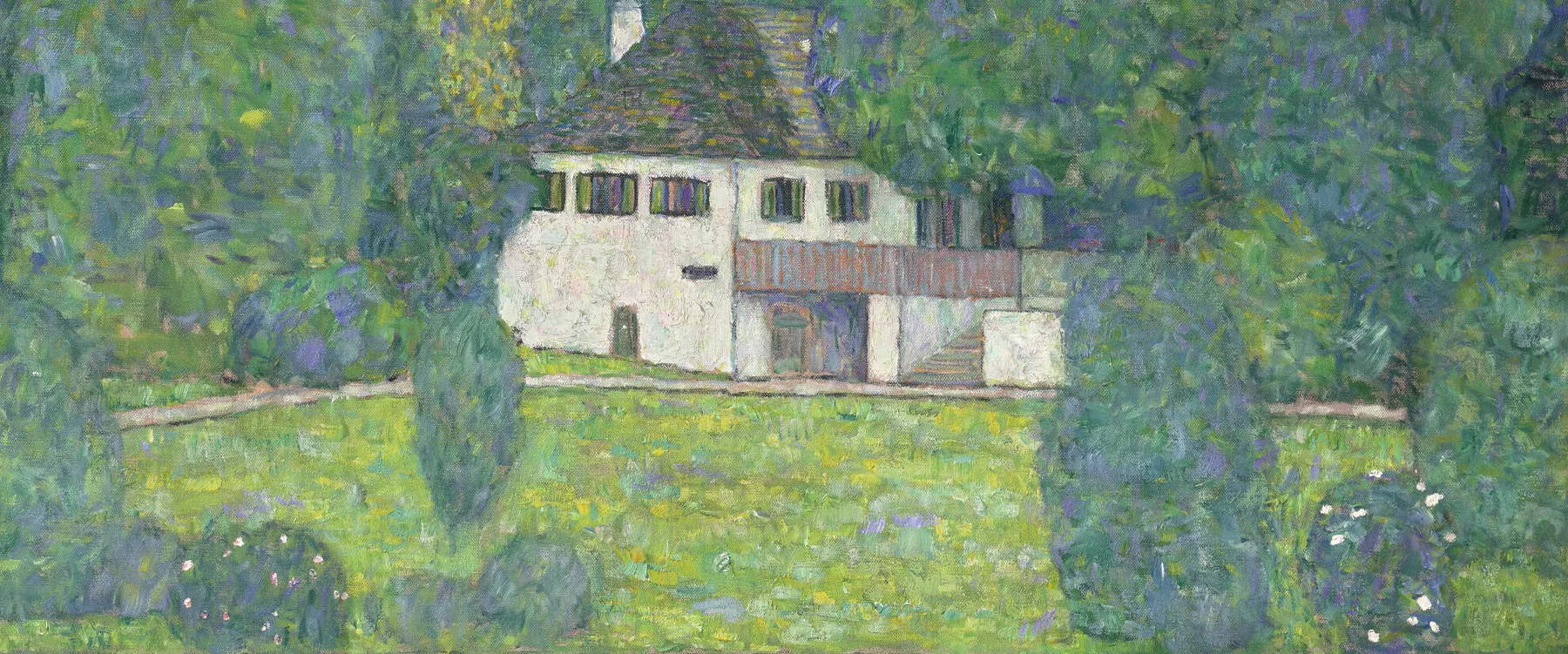 |
| Christie’s: One of Klimt’s Most Beautiful Landscapes Is Up for Auction; Estimated at Up to $80 Million |
Warning: the translation into English of the original Italian article was created using automatic tools. We undertake to review all articles, but we do not guarantee the total absence of inaccuracies in the translation due to the program. You can find the original by clicking on the ITA button. If you find any mistake,please contact us.