



by Redazione 10/11/2026


Categories: Modern Art / Disclaimer
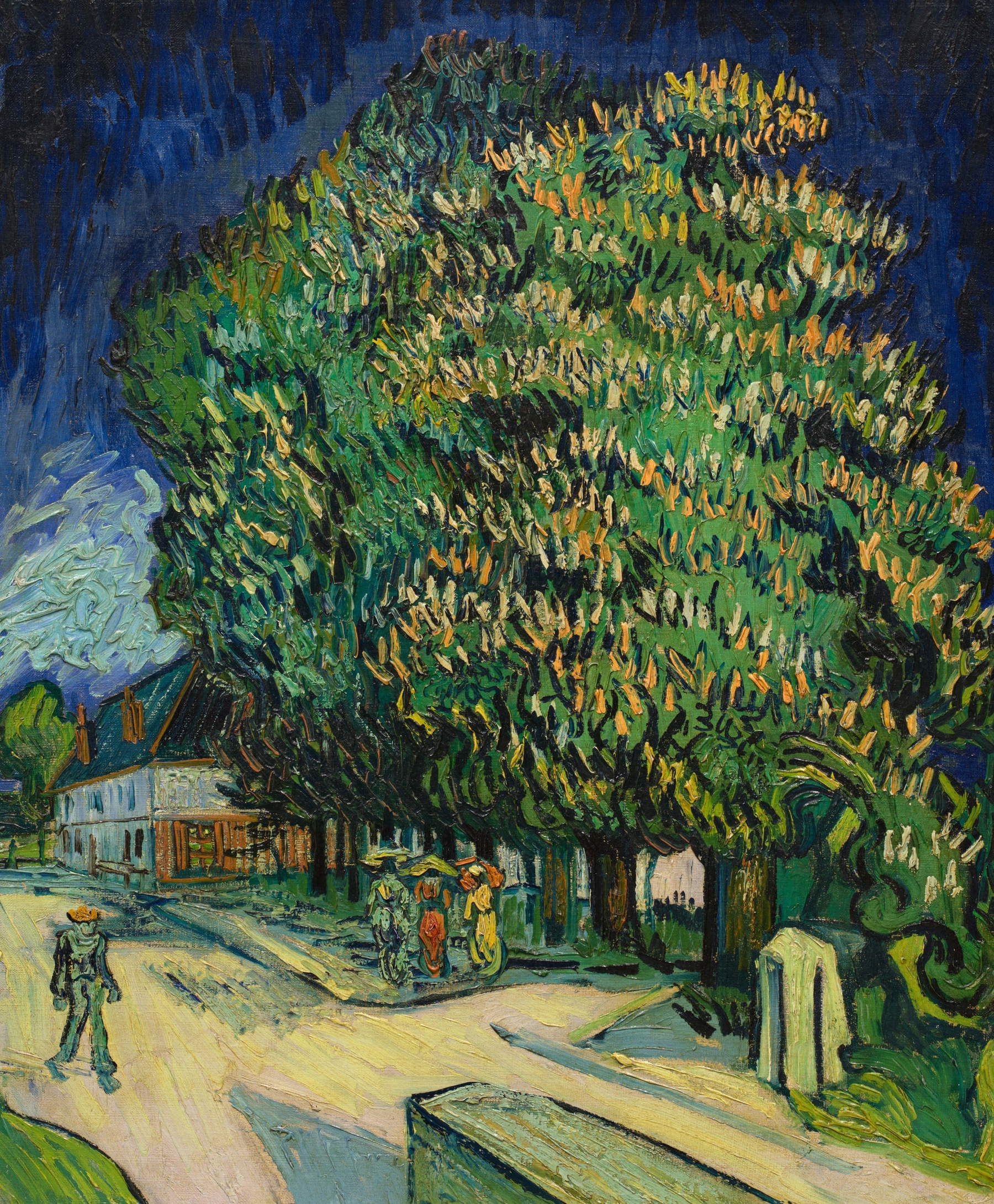
Painted in May 1890 in Auvers-sur-Oise, just a few months before Vincent van Gogh’s death, *Châtaigniers en fleurs* will be the highlight of the Sotheby’s auction on November 18 in New York. The estimated value is $180 million: it could break every previous record for the artist.


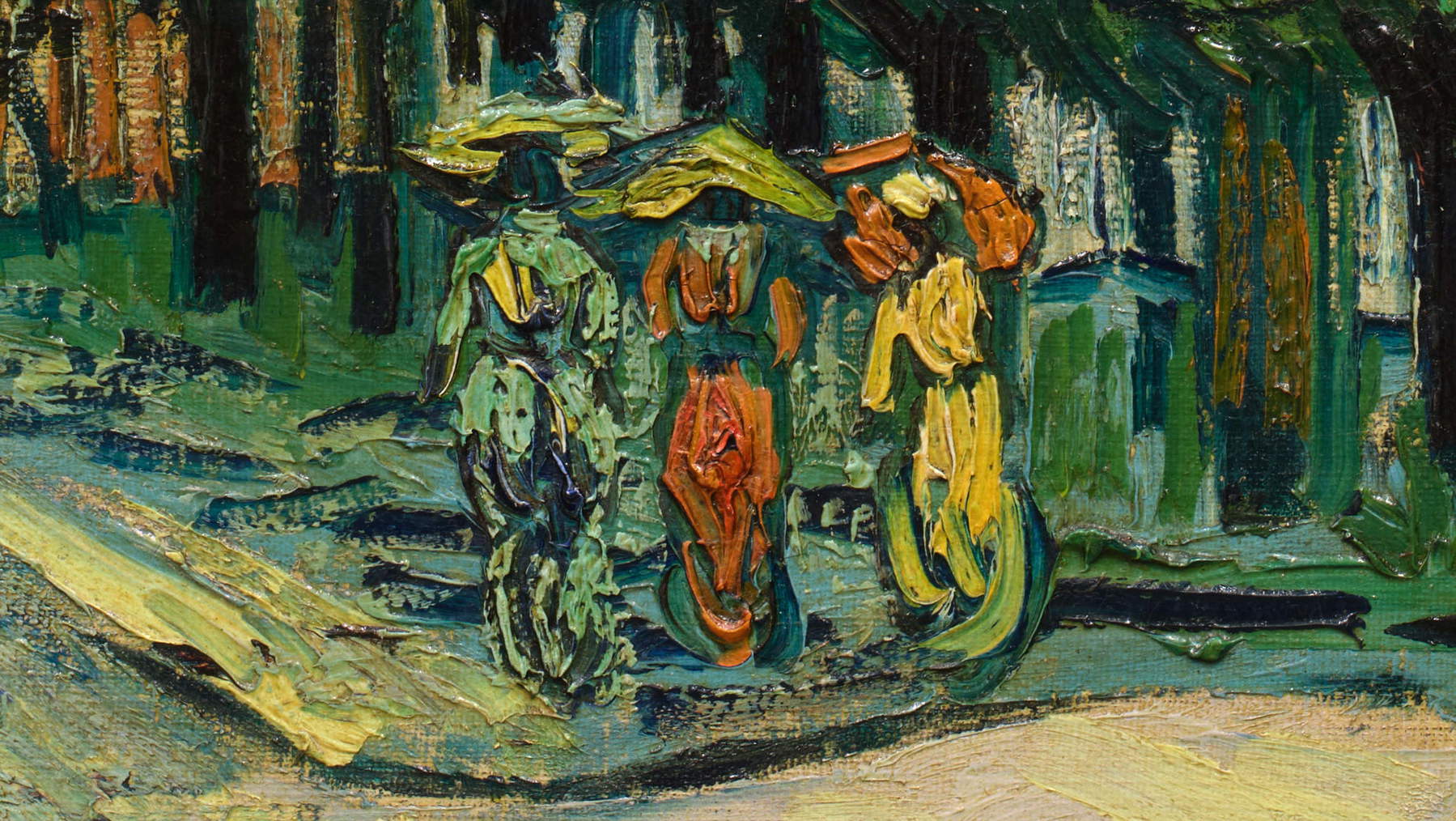
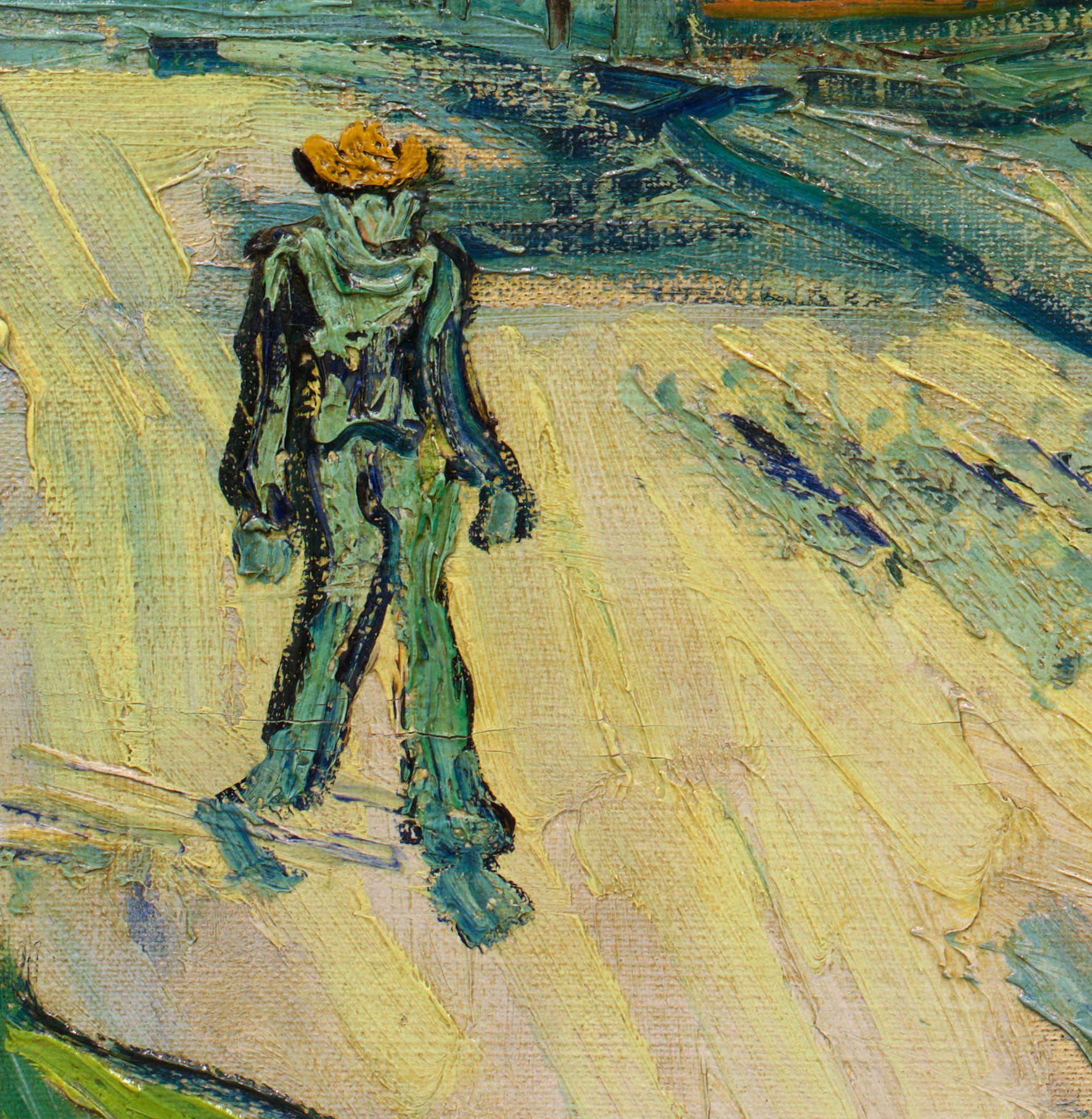
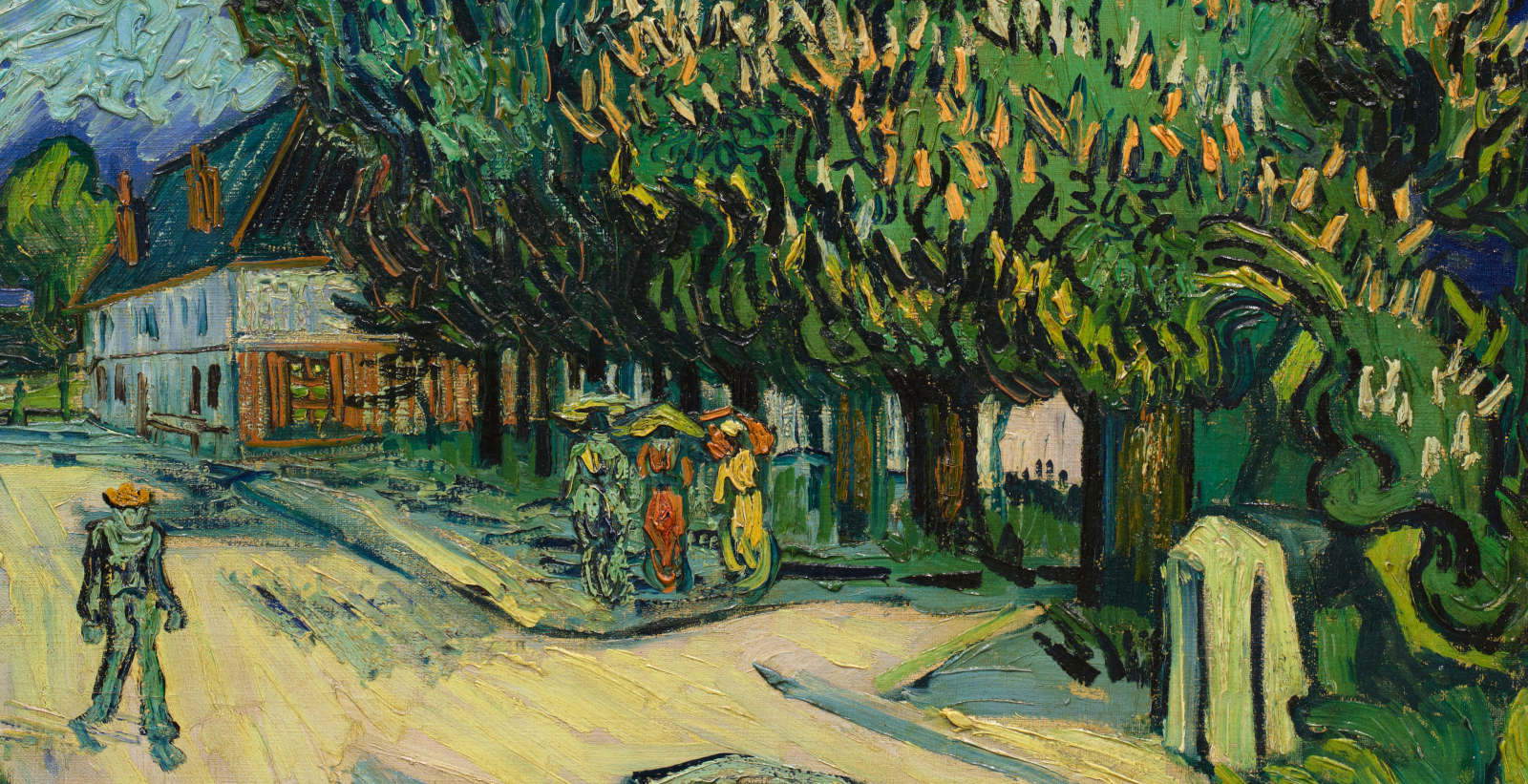
Three women dressed in bright colors are chatting in the sun with their parasols open, and a man in blue work clothes and a yellow straw hat is walking along the road toward the spot where, in all likelihood, Vincent van Gogh had set up his easel. Above them, the village chestnut trees are in full bloom: their enormous branches are laden with flowers that the painter renders in shades ranging from pale pink to yellow to an orange-tinged pink, as if the trees were ablaze. It is an ordinary street in Auvers-sur-Oise, in May 1890. Van Gogh arrived in the village on May 20. Four days later—or perhaps a few days before the 24th—he had already finished this painting. He would die on July 29, just over two months later.


The painting is titled *Châtaigniers en fleurs*(“Chestnut Trees in Bloom”); it is an oil on canvas measuring 70 by 58 centimeters and could soon become the most expensive Van Gogh work ever sold at auction. It will, in fact, be the highlight of “Legendary: The Blaquier-Arrieta Collection,” the evening sale that Sotheby’s will hold in New York on November 18, 2026. Officially, the estimate is available upon request. However, the auction house has indicated a preliminary estimate of $180 million (€160.5 million), though the figure could rise. If that were to happen, the artist’s record would be surpassed by a wide margin: the current record dates back to November 2022, when Christie’s, also in New York, sold *Verger avec cyprès* (1888) for $117.2 million during the sale of Paul G. Allen’s collection. Before discussing the price, however, it’s worth taking a look at the painting itself.


A village street, now Avenue Charles de Gaulle
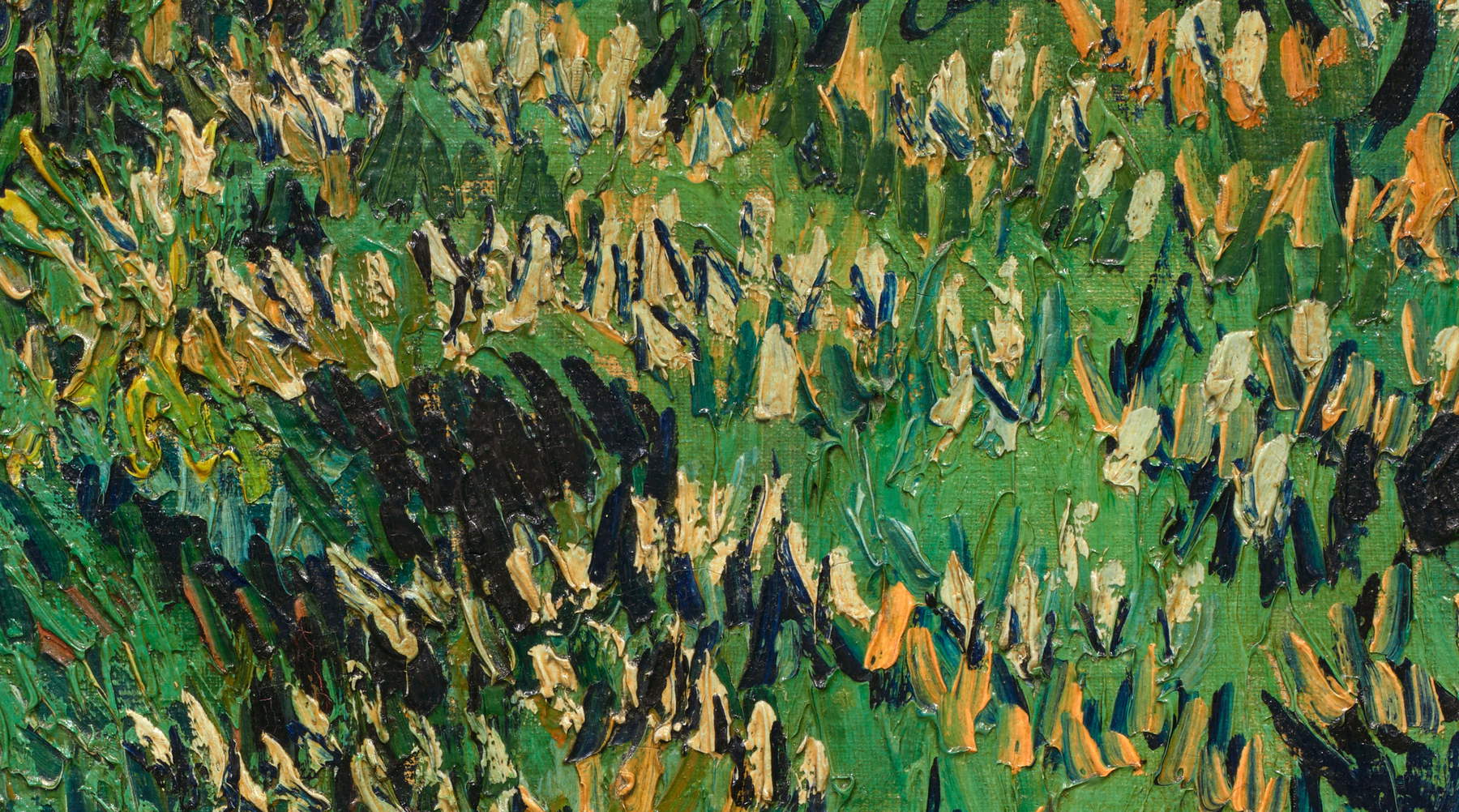
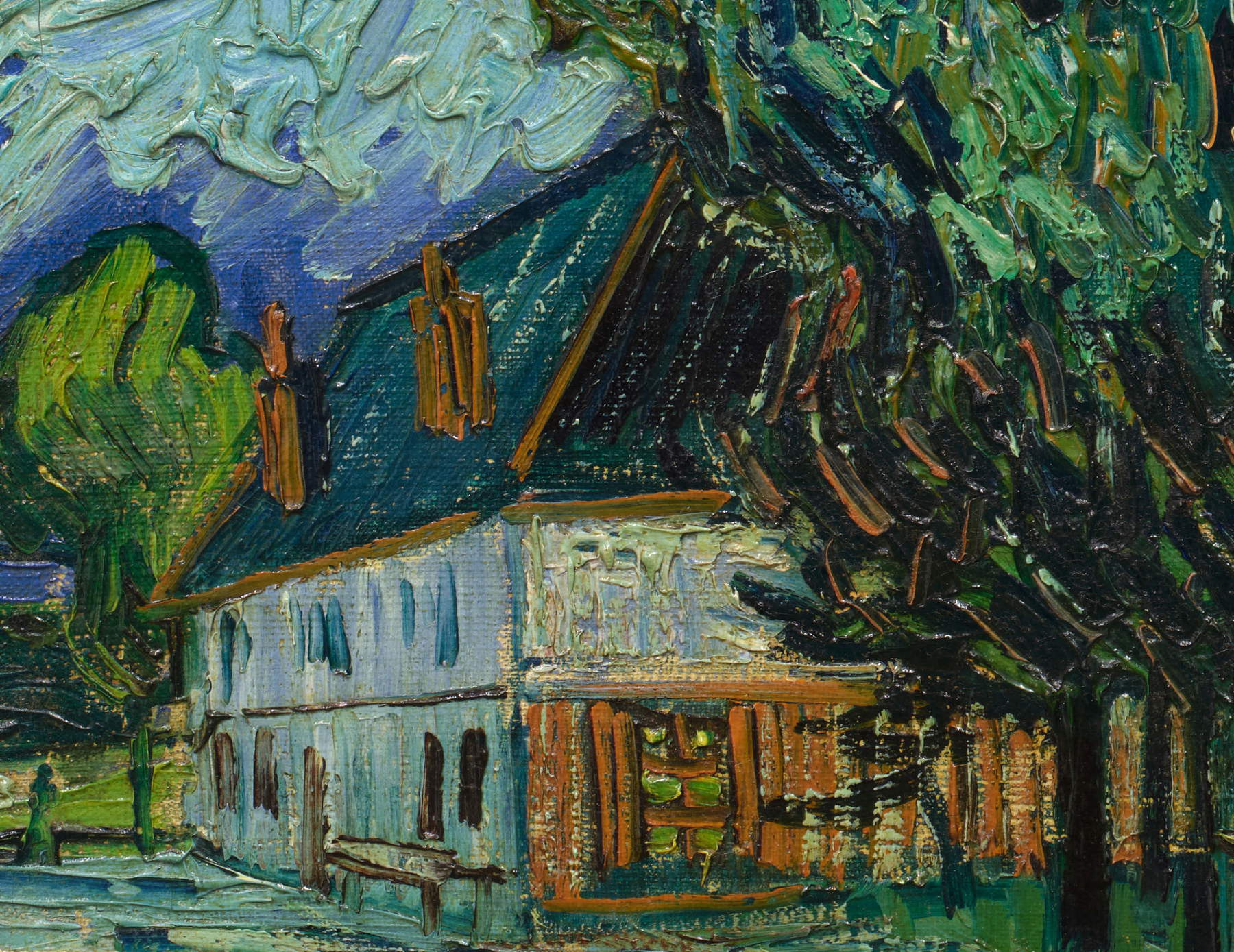
The scene depicts a group of large chestnut trees in the center of Auvers, along what is now Avenue Charles de Gaulle, a short distance from City Hall and the inn where Van Gogh had taken up residence. The trees stand at the entrance to a property: behind the trunks, one can glimpse only a luminous wall, which the painter rendered in a shade of pink. Further down the street stands a large house depicted with precision: the dormer windows, the wooden shutters, and a bench in front of the entrance. Yet everything is rendered with extremely rapid brushstrokes—intense bursts of color.

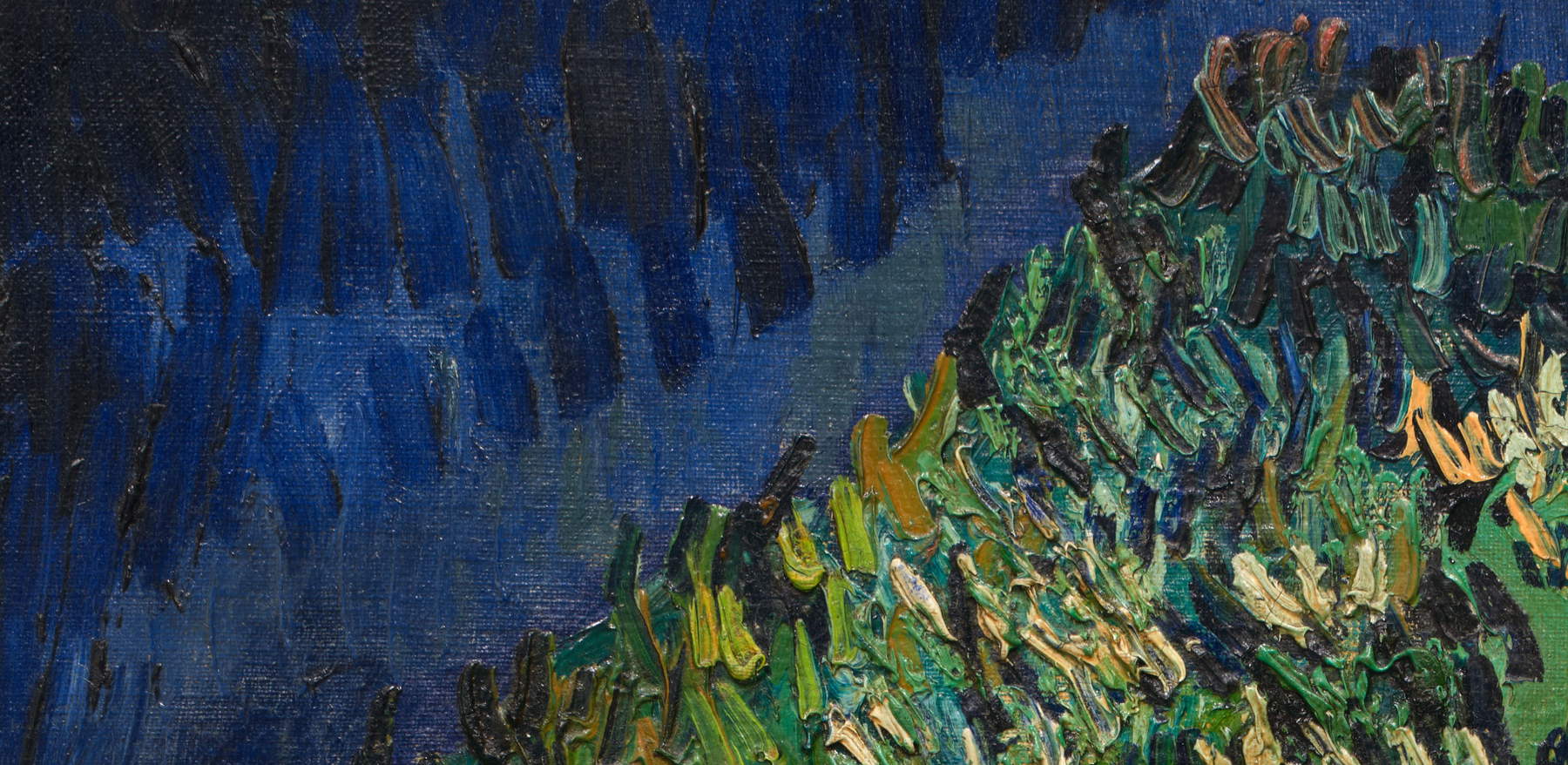
In the lot description written for Sotheby’s, scholar Cornelia Homburg focuses specifically on the technique. With dense, layered brushwork —composed of dots and dashes—Van Gogh “sculpts” the volume of the trees. The natural hues of the flowers are exaggerated and enlivened by complementary contrasts: greens and oranges, blues and pinks. Even the blue shadows on the road are surrounded by pale pink tones, which echo the same interplay of contrasts. The scene is framed by a deep, dark blue sky that acts as a halo around the masses of trees.
That sky raises a small question: the sharp shadows on the road indicate a day of full sunshine. The dark blue of the horizon, however, might suggest an impending change in the weather. In fact, on the weekend of May 24 and 25, Van Gogh wrote about the inclement weather typical of the North: “Yesterday and today it’s raining and stormy, but it’s not unpleasant to see these effects again.” These were effects he had never experienced in that form in Provence.
Geishas in a village in the Oise?
The most intriguing detail in the painting is the three women. The figures are barely sketched, executed so quickly that one might think Van Gogh wasn’t interested in depicting them: he needed them to enliven the scene. Their garish clothes seem a bit out of place in a rural village, but they echo, at street level, the splashes of color from the flowers above them. According to Homburg, it’s possible that the painter simply invented them, with the same poetic license he had taken on several occasions in his Provençal paintings, transforming them into something resembling geishas in brightly colored kimonos. Just a few days earlier, in Paris, he had admired an exhibition of Japanese prints at the École des Beaux-Arts. Before leaving for the South in early 1888, he had collected hundreds of them. There is, however, also a more prosaic explanation: they could have been vacationers from Paris, dressed up for a day trip to the countryside.
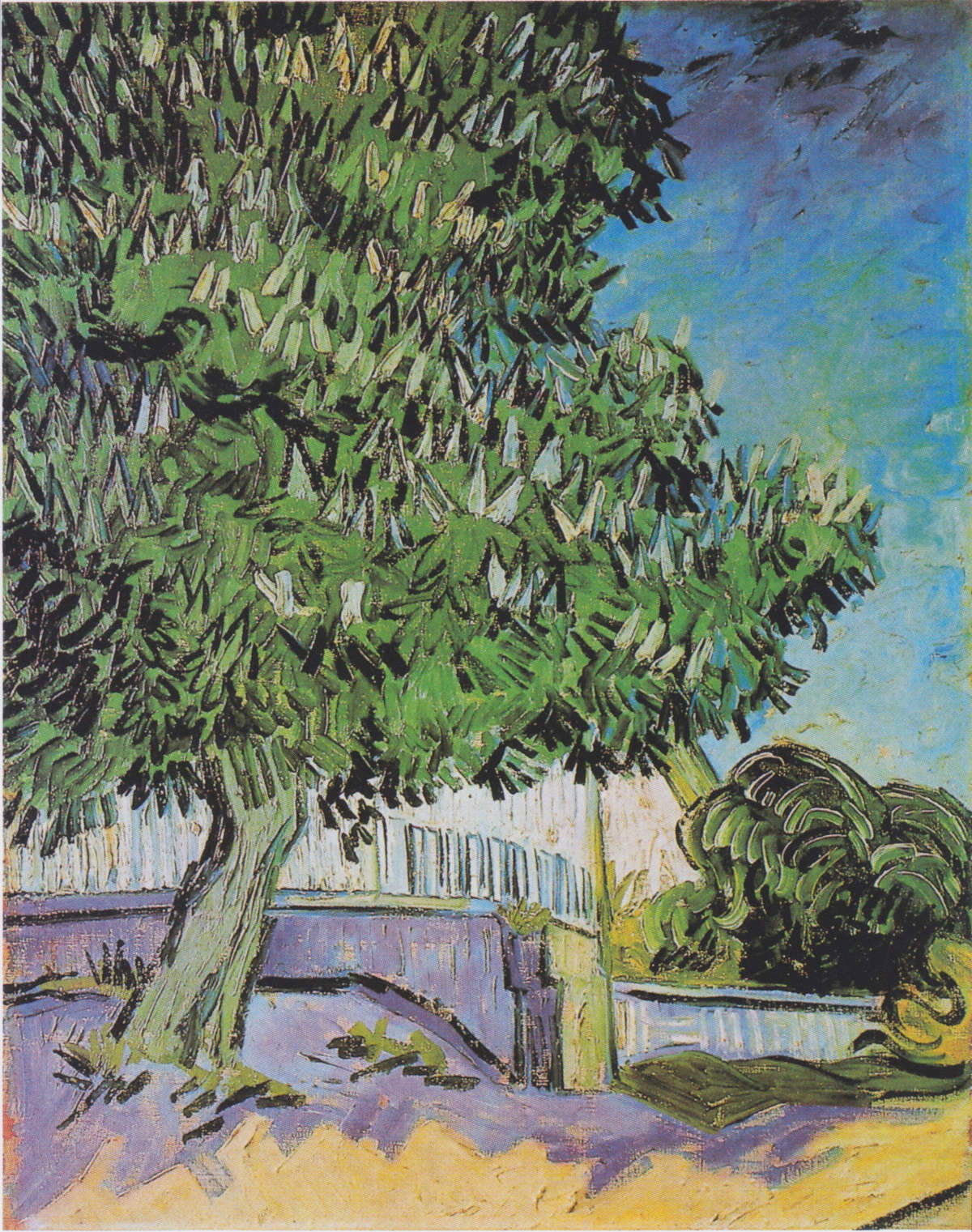
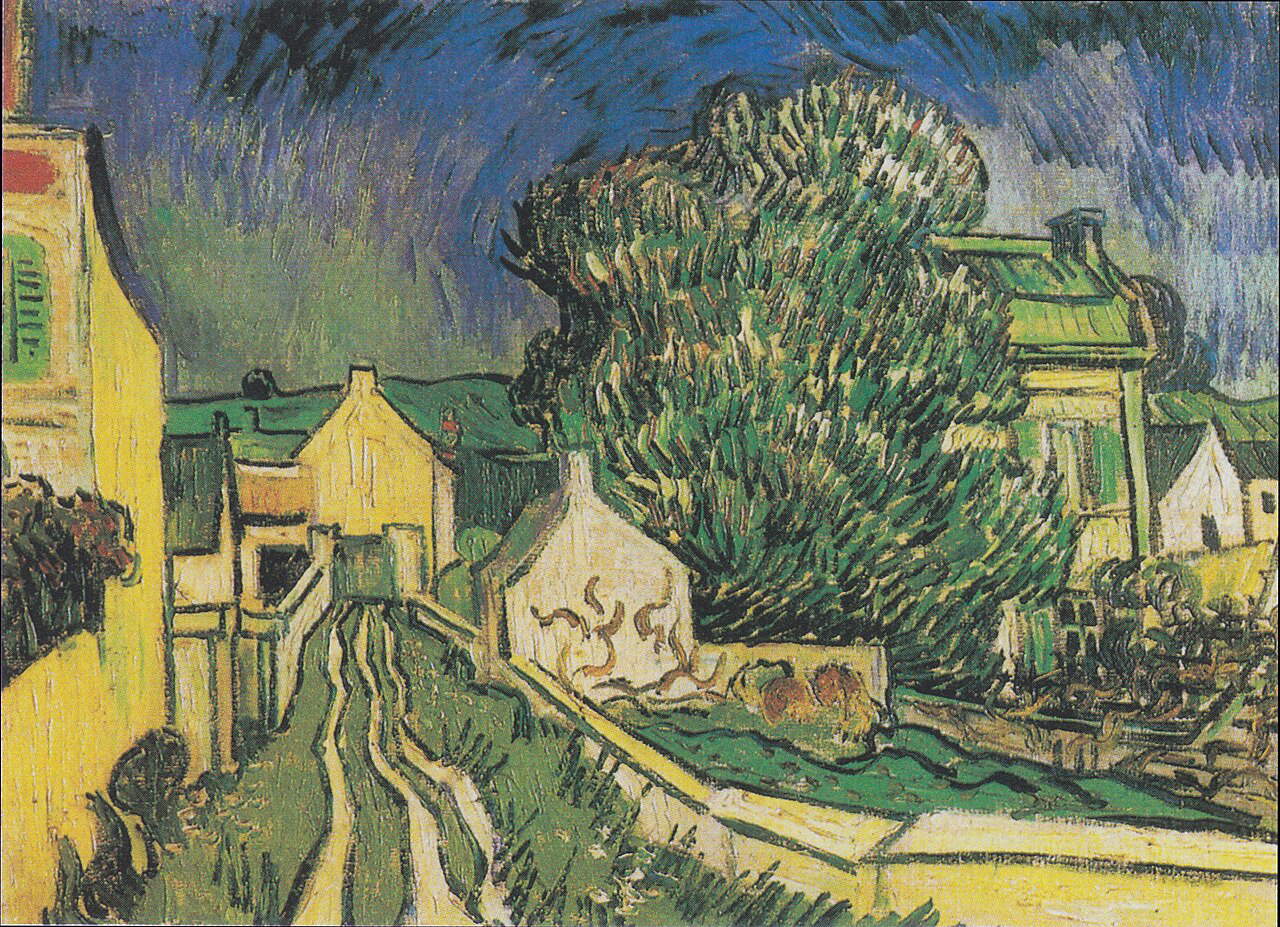
The figures also carry another significance: of all the chestnut trees Van Gogh painted during those days, this is the only one in which people appear. On Sunday, May 25, he wrote to his brother Theo: “I have… a study of pink chestnut trees and one of white chestnut trees.” The “pink chestnut trees” refer to this very painting. The “white chestnut trees” are a canvas now in the Kröller-Müller Museum in Otterlo (F 752). In the days that followed, he painted another composition featuring chestnut trees, *Père Pillon’s House* (F 791), and the still life *Chestnut Branches in Bloom* ( F 820), from the Emil Bührle Collection and on long-term loan to the Kunsthaus in Zurich. In the same letter, Van Gogh added: “But if circumstances permit, I hope to make a bit of a name for myself. Some paintings are vaguely taking shape in my mind; it will take time to give them form, but it will come little by little.”
A Lifelong Passion
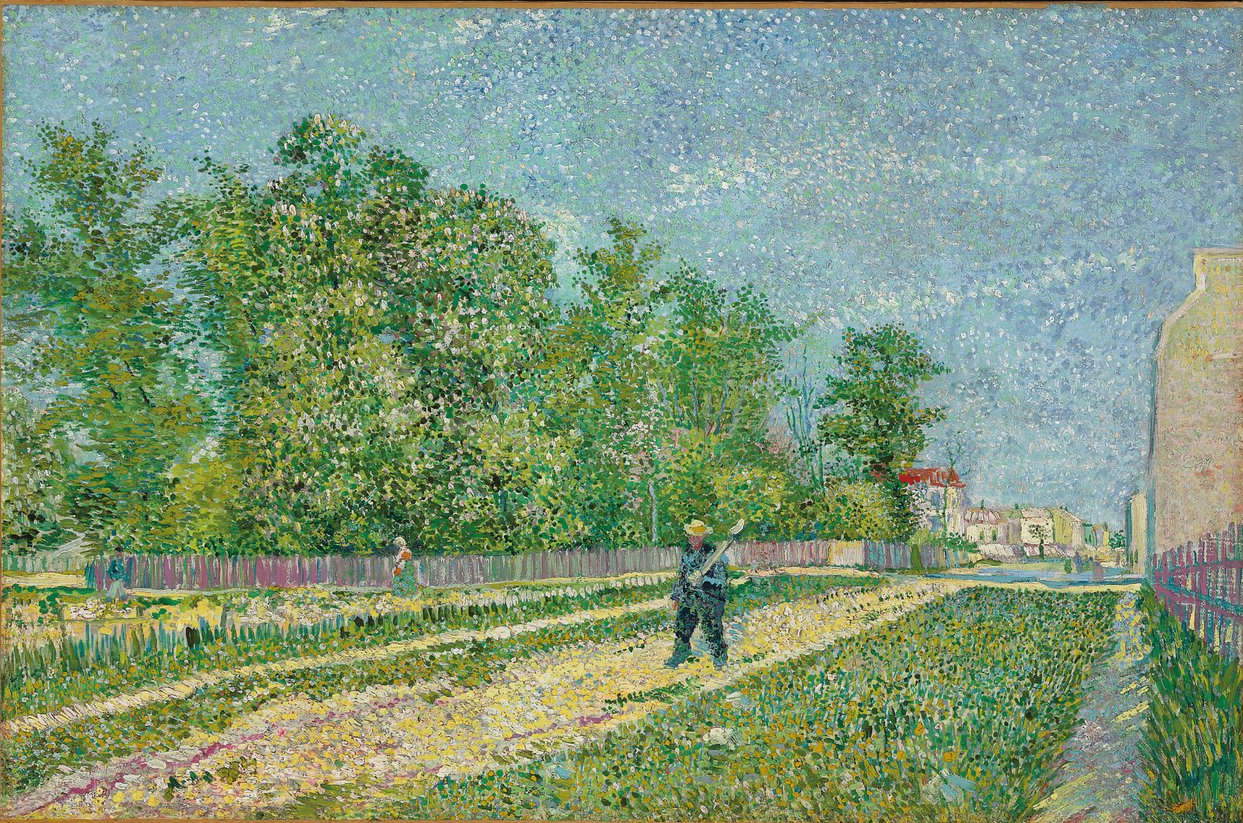
Chestnut trees were not a random subject; Van Gogh had loved them even before becoming a painter: as early as in his letters from England, he admired their majestic form and blossoms. In The Hague, between 1882 and 1883, he had attempted to sketch and paint them. In 1887 in Paris, while experimenting with the styles of Impressionism and Neo-Impressionism, the flowering trees appear in paintings such as *Man with a Spade on the Outskirts of Paris* (F 361) and *The Rispal Restaurant in Asnières* (F 355, Nelson-Atkins Museum of Art in Kansas City).
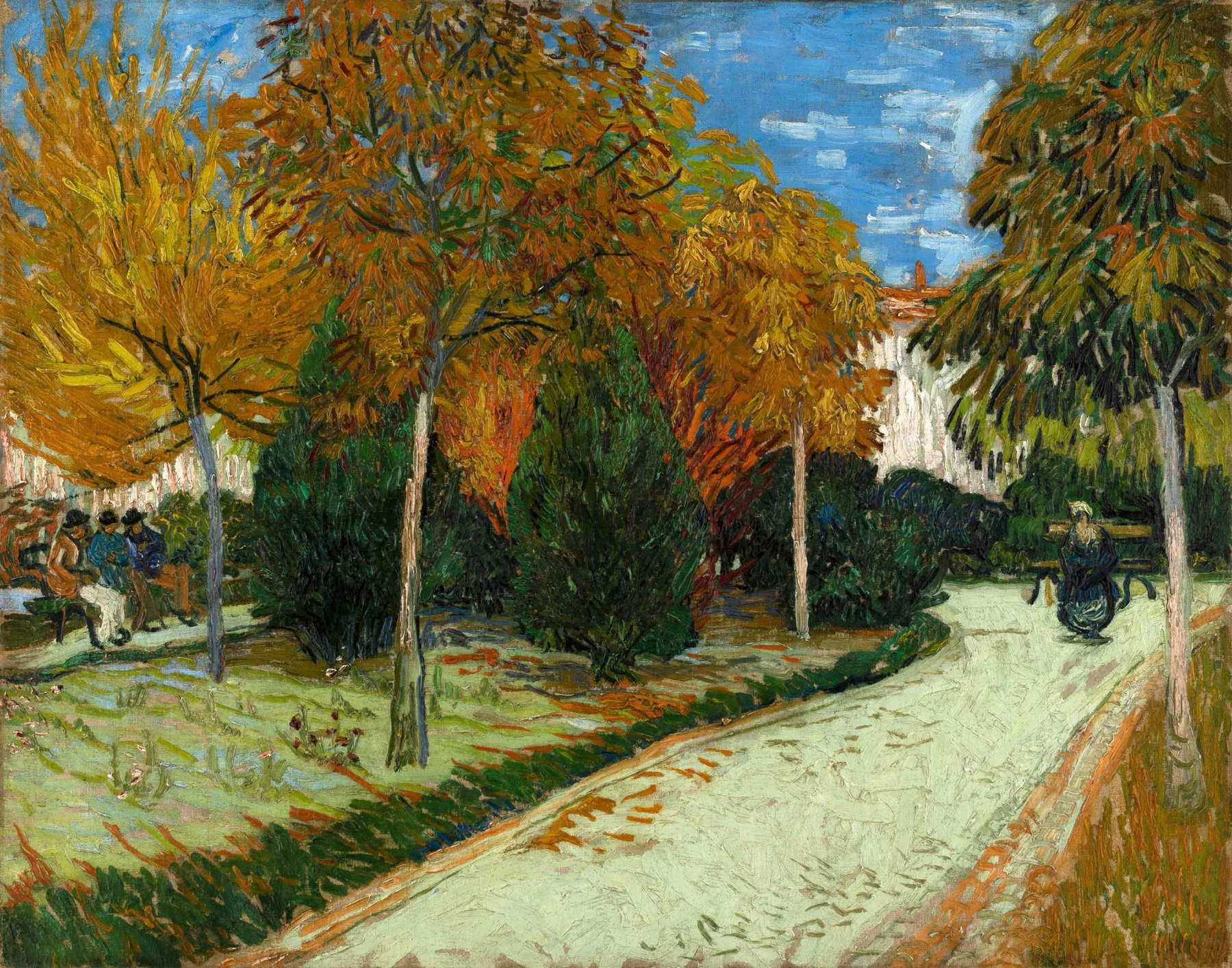
In Arles, when intense color had become an essential tool of his artistic language, he was drawn to both the colors of autumn and the blossoms of spring. In October 1888, he described a new painting, *The Public Garden* (F 472), referring to “chestnut trees with tobacco- and orange-colored foliage” against a deep blue sky. In May 1889, a few days before leaving Arles for Saint-Rémy, he reported that he had “an avenue of chestnut trees with pink flowers in progress.”
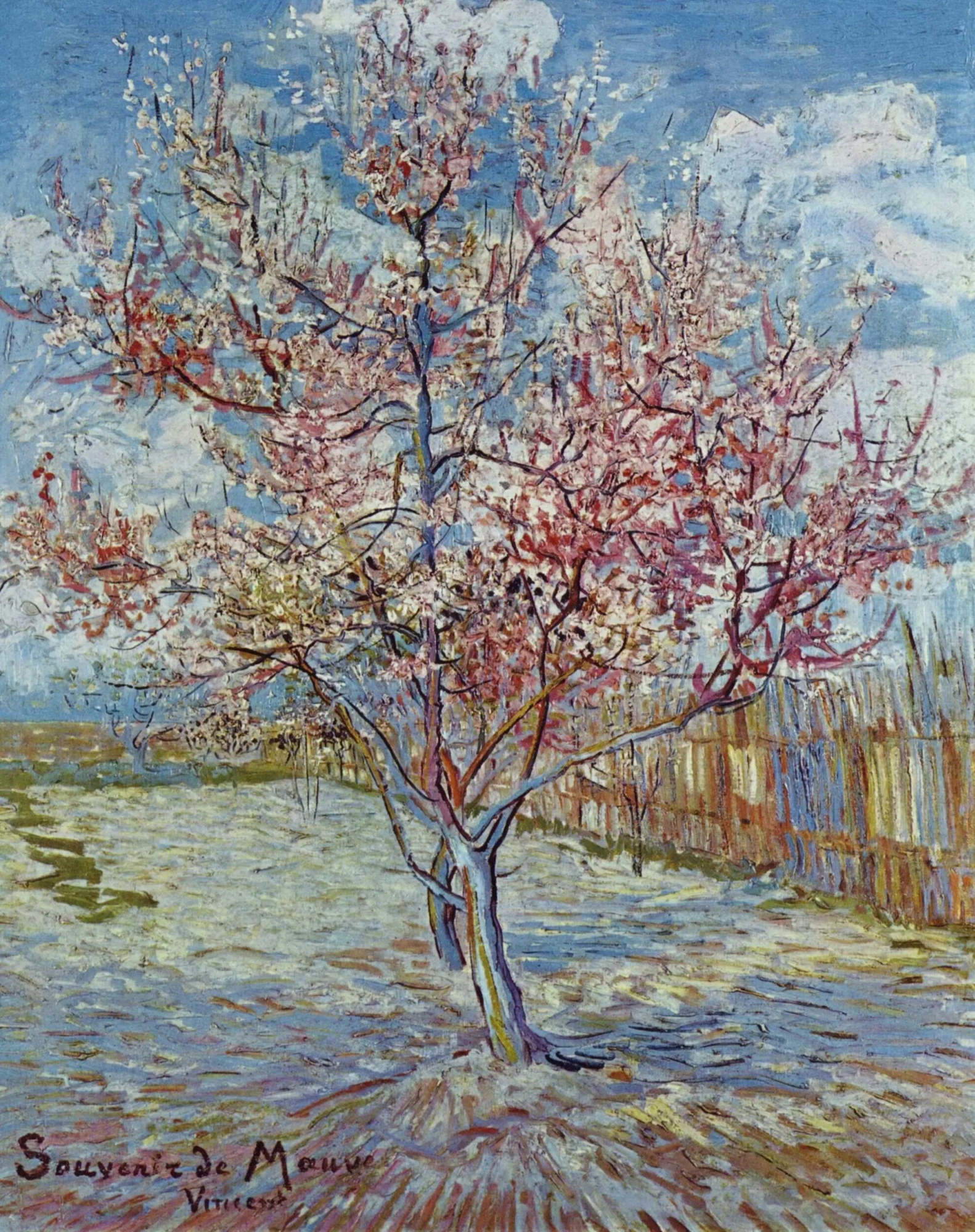
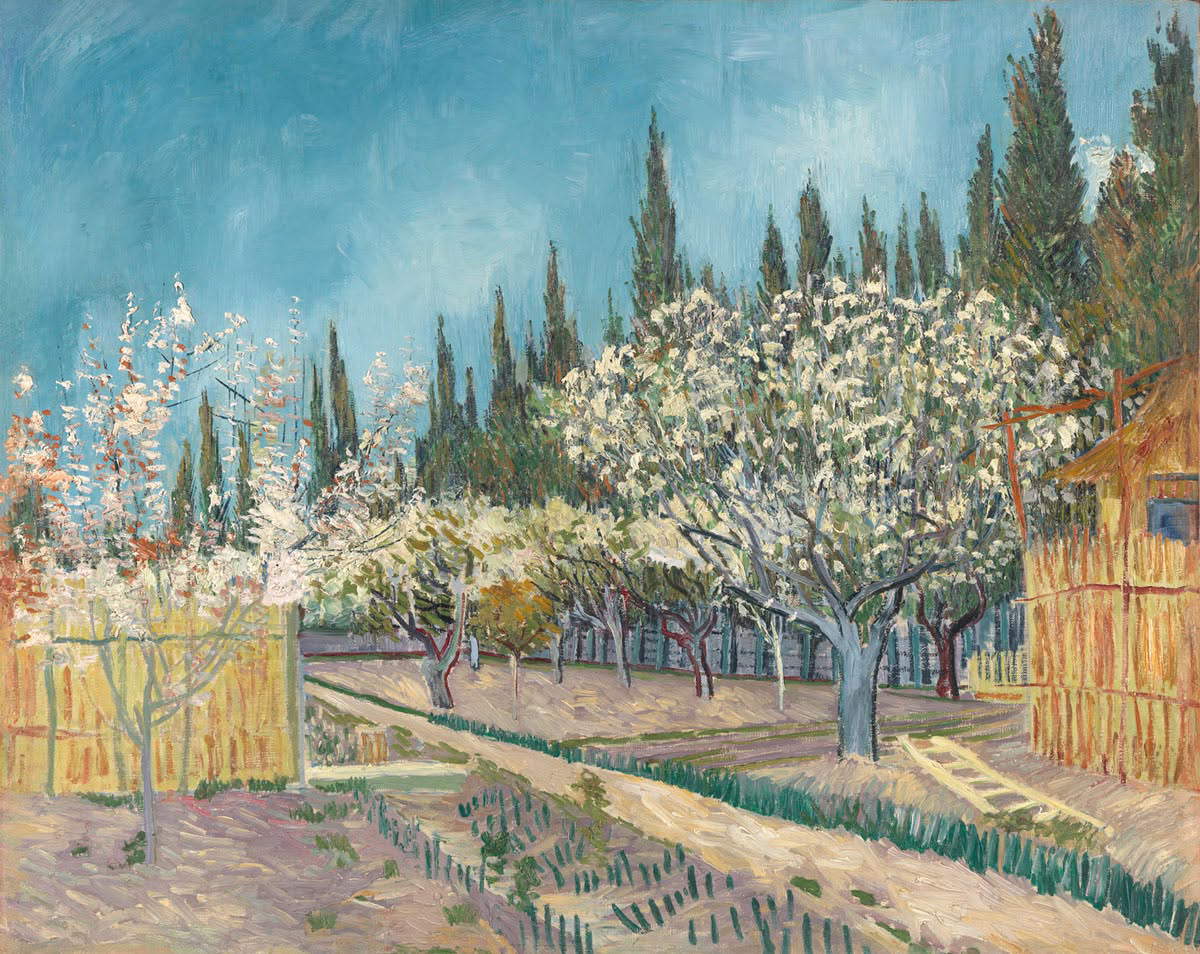
Before that came the great season of the orchards. Shortly after arriving in Provence in 1888, Van Gogh devoted weeks to peach, apricot, and almond trees in bloom. Those paintings reveal an artist who was reworking everything he had learned in Paris: the Impressionist-style pink blossoms of *Peach Trees in Bloom (Souvenir de Mauve) * (F 394, Kröller-Müller), the flat, brilliant fields of color—reminiscent of Japanese prints—in *Orchard with Cypresses* (F 513, Kröller-Müller), and the Neo-Impressionist treatment of *Orchard in Bloom* (F 551). A year later, in the spring of 1889, forced to live in the public hospital in Arles after the onset of his illness, he returned to the orchards with much bolder canvases: he sketched two of them in a letter to Paul Signac dated April 10, 1889. He hoped that those paintings would appeal to the public and perhaps even sell.
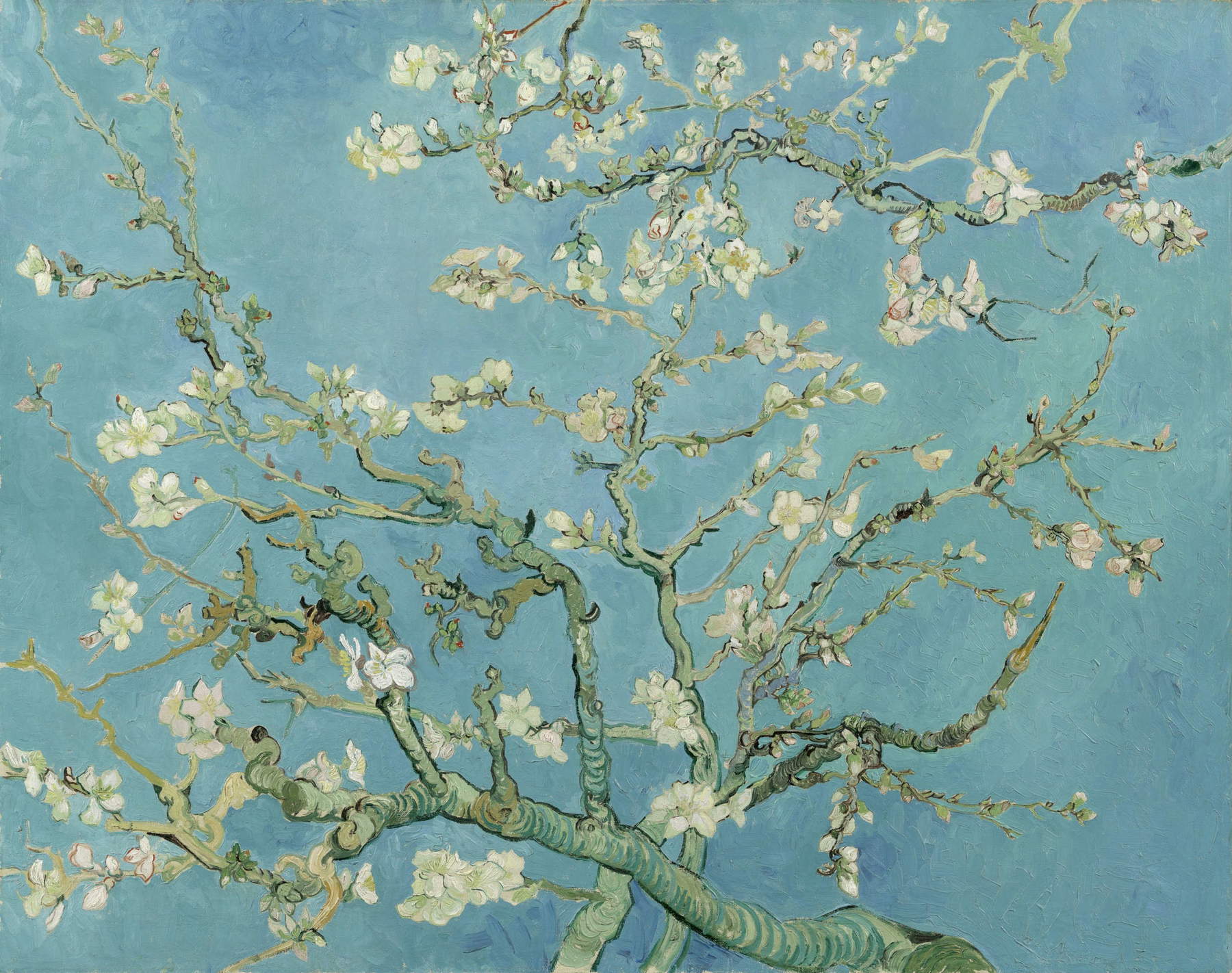
In the spring of 1890, at the sanatorium in Saint-Rémy, long periods of illness prevented him from returning to the subject. He managed to paint only the famous *Almond Blossoms* (F 671, Van Gogh Museum), a gift to celebrate the birth of his nephew, Theo’s son, who was also named Vincent. That is why, upon arriving in Auvers, he was so happy to find the chestnut trees still in bloom and immediately set to work. For him, it was the last chance to paint the spring of that year.
Why Auvers?
After leaving Provence following a little over two years spent between Arles and Saint-Rémy, Van Gogh found a landscape that immediately appealed to him. On the day of his arrival, he wrote to Theo: “Auvers is truly beautiful [...] it is the heart of the countryside, distinctive and picturesque.” The village was less than an hour by train from Paris. It was a destination for Parisians and tourists alike and a sort of artists’ colony. Corot had worked in the Oise Valley, and Daubigny had made the river famous with its meandering course. Daubigny had settled there with a home and studio, and in 1890, after his death, his widow was still living there. A few weeks later, Van Gogh went to paint her garden as a tribute to his mentor.
However, the decision to choose Auvers was made by Dr. Paul Ferdinand Gachet, a physician with a practice in Paris and a home in the village. He had earned his medical degree in Montpellier with a thesis on melancholy. He was an amateur painter and a collector of contemporary art, and in his home Van Gogh could see works by Pissarro and Cézanne. Gachet treated artists and their families, accepting artwork in lieu of money, which was often in short supply. It was Pissarro himself who suggested that Van Gogh go to Auvers, where Gachet could assist him. The painter worked in the doctor’s house and garden and portrayed him in the “Melancholy” pose in the famous portraits of Gachet: one of them is at the Musée d’Orsay.
Auvers also meant being close to Theo, an art dealer in Paris who ran the Montmartre branch of the Goupil & Co. gallery. Vincent met his brother’s wife and newborn son for the first time, and was reunited with friends such as Henri de Toulouse-Lautrec and Andries Bonger. He hoped that returning to the North would free him from his illness: “So far, things are going well. And they could go even better; I still believe that what I’ve contracted is primarily a Southern illness, and that returning here will be enough to dispel all of this.” His plans to visit the capital more often did not come to fruition, because he worked tirelessly. In just over two months, he produced 74 paintings and over 50 drawings before taking his own life at the end of July.
The Beginning of His Final Season
Before settling in Auvers, Van Gogh had spent a few days in Paris. There he had reunited with friends, visited exhibitions, and, it seems, also met the art critic Albert Aurier, who had written an important article about his painting earlier that year. The article focused primarily on his work from previous years. He had rolled up most of the paintings he’d made in the South and sent them to Theo by train, both to have them stored and exhibited and as a token of gratitude for his brother’s financial support. Some were hanging in his home, others were stacked under the bed, and many were stored in the shop of Père Tanguy, the art supply dealer who displayed the latest avant-garde works in his window. For Van Gogh, this was an opportunity to assess the progress he had made.
From there, a new phase began: in Auvers, the painter would develop new styles and a cooler color palette, suited to the northern climate. According to Homburg, *Châtaigniers en fleurs* opens this phase “with skill”: an artistic statement “of great maturity and confidence,” which sums up the achievements of the past and points the way toward the motifs and colors of the North.
It is an idea that Van Gogh had articulated two years earlier, writing to Émile Bernard from Arles: “I exaggerate; sometimes I alter the subject, but I do not invent the entire painting; on the contrary, I find it already made, but in need of unraveling, in the real world.” The road in Auvers with its chestnut trees is an example of this: an ordinary village street, transformed by color and imagination.
From his brother Theo to half a century in the same collection
The painting’s history after 1890 is also worth recounting. Upon Vincent’s death, the work passed to his brother Theo, then to his widow Johanna van Gogh-Bonger, and finally to their son Vincent Willem. In September 1905, it was purchased by the Berlin art dealer Paul Cassirer, who sold it to Alexandre Berthier, Prince of Wagram, in March 1906. It then passed through the Galerie Druet in Paris and, in January 1909, came into the possession of Gustave Fayet. That same year, through the Galerie Bernheim-Jeune, it was purchased by the publisher Samuel Fischer in Berlin-Grunewald. In 1934, it was inherited by Brigitte and Gottfried Bermann-Fischer, who lived between Berlin and Vienna. From 1932–33, it was on consignment with Paul Cassirer in Amsterdam, and through him, it was sold in 1936 to Henriette and Marcel Kapferer in Paris.
From 1939, the painting was on consignment with Wildenstein & Co. in New York, which later took it on consignment. In 1945, it was purchased by George “Buddy” Gard DeSylva and Marie DeSylva in Los Angeles, who kept it at least until 1950. In 1953, it belonged to Harriet Harris-Jonas in New York. In 1974, her heirs entrusted it once again to Wildenstein, where the current owners purchased it in 1975. Fifty years have passed since then, and on November 18 in New York, the pink chestnut trees of Auvers will return to the market. At a price accessible to very few.
 |
| Van Gogh painted these chestnut trees two months before his death. They are now worth $180 million. |
Warning: the translation into English of the original Italian article was created using automatic tools. We undertake to review all articles, but we do not guarantee the total absence of inaccuracies in the translation due to the program. You can find the original by clicking on the ITA button. If you find any mistake,please contact us.