





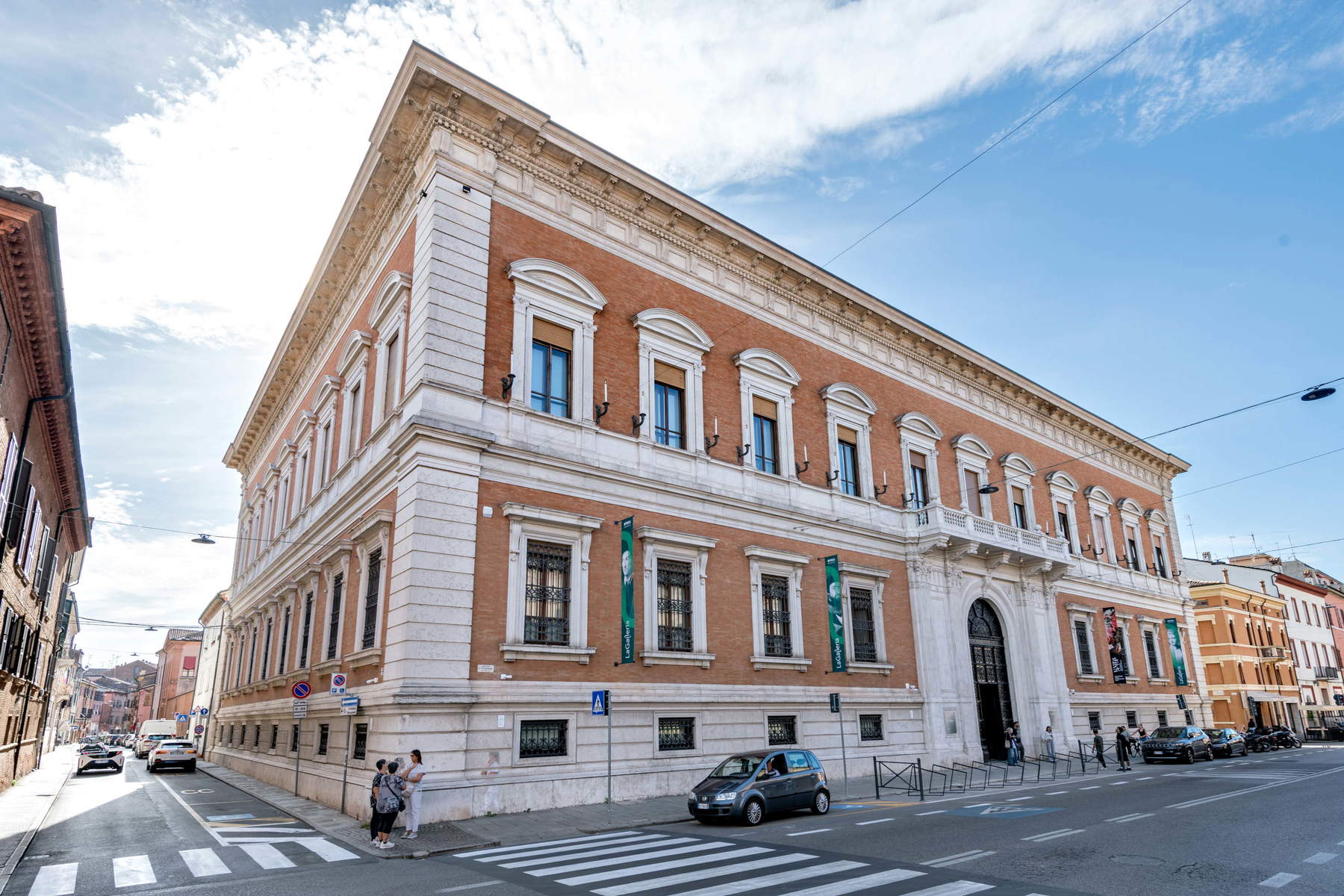
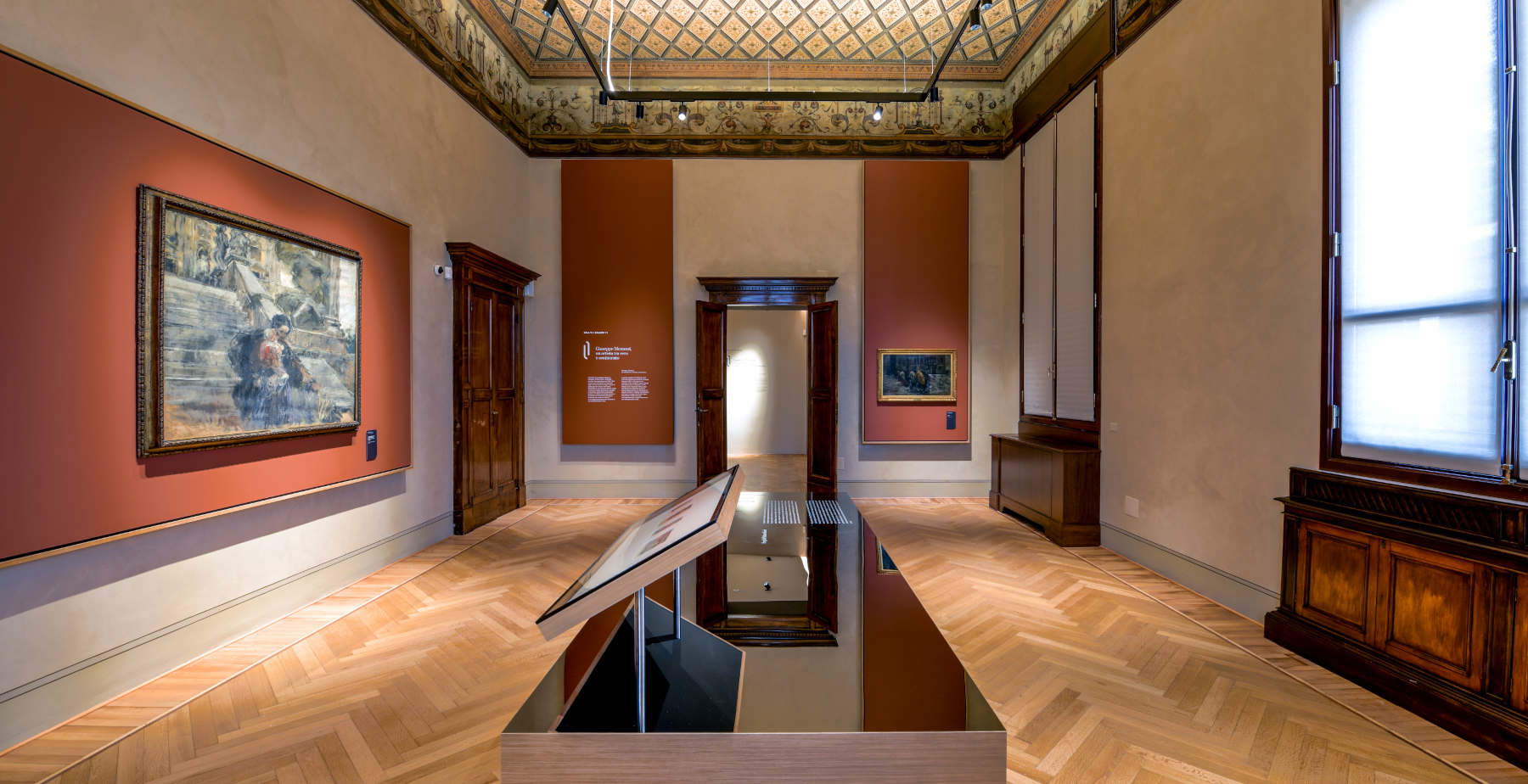
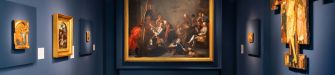
To understand what Ferrara was—and, above all, how the city has preserved its artistic heritage over time—it is not enough to look only at the paintings: one must also trace the stories of those who collected them, the institutions that acquired them or received them as gifts, the works that have changed locations, those that have been lost, and those that are now once again on public view. This is the perspective through which Palazzo Barbantini-Koch, the historic building of the Cassa di Risparmio di Ferrara, reopens to the city on October 8, 2026, as the new home of La Galleria BPER. On the main floor of the building, 135 works—including paintings, sculptures, drawings, and prints—are displayed across 18 rooms, covering an area of approximately 760 square meters. The permanent exhibition, titled “A Treasure Trove of History. Art in Ferrara: Between Past and Present, curated by Lucia Peruzzi and Luciano Rivi, spans more than five centuries, from the Renaissance to the 20th century, bringing together the historic core collections of the former Cassa di Risparmio di Ferrara with works from other collections within the BPER Corporate Collection.
But the focus is not merely on the quantity or chronology of the works: what makes this new exhibition unique is that the collection is used to simultaneously tell the story of art and that of the region that produced, preserved, and, in part, lost it. Alongside the paintings, the narrative thus incorporates the archives, the history of the banking institution, donations, acquisitions, recoveries, and the stories of the collection groups that have shaped the collection over time. Among the most significant works is Gaspare Venturini’s*Allegory of Good Government *, which returns to public view after having originally been part of the decorative scheme of the *Camerino dei Libri*, commissioned by Duke Cesare d’Este for the *Palazzo dei Diamanti*. Its inclusion highlights one of the central aspects of the project: that the works are not considered solely for their intrinsic value, but also as fragments of a broader city history, shaped by commissions, transfers, dispersals, and returns. The same applies to the City View by Girolamo Marchesi, known as Girolamo da Cotignola, dating from around 1520. The small panel, measuring 46 by 37 centimeters, was part of a now-dispersed ensemble and depicts a perspective view enlivened by city walls and scenes of everyday life. Its return to Ferrara ideally brings it closer to the works from the Sacrati Strozzi collection, at least partially reconstructing the memory of a collection that no longer exists in its original form.
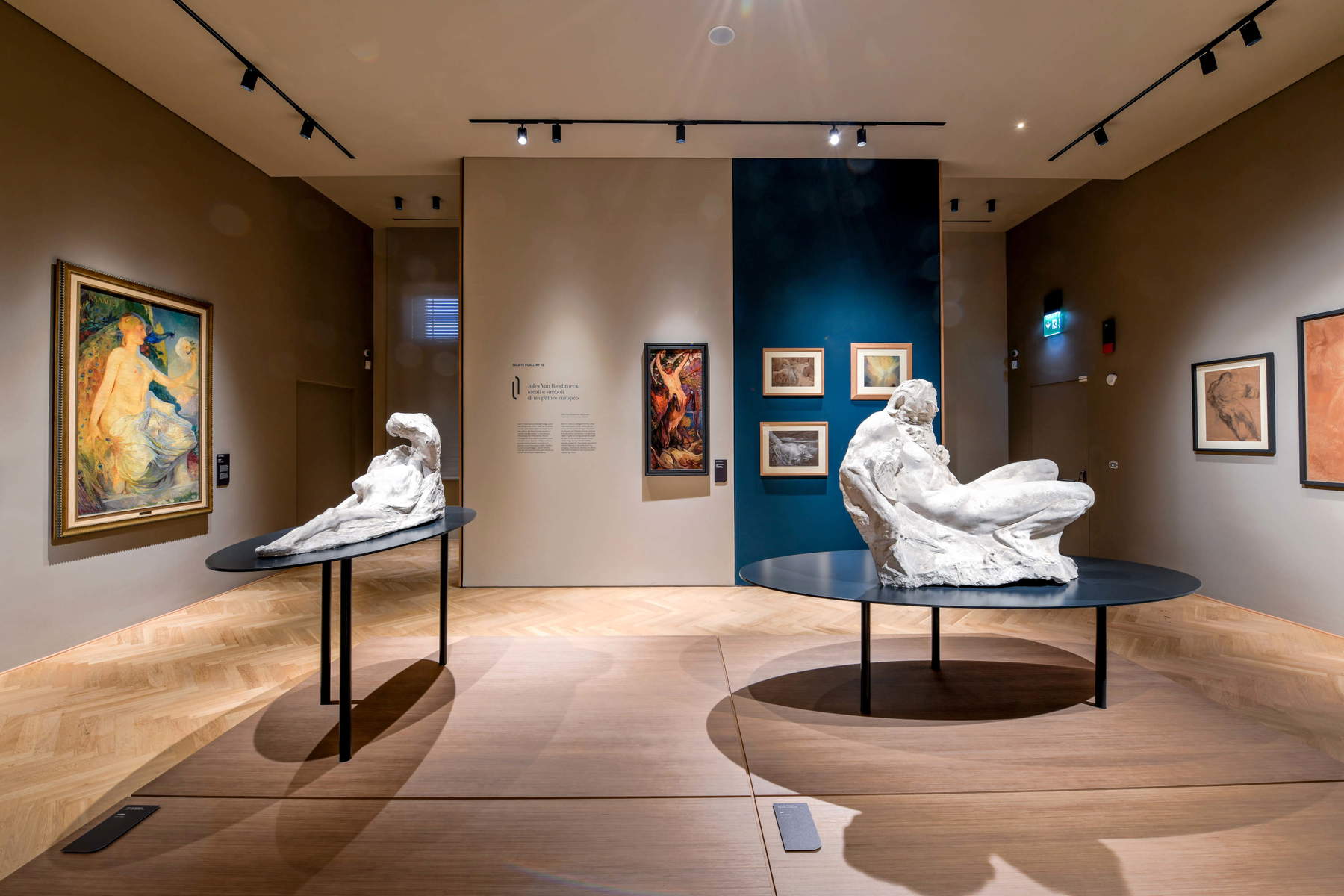
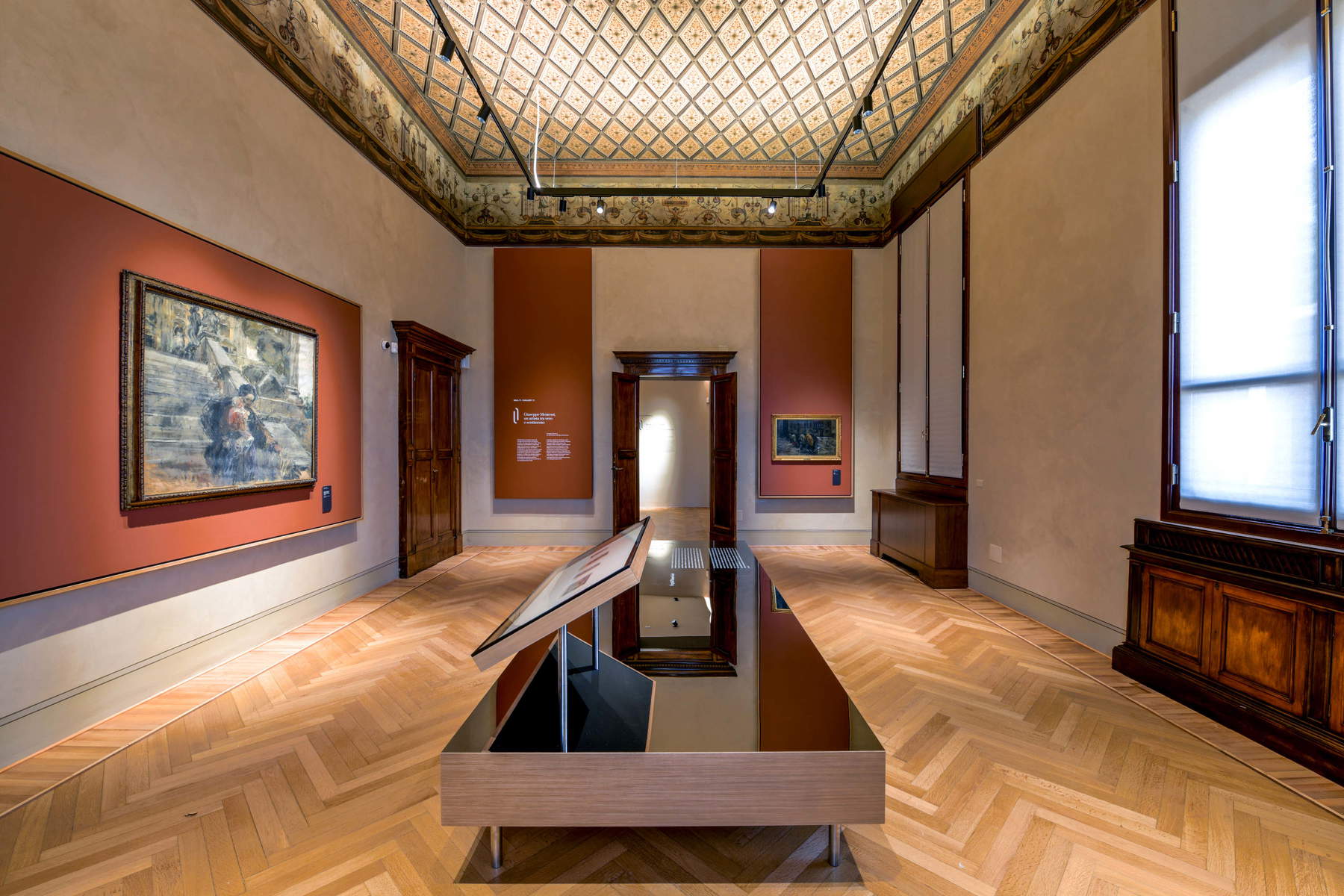
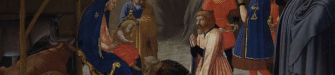
The historical exhibition, curated by Lucia Peruzzi, spans from the 15th to the 18th century. Artists such as Michele Coltellini, Domenico Panetti, and Giovanni Battista Benvenuti—known as “l’Ortolano”—document the transition from the 15th-century Ferrara tradition toward a softer, more restrained style of painting, open to influences from Venetian culture, Perugino, and Raphael. Further on, other important figures in Ferrara’s art scene—such as Girolamo da Carpi, Girolamo Marchesi da Cotignola, Gaspare Venturini, and Carlo Bononi—reflect the diversity of Ferrara’s figurative art between the 16th and 17th centuries. This history, however, is not confined within the city’s borders: one example is the *Portrait of Gabriele Tadino* by Titian and his workshop, dated 1538, in which the Brescian commander Gabriele Tadino is depicted with the cross of the Knights of St. John of Jerusalem and a row of cannons alluding to his military role. The eye he lost during the defense of Rhodes becomes a visible element of his biography. The painting thus introduces a broader dimension to the Ferrara collection, linked to an artistic culture that transcends local boundaries.
Alongside the more official paintings are still lifes, Caravaggesque works, and landscapes, culminating in the canvases by Giuseppe Zola, which conclude the section on ancient art while maintaining a direct connection to the history of the Monte di Pietà. Among these is the *Rest on the Flight into Egypt*, an 18th-century canvas measuring 162 by 198 centimeters, in which the Holy Family is set within a landscape where the religious narrative coexists with scenes of daily life. The work belongs to the collection historically documented in the offices of the Monte di Pietà. Another significant work is the *Saint Cecilia* by Girolamo Sellari, known as Girolamo da Carpi, painted in the 1530s: here, the figure draws on an iconography made famous by Raphael, but interprets it through the elegance of Parmigianino and the artistic influences of Giulio Romano. And in this case as well, the history of Ferrara’s painting emerges as a history of exchanges and relationships—a history in which external influences are absorbed and transformed.
The transition to the nineteenth and twentieth centuries, curated by Luciano Rivi, shifts the perspective while maintaining the connection to the city. Gaetano Previati and Giuseppe Mentessi open the modern section with works that intertwine Symbolist themes, a focus on social issues, and the participation of Ferrara’s artists in the national debate. The city of the 20th century then emerges through sculptures and paintings by Arrigo Minerbi, Annibale Zucchini, Giuseppe Virgili, Ulderico Fabbri, Filippo de Pisis, Achille Funi, Giorgio Sallustio Rossi, and Galileo Cattabriga. This section demonstrates that Ferrara’s artistic culture was not an isolated phenomenon but was connected to national and international art circles. The Niccolini Prize and donations also played a role in shaping the collection, through which some of its most substantial groups of works were acquired.
The conclusion of the exhibition takes the viewer’s gaze even further beyond the city’s borders: one room is dedicated to the substantial collection of works by Jules Pierre Van Biesbroeck, an Italian-Belgian artist whose works entered the collection through a donation. Among the works on display is *Adam and Eve*, created in 1889, when the artist was just sixteen years old: the painting, an oil on canvas mounted on hardboard, measures 207.3 by 95.6 centimeters and tackles the biblical subject by transforming it into a reflection on guilt and the loss of innocence, offering an early engagement with European Symbolism.
The collection, therefore, is not presented as a closed repertoire of Ferrara’s painting tradition. Its very formation tells a more complex story: it arose from a combination of works originally intended for the bank’s premises, acquisitions on the open market, recovered pieces, donations, awards, and collections that have come together over time—a history in which the preservation of cultural heritage has been intertwined with local cultural policies and the role played by the Cassa di Risparmio di Ferrara.
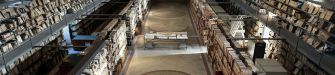
Added to this artistic history is the documentary record.The Historical Archive of the Cassa di Risparmio di Ferrara, which was merged intothe BPER Historical Archive in 2017, preserves approximately 570 linear meters of documentation. Minutes, registers, correspondence, photographs, project plans, and accounting documents allow visitors to trace the institution’s history dating back to 1838, while also offering a glimpse into the economic, social, urban, and cultural transformations Ferrara has undergone through its records. It is especially in the Boardroom that this second dimension physically becomes part of the visitor experience. The archival collection is presented through a narrative and multimedia project developed by Promemoria Group based on BPER’s “I Palazzi Testimoni” concept. The building is viewed as a palimpsest bearing the traces of the events, transformations, and contradictions it has experienced.
The building itself, after all, is part of the history that the new complex aims to tell. Its history belongs to the era of Italian banking architecture spanning the late 19th and early 20th centuries, when the new headquarters of financial institutions had to balance functionality, decorum, and prestige. In 1903, the final design for the new headquarters of the Cassa di Risparmio di Ferrara was entrusted to the Ferrara-based engineer Luigi Barbantini, and a technical commission composed of Giacomo Duprà, Cleto Gasparini, and the Roman architect and engineer Gaetano Koch. The solution approved in 1905 called for two large central spaces illuminated from above and a monumental main staircase.
Construction continued even after the deaths of Barbantini in 1907 and Koch in 1910. The work was carried out by Attilio Muggia and Gualtiero Pontoni, with Paolo Sironi handling the decorative details, while maintaining the key elements of the original design. The construction site involved specialized companies and craftsmen from various cities: from Leins & C. of Stuttgart for the windows and doors to Bombelli of Milan for the gates, from Maccaferri of Bologna for the wrought ironwork to marble from Chiampo. The building was then completed in 1911. Later, in the 1930s, Carlo Savonuzzi and Giuseppe Gatti Casazza renovated the reception rooms to mark the bank’s centennial, redesigning them in the style of the time. Today, the building’s new cultural purpose adds yet another layer to this historical stratification: the redevelopment and repurposing project sought to preserve and make the building’s history visible, while adapting it to the needs of a contemporary cultural center. The permanent gallery thus coexists with the temporary exhibition halls, educational spaces, the conference room, the restoration workshops, and the storage areas dedicated to the conservation of the works. The architecture, therefore, does not merely serve as a container for the collection: it constitutes one of the elements through which the heritage is narrated.
The relationship between the building, the artworks, and memory is further emphasized by the identity, wayfinding, graphic design, and multimedia installations created by the Migliore+Servetto studio. Three installations grouped under the title FRAGMENTS guide visitors through the various spaces. It begins in the atrium, where FRAGMENTS #01 is a four-meter-tall, L-shaped vertical structure that incorporates a screen on which fragments of the artworks and elements of the visual identity are broken down and reassembled. In the temporary exhibition foyer, FRAGMENTS #02 takes the form of a large multimedia mirror composed of twelve square monitors, alternating between details of the artworks and reflections of visitors. Finally, FRAGMENTS #03, in the Council Chamber, connects the building’s physical and digital memories through documents, a light-up timeline, and interactive stations. The system also includes three digital stations and coordinated indoor and outdoor signage. On the façade facing Corso della Giovecca, four double-sided banners over four meters tall project the new Center’s identity outward and make its presence visible in the urban space.
The opening of the building coincides not only with that of the permanent collection. From October 8, 2026, to January 31, 2027, the temporary exhibition spaces will host VANITAS. Flowers and Symbols, from Hayez to Casorati, curated by Fernando Mazzocca and Elena Lissoni and organized in collaboration with 24 ORE Cultura. The exhibition brings together more than 40 works, including paintings and sculptures, and takes as its starting point a seemingly simple subject: the flower. Through its presence in Italian painting and sculpture from the 19th to the early 20th century, the exhibition traces transformations ranging from Romanticism to Naturalism, from Divisionism to Symbolism, establishing a connection between the visual arts and poetry. The temporary exhibition thus introduces a second way of viewing the collections and heritage of Palazzo Barbantini-Koch: while the permanent exhibition traces the history of art and collecting across five centuries, “VANITAS” focuses on a single theme and its ability to shift in meaning across different eras and artistic languages.
However, the Polo’s project is not limited to exhibitions: among its stated objectives are also education, research, and public programs, with the aim of using the collection, archives, and exhibitions together to create opportunities for study and participation. The Memorandum of Understanding with the Fondazione di Ferrara aligns with this vision, providing for joint activities such as events, study days, seminars, and tours, as well as scientific outreach and publishing initiatives, training programs, and internships in the fields of museology, cataloging, communication, and heritage promotion.
The opening in Ferrara also marks a new phase in the “BPER Cultural Hubs: A System of Widespread Heritage” project, coordinated by La Galleria BPER. The Ferrara hub joins those already active in Modena, at Palazzo San Carlo, and in L’Aquila, at Palazzo Farinosi Branconi. The common goal is to transform the Group’s historic sites, collections, and archives into places accessible to the public, while maintaining a connection with the local communities where that heritage originated. “With Ferrara, there are now three BPER Cultural Hubs open to the public,” says Sabrina Bianchi, head of cultural heritage at La Galleria BPER. “Three places that differ in history and identity but are united by a shared vision: to return to public enjoyment a heritage that is deeply rooted in the regions where it was formed. Palazzo Barbantini-Koch is particularly significant because here, the artworks, archives, and architecture together tell the story of the city. We want this heritage not only to be preserved but to continue generating knowledge, opportunities for interaction, and new connections with the public.” The project is carried out under the patronage of the City of Ferrara, with the involvement of the Fondazione di Ferrara and the Superintendence of Archaeology, Fine Arts, and Landscape.
Special attention is also being givento accessibility. Consulting services are provided by the “Giuseppe Garibaldi” Regional Institute for the Blind, and the project includes audio and video guides developed in collaboration with Amuseapp. The digital stations and the wayfinding system are integrated into the design by Migliore+Servetto, while the educational program places special emphasis on students with special educational needs and people with disabilities. Civita Mostre e Musei is also credited for the project’s education and operations. Admission is free for people with disabilities and one accompanying person.
Palazzo Barbantini-Koch is thus at the heart of a project in which the collection is not separated from the building that houses it, and the archive is not relegated to a marginal documentary role. Paintings, sculptures, documents, and architecture all become part of the same narrative: that of a city that has produced, collected, lost, preserved, and once again brought its heritage into circulation.
And it is perhaps precisely in the works that have had the most eventful histories—such as Gaspare Venturini’sAllegory of Good Government or Girolamo da Cotignola’s Cityscape —that this perspective takes its most concrete form. These are not merely masterpieces to be admired, but testimonies to how an artistic heritage can pass through different institutions, collections, and locations before once again becoming part of a city’s public life.
 |
| Ferrara Welcomes Back Palazzo Barbantini-Koch: A Collection of 135 Works Opens |

Warning: the translation into English of the original Italian article was created using automatic tools. We undertake to review all articles, but we do not guarantee the total absence of inaccuracies in the translation due to the program. You can find the original by clicking on the ITA button. If you find any mistake,please contact us.

















 IT
IT FR
FR DE
DE ES
ES CN
CN


