





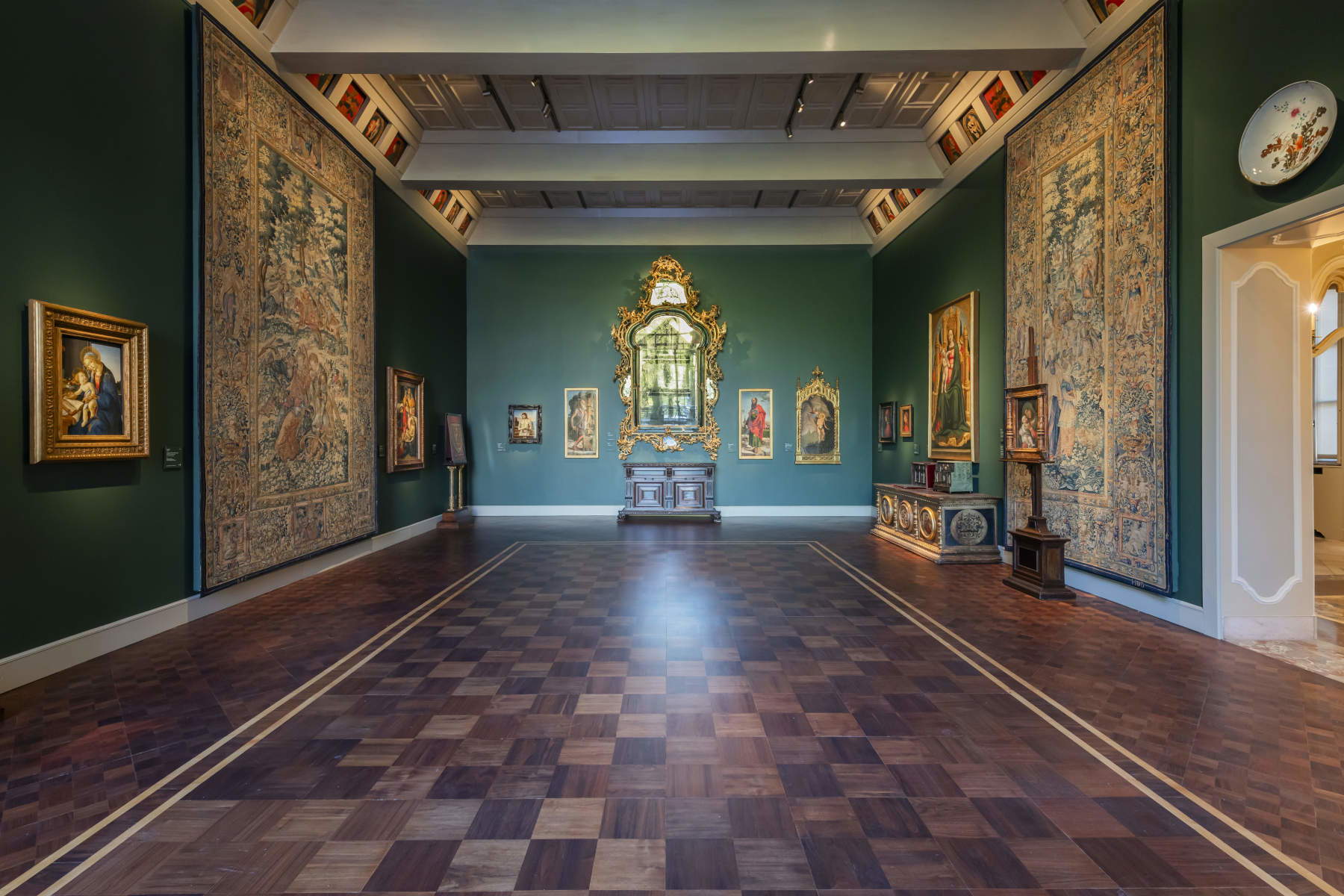
The Poldi Pezzoli Museum in Milan is the focus of the World Monuments Fund’s new Italian initiative, with a project dedicated to the restoration of the Golden Hall, one of the most iconic rooms in the house-museum founded by Gian Giacomo Poldi Pezzoli. Unveiled in May 2026, the project is the result of a year and a half of archival research, restoration work, and reinstallation efforts, and is part of the museum’s initiative to enhance its spaces and collections, which began in 2023.
The project, curated by Alessandra Quarto and Piero Guicciardini, began with consultations with the Superintendency and an analysis of historical documentation, with the goal of restoring certain elements of the layout conceived in the 19th century and modified during the 20th century. The Golden Hall houses the masterpieces of the Italian Renaissance collection and was envisioned by Poldi Pezzoli as the setting for the most precious works in his collection, including paintings, furnishings, tapestries, and sculptures. Gian Giacomo Poldi Pezzoli had structured his collecting project along two main lines: on the one hand, the acquisition of works selected on the basis of their status as masterpieces and their uniqueness; on the other, the decoration of the rooms in his apartment using styles from the past. Some of the leading artists of the Brera Academy—including sculptors, woodcarvers, cabinetmakers, and fresco painters—participated in the creation of the house-museum under the direction of Giuseppe Bertini (1825–1898).
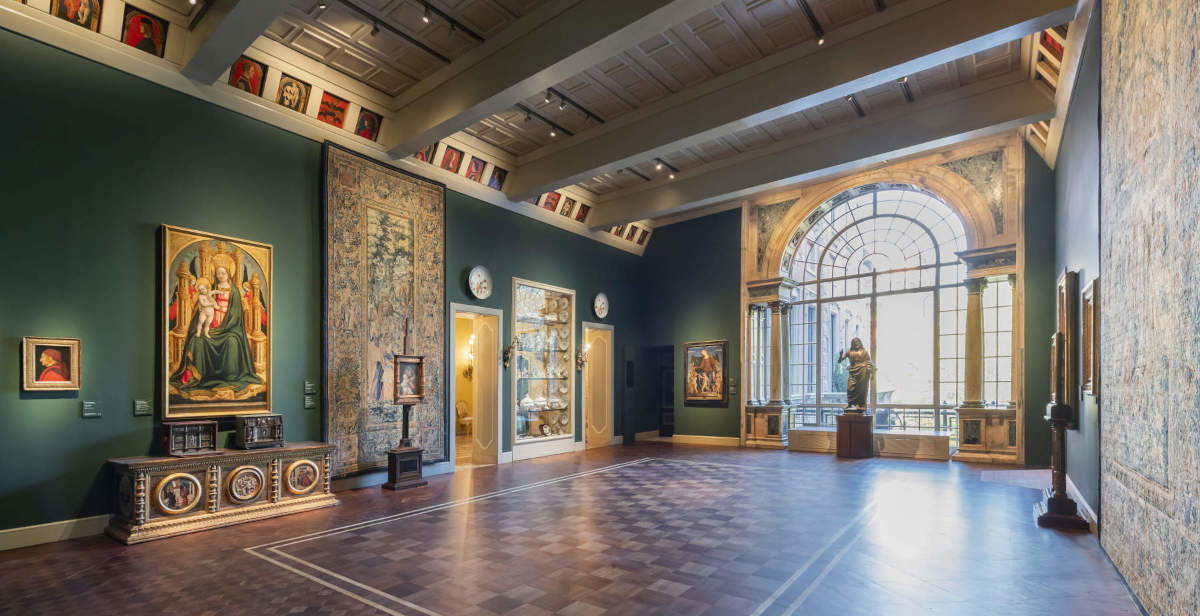
The Golden Salon was completed shortly after Poldi Pezzoli’s death in 1879. Documents preserved in the museum’s archives allow us to reconstruct the progress of the work through contracts, payments, and supplies. In the museum guide published in 1883, Bertini described the Salone as the centerpiece of the house, characterized by its gilded wooden ceiling—from which the room derives its name—and by walls decorated at the top with frescoes depicting cherubs and garlands of flowers and fruit. Another central feature of the room was the large Renaissance-style serliana window overlooking the garden. The structure was made of polychrome marble and featured columns with bronze capitals at the bottom, while the large round arch was decorated with rosettes.
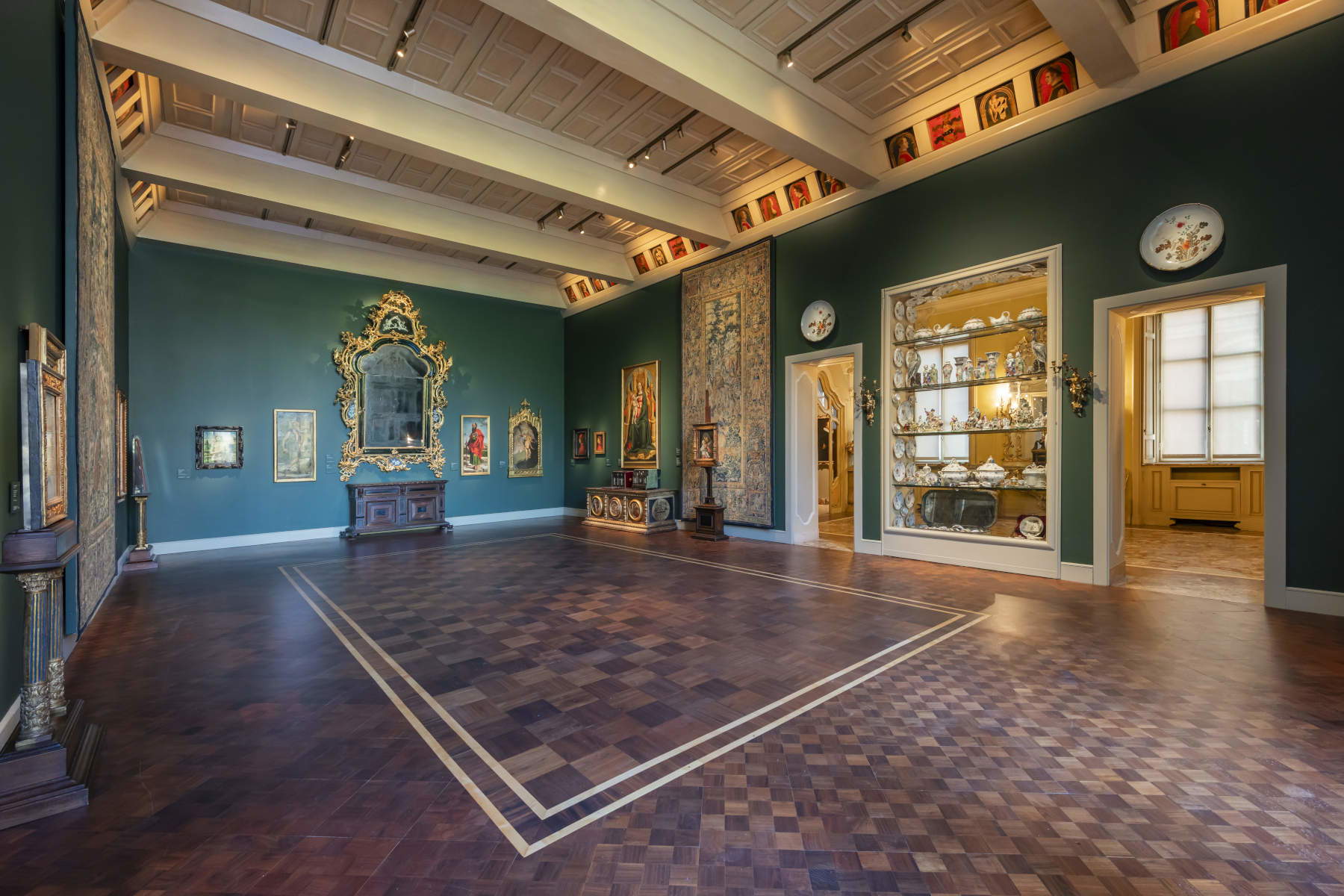
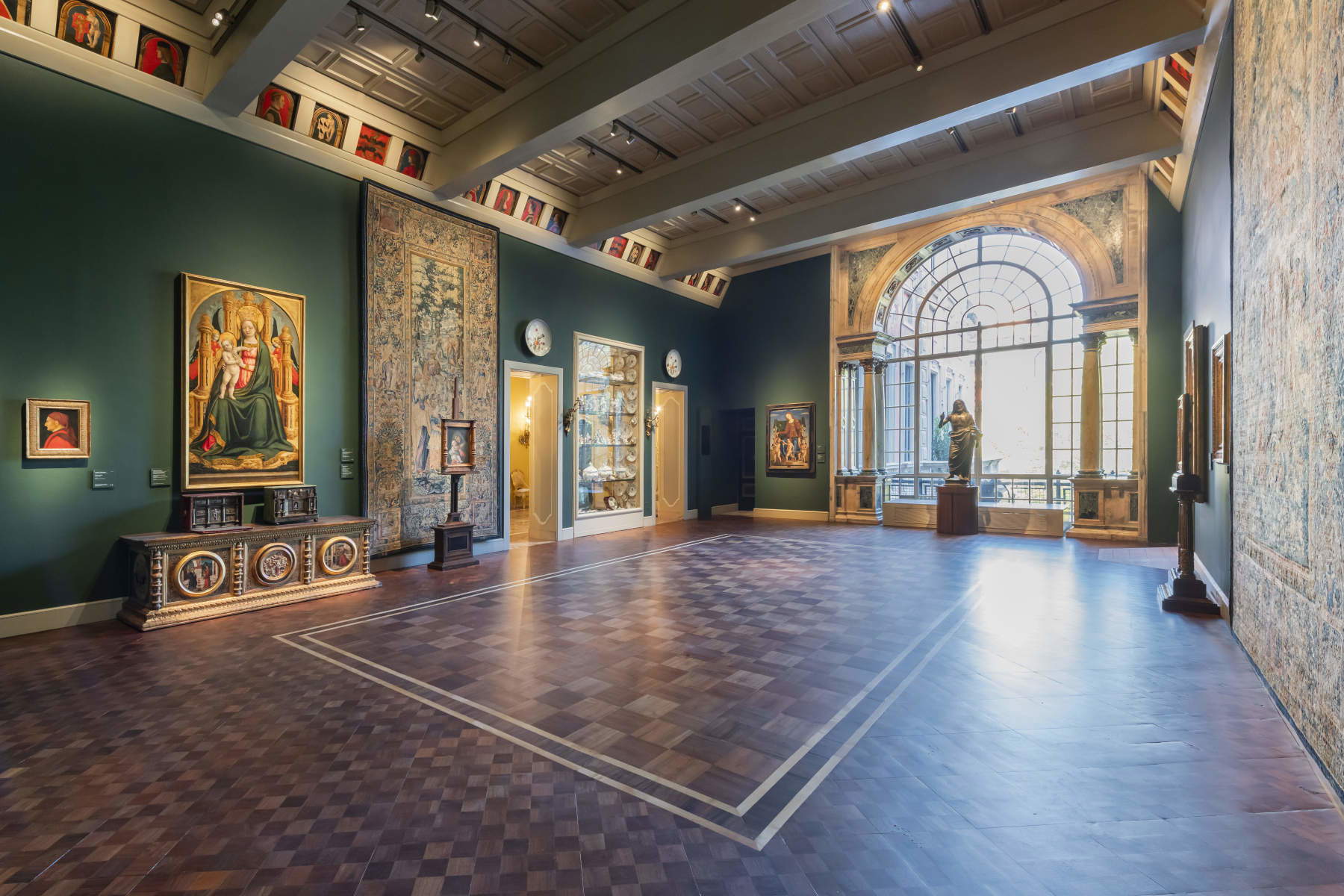
The contracts for the construction of the serliana date back to March 1876 and precisely reflect Poldi Pezzoli’s choices. For the selection of the marbles, several quintals of samples were shipped via a special transport arranged by the Ferrovia dell’Alta Italia: Varallo green, Siena pavonazzo, Carrara statuary marble, marble from Milan Cathedral, Ornavasso marble, and Portovenere marble. The samples had to be inspected, selected, and countersigned on the back to indicate acceptance.
Poldi Pezzoli also had a life-size plaster model made, based on a drawing by Lodovico Pogliaghi, intended to illustrate the cornices, panels, carvings, and decorations of the grand arch. The contracts were drawn up by Giuseppe Speluzzi, the site supervisor, and made out to the sculptors Giovan Battista Boni and Francesco Pellitti, who were commissioned to carry out the work based on Pogliaghi’s design. The arch’s decorations were made of Christofle galvanized metal, shipped from Paris—the same alloy used for the column base finials, capitals, and rosettes, each of which was unique. The use of this material reflected the convergence of technology, design, and the decorative arts that characterized the culture of the time. The contract stipulated that the work on the serliana was to be delivered by September 15, 1876, under penalty of a fine of 200 lire for each week of delay. That date—in 2026—marks the 150th anniversary of the scheduled delivery date.
The history of the Salone, however, has been marked by successive transformations and, above all, by war damage. In August 1943, during the bombings of World War II, the Poldi Pezzoli Museum, like other important Milanese landmarks, suffered severe damage that affected the 19th-century interior design of its galleries. After years of construction work and discussions regarding the reconstruction, the museum reopened on December 3, 1951, with the postwar restoration work entrusted to Fernanda Wittgens. In 1974, the Golden Hall was modified once again: it was decided to lower the ceiling by one meter, introducing a plasterboard structure in the shape of a lowered vault. This configuration—to which two large carbon fiber chandeliers were added in 2017—defined the room’s appearance until the most recent renovation.
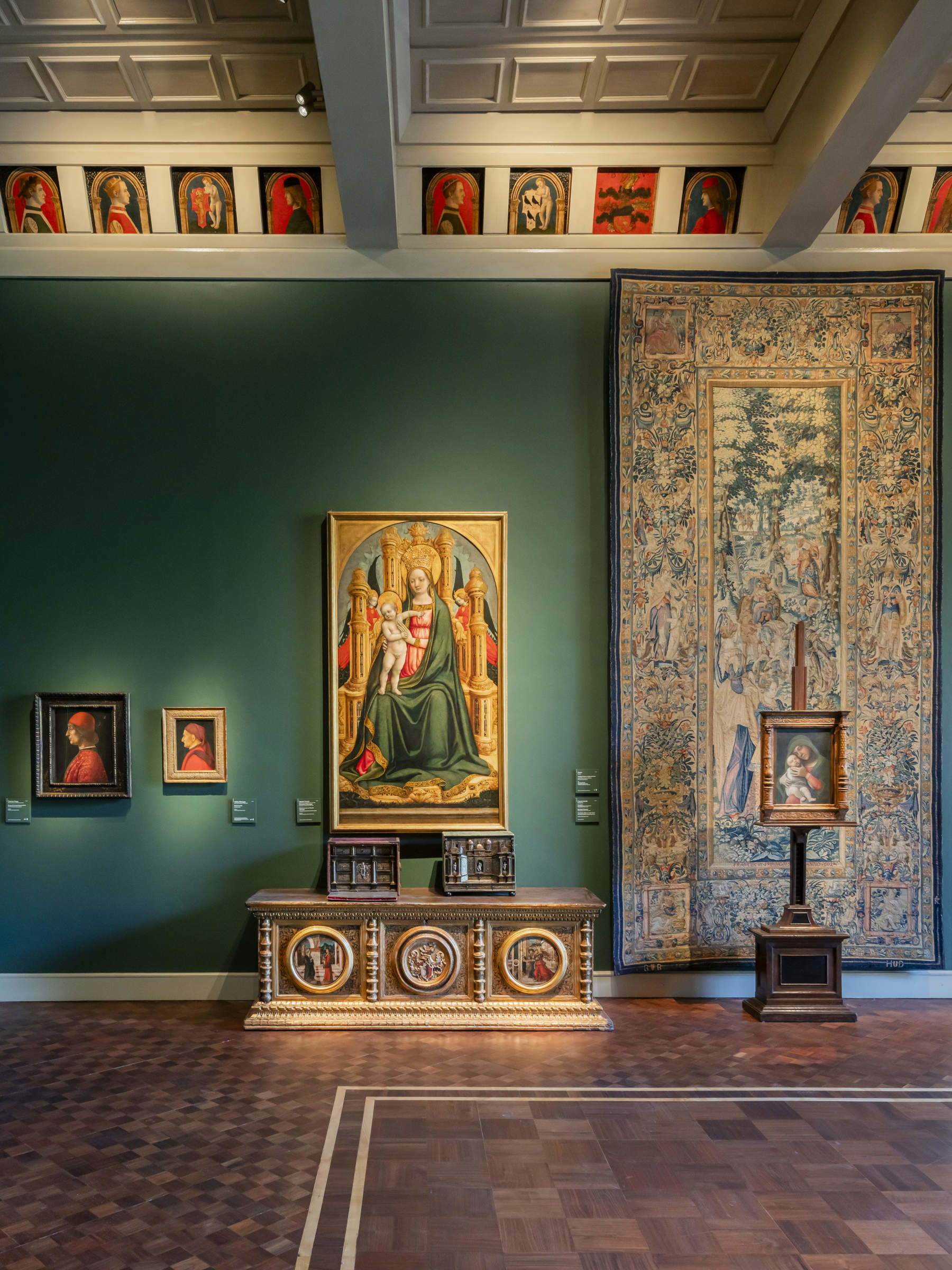
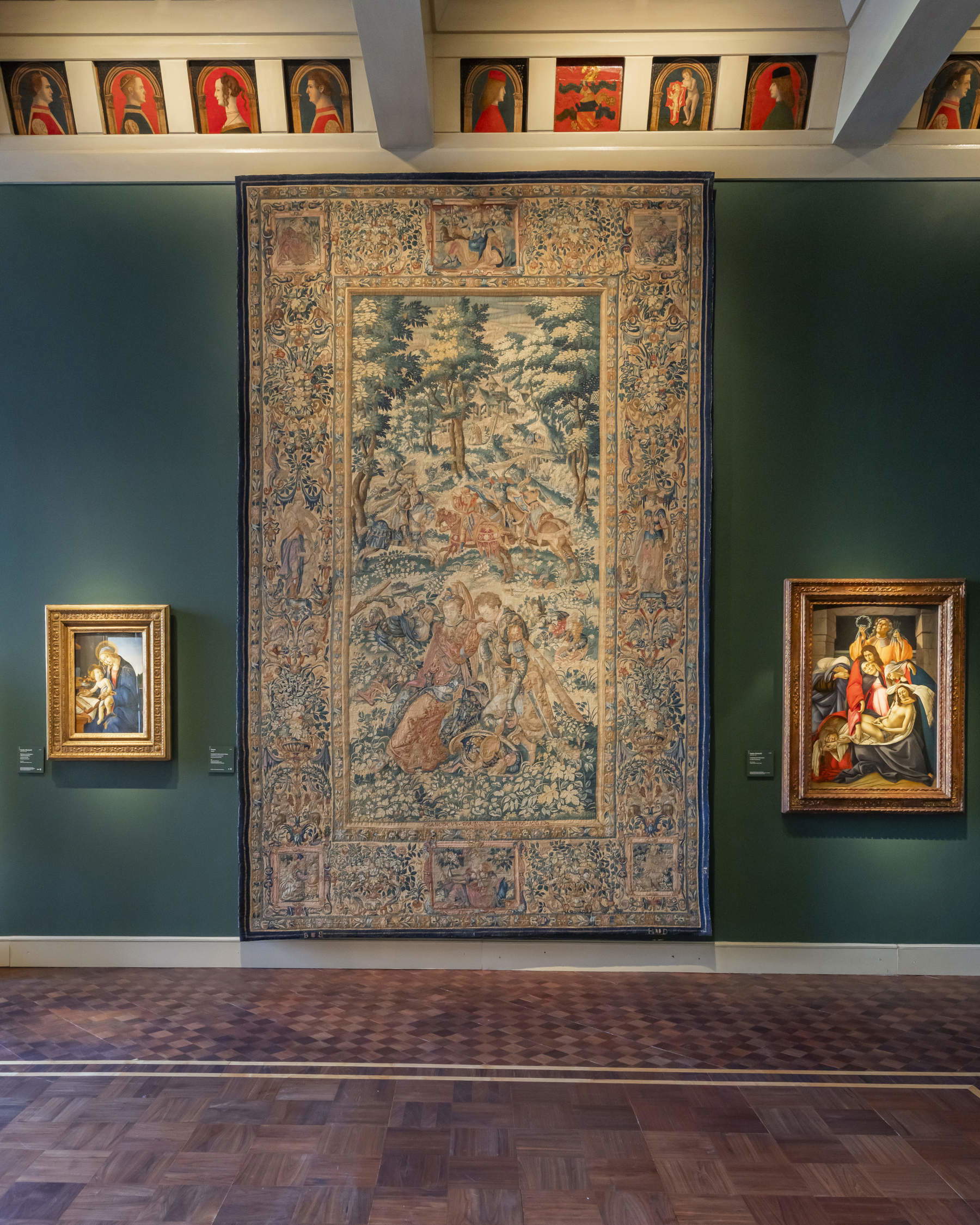
Lowering the ceiling had several consequences for the space. The upper part of the serliana and the large arch with its decorations were enclosed, altering the room’s architectural language. The large 18th-century mirror made of wood and Murano glass was also compromised by the new height and the curvature of the vault. The renovations also made it impossible to display two large tapestries by Françoise Spiering, depicting the *Stories of Amadigi di Gaula*, which had been restored in 2005. The two works, measuring 430 x 266 and 430 x 206 centimeters, are examples of the Flemish tapestry maker’s work, which he created in 1602.
The original ceiling was also dismantled. Of the 98 panels that made up the ceiling, 54 were installed in 1974 in the three galleries dedicated to Lombard Renaissance painting, while the other 44 were transferred to storage, where they remain to this day in perfect condition.
A decisive step for the new project came in January 2025, when a video inspection inside the plasterboard vault made it possible to assess the condition of the underlying structures. The investigation revealed that the wooden ceiling built by Wittgens in 1950—intended to cover the beams and accommodate the panels—had been completely demolished in 1974. However, the marble arch of the serliana, with its bronze rosettes, was found to be in excellent condition.
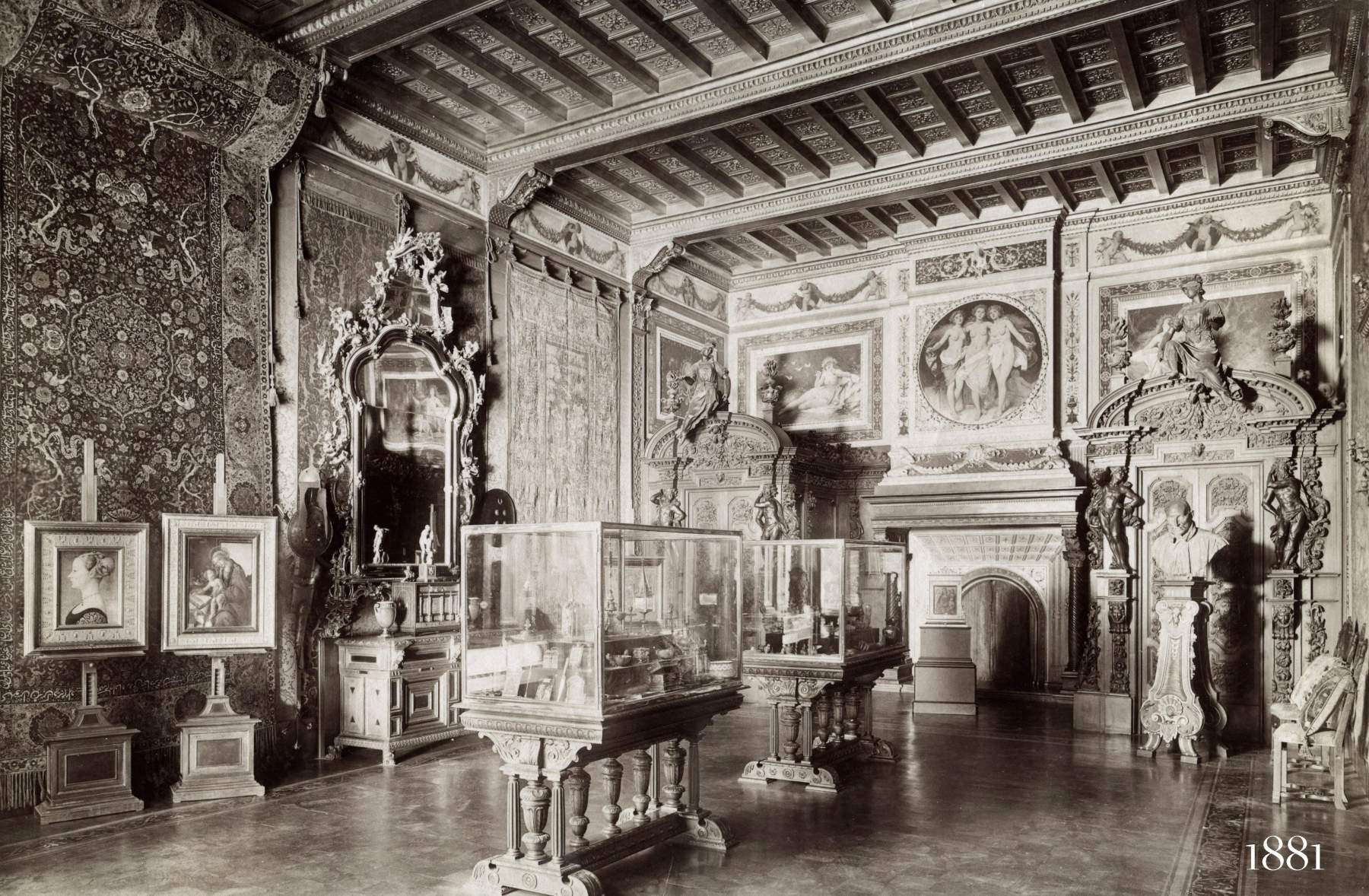
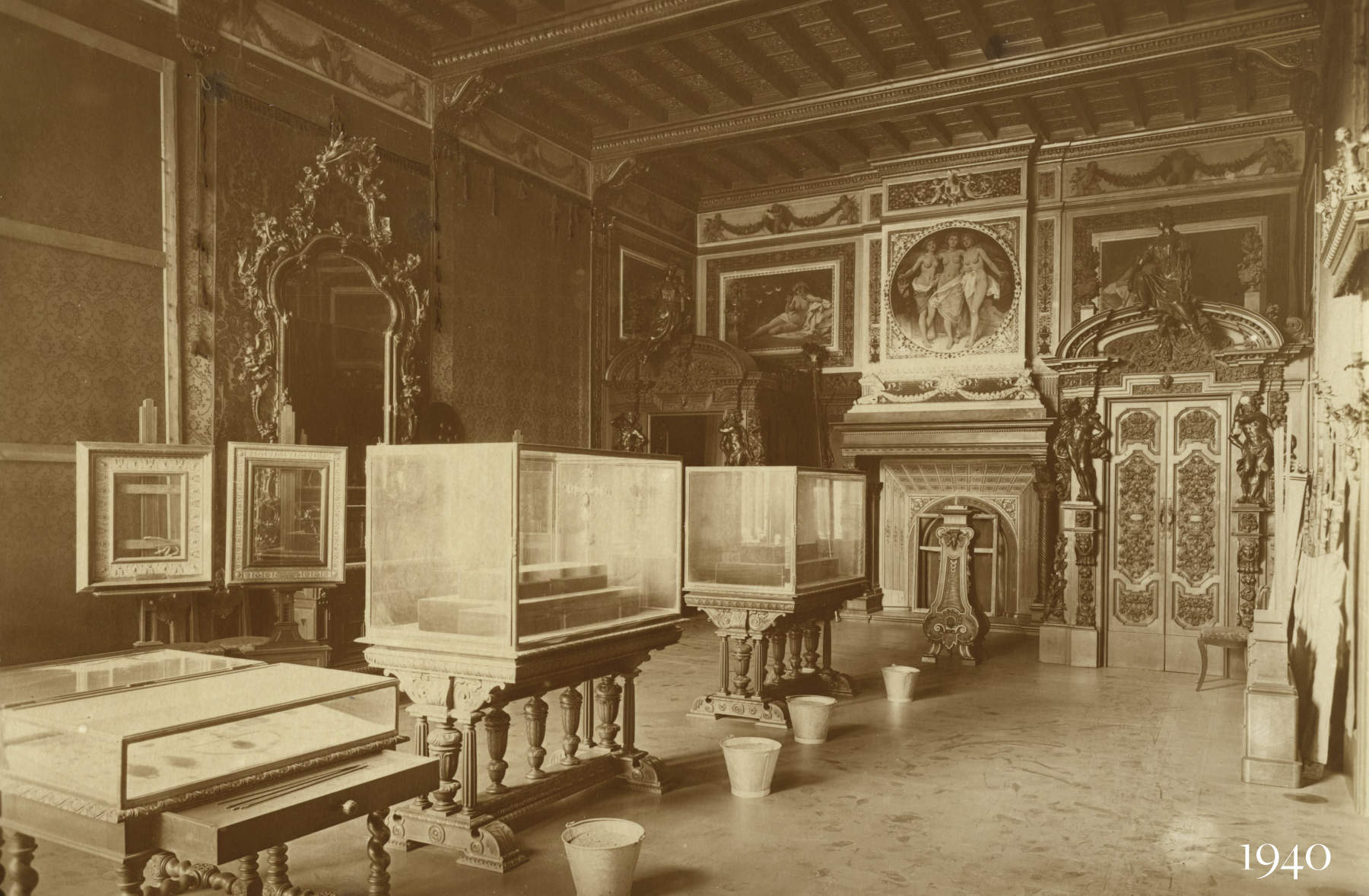
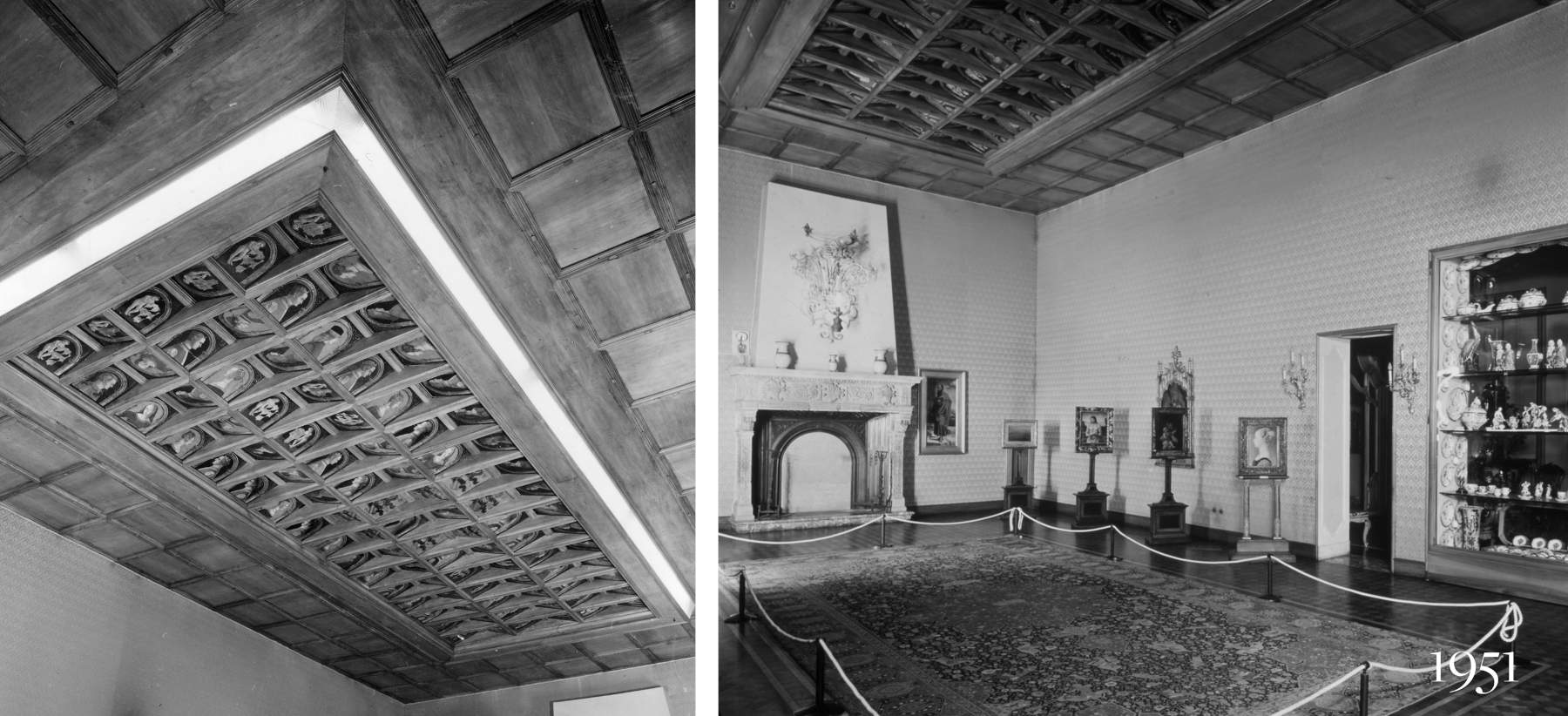
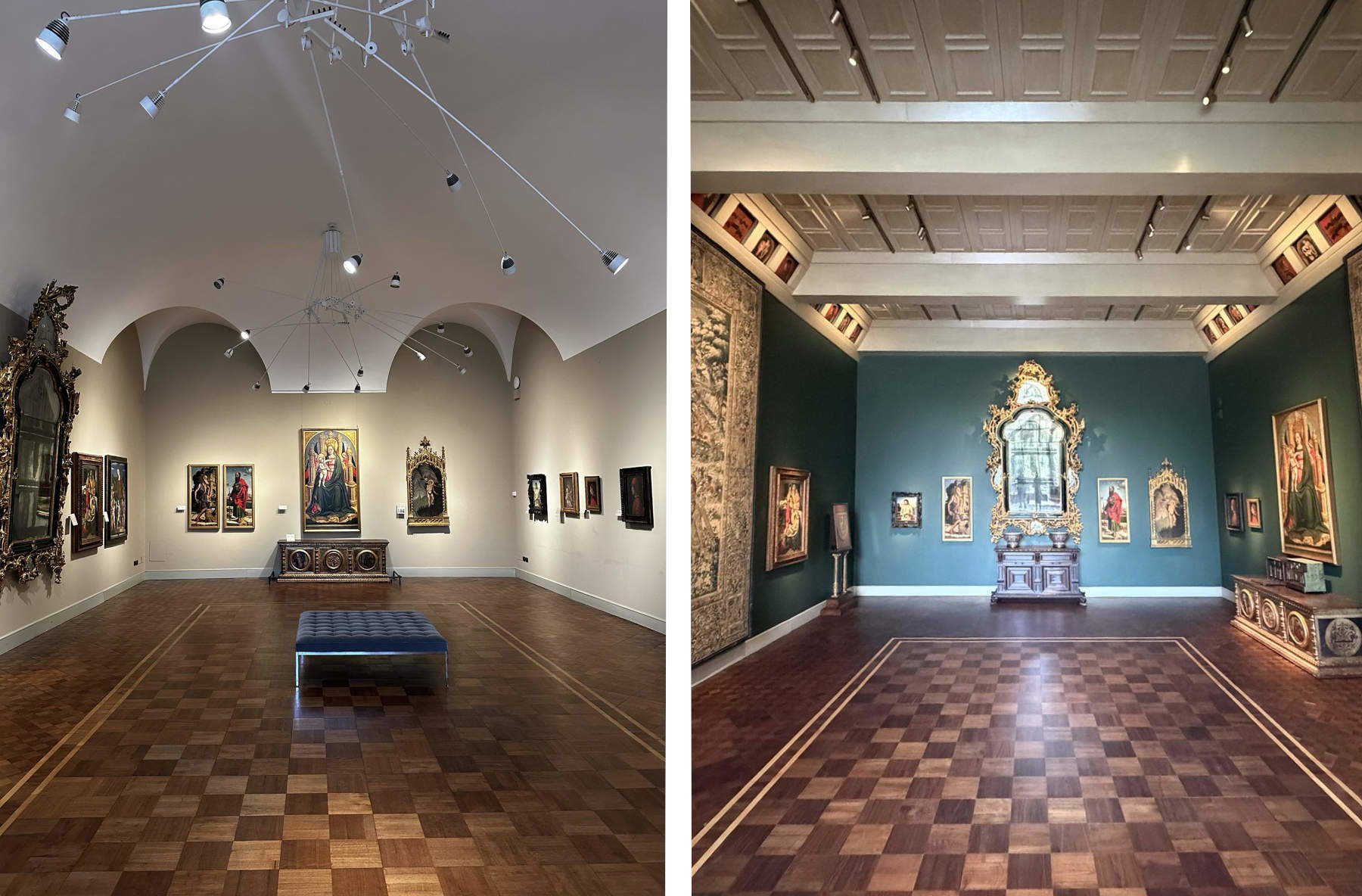
Based on this information, the current restoration project has begun, aiming to restore the room’s original volume and the large window arch with its decorations. The project also includes the reinstallation of the Venetian mirror and the two Flemish tapestries. The project also provides an opportunity to restore the works, conduct in-depth studies of the collection, and reconstruct the history of the house-museum from its origins to its postwar reconstruction.
The restoration of the Golden Hall is part of a broader reflection on the transformation of the Poldi Pezzoli Museum. Since 1951, the rooms have in fact been modified several times: in the 1970s, the Golden Hall and the Lombard rooms; in the 1990s, the painting galleries; in 2000, the Armory; in 2006, the Hall of Gold; and in 2008, the Trivulzio and Collector’s Rooms. In 2017, the addition of four new rooms allowed for a further expansion of the exhibition spaces. The transformations of recent decades have also addressed changing security requirements, facility upgrades, the growth of the collections, and international museum standards, gradually altering the character of this 19th-century house museum. Over the past three years, the museum has therefore launched a comprehensive project aimed at integrating these various interventions, harmonizing their design languages, and reconstructing the institution’s identity through the study of historical sources.
To present the new layout of the Golden Hall to the public, admission to the Poldi Pezzoli Museum will be free on Saturday, September 19, from 10 a.m. to 6 p.m. Furthermore, starting September 24, guided tours will be organized every Thursday during the lunch break, focusing on the restoration of the space and the works housed there.
“The care and enhancement of the house-museum’s collections are part of the initiative launched in 2023, with the goal of ensuring the long-term conservation, understanding, and transmission of our heritage,” states Alessandra Quarto, director of the Poldi Pezzoli. “This commitment stems from an awareness of the responsibility that every cultural institution has toward its own history and toward future generations. Preserving memory, deepening our understanding of the past, and restoring its richness and values, so that they may continue to serve as a source of awareness and inspiration for the present and the future.”
“Over six decades and through more than 80 projects, the World Monuments Fund has worked alongside Italian partners to protect some of the world’s most significant sites,” says Bénédicte de Montlaur, President and CEO of the World Monuments Fund. “The Poldi Pezzoli Museum is one of Europe’s most important historic house museums, and its founder was a pioneer in the concept of exhibiting art within spaces designed specifically for it—a model that went on to shape institutions such as the Isabella Stewart Gardner Museum and the Frick Collection. Together with Alessandra Quarto and the museum team, we have restored the Salone Dorato to its original proportions. This project demonstrates how a site damaged by war can be restored through research and careful conservation, paying tribute both to the vision of Gian Giacomo Poldi Pezzoli and to the postwar reconstruction led by Fernanda Wittgens.”
“We are very proud that the Salone Dorato marked the opening of the World Monuments Fund’s new Italian office,” says Fiorella Ballabio, director of the World Monuments Fund in Italy. “What moves me most about this hall is the attention to every detail. Gian Giacomo Poldi Pezzoli personally inspected each marble sample and brought together the finest artisans from the Brera Academy to realize his vision. Much of their work remained hidden for half a century. Now, 150 years after the serliana was built, its grand arch is visible once again, the Flemish tapestries have returned to the walls, and the room is once more the heart of the home envisioned by Poldi Pezzoli.”
 |
| Milan: The Golden Hall at the Poldi Pezzoli Museum Returns to Its 19th-Century Layout |

Warning: the translation into English of the original Italian article was created using automatic tools. We undertake to review all articles, but we do not guarantee the total absence of inaccuracies in the translation due to the program. You can find the original by clicking on the ITA button. If you find any mistake,please contact us.





















 IT
IT FR
FR DE
DE ES
ES CN
CN


