


by
Federico Giannini  @federicogiannini1
, Ilaria Baratta 02/11/2026


Categories: News Focus / Disclaimer
How has Artissima changed? The figures from the last ten editions reveal a profound transformation: the number of Italian galleries that remain loyal to the event is growing, while foreign galleries are participating on an increasingly occasional basis. The composition is also shifting: more Italian galleries, fewer first-time participants, and a particularly high rate of turnover among international galleries. Here’s what the data shows.
How has Artissima changed over the past ten years? How many galleries remain loyal to the fair, how many have tried it just once, how many drop out, how many return, and what do the changes in the fair’s composition suggest? We tried to compile statistics from the lists of exhibitors for the last ten editions (excluding the 2020 “Unplugged” edition, as it cannot be compared with the others), specifically from 2016 to 2026: the data allow us to measure with some precision how much the Turin fair changes from one year to the next, how much it relies on a core group of returning galleries, how truly international it is, and so on. The numbers reveal an event with two distinct aspects: a very loyal Italian contingent, which over time has become the majority, and a much more fluid international contingent, which is largely renewed with each edition.

First, a few methodological notes: for our data, we considered galleries rather than booths; therefore, if a booth was shared by two galleries in a given edition, we counted them as two separate galleries. We then compiled the statistics taking into account name changes, venue changes, and mergers (in the case of two merged galleries, we assigned historical continuity to one of them rather than treating the new entity as a debutant), classifying as Italian those galleries with their main headquarters in Italy, and using the 2016 edition as the baseline for determining debuts. All the debuts we consider in this article, therefore, should be regarded not as absolute debuts but as debuts relative to the first edition we considered for this brief study.


Across the ten editions considered, 697 different galleries exhibited. The total number of appearances—that is, the sum of the galleries present in each edition—is 1,907, which means that each gallery participated in Turin an average of 2.7 times. However, the average masks a highly asymmetrical distribution: nearly one in two galleries—333 out of 697, or 47.8%—appeared only once in these ten editions. On the other hand, 364 galleries—52.2%—have participated at least twice; 176—25.3%—have participated at least four times; and 103—14.8%—have participated at least six times. On the other hand, 28 galleries participated in all ten editions considered (4% of the total): 26 are Italian (Alberta Pane, Apalazzo, Colophonarte, Continua, de’ Foscherari, Enrico Astuni, Franco Noero, Frittelli, Giorgio Persano, Laveronica, Lia Rumma, Mazzoleni, Mazzoli, Monica de Cardenas, Monitor, P420, Primo Marella, Prometeo, Raffaella Cortese, Repetto, Rolando Anselmi, Simóndi, SpazioA, Thomas Brambilla, Tucci Russo, and Vistamare) and 2 international galleries (Gregor Podnar and Piero Atchugarry).

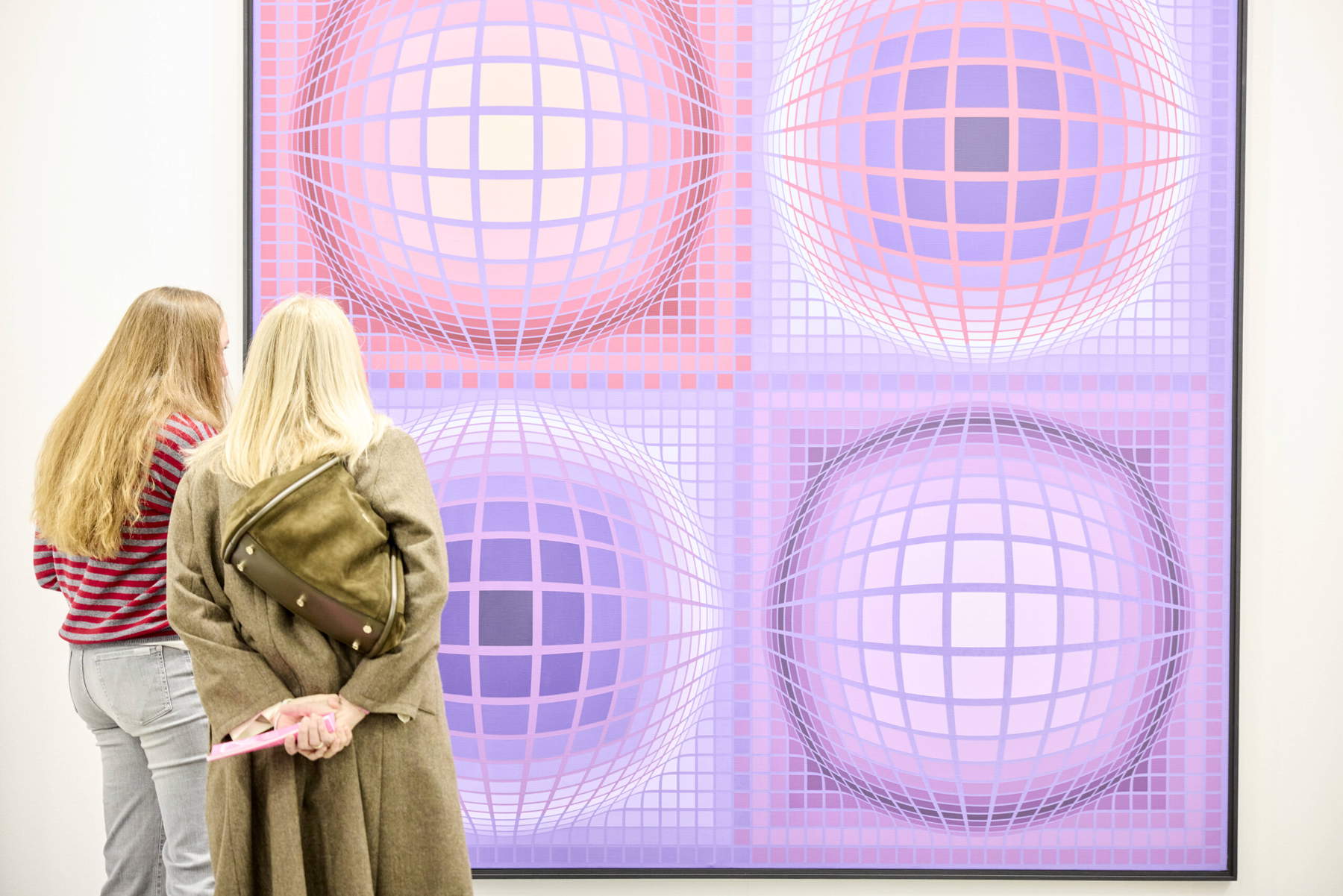
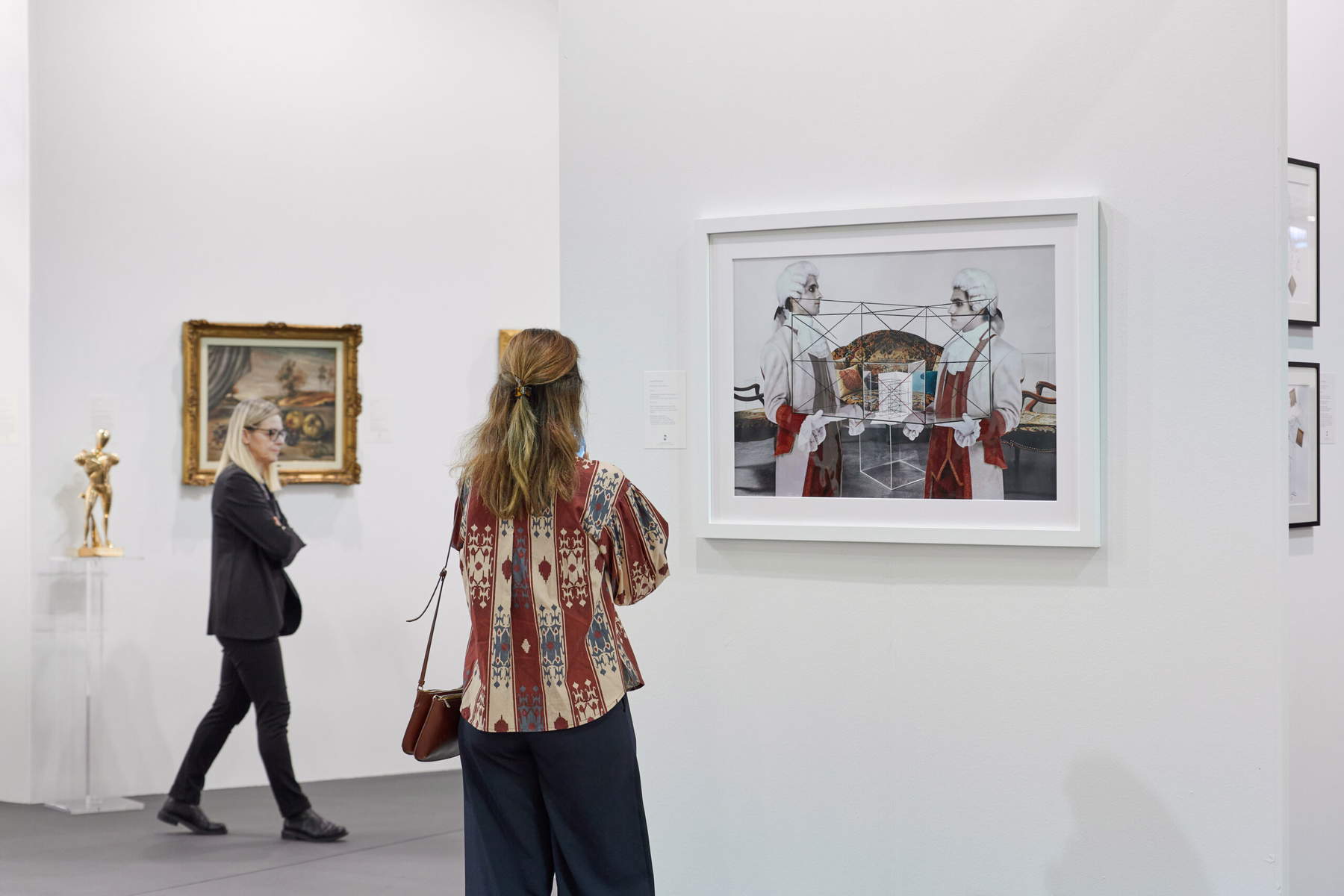
The core group, however small, plays a major role in the fair’s operations: the 103 galleries with at least six participations account for 43.2% of all participations recorded over the decade, and 40.5% of the exhibitors at the 2026 edition had participated six times or more over the decade. It can therefore be said that Artissima relies on a minority of recurring galleries, surrounded by a large group of occasional participants.
The distinction between Italian and foreign galleries is the factor that most significantly alters the interpretation. For this analysis, any gallery that had a location in Italy during at least one edition was considered Italian—even if it later moved or opened elsewhere—so as not to treat a gallery that changes cities as two separate entities. Using this criterion, there are 195 Italian galleries and 502 foreign galleries: the former have participated an average of 4.7 times, while the latter have participated an average of 2 times. Among the Italian galleries, only 22.1% have participated just once, while among the foreign galleries, 57.8% have done so. Among those with at least six participations, 78 are Italian and 25 are foreign: 40% of the Italian galleries reach this threshold, compared to just 5% of the foreign ones.
In terms of the scale of the editions, the data show that the fair has remained essentially stable. The number of galleries participating in Turin was 193 in 2016, 210 in 2017, 189 in 2018, 207 in 2019, 178 in 2021, 184 in 2022, 186 in 2023, 195 in 2024, 180 in 2025, and 185 in 2026. The fluctuation is modest, and the sharpest decline occurred in 2021—the first edition following the hiatus—with about thirty fewer exhibitors than in 2019. What has shifted, while remaining largely constant, is the composition. The share of Italian galleries rose from 38.9% in 2016 to 53.0% in 2026, and in absolute terms, the number of Italian galleries increased from 75 to 98, while the number of foreign galleries decreased from 118 to 87. The trend is not linear: the Italian share had already risen to 44.8% in 2017, fluctuated between 43% and 46% through 2019, exceeded 50% in 2021, stayed around 49% in the 2022–2023 period, and has stabilized between 52% and 54% since 2024. The peak occurred in 2024, at 53.8%, and the 2026 edition came in just below that, at 53.0%. It can nevertheless be said that Artissima is becoming increasingly Italian and less international, although the foreign presence—despite having fallen by about ten percentage points over ten years—remains strong.
To understand the source of this shift, we need to look at retention rates—as we’ve termed the percentage of galleries present in one edition that return for the next. Overall, the average retention rate across the nine transitions between consecutive editions is 61.4%, but the figure is sharply divided: 80.8% for Italian galleries and 43.7% for foreign ones. In practical terms, with each transition from one edition to the next, approximately four out of five Italian galleries remain in Turin, while fewer than one in two foreign galleries do. Few Italian galleries leave, whereas the foreign galleries that do leave are replaced by others—largely new ones. The corresponding turnover rate—that is, the proportion of galleries in the current edition that were not present in the previous one—averages 38.5% of the total, 21.7% for Italian galleries, and 55.1% for foreign galleries. Such a high turnover rate among foreign galleries is neither a negative nor a positive sign in and of itself: it may indicate a fair capable of attracting new international galleries each year, but it may also reflect the difficulty of retaining them, and the data on dropouts suggest that both interpretations contain a grain of truth. In any case, it seems quite clear that Italian galleries—at least those that exhibit with some regularity—appear to view Artissima as a relatively stable event, almost a structural component of their fair schedule, while foreign galleries seem to view participation as a more occasional investment, to be evaluated on a case-by-case basis.
One period in particular highlights the fragility of the foreign contingent: the span from 2019 to 2021. During that period, overall retention dropped to 46.4%—the lowest figure of the decade—and for foreign galleries to 28.8%, compared to 69.7% for Italian galleries. Of the 207 exhibitors in 2019, only 96 returned in 2021. It should be noted, however, that between the two editions there was the 2020 edition, which took a different format and was excluded from the analysis: the data therefore measure a span of two calendar years, and it is not possible to distinguish how much of the decline is due to the context of that period and how much to dynamics already underway.
After 2021, exhibitor retention gradually rebounded: 57.3% in the 2021–2022 transition, 61.4% in 2022–2023, 68.3% in 2023–2024, 63.6% in 2024–2025, and 68.3% again in 2025–2026. At the same time, the turnover rate fell from 46.1% in 2021 to 31.1% in 2025, before rising slightly to 33.5% in 2026. In other words, the fair has appeared more stable over the past three years than it was in the first half of the decade.
The same trend can be seen among the “debutants”—defined, as mentioned earlier, as galleries making their very first appearance during the period under consideration. In 2017, there were 85 such galleries, accounting for 40.5% of the exhibitors. Since then, the number has fallen almost continuously to 35 in 2025 (19.4%), before rising to 41 in 2026 (22.2%). Overall, 504 first-time appearances were recorded from 2017 to 2026. Of these, 145 were galleries listed as “New Entries,” the section dedicated to young galleries that have been in operation for less than five years. Essentially, 71% of the galleries making their first appearance in the decade do not come from the section reserved for young galleries, suggesting that the fair has expanded its scope primarily with operators already established elsewhere. The number of declared “New Entries” ranges from 12 to 25 per year, peaking in 2021, and accounts for between 6% and 14% of exhibitors.
At the same time, the average tenure of the exhibitor pool has increased. Galleries that had already participated in at least three previous editions accounted for 38.2% of the total in 2019 and 53.5% in 2026. This is, of course, an indicator based solely on presence in Turin and not on the galleries’ actual age or the section to which they belong, but the trend is consistent with the decline in first-time participants and the increase in repeat participation. In 2026, 22.2% of exhibitors are making their debut, 24.3% have participated once or twice, and 53.5% have participated at least three times.
The flip side of stability iswithdrawal. When a gallery no longer appears from one edition to the next, two phenomena can be distinguished:temporary absence—that is, followed by a return—andprolonged withdrawal. For this second category, we adopted a conservative threshold, defining “permanent withdrawal” as an absence spanning at least three consecutive editions without a return by 2026. Using this criterion, 391 galleries have left the fair—56.1% of the total—while 185, 26.5%, are present in 2026, and 121, or 17.4%, have been absent for one or two editions and cannot yet be classified, at least according to this criterion. Compared to the galleries present in the previous edition, the permanent withdrawal rate averages 29.0% in the evaluable transitions—those up to 2023–2024—with values ranging from 24.9% in the first transition to 37.2% in the 2019–2021 transition. For Italian galleries, the average is 10.8%; for foreign galleries, 44.5%. In practice, in every transition between two editions, about four out of ten foreign galleries present in Turin end up not returning, while for Italian galleries, the rate is about one in ten.
Among the best-known names that appear to have permanently left artissima are the Italian galleries Massimo De Carlo (which participated in 2018 and 2019 but did not return) and Podbielski (from 2016 to 2021), and, among the international galleries, Jocelyn Wolff (present from 2016 to 2023), Hubert Winter (present from 2016 to 2023), and Air de Paris (present sporadically until 2021). Withdrawal, in and of itself, is not an indicator of the fair’s quality. An exhibitor may, in fact, stop attending an event either because they no longer consider it necessary—having succeeded in selling elsewhere—or because they deem their participation unprofitable. For international galleries, there may also be other explanations, such as a potential increase in participation and transportation costs, or scheduling conflicts with other fairs on the international calendar. Not to mention that a gallery may simply have legitimately chosen to change its business strategy.
Returning after an absence is a minority phenomenon but not a marginal one: over the decade, there were 669 instances of withdrawal—that is, cases in which a gallery present at one edition was absent from the next—and in 157 cases (23.5%), the gallery subsequently returned. Returns are much more frequent among Italian galleries (38.6%) than among foreign ones (18.8%). Most returns occur early: 81 galleries returned after missing just one edition, 41 after two, 16 after three, and only 19 after four or more editions. Thus, in 78% of cases, those who return do so within two editions. Calculating the probability of return based solely on observable instances for the period in question, the proportion of galleries returning within one edition is 13.2%, within two is 21.3%, within three is 24.9%, and then stabilizes around 29–30%. After three editions of absence, the probability of seeing a gallery return increases only very slightly, confirming the reasonableness of a three-edition threshold for defining an exit as definitive. The longest case—eight editions of absence before a return—involves a single gallery, the Brazilian Luisa Strina, which participated in 2016 and again in 2026.
There is also an intermediate category of intermittent participation. There are 58 galleries that skipped only one edition at a time and returned, 75 that returned after an absence of at least two consecutive editions, and 60 that joined after 2016 and remained without interruption through 2026. In contrast to these groups, 292 galleries—41.9% of the total—participated only once and did not return, while 41 are making their debut in 2026. This is a large and largely international audience that passes through the fair without settling in.
Another measure of continuity is the comparison between the first and final editions of the time period. Of the 193 galleries present in 2016, 54 are also present in 2026, representing 28.0%. Among Italian galleries, the rate is 56.0%—42 out of 75—while among foreign galleries, it is 10.2%—12 out of 118. Of the 54 galleries present in both editions, 28—as mentioned above—have never missed an edition, and 26 have had at least one absence in between (meaning they have participated in at least nine editions). On the other hand, 29.2% of the galleries in 2026 were already in Turin ten years earlier, while the remaining 70.8% were not present in 2016. Ten years later, seven out of ten galleries from 2016 are no longer at the fair.
Taken together, these figures paint a fairly clear picture of the turnover that has affected Artissima. Meanwhile, the fair has not changed in size nor has it ceased to be international, but it has evidently shifted its focus—a reason that might explain (although, of course, these figures cannot prove it) why the Turin event appears less and less like a fair focused on emerging art and more and more like a fair with a much more established commercial dimension (it being understood that sales, of course, are the ultimate goal of any fair) where, for example, there is an increasingly large section dedicated to modern art (so much so that some gallery owners who deal primarily in modern art or established names, such as Tornabuoni, Biasutti & Biasutti, or Matteo Lampertico, have only recently begun participating—which is not statistical proof of an overall shift in the offerings but nonetheless provides a basis for discussion): the Italian contingent has grown from just over a third to more than half of the exhibitors, though this is primarily due to greater stability and, to a lesser extent, to the decline in the number of foreign galleries (it is therefore natural that if the Italian core remains stable and well-established, and the commercial offerings of the historic galleries undergo few changes, the fair simultaneously conveys an impression of solidity and caution). The foreign contingent continues to ensure a large influx of new participants each year, but it has a low retention rate, and 2021 demonstrated just how sensitive this influx can be to external factors.
Even the data on stability (more than 4 out of 10 galleries having participated in at least six editions) can be interpreted positively or negatively. On the positive side, it conveys the idea of a fair in which many galleries consider it worthwhile to invest frequently, suggesting the impression of a successful event where sales are made. And, of course, it also conveys the image of a credible fair: an event like Artissima could not survive on newcomers or occasional participants alone. On the other hand, however, it could be interpreted as a problem of the system becoming increasingly closed off, with little openness to the new. In short, one has to wonder whether Artissima has reached a greater level of maturity or is gradually narrowing its horizons. Furthermore, to answer this question, we would need more qualitative data than quantitative data.
Trends in recent years, however, point to a phase of consolidation—that is , fewer debuts, a decline in turnover, and more galleries with a history in Turin. This data, however, should be interpreted with caution: a more stable fair is also one that depends to a greater extent on a group of recurring galleries, and the low number of debuts may reflect either a selection process more oriented toward continuity or a reduced ability to attract new participants—which is why it is not possible to draw definitive conclusions on this point. Data based solely on exhibitor names do not, in fact, allow us to determine which of the two explanations prevails, and verifying this would require additional information, such as the age of the galleries, the entry category, rejected applications, and the reasons for non-renewal.
The data suggest a possible shift in the fair’s positioning, at least over the past ten years: from an international event with strong appeal toward a system increasingly rooted in the Italian market, which retains an international component but struggles to transform it into a stable community of exhibitors. This does not necessarily mean that Artissima has become less international in terms of the quality of its offerings, but simply that the continuity of international participants does not appear to be the main characteristic of the Turin fair. A fair can have a very high turnover of international participants and still present highly interesting offerings: the question, if anything, is whether this turnover is the result of a strategy of openness or of a difficulty in retaining participants. Furthermore, the data might suggest that Artissima is gradually replacing part of its role as a “laboratory,” so to speak, with a role focused on market consolidation.
This market consolidation could be a natural development, especially given the sharp increase in the presence of Italian gallery owners. Artissima’s audience, after all, remains entirely Italian: how does this characteristic affect the fair’s composition? And is it possible to draw any conclusions to the contrary? The fair’s stability could stem, for example, from the public’s low appetite for risk: the fair might therefore rely on a strong core of galleries presenting a commercial offering with little fluctuation, suited to an audience that prefers purchases perceived as safer or simply more in line with a recognizable taste (a fair can be a place where what the market already recognizes is presented, and a place where one seeks to anticipate what might emerge on the market in the future—functions that are certainly not incompatible but that inevitably influence the composition of exhibitors: while one might once have said that at Artissima the second dimension prevailed, today the opposite seems to be the case). An audience that might therefore favor galleries that return and cater to its preferences, rather than foreign galleries that offer something new, perhaps sell little, and are therefore less likely to return. A fair attended predominantly by Italian collectors could favor galleries that know the domestic market better and are better able to build lasting relationships with potential buyers. The fair’s management could therefore encourage this dynamic by steering the composition of exhibitors in a specific direction.
Warning: the translation into English of the original Italian article was created using automatic tools. We undertake to review all articles, but we do not guarantee the total absence of inaccuracies in the translation due to the program. You can find the original by clicking on the ITA button. If you find any mistake,please contact us.