





Rome, 1621. That year, the physician, scholar, and collector Giulio Mancini took an interest in a large canvas by Rutilio Manetti (Siena, 1571–1639) that had recently arrived in the city: it wasthe Allegory of the Four Seasons, painted by the Sienese artist around 1620. The physician, scholar, and collector did not merely admire it; he also sought to acquire a replica for his own collection. Four centuries later, that same work has entered the collections of the National Museums of Siena and is currently on display at Palazzo Chigi Piccolomini alla Postierla. The work will be presented to the public on September 16.
“The acquisition of Rutilio Manetti’s*Allegory of the Four Seasons* underscores the Siena National Art Gallery’s commitment to being, more than ever, the leading museum for the study of Sienese painting,” states Axel Hémery, director of the Siena National Art Gallery. “The 17th century has long remained in the shadow of medieval and Renaissance painting. The Pinacoteca’s new exhibition layout, which will be unveiled by the end of the year, will offer a more comprehensive narrative of the evolution of Sienese painting. The final section, dedicated to the 17th century, will be completely transformed compared to the previous layout, thanks to new acquisitions and the transfer of works between Palazzo Chigi alla Postierla and the Pinacoteca. Three of the four galleries will be organized around a leading figure of this school, ranging from Francesco Vanni to Rutilio Manetti and Bernardino Mei.The Allegory of the Four Seasons is a painting that marks a turning point and symbolizes a new direction through its visual impact, its history, and its iconography.”
As Giulia Cantoni, an art historian, explains, the story of the *Allegory of the Four Seasons* is documented in an interesting collection of letters preserved atthe Archive of the Society for the Execution of Pious Dispositions in Siena, as part of the Mancini Estate. It is the letters written by Giulio Mancini to his brother Deifebo that convey the extent of the interest the painting aroused in early 17th-century Rome. On January 2, 1621, Mancini announced the arrival of a large painting depicting the four seasons, created by Rutilio, emphasizing how it was regarded in Rome as a work of great quality and expressing his own appreciation, along with that of Maestro Astolfo. In the same letter, he considered the possibility of purchasing a similar work for himself, viewing it as an investment that would not lose value over time.
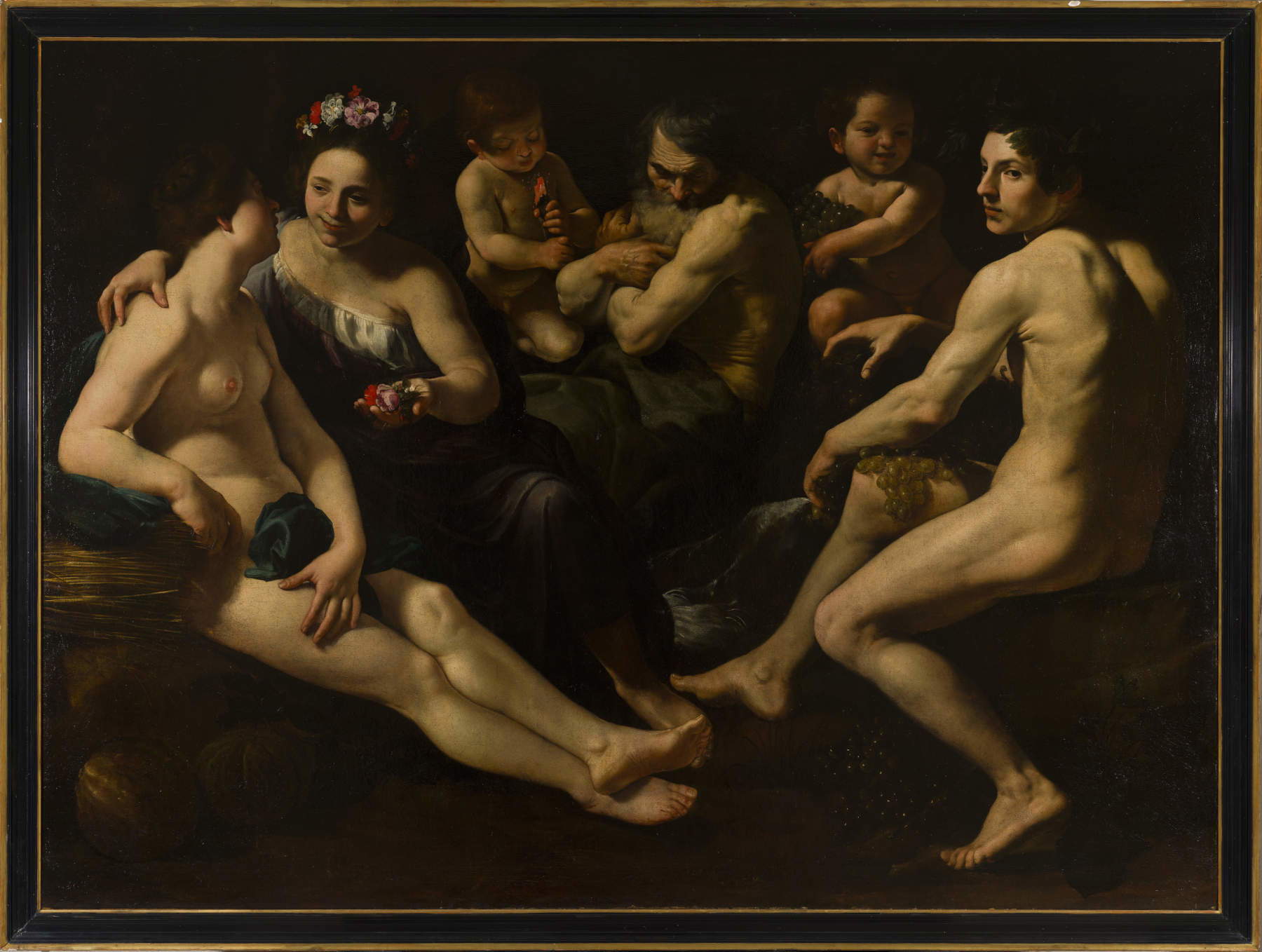
A few weeks later, on January 16, 1621, Mancini returned to the subject of the painting, emphasizing its quality and noting that not all of Manetti’s works were equally successful.The Allegory of the Seasons, according to the collector, was a special case. Mancini also expressed surprise at the circumstances of the commission: such a large and ambitious painting had been commissioned not by a cardinal (as he might have expected), but by a craftsman, a certain “Andrea raccamatore” who made tapestries. The commission could not, therefore, be attributed to Cardinal Orsini, a prominent figure in the Roman Curia. The painting was already part of a context in which Manetti’s work was attracting attention. Its history would later become directly intertwined with that of Giulio Mancini himself. Through the recommendation of Cardinal Scaglia and subsequently Cardinal Maurizio di Savoia, Mancini worked to ensure that Manetti was awarded the Knight’s Cross. In exchange, the collector hoped to receive a replica ofthe *Allegory of the Seasons* for his own collection.
However, the project did not come to fruition. The reasons are unclear and have been attributed, on the one hand, to difficulties in the mediation efforts of his brother Deifebo and, on the other, to Manetti’s possible lack of interest, as he reportedly responded slowly to the collector’s requests. On April 17, 1621, Giulio Mancini returned to the subject in a letter to his brother, urging the artist to respond and revealing a certain impatience. Interest in Manetti’s works, he observed, risked waning if the process dragged on, so much so that he wrote to his brother to tell the artist that his “early works” were appealing, but that after three or four months they might no longer arouse the same interest.
This correspondence is today one of the elements that make the history of the painting significant. It is not only a record of the painting’s reception in the early years following its creation, but also a document that directly links the work to the network of artistic, collecting, and cultural relationships that connected Siena and Rome in the early seventeenth century. Added to this historical context is the pictorial quality of the work, attributed to Rutilio Manetti by Roberto Longhi in 1927. The scholar considered it a “beautiful painting depicting the Ages of Life, ” citing it as an example of the Sienese painter’s hybrid style, capable of combining naturalistic realism and Caravaggism with a more traditional emphasis on formal elegance.
The canvas is striking first and foremost for its monumental dimensions. The four personifications are arranged in a semicircular pattern, creating a dynamic composition in which each figure assumes a different pose. At the same time, the whole is governed by a precise compositional balance. Spring is a young maiden with gentle features, crowned with flowers. With one hand, she offers a handful of flowersto Summer, depicted beside her as a young nude woman seated among sheaves of wheat and melons. At the far right isAutumn, a young man whose musculature still bears the hallmarks of Mannerist sensibility. He wears a vine wreath on his head and holds several bunches of grapes, while a cherub offers him more. At the center of the scene standsWinter, depicted as a trembling old man, withdrawn into himself. Beside him, a cherub tries to warm him by holding a burning ember close to him. The succession of the four seasons thus also becomes a representation of the different stages of human life, from youth to old age.
It is precisely in the relationship between the figures and in their physical rendering that one of the most characteristic aspects of Manetti’s painting emerges. The artist draws on nature, observing bodies, facial features, and gestures, while at the same time maintaining a focus on drawing and formal composition. Winter’s wrinkled forehead and sagging belly immediately convey the signs of age, while the poses of the other figures introduce an element of spontaneity into the composition. Naturalism, therefore, does not overshadow elegance. The figures retain a carefully studied composition, and the relationship between bodies, attributes, and space follows a precise organization. It is this coexistence of different registers that constitutes the “mixed style” to which Longhi referred.
Light, too, plays a role in defining the figures. Manetti constructs a complex system of chiaroscuro, alternating illuminated zones with areas of shadow that model the bodies and either emphasize or conceal their forms. Particularly noteworthy is the treatment of Summer, seen in profile: the light strikes the young woman’s cheek and gradually fades, until her face is immersed in shadow. This study of light combines with the softness of the color mixture. Among the most notable details are the highlights on Winter’s skin and the backlighting that illuminates the face and body of the cherub blowing on the burning log. In these passages, light becomes a tool for rendering the texture of the figures and, at the same time, for creating particularly complex painterly effects.
Some of the figures inthe *Allegory of the Seasons* also find parallels in other works created by Manetti during the same period. The physical types depicted in this painting reappear in the two versions of *The Magdalene* held in private collections and in *Rest on the Flight into Egypt*, a 1621 painting now housed in Siena, in the church of San Pietro alle Scale. The face of Spring, on the other hand, was reused by the artist around 1622 in the painting *Ruggero and Alcina*, now in the Palatine Gallery in Florence, as noted by art historian Alessandro Bagnoli in the catalog of the 1978 exhibition.
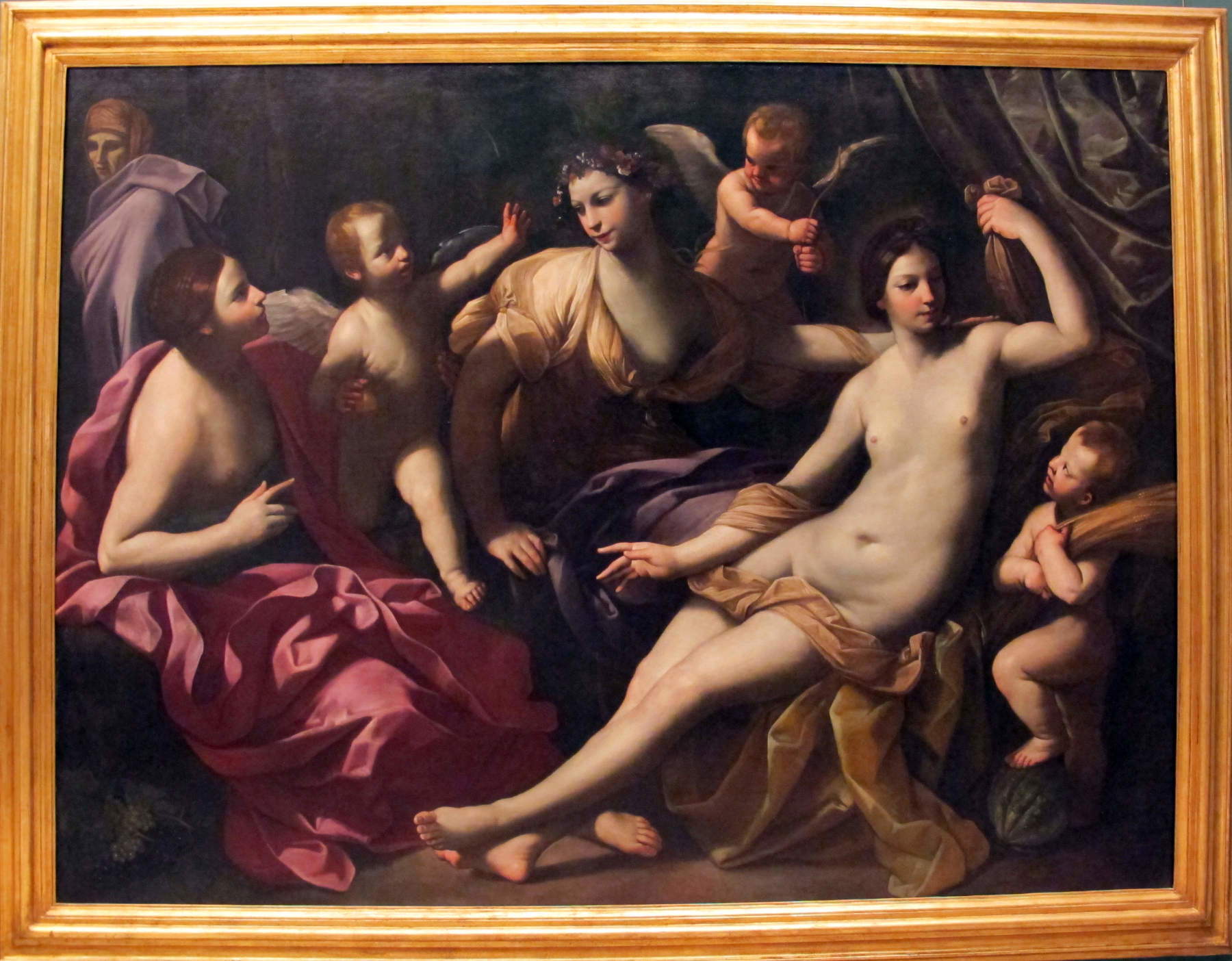
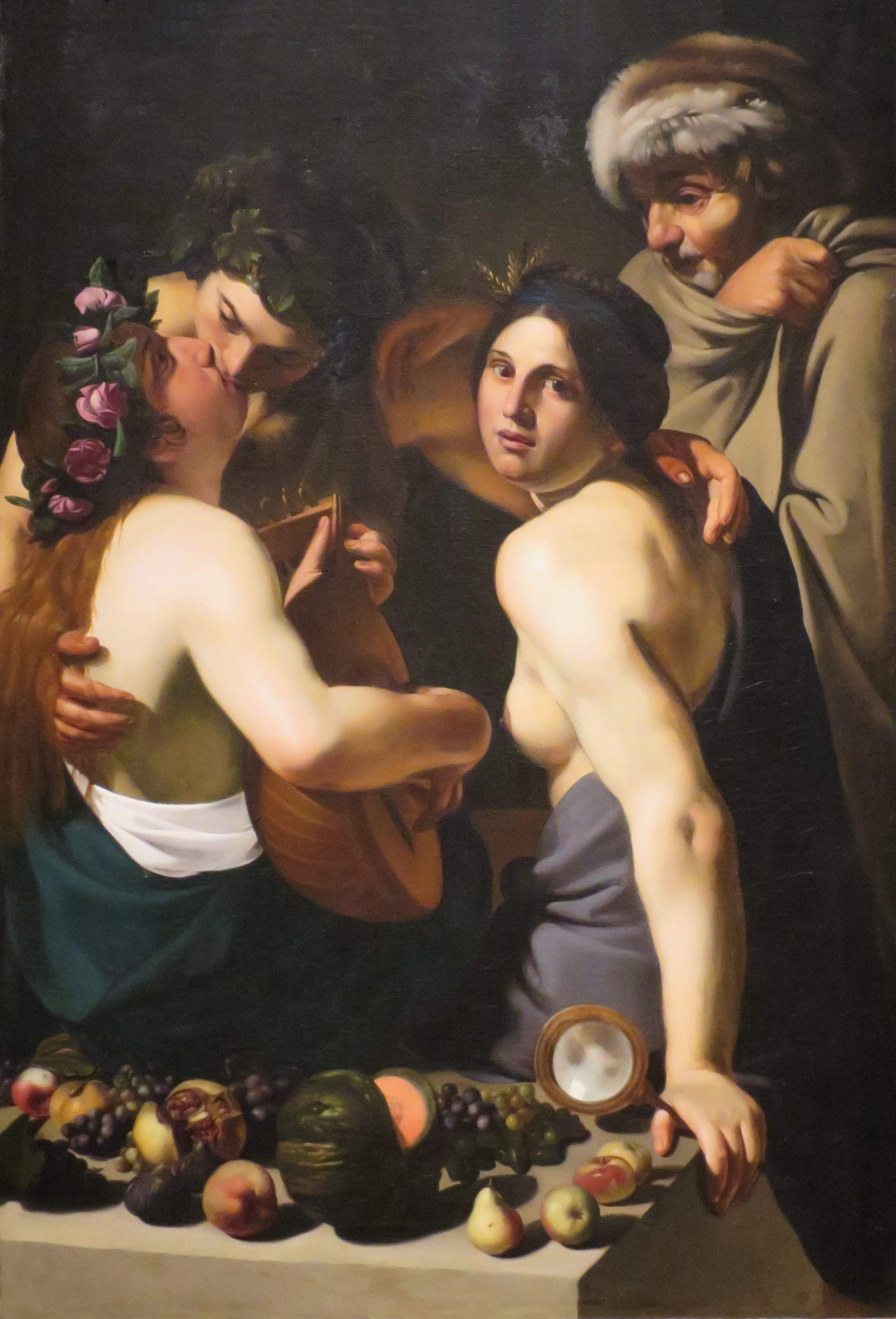
As art historian Cantoni points out, the theme of the Four Seasons, though immediately recognizable, is not particularly common in naturalistic painting of the early seventeenth century. Manetti’s painting can be compared to Bartolomeo Manfredi’s Allegories of the Four Seasons, dated around 1610 and housed at the Dayton Art Institute in Dayton (Ohio), and with those by Guido Reni, housed at the Capodimonte Museum and dated 1617–1620. In Manfredi’s painting, the figures are arranged according to a more rigid and enclosed composition, while the comparison with Reni reveals greater similarities. The two works are nearly contemporary and share the semicircular arrangement of the personifications. Even the detail of Summer’s outstretched legs finds a parallel in Reni’s painting.
The primary iconographic reference is Cesare Ripa’s*Iconologia*, a text that Manetti was familiar with through an edition printed in Siena in 1613 by the “Heirs of Matteo Florimi,” whom the artist knew personally. In any case, the relationship with Ripa’s text is not literal. Manetti draws on some of the attributes indicatedin the *Iconologia* and deviates from them in other cases, adapting the personifications to his own figurative needs. Spring, for example, retains some of the elements described by Ripa: she is a young maiden crowned with flowers and holding flowers in her hands, symbolizing the infancy of the year and the fertility of the earth. Winter, too, retains the character of the white-haired, wrinkled old man warming himself by the fire, associated with the old age of the year and the earth now weary of its natural activities—cold, melancholic, and devoid of beauty.
Summer, on the other hand, is depicted differently from Ripa’s description, which portrayed a sturdy-looking young woman crowned with ears of wheat, dressed in yellow, and holding a lit flame in her right hand. Manetti chooses a different approach, depicting her nude, alongside the season’s produce—sheaves of wheat and melons. The departurefrom *Iconologia* is even more pronounced in the case of Autumn. Instead of the “woman of mature age, plump, and richly dressed” described by Ripa, the painter presents a young man with a Bacchic demeanor. However, the fundamental attributes of grapes and vines remain, evoking the abundance of wine, fruit, and all things intended for human use. The annual cycle thus takes on an additional meaning. The four seasons correspond to the different stages of human existence and form a circular movement in which youth leads to old age, and the cycle begins anew. The subject, seemingly simple, therefore contains an iconological and philosophical dimension linked also to the Stoic conception of time and nature.
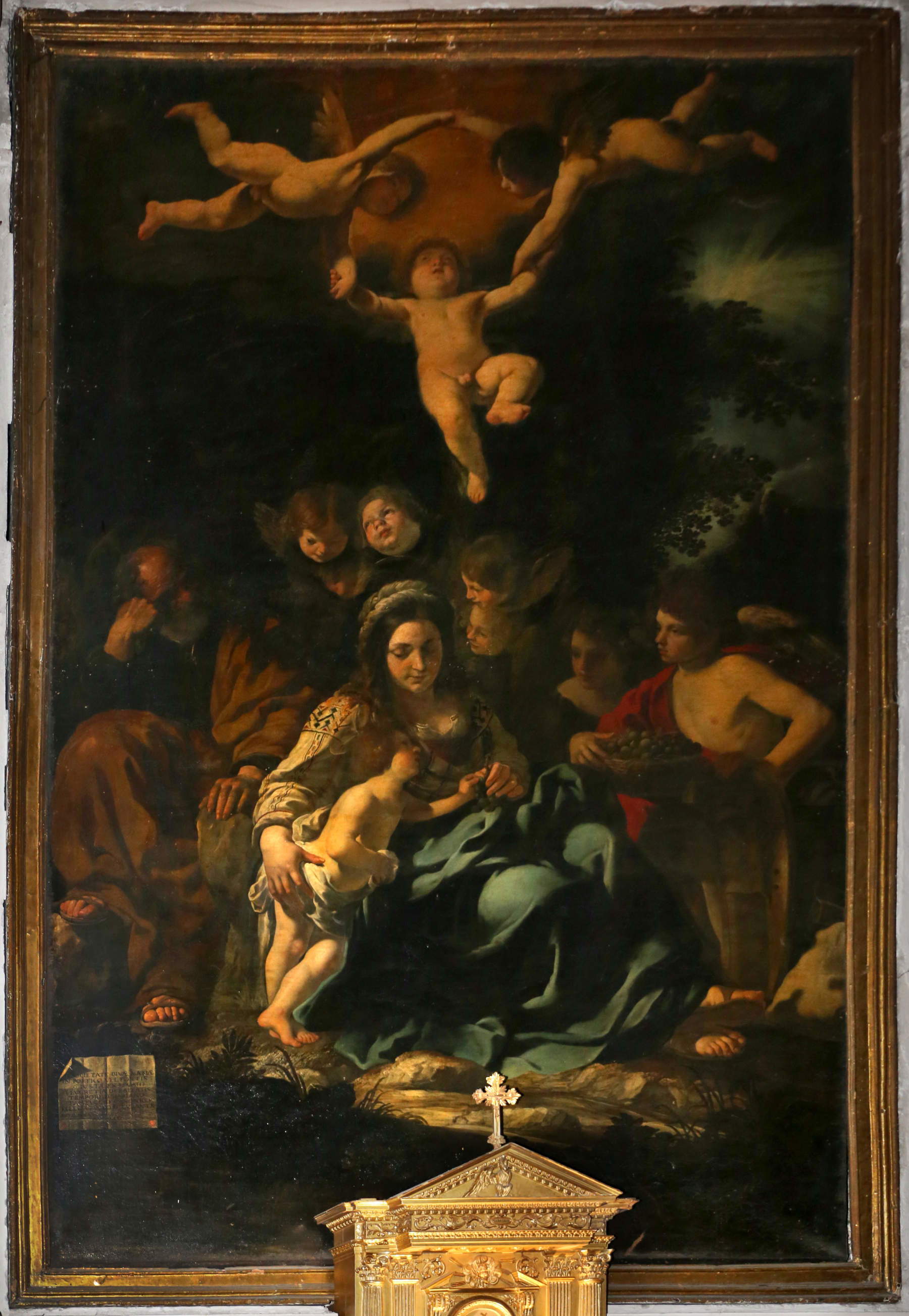
Rutilio Manetti fits into this context with a style that, by his mature period, had already moved beyond the early influences of Francesco Vanni and Ventura Salimbeni. Born in Siena in 1571, the artist trained in the workshops of the two Sienese painters and began working independently in 1597. He gradually supplemented his local training with influences drawn from the naturalism of the Bolognese school and the luminism of Caravaggio’s painting, developing a narrative vitality that characterizes a significant portion of Sienese painting from the early decades of the 17th century.The Allegory of the Four Seasons thus belongs to a phase in which these elements are now fully integrated. The monumentality of the composition, the attention to the physical reality of the figures, the use of light, and the persistence of formal elegance attest to the multifaceted nature of the artist’s artistic exploration.
The painting was last exhibited publicly in 1978, during the major monographic exhibition dedicated to Rutilio Manetti at the Palazzo Pubblico in Siena, curated by Alessandro Bagnoli. Subsequently, the work passed through the antiques market and was later listed at the Robilant+Voena Gallery in Milan, with reference to Weston 2022. The work’s condition was also verified during the 32nd edition of the Florence International Antiques Biennial, held at Palazzo Corsini from September 24 to October 2, 2022. The painting was found to be in good condition.
The decision by the National Museums of Siena to acquire the work is therefore based on several factors: the work’s significance within Manetti’s oeuvre, its pictorial quality, the documentation attesting to its presence in Rome as early as 1621, and its connection to the history of Sienese collecting, as evidenced in particular by the letters of Giulio Mancini. The acquisition also expands the core collection of works by Rutilio Manetti already held by the National Museums of Siena, such as *Saint Paul*, housed at the city’s Civic Museum, as well as *The Supper at Emmaus*, *Saint Mary Magdalene Reading*,*Saint Jerome the Penitent*, and *The Blessed Virgin of Ghiara and Saint Francis of Paola*, housed at Palazzo Sansedoni in the center of Siena. The new painting thus provides an additional piece of the puzzle for reconstructing the Sienese painter’s oeuvre and tracing his stylistic evolution, linking the local figurative tradition with Bolognese naturalism and Caravaggesque luminism.


The author of this article: Noemi Capoccia
Originaria di Lecce, classe 1995, ha conseguito la laurea presso l'Accademia di Belle Arti di Carrara nel 2021. Le sue passioni sono l'arte antica e l'archeologia. Dal 2024 lavora in Finestre sull'Arte.Warning: the translation into English of the original Italian article was created using automatic tools. We undertake to review all articles, but we do not guarantee the total absence of inaccuracies in the translation due to the program. You can find the original by clicking on the ITA button. If you find any mistake,please contact us.





















 IT
IT FR
FR DE
DE ES
ES CN
CN


