



by Redazione 11/11/2026


Categories: News / Disclaimer
In a lengthy interview with *taz*, German artist Hito Steyerl describes AI as a bubble, discusses refugees who are paid to train machines, and denounces the crisis of cultural autonomy. Meanwhile, the Deichtorhallen in Hamburg are dedicating a retrospective to her, titled *Deine Mudda macht Show*.


Will artificial intelligence destroy humanity? According to one of the greatest contemporary artists, Hito Steyerl, humanity already knows other ways to destroy itself, and AI will simply contribute to the general chaos. This is how she begins a lengthy interview with Katrin Gottschalk and Sophie Jung of the German newspaper Die Tageszeitung ( taz), published on November 7. “Much of the enthusiasm for AI,” she says, “has been self-perpetuating and operates through circular investments. Forecasts are made that exceed actual demand, leading to the construction of ever-more-extensive infrastructure. This infrastructure, in turn, always benefits the same few companies. From technical experience, I know that part of this infrastructure is superfluous. The AI infrastructure sector is a bubble.”

To arrive at this conclusion by following Steyerl’s reasoning, we must go back a few years to a refugee camp in Iraqi Kurdistan in the early 2020s: young people with smartphones in hand spending their days labeling photographs—here a house, there a street, further on a person. Their task was to teach machine learning systems to recognize the world: Hito Steyerl documented that work in her 2025 video installation *Mechanical Kurds*, filmed in Erbil. The idea, she says, came from the World Bank: to employ Middle Eastern refugees in digital micro-jobs, because there were many young people in the camps who knew how to use the internet and needed money. Essentially, Steyerl observes, “this way they could be exploited effectively.” She and her team spoke with fifteen or twenty of them. Then they were all laid off, because in the meantime the machines had learned to recognize and annotate the images on their own.


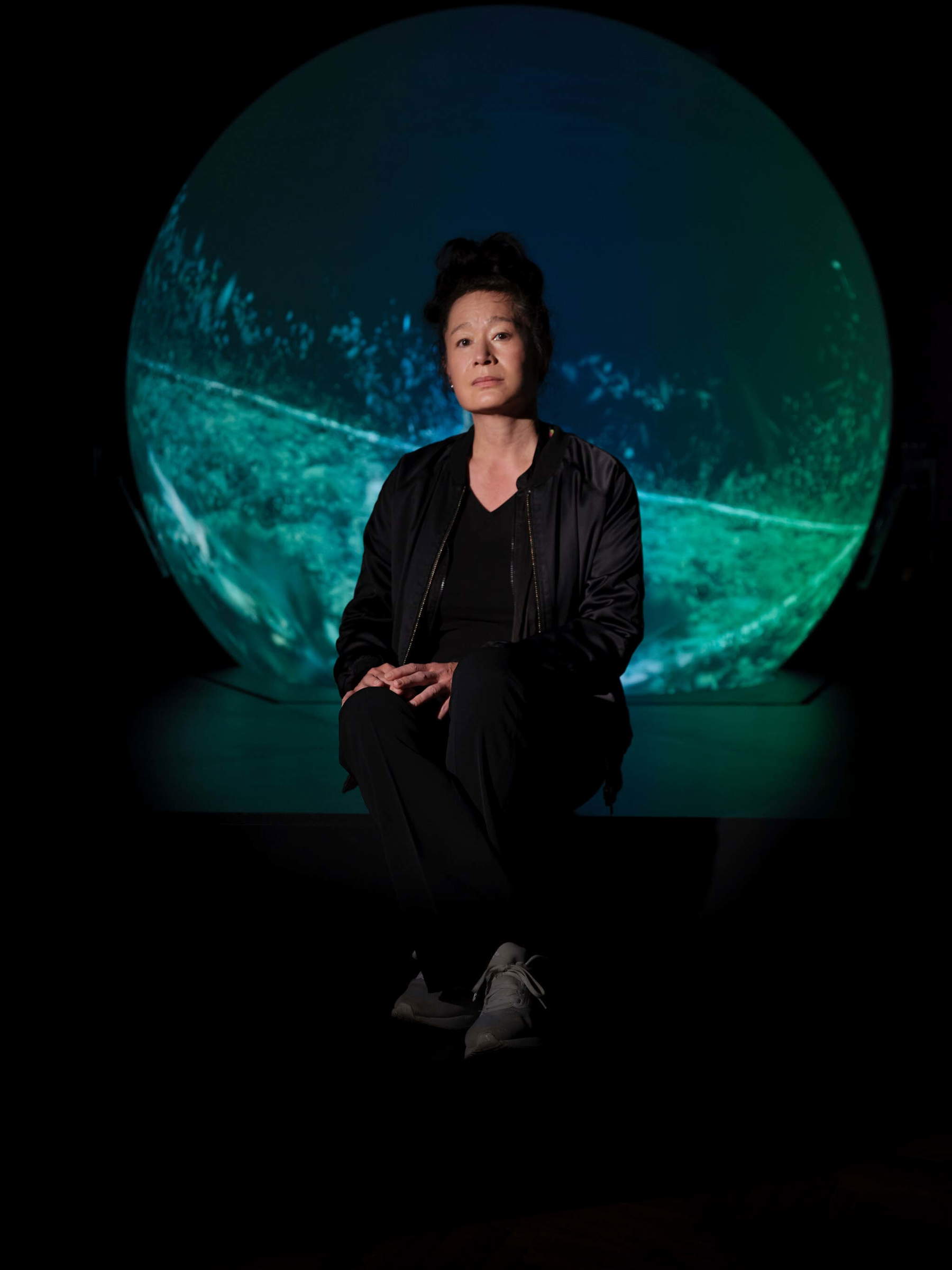
The human labor behind AI hasn’t disappeared; it has simply changed form. According to Steyerl, today robots are being trained: people strap an iPhone to their heads and film themselves while folding laundry or taking out the trash, so that machines can learn to navigate three-dimensional space. Some are well paid—for example, dentists who film themselves while working. Most, she says, earn less than the minimum wage. The “autonomous machine,” in short, is both reality and myth, and it doesn’t function without an army of workers that no one sees.

This is the perspective from which Steyerl, born in Munich in 1966, has viewed technology for years. She is considered one of the most important artists of our time, even though she prefers to call herself a filmmaker and writer. She explains to her interviewers that she cannot view AI from the outside, because she has been part of it from the very beginning: “I work from the inside, with things, against things.” It is a position she herself describes as complicated—indeed, compromised. She borrows the notion of the“implicated subject” from the American scholar Michael Rothberg: anyone who uses these technologies is implicated, but almost no one is aware of it. She resisted for a long time—until four years ago, she used an old cell phone without internet—and only gave in during the pandemic, when it was nearly impossible to do anything without QR codes.
Her view on artificial intelligence is clear-cut. She does not believe that humanity is destined for extinction because of machines: AI adds chaos to the general chaos, but there is a lack of data to truly assess its effects, because the algorithms remain secret. More than the apocalypse, however, she is concerned about the economy: according to Steyerl, as noted above, much of the enthusiasm is self-perpetuating, fueled by circular investments and inflated projections that exceed actual needs. This creates a constant need for new infrastructure, which ultimately always benefits the same few companies. She argues that models could be trained using far less energy and data by optimizing algorithms and streamlining architectures. At that point, there would be no need for new nuclear power plants, gas pipelines, or fossil-fuel infrastructure.
The opportunity to experience her work in person is in Hamburg. Through March 29, 2027, the Deichtorhallen are hosting *Hito Steyerl – Deine Mudda macht Show*, a retrospective that opened on October 30. Among the earliest works on display is the film series *Normality 1–X*, shot between 1999 and 2001, which explores everyday antisemitism and racism in newly reunified Germany. In an interview with *taz*, Steyerl confirms that those events affected her personally, since, she says, it’s obvious that she isn’t white (she is the daughter of a German father and a Japanese mother). Even the exhibition’s title comes from her private life: her daughter, now 21, constantly repeats the slang expression “Deine Mudda,” meaning “your mother.” The artist decided to take it personally, given that she is, in fact, the mother in question.
Her journey has been anything but straightforward. She grew up in conservative Bavaria in the 1970s and 1980s, the daughter of scientist parents who were worlds apart from the spirit of 1968. She dropped out of school and ended up studying film in Tokyo without a high school diploma, thanks to a series of coincidences that led her to director Shōhei Imamura. Imamura had attended the same school and was convinced that those who drop out of school have a special talent for cinema. She dreamed of making martial arts films and trained in karate six times a week. Then came the essayistic documentaries of the 1990s, a Ph.D. in philosophy in Vienna, and essays on media theory. In 2015, she presented the immersive installation *Factory of the Sun* at the German Pavilion of the Venice Biennale. Kurdistan has been a recurring theme in her work for twenty years. It all began with a search for the truth about the death of his childhood friend Andrea Wolf, who had joined the PKK and was killed in 1998—the focus of his 2007 film *Lovely Andrea *. Then her travels became a way to understand the region—from the peace process to the Battle of Kobanê and the autonomous experiment of Rojava. Steyerl insists, however, on form: she considers herself a reflective artist rather than an activist, and says that Kurdistan is too close to her heart to neglect the way she portrays it.
In the interview, the artist is also critical of the art world. In her view, culture used to be a space where discussion could take place beyond partisan lines, but today it is no longer so, partly due to heavy political interference. She explicitly criticizes Federal Minister of Culture Wolfram Weimer, but clarifies that the problem is not one person: it is a general shift toward authoritarianism. The cultural sector, in her view, has become in part “an appendage of social media,” bending almost effortlessly to the logic of platform attention. The path she points to, therefore, is to return to thinking about form, infrastructure, and systems—and perhaps rediscover poetry there as well. Steyerl currently teaches at the Academy of Fine Arts in Munich, after having been a professor at the Berlin University of the Arts. Above all, she seeks to instill a sense of mutual solidarity in her students and shield them from market pressures.
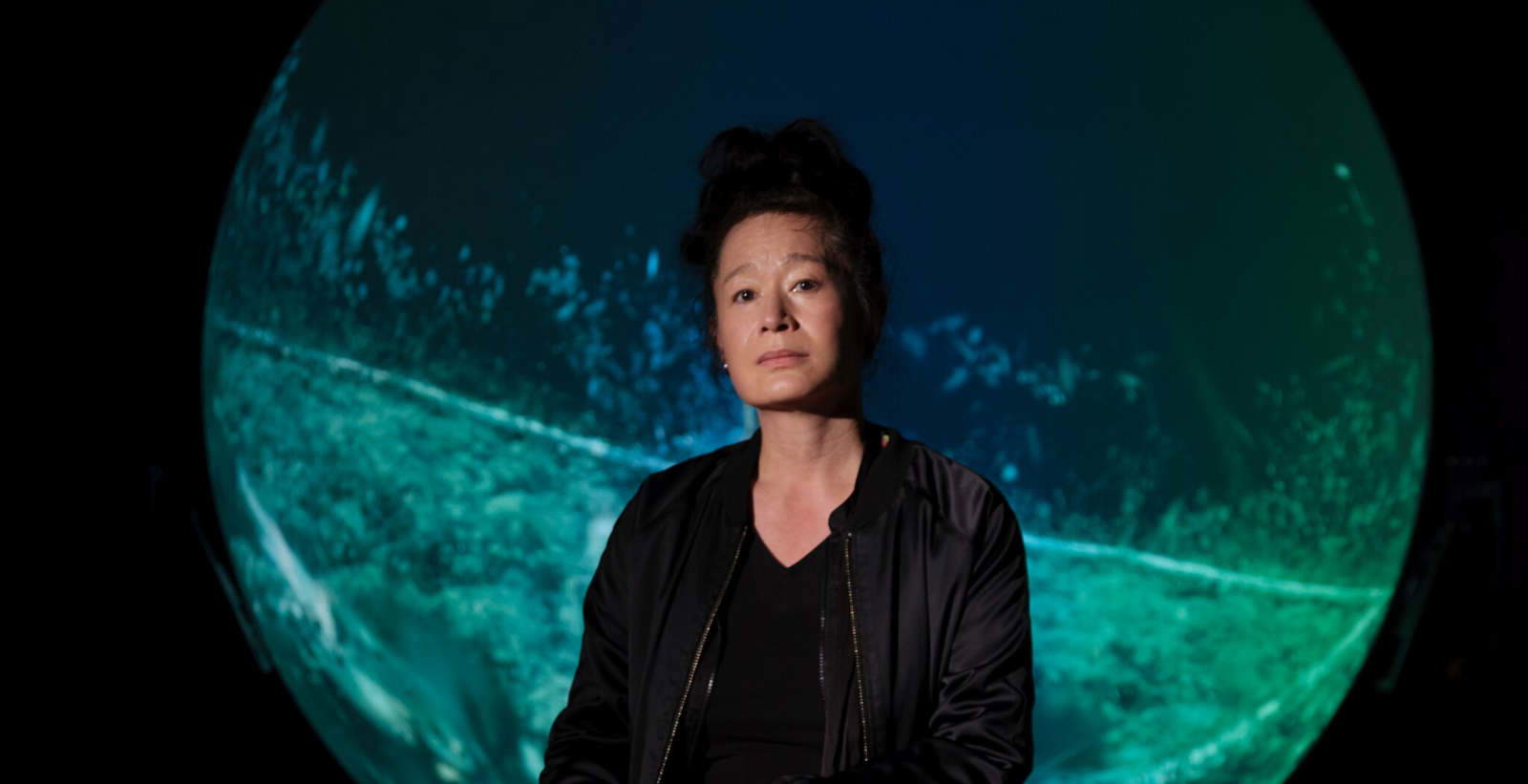 |
| Hito Steyerl: “Will AI destroy humanity? No, we already know how to do that in other ways, but it will add to the chaos.” |
Warning: the translation into English of the original Italian article was created using automatic tools. We undertake to review all articles, but we do not guarantee the total absence of inaccuracies in the translation due to the program. You can find the original by clicking on the ITA button. If you find any mistake,please contact us.