





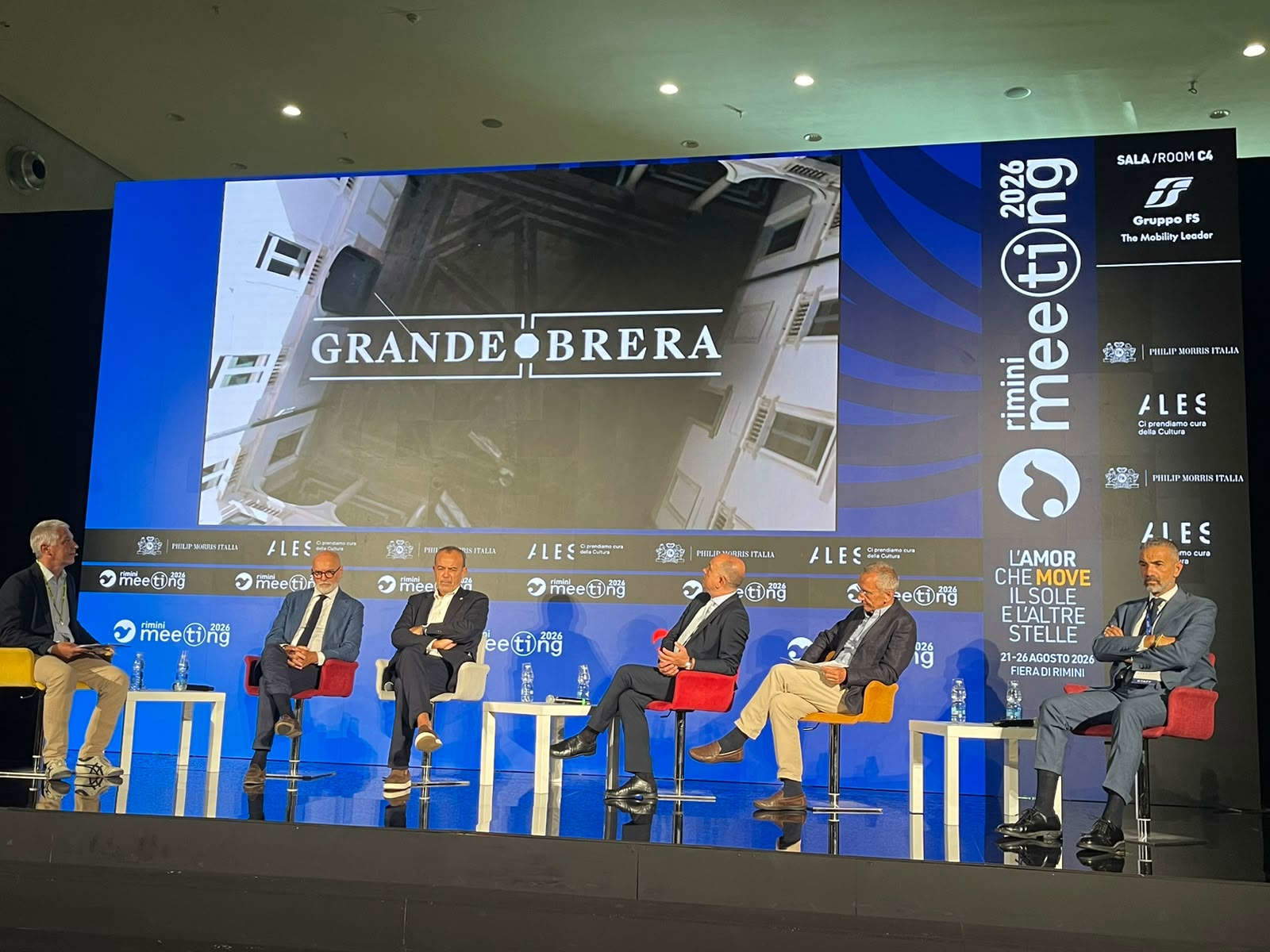
“I saw Antonello da Messina’s painting *Ecce Homo*, and I find its display at the Rimini Meeting relevant because it restores the work’s status as a sacred icon—an object of worship, as it originally was—rather than merely a cultural artifact.” These are the words of Angelo Crespi, director of the Pinacoteca di Brera in Milan, who spoke at the Rimini Fair on the sidelines of the Communion and Liberation Meeting, where he participated yesterday in the panel discussion “When Art Creates Development.”
The statement comes as the exhibition of*Ecce Homo* in Rimini has raised some concerns regarding the manner and timing of its transfer. The panel painting by Antonello da Messina, purchased by the Italian government in February for $14.9 million—equivalent to approximately 12.6 million euros—will not actually be added to the collection of the MuNDA—the National Museum of Abruzzo in L’Aquila —until June 2026. Two months after its addition to the museum’s collections, the work was transferred to the Rimini Fairgrounds, where it will be on display for one week as part of the CL Meeting, scheduled for August 21–26. The loan had been planned, but the decision took on particular significance given the work’s recent arrival at MuNDA, the fact that L’Aquila is the 2026 Italian Capital of Culture, and, above all, the recent theft of Antonello’s panels from the Regional Museum of Messina. The announcement of the relocation, which came with little advance notice, also sparked debate.
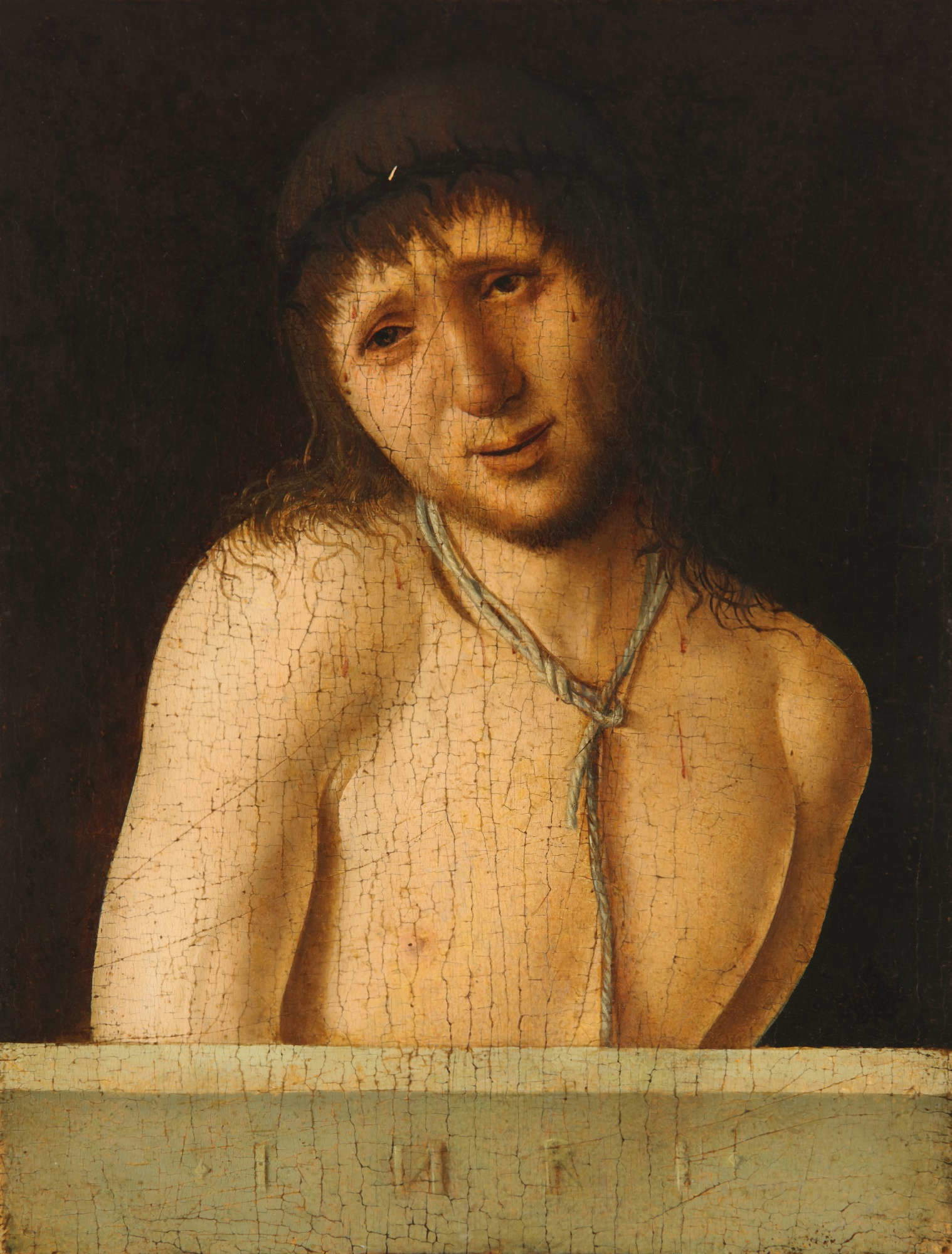
For Crespi, however, the presence ofthe *Ecce Homo* at the Meeting is particularly relevant precisely because of the work’s original nature. “Thousands of people line up to see it because they feel the power of the sacred,” stated the director of the Grande Brera, emphasizing that this perception is independent of whether the painting is housed in a museum. “It is a work that retains the original power of an icon created so that the people could see it even without the mediation of a museum,” he added.
Antonello’s panel is a small-scale work, measuring approximately 20 by 15 centimeters, yet characterized by extraordinary expressive intensity. It is painted on both sides and features two closely related images. On one side is a half-length depiction of Christ, his face marked by the Passion and his gaze directed directly at the viewer. The visual connection established by the figure thus creates an immediate and silent dialogue, bridging the gap between the image and the viewer. On the reverse side, however, is the penitent Saint Jerome, set against a rocky and austere landscape, conceived as a space of solitude and meditation.
The work was created for private devotion, as an image intended to be kept and carried for individual contemplation. It dates from between 1460 and 1465 and belongs to a decisive phase in Antonello da Messina’s career, during which the influence of Flemish painting intertwines with the Italian tradition. From this synthesis emerges a style characterized by a particular intensity of light, a more natural rendering of the figures, and a profound psychological depth.
The *Ecce Homo* housed at the MuNDA is also considered the first known version of the subject created by Antonello. The artist would return to the theme several times throughout his career, producing some of the most sublime depictions of the humanity of Christ in the Renaissance. After a long period in private collections, this extremely rare panel has once again become part of the public heritage thanks to its acquisition by the Ministry of Culture.
The issue of the loan to Rimini therefore concerns not only its duration—limited to one week—but above all the appropriateness of removing the work so soon from the museum that has just welcomed it into its collection (in fact, the MuNDA is temporarily deprived of what has become the main attraction of its exhibition itinerary and one of the reasons why many visitors are flocking to the museum in L’Aquila), and the decision to lend it to an event rather than an art exhibition.
Meanwhile, Crespi has interpreted the large turnout in Rimini as confirmation of the work’s ability to maintain its devotional dimension intact. Its display at the Meeting, according to the director of the Grande Brera, allows us to bring back to the forefront that original function which precedes the museum experience and which, even today, through the direct relationship with the image of Christ, seems to speak to a very broad audience.
Crespi was also present at the Meeting for the panel discussion “When Art Creates Development,” during which he reaffirmed the role of the Grande Brera as a permanent platform capable of generating knowledge and development for the benefit of the community. His perspective on the *Ecce Homo* thus forms part of a broader reflection on the relationship between cultural heritage, the public, and cultural institutions, precisely as Antonello’s painting is temporarily on loan from the venue that has just hosted it.
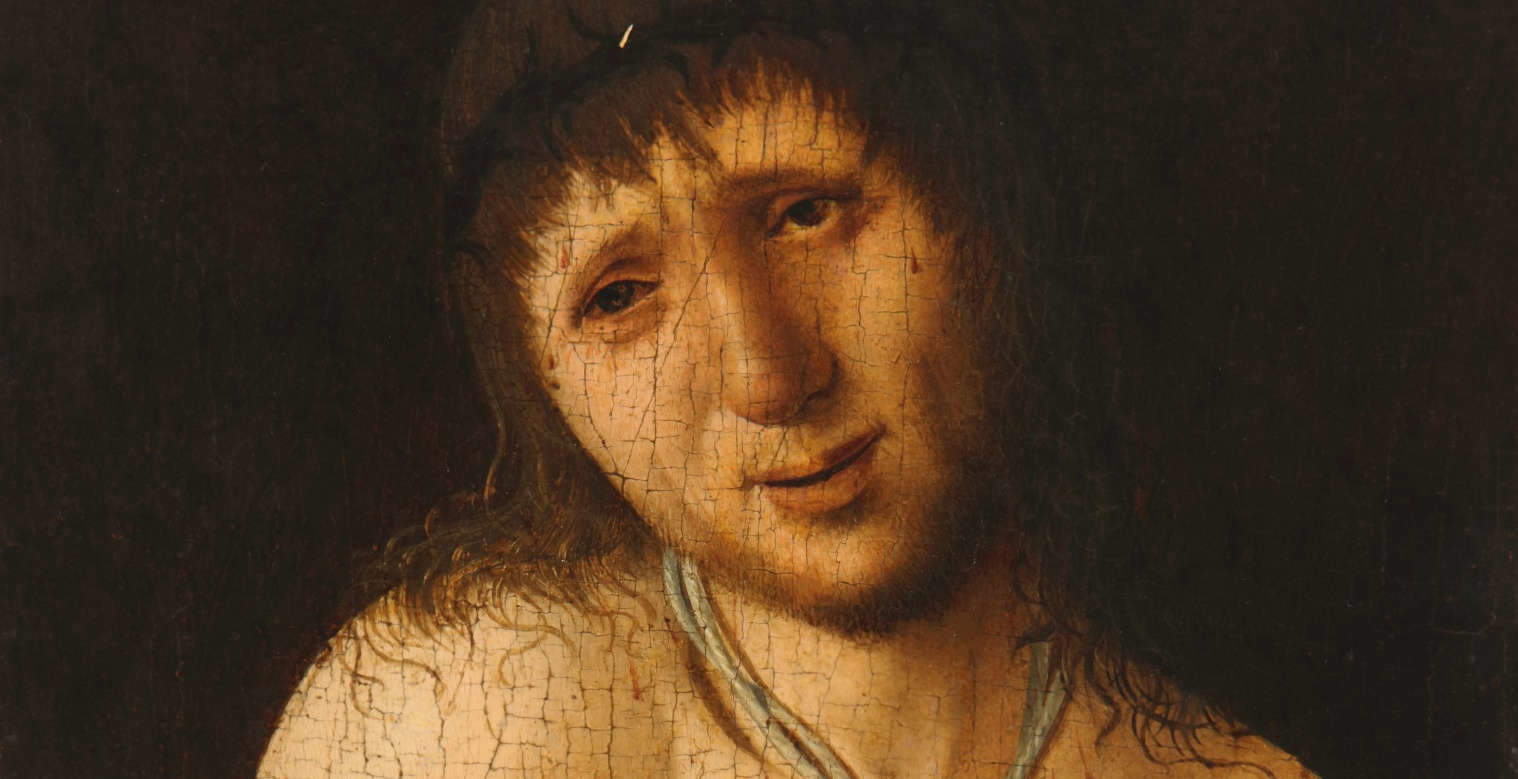 |
| “It’s the right decision to exhibit Antonello’s *Ecce Homo* at the CL Meeting,” said Crespi, director of the Brera Gallery |

Warning: the translation into English of the original Italian article was created using automatic tools. We undertake to review all articles, but we do not guarantee the total absence of inaccuracies in the translation due to the program. You can find the original by clicking on the ITA button. If you find any mistake,please contact us.

























 IT
IT FR
FR DE
DE ES
ES CN
CN


